
Not sure which size fits? Start with the bench or floor space you have:
6 products
-
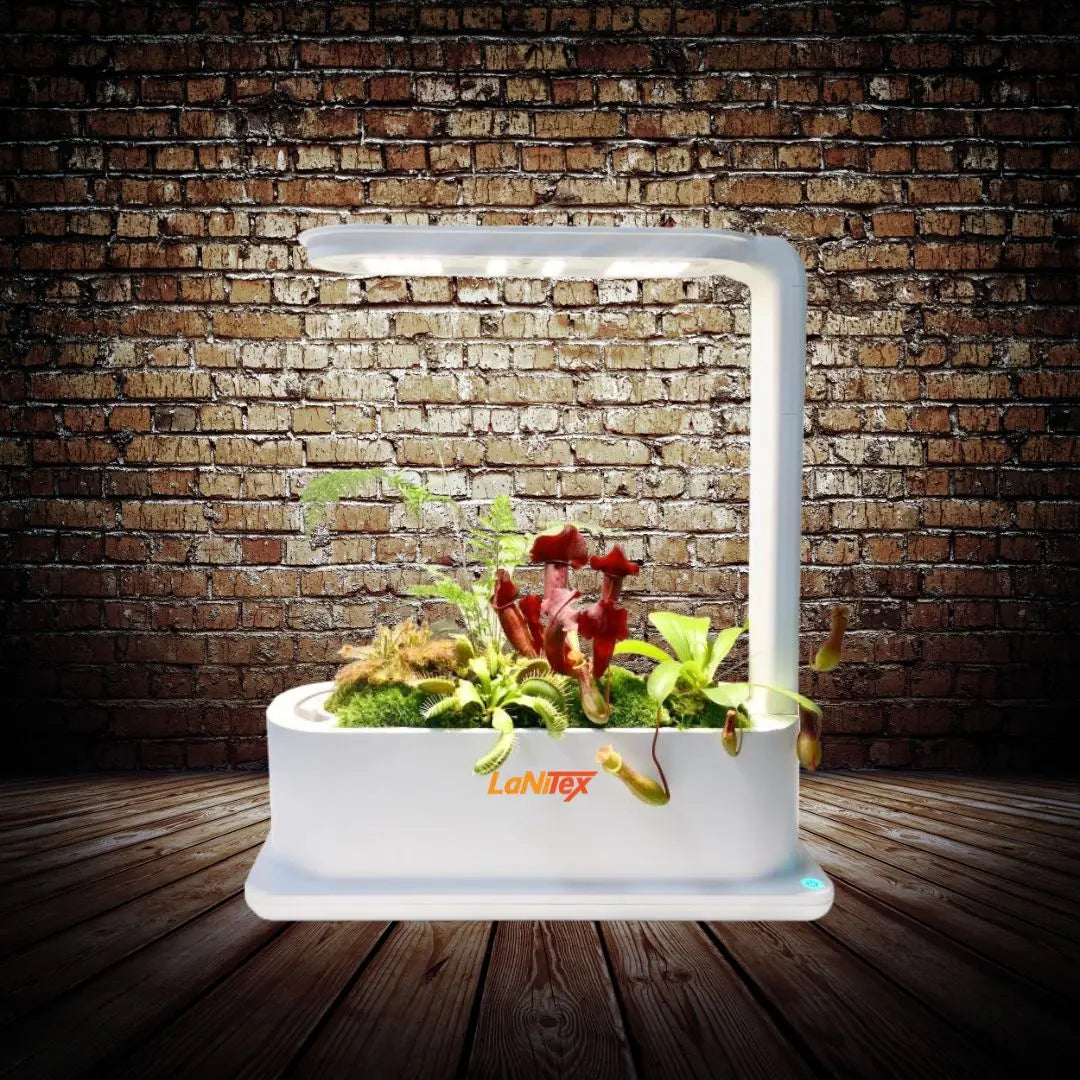
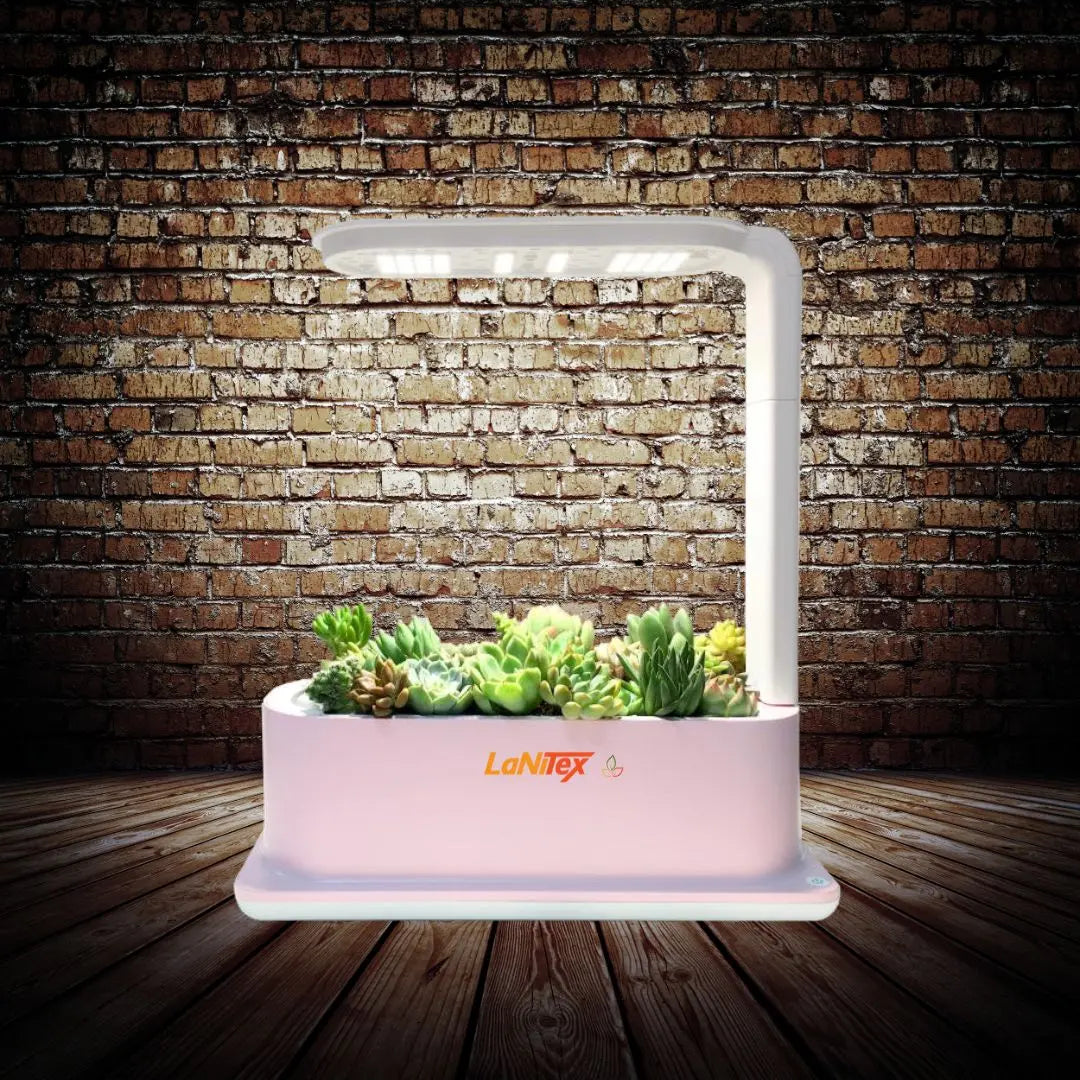 Indoor Herb Garden Hydroponic Kit – 3-Pod Grow Box with Desk Lamp Style Grow LightVendor:Indoor Herb Garden Hydroponic Kit – 3-Pod Grow Box with Desk Lamp Style Grow LightLaNiTex Hydro Garden
- Regular price
-
$99.00 AUD - Regular price
-
$139.00 AUD - Sale price
-
$99.00 AUD
Quick view
-
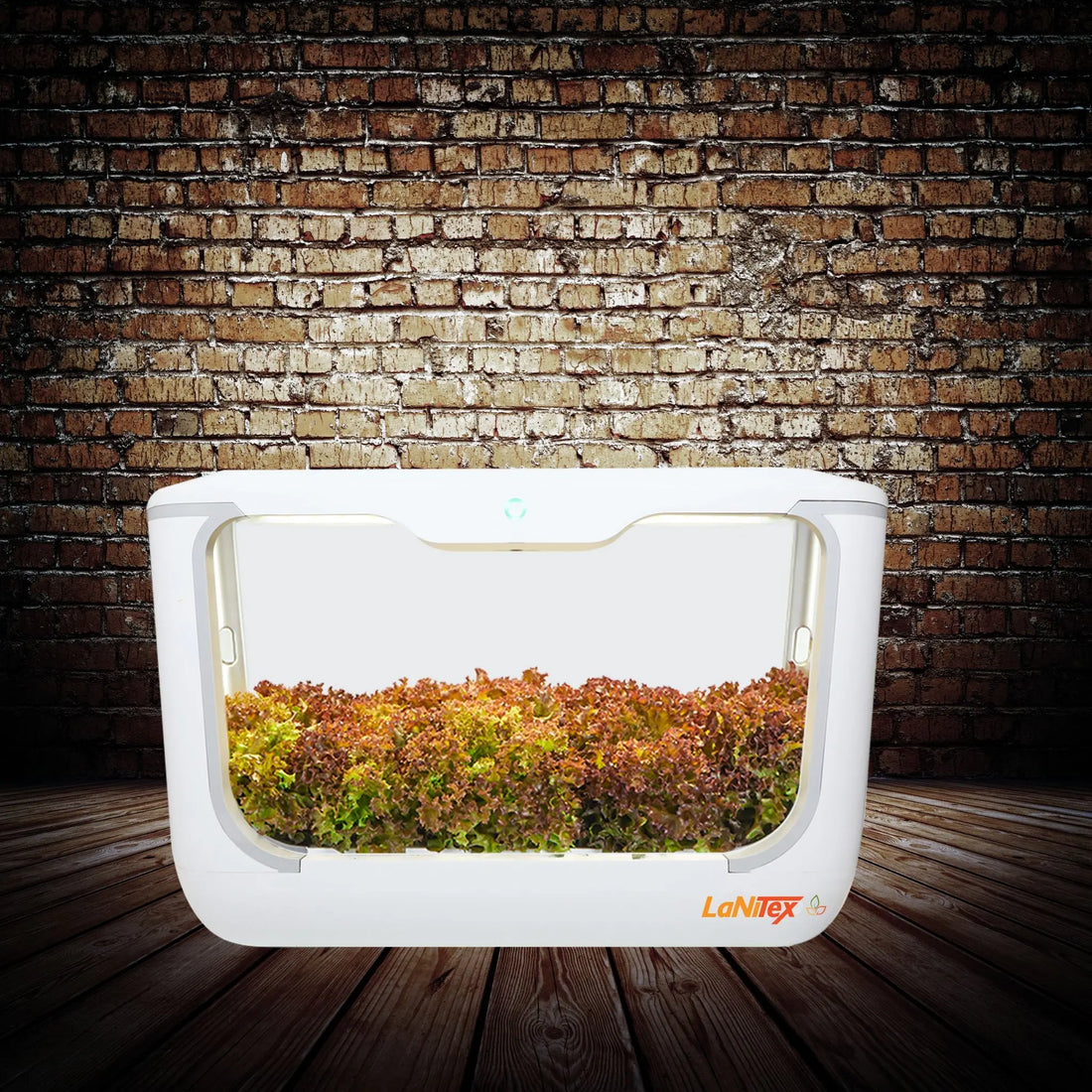
 Smart Grow Box – Hydroponics Growing System, 15 or 67 HolesVendor:Smart Grow Box – Hydroponics Growing System, 15 or 67 HolesLaNiTex Hydro Garden
- Regular price
-
$299.00 AUD - Regular price
-
$399.00 AUD - Sale price
-
$299.00 AUD
Quick view
-
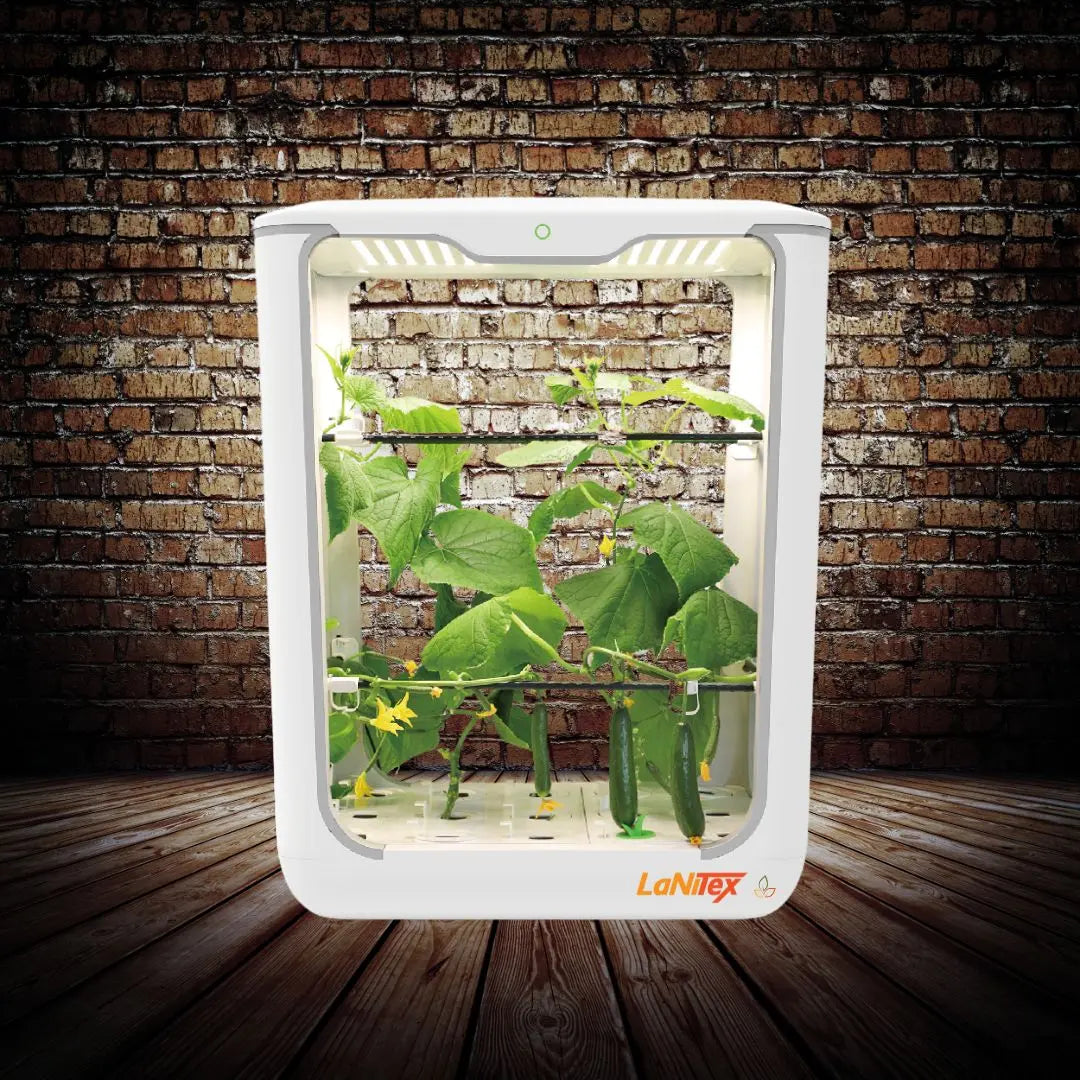
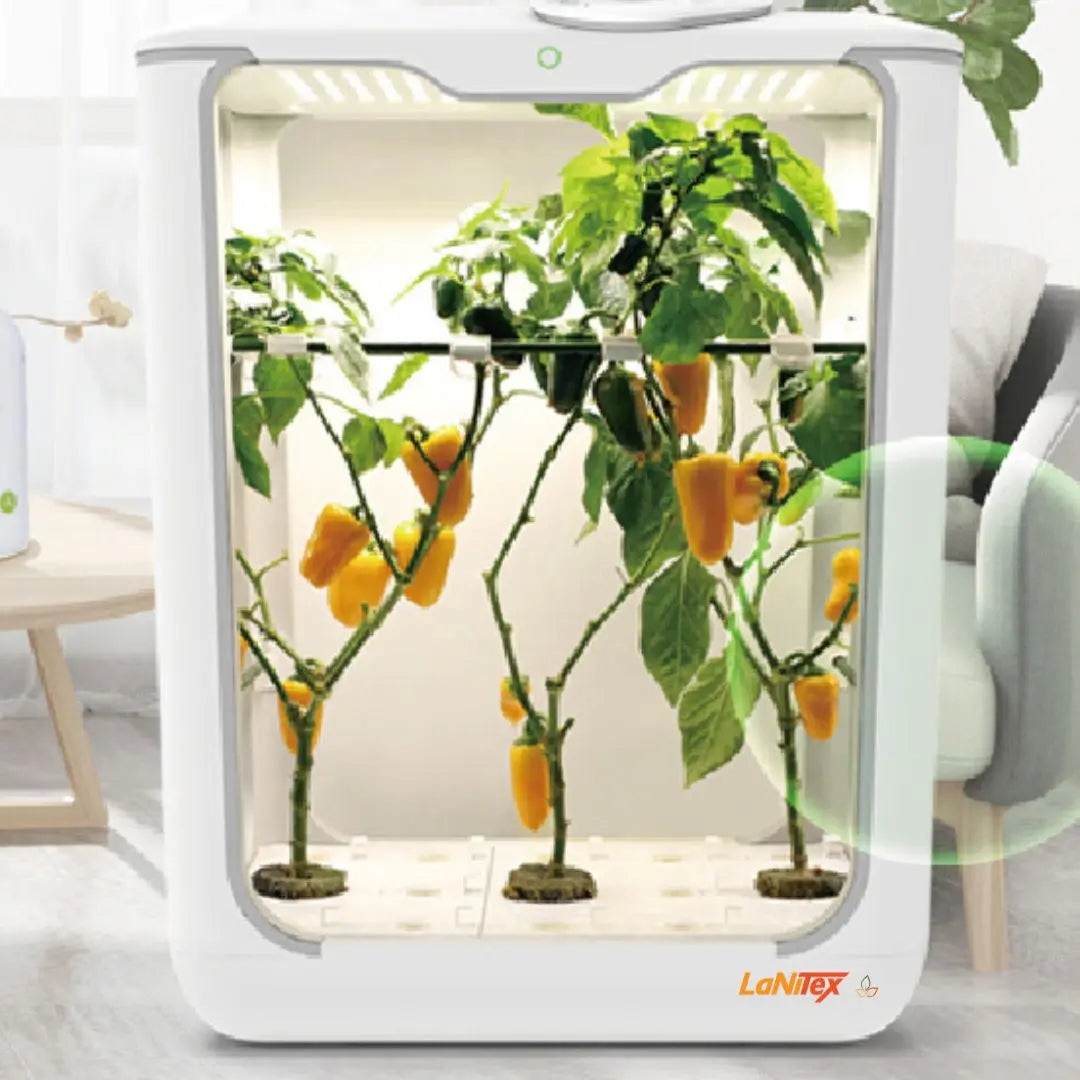 Hydroponic system: Grow Box Tall versionVendor:Hydroponic system: Grow Box Tall versionLaNiTex Hydro Garden
- Regular price
-
$590.00 AUD - Regular price
-
$490.00 AUD - Sale price
-
$590.00 AUD
Quick view
-

 Smart Indoor Hydroponic Tower V5.2-A – Complete Hydroponic SystemVendor:Smart Indoor Hydroponic Tower V5.2-A – Complete Hydroponic SystemLaNiTex Hydro Garden
- Regular price
-
$990.00 AUD - Regular price
-
- Sale price
-
$990.00 AUD
Quick view
-
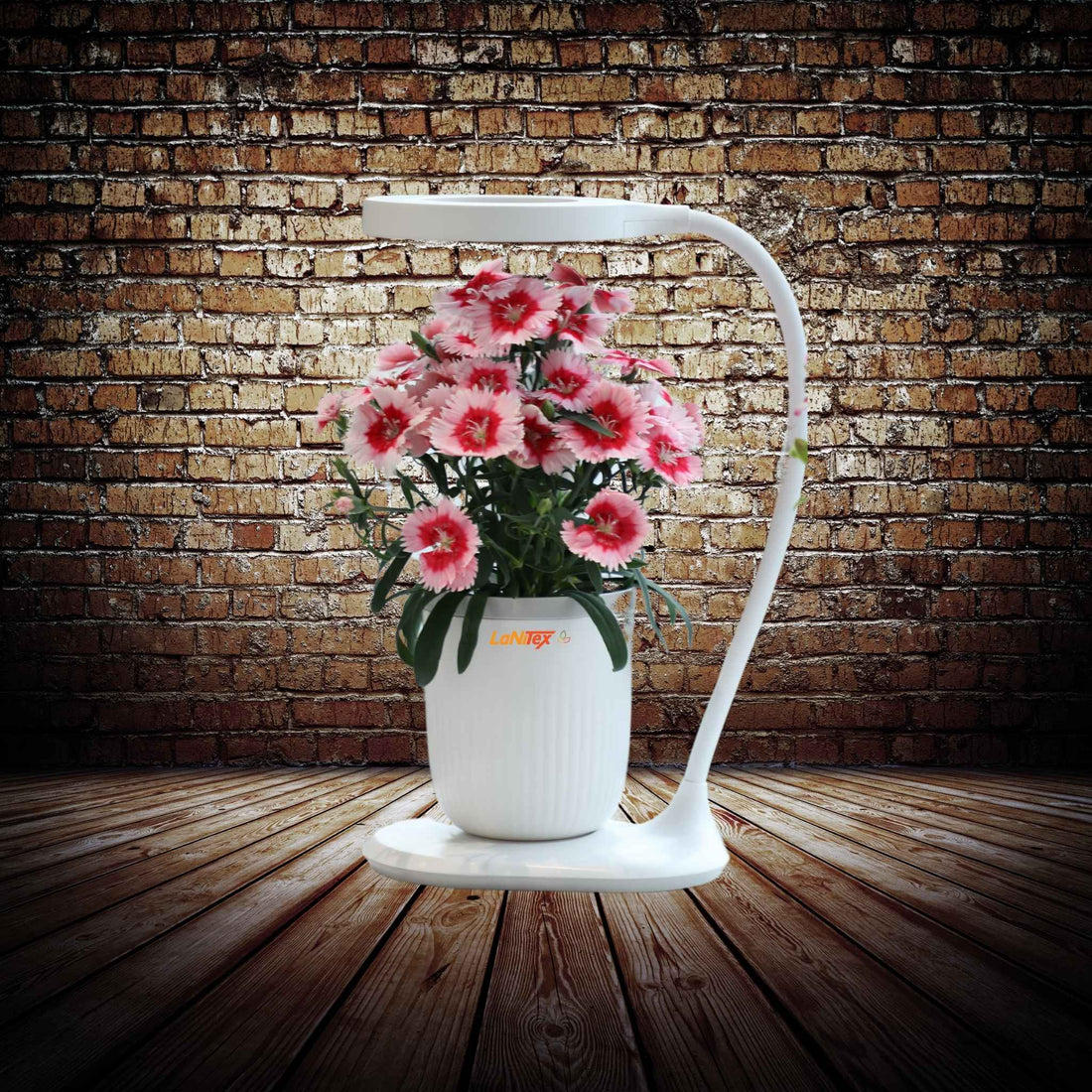
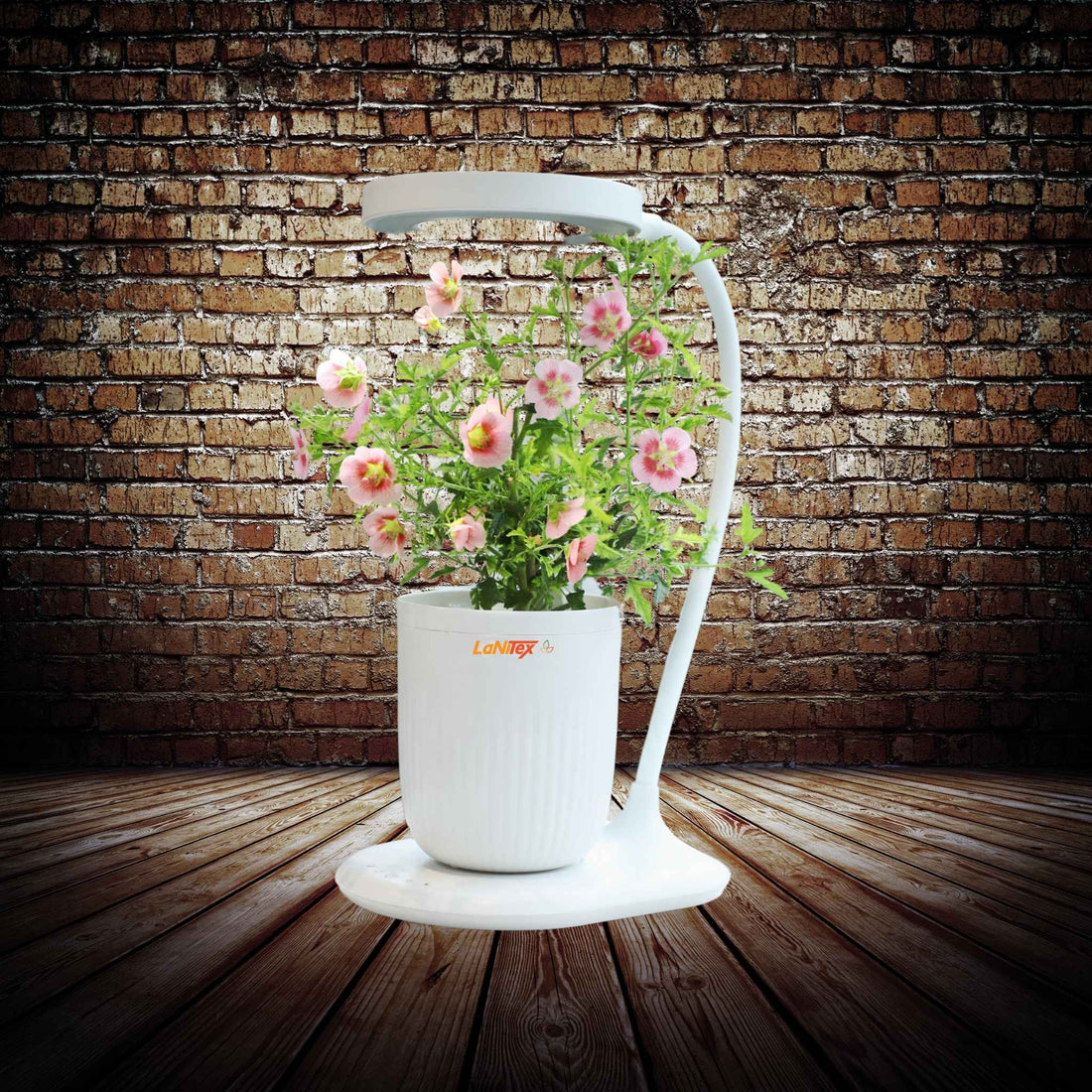 Mini Plant Lamp – Self Watering Pot with Plant Grow Light, Reading, Warm & Night ModesVendor:Mini Plant Lamp – Self Watering Pot with Plant Grow Light, Reading, Warm & Night ModesLaNiTex Hydro Garden
- Regular price
-
$49.00 AUD - Regular price
-
$65.00 AUD - Sale price
-
$49.00 AUD
Quick view
-
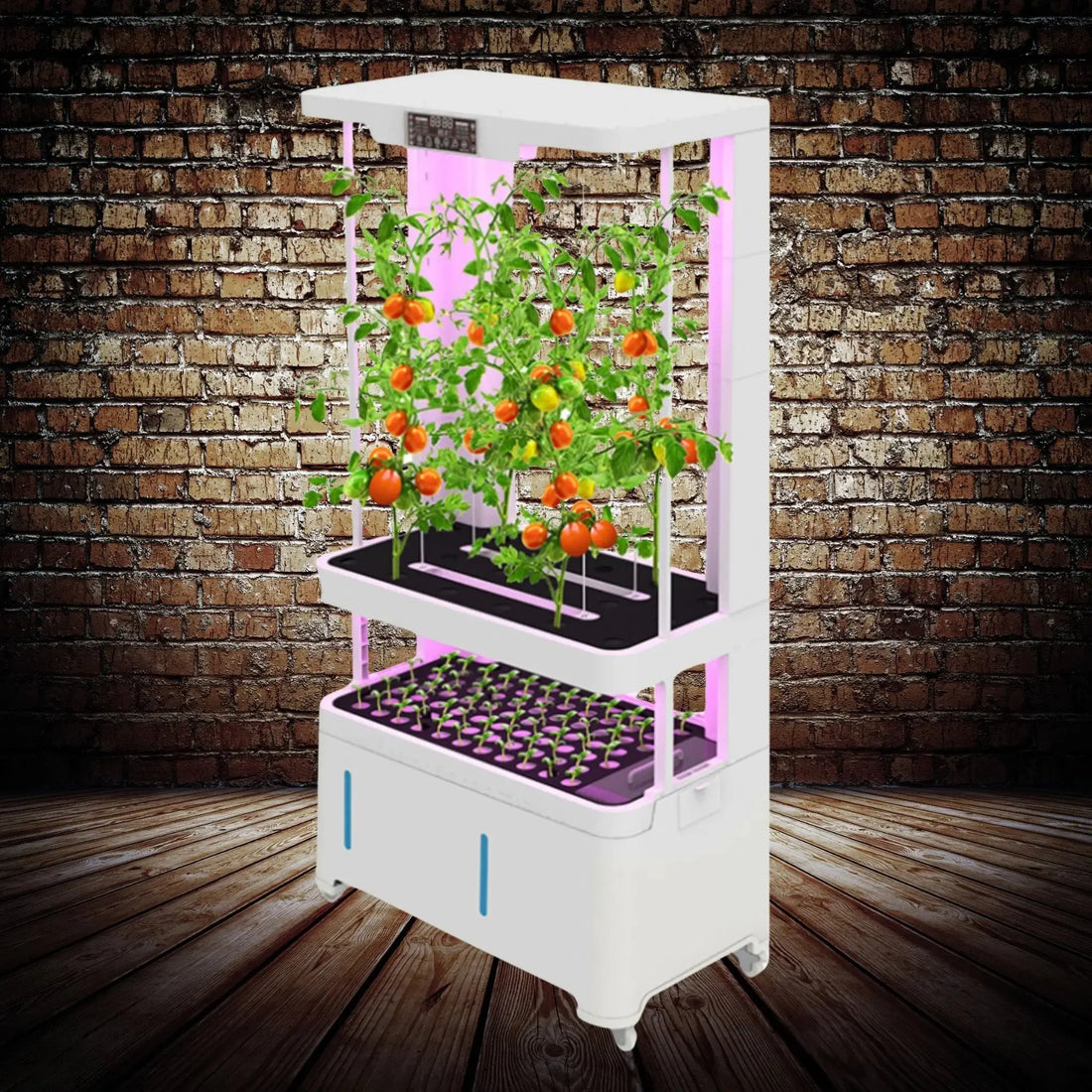
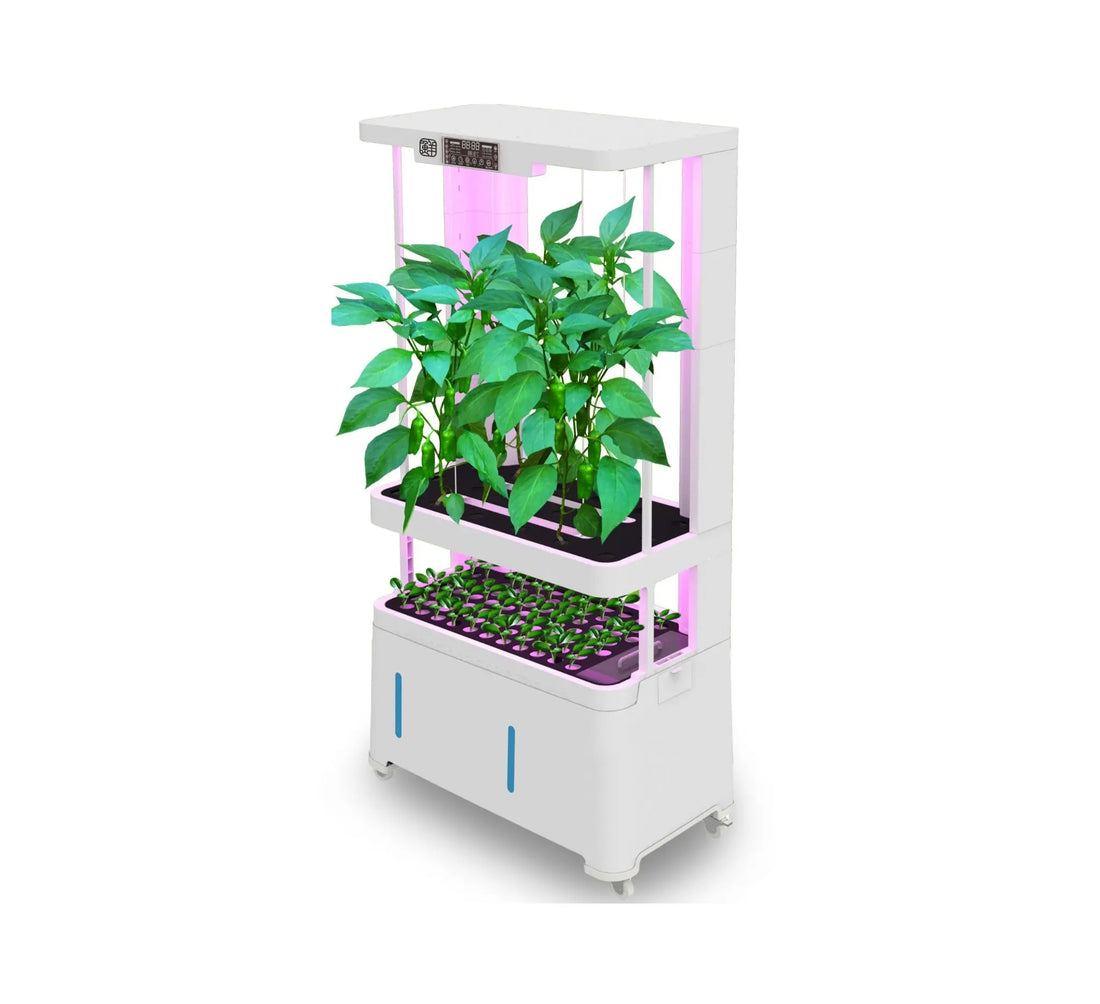 Automated NFT Hydroponic System V5.2-T – Self-Watering, 161 cmVendor:Automated NFT Hydroponic System V5.2-T – Self-Watering, 161 cmLaNiTex Hydro Garden
- Regular price
-
$890.00 AUD - Regular price
-
- Sale price
-
$890.00 AUD
Quick view


Warranty, Returns and Our First-Grow Promise
Which Hydroponic System Is Right for You?
Every LaNiTex indoor hydroponic system is a self-contained unit with the grow light, reservoir and timer built in. What separates them is what you want to eat and how much bench or floor space you can give it.
- Most of a salad bowl on the bench: the 15- or 67-hole Smart Grow Box hydroponics growing system, which stacks up to four units high as you grow.
- Feeding a whole household: the 72-site V5.2-A hydroponic tower, 180 cm of vertical planting on about a third of a square metre of floor.
- Herbs beside the cooktop: the three-pod indoor herb garden with a desk-lamp style grow light.
- The smallest option: a self-watering pot with a grow light that holds one plant and also switches to reading, warm and night modes.
- Tomatoes, cucumbers and chillies: the Grow Box Tall hydroponic system for tomatoes, with a built-in trellis for dwarf and cherry varieties.
- Set it and leave it: the automated NFT hydroponic system V5.2-T, 18 pods above a germination tray, running off a 34-litre reservoir.
Still deciding? There is a two-and-a-half-minute demo on the Smart Grow Box page: greens growing indoors, no soil. Or read the hydroponic system comparison and browse 70+ plant-by-plant growing guides.
What Can You Grow?
Indoor hydroponic systems grow leafy greens, herbs, fruiting crops and edible flowers, and there are about fifty varieties covered below. Greens and herbs are the fastest and most forgiving; tomatoes, cucumbers and chillies need a taller unit with a trellis. Every plant below has its own LaNiTex growing guide written for Australian conditions, so click any name for timing, nutrients and step-by-step care.
Leafy greens and lettuce — start cutting outer leaves from three to five weeks; a full head takes 40 to 60 days.
Herbs — pick leaves as you need them once the plants establish.
Fruiting crops — these need a taller system with a trellis, such as the Grow Box Tall.
Edible flowers — the same systems that grow your salad.
Growing microgreens or mushrooms instead? Those have their own kit: the microgreen kits and the Smart Mushroom Growing Box. Browse all 70+ plant guides →
Harvest timing cross-checked against Utah State University Extension: “Harvest can start anytime from 3 to 5 weeks after seeding.”
Indoor Hydroponic Systems, Answered
Is hydroponic growing better than growing in soil?
Different rather than better. In soil, what your plants get depends on what is in the mix and how well it holds water. In indoor hydroponic systems you feed them directly, in water, so you set the strength yourself and you can see the level at a glance. There is no potting mix to buy or store, no weeds, and the recirculating models reuse their own water instead of draining it away. Soil does give you one thing back: forgiveness. It buffers mistakes that plain water does not.
What is an indoor hydroponic system?
An indoor hydroponic system grows plants in nutrient-fed water instead of soil, inside a unit that supplies its own light. In an all-in-one system the reservoir, the pump or wick, the timer and the full-spectrum LED are built into one appliance, so a standard wall socket is the only connection it needs: no plumbing, no drainage, nothing to mount.
What do you need to start a hydroponic system at home?
A component build needs a reservoir, net pots, growing medium, a pump, a timer, a grow light and nutrients. With an all-in-one system you add seeds or seedlings, nutrient solution and water. Power is a standard wall socket. Mix the nutrient to the strength on the bottle, and keep an eye on the water itself: most crops take up nutrients best between pH 5.5 and 6.5, and topping up with plain water rather than more nutrient stops the solution getting too strong. The sponge or substrate the seeds start in is listed separately on each product page.
What types of hydroponic system are there?
The common methods are deep water culture, nutrient film technique, drip, ebb and flow, wick and aeroponics. LaNiTex grow boxes and the towers use a recirculating design: the nutrient is dissolved in the water and a pump keeps it moving. The Mini Grow Pot and the Desktop unit are passive — no pump.
Is a hydroponic system good for beginners?
An all-in-one system is easier than a component build, because the watering and the lighting run themselves. What is left to you is topping up the reservoir, mixing nutrient at the strength on the bottle, keeping an eye on the pH, and cutting at the right time. If your first grow struggles, our first-grow promise means a real grower helps you get the next one right.
What is the smallest indoor hydroponic system?
The Mini Indoor Grow Pot is the smallest in the range at 146 × 178 × 345 mm: one plant, a self-watering reservoir, and a grow light that also switches to reading, warm and night modes. Next up is the three-pod Desktop unit, then the Smart Grow Box in its 15-hole variant.
Where can you buy a hydroponic system in Australia?
Hydro shops stock components; LaNiTex sells complete systems online and ships Australia-wide from the Sunshine Coast, Queensland. Each model was grown out once before we listed it, and powered systems carry a 12-month warranty.
How much does it cost to run an indoor hydroponic system?
The automated V5.2-A tower draws about 1.2 kWh a day, so what it costs you comes down to your own electricity rate: multiply the daily kWh by what you pay per kWh. Across the range, power use depends on the size of the hydroponics system. The benchtop units draw less, because they run a smaller light, and the Mini Grow Pot and the Desktop have no pump at all. The light is the biggest single draw in every model, so consumption tracks how many hours a day you run it.
How long does delivery take and what does shipping cost?
We ship Australia-wide, with standard delivery in 3 to 7 business days, or up to 10 for regional areas and Western Australia. Orders leave our Queensland hub within 24 to 48 hours on weekdays. Shipping is free on orders over $199, with one exception: the V5.2-A and V5.2-T towers travel as heavy freight, charged from $100. Every order is tracked.
How much work is an indoor hydroponic system each week?
Three things, and none of them daily. Top up the reservoir when it drops: how often depends on the tank, so the 34-litre V5.2-A goes much longer between top-ups than a benchtop unit, and it has a low-water alarm to tell you. Mix nutrient to the strength on the bottle each time you refill, and check the pH while you are there. Then harvest when the leaves are ready. The lighting runs on its own timer, so there is nothing to do there at all.
More hydroponic system questions?
Browse the full LaNiTex FAQ for pH, nutrients, pests and troubleshooting.
On why pH matters: Penn State Extension notes that pH “plays an important role in plant nutrient availability”.
See an Indoor Hydroponic System Running
Two and a half minutes inside the Smart Grow Box: the nutrient reservoir, the LED on its timer, and what the greens look like at harvest. That is the mid-size model. The Grow Box Tall and both towers circulate nutrient the same way, while the Mini Grow Pot and the Desktop unit are passive, so they have no pump to run.