
By Laszlo Bulatko | Updated 24 June 2026 | 11 min read
Marigold hydroponics is a surprisingly approachable indoor flowering project for Australian growers — fast-blooming, low-maintenance, and well-suited to compact systems like the Desktop Grow Box. Both Tagetes erecta (the African marigold) and Tagetes patula (the French marigold) flower fast under steady light and warm root temperatures that a closed hydroponic setup delivers year-round, even on a Sunshine Coast July night that drops to 8 degrees outside.
For an indoor hydroponic marigold setup, aim for pH 5.8-6.5, EC 1.0-1.5 dS/m, 11-12 hours of light at 200-400 PPFD, and pick a compact French cultivar for limited headroom. Start with reasonable water quality — Sunshine Coast and Brisbane tap water typically sits at EC 0.2-0.4 dS/m, which is fine without RO if chloramine is filtered out. We've tested every cultivar and nutrient range in this guide on our own gear at LaNiTex's Sunshine Coast facility before publishing.
Here's what works for growing marigolds indoors in Australia, from species selection through continuous bloom.
Why marigolds work indoors hydroponically (and which species to pick)

Two species dominate: Tagetes erecta (the African marigold, 60-90 cm pom-pom blooms) and Tagetes patula (the French marigold, smaller bushy form at 20-30 cm). The French is usually the better fit for compact indoor systems. Both flower fast under steady light and warm root temperatures, which a closed hydroponic setup delivers year-round, even when a Sunshine Coast July night drops to 8 degrees outside.
For limited headroom, steer toward the French side. Cultivars worth trialling: 'Bonanza Yellow' (compact, prolific, 25 cm), 'Crackerjack Mix' (a Tagetes erecta blend if you have height to spare, 70-90 cm), and 'Golden Guardian' (Tagetes patula, marketed as a strong nematode-companion variety). All three are stocked by Australian seed retailers and germinate well in rockwool or coir plugs.
| Type / cultivar | Height | Best for |
|---|---|---|
| Tagetes erecta (African) | 60-90 cm | Tall pom-pom blooms; needs headroom |
| Tagetes patula (French) | 20-30 cm | Compact indoor systems - the usual pick |
| Tagetes tenuifolia (Signet / 'Gem') | 20-30 cm | Smallest; bench-top; edible citrus-scented flowers |
| 'Bonanza Yellow' (French) | 25 cm | Compact, prolific - DWC / Kratky / NFT |
| 'Crackerjack Mix' (erecta) | 70-90 cm | Only if you have height to spare |
| 'Golden Guardian' (French) | ~60 cm | Nematode-companion variety; taller, needs headroom (not a compact pick) |
A third type is worth knowing: the Signet marigold (Tagetes tenuifolia, often sold as 'Gem' marigolds such as 'Lemon Gem' or 'Tangerine Gem'). It's the smallest of the three at 20-30 cm, with lacy foliage and masses of small single citrus-scented flowers, and the best fit of all for a bench-top system. It's also the type most often grown for the kitchen. One naming note worth clearing up: the "pot marigold" sold as Calendula officinalis is a different plant from a different genus, so everything in this guide refers to true marigolds (Tagetes). The petals of Tagetes (Signet especially) are edible and lend a saffron-like colour to rice and salads. Marigold has long been called "poor man's saffron", though the petals work as a garnish or natural colourant rather than a culinary mainstay.
Marigolds also double up as a companion plant. In soil and greenhouse beds, root exudates suppress some nematodes and the flowers attract hoverflies and lacewings that prey on aphids, the same beneficial insects that cosmos draws in the garden. In a small indoor hydroponic system this benefit is minimal, and you'll only get the pollinator bonus when a window's open.
What pH, EC, and water targets work for hydroponic marigolds in Australia?
Marigolds are forgiving but respond best in a tight band. Hold the nutrient solution at pH 5.8-6.5 and EC (electrical conductivity) 1.0-1.5 dS/m for seedlings and vegetative growth. Marigolds specifically peak around pH 5.8-6.2. As plants flower you can push EC to 1.8-2.0 dS/m. Only experienced growers with stable, well-monitored systems should trial up to 2.2 dS/m; higher than that risks salt stress and tip burn in small indoor reservoirs.
Start with weekly top-ups and a full change every 2 weeks on a small system like the Desktop Grow Box, then adjust by monitoring EC and pH. A hot Sunshine Coast summer week may need more frequent changes; a cooler month, less. Volume and plant density matter more than the calendar. Sunshine Coast tap water runs EC 0.2-0.4 dS/m; Brisbane is similar. If you're on tank water, or mains EC sits above 0.5 dS/m, or your supplier adds chloramine, filter through carbon or RO before mixing.
Water temperature matters more than beginners realise. Keep the tank between 18 and 24 degrees Celsius. Above 26, dissolved oxygen drops and you set the stage for root rot; below 16-18, root metabolism slows and marigolds sulk.
My experience growing marigolds on the Sunshine Coast
My wife adores flowers, which is what nudged me to start experimenting with them on our indoor hydroponic gear here on the Sunshine Coast. When they bloom they bring fresh life and colour to the house. It still surprises me how the Desktop Grow Box turns a kitchen bench into a beautiful, fragrant spot, and what a lovely gift it makes for a wife or grandmother on Mother's Day or Christmas.
How much light do hydroponic marigolds need indoors?
Marigolds are short-day to day-neutral plants, depending on cultivar. Tagetes erecta is a facultative short-day plant (long days delay flowering rather than prevent it), while French Tagetes patula is less sensitive, closer to day-neutral. They flower best at 11-12 hours of light per day. Push past that to 14-16 hours and you delay flowering and stretch the stems. Indoors, run 11-13 hours once buds form to keep them blooming. They want intense light, around 200-400 PPFD (photosynthetic photon flux density) at the leaf canopy, but timing matters more than duration. The 9-watt LED in the Desktop Grow Box hits the lower end of that band at pod height. That's enough for compact French varieties; taller African types benefit from a larger panel.
Spectrum matters too. A 4000K-6500K white LED with red bias (around 660 nm) gives the best growth-to-flower ratio. Pure-blue spectrums grow leafy plants well but delay buds. I run mine on a timer, 7 am to 7 pm, a 12-hour cycle that keeps the plants flowering.
Don't crowd the canopy. Plants packed too tight grow leggy and pick up powdery mildew. Use a small clip-on fan for airflow, and remove only yellowing or congested lower leaves as needed.
Two simple habits keep a compact plant bushy and in flower. First, pinch out the central growing tip once a seedling reaches about 15 cm or 4-6 true leaves; this forces side branching and more flower stems instead of one tall stalk. Second, deadhead as the season runs: snip each spent bloom just above the next leaf node once the petals fade. Removing old heads stops the plant putting energy into seed and pushes it to throw fresh buds, so an indoor marigold keeps colour coming for weeks instead of stalling after the first flush.
Which hydroponic system suits marigolds best on the Sunshine Coast?
Marigolds have a compact, fibrous root system with a defined crown just above the root mass. Keep that crown out of stagnant, constantly saturated water. Root architecture, more than anything, decides which system suits them.
Deep water culture (DWC) suits compact French cultivars. Roots love the oxygenated reservoir, but you need a reliable air pump or the crown sits too wet. Nutrient film technique (NFT) is the trickiest fit: marigold roots are bushier than lettuce roots and can choke a narrow channel. Fine for 'Bonanza Yellow' compact types; harder for African types. Kratky (passive, no pump) is surprisingly successful for French marigolds. I've run 'Bonanza Yellow' from seedling to bloom in a 4-litre Kratky jar in 10 weeks with zero electrical input. An aeroponic tower garden stacks 20-30 plants in a metre of floor space.
| System | Suitability for marigolds | Notes |
|---|---|---|
| Deep water culture (DWC) | Good - compact French cultivars | Roots love the oxygenated reservoir; needs a reliable air pump or the crown sits too wet. |
| Nutrient film technique (NFT) | Trickiest fit | Bushy marigold roots can choke a narrow channel. Fine for 'Bonanza Yellow'; harder for African types. |
| Kratky (passive, no pump) | Surprisingly successful | 'Bonanza Yellow' from seedling to bloom in a 4-litre jar in ~10 weeks, zero electrical input. |
| Aeroponic tower | Best for vertical displays | Stacks 20-30 plants in a metre of floor space. |
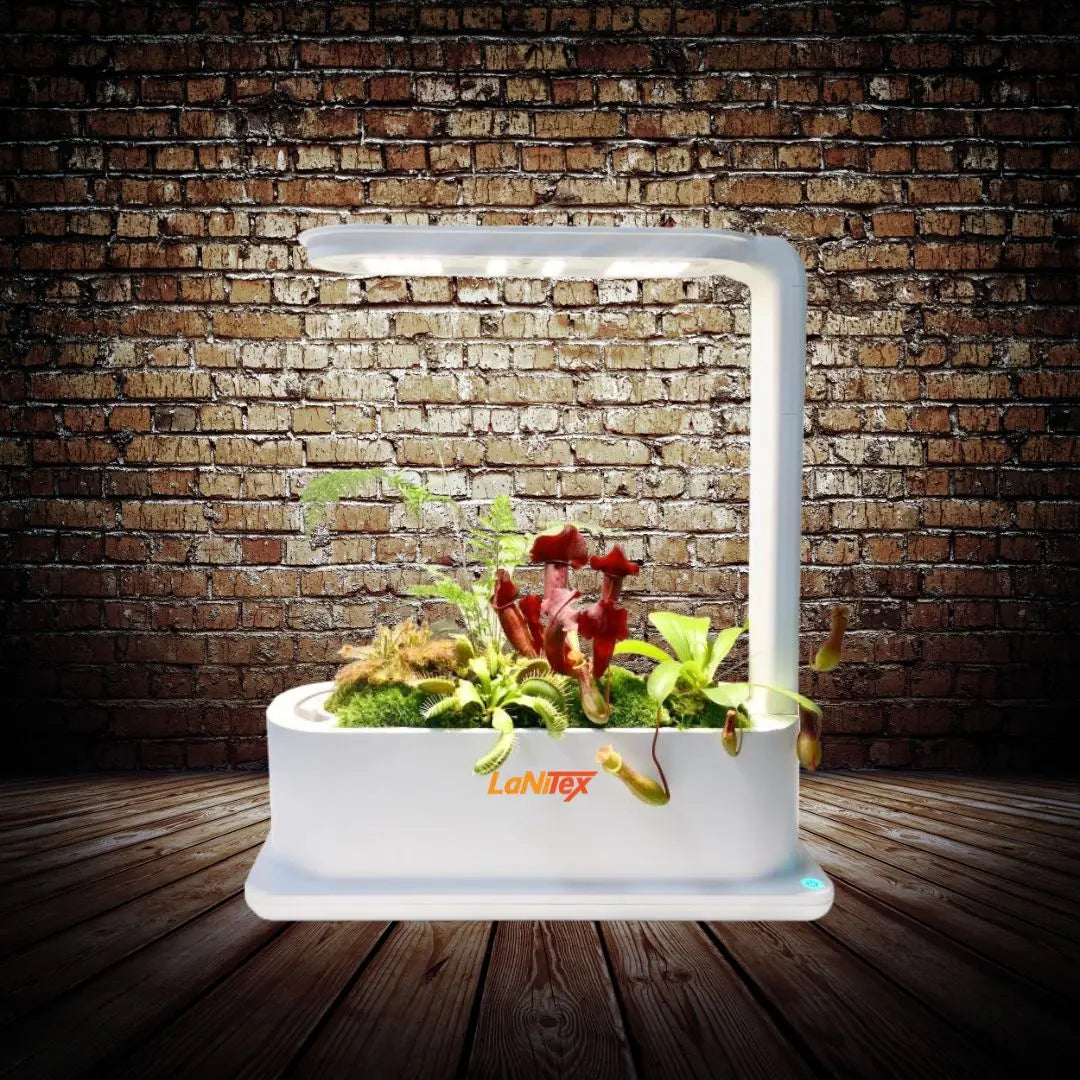
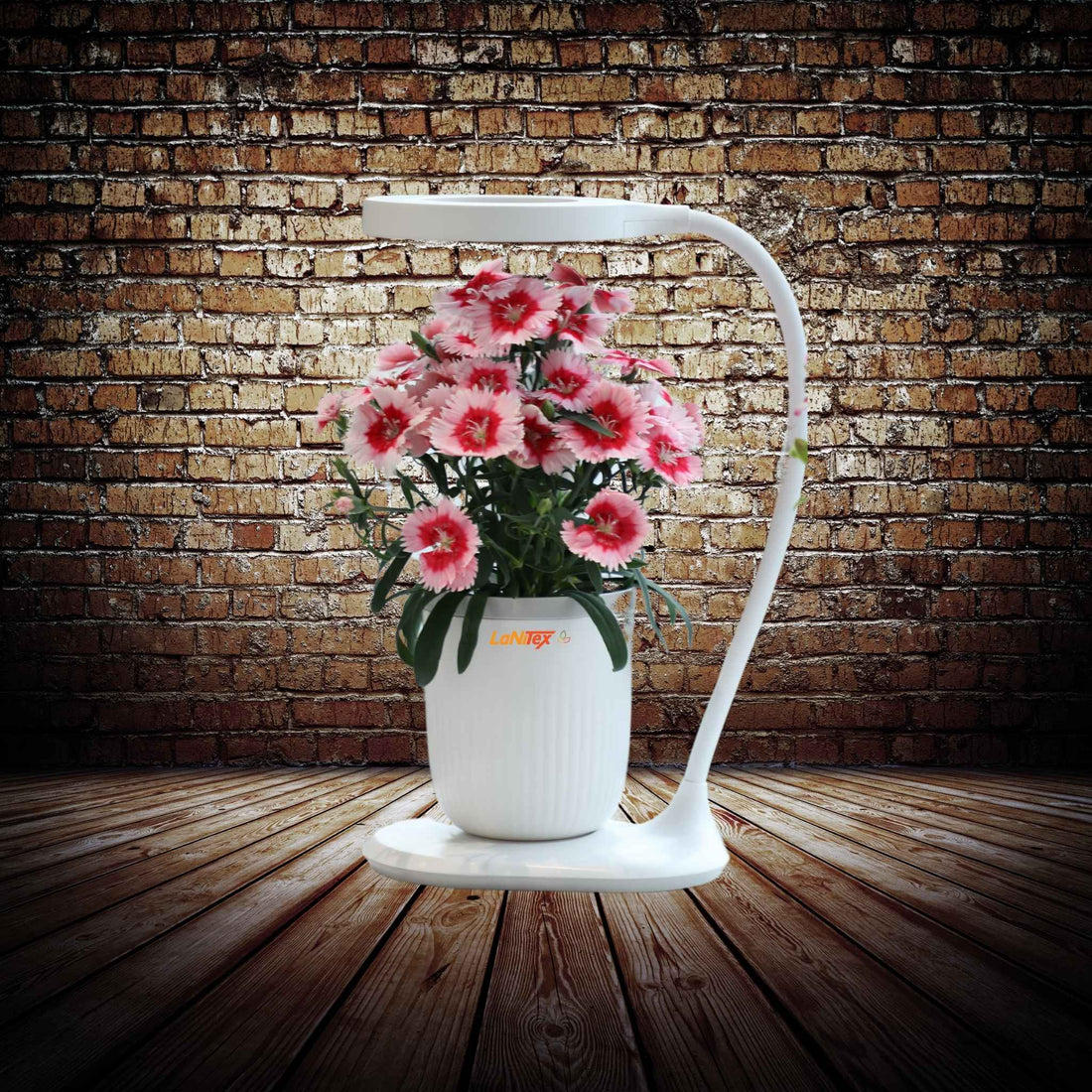
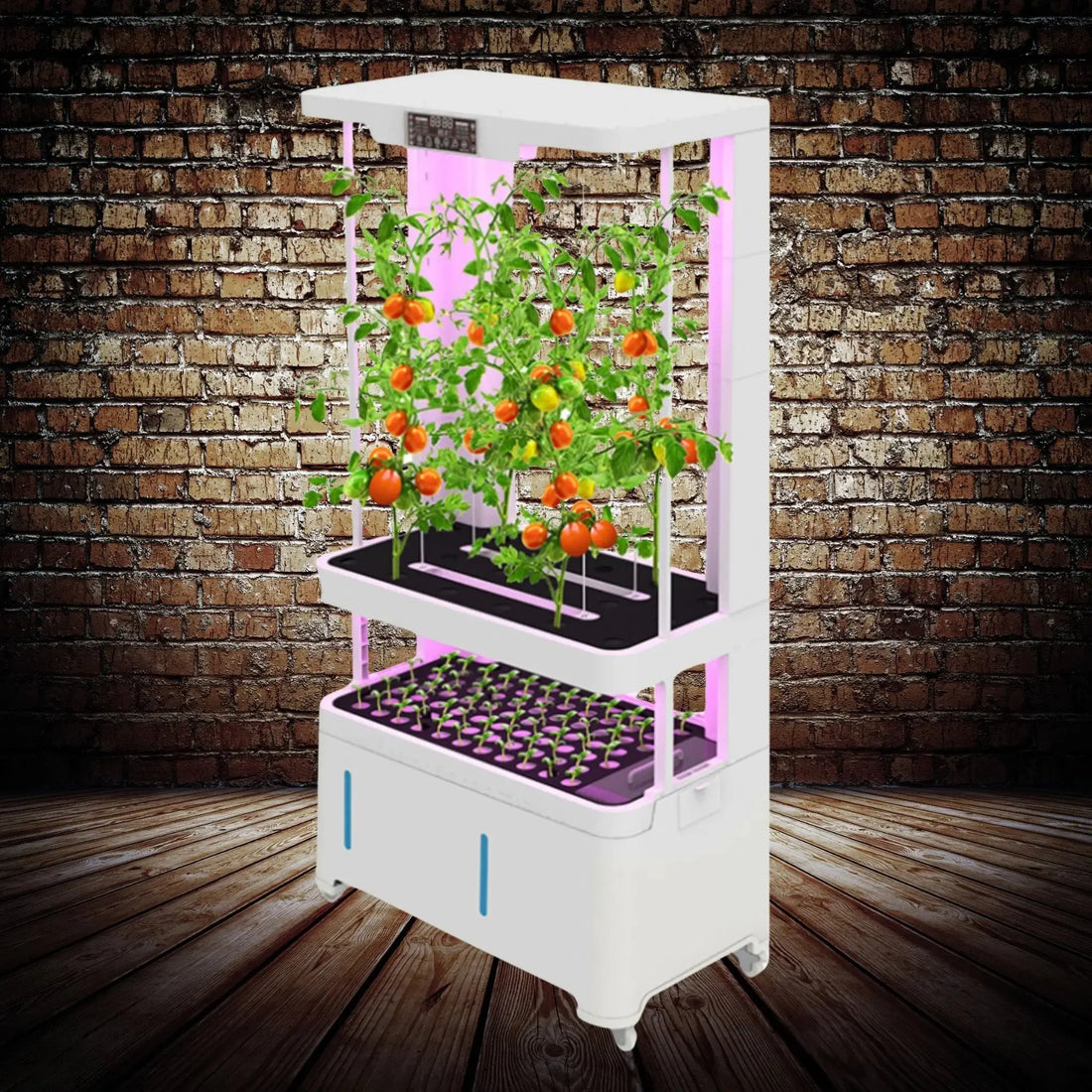
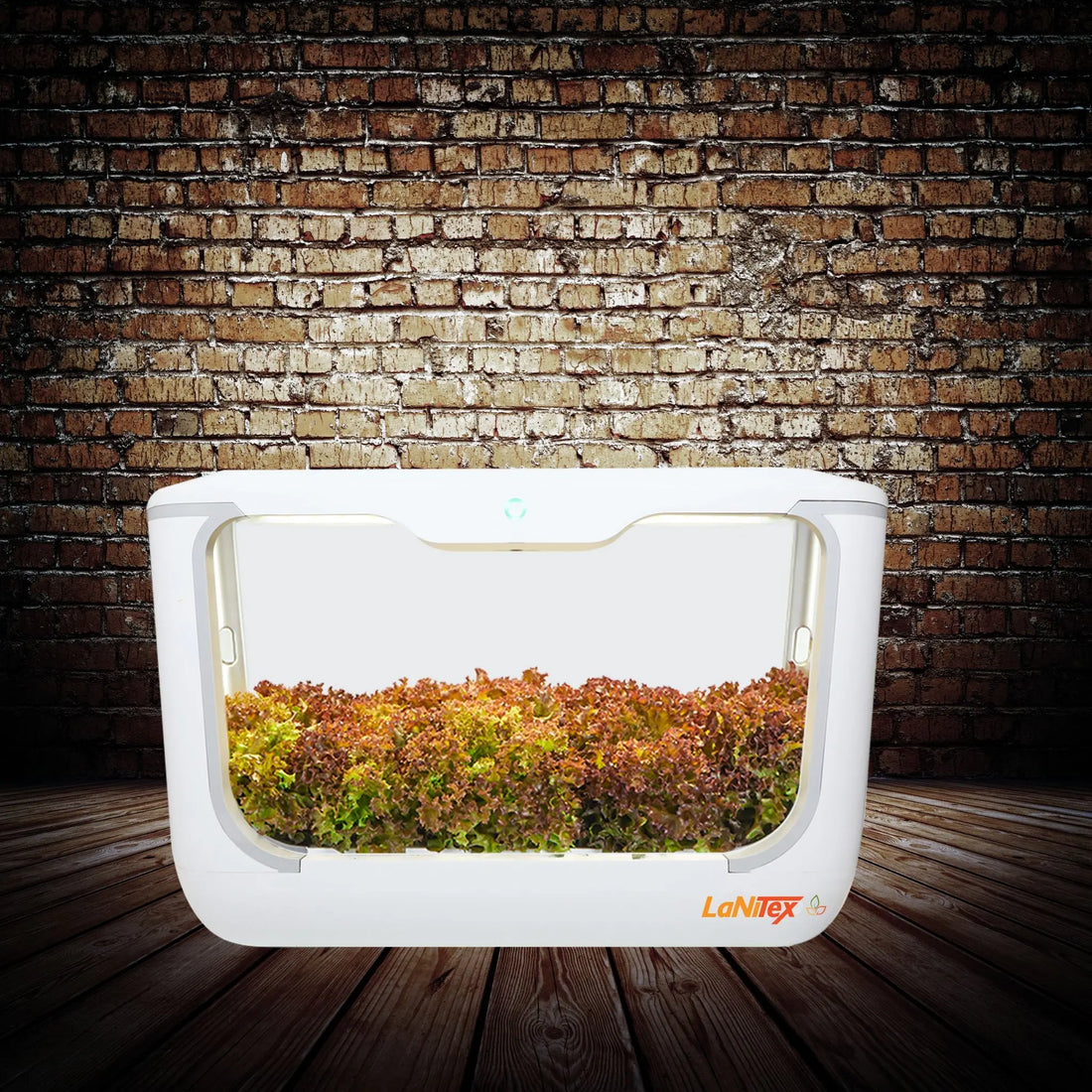
Most home growers should pick the Desktop Grow Box (3 pods, DWC-style, fits two French marigolds plus a herb) or the indoor self watering pot for a single statement plant on the bench. For a vertical display, the grow tower for apartments guide walks through tower options. Full range: indoor hydroponic systems.

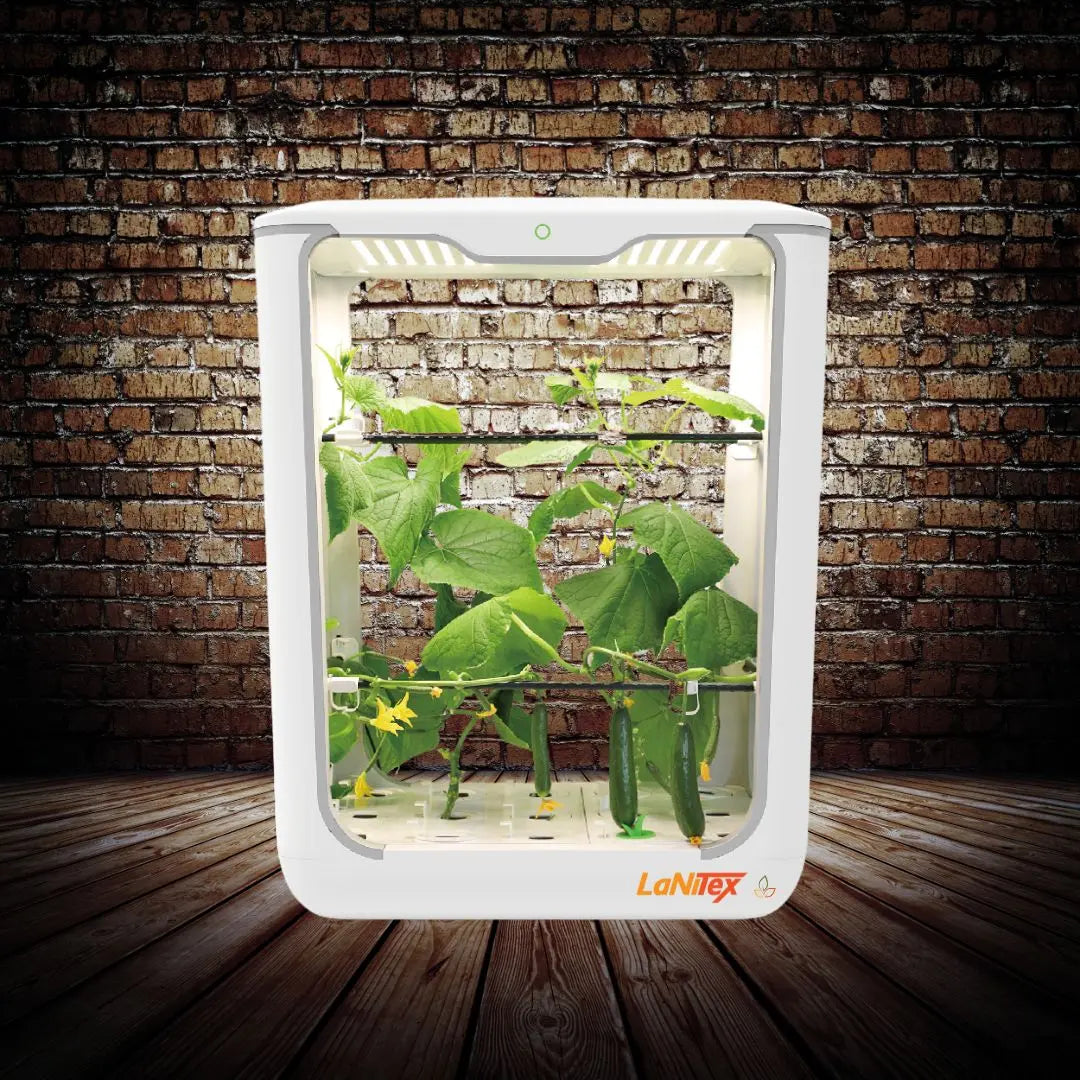
Grow a benchful of compact French marigolds indoors, whatever the season — the Grow Box runs 15 planting sites under full-spectrum LED with a steady, oxygenated feed, the controlled root zone these flowers want. You supply the seeds.
Start your marigold bench garden →Personally tested at home on the Sunshine Coast before listing.
Get a fresh grow guide like this every fortnight
Join the LaNiTex Hydro Garden newsletter for practical hydroponic, microgreen and mushroom growing tips for Australian homes. Subscribe to download a free hydroponics starter guide (PDF) and get 10% off your first order.
Join the newsletter →What nutrients do flowering hydroponic marigolds need?
Marigolds are a flowering crop, not a leafy one. The nutrient profile shifts as they mature. For the first 3-4 weeks use a balanced vegetative formula (NPK around 3-1-2). Once buds form, switch to a bloom formula higher in potassium and calcium, around 1-2-3 N-P-K with calcium at 150-200 ppm.
Calcium is the one most growers shortchange. The deficit shows up first as distorted new leaves (cupped, twisted) and weak flower stems, not generalised tip burn. Tip burn usually means salt overload or potassium imbalance. A two-part A+B mix (General Hydroponics, Flairform or Canna) keeps the calcium balanced. Mixing your own from raw salts? Dose calcium nitrate separately and test EC after.
Don't over-feed. Marigolds run on less than tomatoes. If leaves curl down at the edges, drop EC by 0.3 and flush within 48 hours.
Which pests and diseases hit hydroponic marigolds (and how marigolds protect other crops)
Indoor closed systems skip most outdoor pests, but two problems show up. Powdery mildew loves still, humid air under a tight LED canopy. You'll see a white dusty film on lower leaves first. Airflow and hygiene prevent most cases: run a clip-on fan 12 hours a day and trim the bottom 5 cm of foliage. A weekly 10% milk spray (1 part milk to 9 parts water) can help with mild infections caught early, but it won't control severe outbreaks. Escalate to a registered ornamental fungicide if the mildew spreads past the lower leaves. Keep the spray off LED panels.
Root rot is the bigger threat in any DWC or Kratky setup. Brown, slimy roots and a sour smell mean Pythium has taken hold, usually after water climbed above 26 degrees or the air pump quit. Drain the reservoir, rinse roots in fresh pH-balanced water, and refill with cooler nutrient solution. If you choose to use hydrogen peroxide, dose 2-3 ml of 3% solution per litre. Anything stronger burns roots and oxidises beneficial microbes. Better aeration and a cooler tank (below 24°C) is the more reliable fix.
The companion-plant angle is where marigolds really shine, in soil. In a greenhouse, marigolds at the edge of a hydroponic bed attract hoverflies and ladybirds that suppress aphids on neighbouring crops. Marigold root exudate (alpha-terthienyl) is well-documented as a root-knot nematode suppressant in soil-grown rotations; whether the effect transfers to hydroponic media is less clear. Don't treat marigolds in your DWC tank as a nematode insurance policy. Pick a clean media and sanitise between crops instead.
When should you start and harvest marigolds in the Australian climate?

Outdoor sowing is climate-dependent: subtropical zones (Sunshine Coast, Brisbane) sow August to March, temperate zones (Melbourne, Sydney) September to February. Indoors under hydroponics you sow year-round; only the light cycle gates you.
Seed-to-bloom timing on my Sunshine Coast bench: 7-10 days for germination, 25-35 days to the first visible bud, and 45-60 days from sowing to a fully open flower. Total cycle for a 'Bonanza Yellow' is around 8-10 weeks from seed to peak bloom.
For cut flowers, harvest early morning when blooms are two-thirds open. Cut at 45 degrees, plunge into water within 60 seconds, store cool. Vase life is 4-7 days in plain water and around 7-10 days with a commercial preservative sachet. Re-cut stems every 2 days and keep the vase out of direct sun for the upper end of that range. For a Mother's Day gift, sow 8 weeks before; put a 'Bonanza Yellow' on the kitchen bench in March and it'll peak for that early-May Sunday.
Saving your own seed is easy and worth doing, especially as marigold seed is something you buy rather than something we stock. Leave a few of the best blooms unpicked and let them brown and dry on the plant. When the base of the flower head turns papery, pull it apart and tip out the slim dark seeds attached to the spent petals. Dry them on paper for a day or two, then store them somewhere cool and dark in a labelled envelope; they stay viable for two to three years and give you the next indoor crop for nothing. One caveat: many named cultivars (the 'Bonanza' series among them) are F1 hybrids that won't grow true from saved seed, so save from open-pollinated types if you want a reliable repeat.

Ready for a full flower display? The V5.2-A Tower stacks up to 72 planting sites under full-spectrum LED with a self-watering tank, room to run marigolds alongside herbs and salad greens.
Scale up your grow →Personally tested at home on the Sunshine Coast before listing.
The full range
Find the system that fits your space


Supported in Australia - every model tested before listing.
Frequently asked questions about hydroponic marigolds in Australia
What EC and pH should I use for hydroponic marigolds in Australia?
Run pH 5.8-6.5 and EC 1.0-1.5 dS/m for seedling and vegetative growth. Lift EC to 1.8-2.0 dS/m once buds form; only very experienced growers should push beyond 2.2.
Can you grow marigolds in NFT hydroponics at home?
Yes, but pick a compact cultivar. 'Bonanza Yellow' works; African types like 'Crackerjack Mix' grow root masses too large for narrow NFT channels.
How much light do hydroponic marigolds need under LED grow lights?
11-12 hours per day at 200-400 PPFD at canopy level. Longer photoperiods delay flowering in short-day cultivars like Tagetes erecta. A balanced white LED (4000K-6500K) with red bias works best.
Which marigold varieties grow best in hydroponic systems?
Compact French cultivars: 'Bonanza Yellow', 'Golden Guardian', and smaller Tagetes patula varieties. Signet types (Tagetes tenuifolia, the 'Gem' marigolds) are smaller still and ideal for a bench. 'Crackerjack Mix' (Tagetes erecta) works above 70 cm headroom.
How long do hydroponic marigolds take to flower from seed?
7-10 days to germinate, 25-35 days to first bud, 45-60 days to first open bloom. Peak display around week 8-10 for French varieties.
What nutrient solution is best for marigolds in hydroponics?
A two-part bloom formula emphasising potassium and calcium. General Hydroponics Flora, Canna Flores or Flairform Bloom all work. Avoid vegetable formulas once buds appear.
Why are my hydroponic marigold leaves turning yellow?
Usually nitrogen shortage (older leaves yellow first) or pH drift above 6.8 locking out iron (newer leaves pale yellow with green veins). Check pH first, then EC, then light.
Can marigolds be grown in Kratky systems in Australian climates?
Yes, one of the simplest plants for Kratky, especially compact French cultivars. A 4-litre jar holds a 'Bonanza Yellow' seedling to bloom. Best in shaded indoor spots where water stays under 24 degrees.
Do marigolds repel pests, and which ones?
Yes, but mainly in soil and greenhouse beds, not inside a sealed hydroponic tank. French marigold (Tagetes patula) root exudate suppresses root-knot nematodes in soil rotations, and the open flowers attract hoverflies, lacewings and ladybirds that prey on aphids near vegetable beds like tomatoes. In a small closed indoor system the repellent effect is minimal, so pick clean media and sanitise between crops instead.
When should you plant marigolds in Australia?
Outdoors, sow in subtropical zones (Sunshine Coast, Brisbane) from August to March, and in temperate zones (Melbourne, Sydney) from September to February. Under indoor hydroponics you can sow year-round, since only the light cycle gates flowering. Expect 7-10 days to germinate and 45-60 days from sowing to a fully open bloom.
Are marigolds perennial or annual?
Marigolds (Tagetes) are grown as annuals: they complete their life cycle in a single season and won't survive a frost outdoors. Indoors the upside is that a controlled hydroponic system has no frost, so you simply resow every few months and keep blooms coming year-round instead of waiting for spring.
About the writer
Laszlo Bulatko founded LaNiTex Hydro Garden in December 2024 on the Sunshine Coast. Before hydroponics he spent 15 years in sales, marketing and brand development across the Hungarian fishing tackle market, working with brands like Okuma, Mustad and Abu Garcia. Every product in the LaNiTex catalogue was personally tested at home on the Sunshine Coast before listing, including the Desktop Grow Box used for the marigold trials above. Read more on the about Laszlo page.
Sources
- Department of Agriculture and Fisheries Queensland - Hydroponics (pH, EC, water-temperature ranges for AU subtropical hydroponics)
- Agriculture Victoria - Protected Cropping (PPFD and indoor flowering crop guidance)
- NSW DPI - Hydroponic Greenhouse Production (flowering-stage nutrient profiles)
- Royal Horticultural Society - Tagetes Marigold Growing Guide (cultivar characteristics for Tagetes erecta and Tagetes patula)
- Michigan State University - Marigold Production (PDF) (photoperiod classification, short-day, ≥13 h delays flowering)
- PubMed Central PMC9515493 - Marigold cut-flower stem quality vs photoperiod (stems unharvestable at ≥13 h)