
Plenty of leaves, almost no flowers. That is the usual complaint with the cosmos flower in Australia, and it is fixable. This guide covers timing by state, sowing, feeding, and how to coax more blooms from Cosmos bipinnatus, indoors or out.
Quick answer: Cosmos is a fast-growing annual in the daisy family (Asteraceae), grown from seed after the last frost. Give it warm soil, full sun and lean feeding, and the first flowers open roughly 7 to 12 weeks later. Over-feeding is the most common reason plants stall on leaves.
Key takeaways:
- Plant cosmos after the last frost. In warm parts of Queensland you can sow across most of the year.
- Feed lightly. An optimal nitrate level helps flowering. But too much delays it (Ye et al., 2021).
- Pinch seedlings once and deadhead often for more blooms over a longer season.
- Cosmos grows indoors under LED. That means Sunshine Coast and Brisbane growers can cut flowers off-season.
When to plant cosmos in Australia
Cosmos is frost-tender, so the safe planting window opens once frost has passed. The Bureau of Meteorology notes that extensive areas in northern Australia are generally frost free, while frost potential in other areas increases with elevation (BOM, 1976-2005 climatology). So that single fact sets your planting calendar.
By state:
- Queensland and northern NSW: sow spring through autumn; frost-free coastal zones suit sowing across most of the year.
- Sydney, Melbourne and Adelaide: sow September to December, after the last frost.
- Tasmania and the tablelands: wait until October or November.
- Perth and the WA coast: sow August to November, before peak summer heat.
Indoors, any month: under lights, frost stops mattering. In practice, a warm indoor system lets you start cosmos on the Sunshine Coast or in Brisbane at any time of year.
How do you sow cosmos seed?
Cosmos is one of the easiest annuals to raise from seed. Sow shallow, about 5 mm deep. Then keep the medium warm and just moist. Then germination usually takes 7 to 14 days.

Direct sowing: scatter seed where the plants will grow, then thin the seedlings to their final spacing. And direct-sown cosmos skips transplant shock and often catches up to earlier indoor starts.
Raising seedlings: start in trays for a head start in cooler zones. Then move the plants out once frost risk has passed and they carry two true leaves.
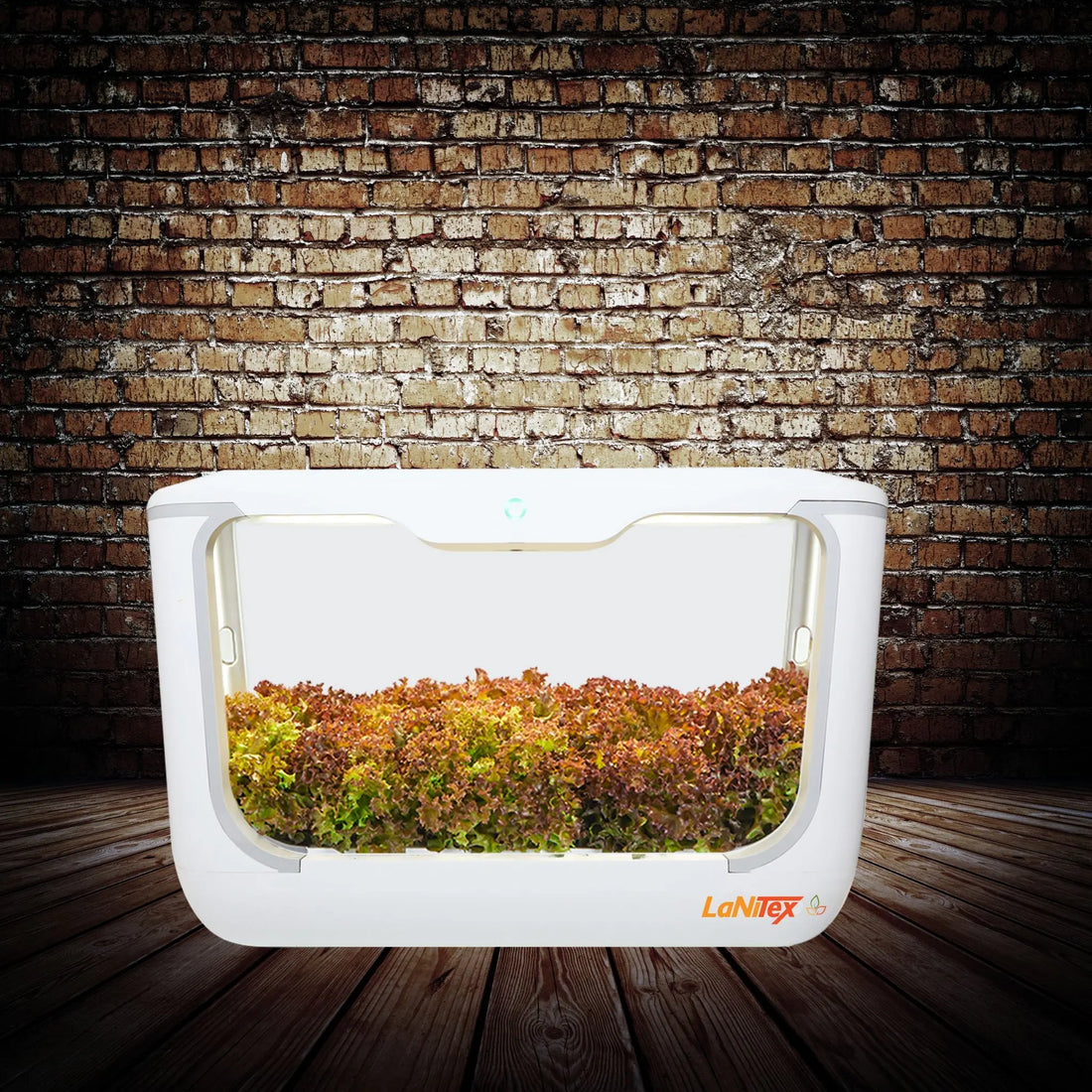
Starting on a cotton medium: indoors, cosmos germinates on a cotton pad in a hydroponic unit, then moves into a substrate for grow-out. That means propagation and growing stay in one place.
Where do cosmos grow best?
Full sun and free-draining ground. That is what cosmos wants. And it copes with poor, dry soil better than most flowers.

Position and medium: give plants at least six hours of direct sun a day. Rich, heavy soil pushes leafy growth at the expense of flowers. Instead, lean ground actually helps here.
How far apart: space plants 30 to 45 cm apart. So crowded cosmos stretch, lean and compete for light, which is a common cause of floppy stems.
Companion planting and pollinators: cosmos draws bees and hoverflies. And it earns a spot beside vegetables. See our guides to growing marigolds in Australia and growing zinnias in Australia for companions on the same schedule.
Why do my cosmos have leaves but no flowers?
Leaves but no flowers is the single most common cosmos complaint, and the cause is usually food. Cosmos flowers best on a lean diet. Push it with rich soil or strong nutrients and it does exactly what you do not want: it grows lush foliage and holds back its blooms.
So the mechanism is nitrogen. A 2026 study on marigold, a close relative of cosmos in the daisy family, found that high nitrogen drives a plant to put growth into leaves and flowers while shrinking its root system (Peralta-Sanchez et al., 2026). So that explains the leafy, top-heavy plant. But on its own, it does not mean feeding suppresses flowers; the flowering effect comes from a separate finding. In a 2021 study, researchers found that an optimal level of nitrate helps flowering, and that nitrate above or below that level delays it (Ye et al., 2021). So both starving and overfeeding cost you blooms.
In a hydroponic system, then, keep the nutrient solution lean, as with most flowering ornamentals. Oklahoma State University Extension puts hydroponic ornamentals in a modest band, with greenhouse rose at a nutrient strength reading (EC) of 1.5 to 2.5 and a pH of 5.5 to 6.0 (OSU Extension, HLA-6722). So for cosmos, aim for an EC around 1.5 to 2.0 and hold the pH, which is how acidic the water is where lower means more acidic, near 5.8 to 6.2. In practice, lean, steady feeding beats heavy feeding every time.
Get a fresh grow guide like this every fortnight
Join the LaNiTex Hydro Garden newsletter for practical hydroponic, microgreen and mushroom growing tips for Australian homes. Subscribe to download a free hydroponics starter guide (PDF) and get 10% off your first order.
Join the newsletter →When do cosmos flower, and how do you get more blooms?
From sowing, cosmos usually flowers in about 7 to 12 weeks, then keeps going until frost or heat ends the season. Warmth and long days bring it on. And a few simple habits bring more of it.

Pinching: pinch out the growing tip when a seedling is 20 to 30 cm tall. So one pinch makes the plant branch, and more branches mean more flowers.
Deadheading: cut spent flowers before they set seed. That tells the plant to keep producing rather than shut down. And it can extend the display by weeks.
Growing for cut flowers: cosmos is a strong cut flower. Then harvest in the cool of the morning, when the buds are just opening, and change the vase water often. And cutting regularly has the same effect as deadheading: more stems, over a longer window. To keep cutting through the cooler months when cosmos fades, try growing stock flowers indoors for fragrant, long-lasting stems.

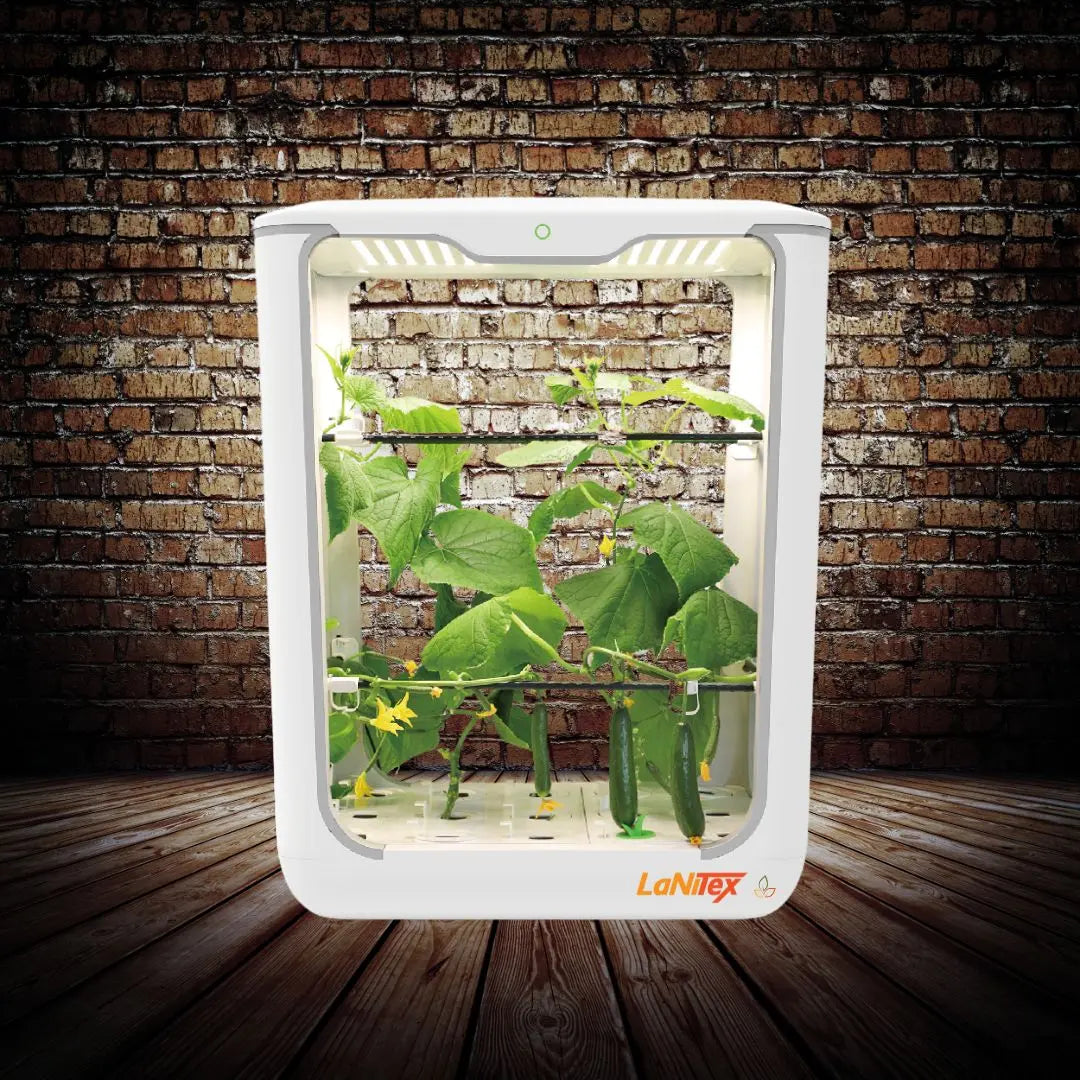
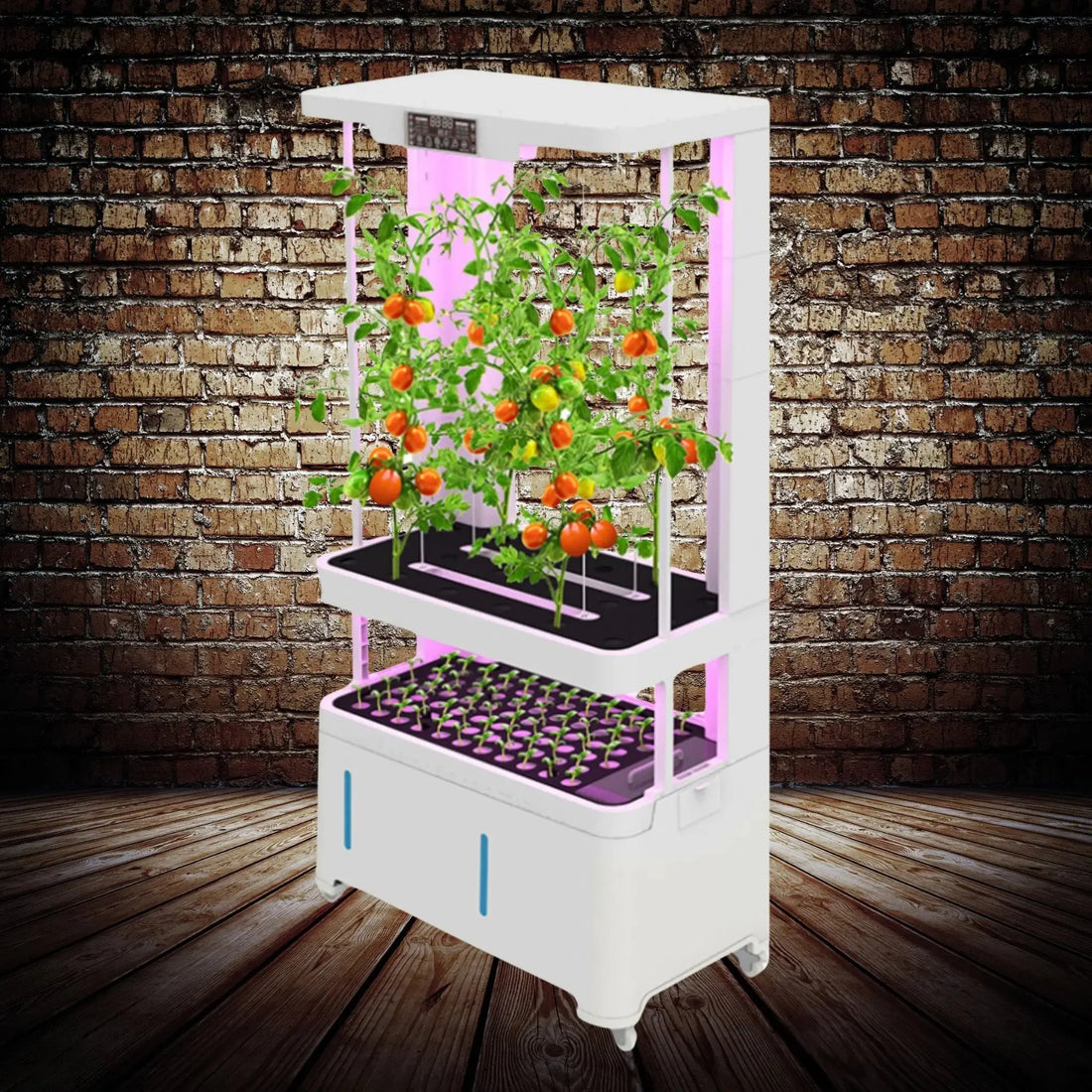
Grow cosmos indoors and cut flowers off-season, when the garden is bare. The tall frame and a raised LED give tall stems the headroom they need, and you supply the seed and the light schedule.
Grow cosmos indoors →Personally tested at home on the Sunshine Coast before listing.
Common cosmos problems
Cosmos is tough. But three problems catch growers out, especially in Queensland humidity.
Powdery mildew, aphids and leggy growth: powdery mildew shows as a white dusting on leaves in warm, damp weather. Then improve airflow and avoid wetting the foliage. Also, aphids cluster on soft new tips; a firm spray of water or a soap solution usually clears them. Leggy, floppy growth traces back to too little light or too rich a diet. And give full sun, space plants properly and feed lean.
Does cosmos self-seed in Australia? Yes. Left to set seed, cosmos drops seed freely and often returns the next season, particularly Cosmos sulphureus in warm zones. That is handy in a garden bed. But it means deadheading matters if you want to keep the patch contained.
Cosmos varieties: bipinnatus, sulphureus and chocolate cosmos
So three names cover most of what Australians grow.
Cosmos bipinnatus: the common garden cosmos. Li et al. (2019) describe Cosmos bipinnatus as a popular ornamental plant in the Asteraceae family. It gives tall, feathery plants in white, pink and crimson. And it is the easiest to grow from seed.
Cosmos sulphureus: sulphur cosmos. Shorter, heat-loving, in orange and gold, and the most likely to self-seed in warm Queensland gardens.
Chocolate cosmos: Cosmos atrosanguineus is a different species, tuberous, tender and scented like chocolate. It is usually bought as a plant rather than seed. And it is not a beginner crop. So treat it as a specialty, not a starting point.
Growing cosmos indoors and hydroponically
You do not need a garden to grow cosmos. So indoors, under light, it flowers off-season, which is the whole point for apartment growers on the Sunshine Coast and in Brisbane.
Apartment growing: cosmos is tall. That means it suits a system built for height rather than a benchtop of herbs. Then start seed on a cotton medium, grow it on in substrate, and feed lean. How to grow amaranth flowers covers another tall bloom that suits the same setup.
Light and photoperiod under LED: cosmos responds to day length. Spall and Lopez (2022), reporting earlier work by Warner (2006), found that five nine-hour short days brought cosmos flowering forward by 23 days. A 2025 review in Botanical Studies reports that LED grow-light systems can induce flowering in greenhouse ornamentals (Cai et al., 2025). Under lights you set both. In practice, blooms are not tied to the season. Cosmos flowers year-round indoors. But it needs that light management. So that is the trade-off against simply sowing outside in spring.
The full range
Find the system that fits your space


Supported in Australia - every model tested before listing.
FAQ
Is cosmos flower annual or perennial?
Most garden cosmos, including Cosmos bipinnatus and Cosmos sulphureus, are annuals: they grow, flower and die in one season. They often self-seed. So a patch returns year after year even though each plant is annual. Chocolate cosmos (Cosmos atrosanguineus) is the exception, a tender perennial grown from a tuber.
How do you grow cosmos flowers?
Four steps. Sow seed after the last frost, about 5 mm deep. Give the plants full sun and space them 30 to 45 cm apart. Then feed lightly, because rich food gives leaves rather than flowers. Then pinch young plants once and deadhead often for a long run of blooms.
How tall do cosmos flowers grow?
Height depends on the type. Tall Cosmos bipinnatus varieties commonly reach 1 to 1.5 metres, and some climb higher in good conditions. Cosmos sulphureus is usually shorter, around 0.5 to 1 metre. The tall types stretch. That means they benefit from support and a system with headroom indoors.
How do you plant cosmos flower seeds?
Sow seed about 5 mm deep in warm, moist soil or a seed-raising mix. Then firm it gently. Germination usually follows in 7 to 14 days. Then outdoors, sow direct once frost has passed; indoors, start on a cotton pad and move the seedlings on once they carry their first true leaves.
Can you grow cosmos flowers in pots?
Yes. Choose a deep pot, at least 25 to 30 cm, because cosmos roots run down. Then use a free-draining mix, place it in full sun and stake taller varieties. Pots dry out faster than beds. So check moisture often, but keep the feeding light.
Can you grow cosmos hydroponically in Australia?
Yes, and it is a good way to get cut flowers off-season. And grow cosmos in a system with headroom, start seed on a cotton medium, then hold the nutrient strength (EC) modest and the pH slightly acidic. So manage the light, and you can flower cosmos on the Sunshine Coast or in Brisbane year-round.
Changelog
- 19 July 2026: Full rewrite. Added Australian state-by-state planting windows, a research-based feeding section, six FAQs and a Sources list. Reconciled the growing figures and removed earlier unsourced health claims.
About the writer
Laszlo Bulatko is the founder of LaNiTex Hydro Garden, based on the Sunshine Coast in Queensland. Before hydroponics, he spent 15 years in the Hungarian fishing-tackle trade in sales, marketing and brand development. He began growing indoors at home in Sippy Downs and saw fast results, with microgreens ready in under a week and lettuce in 25 to 35 days. Every system he sells was hand-picked and tested at home before it was listed. He also runs Term-Grow, placing grow boxes in Queensland primary school classrooms so kids grow real food during term. Have a cosmos question? Email him through the LaNiTex contact page; he reads every message. ABN 47 682 768 967.
Sources
- Ye, J., et al. (2021). Nitrate and flowering regulation. Frontiers in Plant Science. https://www.frontiersin.org/journals/plant-science/articles/10.3389/fpls.2021.629857/full
- Spall, C.E. & Lopez, R.G. (2022). Photoperiod and flowering in bedding plants (reporting Warner, R., 2006, Acta Horticulturae 711:267-272). Frontiers in Plant Science. https://pmc.ncbi.nlm.nih.gov/articles/PMC9515493/
- Li, W., et al. (2019). Cosmos bipinnatus as an ornamental plant in the Asteraceae. International Journal of Molecular Sciences. https://pmc.ncbi.nlm.nih.gov/articles/PMC6566773/
- Bureau of Meteorology. Maps of average conditions: frost (1976-2005 climatology). http://www.bom.gov.au/climate/maps/averages/frost/
- Cai, Y., et al. (2025). LED grow-light systems and flowering induction in greenhouse ornamentals. Botanical Studies. https://pmc.ncbi.nlm.nih.gov/articles/PMC12708503/
- Peralta-Sanchez, M.G., Gomez-Merino, F.C., Hernandez-Andrade, E.E. & Trejo-Tellez, L.I. (2026). Nitrogen and biomass partitioning in Tagetes erecta (marigold). Nitrogen 7(1):26. https://www.mdpi.com/2504-3129/7/1/26
- Oklahoma State University Extension. Electrical Conductivity and pH Guide for Hydroponics (HLA-6722). https://extension.okstate.edu/fact-sheets/electrical-conductivity-and-ph-guide-for-hydroponics