
Not sure which one? Both are the same hydroponic grower inside, so pick on finish: black metal suits a modern kitchen, wood-grain suits a bench it will live on. Two starter mats come in the box. Watch one go from seed to harvest in 8 days → Compare the two kits →
3 products
-

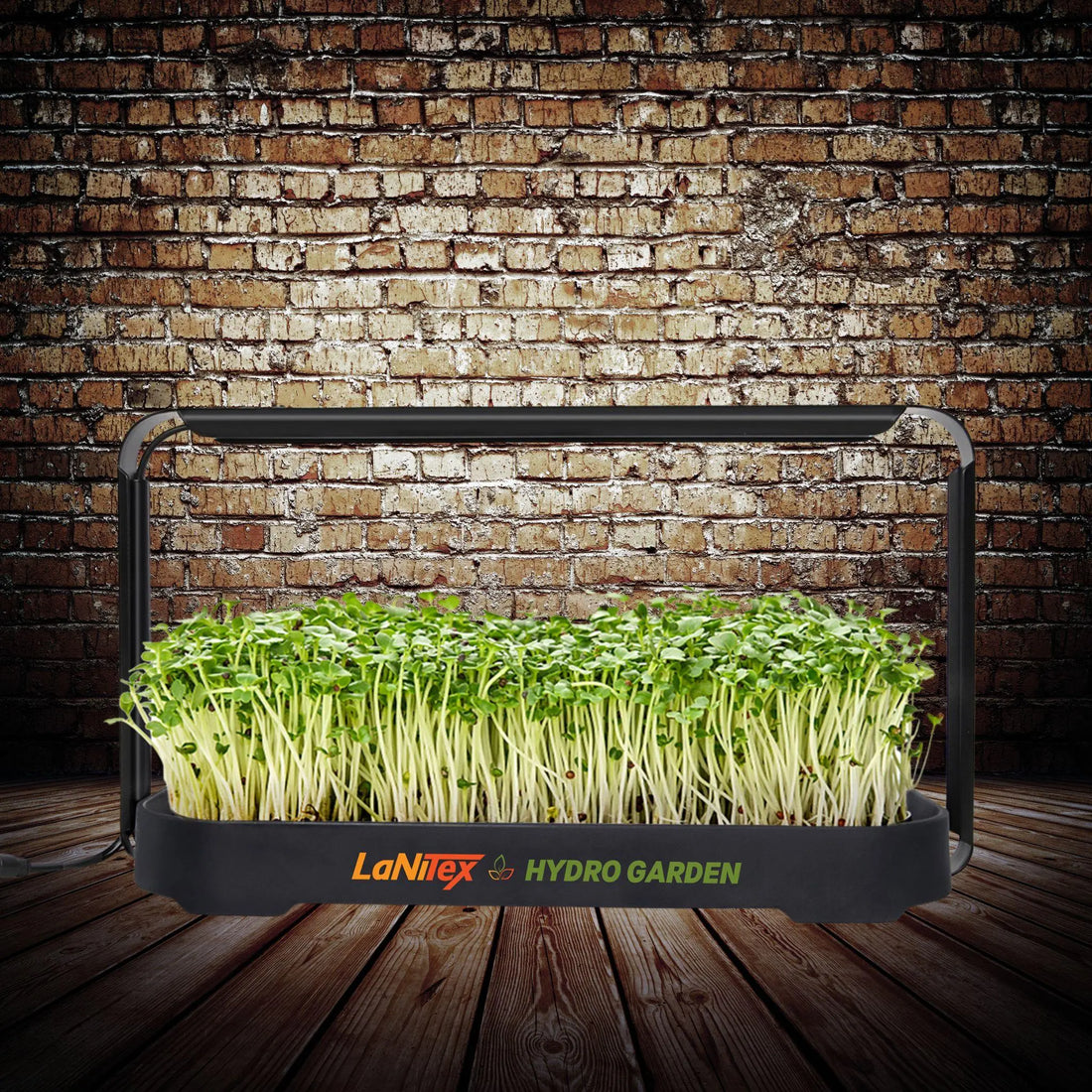 Smart Microgreen Growing Kit – Black MetalVendor:Smart Microgreen Growing Kit – Black MetalLaNiTex Hydro Garden
- Regular price
-
$129.00 AUD - Regular price
-
- Sale price
-
$129.00 AUD
Quick view
-

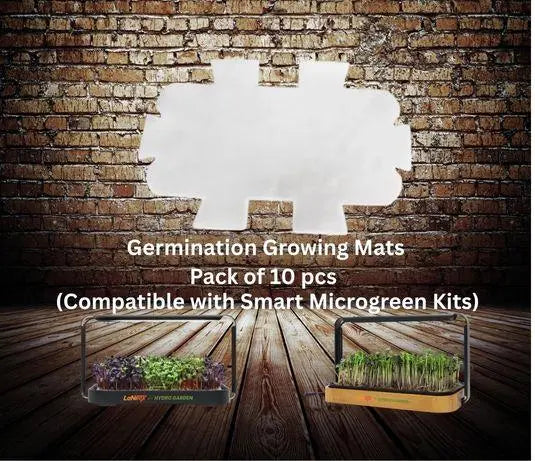 Germinating Growing Mats – 10 PackVendor:Germinating Growing Mats – 10 PackLaNiTex Hydro Garden
- Regular price
-
$14.90 AUD - Regular price
-
- Sale price
-
$14.90 AUD
Quick view
-
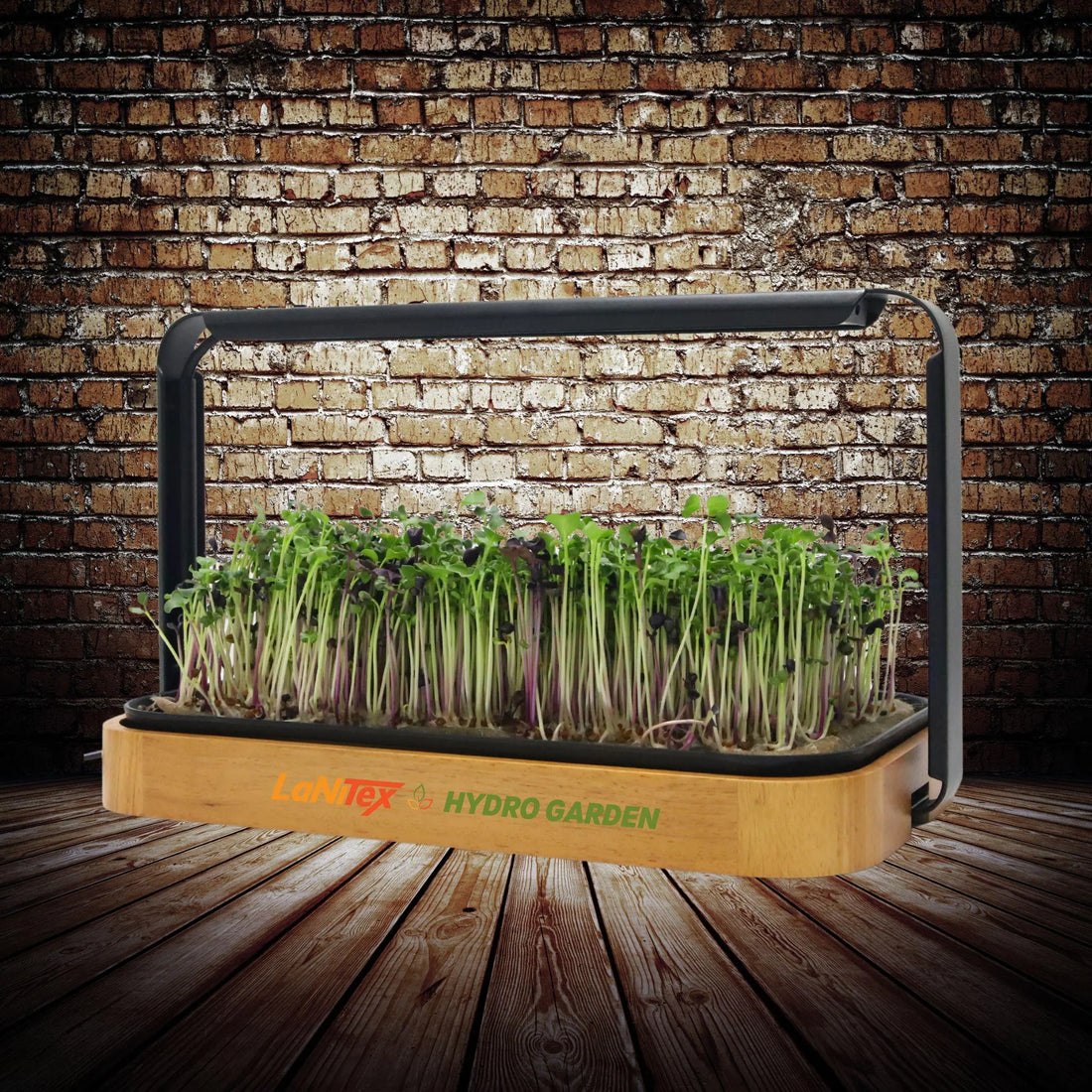
 Wooden Microgreen Kit – Smart Self-Watering Grow KitVendor:Wooden Microgreen Kit – Smart Self-Watering Grow KitLaNiTex Hydro Garden
- Regular price
-
$189.00 AUD - Regular price
-
- Sale price
-
$189.00 AUD
Quick view


Watch It Grow
Unboxing to harvest in eight days, filmed in the black metal kit: assembly, sowing, day-by-day progress, then the two-second root rinse. Because both microgreen kits share the same growing engine, the wooden one follows this routine exactly.
Buy With Confidence
What Can You Grow in Microgreen Kits?
21 varieties grow in these microgreen kits, and every one has its own LaNiTex growing guide written for Australian conditions: sowing density, watering, light and when to cut. That is 21 guides, free to read, so whatever you decide to sow next is already covered rather than left to the back of a seed packet. Most varieties are ready in 7 to 14 days, though the slower herbs take longer.
Fast and forgiving — where to start, because they germinate reliably even if you sow unevenly. Radish and broccoli are typically ready in 7 to 10 days.
Bigger, heartier greens — sunflower and pea shoots usually take 10 to 14 days, but they give the biggest yield per tray.
Asian greens — mild, tender and quick, so they suit kids and first-timers.
Herbs and slower varieties — more patience, though more flavour once they arrive.
For the pets — the same microgreen kits, a different job.
Compare all 26 microgreen varieties (21 have a full LaNiTex guide) →
Ready to start? Both kits grow every variety above →
Harvest stage cross-checked against Utah State University Extension: “Plants are ready to harvest as soon as you begin to see the first true leaves, or sooner.”
Growing Microgreens, Answered
Can you grow microgreens without soil?
Yes. That is exactly how these microgreen kits work. Seed goes straight onto a damp polyester fibre mat, and because the mat wicks water up from the reservoir below, the roots grow down into the fibre. So there is no potting mix and nothing to rinse off at harvest, and far less mould than a soil or potting-mix tray. Once you have cut above the mat, drop in a fresh one and sow again.
What equipment do you need to grow microgreens?
A tray, a growing medium, water, light and seed, plus scissors to harvest: that is the whole microgreens setup. LaNiTex microgreen kits combine the first four into one appliance: self-watering reservoir, soil-free fibre mat, timed full-spectrum LED and a blackout germination dome. So the only supplies you add are untreated seed and replacement mats, and two starter mats already come in the box.
Do microgreen kits come with seeds?
Not these ones, by design. LaNiTex microgreen kits are the growing hardware: self-watering reservoir, soil-free fibre mat, timed full-spectrum LED and a blackout germination dome. Seed stays your choice, so you sow the varieties you actually eat, in untreated seed, at whatever quantity suits you. Two starter mats come in the box, and all 21 varieties on this page have a full LaNiTex growing guide covering how thickly to sow and when to cut.
Are microgreens and sprouts the same thing?
No. Sprouts are germinated seeds eaten whole (root, seed and shoot), and they are usually grown in a jar without light. Microgreens, though, are grown on a medium under light. Then once the first true leaves start to appear you cut the stem above the mat, so you eat the stem and leaves only.
How often do you water microgreens?
In a self-watering microgreen kit you top up the reservoir instead of watering the plants, usually every three to four days, or whenever it drops below halfway. But once the LED is on, avoid watering from above, because water sitting on the leaves is a leading cause of mould.
What are the best microgreens to grow first?
Radish and broccoli. They germinate reliably, they tolerate uneven sowing, and they are typically ready in 7 to 10 days. Sunflower and pea shoots are the step up: bigger yields and a sweeter, crunchier result, though they usually take 10 to 14 days. Each one has a full growing guide above.
Where can you buy microgreen kits in Australia?
LaNiTex ships microgreen kits Australia-wide from the Sunshine Coast, Queensland. Both microgreen kits and the replacement mats are on this page. Every unit went through a full growing run before it joined the range, so it also carries a 12-month warranty.
More microgreen kit questions?