
By next weekend's salad you could be snipping sweet, crunchy pea tendrils off your kitchen bench - one of the easiest microgreens to grow at home in Australia, with two harvests from a single sowing.
Quick answer: To grow pea shoots in Australia (also called pea microgreens), soak Pisum sativum pea seeds for 8-12 hours overnight, sow densely on a damp growing mat or fine seed-raising mix, cover dark for 2-3 days, then move to bright light or LEDs. Harvest at 10-16 days when tendrils appear, around 7-10 cm tall. The same tray often regrows for a second flush.
At a glance
| Field | Detail |
|---|---|
| Species | Pisum sativum (shelling, snap or snow pea varieties) |
| Days to harvest | 10-16 days |
| Difficulty | Easy - one of the most forgiving microgreens for beginners |
| Taste | Sweet, classic pea flavour, tender stems with crunchy tendrils |
| Best uses | Salads, stir-fries, avo toast, garnish, sandwich filler |
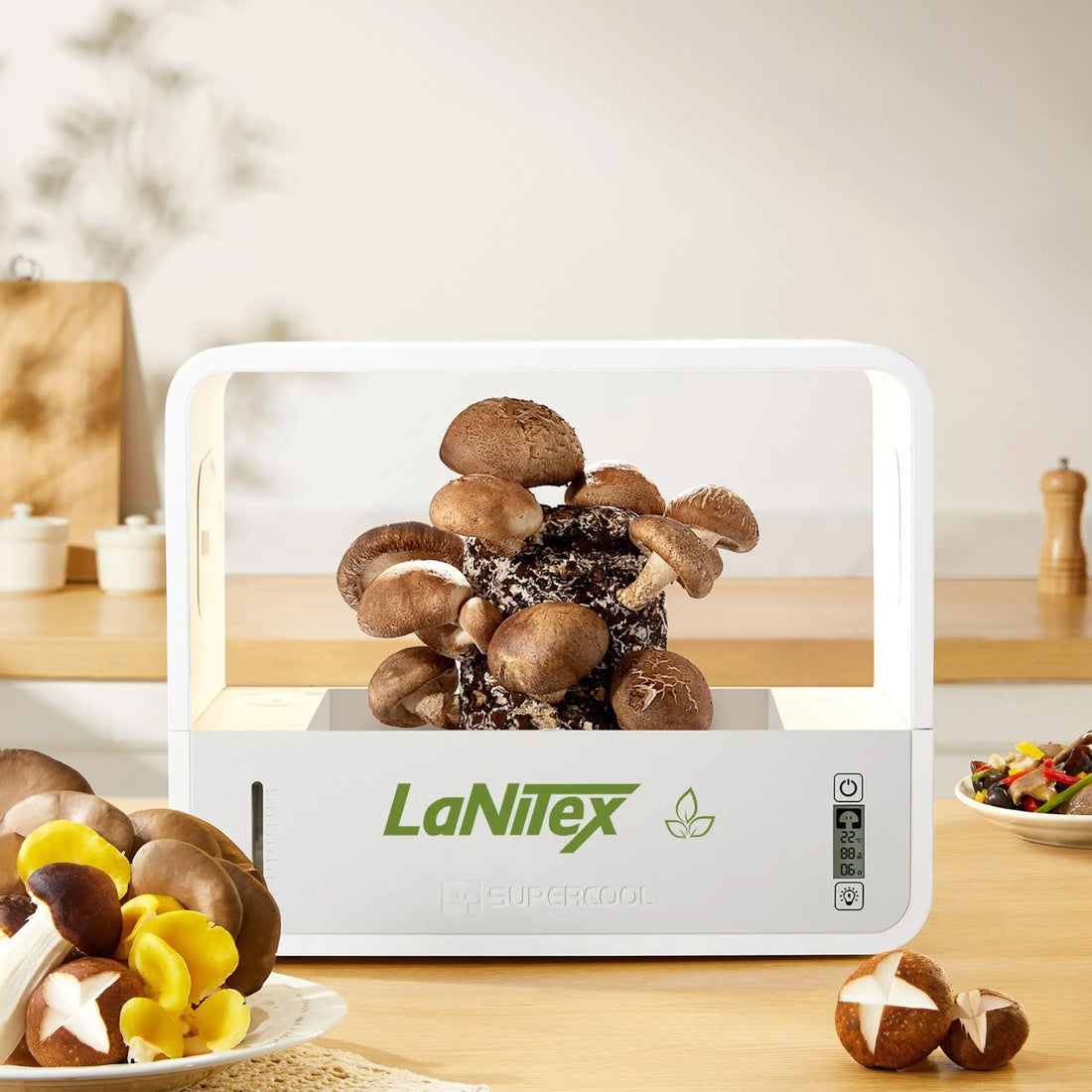
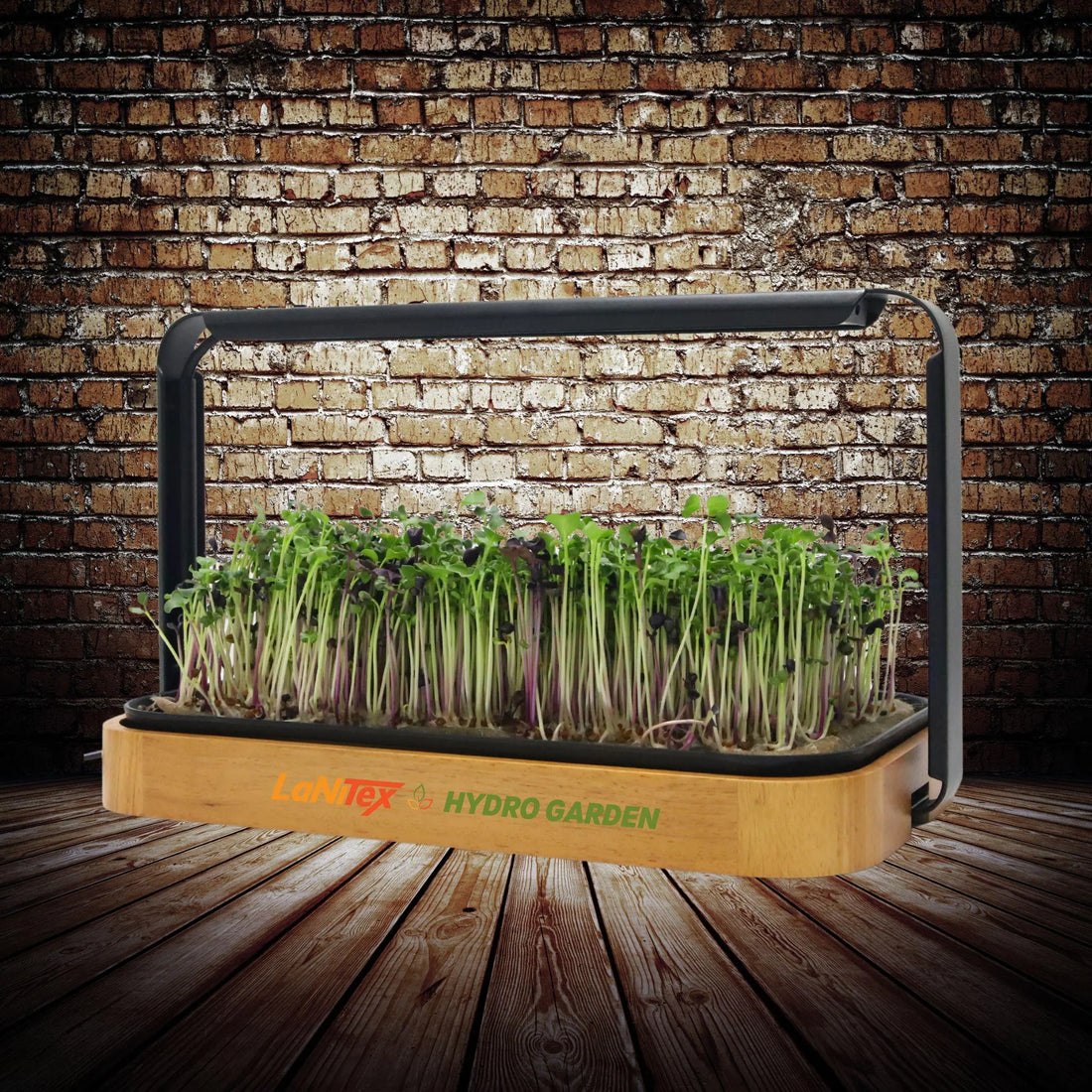
| Recommended kit | Smart Microgreen Kit - choose your style: microgreen growing kit (Black Metal) or wooden microgreen kit (same kit, different tray aesthetic) |
Pea shoots vs pea microgreens vs sprouted peas - what's the difference?
Pea shoots and pea microgreens are the same thing - young pea plants (Pisum sativum) grown in a tray and cut above the medium once they show leaves and curling tendrils, usually at 10-16 days from sowing. Sprouted peas are different: germinated seeds eaten just after the root appears, grown in a jar without any medium, and harvested before the first leaf opens.
Why the two names for the same crop? Australian cafes, grocers and home growers tend to use "pea shoots" more often than "pea microgreens" - and that preference is reflected in search volume too, with "pea shoots" showing substantially higher monthly Australian search volume than "pea microgreens" across the major keyword tools. US-focused content (such as On The Grow's pea guide) leans the other way. This article uses both terms interchangeably so you can find what you need either way.
For a broader chooser across 26+ varieties grown well in Australia, see our companion guide to microgreen varieties.
Why grow pea shoots at home in Australia?
According to the Australian Bureau of Statistics 2021 Census, "70 per cent were separate houses, 13 per cent were townhouses and 16 per cent were apartments" - which means almost one in three Australian households live in attached dwellings without a backyard. Pea shoots solve that constraint elegantly: a single tray on a kitchen bench produces enough for several salads, costs a fraction of supermarket pea-shoot punnets, and reaches harvest faster than almost any vegetable you can grow.
The flavour is the second reason to grow them. Supermarket pea shoots can be several days old by the time they reach the punnet shelf. A home-grown bench-snipped pea shoot, ten minutes from plate, is sweeter, crunchier and noticeably bright green - the kind of flavour difference that gets kids actually eating something they helped grow.
The third reason is the cut-and-come-again behaviour. Most microgreens give you one harvest per tray; pea shoots reliably give you two (sometimes three, with diminishing returns). That changes the cost-per-gram calculation dramatically. More on that in the cut-and-come-again section below.
My experience growing pea shoots on the Sunshine Coast
Honest disclosure: Pea shoots were the easiest first-time success during LaNiTex Kit pre-launch testing in Sippy Downs (Sunshine Coast, QLD 4556) - the big seeds are forgiving, and the cut-and-come-again second flush felt like a free bonus. The guidance below combines those testing notes on shelling-pea variety with On The Grow's tray-method comparisons, Food Garden Life's home-grow tutorial, and Northey Street City Farm's AU home-grower protocols.
What surprised me most during testing was the speed of visible progress - by day 4 the cotyledons were already unfurling and the first tendrils were starting to curl. That visual feedback loop is exactly why pea shoots are also our top recommendation for school classrooms via the Term-Grow Enrolment programme: kids see something change every single morning.

How to grow pea shoots in an Australian kitchen (year-round indoor)
The big advantage of growing pea shoots indoors in Australia is largely sidestepping the outdoor climate problem. Queensland heatwaves wilt outdoor seedlings, Brisbane and Sydney humidity invites mould on uncovered trays, Melbourne and Hobart winters slow germination to a crawl, and Perth UV bleaches young leaves - all problems an indoor kit sidesteps. A countertop kit gives you the same predictable 10-16 day cycle year-round, whether you're in Sippy Downs or Hobart. Pea shoots germinate and grow best at around 13-22°C - normal indoor room temperature - while germination slows and mould risk climbs above about 30°C, which is exactly why a shaded benchtop or a temperature-stable kit gives the most reliable results year-round.
Pea shoots are particularly well-suited to indoor LED growing because their light requirement is modest - they reach harvest before they need full sun. According to Sustainable Gardening Australia, "Farms utilizing hydroponics use up to 90 percent less water" than soil-grown equivalents, and that water-efficiency advantage extends to home microgreen kits too: a single 200 mL fill in a Smart Microgreen Kit's reservoir is enough for an entire 12-day pea-shoot cycle.
CTA #1 - Choose your kit style: Same Smart Microgreen Kit, two styles to suit your kitchen: Black Metal $129 for a minimalist entry-level look, or Wooden $189 for a kitchen-grade premium finish. Both run the same LED + integrated water reservoir + reusable transparent humidity lid system - the difference is just the tray aesthetic.

Grow your own pea shoots indoors, any season — the self-watering tank and full-spectrum LED handle the daily work. You supply the seeds.
Start your first tray →Personally tested at home on the Sunshine Coast before listing.
Step-by-step: growing pea shoots from seed to harvest
What you'll need to grow pea shoots:
- Untreated pea seed (field/dun peas are the cheapest and most reliable for shoots)
- A shallow tray with drainage - or an all-in-one Smart Microgreen Kit (also in a wooden style) that handles watering and lighting for you
- A growing mat or a shallow layer of fine seed-raising mix
- Light - a bright windowsill or the kit's built-in LED
- Clean water for soaking and bottom watering
1. Source quality pea seed
Buy untreated Pisum sativum seed from an Australian supplier - see the seed sourcing section below for the neutral list. Most pea types work for microgreens - field (dun) peas are the cheapest and most reliable for shoots, while green (marrowfat), speckled, shelling, snap and snow pea varieties all grow the same way; dwarf varieties give slightly higher density per tray. Avoid seed coated with fungicide or labelled for field planting - those treatments are not designed for edible shoots eaten raw.
2. Soak the peas (8-12 hours overnight)
Place 150-200 g of dry pea seed in a bowl, cover with cool water by 2-3 cm, and leave overnight. Soaking softens the tough seed coat and evens out germination - skip this step and you'll get a patchy tray. Change the water once if soaking longer than 8 hours, especially in warm Brisbane summer kitchens where stagnant water can sour quickly.
3. Sow dense in a single layer
Drain the soaked peas thoroughly. Spread evenly across a damp growing mat or 2-3 cm of fine seed-raising mix - the seeds should touch but not stack. A standard Smart Microgreen Kit tray holds about 150 g of dry seed (which doubles to ~300 g after soaking). Press lightly to ensure seed-to-medium contact.
4. Cover and dark phase (2-3 days)
Pop the transparent lid on (or cover with a second tray weighted down with a tea towel) and keep dark for 2-3 days. Pea shoots germinate fast - you'll see white roots within 24-48 hours and the first tiny shoot tips lifting the lid by day 3.
5. Move to bright light
Once the shoots are 2-3 cm tall, switch to bright indirect light - a north-facing windowsill in winter, or the kit's built-in LED at 12-16 hours per day. The green colour develops within 24 hours of light exposure.
6. Bottom water (don't mist the leaves)
Pour 100-200 mL of water into the reservoir tray once every 1-2 days. Top-watering wets the leaves and invites mould - bottom-watering keeps the canopy dry while roots drink. The Smart Microgreen Kit's integrated reservoir handles this automatically; for DIY setups, sit your sowing tray inside a second tray and fill the bottom one.
7. Harvest at 10-16 days
When most shoots show full tendrils and two true leaves - usually day 10-16 - your pea shoots are ready to harvest. Snip with kitchen scissors 1-2 cm above the medium. For maximum sweetness, harvest in the morning before any heat stress. For a second flush (cut-and-come-again - see next section), leave one set of leaves below the cut line.
Moment of wonder: Day 4, the cotyledons unfurl and the first tendrils start curling - that's the cue the kit's done its job and you're days from harvest.
- Laszlo Bulatko, LaNiTex Kit pre-launch testing notes, Sippy Downs
How to prevent mould on pea shoots (and what to do if it appears)
Mould is the number one concern home growers raise about pea shoots, especially in warm humid Australian conditions. Five small habits prevent it, and the indoor kit format removes most of the risk before you start.
Keep airflow steady around the tray - stagnant air under a sealed lid is the biggest single trigger. The Smart Microgreen Kit's reusable lid has built-in ventilation slots, so keep them clear; for DIY trays, prop the lid open 1 cm once shoots reach 2 cm tall. Always water from below rather than misting the canopy, because surface moisture on stems turns into visible mould within 48 hours. Wash trays in hot soapy water between sowings and rinse with a 10% white-vinegar solution - skip this and spores survive between batches. In summer, especially north of Brisbane, change soaking water once during the overnight soak so it doesn't sour and carry spore load into the tray. And don't leave mature shoots sitting "for later" - harvest at the tendril stage and store cut shoots in the fridge in a paper-towel-lined glass container.
If you spot fuzzy white growth around the stems, that's usually root hairs (harmless and normal at day 3-5). True mould is grey-green or pink-orange, smells musty, and spreads visibly across the leaves. If you see it: cut and bin the affected section, dry the surrounding area with a paper towel, increase airflow, and the rest of the tray usually recovers.
The integrated humidity lid + LED on the Smart Microgreen Kit reduces the number one reason cheap plastic tray kits fail in Queensland humidity - sealed stagnant air. Build airflow into the design and mould becomes a non-issue, not a daily worry.
CTA #2 - Mould-free by design: Both Black Metal $129 and Wooden $189 styles of the Smart Microgreen Kit ship with the same ventilated lid + bottom-watering reservoir built in. Choose the style that suits your kitchen.
How to harvest pea shoots more than once (cut-and-come-again)
This is the cut-and-come-again technique, and it's one of the main reasons pea shoots out-yield almost every other microgreen on a cost-per-gram basis.
When you harvest the first flush, leave 1-2 cm of stem above the growing medium with at least one set of leaves intact. Within roughly 5-10 days, depending on conditions, the cut stems push out a second wave - lighter and slightly less dense, but still genuinely tasty. A third cut is technically possible but the stems get tougher, the yield drops, and at that point starting a fresh sowing on a new mat yields more per hour of attention. Most home growers comfortably bank two harvests per tray, which effectively halves the seed-and-substrate cost per gram.
Regrowth isn't universal across microgreens - sunflower, broccoli, radish and most brassicas give you one harvest and that's it. Peas are the exception, and the reason is genetic: field peas are designed to be grazed and regrow, and the microgreen stage preserves that behaviour at miniature scale.
Get a fresh grow guide like this every fortnight
Join the LaNiTex Hydro Garden newsletter for practical hydroponic, microgreen and mushroom growing tips for Australian homes. Subscribe to download a free hydroponics starter guide (PDF) and get 10% off your first order.
Join the newsletter →Where to buy pea seeds for microgreens in Australia
You can buy untreated Pisum sativum seed for microgreen use from several reputable Australian suppliers. Look specifically for bulk packets of shelling, snap or snow peas labelled untreated; avoid seed coated with fungicide or pellets, which is designed for outdoor field planting and not safe for edible raw shoots.
| Supplier | Notes |
|---|---|
| The Seed Collection | Ferntree Gully VIC; heirloom, open-pollinated, microgreen-and-sprout-specific range; ABN 61614299697 |
| Mr Fothergill's | Well-known AU brand stocked at Bunnings nationwide; pea seed pack sizes vary |
| Eden Seeds | QLD; "Australia's finest range of heirloom seeds since 1986"; ACO-certified organic options (#10457) |
| Greenharvest | Established 1992; heirloom and open-pollinated seeds for Australian gardens |
| Seedmart | Hand-selected heirloom and open-pollinated seeds, non-GMO, untreated, sustainable |
A 100 g packet of dwarf shelling peas typically runs $3-10 AUD and gives you about two to three full Smart Microgreen Kit trays - which is up to six harvests once you factor in cut-and-come-again. That works out to roughly $1-2 of seed per tray.
LaNiTex Hydro Garden does not sell seed. We sell the Smart Microgreen Kit hardware (LED + integrated water + reusable lid + tray) and Germinating Growing Mats 10-pack ($14.90, ~$1.49 per flush) as the consumable cross-sell. Pair our kit with any of the suppliers above and you have a complete year-round pea-shoot setup.

How to use pea shoots in the kitchen
Pea shoots have a sweet, classic pea flavour with tender stems and crunchy tendrils - more flavour-forward than supermarket pea shoots because they're cut minutes before you eat them. Best uses, in order of how often we use them ourselves:
- Salads - toss whole tendrils through a leafy salad, dress lightly with olive oil and lemon to let the pea flavour through
- Avo toast - scatter over avocado on sourdough with a pinch of flaky salt; the tendrils add visual lift and sweet crunch
- Stir-fries - add at the very end, off the heat, so they barely wilt and keep their bright green colour and snap
- Sandwich filler - layer thickly under ham, chicken or grilled halloumi for a salad-and-sandwich combo in one bite
- Soup garnish - sprinkle over miso, pea, or any green soup just before serving
A few simple pea shoot recipes need no cooking: a two-minute pea shoot and feta salad (a handful of shoots, crumbled feta, lemon and olive oil), or pea shoot pesto - blitz the shoots with parmesan, toasted nuts, garlic and olive oil, then stir it through warm pasta off the heat. Because the flavour is delicate, the best pea shoot recipes keep them raw or barely warmed.
Storage: harvest into a glass container lined with paper towel, refrigerate, and use within 5-7 days. Don't wash until just before eating - moisture shortens shelf life.

Keep a clean, soil-free base ready for every sowing — ten reusable mats that rinse out and run tray after tray of pea shoots.
Stock up on mats →Personally tested at home on the Sunshine Coast before listing.
Pea shoots FAQ
What is the difference between sprouted peas, pea microgreens and pea shoots?
Sprouted peas are germinated seeds eaten just after the root appears, usually grown in a jar without medium. Pea microgreens and pea shoots are the same thing: young pea plants grown in a tray on soil or mats, then cut above the medium once they have leaves and tendrils.
How do you grow pea shoots at home in Australia?
Soak pea seeds overnight, then spread them in a single dense layer on moist potting mix or a growing mat in a shallow tray. Keep them dark and moist for 2-3 days, then move them to bright light on a windowsill or under LEDs. Water from below and harvest in 10-16 days once tendrils appear.
Do you need to soak peas before growing microgreens?
Yes, soaking large pea seeds overnight speeds up and evens out germination. Place them in cool water for 8-12 hours, changing the water once or twice. Drain well before sowing them on your soil or growing mat. Soaking helps you get a more uniform, vigorous tray of pea shoots.
How long do pea microgreens take to grow?
Pea microgreens usually take about 10-16 days from sowing to harvest. You'll see roots and shoots within a few days, then the plants quickly reach 7-10 cm high with curling tendrils. For the sweetest flavour and best crunch, cut them as soon as most shoots show tendrils and full first leaves.
Can you harvest pea shoots more than once from the same tray?
Yes. If you cut pea shoots about 1-2 cm above the medium and leave at least one set of leaves, many plants will regrow for a second flush. The second harvest is usually lighter but still tasty. A third cut is possible, but stems tend to be tougher and yields drop.
What do pea microgreens taste like and how do you use them?
Pea microgreens have a sweet, classic pea flavour with tender stems and crunchy tendrils. They're perfect tossed through salads, scattered over grain bowls, piled onto avo toast, or added at the end of a stir fry. Use them raw or barely wilted so they stay crisp and bright green.
Where can I buy pea seeds for microgreens in Australia?
In Australia you can buy untreated pea seed for microgreens from local nurseries, online seed companies, hydroponic suppliers and some produce stores. Look for bulk packets of shelling, snap or snow peas (Pisum sativum) labelled untreated. Avoid seed coated with fungicide or pellets, as those are designed for field planting, not edible shoots.
Can you grow pea shoots on growing mats instead of soil?
Yes - you can grow pea shoots without soil. The simplest soilless method is an inert growing mat with bottom watering. Pre-soak the peas, wet the mat thoroughly, then spread the seeds in a single layer. Keep the tray covered and moist for a couple of days, then move it into bright light. Keep the mat damp from below and harvest once tendrils appear.
Are pea shoots good for you?
Pea shoots are a nutritious salad green. Like other microgreens they provide vitamin C, vitamin K and carotenoids such as beta-carotene, and research by the USDA Agricultural Research Service found that microgreens generally carry far higher levels of some vitamins and carotenoids - around five times more - than their mature plant counterparts. Exact levels vary with the variety and growing conditions. This is general information, not medical advice.
Explore other microgreen varieties
Grown Pea Shoots once? These pair naturally with the same Smart Microgreen Kit & Germinating Growing Mats.
Quick & easy to grow
Easy to start with
Pairs well in the kitchen
→ Browse all 22 microgreen varieties | → Microgreens growing guide
About the writer
For Laszlo Bulatko, LaNiTex Hydro Garden is as much a mission as a business: helping everyday Australian families grow their own fresh food at home, even without a backyard. From the Sunshine Coast he makes smart indoor growing simple and affordable — hydroponic grow boxes, a benchtop Mini Grow Pot, and the Smart Microgreen Kit — and runs the Term-Grow Enrolment programme placing grow boxes in Queensland primary school classrooms. The founder who has run LaNiTex since it launched in December 2024, he personally tested every product at home before listing it — a discipline carried over from 15 years building brands in the Hungarian fishing-tackle market. Read more on the About Laszlo founder page. ABN 47 682 768 967.
The full range
Find the microgreen kit that suits your kitchen


Supported in Australia - every model tested before listing.
Sources
Authoritative AU institutions cited
- Sustainable Gardening Australia, 31 August 2019: The pros and cons of hydroponic growing - "Farms utilizing hydroponics use up to 90 percent less water"; "space-conscious gardeners can also grow small batches of hydroponic herbs in their flats"
- Australian Bureau of Statistics, 2021 Census: Housing: Census - "70 per cent were separate houses, 13 per cent were townhouses and 16 per cent were apartments"
- Northey Street City Farm Brisbane (nscf.org.au) - AU urban permaculture and home-grower educational programmes; consulted for AU home-grower protocol context
Referenced inline for differentiation context (not authoritative AU sources)
- On The Grow (US): How to grow pea microgreens on various trays - US-focused commercial blog; cited as the international comparison baseline (soak 8-12h, harvest 8-14d, hedged regrowth claim) that this AU-localised guide builds on with Sippy Downs climate-zone framing + same-kit two-style chooser CTA + dedicated mould-prevention H2
- Food Garden Life pea-microgreens tutorial - Phase 1 keyword research source reference (original URL since changed; the organisation's content was consulted for general indoor-pea-growing guidance context only)
Disclaimer: This guide is for home-grower educational purposes. Health and nutrition claims are descriptive only; no medical claims are made or implied. LaNiTex Hydro Garden sells microgreen-growing kit hardware (Smart Microgreen Kit Black Metal $129, Smart Microgreen Kit Wooden $189) and the Germinating Growing Mats 10-pack ($14.90); we do not sell seeds, soil, substrate or fresh microgreens. Source pea seed and substrate from the Australian suppliers named above.