
Brush past a tray of basil microgreens on the kitchen bench and the whole room smells like a Tuscan herb garden. Three weeks from seed to scissors, no backyard required.
Quick answer: Basil microgreens are the premium aromatic crop of the microgreen family - 15 to 25 days from sow to 3 to 7cm harvest with a concentrated sweet basil aroma. Sow 8 to 12 grams per tray on a moist mat, blackout for 3 to 5 days at 18 to 25 degrees Celsius, then light. In southern Australia in winter, add a seedling heat mat. Damping-off is the #1 risk - bottom-water lightly and keep the air moving.
Key takeaways:
- Basil microgreens are Ocimum basilicum, the same Mediterranean herb that grows pesto - just harvested at 3 to 7cm tall in 15 to 25 days.
- Warmth is non-negotiable: 18 to 25 degrees Celsius indoor air; below 18 the seedlings stall and yellow.
- Damping-off, not generic mould, is the basil-specific pain point - seedling stems collapse at the base from overwatering and still air.
- Heat mats are essential for basil microgreens in VIC, SA and TAS winter; usually unnecessary in QLD and northern NSW.
- Wooden-style kits make the kitchen-window aesthetic a feature - Genovese green or purple basil burgundy looks the part.
- Italian and Mediterranean cooking is where micro basil earns its keep: pesto, caprese, pizza, bruschetta, risotto.
At a glance:
| Attribute | Detail |
|---|---|
| Botanical name | Ocimum basilicum (Lamiaceae - mint family) |
| Days to harvest | 15 to 25 days |
| Typical yield | A modest, aromatic flush - basil is slower and lower-yielding than fast microgreens like sunflower or pea, so expect a light finishing-herb cut rather than a heavy harvest |
| Difficulty | Medium-Hard - warmth + damping-off discipline required |
| Taste | Intense, aromatic, slightly sweet - concentrated Genovese basil |
| Best uses | Pesto, caprese, pizza, bruschetta, risotto |
| Recommended kit | microgreen growing kit (Black Metal) (lead) or wooden microgreen kit |
What are basil microgreens?
Basil microgreens are the young seedlings of Ocimum basilicum, a Lamiaceae-family Mediterranean herb harvested at 3 to 7cm tall when the first true leaves appear. The Lamiaceae or mint family also covers mint, oregano, rosemary, thyme and sage - so basil sits among the most aromatic herb cluster on the kitchen shelf, not with the Brassicaceae crowd (broccoli, radish, mustard) that dominate fast-growing microgreen tutorials.
Two cultivar choices matter for home growers. Genovese sweet basil microgreens are bright green with the classic Italian pesto aroma; purple basil microgreens have deep burgundy leaves, a similar flavour with a hint of spice, and read as decorative on the plate. Both are the same species, both grow in the same window, and many growers sow them in one tray for a green-and-burgundy contrast on pizzas and caprese.
Beyond the Genovese-and-purple pairing, four other basil types grow well as microgreens once you want to widen the flavour range. Thai basil brings an aniseed-liquorice note that suits Vietnamese and Southeast-Asian plates; lemon basil adds a bright citrus lift to seafood and salads; cinnamon basil carries a warm, sweet-spice aroma; and opal basil is the deep-purple ornamental cousin of Genovese, near-black under the LED and striking on a plate. All germinate on roughly the same 15 to 25 day window as Genovese, so a beginner is safe to start with Genovese and branch into the aromatic types after a flush or two.
The microgreen form concentrates the aromatic oils of the mature leaves into smaller, more tender seedlings. One small handful flavours a finished pasta the way a generous fistful of full-grown basil leaves would. That intensity is the trade for the patient grow cycle - basil microgreens take 15 to 25 days, two to three times longer than fast brassicas like radish or broccoli.
Why grow basil microgreens at home in Australia?
Outdoor basil in southern Australia is a frost casualty most years. Melbourne, Hobart and Adelaide winters drop below freezing point often enough to kill basil plants on the balcony; even Sydney coastal winters can scorch tender basil overnight. The microgreen route bypasses frost entirely because you grow indoors on a kitchen bench under controlled warmth.
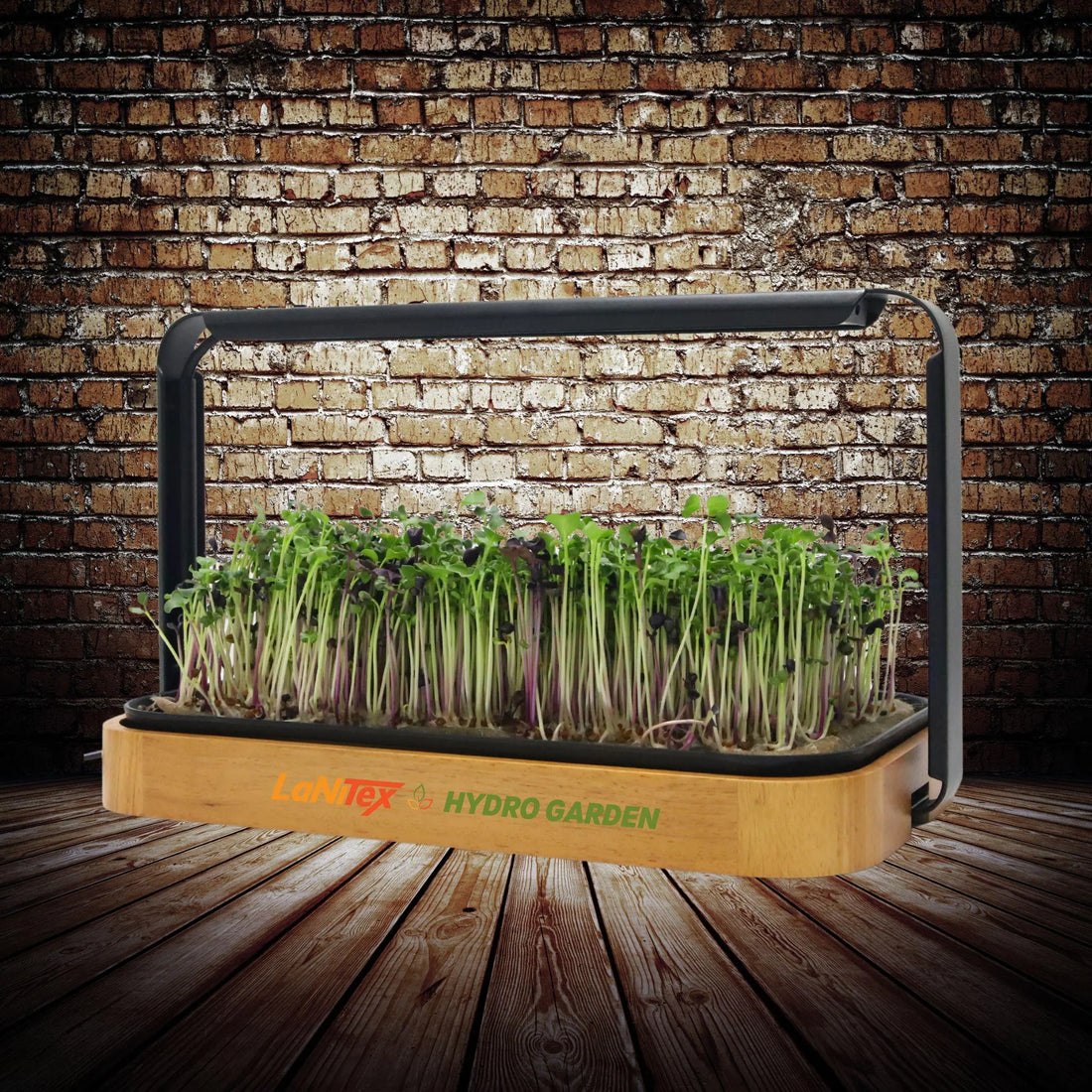
The aesthetic argument is just as strong. A Wooden-style microgreen kit on the kitchen bench, lid lifted, dense green Genovese seedlings just at harvest height, smells like an Italian herb garden and looks the part too. This is the kitchen-window feature - the photogenic indoor garden that doubles as a finishing herb supply. Of Australia's private dwellings counted in the 2021 Census, "70 per cent were separate houses, 13 per cent were townhouses and 16 per cent were apartments" - and for the 3 million-plus apartments and townhouses where outdoor basil is impractical, the kitchen-bench kit is the year-round alternative.
Cost stacks up too. Supermarket basil bunches at Coles or Woolworths run $3 to $5 for around 30 grams; restaurant-grade micro basil punnets cost considerably more per gram. A 30-gram harvest from a Smart Microgreen Kit Wooden runs about $1.50 once you are past the seed packet, and the aroma beats the cling-wrapped supermarket bunch because you snip it minutes before plating.
Ready to grow basil microgreens? Same Smart Microgreen Kit - choose your style: Wooden $189 for the Italian-kitchen-feature look, or Black Metal $129 for the modern alternative. Australia-wide same-week shipping from Sippy Downs, Sunshine Coast.
What I have learned about growing basil microgreens from research
Honest disclosure: basil microgreens were not part of the LaNiTex Smart Microgreen Kit pre-launch validation crop list personally tested in Sippy Downs (Sunshine Coast, QLD 4556) before stocking the kit - radish, broccoli and sunflower were the three calibration crops. The guidance below combines Seedmart Australia's basil microgreen product knowledge, Vertical Veg's basil microgreen technique notes, Microgreen Manager's basil grow protocol, and Australian climate-specific adaptation for the heat-loving Mediterranean herb. Local results may vary by climate zone; the troubleshooting section names the damping-off, slime-coat-mucilage and cold-stall pitfalls most likely to bite AU growers in Brisbane warm-humid summer versus Melbourne or Hobart cool winter.
That research-not-first-party framing matters for one reason: credibility from honesty. The brand pillar is honesty about what has been tested and what has not. For a fully validated first-microgreen experience, start with the Broccoli Microgreens guide - that crop has been grown more than fifty times in Sippy Downs since December 2024, and the technique transfers directly to basil once you have the basics.
How do basil microgreens grow in Australia?
Australia's climate zones vary more than most growing guides admit, and basil cares about the difference. The 15 to 25 day grow window crosses temperature thresholds that fast brassicas never feel. Climate-zone guidance matters most for this species - heat-loving Mediterranean herbs sulk in cool rooms.
| AU city | Indoor temp need | Heat mat needed? | Damping-off risk | Total grow time |
|---|---|---|---|---|
| Brisbane | Usually 22-28C ambient | No (year-round warm) | HIGH (humid summer) | 15-20 days |
| Sydney | 18-25C, supplement winter | Sometimes (cold snaps) | Medium (coastal) | 17-22 days |
| Melbourne | Often <18C winter | Yes (essential winter) | Low-Medium | 20-25 days |
| Perth | 18-26C, dry | Rarely (warm + dry) | Low | 16-22 days |
| Hobart | Often <15C winter | Yes (essential winter) | Low (cool) | 22-25+ days |
Basil seeds need 18 to 25 degrees Celsius for healthy germination, and the seedlings prefer the warmer end of that range during the light phase. Below about 18 degrees the seeds stall - they will eventually germinate, but the slow window magnifies damping-off risk because the medium stays wet for longer.
For seed sourcing in Australia, basil microgreen seeds are available at The Seed Collection, Mr Fothergill's (also at Bunnings), Eden Seeds, Greenharvest and Seedmart Australia. Rotate two or three suppliers across your first three or four flushes; germination rates differ slightly between sources, and finding the supplier that suits your climate is worth the small experimentation.
Get a fresh grow guide like this every fortnight
Join the LaNiTex Hydro Garden newsletter for practical hydroponic, microgreen and mushroom growing tips for Australian homes. Subscribe to download a free hydroponics starter guide (PDF) and get 10% off your first order.
Join the newsletter →Why are basil microgreens slower to grow than other microgreens?
Basil is a warmth-loving Mediterranean herb, so it grows more slowly than fast microgreens like radish or broccoli. The species prefers temperatures around 20 to 25 degrees Celsius and will stall or yellow if kept cold. Because the seeds form a gel coat when wet - a mucilage layer that holds moisture against the embryo - they also take longer to germinate than smooth seeds. Expect roughly 15 to 25 days from sowing to harvest in normal home conditions, two to three times longer than fast brassicas.
That patience window is the cost of the aromatic flavour reward. Speed costs flavour intensity in microgreens generally; basil sits at the slow-but-fragrant end of the cluster. If the 15 to 25 day wait challenges you, start with broccoli or sunflower microgreens first to learn the technique on a faster crop, then return to basil when the kit and the rhythm feel familiar.
Do basil microgreens need a heat mat in southern Australia in winter?
In cooler parts of Australia such as VIC, SA and TAS, a seedling heat mat is very helpful for basil microgreens in winter. Basil dislikes temperatures below about 18 degrees Celsius and germinates best closer to 22 to 25 degrees. A simple seedling heat mat under your tray keeps the root zone warm, speeds up germination by several days, and reduces the risk of damping-off and yellow, stalled growth.
Heat mats run about $25 to $45 at Bunnings, Diggers Club, Greenpatch and general gardening suppliers, and they pay for themselves across a season of winter microgreen flushes. Set the mat under the kit tray, plug it into a timer if you want belt-and-braces overnight control, and check that the surface temperature stays in the 22 to 25 degree range with a cheap probe thermometer.
In Brisbane and northern New South Wales, year-round indoor temperatures usually keep basil comfortable without a heat mat. The exception is the winter cold snap that drops kitchens into the low teens for a week - if you hit that, the mat is still useful as insurance. Perth's dry warm climate also rarely needs the mat. The honest rule: if your kitchen drops below 18 degrees for more than a day, basil microgreens will thank you for the heat.

Grow fresh basil microgreens on your kitchen bench, any season — the self-watering tank and full-spectrum LED handle the daily light and watering. You supply the seeds.
Start your first tray →Personally tested at home on the Sunshine Coast before listing.
Step-by-step: growing basil microgreens in the Smart Microgreen Kit (Wooden style)
This protocol assumes the LaNiTex Smart Microgreen Kit Wooden style with its integrated LED, water reservoir, reusable lid and germination mat compatibility. The wooden tray housing reads as a kitchen feature, not a gadget, which matters for the kind of grower who wants the kit out on the bench rather than hidden in a cupboard. The technique adapts to other shallow-tray setups, but the timing and aesthetics assume the Wooden kit's ambient conditions on a kitchen bench.
1. Source quality basil seeds (Genovese or purple)
Choose Genovese sweet basil for the classic Italian aroma or purple basil for the decorative burgundy contrast - or sow them mixed in one tray for both. Source from The Seed Collection, Mr Fothergill's, Eden Seeds, Greenharvest or Seedmart Australia. Buy a fresh packet rather than using leftover seeds from a prior season; basil germination drops noticeably after 18 months in storage.
2. Prepare the germination mat
Lay a fresh germinating growing mat into the Smart Microgreen Kit tray. Pre-wet the mat evenly with bottom water before sowing - dry patches at sow time become patchy stands at day 15. The mat sits flat against the tray and holds moisture evenly during the 3 to 5 day blackout window without waterlogging the seeds.
Growers working without the kit can substitute a hemp or jute microgreen mat, a thin layer of coco coir, or a fine seed-raising mix - basil is not fussy about the medium as long as it drains freely and stays evenly damp. The reusable germinating mat is simply the cleanest, lowest-mess option on a kitchen bench and rinses out for the next flush.
3. Sow seeds at 8 to 12 grams per tray (lower density)
Sprinkle 8 to 12 grams of basil seeds evenly across the tray surface. Lower density than fast brassicas (15 to 20 grams) because basil's longer germination window combined with the mucilage gel coat amplifies damping-off risk if seeds crowd. Eight to twelve grams. Not fifteen. The extra airspace between seeds is the cheapest damping-off prevention you will ever buy.
The basil seeds will form a gelatinous coat when watered - this mucilage is normal and holds moisture against the embryo to aid germination. Do not touch it, rinse it off, or stir the seeds. It looks slimy. It is doing its job. And do not pre-soak basil seeds the way you might pre-soak larger seeds such as sunflower or pea - the mucilage already does the moisture work, and soaking only clumps the seeds into a sticky mass and invites rot.
4. Mist and blackout for 3 to 5 days at 18 to 25C
Mist the surface lightly and cover with the kit lid or a blackout cover. Hold the seeds in darkness for 3 to 5 days at 18 to 25 degrees Celsius - shorter than coriander's 7 to 10 day blackout because the basil mucilage handles its own moisture management once the seeds are pre-wet. In VIC, SA or TAS winter, set the kit on a seedling heat mat to keep the medium at 22 to 25 degrees through the blackout.
Some growers lay a light weighted cover over the tray for the first day or two of blackout - a second tray with a small weight on top. That gentle weight pushes the seeds into firmer contact with the mat and encourages the roots to drive downward, so the seedlings come up sturdier and better anchored than they would under a loose humidity dome. Lift the weight once the seeds swell and root, well before the seedlings start to push up.
Check daily for moisture and airflow; lift the lid briefly every 24 hours from day 2 onwards to release trapped moisture. Damping-off prevention starts here. According to Sustainable Gardening Australia, "Farms utilizing hydroponics use up to 90 percent less water" than soil growing - the kit's bottom-water reservoir captures this efficiency on the kitchen bench, but the discipline is to mist less than you think.
5. Light phase 8 to 12 days under the integrated LED
Once the seedlings reach 1 to 2cm tall and the stems are firm, remove the cover and place the tray under the Smart Microgreen Kit's integrated LED at 8 to 12 hours per day. The Wooden kit's LED bar is positioned to give even light coverage across the tray; avoid afternoon direct sun in QLD summer, which can scorch tender seedlings through a window.
This is also the window where airflow matters most. Position the kit where ambient air moves - a kitchen with a ceiling fan on low or near an opened window when weather allows. Still air during the light phase is the second most common cause of damping-off after overwatering.
6. Bottom-water and watch for damping-off
Refill the kit's water reservoir from below; do not top-water during the light phase. Bottom-watering keeps the seedling stems dry and reduces damping-off risk. The Wooden kit's reservoir is sized for a full grow cycle without refilling more than once or twice; let the medium dry slightly between top-ups rather than keeping it saturated.
"The cheapest damping-off prevention is sowing density discipline - eight grams not fifteen, with the lid lifted briefly every twenty-four hours."
7. Harvest at 3 to 7cm tall (day 15 to 25)
When the seedlings reach 3 to 7cm tall and the first true leaves appear, harvest by cutting just above the medium with sharp scissors. Aim for the morning, before the warmth of the day softens the seedlings. Rinse gently under cool water, dry with a salad spinner or paper towel, and store in a sealed container in the fridge for 5 to 7 days.
Common problems and how to fix them
Damping-off is the basil-specific risk - not generic mould. The two often get confused, so it pays to distinguish them clearly. Mould is fluffy white surface growth on the medium that you can sometimes airflow your way out of; damping-off is when the seedling stems collapse at the base and the plants flop over, often unrecoverable. Both have the same prevention: keep moisture moderate and air moving.
Damping-off (stem collapse at base) - The basil-specific #1 problem. Cause: overwatering plus still air plus cool temperatures. Prevention: sow at the lower 8 gram density, bottom-water lightly, lift the kit lid briefly every 24 hours to release moisture, position the kit where ambient air moves, and in cool kitchens add a seedling heat mat to keep the medium at 22 to 25 degrees. Once damping-off starts, it spreads; pull the affected seedlings out by the stem and improve airflow immediately.
Mucilage seed slime (totally normal) - The gel coat that forms when basil seeds get wet is mucilage, not mould or rot. Do not pick it off, do not rinse it, do not stir the seeds. The mucilage holds moisture against the embryo and helps germination. It looks slimy because it is - by design.
Uneven germination on day 5 - Basil seeds emerge unevenly compared to brassicas because the mucilage layer absorbs water at different rates per seed. Resist the urge to lift the lid and water heavily; give it another two days at temperature.
Leggy growth (tall thin stems, small leaves) - Symptom of low light. Move the kit closer to the LED, increase the daily light hours to 12, or both. Leggy basil seedlings rarely recover their compact form; better to prevent than to fix.
Yellowing from cold - Basil yellows when the medium drops below 18 degrees Celsius for more than a day. The fix is warmth, not water or fertiliser. Set a seedling heat mat under the kit if your kitchen is cool, or move the kit to a warmer room.
"Damping-off, not mould - that distinction saves more basil microgreen flushes than any other single piece of advice."
Still on the fence? Same Smart Microgreen Kit - choose your style: Wooden $189 for the Italian-kitchen-feature look or Black Metal $129 for the modern alternative. Both ship Australia-wide from Sippy Downs.
How do you use basil microgreens in Italian and Mediterranean cooking?
Basil microgreens taste like a more intense, slightly sweeter version of mature basil leaves. Genovese and sweet basil are classic for Italian cooking. Use them as the finishing herb, not the cooking herb - the heat of the pan flattens the aroma, so add them at the table or just before serving.
A handful of practical kitchen uses:
- Pesto - Replace mature basil leaves with micro basil for a more concentrated, brighter pesto. Use about two-thirds the volume by weight; the microgreens punch harder than mature leaves.
- Caprese salad - Scatter Genovese basil microgreens over sliced buffalo mozzarella and ripe tomato. Deep green seedlings against white cheese against red tomato is the kitchen-feature shot.
- Pizza Margherita - Add the microgreens after the pizza comes out of the oven, not before. Heat destroys the aromatic oils; scatter them on the hot pizza at the table.
- Bruschetta - Top toasted sourdough, tomato and olive oil with a generous pinch of micro basil. The aroma hits at the first bite.
- Risotto and pasta - Stir a small handful through finished risotto off the heat, or scatter over plated pasta primavera and bowl-of-the-day spaghetti.
- Antipasto and salads - Purple basil microgreens read as decorative on antipasto platters; mix them with Genovese for the colour contrast.
A simple kitchen-feature moment: brush past the kit on the bench while making caprese, snip a small handful of basil microgreens straight into the bowl, and the kitchen smells like a Tuscan herb garden for the rest of the evening. That is the value proposition the supermarket cling-wrapped bunch cannot match.

Restock the soil-free mats your kit runs on — a 10-pack of reusable growing mats, ready for your next basil sowing.
Stock up on mats →Personally tested at home on the Sunshine Coast before listing.
Basil microgreens FAQ
What are basil microgreens?
Basil microgreens are young basil plants harvested at 2-3 weeks old, when they have their seed leaves and first true leaves. They're grown densely in shallow trays and cut just above the medium. Compared with full-size basil, micro basil has a more concentrated aroma and flavour, making it perfect for premium garnishes, Italian dishes and Mediterranean salads.
Why do basil microgreens grow more slowly and need warmth?
Basil is a warmth-loving Mediterranean herb, so it grows more slowly than fast microgreens like radish or broccoli. It prefers temperatures around 20-25 degrees Celsius and will stall or yellow if kept cold. Because the seeds form a gel coat when wet, they also take longer to germinate. Expect roughly 15-25+ days from sowing to harvest in normal home conditions.
How do you grow basil microgreens at home in Australia?
Fill a shallow tray or growing mat with moist medium, then sow basil seeds densely on the surface. Mist well and keep warm and dark for 3-5 days until they germinate. Move the tray under bright light, keep the medium damp with bottom-watering and ensure good airflow. In most Australian homes, basil microgreens are ready to harvest in about 15-25 days.
Do basil microgreens need a heat mat in southern Australia in winter?
In cooler parts of Australia such as VIC, SA and TAS, a heat mat is very helpful for basil microgreens in winter. Basil dislikes temperatures below about 18 degrees Celsius and germinates best closer to 22-25 degrees. A simple seedling heat mat under your tray keeps the root zone warm, speeds up germination and reduces the risk of damping-off and yellow, stalled growth.
What do basil microgreens taste like and how do you use them in Italian cooking?
Basil microgreens taste like a more intense, slightly sweeter version of mature basil leaves. Genovese and sweet types are classic for Italian cooking: scatter them over caprese salad, pizza, bruschetta, pasta, risotto or grilled vegetables. Because they're tender and aromatic, add them at the end of cooking or as a fresh garnish so their flavour and colour stay vibrant.
What's the difference between Genovese and purple basil microgreens?
Genovese basil microgreens are bright green with a classic sweet basil aroma, ideal for pesto and traditional Italian dishes. Purple basil microgreens have deep burgundy leaves, a similar flavour with a hint of spice, and are highly decorative. Many home growers mix them in one tray for a blend of familiar basil taste and striking colour on pizzas, salads and antipasto platters.
How many days do basil microgreens take to harvest?
Basil microgreens usually take around 15-25 days from sowing to harvest, depending on temperature, light and variety. Warmer indoor conditions and strong light push growth towards the shorter end of that range, while cool rooms or weak light slow them down. Harvest when plants are 3-7 cm tall and have their first true leaves for the best flavour and aroma.
What are common problems with basil microgreens like damping-off and overwatering?
Basil microgreens often struggle with damping-off, where seedlings collapse at the base from excess moisture and poor airflow. Overwatering is the main cause, especially in cool rooms. Use a well-drained medium or growing mat, bottom-water lightly and let the surface dry slightly between waterings. Provide good air movement and avoid crowding trays in dark, stagnant corners.
Should you soak basil microgreen seeds before sowing?
No. Basil microgreen seeds are never pre-soaked. When they get wet they form a gel-like mucilage coat that holds moisture against the seed and does the soaking job for you. Pre-soaking basil seeds makes them clump into a sticky mass that is hard to spread evenly and raises the risk of rot and damping-off. Sow them dry onto a pre-moistened mat and mist the surface lightly instead.
The full range
Find the microgreen kit that suits your kitchen


Supported in Australia - every model tested before listing.
Sources
- Australian Bureau of Statistics - Housing Census 2021 - Australian Government statistical authority. Quoted: "70 per cent were separate houses, 13 per cent were townhouses and 16 per cent were apartments."
- Sustainable Gardening Australia - Pros and Cons of Hydroponic Growing - Australian not-for-profit horticultural authority. Quoted: "Farms utilizing hydroponics use up to 90 percent less water"
- The Seed Collection AU - Australian heirloom seed retailer; basil microgreen seed source (Genovese sweet basil, purple basil).
- Eden Seeds - Australian heirloom seed retailer; certified organic Mediterranean herb seed supplier.
- Mr Fothergill's (available at Bunnings) - AU mass-retail basil seed packets, not microgreen-specific but works for the technique.
- Seedmart Australia - Microgreen-specific basil seed range, larger pack sizes for regular growers.
- Greenharvest - QLD-based sub-tropical specialist supplier; basil varieties suited to humid climate.