
Parsley, tarragon, chervil, and chives form the four canonical French fines herbes, and the chive at its microgreen stage delivers that delicate onion-herb note in 14 to 21 patient days (occasionally up to 30 in cool conditions).
Quick answer: Chive microgreens are the very young shoots of Allium schoenoprasum (common chive), grown densely from seed and harvested at 2 to 5 cm tall, around the time the first true leaves begin to emerge. The cycle takes 14 to 21 days typically in Australia (occasionally up to 30 days in cooler conditions or with older seed), still the slowest single-variety microgreen in the LaNiTex cluster, and the shoots deliver a subtle onion-herb flavour suited to scrambled eggs, potato salad, leek-and-potato soup, and any classic French fines herbes finishing dish.
At a glance
| Field | Detail |
|---|---|
| Days to harvest | 14-21 days typical, up to 30 days in cool conditions (slowest single-variety in cluster) |
| Germination window | 7-14 days |
| Sowing density | 10-15 g per tray |
| Ideal temperature | 18-24 deg C (20-22 deg C sweet spot) |
| Difficulty | Medium |
| Best uses | Scrambled eggs, omelettes, potato salad, leek-and-potato soup |
What are chive microgreens?
Chive microgreens are the very young shoots of Allium schoenoprasum, the common chive species used as a culinary herb across Europe, Asia, and North America. Botanically they belong to the Amaryllidaceae family (subfamily Allioideae, the onion family), so they share lineage with onions, leeks, garlic, and shallots.

At the microgreen stage, harvested at 2 to 5 cm tall, the shoots look like a fine mat of thin grass-like green, often still wearing the black seed coats at the tips. The flavour reads as a subtle, fresh onion-herb note, gentler than mature chive leaves. Compared with onion microgreens (Allium cepa) growing in the same cluster, chive shoots are noticeably finer and more delicate.
This is the cluster's second Amaryllidaceae species. Onion microgreens (Allium cepa) sit at the bolder green-onion-top end of the spectrum; chives close the Allium family pair at the gentle fines-herbes end.
A single tray gives a modest harvest. Chives are a slow, fine-leaved crop, so yields sit well below dense brassicas: for scale, Penn State Extension microgreen trials put low-yield herbs like coriander around 47 g per standard tray, with most microgreens landing in the 50 to 200 g range, and fine allium shoots tend toward the lower end. Nutritionally, USDA food-composition data lists chives as a rich source of vitamin K, with vitamin A (from carotenoids such as beta-carotene and lutein), vitamin C, folate, and flavonoid and organosulphur antioxidants. Microgreens generally carry higher concentrations of some vitamins per gram than mature leaves, though chive-specific figures are limited; used as a fresh garnish in small amounts, chive microgreens are a flavour-and-colour lift rather than a major source of any single nutrient.
Chive microgreens vs onion microgreens: closing the Allium family pair
Both come from the Allium family and both deliver mild onion-like flavour, but they are not interchangeable in the kitchen.
Flavour: chive microgreens give a light, subtle onion taste with a mild herbal note that finishes scrambled eggs, potato salad, and creamy dishes without dominating. Onion microgreens carry a stronger, sharper onion punch that reads as a restaurant-style green-onion-top garnish.
Texture and appearance: chive microgreens have very fine, needle-thin leaves, extremely delicate and bendy at the cut. Onion microgreens come up slightly thicker, more upright, and often retain a polka-dot black hull on the tip of each shoot.
Botany: chives are Allium schoenoprasum, a perennial-clump herb species. Onion is Allium cepa, the annual bulb-forming species used at the microgreen stage before the bulb forms.
Use-case: choose chives for creamy soups, scrambled eggs, sour-cream toppings, smoked salmon, and traditional French cuisine where the mild herb note enhances rather than overwhelms. Choose onion microgreens for Asian stir-fry, French omelette, and chef-garnished plates where concentrated onion intensity is the feature.
For the full onion microgreens guide, see the onion microgreens Australia guide -- the family-pair anchor that lives next to this one in the cluster.
What I have learned about growing chive microgreens from research
Honest disclosure: chive microgreens were not part of the LaNiTex Smart Microgreen Kit pre-launch validation crop list personally tested in Sippy Downs (Sunshine Coast, QLD 4556) before stocking the kit -- radish, broccoli, and sunflower were the three calibration crops. The guidance below combines Epic Gardening chive microgreen growing methodology, Royal Horticultural Society UK Allium schoenoprasum botanical context, Penn State Extension generic microgreen technique guides, The Seed Collection AU Allium guide context, and AU climate-specific adaptation for this slow-pace Amaryllidaceae onion-family microgreen.
The 14 to 30 day cycle is verifiable across multiple peer-source benchmarks -- not a stylistic exaggeration. The thin grass-like shoots are an Allium schoenoprasum botanical reality grounded in the seedling-leaf morphology, not a technique failure. Local results vary by climate zone; the troubleshooting section names the cycle-length mould risk, leggy low-light, thin-shoot crush at harvest, and slow patchy germination pitfalls most likely to bite AU growers in humid Queensland summer versus cooler southern winter.
Chive microgreens in classic French cuisine: the canonical fines herbes garnish
Fines herbes in classic French cuisine is a four-herb finishing blend: parsley, tarragon, chervil, and chives. The blend traces back to classical French cooking tradition, popularised through Escoffier-era kitchens, and runs through French kitchens everywhere -- omelettes, Bearnaise, Hollandaise, creamy mushroom soup, soft-boiled eggs on toast, grilled fish finishing.
Chive microgreens deliver the same delicate onion-herb note as mature chive leaves but with thinner, finer shoots that read as a modern restaurant-aesthetic alongside traditional parsley, tarragon, and chervil. At the microgreen stage the flavour is arguably more delicate than mature leaves: subtler in intensity, finer in texture, and more refined on the plate.
French applications worth naming:
- Scrambled eggs and omelettes finished with a gentle onion-herb sprinkle straight off the heat
- Potato salad with whole-egg mayo and a thumbnail of Dijon, topped with a heavy chive sprinkle
- Bearnaise, Hollandaise, cream-of-mushroom, and white-wine-butter sauces finished raw
- Leek-and-potato soup garnish, echoing the cooked-leek base flavour
- Smoked salmon on rye with cream cheese, microgreens cut at the moment of plating
- Grilled fish or roast meat plate-finishing -- fresh green against rich proteins
- Compound butters: shoots pulse-blended into softened butter for finishing steak or warm bread
Add at the end of cooking or raw. Heat above 60 deg C wilts the shoots and dulls the onion-herb flavour. The snipped shoot releases volatile sulphur compounds that dissipate within minutes, so chop just before plating for maximum aroma.
CTA #1: Start your French fines herbes flush
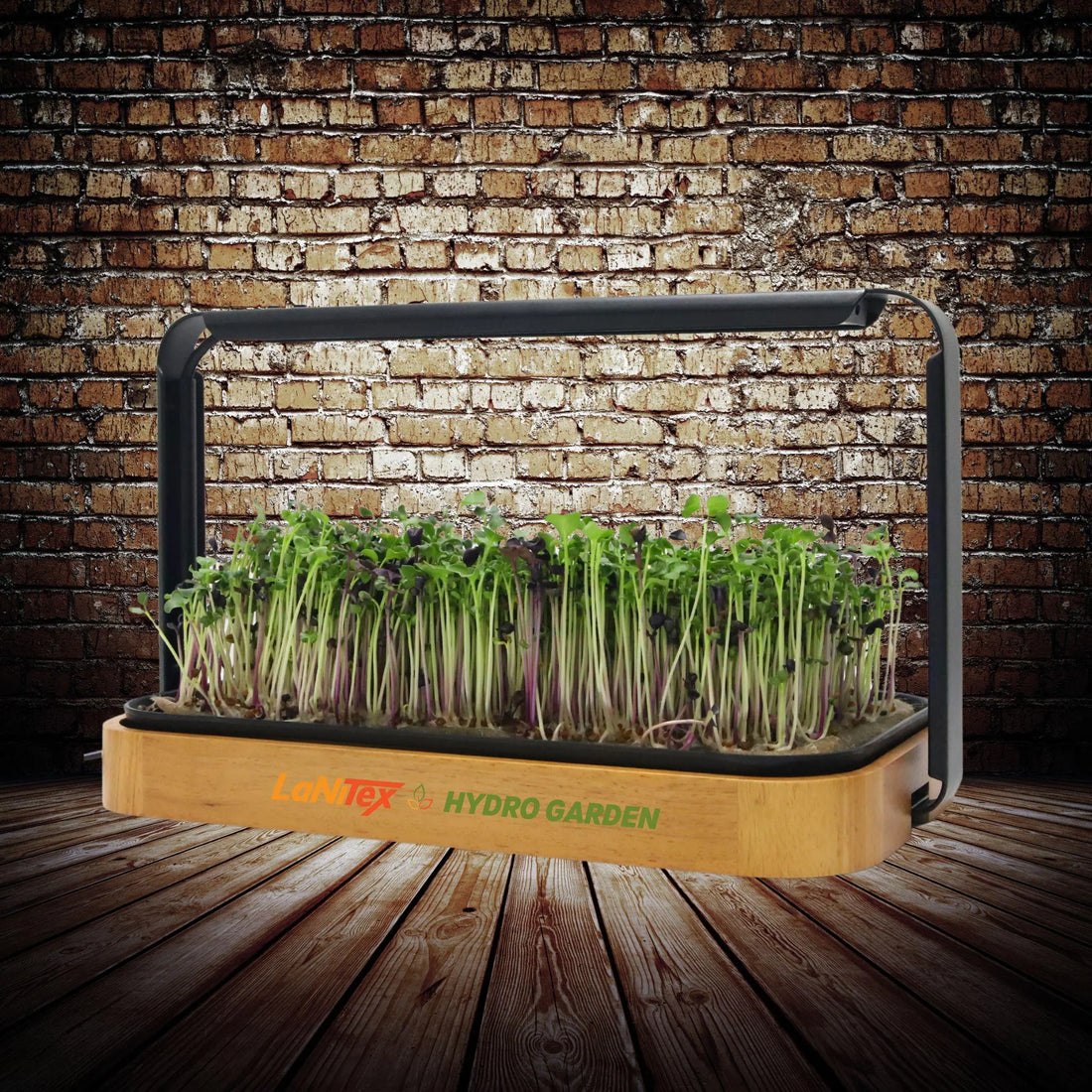
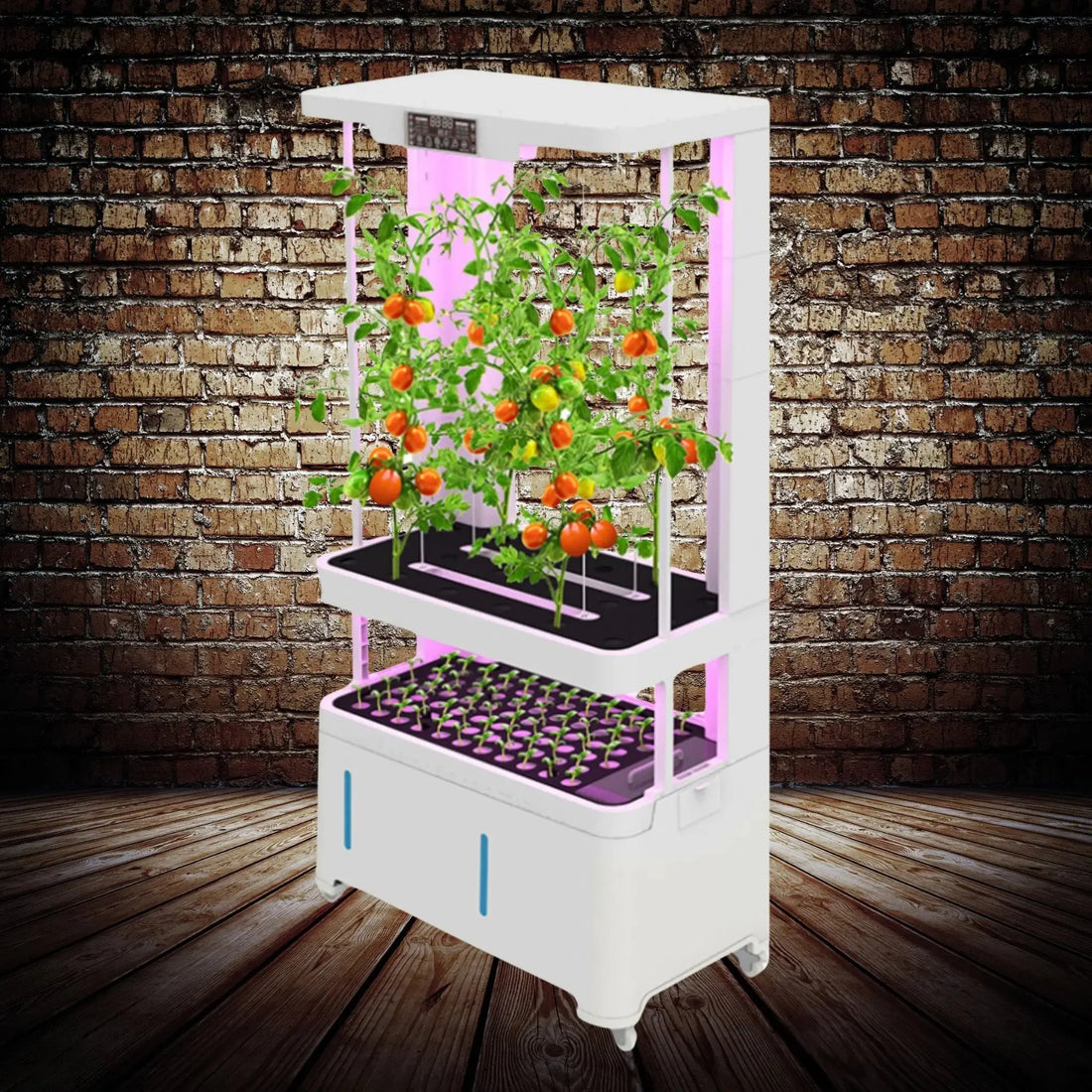
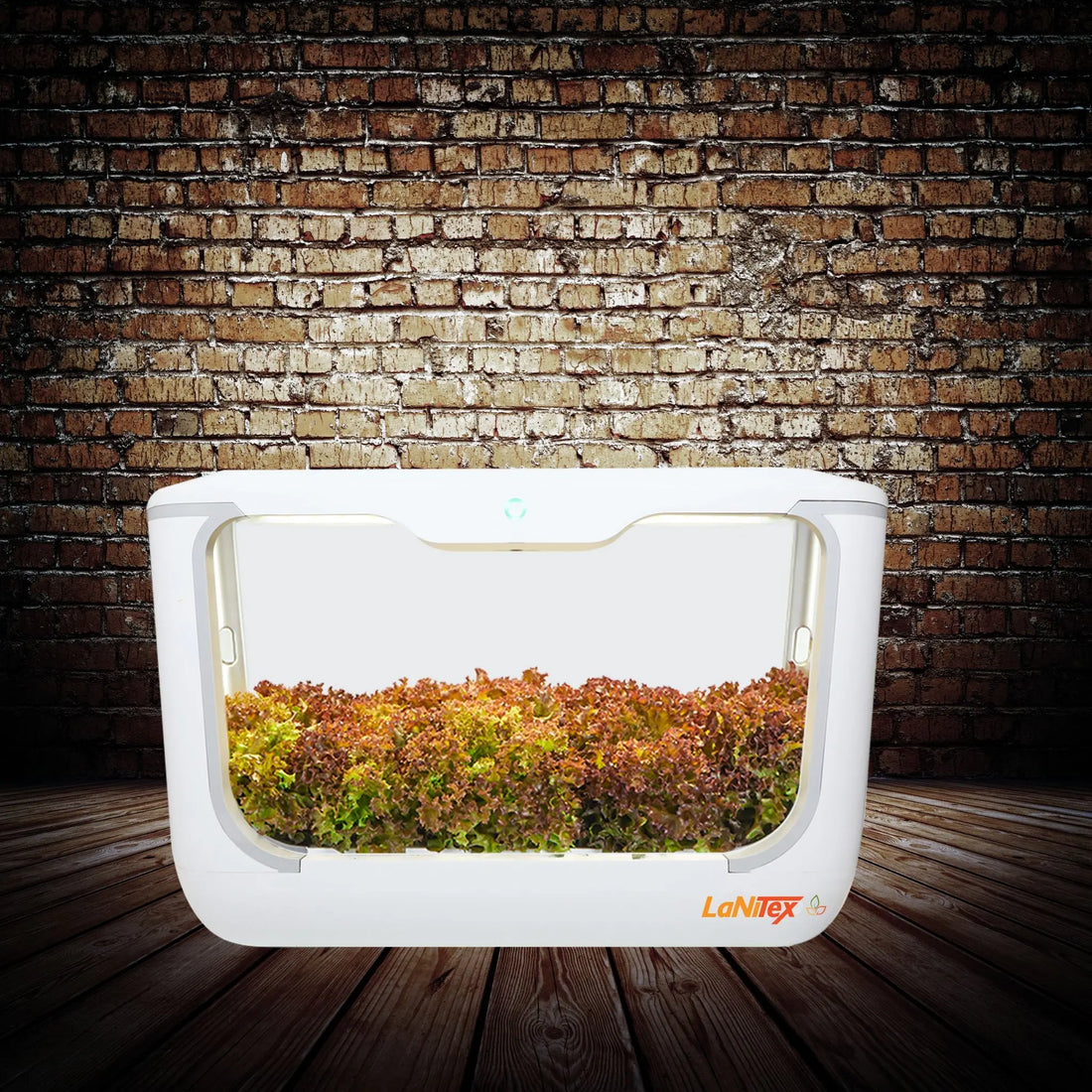
Bringing French fines herbes home does not require chef training or a Lyon kitchen. The Smart Microgreen Kit Black Metal Style at $129 sets up a chive-microgreen tray in minutes, with the integrated LED handling the long chive cycle without the usual humidity-dome guesswork. For the photogenic countertop kitchen-feature aesthetic, the Wooden Style at $189 is the same kit in oak-finish styling. Same hardware, different style. A $4 to $6 supermarket cut-chives bunch wilts in three days; one home flush costs about $1.49 in seed.
Choose your Smart Microgreen Kit -- microgreen growing kit (Black Metal) or wooden microgreen kit
Get a fresh grow guide like this every fortnight
Join the LaNiTex Hydro Garden newsletter for practical hydroponic, microgreen and mushroom growing tips for Australian homes. Subscribe to download a free hydroponics starter guide (PDF) and get 10% off your first order.
Join the newsletter →Breakfast eggs, potato salads, and creamy comfort food: chive microgreens at home
The chive microgreen flavour profile is the same subtle fresh onion-herb note found in mature chive leaves, but with a delicate textural touch that adds a gentle accent without overwhelming the underlying dish. The home applications span breakfast, side-dish potato territory, and creamy comfort food.
Breakfast applications: scrambled eggs sprinkled at the end of cooking, sometimes folded gently into the curd just before plating. Omelettes and frittatas sprinkled after folding, or stirred into the egg mixture for visible green flecks. Savoury pancakes and blini sit beautifully under a mild onion-herb topping over their rich-cream base. Soft-boiled eggs get a finishing sprinkle on the broken yolk. Baked eggs or shakshuka close with a fresh-herb pop against the tomato base. Avocado toast: chive microgreens replace chopped white onion. Bagel with cream cheese: replaces the chopped-chive standard at delis.
Potato applications: potato salad with whole-egg mayo and Dijon takes a heavy sprinkle. Baked potato with sour cream or butter gets a topping crown. Mashed potatoes fold the shoots in just before serving for green-fleck. Gnocchi and dauphinoise close with a finishing-herb on the creamy potato side. Potato latkes and hash browns: fresh-herb pop on the fried-potato base.
Creamy comfort food: leek-and-potato soup finishing-herb sprinkle, creamy mushroom soup garnish, chicken-and-mushroom pie or stew, creme-fraiche-topped baked dishes, buttery pasta or risotto finishing.
Add at the end of cooking. Storage tip: chop just before serving for the best aroma; the cut shoot keeps three to five days refrigerated in a paper-towel-lined airtight container.
How chive microgreens grow in Australia: climate-zone breakdown
Chive microgreens are moderately temperature-tolerant but humidity-sensitive because of the long 14-day-typical, up-to-30-day cycle.
| AU climate zone | Profile | Practical adjustment |
|---|---|---|
| Brisbane / SE QLD warm-humid | Dec-Feb humidity often above 70% | Small fan above the tray. Skip the dome lid in the light phase. Dehumidifier or air-con recommended. |
| Sydney coastal | Year-round moderate (55-70%) | Usually fine without intervention; small fan in summer. |
| Melbourne temperate | Cool-friendly | Best growing window May-September. Bench heat-mat optional below 16 deg C. |
| Perth dry | Low-humidity friendly | Chive's natural sweet spot. Light mist required only if shoots look dry. |
| Hobart cool | Winter ideal | Cool conservatory or bright kitchen window all winter. Ambient ideal. |
Indoor temperature 18 to 24 deg C is the ideal range, with 20 to 22 deg C as the sweet spot. Cooler than 16 deg C slows germination further; above 26 deg C amplifies mould risk in dense sowing.
AU seed suppliers carry common chive (Allium schoenoprasum) at most outlets: Mr Fothergill's at Bunnings nationwide, Eden Seeds online, Greenharvest online, Seedmart online, and The Seed Collection online. Look for "common chives" or "Allium schoenoprasum" on the label -- garlic chives (Allium tuberosum) is a different species and not the canonical French fines herbes plant.

Grow your own chive microgreens indoors on the bench, any season — the self-watering tank and full-spectrum LED hold the steady conditions this slow fines-herbes allium needs across its long cycle. You supply the seeds.
Start your first tray →Personally tested at home on the Sunshine Coast before listing.
Step-by-step: growing chive microgreens from seed to harvest
This sequence follows the LaNiTex Smart Microgreen Kit but works on any shallow tray with drainage.
- Prepare the tray. Fill with fine seed-raising mix or place a pre-moistened coir mat in the tray. Pre-moisten evenly damp, not dripping.
- Sow chive seed densely. Scatter 10 to 15 g of common chive seed (Allium schoenoprasum) across the tray in a dense single layer; seeds almost touching, not piled. Press gently. Optional thin top-cover with vermiculite or coir.
- Blackout phase 7-14 days. Cover with a board or blackout lid, place a light weight on top, and keep warm at 18-24 deg C (20-22 deg C sweet spot). Germination is slow and uneven by microgreen standards; be patient.
- Light phase 7-14 days. When shoots reach 1-2 cm, remove the cover and place under bright light or grow lights for around 12 hours per day. Run a small fan on low for airflow in humid AU climates.
- Bottom water. Sit the tray in 1 cm of water for 5 to 10 minutes. Re-water when the surface starts to dry. Avoid spraying the shoots -- water beads on the thin foliage promote mould. Stop watering about 12 hours before you plan to harvest, so you cut dry shoots rather than wet ones -- they spoil less and keep longer in the fridge.
- Harvest at 2-5 cm. Cut at the base with a very sharp blade. Handle gently; thin shoots crush easily. Some shoots will still wear a black seed hull at the tip -- these are harmless and edible, but for a cleaner plate, swirl the cut shoots gently in a bowl of water and most hulls float free. The cycle from sowing to harvest takes 14 to 21 days typically, occasionally up to 30 days in cooler conditions.
- Clean and reset. Compost the spent substrate, wash the tray, and start the next flush with a fresh mat or substrate. Aim for one tray every 2 to 3 weeks for a rolling supply.
Common chive microgreen problems and how to fix them
The slow chive cycle plus thin grass-like shoots amplify a handful of recurring issues. Each has a specific fix, and the prevention is mostly about discipline rather than gear. Don't sow too densely on a single tray; never spray-flood the surface during the light phase; and don't leave a weighted lid on after germination -- those three habits cause most of the trouble on long-cycle Allium trays.
| Problem | Cause | Fix |
|---|---|---|
| Slow patchy germination | Natural for chives (7-14 days) | Maintain even moisture; keep warm during blackout; be patient |
| Surface mould (fluffy white-grey) | Poor airflow, dense sowing, humid AU summer | Bottom-water only; small fan; sow at 10-15 g/tray not denser; ventilated lid not weighted |
| Yellow pale shoots before light | Normal blackout-phase response | Continue blackout to full duration; under grow lights they green within a day |
| Floppy weak stems | Insufficient light or off-axis | Place lights directly above at 15-30 cm; switch on for 12 hours/day |
| Damaged crushed shoots at harvest | Thin shoots, dull blade, heavy hand | Use a fresh sharp razor or microgreen blade; cut at the base; lift gently |
CTA #2: Reliable setup for the patient grower
Chive microgreens are the slowest single-variety in the active LaNiTex cluster, and that long wait is exactly what trips up most first-time growers without the right setup. The Smart Microgreen Kit Black Metal Style at $129 has run 18 sibling microgreen species through the same kit across the LaNiTex catalogue. For the countertop-aesthetic preference, the Wooden Style at $189 is the same kit in a different finish. Grow smart, eat fresh with LaNiTex Hydro Garden. Same kit, different style, your choice.
Sunshine Coast humidity and the chive cycle: keeping chive microgreens mould-free
Chive microgreens face among the higher cumulative mould risk in the active LaNiTex cluster because the long chive cycle gives airborne spores roughly three times more time to colonise the tray than fast crops like radish or sunflower at 5 to 10 days. Thin grass-like shoots crush easily under over-watered or compressed humidity domes, and surface moisture lingers longer between thin shoots than between thicker, sturdier shoots.
Sippy Downs (Sunshine Coast, QLD 4556) ambient humidity often reaches 70 to 80 percent across Dec-Feb summer. Chive microgreen trays left on the bench in such conditions sit at peak mould risk. Indoor air-conditioned grow rooms or south-facing kitchens with breeze are markedly safer for mould; watch the opposite problem too -- overly dry conditioning can crisp thin shoots, so check moisture daily. The LaNiTex Smart Microgreen Kit's integrated LED and ventilated lid design specifically helps with this AU humidity profile compared to open-tray DIY setups.
Prevention discipline for the chive cycle:
- Sow at moderate density (10-15 g per tray) with breathing room between seeds. Too-dense equals no airflow plus crowd-stress.
- Run a small fan on low, or position the tray near an open window, for continuous airflow.
- Use a ventilated humidity dome during the blackout phase, not a weighted lid that traps moisture for the long chive cycle.
- Bottom-water lightly rather than spray-flooding the surface. Water rises through the substrate; the shoot tops stay dry.
- Clean the tray and substrate thoroughly between flushes. Chive trays carry higher cross-contamination risk because of the extended grow cycle and slow-germination dead-seed accumulation.
- Raise the kit on a small block so the underside of the tray gets airflow.
The distinction matters: surface mould (fluffy white or grey growth on tray surface or shoot clump) is the typical chive fear; damping-off (seedling stem collapse at the base) is a well-known issue in basil and other dense, slow-germinating seedlings. Airflow, sowing density, and a clean setup address both.
Where to source chive seeds for microgreens in Australia (and the garlic-chives warning)
Common chives (Allium schoenoprasum) is the species this blog covers: a perennial herb with hollow grass-like green shoots and mild onion-herb flavour, and the canonical French fines herbes species.
Garlic chives (Allium tuberosum) is a different Allium species sold in some AU seed packets. Flat-leaved, with a stronger garlic-onion note and an Asian-cuisine tradition. Both grow as microgreens, but they are not interchangeable for French cuisine. Read the seed packet -- look for "common chives" or "Allium schoenoprasum" on the label.
What to avoid: pelleted chive seed (the coating designed for outdoor sowing interferes with the microgreen flush); treated seed marked with a fungicide colour film; very old stock (chive seed viability drops after 18 to 24 months).
AU seed supply path:
- Mr Fothergill's common chives at Bunnings nationwide
- Eden Seeds common chives, organic, with Allium schoenoprasum sometimes labelled separately from Allium tuberosum garlic chives
- Greenharvest both species, often labelled clearly in the Asian-greens range
- Seedmart microgreen-focused range with bulk chive seed
- The Seed Collection broader Allium category with both species available -- read the label carefully
A simple germination test: place 10 to 20 seeds in damp paper towel for 7 to 14 days. If 60 percent or more germinate, the batch is fresh enough for microgreens. Below 40 percent, source elsewhere. The slower germination rate is botanical not quality, so allow the extra time versus brassica tests.
A $4 to $8 packet of common chive seed at any AU nursery contains enough seed for 4 to 8 microgreen flushes -- comparable favourably to a $4 to $6 supermarket cut-chives bunch as a single-use ingredient.

Keep a fresh tray on rotation — 10 soil-free growing mats, the reusable base your kit sows each chive crop on. Ready for your next sowing.
Stock up on mats →Personally tested at home on the Sunshine Coast before listing.
Chive microgreens FAQ
What are chive microgreens?
Chive microgreens are very young chive plants (Allium schoenoprasum) grown densely and harvested soon after the first seed leaf (cotyledon) appears. They look like a fine mat of bright green, grass-like shoots, often still wearing their black seed hulls on the tips. Unlike full-size chive clumps in the garden, microgreen chives are cut once at about 2-5 cm tall and eaten fresh. They bring a subtle onion flavour and delicate texture without the toughness of mature leaves.
How are chive microgreens different from onion microgreens?
Both come from the allium family with mild onion-like flavour, but they are not identical. Chive microgreens have a light, subtle onion taste with a mild herbal note (the classic French garnish for eggs, potatoes, creamy dishes); onion microgreens carry a stronger, sharper onion punch. Chive microgreens have very fine needle-like leaves, extremely delicate and bendy; onion microgreens are slightly thicker with more upright shoots. Use chives for elegance and gentle flavour; onion microgreens for a more obvious onion kick.
How long do chive microgreens take to grow, and why are they considered slow?
Chive microgreens are slower than many common microgreens. Typical timing: germination 7-14 days in dark, covered blackout period; growing on under light another 7-14 days until 2-5 cm tall. Overall around 14-30 days from sowing to harvest. Medium difficulty mainly because seeds germinate slowly and unevenly compared to fast crops, and the shoots are thin and grass-like, making them a bit fiddlier to harvest and handle without bending or bruising.
How do I grow chive microgreens at home in Australia?
Set up a shallow tray with drainage holes and fine well-draining seed-raising mix; lightly tamp and pre-moisten. Scatter chive seed in a fairly dense single layer (seeds almost touching, not piled); press gently and add an optional thin layer of mix on top. Cover with another tray or board to block light and keep moisture, with a small weight on top, and keep warm for 7-14 days of germination. Once most have germinated, remove the cover and place under bright light or grow lights for around 12 hours a day, with good airflow (a small fan helps in humid AU climate). Bottom-water: tray sits in shallow water 5-10 minutes; re-water when surface starts to dry. Harvest at 2-5 cm tall, around when the first true leaves begin to emerge.
What do chive microgreens taste like and how can I use them in the kitchen?
Chive microgreens have a subtle fresh onion flavour similar to regular chive leaves but even more delicate. Classic uses include breakfast dishes (scrambled eggs, omelettes, savoury pancakes), potato dishes (potato salad, baked potatoes, mashed potatoes just before serving), French-inspired cooking (finishing soups like leek-and-potato, creamy sauces, fish dishes, quiches), and everyday garnishes (avocado toast, salads, rice bowls, creamy dips). Best raw, added right before serving and avoiding long cooking.
What are the most common problems when growing chive microgreens?
Very slow or patchy germination is natural for chives (7-14 days); be patient, maintain even moisture, keep warm during blackout. Mould or fuzzy growth at the base comes from poor air circulation, high humidity, or constantly wet foliage; bottom-water, provide good airflow with a fan, and avoid over-seeding. Yellow or pale shoots are normal before light; under grow lights they green up within a day. Floppy weak stems mean insufficient light or off-side angle; place lights directly above 15-30 cm. Damage at harvest happens because shoots are very thin and crush easily; use a very sharp blade and handle gently.
Where can I buy chive microgreen seeds in Australia?
Source chive and garlic chive seeds for microgreens from a range of AU suppliers: specialist microgreen and herb seed companies shipping nationally (Seedmart, The Seed Collection, Eden Seeds, Greenharvest); general online garden retailers and nurseries with herb seed ranges; and local garden centres or hardware chains stocking Mr Fothergill's chive seed suitable for both garden and microgreen use. Look for high germination rates (ideally labelled for microgreens or sprouting) and clean food-grade sources for frequent kitchen use. Read the seed packet to confirm Allium schoenoprasum (common chives) rather than Allium tuberosum (garlic chives) if you want the traditional French fines herbes profile.
Can I grow chive microgreens in a microgreen kit with growing mats?
Yes. Chive microgreens can be grown in fine soil or seed raising mix or on suitable fibre mats, as long as the medium retains moisture without waterlogging. In a microgreen kit, place a germinating mat in the tray, pre-moisten evenly damp but not dripping, sow chive seeds densely, then follow the usual blackout and bottom-watering routine. Ensure strong overhead light and good airflow, particularly in warmer humid regions. Growing mats make cleaning and turnaround between crops quicker, which is handy when running several trays at once.
What are the nutritional benefits of chive microgreens?
Chives are a nutrient-dense allium: USDA food-composition data lists them as a rich source of vitamin K, plus vitamin A from carotenoids such as lutein, vitamin C, folate, and flavonoid and organosulphur antioxidant compounds. There are no USDA figures specific to chive microgreens, so treat these as a general guide. Like most microgreens the young shoots concentrate flavour and colour, so a small pinch lifts a dish without adding bulk. Enjoy chive microgreens as a fresh, nutritious garnish rather than a supplement. This is general information, not medical advice.
Explore other microgreen varieties
Grown Chives once? These pair naturally with the same Smart Microgreen Kit & Germinating Growing Mats.
More allium greens
Easy to start with
Fresh herb garnishes
→ Browse all 22 microgreen varieties | → Microgreens growing guide
About the writer
For Laszlo Bulatko, LaNiTex Hydro Garden is as much a mission as a business: helping everyday Australian families grow their own fresh food at home, even without a backyard. From its base on the Sunshine Coast, LaNiTex makes that easy and affordable — hydroponic grow boxes, a benchtop Mini Grow Pot, and the Smart Microgreen Kit — alongside the Term-Grow Enrolment programme in Queensland primary school classrooms. He launched LaNiTex in December 2024 and personally tested every product at home before listing it — drawing on 15 years of earlier brand-building in the Hungarian fishing-tackle trade. Full background on the About Laszlo founder page. ABN 47 682 768 967.
The full range
Find the microgreen kit that suits your kitchen


Supported in Australia - every model tested before listing.
Sources
- Epic Gardening, Chive Microgreens: A Complete Guide (2024 update): "Chives can be grown as microgreens and harvested at the cotyledon stage, taking longer to germinate than many other microgreens."
- Royal Horticultural Society UK, Allium schoenoprasum botanical reference (2023): "Common chive (Allium schoenoprasum) is a perennial herb of the Amaryllidaceae family, native to Europe, Asia, and North America, with hollow grass-like leaves."
- Penn State Extension, Microgreen Production Guide (2022): "Microgreens are seedlings of edible vegetables and herbs harvested when the first true leaves appear, typically between 7 and 21 days from seeding depending on the species."
- Penn State Extension, Growing Microgreens greenhouse yield trials: low-yield herb microgreens such as coriander averaged about 46.8 g per standard tray, with most species in the ~50-200 g range -- used here as the closest analogue for slow, fine allium microgreens, for which direct yield data is scarce.
- USDA FoodData Central, Chives, raw (Allium schoenoprasum): nutrient profile listing chives as a rich source of vitamin K, with vitamin A (carotenoids), vitamin C and folate.
- The Seed Collection AU, Allium Guide (2024): "Common chives and garlic chives are distinct species; gardeners should check the seed packet to confirm which species is in the pack."
- Larousse Gastronomique, Fines herbes entry (1938 first edition, 2024 reprint): "The classic four-herb blend known as 'fines herbes' comprises parsley, chervil, tarragon and chives, used to finish omelettes and delicate sauces."
- ABR (Australian Business Register): LaNiTex Australia Pty Ltd, ABN 47 682 768 967, registered 2 December 2024.