
Tatsoi microgreens are the gentlest of the Asian-greens family - mild, spinach-tender and the kid-friendliest spoonful of mustard greens you'll grow. Eight to fourteen days on a kitchen bench, no garden required.
TL;DR
Tatsoi microgreens are the young seedlings of tatsoi (Brassica rapa subsp. narinosa or rosularis), harvested 8 to 14 days from sowing at 5 to 10 centimetres tall. They have a mild mustard flavour with a spinach-tender texture. Grown indoors year-round in Australian kitchens.
At a glance
- Species: Brassica rapa subsp. narinosa / rosularis
- Days to harvest: 8 to 14
- Difficulty: Easy
- Taste profile: mild mustard with spinach-tender texture
- Best uses: Asian salad mix, ramen and udon garnish, bento, sushi, fried rice topping
- Typical yield: around 115 grams per standard 1020 tray (Penn State Extension trial)
- Recommended kit: Smart Microgreen Kit (chooser) - Black Metal AUD 129 default, Wooden AUD 189 alternative
If you have ever pulled an Asian salad mix packet off the shelf and wondered which of the four Japanese mustards is which, tatsoi is the spoon-shaped one with the mild flavour and the soft, spinach-like texture - the one most likely to win over fussy eaters.
Quick answer: Tatsoi microgreens grow in 8 to 14 days from sowing in an indoor kit on a kitchen bench. Sow 10 to 12 grams of untreated tatsoi seed per tray on a pre-moistened layer of seed-raising mix or germination mat, cover for 2 to 3 days of blackout, then move to 12 to 16 hours of light per day. Harvest at 5 to 10 centimetres with scissors just above the medium. Tatsoi tolerates cooler temperatures than mizuna or mibuna, giving Australian growers a longer indoor cool-season window.
Key takeaways
- Tatsoi microgreens harvest in 8 to 14 days - faster than mizuna or mibuna at 10 to 15 days.
- Mild mustard flavour with spinach-tender texture - milder than its mizuna, mibuna and pak choi cousins.
- Sow 10 to 12 grams per tray; blackout 2 to 3 days; light phase 12 to 16 hours.
- Cold-tolerant down to about 4 deg C; the friendliest Asian green for Australian shoulder seasons.
- Tatsoi seed is often sold under the Asian-greens or salad-greens category in Australia, not always as a dedicated microgreen line - the Asian salad mix pack is a reliable alternative path.
Tatsoi is a niche but growing addition to Australian indoor kitchens - a gentle Asian-mustard microgreen with the texture of baby spinach and a cycle short enough to fit between Saturday morning and the following weekend.
What are tatsoi microgreens?
Tatsoi microgreens are the young seedlings of tatsoi, harvested 8 to 14 days from sowing at 5 to 10 centimetres tall with first true leaves emerging. The botanical name is Brassica rapa subsp. narinosa (sometimes listed as rosularis); the common name "spoon mustard" references the spoon-shaped rosette mature tatsoi forms in the garden.
At the microgreen stage seedlings show rounded heart-shaped cotyledons in deep green on short tender stems - gentler than the peppery mustard cousins, closer to a mild mustard-spinach hybrid than to wasabi or rocket.
Tatsoi belongs to Brassicaceae alongside broccoli, radish, kale, rocket, mustard, red cabbage, pak choi, mizuna and mibuna. Among the four Asian-greens microgreens, tatsoi has the fastest cycle and highest cold-tolerance (handling about 4 deg C) - which matters for Australian shoulder seasons.

Tatsoi vs mizuna vs pak choi microgreens: which Asian green should you grow first?
If you have never grown an Asian green, start with tatsoi - the most forgiving of the four: mild flavour, fast cycle, and rounded cotyledons that hold less surface humidity than mizuna's frilly serrated leaves.
| Variety | Leaf shape (microgreen stage) | Flavour | Cycle | Best culinary use | AU seed availability |
|---|---|---|---|---|---|
| Tatsoi | Rounded heart-shaped cotyledons | Mildest, mustard-with-spinach-texture | 8-14 days (fastest) | Asian salad mix base, ramen, bento | Often under Asian-greens category |
| Mizuna | Serrated frilly leaves | Mid-heat peppery | 10-15 days | Decorative garnish, sharp salads | Most widely stocked |
| Mibuna | Smooth narrow strap leaves | Mild mustard with clean finish | 10-15 days | Refined chef's-secret garnish | Patchy - specialist suppliers |
| Pak choi | Round bok-choy leaves | Very mild cabbage | 10-15 days | Kid-friendly cabbage alternative | Often via mature-vegetable category |
Botanical distinction: tatsoi is Brassica rapa subsp. narinosa; mibuna is Brassica rapa var. nipposinica (smooth strap leaves); pak choi is Brassica rapa subsp. chinensis (round bok-choy leaves). Mizuna's exact botanical classification varies between sources - placed by some in Brassica rapa and by others in Brassica juncea - but it has the sharpest, most peppery bite of the four.
Which first? For a fuss-free weekend project, tatsoi is the easiest starting point. For peppery hit in salad layering, mizuna brings mid-heat. For refined plating, mibuna gives the strap-leaf chef look. For very mild cabbage, pak choi is the rounder alternative.
The chef-grade home Asian-salad-mix layers all four: tatsoi mild base, mizuna frilly mid-heat, mibuna smooth-mustard, pak choi cabbage notes. Separate trays give full timing control.
Get a fresh grow guide like this every fortnight
Join the LaNiTex Hydro Garden newsletter for practical hydroponic, microgreen and mushroom growing tips for Australian homes. Subscribe to download a free hydroponics starter guide (PDF) and get 10% off your first order.
Join the newsletter →What this guide covers about growing tatsoi from research
Honest disclosure: LaNiTex has not yet grown tatsoi microgreens through a full cycle in Sippy Downs (Sunshine Coast, QLD 4556) - this guide is researched, not yet written from first-hand growing. The guidance below combines Royal Horticultural Society Asian-greens botanical references, The Seed Collection AU microgreen technique guides, Greenharvest AU Asian-greens notes, Yates AU tatsoi references, Home Microgreens tatsoi-specific guidance, Penn State Extension microgreen production fundamentals, plus AU climate-specific adaptation. Tatsoi is a BONUS variety - not listed as a dedicated microgreen line on The Seed Collection AU catalogue and often sold for mature vegetable gardens rather than microgreen use. The troubleshooting section names the dense-sowing mould, leggy-light, patchy-germination and pak-choi-confusion pitfalls most likely to bite AU growers in humid QLD summer vs cooler southern winter.
Why tatsoi microgreens are the kid-friendliest Asian green you can grow at home
Tatsoi has the gentlest flavour profile of the Asian greens microgreen quartet. Mild mustard with spinach-tender texture bridges from familiar baby spinach into Asian-greens territory without the peppery-mustard barrier. Kids who pull a face at rocket or full-strength mustard greens will usually eat tatsoi without negotiation.
The eight-to-fourteen-day cycle is fast enough to hold kid attention. Sow today, sprouts in two to four days, first true leaves within a week, harvest by the following weekend - faster than a tomato seedling, faster than fighting a basil plant through Brisbane summer humidity, faster than the mizuna and mibuna cousins at 10 to 15 days.
Cold-tolerance adds reliability. Tatsoi handles 4 deg C overnight, so a sunroom in Hobart or south-facing kitchen in Adelaide stays viable through winter - removing the December-to-February "too hot to grow" problem that bedevils basil microgreens in QLD summer.
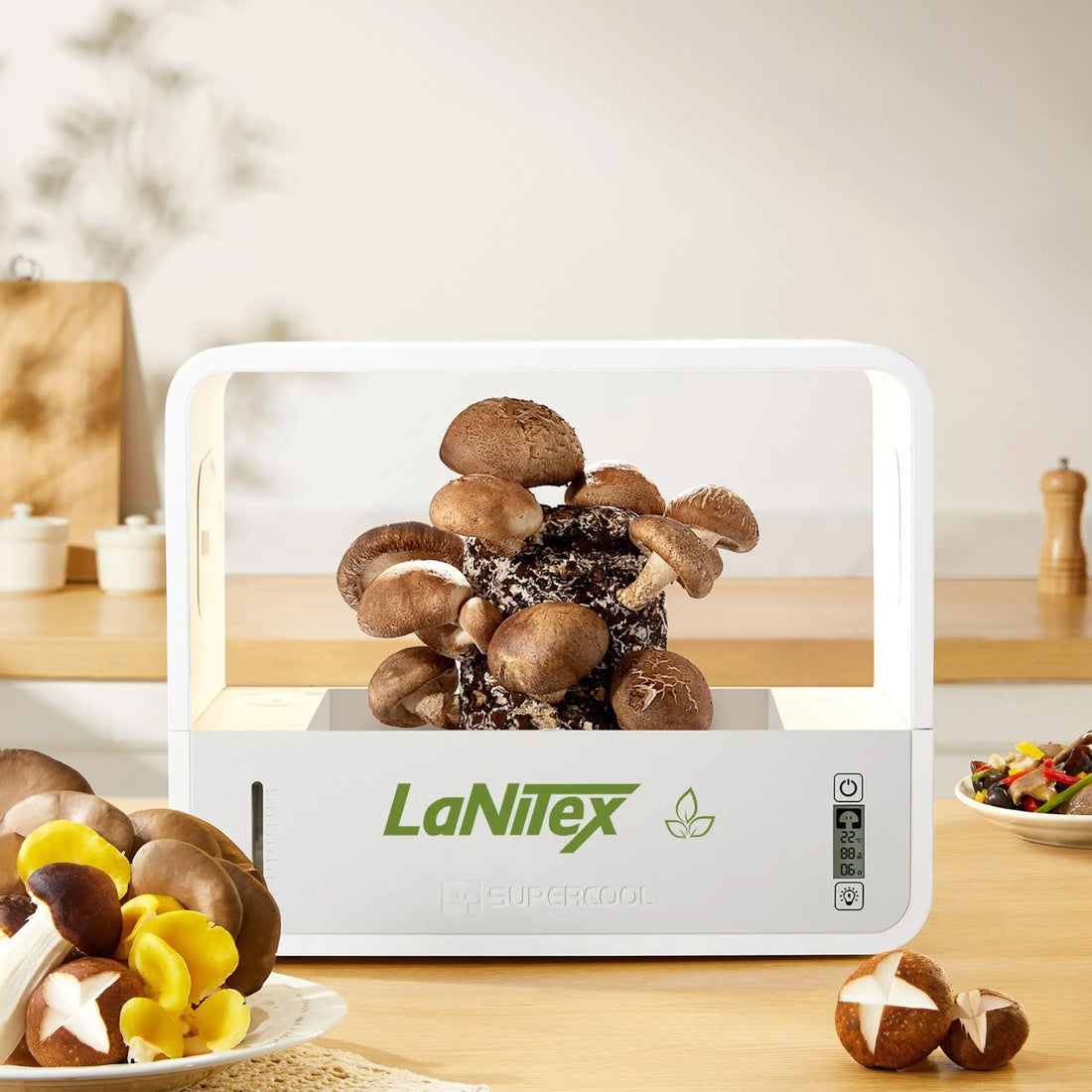
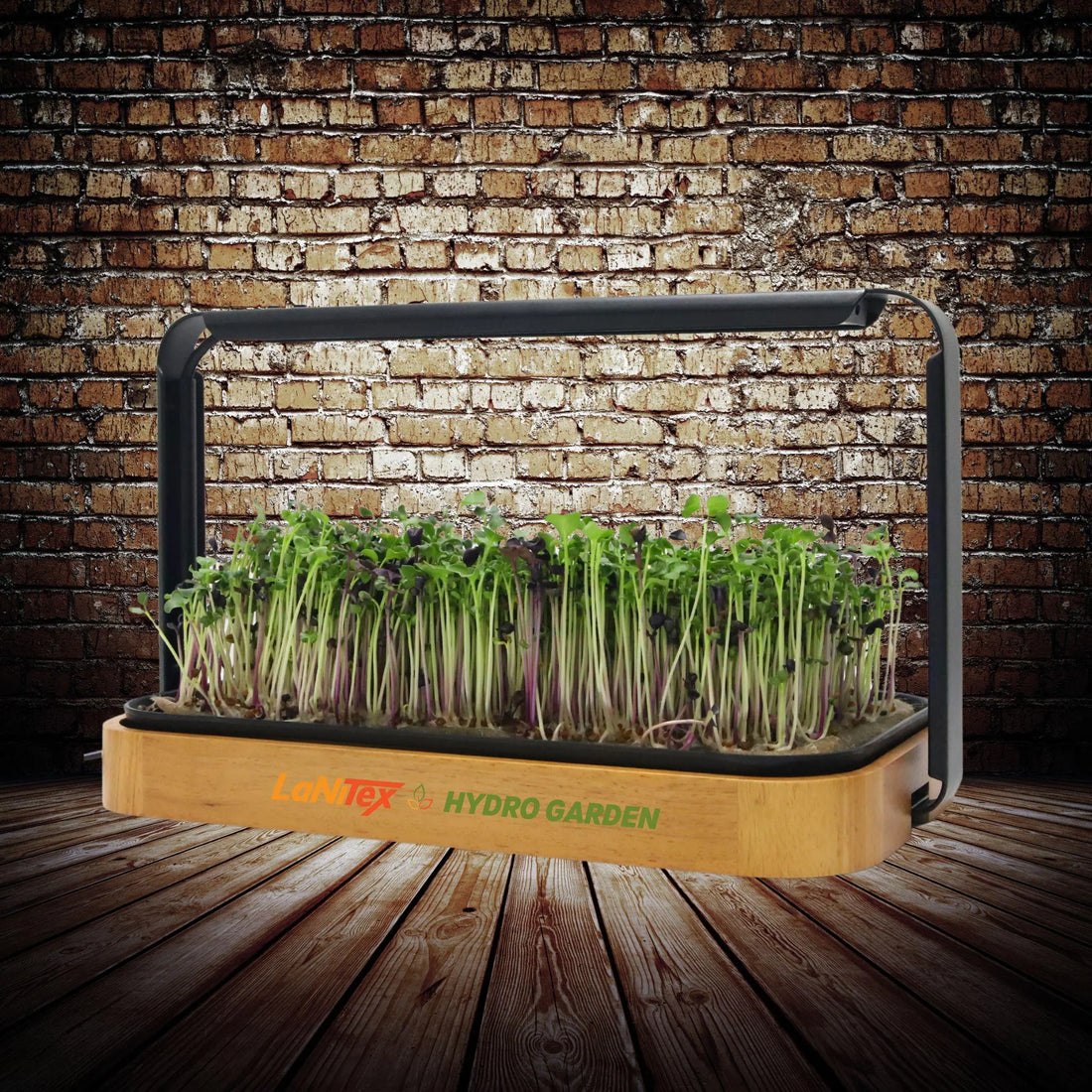
For a first-microgreen project, the Smart Microgreen Kit Black Metal Style at AUD 129 includes integrated humidity lid, bottom-watering reservoir, and LED grow light. Compared with a single Asian-greens supermarket punnet (AUD 4 to 7), break-even is roughly 20 to 30 home-grown punnets - four to six months for most families. To give a sense of the payoff, Penn State Extension microgreen trials measured a standard 1020 tray of tatsoi at around 115 grams of cut microgreens, so one sowing fills several meals' worth of garnish. For a Japanese-restaurant aesthetic, the wooden microgreen kit at AUD 189 is the same kit in a different finish.

Grow your own tatsoi microgreens indoors on the bench, any season — the self-watering tank and full-spectrum LED hold the steady, cool-tolerant conditions this gentle Asian green prefers. You supply the seeds.
Start your first tray →Personally tested at home on the Sunshine Coast before listing.
Kit-aware step-by-step: growing tatsoi microgreens in the Smart Microgreen Kit
Easy difficulty. Indoor kitchen bench. 8 to 14 days from sow to snip. No specialist tools beyond the kit and small kitchen scissors. The kit is the microgreen growing kit (Black Metal) at AUD 129 - integrated humidity lid, bottom-watering reservoir, integrated LED, reusable across cycles.
Step 1: Source untreated AU tatsoi seed
Source untreated tatsoi seed from Greenharvest, Eden Seeds, Mr Fothergill's, Seedmart or The Seed Collection AU. Tatsoi is often listed under the Asian-greens or salad-greens category rather than a dedicated microgreen line - check both sections. Untreated only; no pelleted or coated seed. Asian salad mix packs containing tatsoi are a reliable alternative if tatsoi-solo is hard to find.
Step 2: Prepare the kit
Set up the kit on a level bench within easy reach of natural light and a power point. Lay a germination mat in the inner tray, or fill the tray with 2 to 3 centimetres of fine seed-raising mix lightly firmed. Pre-moisten so the medium is damp not saturated - finger-press should leave a slight indent but no pooling water.
The integrated humidity lid is the difference between mould and a clean harvest. It vents when lifted, traps moisture during blackout, and lifts away cleanly at the light-phase switch.
Step 3: Sow 10 to 12 grams per tray
Sprinkle 10 to 12 grams of tatsoi seed evenly across the tray. Spread to a single layer with no clumps - tatsoi seedlings spread slightly more in the spoon-rosette pattern than mizuna, so a touch lighter than mizuna's 12 to 15 grams works well. Mist lightly to settle the seed against the medium.
Step 4: Blackout phase 2 to 3 days
Close the humidity lid and place the kit away from direct light for 2 to 3 days. Tatsoi germinates fast - radicles emerge within 36 to 48 hours, cotyledons start lifting at 60 to 72 hours. Check daily; mist lightly if the surface dries out.
For thicker, more even stems, some growers add a light weight on top during the first day or two of blackout - a second tray with a small jar of water, or a clean board - so the seedlings push up against gentle resistance before the lid takes over. It is optional with the Smart Microgreen Kit, since the humidity lid already holds the seed in close contact with the medium, but it is a useful trick if a batch comes up leggy.
Step 5: Light phase 12 to 16 hours per day
Lift the humidity lid and switch on the integrated LED for 12 to 16 hours per day (a timer plug helps). Tatsoi tolerates 4 to 22 deg C; ideal indoor window 16 to 22 deg C. Brisbane and Sunshine Coast growers (LaNiTex's Sippy Downs base is in the same warm-humid subtropical zone) get the longest indoor cool-season window - April through October. Sydney coastal humidity (45 to 65 percent) keeps mould risk lower than Brisbane. Melbourne and Adelaide can take tatsoi outdoors April to October on a sheltered north-facing balcony. Perth's dry climate is the friendliest in Australia. Hobart growers can run an outdoor patch May through September.
Tatsoi is more forgiving of less-than-ideal light than most microgreens, so it still does alright in a slightly dim spot - but aim for 12 to 16 hours a day for compact, even growth. Too little light and the stems stretch and go leggy. Gentle, consistent light also keeps the stems tender and the flavour mild.
Step 6: Bottom-water protocol
Add 100 to 150 millilitres of water to the kit's reservoir when the surface starts to look dry - typically every 24 to 36 hours through the light phase. Bottom-watering keeps the surface dry and prevents the dense-sowing mould risk that overhead watering triggers. Do not overhead-spray the canopy once seedlings are upright.
Step 7: Harvest at 5 to 10 centimetres in 8 to 14 days
Harvest when seedlings reach 5 to 10 centimetres tall and first true leaves are emerging (not just cotyledons). Use small clean kitchen scissors to cut just above the medium so you do not pick up soil or fibre. Eat within 3 to 5 days; refrigerate in a lidded container with a dry paper towel.
There is no rush to cut the whole tray at once. Tatsoi holds its flavour and texture well as it grows, so you can snip what a meal needs and let the rest carry on - or leave the tray a few extra days to reach a tender baby-leaf size if you prefer a slightly larger leaf for salads.
Common problems and how to fix them
Most tatsoi failures trace back to four root causes.
Mould from dense sowing plus humid Australian summer
Mould is the main risk, especially during dense sowing in humid Brisbane summer. The fix: airflow, sowing density, bottom-watering discipline. Sow at the lighter end of 10 to 12 grams. Keep an open window or small fan running while the lid is on. Bottom-water only; never overhead-spray. Harvest before plants crowd. Distinguish mould (fluffy white surface growth) from damping-off (seedling stem collapse at the base) - mould is the typical tatsoi fear; damping-off is more a basil signature.
Yellow or leggy seedlings from low light or extended blackout
If seedlings come out pale yellow with long thin stems and undersized cotyledons, the blackout phase ran too long or the light phase is too short or too dim. Move trays to bright indirect light as soon as most seeds have sprouted - do not extend blackout past 3 days. Run the integrated LED for the full 12 to 16 hours per day.
Patchy germination from uneven sowing
If patches come up sparse while others are dense, sowing distribution is the issue. Pre-moisten evenly, sow in two passes (half the seed per pass) at 90-degree directions, and lightly press the seed into the medium before closing the lid.
Pak-choi-confusion errors in care
Tatsoi care diverges from pak choi in two places. Tatsoi tolerates more humidity-risk at the seedling stage (so more aggressive bottom-watering helps), and grows slightly faster at the light phase - do not wait the extra two days a pak choi tray might want.
These risks are real in any open-tray microgreen setup. The Smart Microgreen Kit Black Metal Style at AUD 129 keeps them low: integrated humidity lid, bottom-watering reservoir, integrated LED. The Wooden Style at AUD 189 is the same hardware in a wooden frame. Shipped same week from Sippy Downs, Australia-wide.
Tatsoi in Asian salad mix: the chef's-grade microgreen blend you can grow at home
Tatsoi is the cornerstone mild base of most pre-mixed Asian salad seed packs sold by Australian retailers - the gentle base that lets the peppery cousins layer on. If you see an "Asian greens salad mix" packet on the Greenharvest, Eden Seeds or Mr Fothergill's rack, tatsoi is almost certainly part of it.
Growing tatsoi solo gives more control than a pre-mixed packet. The chef-grade home Asian-salad-mix layers tatsoi (mild base) plus mizuna (frilly mid-heat) plus mibuna (smooth-mustard refined) plus mustard (full-fire) plus radish (sharp pepper finish) for restaurant-quality microgreen-blend layering on stir-fries, fried rice, dumplings, ramen, udon, sushi, bento, poke and chirashi.
Separate trays vs single mix tray is a timing trade-off. Separate trays let you harvest tatsoi at day 8 to 14, mizuna and mibuna at 10 to 15, then blend on the plate at peak freshness. A single mix tray is simpler but uneven harvest. For the first few cycles, run separate trays.
Where to buy tatsoi seeds in Australia (and how to find them in Asian salad mix packs)
Tatsoi seed is often listed under Asian-greens or salad-greens rather than a dedicated microgreen line in AU catalogues. Five neutral suppliers to check:
| Supplier | Tatsoi-specific listing | Asian salad mix alternative | Notes |
|---|---|---|---|
| Greenharvest (greenharvest.com.au) | Often under Asian greens vegetable category | Yes - Asian salad mix packs available | Strongest tatsoi-specific stockist; mature-leaf-focused but seed is microgreen-suitable |
| Eden Seeds (edenseeds.com.au) | Sometimes listed; check "Asian greens" section | Yes - Asian salad mix packs available | Specialist for heritage Asian greens; untreated only |
| Mr Fothergill's (via Bunnings) | Mainstream; check microgreen AND vegetable seed racks | Yes - widely stocked | Most-accessible for first-time growers; in-store at Bunnings nationwide |
| Seedmart (seedmart.com.au) | Microgreen-specific catalogue but tatsoi often absent as dedicated line | Yes - Asian mix packs include tatsoi | Best for dedicated microgreen focus on other varieties |
| The Seed Collection AU (theseedcollection.com.au) | Often grouped under Asian greens or absent as dedicated microgreen line | Yes - Asian salad mix packs include tatsoi | Broadest microgreen hub but tatsoi-specific is patchy |
Check both the microgreen and Asian-greens sections. Asian salad mix packs are often more reliable at smaller retailers. Untreated organic seed is the preference. Larger packets marketed for mature-leaf salad work as a budget option for high-volume sowing.
How to use tatsoi microgreens in the kitchen
The mild mustard with spinach-tender texture suits gentle Asian-cuisine plating and everyday salads. Eight applications:
- Asian salad mix base - mild foundation that lets mizuna, mibuna and mustard layer over without overpowering kids' palates.
- Ramen and udon finish - scatter on the bowl just before serving; residual heat softens without wilting.
- Fried rice topping - added after the pan comes off the heat for fresh crunch.
- Dumpling and gyoza garnish - bright green against the dough wrapper, mild flavour that does not fight the filling.
- Sushi roll filling - tender enough to roll inside maki without bruising.
- Bento box element - a small handful on top of rice.
- Miso soup garnish - scatter at the end; holds shape in hot broth better than baby spinach.
- Stir-fry topping - added after plating, never during the cook.

Recipe idea: tatsoi-base Asian salad blend - equal handfuls of tatsoi, mizuna and mibuna, dressed with rice vinegar, a teaspoon of toasted sesame oil and a pinch of salt. Toss gently. Serve as a side to grilled fish or chicken.
Storage: refrigerate in a lidded container lined with a dry paper towel. Use within 3 to 5 days.

Keep a fresh tray on rotation — 10 soil-free growing mats, the reusable base your kit sows each tatsoi crop on. Ready for your next sowing.
Stock up on mats →Personally tested at home on the Sunshine Coast before listing.
Tatsoi microgreens FAQ
What are tatsoi microgreens and how are they different from full-size tatsoi?
Tatsoi microgreens are the young seedlings of tatsoi (Brassica rapa subsp. narinosa or rosularis), harvested when they are only a few centimetres tall with their first true leaves. Instead of forming the mature spoon-shaped rosette of garden tatsoi, microgreens are cut as tender stems and leaves grown densely in trays. They are used as a garnish or salad green rather than a full cooking green.
How do tatsoi microgreens compare with other Asian greens like mizuna and pak choi?
Tatsoi sits in the same broad Brassica family. Compared with mizuna (finely serrated leaves, sharper mustard bite), tatsoi microgreens are usually rounder-leafed and milder. Compared with pak choi (very mild cabbage flavour), tatsoi has a more distinctly mustard-like flavour. Tatsoi is often included in Asian salad and microgreen blends because it adds a gentle mustard edge and a spinach-like tender texture without overpowering the other flavours.
How long do tatsoi microgreens take to grow and when should I harvest them?
Under good indoor conditions, expect tatsoi microgreens to be ready in 8 to 14 days from sowing. Similar brassica-type microgreens are ready within 1 to 2 weeks. Harvest when the plants are 5 to 10 centimetres tall with first true leaves emerging. Use scissors to cut just above the growing medium so you do not pick up soil or fibre.
What is the basic step-by-step method to grow tatsoi microgreens at home in Australia?
(1) Use a shallow container with drainage holes, about 3 to 5 centimetres deep. (2) Fill with 2 to 3 centimetres of seed-raising mix, lightly firmed. (3) Pre-moisten so it is damp not saturated. (4) Sprinkle tatsoi seed densely and evenly. (5) Optionally cover with a thin layer of mix or a moist paper towel. (6) Mist to settle, then cover for 2 to 4 days. (7) Remove the cover and move to bright indirect light. (8) Bottom-water as needed. (9) Harvest at 8 to 14 days by cutting above the medium.
What do tatsoi microgreens taste like and how can I use them in Asian-inspired dishes?
Tatsoi microgreens have a mild slightly mustard-like flavour with a nutty note and a texture similar to very young spinach. Mature tatsoi has a nuttier taste with a bit of bite; the microgreen stage is gentler but still distinctly Asian brassica. Use them tossed through Asian salads or rice bowls at the end of cooking, as a fresh topping on ramen, udon and miso soup, scattered over dumplings and gyoza, added after cooking to stir-fries, or mixed with mizuna, mustard and pak choi for an Asian salad mix.
What common problems might I face growing tatsoi microgreens and how do I prevent them?
Mould and damping-off (excess surface moisture plus poor airflow - water only when needed, allow drainage, avoid a constantly wet surface). Yellow or leggy seedlings (trays too long in the dark or insufficient light - move to bright indirect light when most have sprouted). Uneven germination (uneven sowing, dry patches, compacted medium - level and gently firm, pre-moisten evenly, keep germination covers moist not dripping). Overwatering (soggy media causes poor growth and fungal issues - keep moist not saturated).
Where can I buy tatsoi seeds for microgreens in Australia?
Tatsoi is sometimes sold more for general vegetable gardens than specifically as a microgreen variety, but you can use the same untreated seed. Australian suppliers like Eden Seeds, Mr Fothergill's and Greenharvest have stocked tatsoi or similar Asian greens, though availability varies. Some dedicated microgreen retailers list Asian salad mixes that include tatsoi. The Seed Collection AU does not list tatsoi as a separate microgreen product. Always check that the seed is untreated and suitable for sprouting or microgreen use.
Do I need a special kit or can I grow tatsoi microgreens in basic containers?
You can grow tatsoi in simple recycled containers with drainage and seed-raising mix. Purpose-designed microgreen kits with a shallow tray, matching reservoir for bottom-watering and suitable growing mats simplify the process - especially on a kitchen bench or in a small apartment. Look for kits with good drainage and a matching base tray for bottom-watering, a shallow depth (3 to 5 centimetres) that matches microgreen needs, and usability with either soil or inert germinating mats. These make it easier to maintain consistent moisture, hygiene and a clean indoor harvest.
Explore other microgreen varieties
Grown Tatsoi once? These pair naturally with the same Smart Microgreen Kit & Germinating Growing Mats.
More brassica greens
Easy to start with
Great in Asian dishes
→ Browse all 22 microgreen varieties | → Microgreens growing guide
About the writer
Laszlo Bulatko founded LaNiTex Hydro Garden on one belief: growing your own fresh food at home shouldn't need a backyard, a green thumb, or a science degree — a sunny apartment windowsill is enough. From the Sunshine Coast, he brings smart indoor growing within reach — hydroponic grow boxes, a benchtop Mini Grow Pot, and the Smart Microgreen Kit — and through the Term-Grow Enrolment programme puts grow boxes in Queensland primary school classrooms. He launched LaNiTex in December 2024 and personally tested every product at home before listing it — drawing on 15 years of earlier brand-building in the Hungarian fishing-tackle trade. Read Laszlo's story on the About Laszlo founder page. ABN 47 682 768 967.
The full range
Find the microgreen kit that suits your kitchen


Supported in Australia - every model tested before listing.
Sources
- Australian Bureau of Statistics homepage (housing and demographic context for Australian growing audiences): abs.gov.au
- Sustainable Gardening Australia: sgaonline.org.au/the-pros-and-cons-of-hydroponic-growing
- Greenharvest AU homepage (Asian-greens seed supplier reference): greenharvest.com.au
- Eden Seeds AU homepage (Asian-greens specialist supplier reference): edenseeds.com.au
- The Seed Collection AU blog hub (microgreen authority reference): theseedcollection.com.au/blog
- Home Microgreens homepage (international microgreen authority): homemicrogreens.com
- Penn State Extension - Growing Microgreens (yield trial reference): extension.psu.edu/growing-microgreens