
Mibuna is the smooth-leaved Japanese mustard most Australian growers haven't met -- and the chef's-secret garnish you can scatter clean across ramen, sushi rolls and bento boxes within ten to fourteen days from a kitchen-bench kit.
Quick answer: Mibuna microgreens (Brassica rapa var. nipposinica) are the young seedlings of a Japanese mustard variety with smooth, narrow strap-like leaves and a mild mustard flavour. They are ready to harvest in 10-14 days, grow best at 18-24 degrees Celsius indoors, and suit any Australian kitchen bench.
Key takeaways:
- Mibuna is a Japanese mustard microgreen (Brassica rapa var. nipposinica, also classified as var. japonica in some sources), distinct from frilly-leafed mizuna (Brassica rapa var. japonica).
- Grow cycle: 10-14 days. Germination 2-4 days at 18-24 degrees Celsius; harvest at 5-10 cm with first true leaves.
- Mibuna seed is genuinely less common than mizuna in Australian catalogues -- order ahead online.
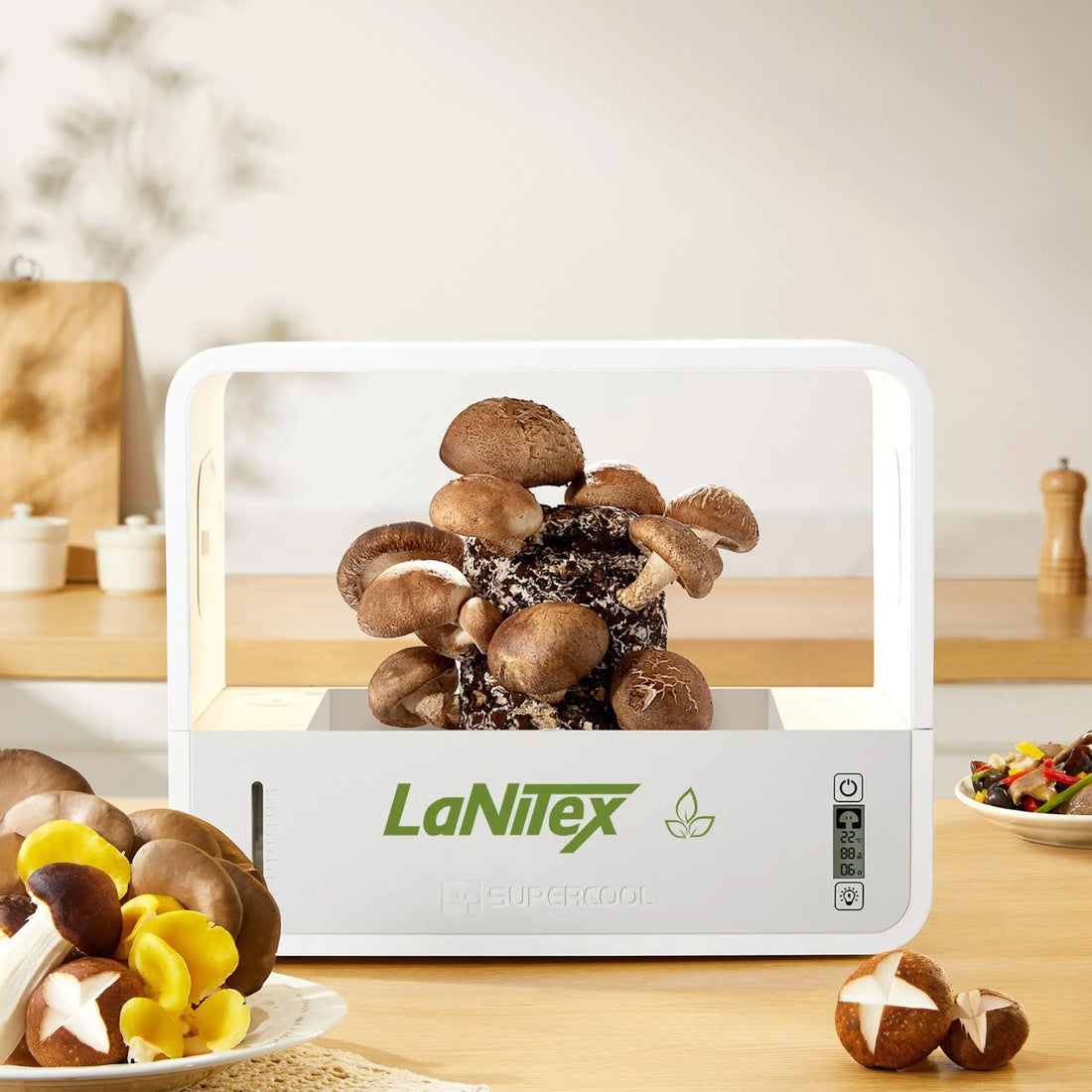
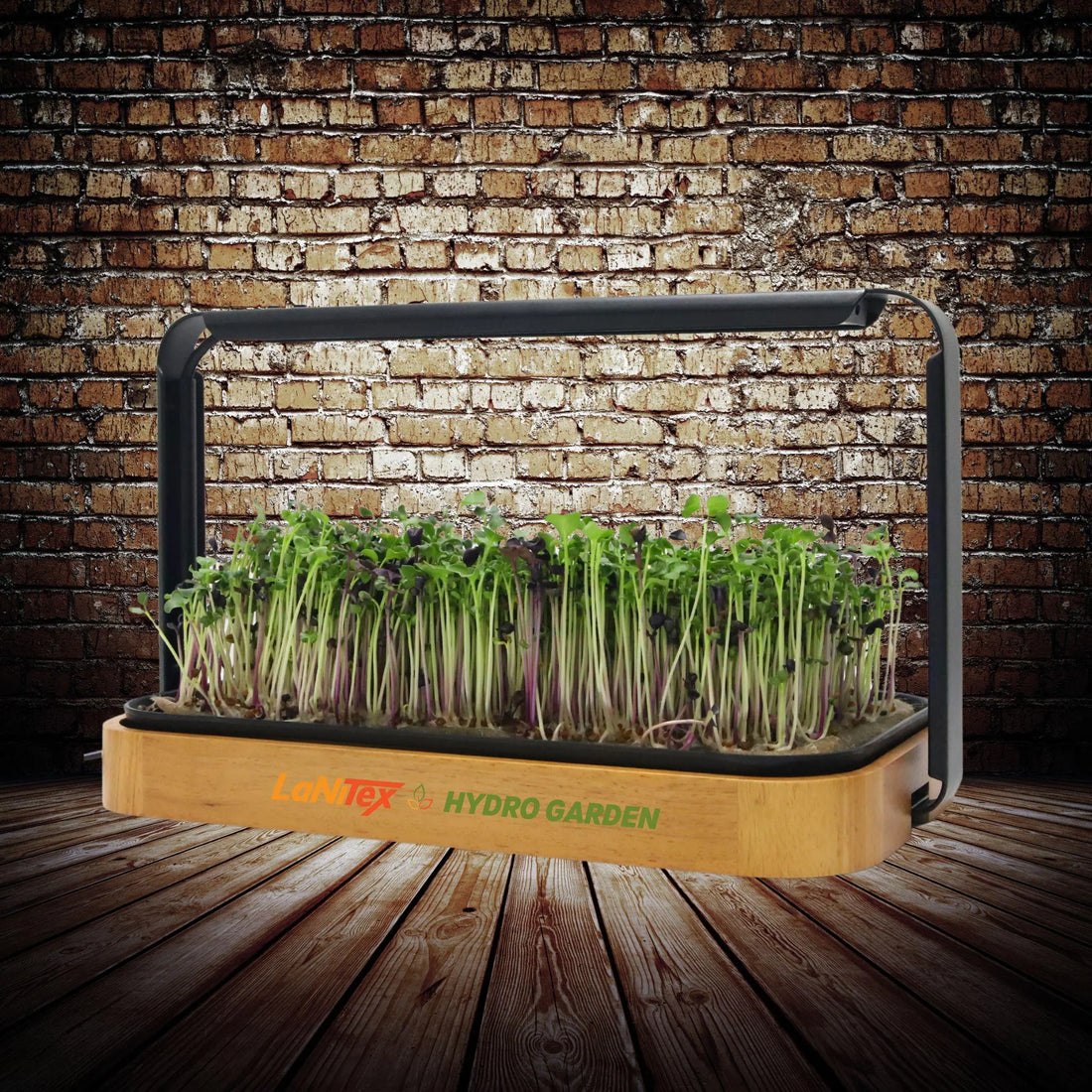
- The LaNiTex Smart Microgreen Kit (Black Metal Style $129 or Wooden Style $189) gives a tidy bench-top setup for repeat flushes.
- At roughly $1.49 per flush with a 10-pack of germination mats ($14.90), home-grown mibuna beats the $5-15 supermarket Asian-greens punnet on cost and reliability.
At a glance:
| Field | Value |
|---|---|
| Species | Mibuna (Brassica rapa var. nipposinica) |
| Days to harvest | 10-14 |
| Difficulty | Easy |
| Taste | Mild mustard, smooth-finish |
| Best uses | Asian salad mix, ramen / sushi / donburi / bento garnish, refined chef-grade plating |
| Recommended kit | Smart Microgreen Kit Black Metal Style ($129) |
What are mibuna microgreens?
Mibuna microgreens are the young seedlings of mibuna, a Japanese leafy brassica with the botanical name Brassica rapa var. nipposinica. The species sits in the Brassicaceae (mustard) family alongside broccoli, radish, kale, rocket, mustard, red cabbage, pak choi and mizuna -- eight other species LaNiTex Hydro Garden already covers in this microgreen cluster.
What sets mibuna apart is the leaf shape. Where mizuna throws up deeply serrated frilly leaves, mibuna grows smooth, narrow, strap-like leaves that read clean against any plating background. The flavour is mild mustard with a fresh, palate-clean finish -- gentler than rocket's sharp bite and a half-step milder than mizuna's mid-heat peppery edge.
Like all microgreens, mibuna is cut once at the seedling stage. The total cycle runs 10-14 days from sowing to harvest indoors, with germination in 2-4 days and the harvest window opening once first true leaves emerge above the cotyledons at 5-10 cm. Visit our pillar guide on growing microgreens at home in Australia for the broader framework, or browse our microgreen varieties chooser to compare mibuna against 25 other easy-to-grow species.

Mibuna vs mizuna microgreens: which Japanese mustard should you grow at home?
Mibuna and mizuna are the two Japanese mustard greens most often confused -- the source of nearly every reader question on mibuna. The distinction matters because the two play different roles on the plate, even though they look adjacent on a seed-supplier shelf.
The four points that matter:
- Leaf shape. Mibuna has smooth, narrow, strap-like leaves that fan out cleanly. Mizuna has deeply serrated, frilly leaves that branch into multiple lobes. At microgreen size you can already see the difference in the first true leaves at day 7-10.
- Botanical subspecies. Mibuna is Brassica rapa var. nipposinica. Mizuna is Brassica rapa var. japonica. Both are different varieties of the same species, within the Brassicaceae family.
- Flavour profile. Mibuna leans milder, with a clean mustard note that fades quickly. Mizuna sits a half-step warmer, between rocket's sharp peppery bite and full-fire mustard greens.
- Plating role. Mibuna gives a refined look for delicate garnishes and chef-grade scatter. Mizuna's frills add visual texture and volume for decorative scatter and salad-mix bulk.
Both share the 10-14 day cycle, both tolerate cool indoor conditions, and both fit any Japanese-cuisine application. Decision tree: choose mibuna for a refined garnish or milder mustard layer; choose mizuna for fuller mid-heat flavour or frilly visual texture. Many home growers run both as a chef's-secret Japanese-greens duo. If you want the full mizuna deep-dive, our Mizuna microgreens guide walks through the frilly-leaf variant with the same depth.
Worth knowing: mizuna is more widely stocked than mibuna in Australian seed catalogues. If you're hunting both, expect mizuna to land first.
My take on growing mibuna at home in Australia
Honest disclosure: mibuna microgreens were not part of the LaNiTex Smart Microgreen Kit pre-launch validation crop list personally tested in Sippy Downs (Sunshine Coast, QLD 4556) before stocking the kit -- radish, broccoli and sunflower were the three calibration crops. The guidance here combines Royal Horticultural Society Japanese-greens references, The Seed Collection AU microgreen notes, Greenharvest AU Asian-greens guides, Yates AU mibuna references and Australian climate-specific adaptation for this cool-season Brassicaceae cousin of mizuna and pak choi.
Mibuna is genuinely less common than mizuna in Australian catalogues, and the sections below acknowledge that honestly -- including which AU suppliers to check first and which substitutions work if local sourcing proves hard. The troubleshooting section names the dense-sowing mould, leggy-light, patchy-germination and heat-bolting pitfalls most likely to bite Australian growers in humid Queensland summer versus cooler southern winter.
Why mibuna microgreens are the chef's-secret Japanese specialty for Australian kitchens
Mibuna is the less-known Japanese mustard variety most Australian home cooks haven't tried -- and that scarcity is exactly what makes it valuable on a refined plate. Where mizuna's frilly leaves add visual texture and bulk, mibuna's smooth narrow strap shape creates a cleaner, more deliberate garnish. The leaf reads as intentional rather than decorative -- which matters when you're plating a ramen bowl, finishing a sushi roll, or scattering across a chirashi bowl for guests.
The chef's-secret angle works on three layers:
- Visual. Smooth strap-like leaves scatter cleanly without the noise of frilly garnish. The result reads more like a Japanese-restaurant plate than a home-cook approximation.
- Flavour. Mild mustard with a clean finish means mibuna adds a peppery layer without overpowering the dish underneath.
- Authenticity. Mibuna belongs in genuine Japanese cuisine -- the variety many Tokyo and Kyoto chefs reach for when they want a refined garnish that won't dominate the protein.
On cost-of-living: supermarket Asian-greens punnets run $5-15 each when you can find mibuna at all (most are mizuna or unmarked mix). Restaurant-supply mibuna sells at $40-80 per kilogram when stockists carry it. Compare that to roughly $1.49 per flush in a LaNiTex Smart Microgreen Kit. The Black Metal Kit ($129 one-time) pays for itself in 9 to 25 punnet swaps -- after that, mibuna costs you pennies per harvest.
Get a fresh grow guide like this every fortnight
Join the LaNiTex Hydro Garden newsletter for practical hydroponic, microgreen and mushroom growing tips for Australian homes. Subscribe to download a free hydroponics starter guide (PDF) and get 10% off your first order.
Join the newsletter →How do you grow mibuna microgreens across Australian climate zones?
Mibuna grows best at 18-24 degrees Celsius indoors, which means many Australian kitchens -- especially in temperate zones -- stay within the ideal band for much of the year, though in hotter regions or heatwaves a cooler room or air-conditioning helps. The crop is cool-tolerant; outdoor mibuna bolts in Australian summer heat (above roughly 25-30 degrees Celsius, varying with humidity and cultivar), which is precisely why indoor year-round growing is the LaNiTex advantage for warm-climate growers.
Climate-zone snapshot:
- Brisbane and South-East Queensland. Warm-humid summers push outdoor mibuna into early bolting. Indoor-only year-round with airflow priority for mould prevention.
- Sydney and NSW coast. Moderate humidity, year-round indoor suitability. Outdoor possible in spring and autumn.
- Melbourne and Adelaide. Temperate climate, spring-autumn outdoor option, indoor year-round preferred for consistency.
- Perth. Dry, low-humidity friendly indoor. Cool-season outdoor works April-September.
- Hobart. Cool-winter natural fit, indoor or outdoor works most of the year.
- Queensland and Northern Territory tropics. Indoor-only year-round, especially in summer when outdoor temperatures sit above the bolting threshold.
The Sippy Downs subtropical microclimate (where LaNiTex is based) sits in the harder end of the Brisbane category. Indoor growing in the Smart Microgreen Kit removes climate as a variable -- a kitchen bench in Sippy Downs in February gets the same mibuna result as a Hobart bench in July.
Same Smart Microgreen Kit -- choose your style: the microgreen growing kit (Black Metal) if you're starting fresh, or the wooden microgreen kit for the kitchen-feature finish. Both deliver mibuna-friendly 18-24 degree indoor conditions anywhere in Australia. Our broccoli microgreen guide covers the same Brassicaceae family entry-point for kid-friendly first flushes.

Grow your own mibuna microgreens indoors on the bench, any season — the self-watering tank and full-spectrum LED hold the steady conditions this cool-tolerant Japanese mustard prefers. You supply the seeds.
Start your first tray →Personally tested at home on the Sunshine Coast before listing.
Kit-aware step-by-step: growing mibuna microgreens in the Smart Microgreen Kit
The LaNiTex Smart Microgreen Kit handles mibuna the same way it handles eight Brassicaceae cousins in this cluster. Its integrated humidity lid, bottom-water reservoir and LED day cycle make mibuna reliably easy in Australian conditions -- especially in humid summer when dense-sowing mould is the main risk. The trick is matching humidity to the stage: keep the lid closed through the 2-4 day germination window so the seed holds the high humidity it needs, then open it for airflow once the tray moves under light, since drier moving air is what keeps surface mould off a dense-sown tray.
Choose your kit
Set up the Smart Microgreen Kit on a flat kitchen bench. Both Black Metal Style ($129) and Wooden Style ($189) are the same kit underneath -- only the tray aesthetic differs. Choose Black Metal for the entry-tier price point and bench-anywhere flexibility. Choose Wooden for the kitchen-feature finish.
Source quality mibuna seed
Mibuna seed is less common than mizuna in Australian catalogues. Check Greenharvest, Eden Seeds, Mr Fothergill's, Seedmart or The Seed Collection for untreated mibuna or "Japanese mustard greens" seed (stock varies by season and supplier). Order ahead online if local nurseries do not stock it. Untreated or organic seed is the standard preference -- no pelleted or chemically coated seed.
Sow at 15-25 grams per 1020 tray
Pre-wet the germinating mat or fine medium. Scatter 15-25 grams of mibuna seed evenly across the tray surface (seeds should almost touch but not pile up). Press lightly into the surface. Do not bury -- mibuna germinates from the surface.
Mibuna may tolerate slightly tighter sowing than its frilly mizuna cousin -- in our experience the smooth strap-leaf shape catches less surface moisture per square centimetre. It is not mould-resistant, especially in humid Brisbane summer, but in our dense-sowing trials the leaf-shape advantage has shown up.
Blackout for 2-3 days
Cover the tray with the kit lid in dark mode (or a second tray inverted). Mibuna germinates in 2-4 days. Mist lightly if the surface dries out, but avoid waterlogging -- the most common day-3 failure mode is over-misting plus poor airflow producing first signs of surface mould.
Light phase 12-16 hours
Once cotyledons unfurl and stand 1-2 cm tall, switch the integrated LED to its day cycle for 12-16 hours daily (8 hours is the minimum on a bright windowsill). Maintain 18-24 degrees Celsius. The LED removes windowsill variability.
Bottom-water as needed
Add water to the integrated reservoir rather than overhead watering, topping up as needed to keep the medium moist but not waterlogged. Bottom-watering keeps the leaf surface dry and prevents dense-sowing mould. The integrated humidity lid handles the rest -- the #1 reason cheap competitor kits fail in a Brisbane February is the lack of controlled humidity over a dense-sown tray.
Harvest at 5-10 cm
Around day 10-14, mibuna reaches 5-10 cm with first true leaves emerging above the cotyledons. Use clean scissors to cut just above the medium. Rinse, pat dry, and store in a sealed container in the fridge for 5-7 days. The smooth strap leaves hold their shape better than mizuna's frills in storage.
Comparison table -- kits and mat for mibuna microgreens:
| Feature | Black Metal $129 | Wooden $189 | DIY tray |
|---|---|---|---|
| One-time cost | $129 | $189 | ~$15-30 |
| Aesthetic | Bench-anywhere matte | Kitchen-feature timber | Plastic tray |
| Integrated LED | Yes | Yes | No (windowsill only) |
| Bottom-water reservoir | Yes | Yes | No |
| Humidity-control lid | Yes | Yes | Cling-film workaround |
| Reusable flushes | Years | Years | Often single use; sturdier nursery trays can be reused |
| Mibuna-specific suitability | High (mould protection) | High (mould protection) | Medium (mould risk in humid AU summer) |
Ready to set up? The Smart Microgreen Kit comes in two styles -- Black Metal at $129 (entry-tier, chef's-secret first-mibuna fit) or Wooden at $189 (premium kitchen-feature for the Japanese-restaurant-style aesthetic).
The integrated humidity lid prevents the #1 reason cheap single-flush kits fail in a humid Brisbane summer -- uncontrolled moisture pooling on dense-sown trays produces surface mould by day three or four.
Common problems with mibuna microgreens and how to fix them
Most mibuna problems trace back to one of four causes: dense-sowing mould, leggy seedlings, patchy germination, or heat-bolting bitterness. Mould sits at the top of the list because dense-sown Brassicaceae microgreens in humid Australian summer face genuine surface-mould risk -- and mibuna shares that risk with every other dense-sown brassica.
The fixes:
- Mould (surface fluff on the medium or seedling base). Cause: overwatering, poor airflow, dense sowing in high humidity. Fix: sow in a single even layer, use a fan or open window for airflow, bottom-water only, harvest before plants crowd. Mibuna's smooth-strap leaf shape has a minor advantage over mizuna's frillies (less surface area to hold moisture between leaves) -- margin advantage, not resistance. Don't conflate mibuna's mould risk with basil's signature damping-off (stem collapse) -- mibuna's lead failure mode is surface mould from dense sowing.
- Leggy or pale seedlings. Cause: insufficient light. Fix: move to a brighter spot once cotyledons unfurl, or extend the LED to the full 12 hours. Pale-yellow seedlings on day 5 mean the lights need to come on sooner.
- Patchy germination. Cause: dry patches or uneven sowing. Fix: pre-water the medium thoroughly, scatter seed in two passes (crossing the tray in different directions), keep covered for the full 2-3 day blackout.
- Bitterness or stringiness. Cause: harvesting too late, or heat-stressed seedlings. Fix: harvest at 5-10 cm, not 15+ cm. Keep indoor temperature under 26 degrees Celsius. If a Brisbane heatwave pushes the kitchen above 28 degrees, run the LED on a shorter cycle.
Airflow and bottom-watering remain non-negotiable in humid Australian summer -- mibuna's smooth-leaf edge is small.
The smart-kit advantage: integrated humidity control, LED day cycle, and bottom-water reservoir remove three of the four common-failure variables. The fourth (heat-bolting) is a kitchen-temperature variable the kit can't control -- but the indoor environment in most Australian homes stays inside the mibuna-friendly band for most of the year; in hotter regions or summer heatwaves it can still exceed the ideal 18-24 degrees Celsius, so use air movement or a cooler room.
How to use mibuna microgreens in Asian cooking -- ramen, sushi, donburi and bento
Mibuna's smooth strap-like leaves and mild mustard flavour fit a long list of Asian-cuisine applications. Six core uses where mibuna outperforms generic microgreens:

- Ramen. Scatter a pinch across the broth surface just before serving. The smooth leaves stay distinct rather than wilting into mush.
- Sushi roll filling. Use mibuna instead of shredded cabbage inside futomaki or California rolls. The mild peppery edge cuts through avocado richness.
- Donburi rice bowls. Top simmered protein (chicken, pork, tofu) with mibuna for a clean garnish that signals chef-style intention.
- Bento box. Add a small mibuna cluster as a fresh-greens compartment beside rice and pickled vegetables.
- Chirashi bowls. The smooth leaf shape suits the artfully-scattered chirashi aesthetic better than mizuna's frilly volume.
- Japanese-style microgreen salad. Mix mibuna + pak choi microgreens + radish microgreens with sesame dressing and rice vinegar for a chef's-grade Asian salad mix.
A light recipe idea: cold soba noodle salad with chilled dashi, sliced spring onion, a soft-boiled egg, and a generous scatter of mibuna at the table. Under fifteen minutes. The mibuna signals this isn't a supermarket-microgreen substitution -- it's the genuine Japanese article.
Mibuna also takes gentle heat. Wilt a handful into miso soup off the boil, or fold it through a stir-fry in the last few seconds before you plate up -- added right at the end, a quick warm-through keeps the leaf intact and the mustard note fresh, where a longer cook leaves it limp and dull.
Storage tip: after harvest, rinse mibuna under cool tap, pat dry with a clean tea towel, and store in a sealed container lined with kitchen paper in the fridge crisper. Use within 5-7 days.
Are mibuna microgreens nutritious?
Mibuna microgreens pack a brassica-family nutrition profile into a tiny leaf. Like other mustard-family microgreens, they are a source of vitamin C, vitamin K and provitamin A carotenoids such as beta-carotene, plus the antioxidant compounds -- including the glucosinolates typical of brassicas -- behind that fresh mustard edge.
The interesting part for home growers is concentration. Research from the University of Maryland (the widely cited Xiao et al. 2012 study in the Journal of Agricultural and Food Chemistry) measured vitamins C, E, K and carotenoids across 25 microgreens and found the seedling leaves can carry far higher concentrations than the mature plant -- by some measures four to forty times more, depending on the nutrient and the species. The exact figure shifts crop to crop, so treat it as a general pattern rather than a fixed number: harvesting a brassica at the microgreen stage tends to concentrate its vitamins and antioxidants into that first flush.
In practice, a scatter of fresh-cut mibuna adds those nutrients to a dish raw and at their peak -- which is exactly when a 10-14 day kitchen-bench crop is at its best.
Where to buy mibuna seeds in Australia (and what to do if you can't find them)
Mibuna seed is genuinely less common than mizuna in Australian catalogues. That's the honest framing many supplier-affiliated guides won't give you -- so factor it into your planning from the start.
Australian seed suppliers worth checking, in priority order:
- Greenharvest. Often stocks an Asian-greens range that includes mibuna or "Japanese mustard greens" packets. Most reliable starting point.
- Eden Seeds. Broader Asian-greens specialist with rotating stock. Worth checking before mainstream nurseries.
- Mr Fothergill's. Mainstream availability across Bunnings and supermarkets. Mibuna stock less consistent than mizuna; check online before driving out.
- Seedmart. Microgreen-specific focus. Better odds for finding mibuna marketed for the microgreen stage.
- The Seed Collection. Broader microgreen hub. Mibuna may be grouped with mizuna or under "Japanese mustard greens" rather than its own line.
What to do if mibuna seed isn't available locally: order ahead online from Greenharvest or Eden Seeds with a week of lead time; check independent Asian-greens specialist suppliers that mainstream catalogues skip; use larger salad-production packets if microgreen-specific listings are scarce; substitute mizuna as the closest cousin (same 10-14 day cycle, frilly rather than smooth-strap, a half-step warmer); or grow both side-by-side as a chef's-secret Japanese-greens chooser.
Untreated or organic seed is the standard preference for microgreens. Avoid pelleted, chemically coated, or treated seed.

Keep a fresh tray on rotation — 10 soil-free growing mats, the reusable base your kit sows each mibuna crop on. Ready for your next sowing.
Stock up on mats →Personally tested at home on the Sunshine Coast before listing.
Mibuna microgreens FAQ
What are mibuna microgreens?
Mibuna microgreens are the young seedlings of mibuna (Brassica rapa var. nipposinica), a Japanese leafy brassica related to mizuna. Grown for just 10-14 days, they produce fine stems and smooth, strap-like leaves with a fresh, mild mustard flavour. Like other microgreens, they are cut once at the seedling stage rather than grown to full-size plants.
How are mibuna microgreens different from mizuna microgreens?
Mibuna and mizuna are often confused because they are both Japanese brassicas used in salad mixes, but they differ: mibuna has smooth, narrow, strap-like leaves while mizuna has deeply serrated frilly leaves. Mibuna has a milder mustard flavour vs mizuna's sharper peppery edge. Mibuna gives a neat refined look for delicate garnishes; mizuna's frills add more texture and volume.
How do I grow mibuna microgreens at home in Australia?
Mibuna microgreens follow the same steps as other brassica microgreens: use a shallow tray or punnet with drainage 3-5 cm deep, fill with seed-raising mix or growing mat, and pre-water evenly. Sow seed densely at 15-25 g per 1020 tray (almost touching). Cover for germination (2-4 days). Once germinated, move to bright indirect light, water from below, and harvest at 5-10 cm tall with first true leaves (about 10-14 days).
How many days do mibuna microgreens take to harvest?
Under typical Australian indoor conditions, mibuna microgreens are usually ready to harvest in 10-14 days after sowing (occasionally up to 15 in cooler conditions). Similar to other brassica and salad microgreens, they are ready when 5-10 cm tall with first true leaves. Cooler temperatures or lower light slow growth; warm bright conditions on a windowsill or covered outdoor bench bring them on quickly.
How can I use mibuna microgreens in Asian and everyday cooking?
Mibuna microgreens fit naturally into Asian-style dishes and everyday meals: toss through Japanese-style salad mixes with lettuce, cucumber, radish and sesame dressing; add a fresh mustard note to rice bowls, poke bowls, noodle salads or bento boxes; use as a finishing garnish on ramen, miso soup or stir-fries (just before serving so they stay crisp); mix with other microgreens for an Asian salad mix with chef's-secret flavour and smooth texture.
What common problems might I face when growing mibuna microgreens in Australia?
Main issues: mould or rot (caused by overwatering, poor drainage, stagnant air -- use trays with drainage, avoid waterlogging, allow airflow); leggy pale seedlings (low light -- move to brighter spot once sprouted); uneven germination (dry patches or inconsistent moisture -- pre-water mix evenly, cover during germination); heat stress in warm AU climates (keep out of harsh midday sun on Sunshine Coast and similar regions).
Where can I buy mibuna seeds for microgreens in Australia, and are they easy to find?
Mibuna seed is available from some AU seed companies specialising in Asian greens and salad mixes, but it is generally less common than mizuna. Look for mibuna or "Japanese mustard greens" in online seed stores that ship within AU, check nurseries with broader Asian vegetable seed ranges, or buy larger packets marketed for salad production. AU guides recommend untreated or organic seed for microgreens. Mizuna is more widely stocked -- order mibuna ahead online for reliability.
Do I need a special kit to grow mibuna microgreens, or can I use basic containers?
Both approaches work. Basic option: re-used punnets or shallow trays with drainage holes plus seed-raising mix (commonly recommended in AU microgreen guides). Kit option: a purpose-built setup like a Smart Microgreen Kit (black metal or wooden) paired with Germinating Growing Mats makes the process tidier, helps with even watering, and looks more presentable on a windowsill or kitchen bench. Both need shallow containers, good drainage, fine medium or mat, consistent moisture and light.
Explore other microgreen varieties
Grown Mibuna once? These pair naturally with the same Smart Microgreen Kit & Germinating Growing Mats.
More brassica greens
Easy to start with
Great in Asian dishes
→ Browse all 22 microgreen varieties | → Microgreens growing guide
About the writer
For Laszlo Bulatko, LaNiTex Hydro Garden is as much a mission as a business: helping everyday Australian families grow their own fresh food at home, even without a backyard. From the Sunshine Coast he makes smart indoor growing simple and affordable — hydroponic grow boxes, a benchtop Mini Grow Pot, and the Smart Microgreen Kit — and runs the Term-Grow Enrolment programme placing grow boxes in Queensland primary school classrooms. He founded and runs LaNiTex, which launched in December 2024, and personally tested every product at home before listing it — drawing on 15 years of earlier brand-building in the Hungarian fishing-tackle trade. More on the About Laszlo founder page. ABN 47 682 768 967.
The full range
Find the microgreen kit that suits your kitchen


Supported in Australia - every model tested before listing.
Sources
- LaNiTex Hydro Garden -- Growing Microgreens at Home in Australia (pillar guide): covers 7-10 day cycle and 7 AU capital climate guidance.
- LaNiTex Hydro Garden -- Microgreen Varieties in Australia: mentions mizuna and mibuna in the Brassicaceae chooser.
- LaNiTex Hydro Garden -- How to Grow Mizuna Microgreens in Australia: mizuna deep-dive with the disambiguation pair section.
- The Seed Collection (Australia) -- The Comprehensive Guide to Growing Microgreens: broad microgreen technique guidance for the AU market.
- Greenharvest (Australia) -- Asian-greens range cultivation notes for the Brassicaceae Japanese-mustard family.
- Royal Horticultural Society -- Japanese-greens botanical references for Brassica rapa var. nipposinica subspecies confirmation.
- University of Maryland, Department of Nutrition and Food Science -- Mighty Microgreens: summary of the Xiao et al. 2012 study (Journal of Agricultural and Food Chemistry) on microgreen vitamin and carotenoid density versus mature leaves.