
If you've killed every plant you've ever owned, start here. Radish microgreens are one of the fastest, most forgiving crops in the tray - peppery, crisp and ready to harvest in about five days on a kitchen bench.
Quick answer: Radish microgreens are one of the fastest reliable microgreens to grow at home in Australia (5-10 days). They have a punchy peppery bite and a colourful stem-and-leaf garnish.
Key takeaways:
- Radish microgreens go from seed to harvest in 5-10 days indoors in Australia.
- The three popular varieties are Japanese (mild green), Pink (rosy medium heat), and Purple Sango or Rambo (deep purple, spicy).
- Sow densely on a mat or shallow soil tray, blackout for 2-3 days, then move to bright indirect light.
- Mould is the #1 beginner failure -- bottom-watering, airflow, and a humidity lid prevent it.
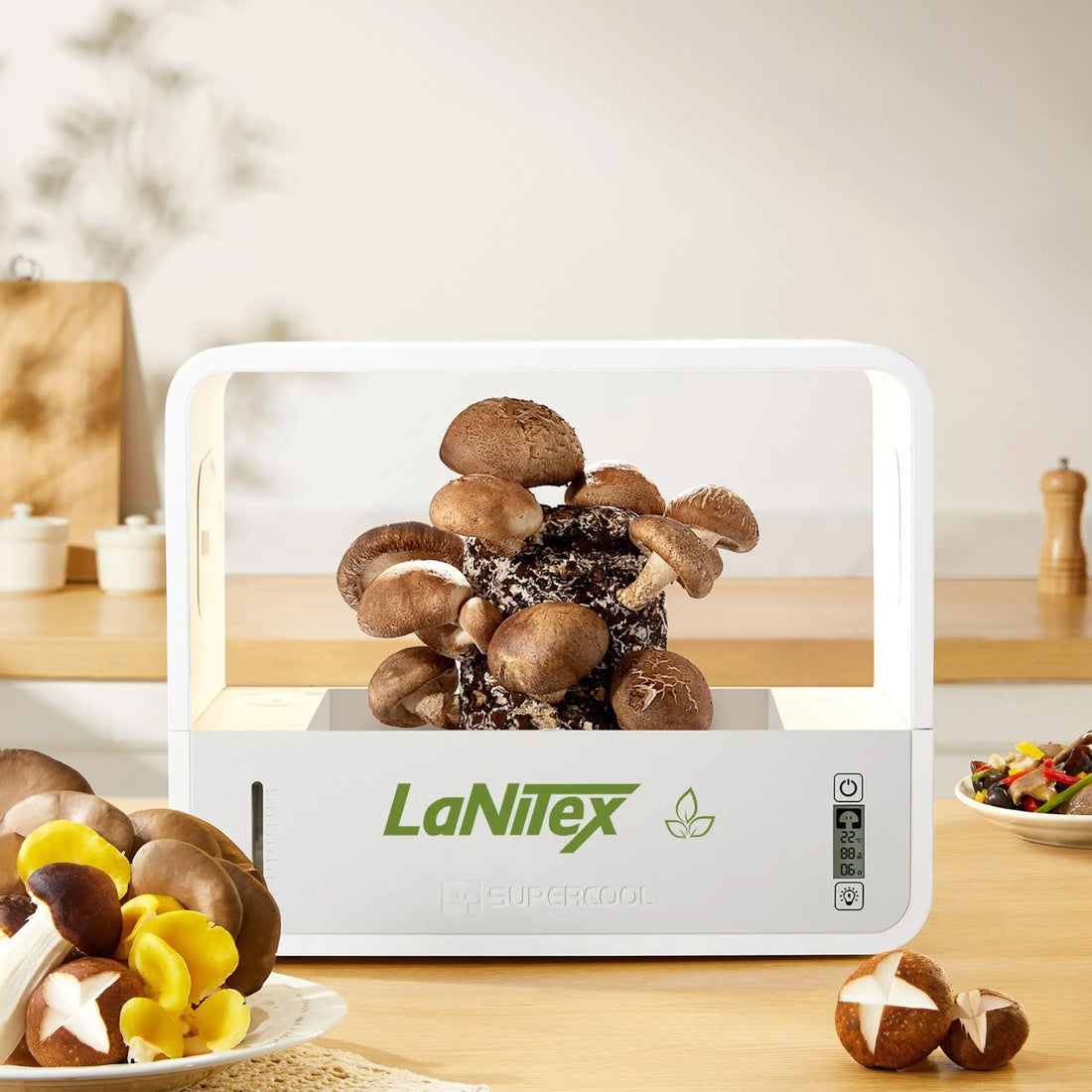
- LaNiTex sells the hardware (Smart Microgreen Kits + reusable germination mats); seeds come from Australian seed suppliers.
At a glance:
| Field | Detail |
|---|---|
| Species | Raphanus sativus |
| Days to harvest | 5-10 |
| Difficulty | Easy |
| Taste | Punchy, peppery and crisp |
| Best uses | Garnish, sangas, grain bowls, sushi |
| Recommended kit | Smart Microgreen Kit -- Black Metal $129 or Wooden $189 |
At the LaNiTex Hydro Garden test bench in Sippy Downs on the Sunshine Coast, radish has been the fastest microgreen that new growers can sow, watch and harvest without messing it up. How to grow radish microgreens at home boils down to a 5-to-10-day reward loop: the right kit, a packet of untreated seed, and a bit of airflow discipline. This 2026 beginner guide covers timing, the three popular varieties (Japanese, Pink, Purple Sango), step-by-step setup, common problems, and how to get reliable harvests through humid Aussie summers.
What are radish microgreens?
Radish microgreens are young radish plants (Raphanus sativus) harvested at the first-true-leaf stage, when the seedlings hit 5-10 cm tall. Sown densely on soil or a fibre mat, then snipped above the substrate with kitchen scissors, they bring a peppery kick to salads, sangas and sushi plates.
The flavour is sharper than mature radish -- a peppery bite that ranges from mild and crisp (Japanese cultivars) to bold and spicy (Purple Sango). Stems are tender and colour through pale green, pink, or deep purple depending on the cultivar.
Radish is in the brassica family, alongside broccoli and mustard. Brassica microgreens share fast germination and an upright growth habit, which is why radish microgreens are one of the first crops most beginners try indoors.
Why grow radish microgreens at home in Australia?
A 50 g punnet of supermarket microgreens in Brisbane, Sydney, or Melbourne often costs a few dollars (commonly around $4 to $7). A single $14.90 ten-pack of germination mats plus a small bag of radish seed can yield a comparable harvest every 5-10 days for weeks, so the per-tray cost drops to a fraction of retail.
Beyond cost, fresh microgreens have a colour and flavour intensity that punnet greens (which often sit days in transit) cannot match. Radish, pea, and sunflower are among the microgreens first-time growers most often try in Australian apartments.
Year-round indoor growing also avoids the heat-and-bolt cycle that limits outdoor radish in Queensland summers. A kit with an integrated LED produces the same harvest in July as it does in February.
What I've learned about growing radish microgreens from research
Honest disclosure: Laszlo hasn't personally grown radish microgreens through a full Japanese-vs-Pink-vs-Purple-Sango comparison run at the Sippy Downs (Sunshine Coast, QLD 4556) bench yet -- that first-person variety comparison is queued for a Phase 4 refresh once each cultivar has been run through the Smart Microgreen Kits. The variety-comparison guidance in this guide combines The Seed Collection Australia's product specs for the Japanese, Pink and Purple Sango ('Rambo') cultivars, Savvy Gardening's indoor radish microgreen guide, Quantum Microgreens' no-fail tray protocols, and publicly available day-by-day timing references, all cross-checked against the Smart Microgreen Kits' integrated LED + humidity-lid setup.
Why radish microgreens are the quickest win for Aussie beginners (5-10 days)
Radish has the shortest reliable seed-to-harvest window of the common microgreens. Germination kicks off within 1-2 days, cotyledons unfurl by day 3-4, and the first true leaves appear around day 5-7. Most trays are ready to cut between day 5 and day 10.
Climate matters. In a warm Brisbane room around 22-26 °C, expect 5-7 days to harvest. In cooler Melbourne or Hobart rooms (16-20 °C), expect 8-10 days. If your summer room regularly pushes above the mid-20s, run it in air-con or a cooler spot; hot, still rooms of 28-30 °C or more slow growth and raise mould risk. The integrated LED in a Smart Microgreen Kit narrows that gap because plants no longer rely on a window for light.
The 5-10 day reward loop is the reason radish often becomes a household's first repeat-grown microgreen. It is fast enough that a beginner sees a finished crop before motivation drops.
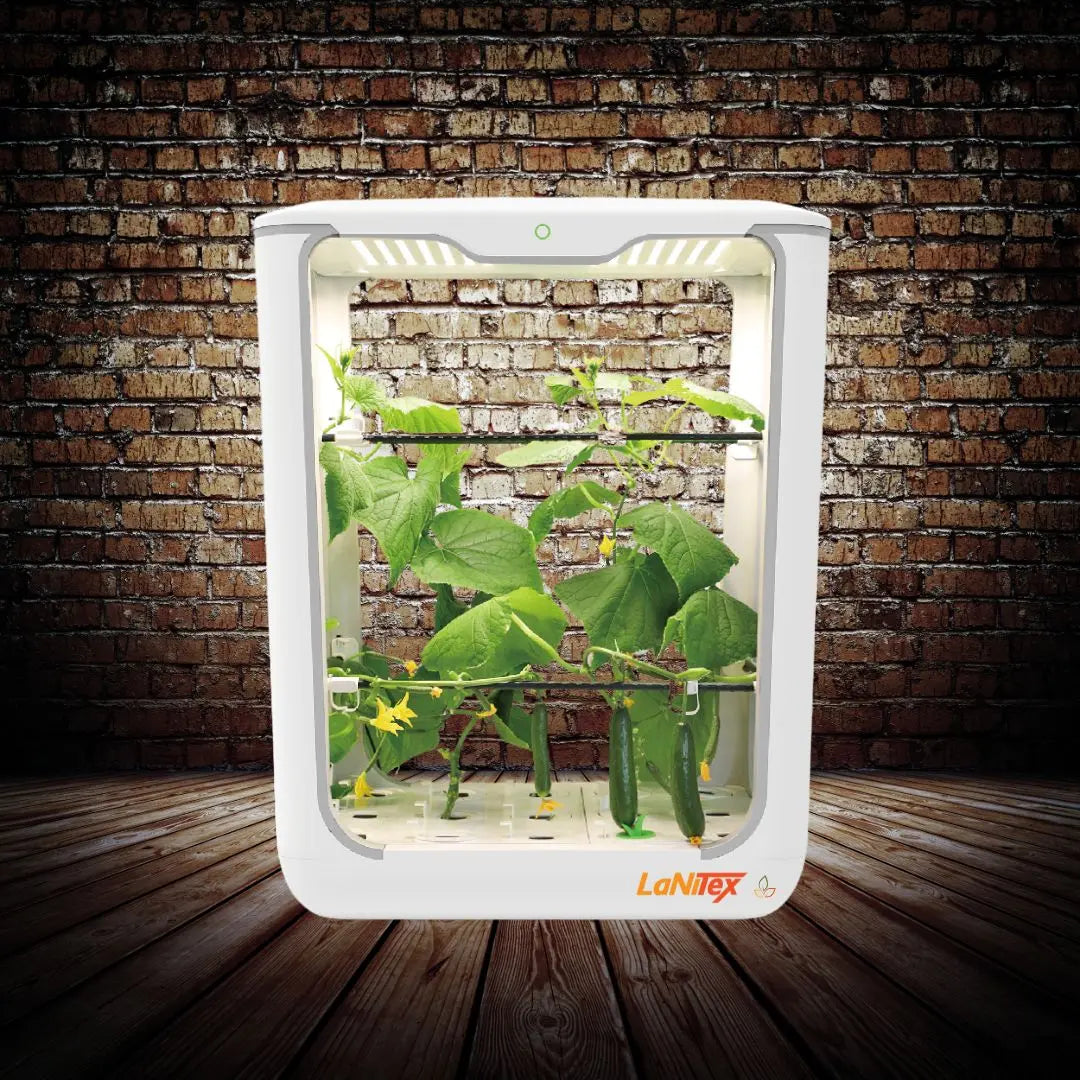
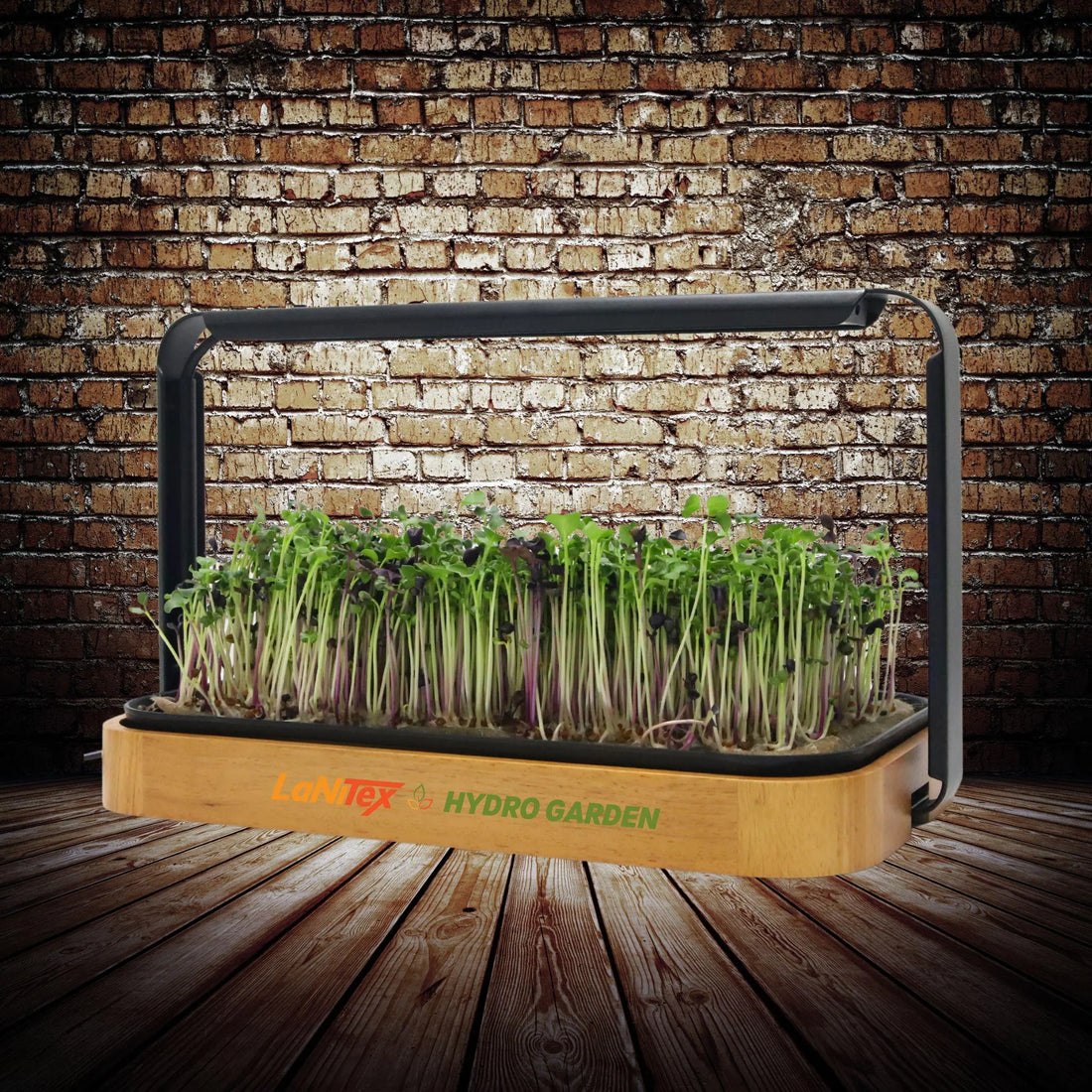
Same Smart Microgreen Kit -- choose your style: microgreen growing kit (Black Metal) or wooden microgreen kit. Both run the same LED + integrated water + reusable lid system; the difference is just the tray aesthetic.

Grow your own radish microgreens indoors, harvest in 7–14 days — the self-watering tank and full-spectrum LED handle the daily work. You supply the seeds.
Start your first tray →Personally tested at home on the Sunshine Coast before listing.
Step-by-step: how to grow radish microgreens from seed to harvest
This is the protocol most home growers in Australia follow for radish microgreens. It assumes a small indoor kit with a tray, a humidity lid, and an LED.
Choose your kit
For most home growers, the Smart Microgreen Kit covers everything except seed. Same Smart Microgreen Kit, two styles. The Black Metal Style ($129) and the Wooden Style ($189) run identical LED, integrated water and reusable lid systems; the only difference is whether you want the workbench look or a kitchen-grade timber finish.
Source quality seed
LaNiTex Hydro Garden does not sell seed. Reliable Australian seed suppliers for radish microgreens include The Seed Collection, Mr Fothergill's, Eden Seeds, Greenharvest, and Seedmart. Look for untreated seed labelled for microgreens, and buy bulk packets if you plan to grow weekly.
Sow density
Aim for a dense, even single layer of seed -- close enough that they nearly touch, but not stacking. For a 24 x 18 cm tray, start with about 1 tablespoon of radish seed for a dense single layer. That tray is smaller than a standard 1020 tray (which takes 2 to 3 tablespoons), so it needs proportionally less seed; only push a little higher once your airflow and mould control are dialled in. Radish seed is small, so there's no need to soak it first; sow it dry straight onto the mat. Soaking is a sprouting step, not a microgreen one.
Blackout phase (2-3 days)
"The cover minimises evaporation, keeps the seeds from drying out, and provides a darker environment."
Cover the tray with the humidity lid or a second tray. Keep it dark and warm for 2-3 days (adjust between 1 and 4 days to your cultivar and room temperature). Most seeds will crack and put down roots in this window. Skipping blackout produces weaker, less uniform stems. For even sturdier, more uniform stems, some growers add a little weight during blackout: a second tray stacked with a small weight presses the seed into firm contact with the mat, so the shoots push up evenly against the resistance. Lift it as soon as the cotyledons start to dome the cover.
Light phase (day 3 onwards)
Once cotyledons appear, lift the lid and switch on the LED. Aim for 12-16 hours of light per day (16-18 hours gives denser stems if your LED supports it). Bright indirect natural light works in a pinch, but a dedicated LED keeps growth even -- especially in winter when southern Australian rooms are dim.
Radish is the fastest reliable microgreen for a first-time grower. -- Laszlo Bulatko, LaNiTex Hydro Garden
Bottom-water vs misting
Once roots have established (day 3-4), water from the bottom by pouring about 50-100 ml into the tray base, adjusting to how quickly your tray dries. Avoid heavy misting from above after this point. Top-misting wets leaves and stems, which combined with warm humid air invites mould.

Harvest at 5-10 cm
When microgreens stand 5-10 cm tall with their first true leaves emerging (some growers harvest earlier at 3-5 cm for a milder flavour), harvest by snipping just above the substrate with clean scissors. Rinse, dry, and store in a sealed container with a damp paper towel for 5 to 10 days in the fridge (some growers report up to 14 days at 4 °C with optimal storage).
Japanese vs Pink vs Purple Sango (Rambo) radish microgreens -- what is the difference?
The three most-grown radish microgreens in Australia all come from the same species but differ in stem colour, leaf colour, and heat:
| Variety | Stem / leaf colour | Flavour | Days to harvest | Best use | Seed source |
|---|---|---|---|---|---|
| Japanese | Pale green stem, green leaf | Mild, crisp, clean radish bite | 5-8 | Salads, sandwiches, all-purpose garnish | Most AU microgreen seed suppliers |
| Pink | Rosy pink stem, green leaf | Medium peppery, slightly sweet | 6-9 | Pretty garnish, plating, brunch | The Seed Collection, Mr Fothergill's |
| Purple Sango (Rambo) | Deep purple stem, purple-green leaf | Strong, spicy, bold | 6-10 | Visual impact, sushi, poke bowls, photography | The Seed Collection, Greenharvest |
If you are choosing one to start with, Japanese radish is the safest bet -- fastest, mildest, most forgiving. Move to Pink or Purple Sango once you know your kit and conditions. Many home growers eventually run all three in rotation for a colourful weekly harvest.
Beyond these three, you may also come across Daikon radish microgreens (white stem, mild and fresh, and a strong performer for vitamin E), China Rose (magenta stem, bold and spicy), Triton and Red Rambo (deep purple, hot), and "Rainbow" or mixed radish packs that blend several cultivars in one tray. They all grow the same way; only colour, heat and days-to-harvest shift slightly.
Common problems and how to fix them
Most radish microgreen failures fall into three buckets. The good news: each has a clear, simple fix.
Mould
Mould (often confused with fluffy white root hairs in the first 48 hours -- the distinction is that mould has a musty smell and spreads above the substrate) usually points to too much moisture and not enough airflow. The Seed Collection describes the underlying problem clearly: "Damping off is caused by a fungal growth that transfers from the soil to seeds or tender seedlings."
Quantum Microgreens adds the airflow side: "Poor air circulation can lead to mould. So, do your best to flatten the top of the growing medium." Savvy Gardening's safety note is simple -- if any microgreens are "at all slimy, moldy or otherwise off-looking or off-smelling, throw them away and start again."
Practical fixes: bottom-water once roots have set, lift the humidity lid earlier (day 2-3) once cotyledons appear, run a small fan on low for a few hours a day, and avoid sowing too densely. The integrated humidity lid on a Smart Microgreen Kit gives you a controlled blackout phase that comes off cleanly when light starts.
Leggy growth
Pale, stretched stems mean not enough light. Move the tray closer to the LED (within 10-15 cm), keep light on 12-16 hours per day, and harvest at 5-7 cm rather than letting plants stretch toward the light source.
Uneven germination
Patchy crops usually mean uneven moisture during blackout. Mist the seed once at sowing, then resist re-misting -- the lid does the work. If a corner stays drier, gently lift, mist that spot only, and reseal.
Same Smart Microgreen Kit -- choose your style: Black Metal Style $129 or Wooden Style $189. Both run the same LED + integrated water + reusable lid system; the difference is just the tray aesthetic.
The integrated humidity lid prevents the #1 reason cheap kits fail. -- Laszlo Bulatko, LaNiTex Hydro Garden
Get a fresh grow guide like this every fortnight
Join the LaNiTex Hydro Garden newsletter for practical hydroponic, microgreen and mushroom growing tips for Australian homes. Subscribe to download a free hydroponics starter guide (PDF) and get 10% off your first order.
Join the newsletter →Growing radish microgreens in hot, humid Australian conditions
Queensland summers test radish microgreens harder than most other crops. Sippy Downs, Brisbane, and most of coastal QLD see weeks of 70-90% humidity, which is exactly the condition mould loves. A few small habits stop that from becoming a problem.
The humidity lid only stays on through the blackout phase -- usually 48 hours, not the whole crop. Once it comes off, a small fan on its lowest setting moves air across the tray for 2-4 hours daily. Bottom-watering matters too: keep stems and leaves dry once the roots are established, and damping-off rarely takes hold.
Cooler southern Australian rooms (Melbourne, Hobart, Adelaide in winter) face the opposite problem: slow growth. Expect 8-10 days to harvest rather than 5-7. The kit's LED partially compensates by replacing weak winter sunlight. Air-con and heated rooms both work; the kit doesn't need a window.
Can you grow radish microgreens at home in Australia all year round? Yes, across every AU climate zone with the right kit -- the LED + lid combination removes the variables that limit outdoor growing.
How to use radish microgreens in the kitchen (easy serving ideas)
Peppery microgreens like radish are at their best raw, scattered just before serving. Avo toast, egg sangas, grain bowls, poke bowls, sushi, and roast veg all carry radish microgreens well. They add a fresh, peppery layer that warm dishes (soups, curries) tend to flatten, so add at the end.
A few quick ways to use a handful:
- Pepper-pop avo toast: smashed avo, a squeeze of lemon, a thick tangle of radish microgreens, and a pinch of chilli flakes.
- Steak or salmon finish: scatter over the rested protein with flaky salt for a fresh, peppery lift.
- Sushi and poke bowls: pile them on at the end for colour and crunch (Purple Sango looks the part).
Storage tip: rinse, gently spin or pat dry, and store in a sealed container lined with a slightly damp paper towel for 5 to 10 days in the fridge. Cut microgreens drop quality fast once warm, so harvest only what you need.

Keep a clean, soil-free base ready for every sowing — ten reusable mats that rinse out and run tray after tray of radish microgreens.
Stock up on mats →Personally tested at home on the Sunshine Coast before listing.
Radish microgreens FAQ
What are radish microgreens?
Radish microgreens are young radish plants (Raphanus sativus) harvested just after they develop their first true leaves. They're grown densely in shallow trays, usually on soil or fibre mats, and cut at 5-10 cm tall. They have a punchy peppery bite, a crisp texture, and are used as a colourful garnish in salads, sandwiches and bowls.
Are radish microgreens the fastest microgreen to grow at home?
Radish microgreens are one of the fastest reliable microgreens you can grow at home. In warm indoor conditions around 20-24 °C, they germinate in 1-2 days and are usually ready to harvest in 5-10 days, depending on light and variety. That makes them an ideal quick-win crop for new Australian microgreen growers.
What is the difference between Japanese, Pink and Purple Sango (Rambo) radish microgreens?
Japanese radish microgreens are usually green-leaved with a crisp, clean radish flavour. Pink radish microgreens have rosy stems and a mild to medium peppery bite, great for pretty garnishes. Purple Sango or Rambo radish microgreens have deep purple stems and leaves with a stronger, spicy heat and bold colour, ideal when you want maximum visual impact on the plate.
How long do radish microgreens take to grow?
Radish microgreens usually take 5-10 days from sowing to harvest in typical indoor Australian conditions. Seeds germinate in about 1-2 days, then quickly put on height once they get light. You can start snipping when they're 5-10 cm tall and have their first true leaves. Warmer conditions and good light speed things up; cooler rooms slow them down.
What do radish microgreens taste like and how do you use them?
Radish microgreens have a punchy peppery bite, similar to fresh radish roots but often more concentrated. Some varieties lean mild and crisp; others are hot and spicy. They're brilliant scattered over salads, avo toast, grain bowls, poke, sushi, soups and roast veg, or tucked into burgers and sangas for a fresh, colourful kick.
Why are my radish microgreens going mouldy?
Mould on radish microgreens usually means too much moisture and not enough airflow. Common causes are overwatering, poor drainage, crowded trays, and warm still air -- especially in humid Australian summers. Use shallow trays with drainage, water from below once established, avoid heavy misting, keep good air movement, and don't let mats or soil stay soggy.
Why are my radish microgreens leggy and pale?
Leggy, pale radish microgreens are almost always a light issue. If they stay too long in blackout, or sit on a dim windowsill, they stretch toward the light and lose their vibrant colour. Move them under bright, indirect light or a grow light as soon as they've germinated, keep the light close, and avoid over-crowding so every plant gets light.
Where can I buy radish microgreen seeds in Australia?
In Australia, radish microgreen seeds are widely available from online seed companies, hydroponic suppliers and some garden centres. Look for bulk packets labelled specifically for microgreens, such as Japanese, Pink and Purple Sango (Rambo) radish. Choose reputable Australian suppliers that test germination rates and avoid treated seed when you're growing for fresh eating.
Are radish microgreens good for you?
Yes. Radish microgreens are a nutrient-dense fresh green. A widely cited peer-reviewed study (Xiao et al., 2012) found that microgreens generally carry higher vitamin levels than mature leaves, and that green daikon radish microgreens ranked highest of the 25 types tested for vitamin E. As a brassica, radish also gives you vitamin C and plant antioxidants. This is general information, not dietary advice.
Do radish microgreens regrow after cutting?
No. Radish microgreens are a single-harvest crop. Once you snip them above the mat they won't grow back, because the energy stored in the seed has already been spent. Compost the old mat and re-sow a fresh tray; with a 5-10 day turnaround, the next harvest is only about a week away.
Can you grow radish microgreens without soil?
Yes. Radish microgreens grow happily without soil on a reusable germination mat, which is how the Smart Microgreen Kit works. The mat holds moisture while the seeds root, and you water from the tray below. It's cleaner than soil, mess-free on a kitchen bench, and the mats rinse out and reuse.
Do radish microgreens need soaking before sowing?
No. Radish seed is small enough to sow dry straight onto the mat or soil, so skip the overnight soak. Soaking is a step for sprouts, not microgreens; The Seed Collection's radish microgreen guide lists "soak before planting: no". Just sow evenly, mist once, and start the blackout phase.
What is the difference between radish sprouts and radish microgreens?
Sprouts are seeds soaked in water and eaten whole, seed root and shoot, after a couple of days, with no growing medium or light. Radish microgreens grow on a mat or soil under light for 5-10 days and are cut above the seed, so they're cleaner to eat, lower-risk for contamination, and bigger on colour and peppery flavour. This guide covers microgreens.
Where to buy radish microgreen seeds in Australia
LaNiTex Hydro Garden sells the growing hardware -- Smart Microgreen Kits and the reusable ten-pack of germination mats -- not seed. Five reputable Australian suppliers stock radish microgreens seeds:
- The Seed Collection -- broad microgreen range including Japanese, Pink, and Purple Sango (Rambo) cultivars.
- Mr Fothergill's -- mainstream Australian seed brand stocked in many garden centres.
- Eden Seeds -- heritage and organic focus, useful for untreated bulk packets.
- Greenharvest -- specialist organic supplier based in QLD.
- Seedmart -- online seed retailer with bulk microgreen options.
Choose untreated seed labelled for microgreens, and store unused seed cool and dry between sowings.
Explore other microgreen varieties
Grown Radish once? These pair naturally with the same Smart Microgreen Kit & Germinating Growing Mats.
More brassica greens
Easy to start with
Colour & plating
→ Browse all 22 microgreen varieties | → Microgreens growing guide
About the writer
Laszlo Bulatko started LaNiTex Hydro Garden because he believes every Australian family should be able to grow fresh food at home, even in a small apartment. Running LaNiTex from the Sunshine Coast, he brings smart indoor growing within reach — hydroponic grow boxes, a benchtop Mini Grow Pot, and the Smart Microgreen Kit — and through the Term-Grow Enrolment programme puts grow boxes in Queensland primary school classrooms. Since founding LaNiTex in December 2024, he has personally tested every product at home before listing it — a discipline carried over from 15 years building brands in the Hungarian fishing-tackle market. Full background on the About Laszlo founder page. ABN 47 682 768 967.
The full range
Find the microgreen kit that suits your kitchen


Supported in Australia - every model tested before listing.
Sources
- The Seed Collection Australia -- How to Grow Radish Microgreens. AU seed supplier growing guide covering damping-off and microgreen timing.
- Savvy Gardening -- How to Grow Radish Sprouts and Microgreens Indoors Year-Round. Year-round indoor growing principles and mould-safety guidance (US source; AU climate notes drawn from local growing experience).
- Quantum Microgreens -- How to Grow Radish Microgreens (step-by-step no-fail guide). Blackout phase technique and airflow guidance for mould prevention.
- Sustainable Gardening Australia -- The Pros and Cons of Hydroponic Growing. Cited for water-use efficiency in indoor growing ("Farms utilizing hydroponics use up to 90 percent less water").
- Australian Bureau of Statistics -- Housing: Census, 2021. Cited for AU dwelling-type breakdown (apartments + townhouses).
- Video reference: Radish microgreens grow-along (YouTube)
- Video reference: Radish microgreens harvest demonstration (YouTube)