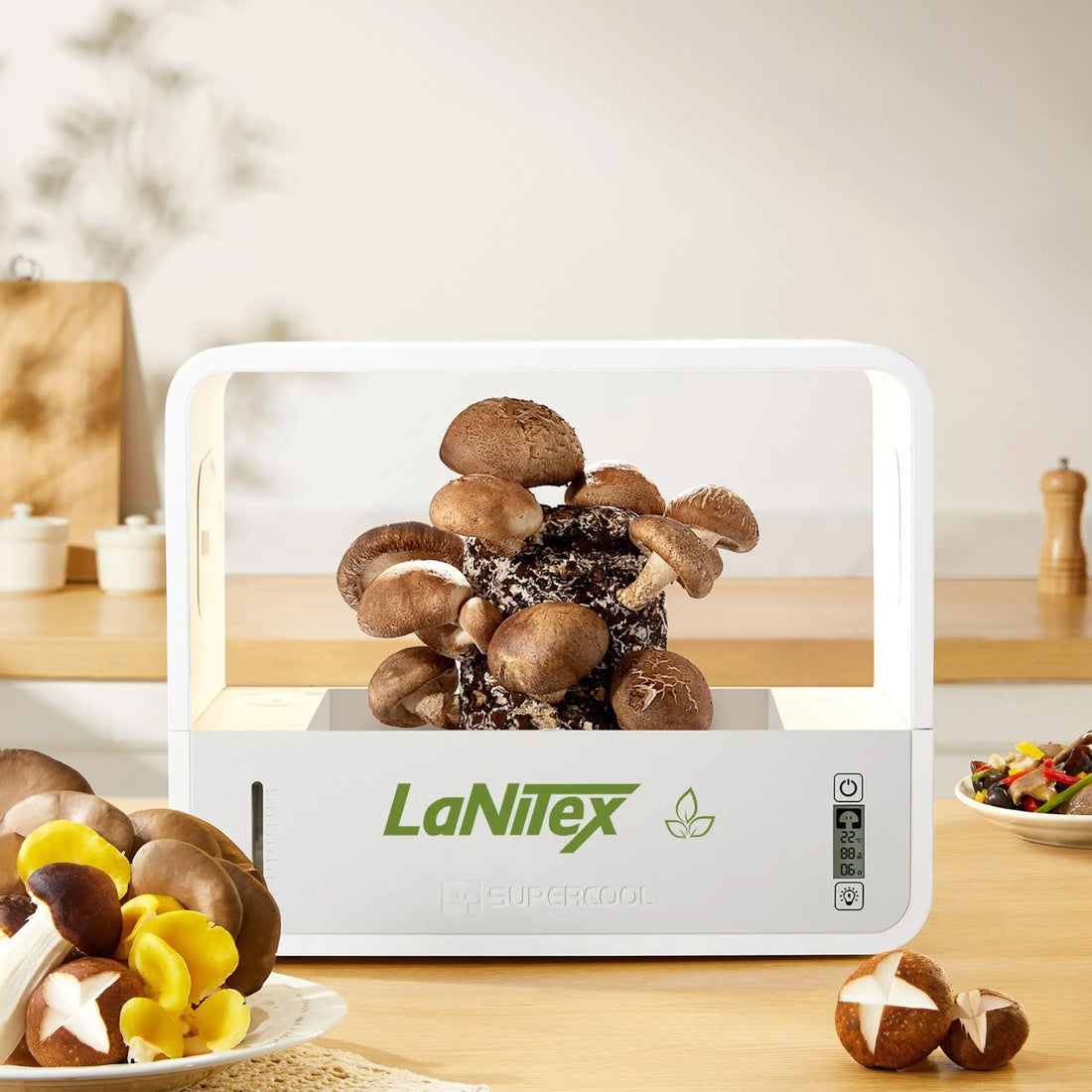

Australia's warm subtropical climate suits amaranth microgreens naturally -- three vivid varieties from deep burgundy Red Garnet to garden-fresh Green Leaf are ready in 10 to 21 days on the kitchen bench.
Amaranth microgreens are the rare crop where the Australian climate is an advantage rather than a challenge. The species Amaranthus tricolor and Amaranthus cruentus are heat-loving by nature, which makes Queensland, the Northern Territory, and the subtropical Sunshine Coast natural fits for year-round indoor growing. Three distinct varieties (Red Garnet deep burgundy, Red Leaf bright pink-red, Green Leaf green with reddish stems) cover every chef-plating use from canapes to grazing boards.
Quick answer: Amaranth microgreens are heat-loving Amaranthus tricolor and Amaranthus cruentus shoots harvested at the first true leaf stage 10 to 21 days after sowing. Three varieties (Red Garnet deep burgundy, Red Leaf bright pink-red, Green Leaf green with red stems) suit Australian growers. Queensland and the Northern Territory are natural climate fits, and southern states from Melbourne to Hobart benefit from a heat mat in winter.
Key takeaways:
- Three varieties: Red Garnet (deepest red), Red Leaf (bright pink-red), Green Leaf (green with red stems)
- Days to harvest: 10 to 21 in warm conditions, up to 25 in cool southern winter
- Sowing density: 5 to 10 grams per 25 by 25 cm tray (amaranth seed is tiny, benefits from sparse sowing)
- Indoor temperature target: 18 to 24 degrees Celsius (22 deg C ideal); heat mat for VIC, SA, TAS winter
- Best AU growing zones: Queensland and Northern Territory natural fit; southern states indoor year-round
- Two-style chooser: Smart Microgreen Kit Black Metal at $129 or Wooden at $189; Germinating Growing Mats 10-pack at $14.90
At a glance:
| Field | Value |
|---|---|
| Botanical name | Amaranthus tricolor (all three cultivars; Red Garnet sometimes catalogued as A. cruentus) |
| Family | Amaranthaceae (sibling: beetroot, quinoa, spinach, chard) |
| Days to harvest | 10 to 21 days |
| Difficulty | Medium (tiny seed sensitivity, cold-stall risk in southern AU winter) |
| Taste | Mild, slightly earthy, faintly sweet |
| Best uses | Chef garnish, canapes, cocktails, grazing boards, Pinterest plating |
| Recommended kit | Smart Microgreen Kit Black Metal style $129 |
What are amaranth microgreens?
Amaranth microgreens are the young shoots of two related Amaranthaceae species, Amaranthus tricolor and Amaranthus cruentus, harvested 10 to 21 days after sowing at the first true leaf stage. The flavour is mild and slightly earthy with subtle sweetness, but the appeal is colour: vivid magenta, burgundy, pink, and green pigments from natural betalain and amaranthin compounds that develop fully under LED light during the colour-development phase.
The Amaranthaceae family includes beetroot, quinoa, spinach, and chard, so amaranth microgreens are sibling crops to other Australian favourites already covered in this series. Three cultivars share one family. Each one earns a different job on the plate, and the cultivars are visually and use-case-distinct enough to merit dedicated discussion below.
Red Garnet amaranth microgreens
Red Garnet is the amaranth microgreen variety with the deepest red-burgundy stems and leaves, prized by chefs for dramatic colour contrast on white plates and dark cocktails. Sometimes catalogued as Amaranthus cruentus though commonly an A. tricolor cultivar, Red Garnet produces the most visually dramatic harvest of the three varieties. Sowing density and days-to-harvest match the other cultivars, but the pigment expression runs darkest.
Red Leaf amaranth microgreens
Red Leaf amaranth microgreen is the Amaranthus tricolor cultivar with bright pink-red tones, lighter than Red Garnet's burgundy, that suits grazing-board contrast and pasta-plate accents. The pink-red tone reads as fresh and approachable on pale backgrounds where Red Garnet's deeper burgundy might feel formal.
Green Leaf amaranth microgreens
Green Leaf amaranth microgreen is the Amaranthus tricolor cultivar with green leaves and reddish-pink stems, producing a garden-fresh multi-tone visual that pairs with salads and grain bowls. The green-with-red-stem combination delivers two-tone visual interest in a single sprig, useful when chefs want a fresh accent without the colour drama of the red varieties.
Three cultivars share one family. And one climate that loves Australia.
Why amaranth microgreens love Australia's warm climate (and how to grow them in cool southern winter)
Amaranth loves heat. The Sunshine Coast subtropical climate where LaNiTex Hydro Garden ships from Sippy Downs suits this crop naturally, and the heat-mat fix for southern Australian winter is the same one tested in Tasmania kitchens. The ideal indoor germination window for amaranth microgreens is 18 to 24 degrees Celsius, with 22 degrees Celsius the ideal target, which maps directly onto the Australian climate-zone reality.
Yes, amaranth microgreens are easier to grow in warm Australian regions such as Queensland and the Northern Territory because amaranth is heat-loving. Growers in Melbourne, Hobart, and Tasmania need a heat mat and indoor LED grow lighting to maintain 18 to 24 degrees Celsius year-round, but the kit-aware approach in H2 #5 below handles southern AU winter without trouble.
Climate-zone breakdown for Australian amaranth microgreen growers:
- Queensland and Northern Territory -- natural climate fit year-round indoors and in covered outdoor settings; subtropical warmth matches amaranth's heat-loving nature
- Sunshine Coast (Sippy Downs base for LaNiTex) -- subtropical year-round indoor, the provenance moat for this guide
- Sydney coastal -- year-round indoor with steady results across all four seasons
- Brisbane warm-humid summer -- needs airflow management (open a window or run a small fan) plus strict bottom-water protocol to prevent damping-off in humid conditions
- Perth dry climate -- good year-round indoor; the dry air actually helps reduce damping-off risk
- Melbourne and Adelaide temperate winter -- heat mat plus indoor LED grow lighting bridges cold-stalls below 18 degrees Celsius
- Hobart and Tasmania cool winter -- strongly recommends heat mat plus indoor LED plus indoor positioning year-round
Don't expect amaranth to grow well outdoors in Hobart winter without a heat mat. Germination slows noticeably below 18 degrees Celsius and may stall entirely below 15 degrees Celsius, and the long blackout phase creates moisture-trap conditions that lead to mould. The heat mat fix is simple. The cold-stall risk is real.
How long do amaranth microgreens take to grow? Generally 10 to 21 days in warm conditions, depending on warmth, light, and growing method (per Home Microgreens grow guide and Quantum Microgreens amaranth protocol). Warm-climate AU growers usually report the shorter end of the window; southern AU growers in winter often see the longer end.
Get a fresh grow guide like this every fortnight
Join the LaNiTex Hydro Garden newsletter for practical hydroponic, microgreen and mushroom growing tips for Australian homes. Subscribe to download a free hydroponics starter guide (PDF) and get 10% off your first order.
Join the newsletter →My research-based approach to amaranth microgreens on the Sunshine Coast
Honest disclosure: amaranth microgreens were not part of the LaNiTex Smart Microgreen Kit pre-launch validation crop list personally tested in Sippy Downs (Sunshine Coast, QLD 4556) before stocking the kit -- radish, broccoli and sunflower were the three calibration crops. The guidance below combines Quantum Microgreens amaranth grow protocol, Home Microgreens amaranth guide, The Seed Collection's Red Garnet, Red Leaf, and Green Leaf variety knowledge, and AU climate-specific adaptation for the medium-difficulty heat-loving species. The Sunshine Coast subtropical position does suit amaranth well; the guidance for southern Australian growers (Melbourne, Adelaide, Hobart, Tasmania) reflects the heat-mat-and-indoor-LED accommodation needed to bridge cool-winter cold-stalls in this heat-loving crop. Local results may vary by climate zone; the troubleshooting section names the slow-germination, overwatering damping-off, cold-stall, and leggy-growth pitfalls most likely to bite AU growers in cooler southern climates.

Red Garnet vs Red Leaf vs Green Leaf: which amaranth microgreen variety to choose?
Three varieties, three jobs. The three amaranth varieties pay off differently on the plate, and growers often mix all three in one tray for a layered magenta-pink-green harvest. Red Garnet drama suits dark cocktails and white-plate pasta. Red Leaf brightness suits grazing boards and pale soups. Green Leaf garden-fresh tone suits salads and grain bowls.
What's the difference between Red Garnet, Red Leaf, and Green Leaf amaranth microgreens? Red Garnet, Red Leaf, and Green Leaf are commonly sold as cultivars of Amaranthus tricolor (with Red Garnet sometimes catalogued as A. cruentus) within the Amaranthaceae family. Red Garnet usually gives the deepest red colouring, Red Leaf tends to have bright pink-red tones, and Green Leaf has green leaves with reddish stems. All three are good garnish crops, but Red Garnet is usually the most visually dramatic for chefs and social-media content. Many growers mix all three in one tray for layered colour and texture.
Red Garnet vs Red Leaf vs Green Leaf at a glance:
| Variety | Botanical | Colour | Tone | Best garnish use | Days | Sowing density |
|---|---|---|---|---|---|---|
| Red Garnet | A. tricolor (sometimes A. cruentus) | Deepest red-burgundy | Most dramatic | Canapes, dark cocktails, white-plate pasta | 10 to 21 | 5 to 10 g/tray |
| Red Leaf | A. tricolor | Bright pink-red | Brighter pink | Grazing boards, pasta plating | 10 to 21 | 5 to 10 g/tray |
| Green Leaf | A. tricolor | Green leaves, reddish-pink stems | Garden-fresh multi-tone | Salads, grain bowls, sandwiches | 10 to 21 | 5 to 10 g/tray |
Don't expect Green Leaf to match Red Garnet's deep colour on dark backgrounds. The garden-fresh register is a different visual job, not a lesser one. Single-tray mixing of all three varieties produces what some growers call a rainbow microgreen tray -- one harvest delivers all three pigment registers for layered plating drama. See the related sibling guide how to grow beetroot microgreens in Australia for another Amaranthaceae family variety with similar visual-garnish positioning.

Grow fresh amaranth microgreens on your kitchen bench, any season — the self-watering tank and full-spectrum LED handle the daily light and watering. You supply the seeds.
Start your first tray →Personally tested at home on the Sunshine Coast before listing.
Kit-aware step-by-step: growing 3-variety amaranth microgreens in the Smart Microgreen Kit Black Metal style
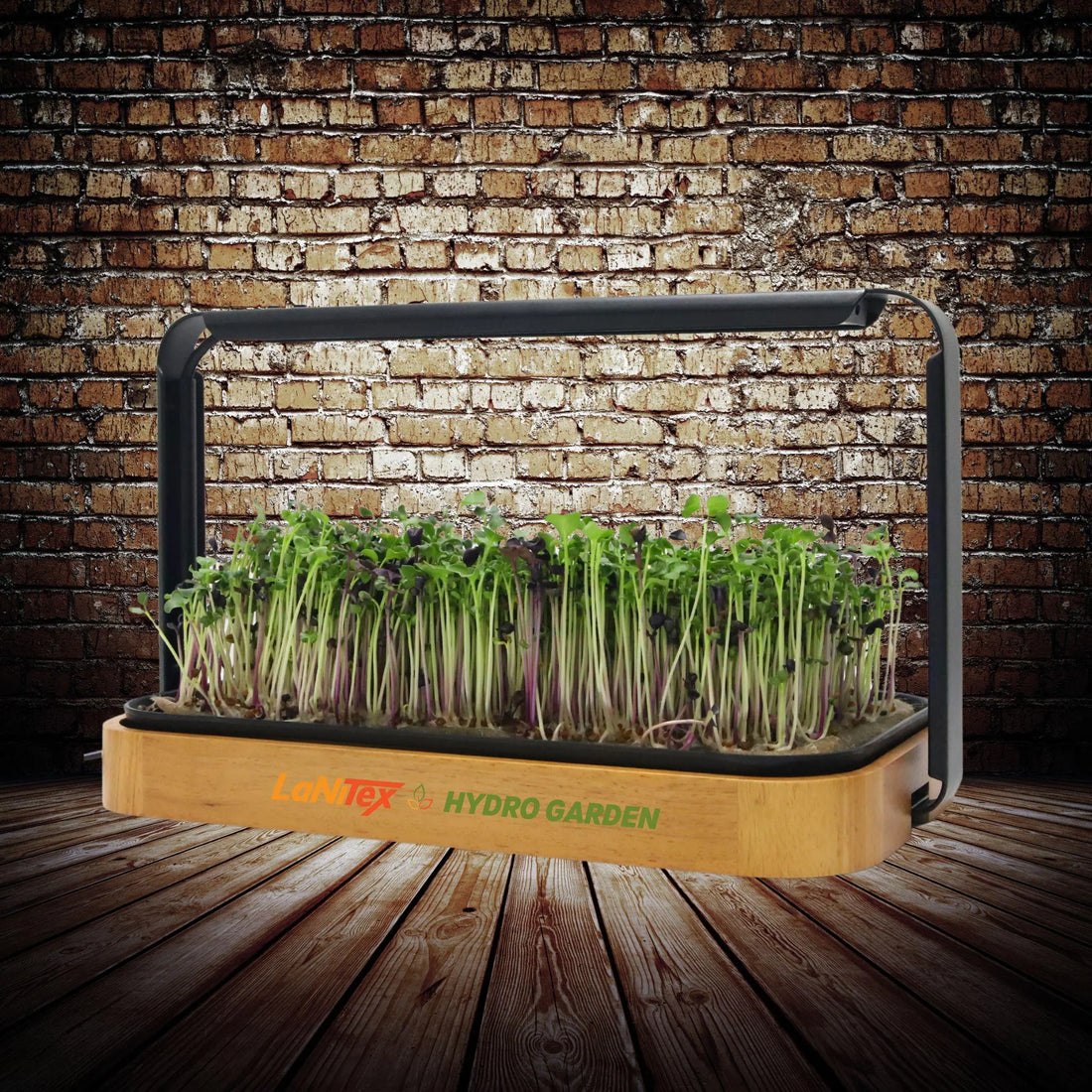
Bottom water only. The microgreen growing kit (Black Metal) at $129 has a structural frame, integrated water reservoir, reusable lid, LED grow lighting, and heat-mat compatibility for southern AU winter. The 7-step protocol below works whether the tray runs Red Garnet, Red Leaf, Green Leaf, or all three mixed.
Step 1: Choose your variety mix
Single variety per tray gives the cleanest harvest if the end use is a specific chef-plating application. Mixed varieties (all three at roughly 3 grams each, about 9 grams total) give a rainbow tray for layered colour. Either approach uses 5 to 10 grams of seed for the standard 25 by 25 cm tray surface.
Worth the bench space? A standard 25 by 25 cm tray typically returns roughly 55 to 80 grams of cut amaranth microgreens over the 10 to 21 day cycle -- commercial 10 by 20 inch trays run about 110 to 160 grams -- so a single tray garnishes a lot of plates. Switching single-use medium for a reusable Germinating Growing Mat keeps each flush low-waste.
Step 2: Source quality seed from an Australian supplier
Where can I buy amaranth seeds in Australia? Reputable Australian seed retailers stocking amaranth or Amaranthus tricolor include The Seed Collection, Mr Fothergill's, Eden Seeds, Greenharvest, and Seedmart. Look for fresh seed, clear variety naming (Red Garnet, Red Leaf, Green Leaf), and suitability for edible microgreens. Compare local suppliers for availability and shipping to your state or territory.
Step 3: Sow tiny seeds sparingly without burying
Scatter 5 to 10 grams of amaranth seed across a moist medium surface inside the Smart Microgreen Kit. Don't bury the seed. Amaranth seed is tiny and surface-germinating, so it sits on top of a coco coir layer or a Germinating Growing Mat. Mist gently with a spray bottle to settle the seed onto the medium.
Step 4: Weighted blackout for 3 to 4 days
Cover the tray with the kit lid plus a single book for light pressure. Maintain 18 to 24 degrees Celsius (22 deg C ideal). In southern AU winter, place a heat mat under the tray to keep the temperature steady. Heavier weight than a single book risks crushing the delicate emergent stems, so lighten up rather than press harder.
Step 5: Move to bright LED light for 10 to 14 days
After 3 to 4 days of blackout, remove the weight and place the tray under the integrated Smart Microgreen Kit LED. Run the light for 12 to 16 hours per day across the 10 to 14 day colour-development phase. The LEDs intensify the betalain and amaranthin pigment expression that gives Red Garnet its burgundy, Red Leaf its bright pink, and Green Leaf its red stems.
Step 6: Bottom water only via the integrated reservoir
Mist gently once at sowing to settle the seed, then switch to bottom-watering only once germination starts (around day 2 to 3) using the kit's integrated reservoir. Skip overhead watering after germination. Amaranth is sensitive to damping off, and overhead spray on the moisture-trap conditions of a weighted blackout tray is the fastest path to mould.
Step 7: Harvest at 10 to 21 days
Harvest when stems and leaves reach 3 to 7 centimetres above the medium and full pigment expression has developed. Snip with clean scissors just above the medium. Days to harvest vary by warmth and light intensity: warm-climate QLD growers usually land near the short end, around 10 to 15 days; southern AU winter growers without a heat mat may stretch to 25 days or longer.
For the best shelf life, stop watering about a day before harvest so the greens cut dry, then store them unwashed in an airtight container lined with paper towel in the fridge at around 4 to 8 degrees Celsius. Amaranth microgreens are best used within 5 to 7 days, though careful dry handling can stretch freshness toward two weeks (per Home Microgreens storage guidance).
The step-by-step above runs in the Smart Microgreen Kit Black Metal style at $129 -- structural frame, integrated water reservoir, reusable lid, LED grow lighting, heat-mat compatible for southern AU winter. Same kit, different style available as the wooden microgreen kit at $189 if the wooden tray look suits the kitchen bench better. Either choice runs the same growing performance.
Are amaranth microgreens really medium difficulty? Common problems and how to fix them
Mould loves wet trays. Four problems trip up most amaranth growers in Australia, and naming them honestly is the only way to dodge them. The medium-difficulty rating comes from the combination of slow harvest window (10 to 21 days versus 7 to 10 days for fast brassicas like radish), tiny seed sensitivity to overwatering, cold-stall risk in southern AU winter, and variety confusion if cultivars are mixed without tray labels.
What are the most common growing problems with amaranth microgreens? The main issues are overwatering, poor airflow, and cool temperatures. Amaranth has tiny seed and is sensitive to staying too wet, which can lead to mould or damping off. It also performs better in warmth than in chilly conditions.
Four common amaranth microgreen problems and their fixes:
| Problem | Cause | Fix |
|---|---|---|
| Overwatering damping-off | Tiny seed, moisture-trap, poor airflow | Mist gently, bottom-water only, run a small fan or open a window; use fresh seed and discard any clumped or musty lots |
| Cold-stall (under 18 degrees Celsius) | Heat-loving species in cool conditions | Heat mat under tray during southern AU winter |
| Uneven germination | Inconsistent moisture during week one | Cover with moist paper towel during 3 to 4 day blackout |
| Leggy growth | Insufficient LED light intensity | Bright LED at 15 to 20 cm above tray for 10 to 14 day light phase |
Skip overhead watering once the seed has germinated. The heat mat under the tray costs around $25 to $40 at Bunnings or any garden centre and removes the cold-stall problem entirely for VIC, SA, and TAS growers. Once the four pitfalls are sorted, the colour reward starts paying off.
Root hairs are not mould. Around day three or four, a fine white halo often appears at the base of the stems and can look alarming. That fuzz is almost always root hairs -- a normal part of germination that flattens and vanishes when you mist the tray. True mould is different: it is grey or blue-green, spreads in a cobweb pattern across the canopy or medium, and usually smells musty. When in doubt, mist lightly and check an hour later -- root hairs settle down, mould does not.
The four problems above are easier to dodge in a kit built for them. The Smart Microgreen Kit Black Metal style at $129 has integrated bottom-watering (skip overhead spraying = skip damping-off risk), a heat-mat-compatible base (no cold-stalls in Hobart winter), and bright LED light positioned to prevent leggy growth. The Wooden style at $189 runs the same fix list with the wooden-tray aesthetic.
How to plate amaranth microgreens: chef-style garnish for canapes, cocktails, and Pinterest-worthy food photos
Colour over flavour. Amaranth microgreens earn their place on the plate through colour, not taste. The flavour is mild, slightly earthy, and sometimes faintly sweet. The amaranth is mainly prized for the visual contrast it adds to dishes rather than flavour competition.
What do amaranth microgreens taste like? Mild, slightly earthy, and sometimes faintly sweet. They work as a background garnish that lifts the visual impact of a dish without competing with the main flavours -- ideal when you want colour without taste interference.
Chef-plating applications for each variety:
- Canapes -- Red Garnet crowns a smoked-salmon and cream-cheese blini or a goats-cheese toast for high-impact colour drama on a pale background
- Cocktails -- Red Garnet stem swizzle in a clear gin and tonic or a vodka-cucumber long drink for visible colour drama through clear glass
- Grazing boards -- Red Leaf bright pink contrast against pale cheeses and charcuterie; Green Leaf garden-fresh accent against darker meats
- Salads and grain bowls -- Scatter Red Garnet or Red Leaf over rocket and quinoa for earthy-sweet visual contrast
- Sandwiches and wraps -- Layer on smoked-salmon and cream-cheese rye for visible colour through the layers
- Soups -- Single Red Garnet sprig as a colour-pop on yellow pumpkin or pale-coloured cream soups
- Pasta and risotto -- Red Garnet plus Green Leaf scattered on white plates for restaurant-style presentation
- Pinterest food photography -- High-contrast plating, natural daylight, macro shots that emphasise the vivid pigments
Don't drown the garnish in dressing. The colour disappears under oil or vinaigrette, and the chef-plating job is lost. One to three sprigs per plate, applied at the last moment before serving, delivers the visual punch without competing with the main flavours. See the related microgreen varieties Australia guide for a broader chef-plating overview across the LaNiTex Microgreen series.
Are amaranth microgreens good for you? Nutrition and colour compounds
Colour first, nutrition close behind. Amaranth microgreens are a low-energy food at around 23 kilocalories per 100 grams, and they supply vitamin C, vitamin K, vitamin E, beta-carotene, folate, and minerals including calcium, iron, magnesium, manganese, and potassium (per an Australian amaranth microgreen nutrition fact sheet). Like many microgreens, they concentrate those nutrients: a 2012 USDA study (Xiao and colleagues), which tested garnet amaranth among 25 microgreen species, found microgreens often carry several times more vitamin C, vitamin K, vitamin E, and beta-carotene per gram than the mature leaves of the same plant.
The vivid red-magenta colour is doing more than decoration. It comes from betalain pigments -- particularly betacyanins such as amaranthin, the same natural compounds named in the growing steps above -- which also show antioxidant activity in laboratory testing. The honest framing: treat amaranth microgreens as a colourful, nutrient-dense garnish, not a medicine. A few sprigs lift a plate visually and add a little nutrition along the way.

Restock the soil-free mats your kit runs on — a 10-pack of reusable growing mats, ready for your next amaranth sowing.
Stock up on mats →Personally tested at home on the Sunshine Coast before listing.
Amaranth microgreens FAQ
What are amaranth microgreens?
Amaranth microgreens are the young shoots of Amaranthus tricolor harvested after the first true colour and leaves appear, usually while still small and tender. They're grown mainly for their vivid colours and delicate texture, with a mild, slightly earthy flavour and sometimes a faint sweetness. Restaurants and food photographers value them as a high-impact garnish.
How long do amaranth microgreens take to grow?
They're generally ready in about 10 to 21 days in warm conditions, depending on warmth, light, and growing method. Some guides report faster harvest windows of 10 to 14 days in ideal warm conditions, while cooler southern AU conditions can slow them down to 21 to 25 days. Patience pays off -- the vivid colours develop best when the plants have time to mature their pigments.
Are amaranth microgreens easy to grow in Australia?
They're often easier in warm Australian regions such as Queensland and the NT because amaranth is heat-loving. In cooler climates like Melbourne, Hobart and Tasmania, they can be trickier due to slow germination, stalling, and moisture issues. Southern growers should use a heat mat in winter and grow indoors year-round for best results.
What's the difference between Red Garnet, Red Leaf, and Green Leaf amaranth microgreens?
Red Garnet, Red Leaf, and Green Leaf are commonly sold as cultivars of Amaranthus tricolor (with Red Garnet sometimes catalogued as A. cruentus) within the Amaranthaceae family. Red Garnet usually gives the deepest red colouring, Red Leaf tends to have bright pink-red tones, and Green Leaf has green leaves with reddish stems. All three are good garnish crops, but Red Garnet is usually the most visually dramatic for chefs and social-media content. Many growers mix all three in one tray for layered colour and texture.
What do amaranth microgreens taste like?
The flavour is mild, slightly earthy, and sometimes faintly sweet. Because the taste is subtle, amaranth is mainly prized for colour rather than bold flavour. They work as a background garnish that lifts the visual impact of a dish without competing with the main flavours, ideal when you want colour without taste interference.
What are the most common growing problems with amaranth microgreens?
The main issues are overwatering, poor airflow, and cool temperatures. Amaranth has tiny seed and is sensitive to staying too wet, which can lead to mould or damping off. It also performs better in warmth than in chilly conditions. Use shallow trays with drainage, mist gently rather than heavy water, ensure good airflow, and maintain 18 to 24 degrees Celsius (22 deg C is ideal) for best germination.
Can I grow amaranth microgreens on coco coir or mats?
Yes. Coco coir is commonly used, and germinating mats are another option, especially if you want a cleaner, lighter setup. The key is even moisture without saturation, because amaranth dislikes soggy conditions. Use a shallow layer of medium or a single mat, mist seeds gently (don't bury, they're tiny), and water from below once germinated.
Where can I buy amaranth seeds in Australia?
Reputable Australian seed retailers stocking amaranth or Amaranthus tricolor include The Seed Collection, Mr Fothergill's, Eden Seeds, Greenharvest, and Seedmart. When choosing, look for fresh seed, clear variety naming (Red Garnet, Red Leaf, Green Leaf), and suitability for edible microgreens. Compare local suppliers for availability and shipping to your state or territory.
What are the health benefits of amaranth microgreens?
Amaranth microgreens are low in energy (around 23 kilocalories per 100 grams) and supply vitamin C, vitamin K, vitamin E, beta-carotene, folate, and minerals such as calcium, iron, and manganese. Those figures sit alongside the measured vitamin and carotenoid ranges recorded for microgreens across species. Like many microgreens, they are more nutrient-dense per gram than the mature leaves. Enjoy them as a colourful, nutritious garnish rather than a medicine.
Explore other microgreen varieties
Grown Amaranth once? These pair naturally with the same Smart Microgreen Kit & Germinating Growing Mats.
More colourful greens
Easy to start with
Colour & plating
→ Browse all 22 microgreen varieties | → Microgreens growing guide
The full range
Find the microgreen kit that suits your kitchen


Supported in Australia - every model tested before listing.
Sources
- Home Microgreens grow guide for amaranth microgreens -- external how-to reference verified 27 May 2026
- The Seed Collection -- AU seed supplier shoutout
- Mr Fothergill's -- AU seed supplier shoutout
- Eden Seeds -- AU seed supplier shoutout
- Greenharvest -- AU seed supplier shoutout
- Seedmart -- AU seed supplier shoutout