
Two peer-reviewed studies looked at vitamin C in microgreens and landed on ranges that barely overlap. Even so, neither is wrong. But that gap explains why a tidy microgreens nutrition chart is often the least trustworthy thing here.
Quick answer: Microgreens are seedlings of edible vegetables and herbs, harvested at the cotyledon stage. In practice, we grow ours on the Sunshine Coast in 7 to 14 days. Xiao et al. (2012) put vitamin C across 25 species at 20.4-147.0 mg per 100 g fresh weight, and found the cotyledon leaves carried higher nutritional densities than mature leaves.
This guide is for: Intermediate growers who want the numbers with sources attached. ~11 min read.
Key takeaways:
- Xiao et al. (2012) put vitamin C between 20.4 and 147.0 mg per 100 g across 25 species. So one microgreens nutrition number cannot cover that spread.
- Bhaswant et al. (2023) found broccoli microgreens carried 10 times the total phenolic content of mature broccoli. But that covers one species, one nutrient.
- Wojdylo et al. (2020) ran both head to head. Instead of a clean win, sprouts led on vitamin C and polyphenols, microgreens on carotenoids and chlorophylls.
- The Xiao abstract states no multiplier at all. So the famous "4 to 40 times" line did not come from that study.
What did the research actually measure?
Microgreens are seedlings of edible vegetables and herbs, picked once the cotyledon leaves are up. The most-cited work on them is Xiao et al. (2012), which ran 25 shop-bought microgreens through a lab.
Here is what that paper concluded:
"In comparison with nutritional concentrations in mature leaves (USDA National Nutrient Database), the microgreen cotyledon leaves possessed higher nutritional densities."
- Xiao et al., Journal of Agricultural and Food Chemistry, 2012
Read it again. There is no number in it. No "4 times", no "40 times", no multiplier of any kind. Instead, it reports a direction against USDA figures for mature leaves.
That matters, because the "microgreens are 40 times more nutritious" line gets hung on this paper everywhere. In fact, it is not in there. So anyone quoting a fold-difference from Xiao et al. is quoting something the study never said.
That means the microgreens vs vegetables nutrition question has an honest starting point: direction, not size. Microgreens nutrition varies hard by species.

Microgreens nutrition chart: what each study found
Each figure below was measured at the microgreen stage. That means nothing here is borrowed from a mature-vegetable database.
| Nutrient | Measured range | Study and scope |
|---|---|---|
| Vitamin C (total ascorbic acid) | 20.4-147.0 mg/100 g | Xiao et al. 2012, 25 species |
| Vitamin C (L-ascorbic acid) | below 32 mg/100 g | Wojdylo et al. 2020, 5 species |
| Beta-carotene | 0.6-12.1 mg/100 g | Xiao et al. 2012, 25 species |
| Vitamin E (alpha-tocopherol) | 4.9-87.4 mg/100 g | Xiao et al. 2012, 25 species |
| Vitamin K1 (phylloquinone) | 0.6-4.1 ug/g | Xiao et al. 2012, 25 species |
| Total carotenoids | 1510.1-4073.5 ug/g | Wojdylo et al. 2020, 5 species |
| Total chlorophyll | 195.6-638.5 ug/g | Wojdylo et al. 2020, 5 species |
| Total phenolic content | 10.71-11.88 mg/g | Bhaswant et al. 2023, broccoli highest |
All figures are fresh weight. Many widely quoted microgreens nutrition facts trace back to these three papers, with the scope stripped off.
Now look at the first two rows. Xiao et al. (2012) put vitamin C at 20.4-147.0 mg/100 g. But Wojdylo et al. (2020) put it below 32. In practice, those ranges barely overlap, and both are peer-reviewed.
Neither team slipped up. Instead, they ran other species, other methods, other growing set-ups. That clash is the most useful thing on this page, because it shows what one tidy number hides.
Then notice what is missing from the microgreens nutrition chart above. No calories, no protein, no iron. In short, no study here measured those. And a gap you can explain beats a number you cannot source.
What I have learned growing microgreens on the Sunshine Coast
Time for the honest part.
You don't need a huge garden to grow your own fresh vegetables as a family. So at our place the kitchen counter has become our favourite little garden: the kids love watching the microgreens shoot up in a matter of days, and we love that we can sneak a handful of them into everyday meals without anyone noticing.
So that is the part I know first-hand. I grow these on a bench in Sippy Downs, up here on the Coast. For example, radish and broccoli are up in about 7 to 10 days, sunflower and pea in 10 to 14. In fact, in my own pre-listing testing at home, microgreens were ready in under a week.
Here is what I do not know: what is inside them. I am not a nutritionist, and I have never measured a milligram of vitamin C. So each microgreens nutrition figure on this page comes from published research, not from my bench. That means the chart above names a study on each row.
A Brisbane summer kitchen runs more humid than mine. But that mostly changes the growing. Even so, light, temperature and humidity can shift nutrient levels, so treat each figure here as the study's conditions rather than a promise about your bench.
Get a fresh grow guide like this every fortnight
Join the LaNiTex Hydro Garden newsletter for practical hydroponic, microgreen and mushroom growing tips for Australian homes. Subscribe to download a free hydroponics starter guide (PDF) and get 10% off your first order.
Join the newsletter →Which microgreens are highest in what?
If you want the best microgreens for nutrition, the honest answer is that it depends which nutrient you are chasing. Xiao et al. (2012) ranked all 25 species they tested. And four came out on top.
- Red cabbage microgreens: highest total ascorbic acid, or vitamin C.
- Coriander microgreens: highest carotenoids. That paper uses the American name for the same herb.
- Garnet amaranth microgreens: highest phylloquinone, or vitamin K1.
- Green daikon radish microgreens: highest tocopherols, or vitamin E.

Broccoli sits in a second study. Bhaswant et al. (2023) reported that "the total phenolic content in the microgreens ranged between 10.71-11.88 mg/g, especially in broccoli, which was 10 times higher than that of the respective mature counterparts". Also see our guide to broccoli microgreens.
Now read that scope slowly, because it is the most misquoted sentence in the field. It is ten times, for one species, for one measurement, in one study. That means it is not a general microgreen multiplier. Instead, stretching it into one is how the "40 times" myth started.
Overall, there is no single winner here. Instead, pick the species for the nutrient you want, or grow a few and stop counting.

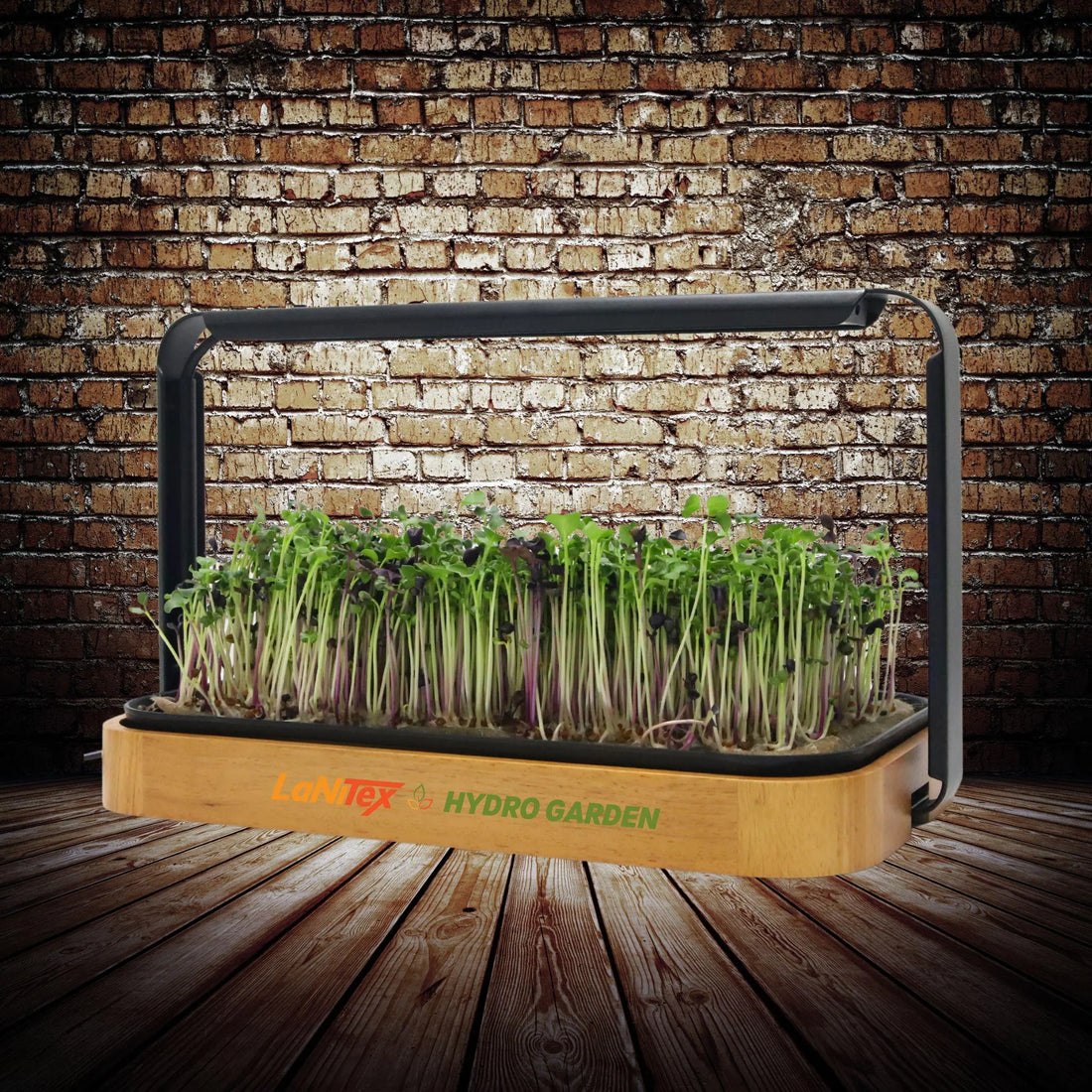
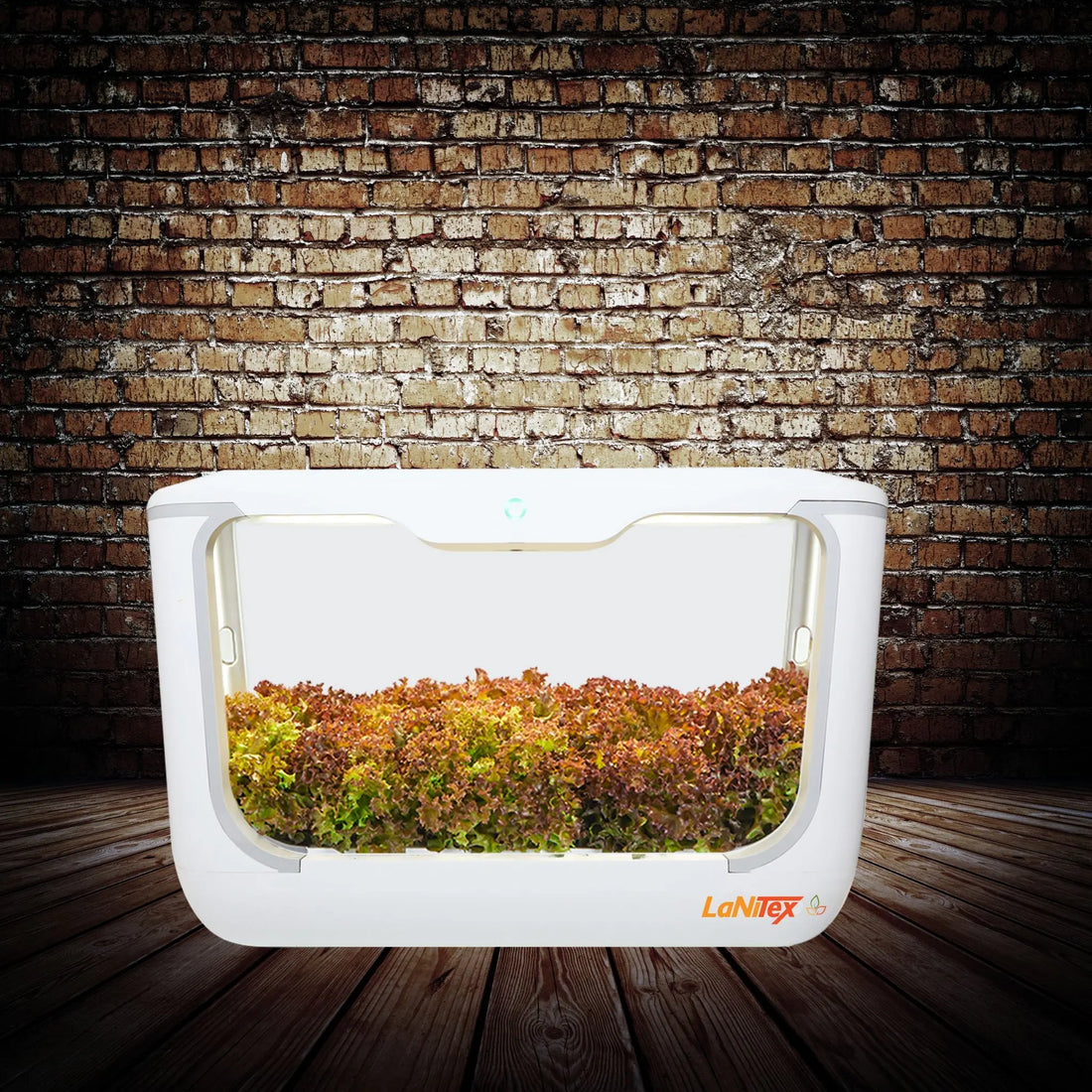
Fresh microgreens on your kitchen bench in 7-14 days - the self-watering tank and full-spectrum LED do the daily work. You supply the seeds.
Start your first tray →Personally tested at home on the Sunshine Coast before listing.
Prefer timber? The same kit comes as a wooden microgreen kit.
Microgreens vs sprouts: which is actually more nutritious?
On microgreens vs sprouts nutrition, the line that keeps getting republished is that microgreens win. But the research is less tidy. Wojdylo et al. (2020) grew both and weighed them directly. In practice, the winner changes by nutrient.

| Nutrient group | Sprouts | Microgreens | Source |
|---|---|---|---|
| Polyphenols | Higher | Lower | Wojdylo et al. 2020 |
| Vitamin C | Higher | Lower, below 32 mg/100 g | Wojdylo et al. 2020 |
| Amino acids, pectins, sugars | Higher | Lower, and no sugars at all | Wojdylo et al. 2020 |
| Carotenoids | Lower | Higher, 1510.1-4073.5 ug/g | Wojdylo et al. 2020 |
| Chlorophyll | Lower | Higher, 195.6-638.5 ug/g | Wojdylo et al. 2020 |
| Organic acids | Lower | Higher | Wojdylo et al. 2020 |
The paper is plain. On the one hand, "sprouts are better sources of amino acids, pectins and sugars than microgreens". On the other hand, "Microgreens were characterized by high content of carotenoids and chlorophylls, and organic acid, without any sugars".
That team ran eight sprout species against microgreens of kale, radish, beetroot, green peas and amaranth. In practice, this is a real head-to-head on one bench. That means it beats a microgreens nutrition comparison stitched together from two databases.
So neither one wins outright. However you weigh it, anyone claiming one is flatly better has not read the head-to-head.
Why are most microgreens nutrition charts wrong?
Three failure modes turn up again and again. Even so, each has a check you can run in about a minute.
The table reports mature-vegetable values
A "carrot microgreen nutrition" table on microgreensworld.com lists vitamin A at 835 ug, beta-carotene at 8,280 ug and 41 kcal. But those are the USDA figures for a mature raw carrot. How to check it: search the USDA entry for the full-grown vegetable. So if it matches to the decimal, you are reading the wrong plant.
A multiplier is credited to a study that never stated one
The "4 to 40 times more nutritious" line is almost always pinned on Xiao et al. (2012). But that abstract states no fold-difference. How to check it: open the paper the page cites and search its abstract for the number. So if the number is not there, the page invented it.
One tidy number hides the species and the method
A chart announcing "microgreens contain 60 mg of vitamin C" has buried the 20.4-147.0 mg range Xiao et al. (2012) found. How to check it: look for the species and sample size next to the number. No scope, no trust.
So here is the filter: don't trust a microgreens nutrition chart with no source attached to any row. A national food composition database like FSANZ or USDA counts as a source. In practice, that one rule clears out most of them.
How do you actually eat them?
Microgreens go in raw, at the end. But heat wrecks the texture and dulls the colour, so they belong on the finished plate instead of in the pan. Snip what you need with scissors and leave the rest growing. That means a living tray keeps better than a cut punnet in the fridge.
In practice they work as a finishing layer, not a salad base. For example: radish on scrambled eggs, coriander through a curry after the heat is off, red cabbage across a sandwich. That is it.

On microgreens nutrition benefits, keep the framing honest. These are food, not a supplement. Wojdylo et al. (2020) found that, in their samples, microgreens carry carotenoids, chlorophylls and organic acids, and no sugars. So they are worth eating as vegetables, and the research measures what is in them, not what they do to you.
People Also Ask
Which microgreen has the most vitamin C?
Red cabbage. Of the 25 species run by Xiao et al. (2012), it carried the highest total ascorbic acid. Even so, that ranking holds only within that study's species set.
Are sprouts or microgreens higher in protein?
Wojdylo et al. (2020) did not measure protein directly. But they did find "sprouts are better sources of amino acids, pectins and sugars than microgreens", and amino acids build protein. That suggests, but does not prove, sprouts lead.
How much broccoli microgreen equals a serve of broccoli?
No study here answers that. In fact, any page giving you a gram figure is guessing. Bhaswant et al. (2023) measured one thing: total phenolic content in broccoli microgreens ran 10 times higher than in mature broccoli. That is a ratio for one compound group, not a serving match.

Keep a tray running without the soil mess. Both kits ship with 2 starter mats, so this 10-pack is a refill, not an upsell. Non-woven polyester fibre, made for LaNiTex Microgreen Kits.
Stock up on mats →Personally tested at home on the Sunshine Coast before listing.
The full range
Find the microgreen kit that suits your kitchen


Supported in Australia - every model tested before listing.
FAQ
Why do we like microgreens?
They are fast, they need almost no space, and they taste stronger than the full-grown plant. For example, a tray takes the footprint of a paperback and runs from seed to scissors in 7 to 14 days.
How do you eat microgreens?
Raw, and last. Scatter them over the finished dish instead of cooking them, because heat costs the texture and colour. So snip only what the meal needs.
Are microgreens more nutritious than the full-grown vegetable?
For some nutrients, in some species, yes. Xiao et al. (2012) found cotyledon leaves carried higher nutritional densities than mature leaves in the USDA figures. But that is a direction, not a multiplier.
Which microgreens are the most nutritious?
There is no single winner. The answer changes with the nutrient you want. Xiao et al. (2012) ranked all 25 species they tested, and four came out on top: red cabbage for vitamin C, coriander for carotenoids, garnet amaranth for vitamin K1, and green daikon radish for vitamin E. So choose by the nutrient, not by a headline.
Is there a reliable microgreens nutrition chart?
Only one that names its source, its species and a measured range in each row. A national database like FSANZ or USDA counts. In short, any chart giving one clean figure per nutrient without saying where it came from has buried a real spread.
Do microgreens contain sugar?
In their samples, Wojdylo et al. (2020) reported microgreens were "characterized by high content of carotenoids and chlorophylls, and organic acid, without any sugars". On the other hand, sprouts did carry sugars.
Further reading
Every microgreen species guide on this site covers one crop end to end.
- Growing microgreens at home in Australia, the parent pillar.
- How to grow broccoli microgreens in Australia, the species behind the 10x figure.
- Xiao et al. (2012): https://pubmed.ncbi.nlm.nih.gov/22812633/
- Bhaswant et al. (2023): https://pmc.ncbi.nlm.nih.gov/articles/PMC9864543/
- Wojdylo et al. (2020): https://pmc.ncbi.nlm.nih.gov/articles/PMC7587365/
Seen a chart that disagrees with this one? So send it over. The source settles it, not the number.
Sources
- Xiao Z, Lester GE, Luo Y, Wang Q. "Assessment of vitamin and carotenoid concentrations of emerging food products: edible microgreens." J Agric Food Chem. 2012 Aug 8;60(31):7644-51. doi:10.1021/jf300459b. https://pubmed.ncbi.nlm.nih.gov/22812633/
- Bhaswant M, Shanmugam DK, Miyazawa T, Abe C, Miyazawa T. "Microgreens-A Comprehensive Review of Bioactive Molecules and Health Benefits." Molecules. 2023 Jan 15;28(2):867. doi:10.3390/molecules28020867. https://pmc.ncbi.nlm.nih.gov/articles/PMC9864543/
- Wojdylo A, Nowicka P, Tkacz K, Turkiewicz IP. "Sprouts vs. Microgreens as Novel Functional Foods: Variation of Nutritional and Phytochemical Profiles and Their In vitro Bioactive Properties." Molecules. 2020;25(20):4648. doi:10.3390/molecules25204648. https://pmc.ncbi.nlm.nih.gov/articles/PMC7587365/
About the writer
Laszlo Bulatko founded LaNiTex Hydro Garden in December 2024, based on the Sunshine Coast (Sippy Downs, QLD 4556). He started his career at IBM and Diageo in Hungary, then spent 15 years in sales, marketing and brand development in the Hungarian fishing tackle market. He now runs the Term-Grow Enrolment programme, which puts grow boxes into Queensland primary school classrooms. Each product was tested at his home before it joined the catalogue; microgreens were ready in under a week. So he grows microgreens weekly, and reads the research for the rest. ABN 47 682 768 967. More at About Laszlo Bulatko.