
If your cat keeps chewing the pot plants, a fresh tray of cat grass on the windowsill is the fix — and it grows in about a week on your kitchen bench, no garden required.
Growing cat grass on my Sippy Downs bench
Last week a Sunshine Coast cat owner found us while she was hunting for a way to grow fresh cat grass for her cat. It made me smile, because the same trays and mats I use for microgreens on my Sippy Downs bench grow a perfect pot of cat grass in about a week — same method, different customer.
So this is the exact bench-top approach I use, written for Australian homes: what cat grass actually is, how to grow it without a mess of potting mix, and — because a good few of you asked — what vets and the RSPCA say about why it's good for your cat in the first place.
What is cat grass (and is it the same as catnip)?
"Cat grass" isn't one plant — it's a catch-all name for young cereal grasses grown indoors for cats to chew. The usual mix is wheat, barley, oats and rye, either on their own or blended. It's the soft, grassy tuft you see in pet shops, and it's the same family of seed I sprout for microgreens.
It is not catnip. Catnip (Nepeta cataria) is a leafy member of the mint family that contains nepetalactone — the compound that sends some cats loopy. Cat grass has no such effect: cats simply like the taste and texture of the fresh blades and physically chew them. If you've been searching "are cat grass and catnip the same thing" — they're two completely different plants that happen to both please cats.
Why cats love cat grass — and why it's good for them
I grow the stuff, I'm not a vet, so for the "why" I'll hand you straight to the animal-welfare and veterinary sources. Here's what they actually say.
It's a normal, healthy instinct
Grass-eating isn't a sign something's wrong. Greencross Vets (an Australian veterinary group) note that while there's no single reason cats graze on grass, "it is generally not a concern," and some experts believe cats do it simply because they enjoy the taste and texture. The RSPCA Australia puts it plainly: "Cats may benefit from having access to grass," and grass "may be a source of vegetable matter and micronutrients."
Fibre, digestion and hairballs
The most commonly cited benefit is roughage. VCA Animal Hospitals state that "grass provides roughage that aids digestion and elimination," and that cats who eat grass routinely "may have more regular gastrointestinal tracts, fewer hair balls, and less constipation." Greencross Vets add that cats may use grass "as a laxative to help with digestion," or to help bring up indigestible material such as swallowed fur.
Enrichment for indoor cats
If your cat lives entirely indoors, a tray of grass is more than a snack. VCA Animal Hospitals note that "cats just like chewing on grass, so it provides entertainment" — a little slice of the outdoors that satisfies a natural chewing instinct and eases boredom.
A safe alternative to toxic houseplants
This is the big one for pet owners. According to veterinary behaviourist Dr Carlo Siracusa via PetMD, cat grass "gives your cat a healthy alternative to nibbling on houseplants and flowers, many of which are toxic to cats." Lilies and daffodils are singled out by VCA and PetMD as especially dangerous — lilies can be fatal to cats even in tiny amounts. Giving your cat its own dedicated grass tray lures it away from the greenery it shouldn't touch.
Grow it on a reusable tray, not in a mess of soil
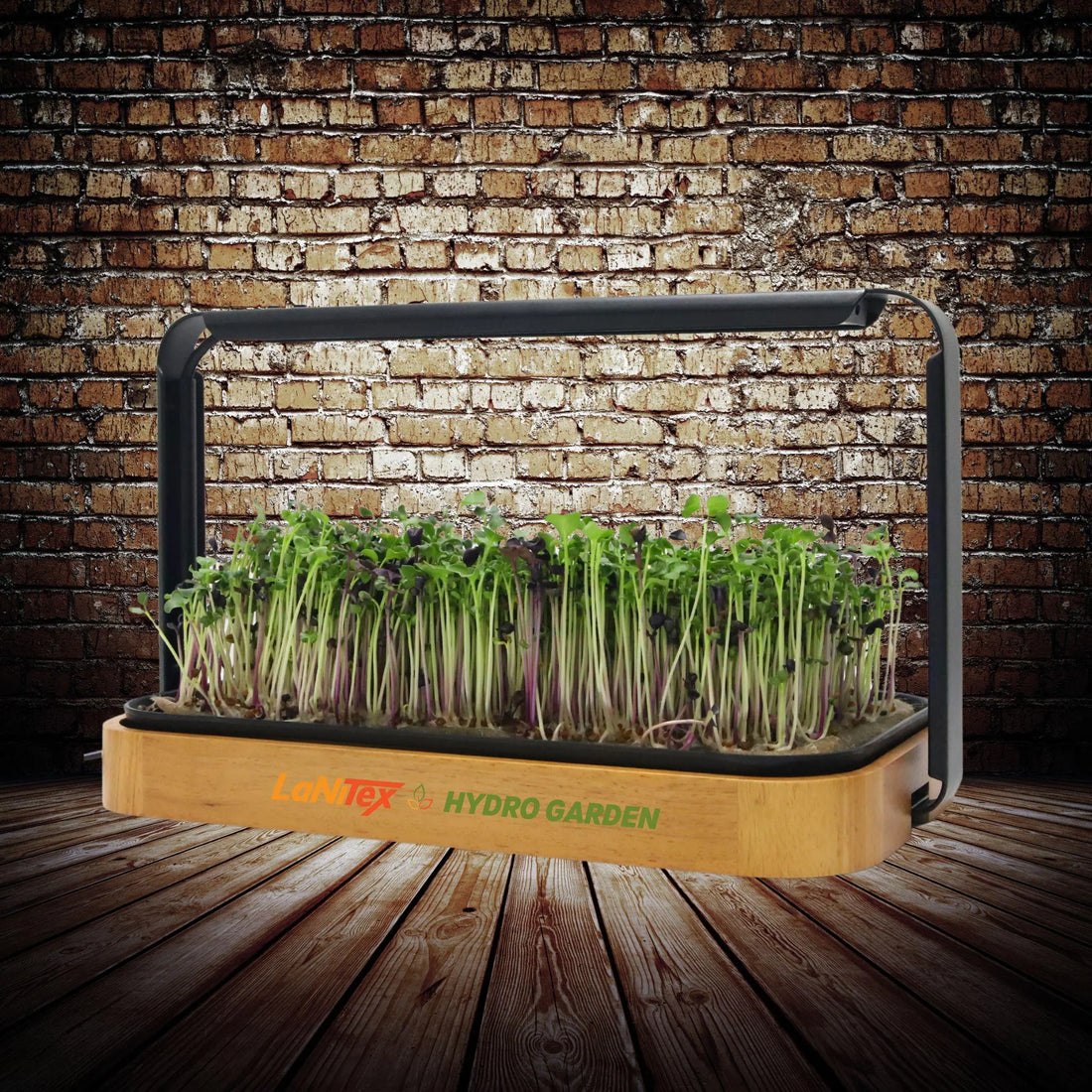
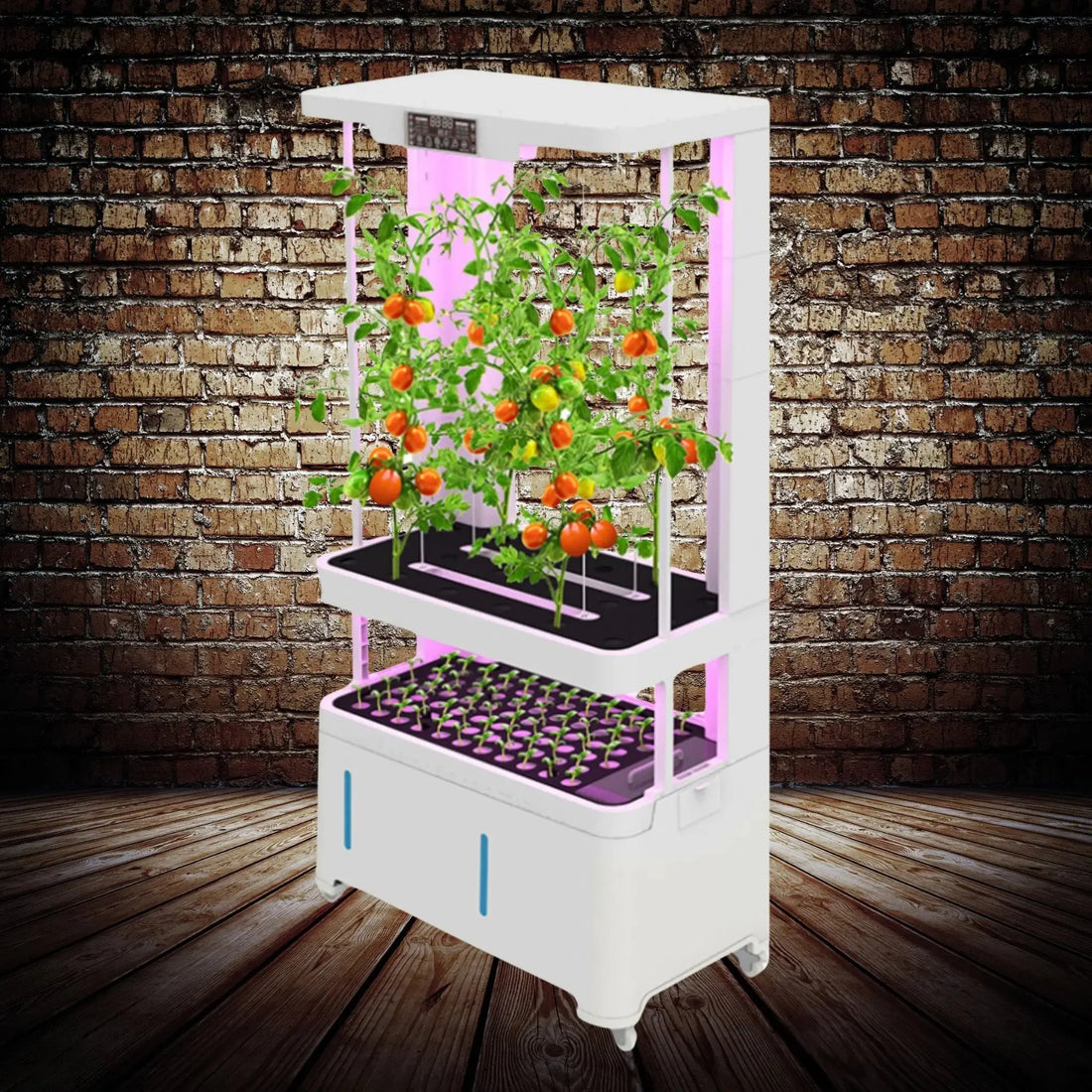
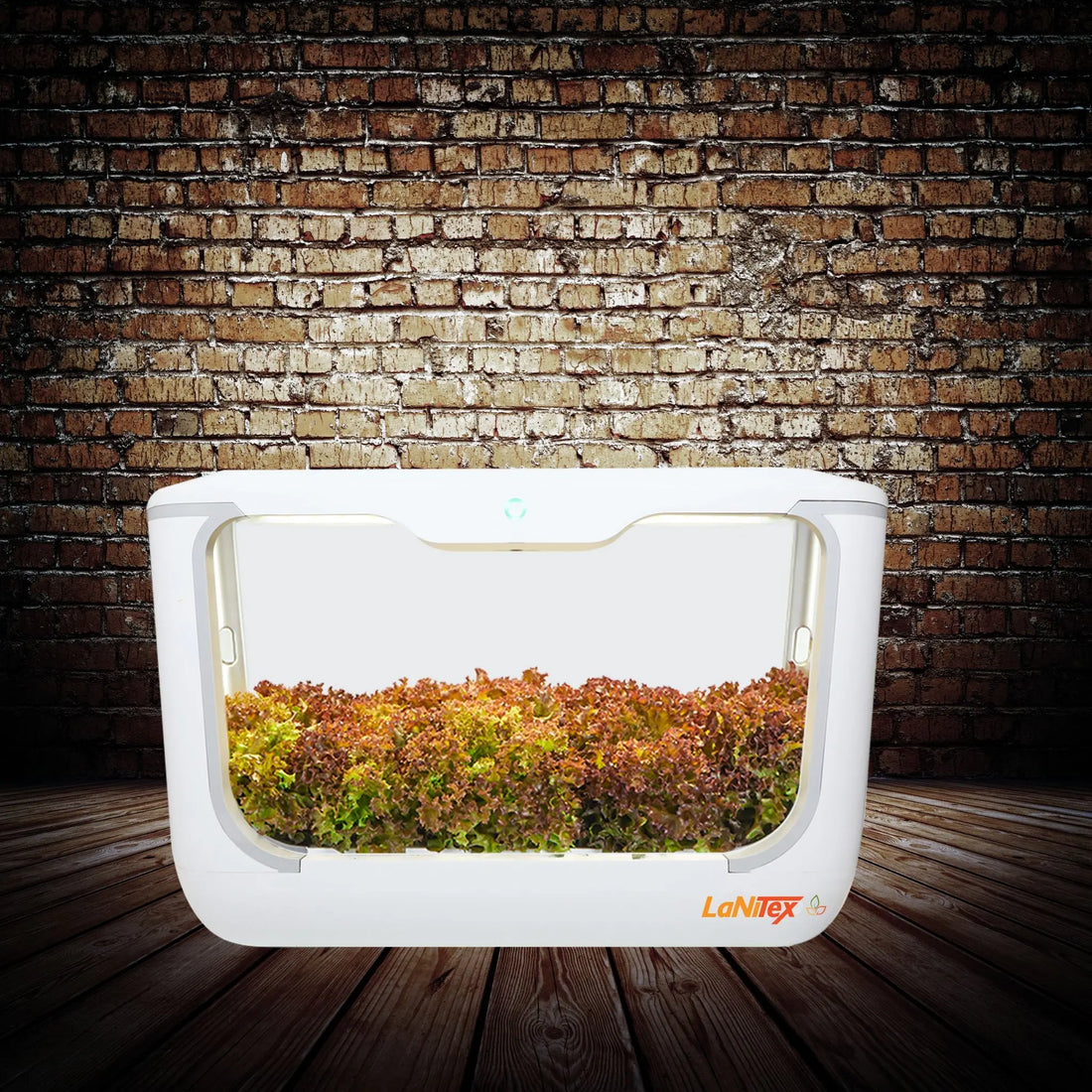
The Smart Microgreen Kit (Black Metal) is the tidy bench-top tray I use for both microgreens and cat grass — no potting mix, no dirt on the sill.
See the Microgreen KitWhat you need to grow cat grass indoors
- Cereal grass seed — untreated, food-grade wheat, barley, oat or rye. We don't sell seed, so grab it from an Australian supplier: garden centres and produce stores stock it, and specialists like Green Harvest (QLD), The Seed Collection and Eden Seeds sell organic wheat and oat seed by weight. Choose untreated seed — never seed dressed with fungicide for farm sowing.
- A shallow tray — anything low with a bit of airflow. A dedicated tray keeps it off the good crockery.
- Germinating mats — this is the soil-free trick. A germinating mat holds moisture evenly, so the roots stay damp while the blades stay dry and clean — no potting mix, no dirt for your cat to dig, and far less mould risk.
- A spray bottle and a bright spot out of harsh direct sun.

How to grow cat grass step by step (the soil-free method)
- Lay the mat. Sit a germinating mat in your tray and wet it thoroughly with the spray bottle, then tip out any pooled water. You want it damp like a wrung-out sponge, not swimming.
- Sow densely. Scatter the seed in a single, even, generous layer across the mat so the blades come up thick. Don't pile seed several layers deep — trapped moisture underneath is the number-one cause of mould.
- Keep it warm and covered — briefly. Cat grass germinates best around 15–24°C, comfortable indoor temperature for most Australian homes. You can loosely cover the tray for the first couple of days to hold humidity, but lift the cover the moment you see sprouts.
- Mist daily. Once a day, mist the mat to keep it evenly moist. Never let it dry out and never let it sit in a puddle.
- Move to the light. As soon as green shows, put the tray somewhere bright with indirect light. Good light gives you sturdy, upright blades instead of pale, floppy ones.
- Offer it to your cat. When the grass reaches roughly 8–10 cm (a few days more), set the tray down at cat height and let them graze.
How long does cat grass take to grow?
It's fast — closer to microgreens than to a lawn:
- Day 0: sow the seed on a damp mat.
- Day 3–7: seeds sprout.
- Day 7–10: blades reach snackable height — offer the tray to your cat.
- Day 10 onward: the tray stays fresh for roughly one to three weeks before it tires out.
Because each tray has a limited life, the trick to a constant supply is to sow a new tray every one to two weeks and rotate them — exactly the same succession-sowing rhythm I use for microgreens.
Like growing things on the windowsill?
Join the LaNiTex Hydro Garden newsletter for simple indoor-growing guides from the Sunshine Coast — microgreens, herbs and the odd tray of cat grass.
Sign up for growing tipsHow to keep cat grass alive longer
- Water little and often. Keep the mat evenly moist — mist when the surface starts to feel dry, and always drain away any water sitting in the tray.
- Bright, indirect light. A well-lit windowsill is ideal. Avoid baking it behind hot glass or parking it next to a heater, both of which dry it out fast.
- Give it air. Good airflow around the tray keeps the surface dry and holds mould at bay.
- Trim tired tips. Snip yellowing tips to freshen the tray, but know that cat grass won't regrow like a lawn — once it's well chewed, it's time for a new sowing.
Common cat grass mistakes (and how to dodge them)
- Overwatering. A soggy mat means mushy, sour, mouldy grass. Damp, not drenched — every time.
- Seed piled too thick. A dense single layer is great; a deep pile traps water and grows fuzz. Spread it out.
- Too little light. Dim corners give you tall, weak, floppy blades that collapse. Move it into the light.
- Leaving the cover on. A dome is fine for germination only. Once it sprouts, take the lid off so it can breathe.
- Letting it sit in water. Standing water rots the roots. Tip the tray out after watering.
If a tray does turn mouldy — fuzzy grey or black patches, a sour smell — don't risk it. Bin the lot, rinse the tray, and start a fresh mat.
One tidy tray, cat grass and microgreens all year
The Smart Microgreen Kit is the reusable bench-top tray behind everything in this guide. Grow cat grass for your cat one week and fresh microgreens for yourself the next — no soil, no mess, made for Australian kitchens.
Explore the Smart Microgreen KitStock up on the soil-free secret
Our germinating mats (10-pack) are what make dirt-free cat grass so clean and low-mould — enough for months of fresh trays.
See the germinating matsCat grass FAQ
Is cat grass good for cats?
Reputable sources say yes, in moderation. The RSPCA Australia notes that "cats may benefit from having access to grass," and VCA Animal Hospitals describe grass as roughage "that aids digestion and elimination," linked to "fewer hair balls, and less constipation." The key caveats from the vets: use untreated, chemical-free grass, keep it to a treat-sized amount, and see your vet if your cat suddenly eats a lot.
Why do cats eat grass?
There's no single answer. Greencross Vets say it's "generally not a concern" and may come down to taste and texture, while also helping cats bring up indigestible material like fur. Others point to the fibre helping digestion. PetMD notes it's a natural behaviour — not just something cats do when they're unwell.
How do you keep cat grass alive?
Keep the mat evenly damp (never soggy), give it bright indirect light, and make sure air can move around the tray to prevent mould. Trim tired tips, drain off any standing water, and expect one to three weeks from a tray before it's time to sow a fresh one.
Can you grow cat grass without soil?
Yes — that's the method in this guide. A germinating mat in a shallow tray holds moisture for the roots while keeping the blades and your windowsill clean. It's the same soil-free approach used for microgreens, and it sidesteps the dirt and mould that come with potting mix.
Are cat grass and catnip the same thing?
No. Cat grass is young cereal grass (wheat, barley, oats, rye) that cats chew. Catnip is a mint-family herb whose scent can make some cats playful or dozy. Different plants, different effects — many cats enjoy both.
How long does cat grass take to grow?
Seeds usually sprout in 3–7 days and reach snackable height around day 7–10. From sowing to your cat's first nibble is about a week to ten days on a warm, bright bench.
That's the whole method — the same trays, mats and rhythm I use for microgreens, pointed at your cat instead of your salad. Grow a tray, keep a spare coming, and your cat gets its own safe patch of green instead of your pot plants. Have a green day.
LaNiTex Hydro Garden grows and sells indoor growing systems, not veterinary advice. The feline-health information above is attributed to the RSPCA Australia, Greencross Vets, VCA Animal Hospitals and PetMD — always check with your own vet about your cat's diet.