
Two of the loudest thyme questions on the Australian internet turn out to be one question: why does thyme sulk while its sibling herbs thrive in the same machine? One grower's oregano is going wild while the thyme sits leggy and pale.
Quick answer: Hydroponic thyme needs pH 5.5-6.5, EC 0.8-1.8 mS/cm, and 150-250 umol/m2/s of light for 12-16 hours a day at 18-24 degrees C. Start at the low end of that EC band. Thyme is the leanest feeder of the common kitchen herbs, so a reservoir tuned for oregano will overfeed it.
Key takeaways:
- Thyme (Thymus vulgaris) is a woody Mediterranean perennial that wants its root zone leaner and drier than basil or oregano does.
- One band, used everywhere here: pH 5.5-6.5, EC 0.8-1.8 mS/cm, 150-250 umol/m2/s, 12-16 hours of light, 18-24 degrees C.
- Leggy thyme beside thriving oregano is a shared-reservoir problem, usually not a light problem.
- The first useful harvest lands at 4-6 weeks, not the 8-12 weeks quoted for soil.
At a glance:
| Parameter | Target |
|---|---|
| pH | 5.5-6.5 (tolerates 7.0) |
| EC | 0.8-1.8 mS/cm (start low; guides cluster 1.2-1.6) |
| Light | 150-250 umol/m2/s, 12-16 h/day |
| Temperature | 18-24 degrees C |
| Humidity | 40-70% |
| Spacing | 10-15 cm in a pod (25-30 cm in soil) |
| Germination | 7-28 days |
| First harvest | 4-6 weeks |
| Useful life | 2-3 years (3-5 in cooler climates) |
What is thyme, and does it suit hydroponics?
Thyme is a low, woody Mediterranean sub-shrub that grows wild on thin, dry, rocky ground. That means most of what follows is about restraint. In soil it shrugs off neglect. But in water it can drown in kindness.
So does thyme suit hydroponics? Yes, with one condition. Thyme wants a reservoir you can tune apart from your fast leafy greens - it grows slower, feeds leaner and turns woody sooner than basil.
Which thyme variety should you grow?
First, start with English Winter. The compact culinary cultivars are the ones that behave indoors - English Winter, French and German Winter - and the first is the most forgiving of the three. French thyme has the finer leaf, and it sulks fastest when the solution runs rich. Lemon thyme grows on the same numbers and swaps the pepper note for citrus, so treat it as a flavour choice rather than a different crop.
One kind to rule out. Creeping thyme (Thymus serpyllum) is not this plant - it is a low ornamental ground cover grown as a lawn substitute, and a kitchen pod is the wrong home for it. So if the label says creeping, elfin or red creeping, put it back. You want Thymus vulgaris.
How do you start thyme in a hydroponic system?
Two ways to start thyme: from seed, or from a cutting off a plant that already works. Seed is cheaper and slower. But a cutting is faster, and it clones a plant you have already tasted.
From seed, four steps:
- Sow about three seeds per pod.
- Then barely cover them. Thyme seed is tiny and wants light to germinate, so burying it is the usual reason nothing comes up.
- Next, thin to the strongest seedling once the first true leaves show.
- Finally, expect 7-28 days, and expect it to be uneven.
Thyme germinates erratically, and a pod that looks dead at day 14 is often just slow.
Should you soak the seed first? The sources disagree. LetPot recommends 6-12 hours in water; The Seed Collection, an Australian seed specialist, says thyme needs no pre-treatment at all. Side with the seed specialist on its own speciality - sow it dry, and spend the effort on not burying it.
From a cutting, take a 5-8 cm non-flowering stem tip, strip the lower leaves, and set it straight into a moist pod. Then keep the reservoir lean while it roots.
For thyme seeds in Australia, The Seed Collection, Mr Fothergill's, Eden Seeds and Green Harvest all stock them.
What pH and EC does hydroponic thyme need?
Hydroponic thyme runs best at pH 5.5-6.5 and EC 0.8-1.8 mS/cm. Thyme tolerates pH drifting toward 7.0. But uptake gets sloppy above 6.5. In practice, most thyme care indoors is this one band - hold it, and the plant largely looks after itself.
Also, that EC band is wide, and the width matters. Start a new plant at the low end, around 0.8-1.2 mS/cm. Then, once it has real roots, creep upward toward 1.8. Published guides cluster around 1.2-1.6, so treat both ends of the band as tolerance, not target.
And calcium, magnesium and a trace package still matter, though a general-purpose herb nutrient covers them. Mix it weaker than the bottle tells you - label doses suit hungry leafy greens, not a herb that evolved on poor ground.
What does the research say about growing thyme hydroponically?
Here is the honest part. So far, thyme has not run in my kitchen. Capsicum and herbs have gone year-round on the bench at home, but not thyme. So this page is built from published research and from the herbs either side of thyme in our own guides, not from a grow log of my own.
That is worth saying plainly, because most guides imply a trial they never ran. But what research exists points one way. A 2021 Zagazig University trial found more supplemental light, paired with a mid-range 10 L/h flow rate, produced the best thyme growth it measured.
Then came the other lesson, and it is the one that changed how I think about thyme hydroponics. It came from reading our own guides side by side. Thyme has the lowest published EC of any herb we grow - and that fact explains the complaint no competitor answers.
Why is hydroponic thyme leggy when basil and oregano thrive?
Because the reservoir is tuned for the other herbs. That means a solution that suits oregano sits above thyme's ceiling.

Our own guides publish the numbers: EC 1.0-1.6 for sage, 1.0-1.8 for rosemary, 1.5-2.0 for oregano and 1.6-2.3 for marjoram. Thyme, instead, sits at 0.8-1.8. So a shared tank at EC 1.5-2.3 and pH 6.0-7.0 overshoots thyme on both axes at once.
That is the stretch you are seeing. Do not share a reservoir tuned for oregano or marjoram with thyme - give it its own lean tank, or run the tank at thyme's band. Still, thyme does pair with the other lean woody Mediterraneans, since sage and rosemary sit close enough in EC to share a tank at 1.0-1.6. Basil and lettuce overlap on EC too, but they want constant moisture where thyme wants to dry out, so that is a root-zone mismatch rather than a feed one. Also check the roots: white is healthy, brown means the root zone has run short of oxygen.
Thyme vs rosemary, oregano and basil: which is easiest to grow hydroponically?
Thyme is the leanest feeder of the six herbs we publish bands for, and that one fact decides who it can share a tank with. Rosemary and sage sit inside its range. But oregano and marjoram sit above it, which is the whole of the leggy problem. Basil is the odd one out - it matches on paper, then disagrees in the root zone.
| Herb | EC (mS/cm) | pH | Share a tank with thyme? |
|---|---|---|---|
| Thyme | 0.8-1.8 | 5.5-6.5 | - |
| Sage | 1.0-1.6 | 5.5-6.5 | Yes - the closest match |
| Rosemary | 1.0-1.8 | 5.5-6.5 | Yes |
| Basil | 1.0-1.6 | 5.5-6.5 | On the numbers yes, in practice no - it wants constant moisture |
| Oregano | 1.5-2.0 | 6.0-6.8 | No - overshoots on both |
| Marjoram | 1.6-2.3 | 6.0-7.0 | No - overshoots on both |
So which is easiest? Rosemary and sage forgive the most, because their band overlaps thyme's almost exactly and all three want the same dry-ish root zone. Oregano, by comparison, is easy on its own and a menace beside thyme. Difficulty here is rarely about the herb - it is about what else is in the tank.
Get a fresh grow guide like this every fortnight
Join the LaNiTex Hydro Garden newsletter for practical hydroponic, microgreen and mushroom growing tips for Australian homes. Subscribe to download a free hydroponics starter guide (PDF) and get 10% off your first order.
Join the newsletter →How much light does hydroponic thyme need?
Give hydroponic thyme 150-250 umol/m2/s for 12-16 hours a day. So that is brighter than most people guess, though dimmer than a tomato bench. Under-light it and the stems stretch, reaching for a sun that is not there.
The 2021 Zagazig trial helps here, if you read it correctly. It tested supplemental LED on top of natural sunlight, and recorded "the highest values recorded in thyme plant growth of fresh weight, dry weight and height were 28.7g, 8.4g and 36 cm respectively". Do not treat that trial's 30 umol figure as a PPFD target - it was a top-up on sunlight, not a total, and it sits an order of magnitude under what indoor thyme needs.
Which hydroponic system suits thyme?
Any system suits thyme if you can keep it lean and aerated. That is the whole test.
| System | How thyme does | Best for |
|---|---|---|
| Countertop pods | Good - small, tunable, own reservoir | One or two plants |
| Larger grow box | Good, if thyme gets a lean tank | A full herb bench |
| NFT channel | Workable - thin film aerates roots | Existing channel growers |
| Deep water culture | Riskiest - constant wet suits basil | Not a first choice |
| Aeroponics | Strong aeration, more kit | Experienced growers |
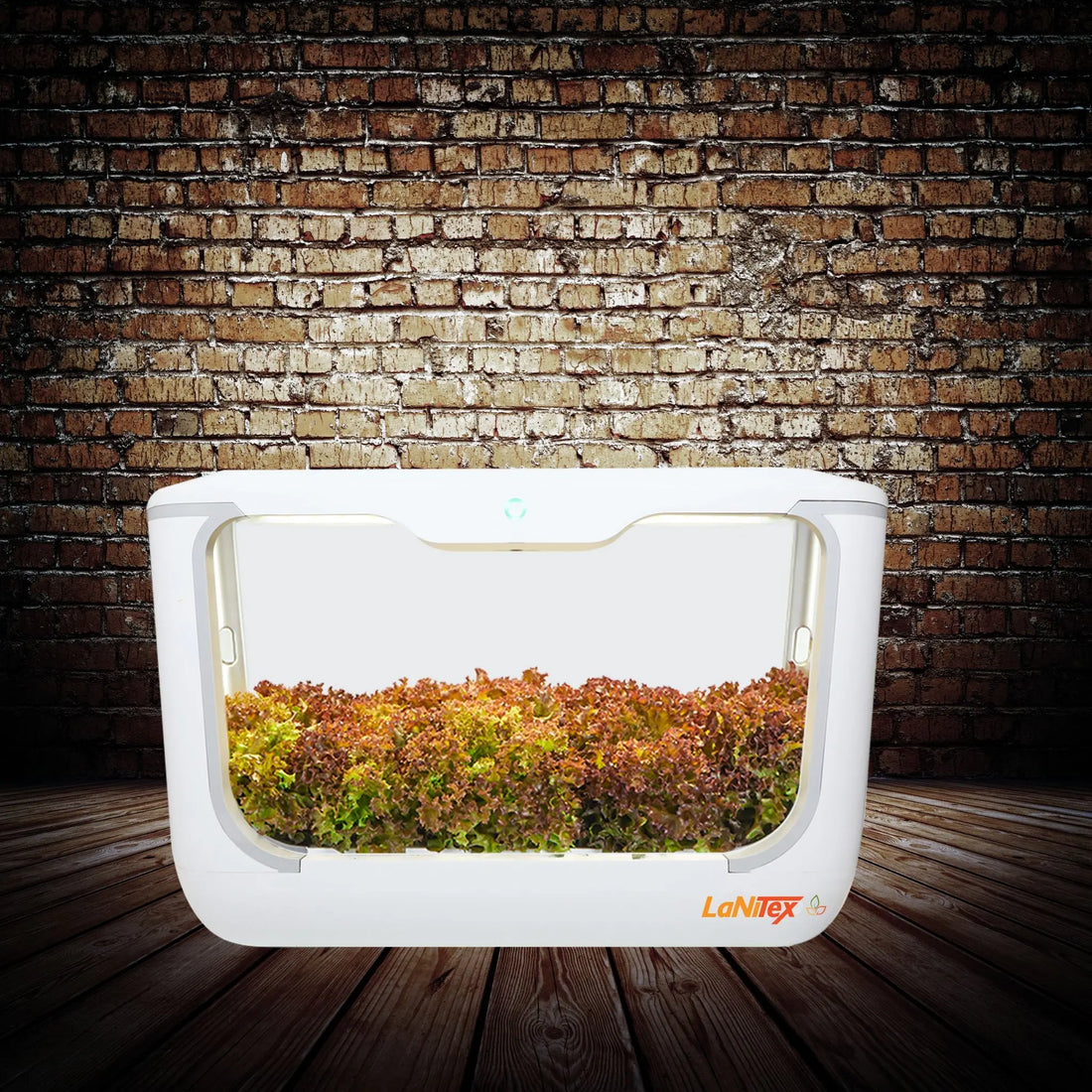
For a hydroponic thyme setup Australia-wide, the smallest option is often the sanest, because a separate small reservoir is exactly what a lean feeder wants. So if you are still choosing between system types, our guide to hydroponic system essentials covers the basics first. The Desktop Hydroponic Grow Box — a compact indoor herb garden — runs three pods, and its product page lists thyme among the herbs it suits. It will not suit big fruiting plants such as tomatoes.

The lean tank thyme actually wants - its own small reservoir, three pods, and a full-spectrum LED. Nothing to share with the oregano.
Start your herb bench →Personally tested at home on the Sunshine Coast before listing.
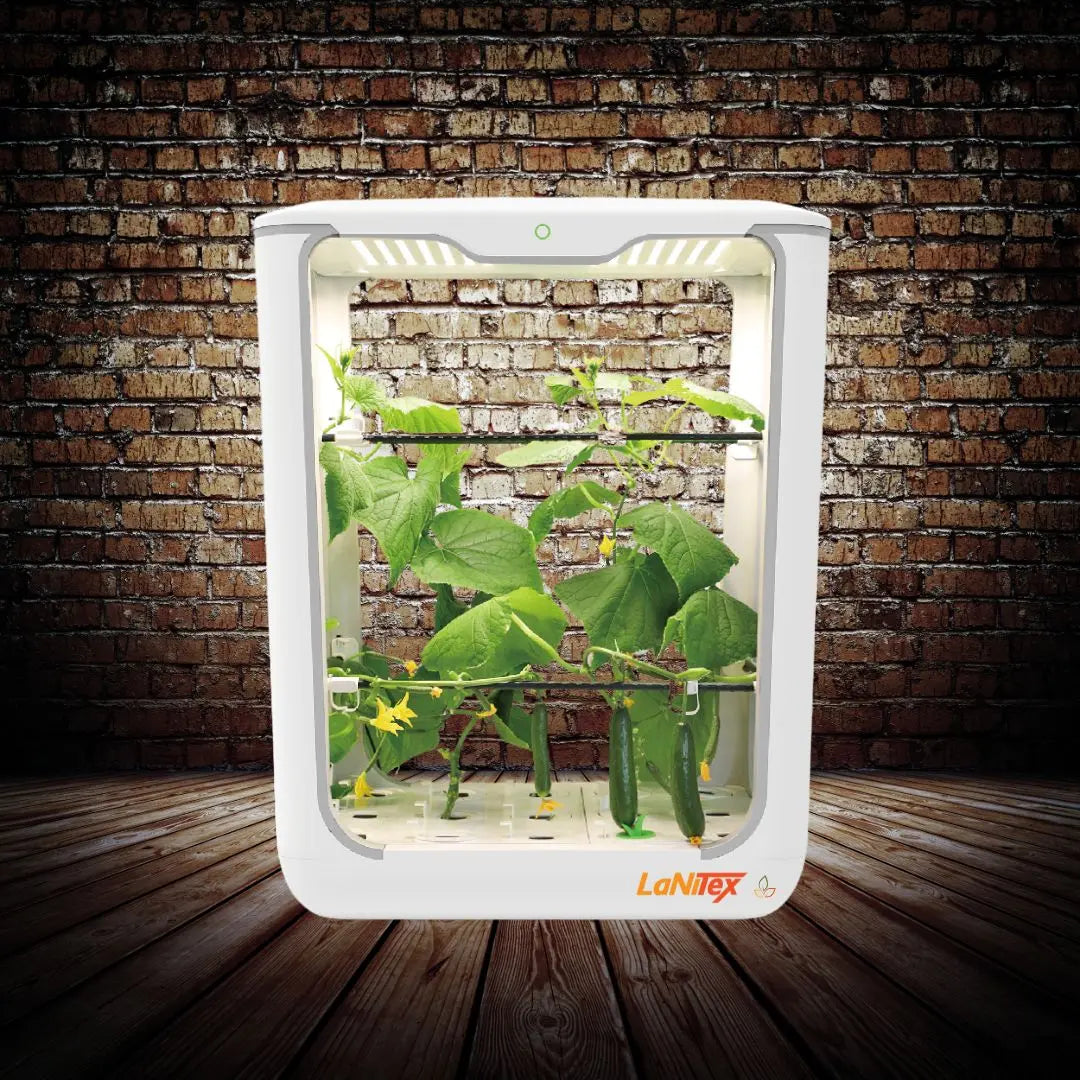
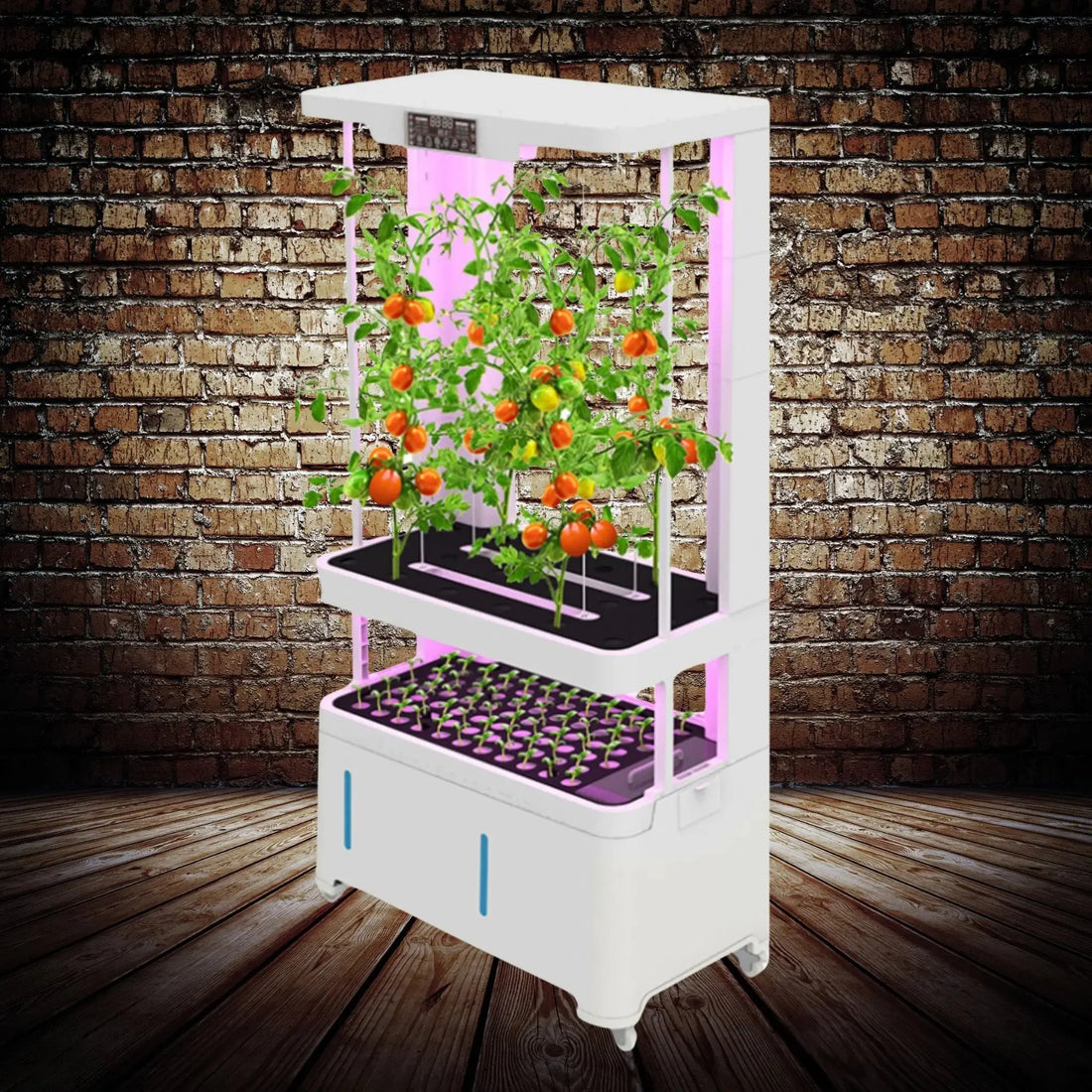
Then, scaling up, the Smart Grow Box holds a 9 L reservoir for a whole herb bench, and the Grow Box Tall takes 15 plants and stacks four high. And for a much bigger leafy-green and herb crop, the Smart Indoor Hydroponic Tower runs 72 planting positions in a vertical NFT system - the same thin-film approach this guide rates as workable for thyme.
How do you grow thyme through an Australian summer?
Indoors, mostly. Here is the reason, and it matters on the Sunshine Coast and in Brisbane. At the Bureau of Meteorology's Sunshine Coast Airport station, mean 9am relative humidity runs 71% across the year, peaking near 76% in June. Afternoons are drier, and the gap matters: mean 3pm humidity averages 66%, and bottoms out at 59% in July and August.
Thyme wants 40-70%. So the morning air here sits at or above a Mediterranean herb's ceiling for most of the year, which is why thyme struggles outdoors in Queensland while it thrives in Greece. Winter afternoons are the one real reprieve - at 59% the air finally sits inside thyme's band. Airflow indoors is not optional - a fan and space between plants do more for summer thyme than any nutrient tweak. A balcony gives you free light, but it hands you the humidity and the February heat as well. So a sheltered indoor bench with a fan beats an exposed balcony in most of coastal Queensland. Also watch for bolting in the heat: once thyme flowers, leaf growth slows and the flavour turns sharp.
And the humidity brings disease, too. Powdery mildew is the one to watch through a subtropical Australian summer - a dusty white bloom on the leaves, and it thrives in exactly the still, damp air a Queensland February delivers. Instead, airflow and spacing prevent it far more reliably than any spray. Root rot is the other, and it arrives from the reservoir rather than the air: a tank running warm and overfed turns roots from white to brown and soft. So keep the solution lean and moving, and hold it under 24 degrees C.
Three pests are worth a weekly look.
| Pest | What you see | Where to look |
|---|---|---|
| Aphids | Clusters on the soft new growth | Soft new tips, and leaf undersides |
| Spider mites | Fine webbing and stippled leaves, usually once the indoor air has run dry | Leaf undersides |
| Whitefly | Brush the plant and they lift off in a cloud | Anywhere - they announce themselves |
Still, a firm rinse knocks most of them off well before it becomes a spray problem.
How long until harvest, and how do you keep it?
Thyme germinates in 7-28 days and gives a first useful harvest 4-6 weeks from sowing. For example, a 2022 trial at Dunarea de Jos University grew hydroponic thyme to 28.44 g per plant over 45 days. If you have read that thyme takes 8-12 weeks, that is a soil number - hydroponic thyme beats it.

Thyme harvesting is cut-and-come-again, so snip sprigs above the woody base, never into bare wood, and take no more than a third at once. Then the plant rebuilds. Kept lean and pruned, thyme runs 2-3 years here before it goes woody enough to replace. In a cooler climate it can push to 3-5 - the summer heat and humidity are what shorten it.
Then rinse what you cut, dry it properly, and store it in a sealed container in the fridge. That applies to every herb, but thyme's thin leaves shed moisture fast.

Room for the whole herb bench when three pods stop being enough - fifteen planting sites and a 9 L reservoir, with the same full-spectrum LED doing the daily work.
Grow the full herb bench →Ships from the Sunshine Coast, Queensland.
The full range
Find the system that fits your space


Supported in Australia - every model tested before listing.
FAQ
What pH and EC should I use for hydroponic thyme in Australia?
Set pH 5.5-6.5 and EC 0.8-1.8 mS/cm. Start a fresh plant at the low end, around 0.8-1.2, and creep higher only once it is rooted. Published guides cluster around 1.2-1.6, so treat both ends as tolerance, not target. Then check both weekly with a meter.
How much light does hydroponic thyme need indoors?
Aim for 150-250 umol/m2/s, 12-16 hours a day. So on a timer, 14 hours is a safe default. If stems stretch, add light before you add nutrient.
How long does thyme take to grow in a hydroponic system before harvesting?
Germination takes 7-28 days, and the first cut comes at 4-6 weeks. Then snip little and often. And a well-run plant lasts 2-3 years here, or 3-5 in a cooler climate.
Can I grow thyme hydroponically through an Australian winter?
Yes. Indoors, thyme barely notices winter, because light and warmth come from you. So hold 18-24 degrees C and 12-16 hours. Winter is often easier here, since the air is drier.
What nutrient mix is best for hydroponic thyme herbs?
A general-purpose herb or leafy-green nutrient with calcium, magnesium and trace elements is enough. So mix it weaker than the label says and land inside EC 0.8-1.8.
Why is my hydroponic thyme going woody or leggy?
Check the reservoir first, not the lamp. If thyme shares a tank tuned for oregano or marjoram at EC 1.5-2.3, drop it to 0.8-1.2 or move the thyme out. Then prune back to just above the woody base, and check the roots are white rather than brown.
How close should grow lights be to hydroponic thyme?
Close enough to hit 150-250 umol/m2/s, which on most small LED units means 15-30 cm above the canopy. Raise the light if leaf tips bleach. Then lower it if stems stretch.
Why is my thyme dying?
Work through four causes in order. Overfeeding is the most common, because a tank tuned for oregano or marjoram sits above thyme's ceiling - drop it to 0.8-1.2. Root rot turns roots brown and soft in a warm, stagnant reservoir. Powdery mildew is a white bloom that arrives with still, damp air. And bolting slows leaf growth once the plant flowers.
About the writer
Laszlo Bulatko founded LaNiTex Hydro Garden in December 2024. The business is Australian-registered, based on the Sunshine Coast, Queensland (ABN 47 682 768 967). Before hydroponics he spent 15 years in sales, marketing and brand development in the Hungarian fishing-tackle trade. He hand-picked and tested the gear at home before listing it, and has had capsicum and herbs running year-round in the kitchen - though not thyme, which is why this guide leans on research. Read more on the About Laszlo page. If your thyme is the one sulking beside a happy oregano, say so in the comments.
Sources
- Bureau of Meteorology (2026). Climate statistics for Australian locations: Sunshine Coast Airport, station 040861. Product IDCJCM0027. bom.gov.au
- Mohamed, N., EL_Hanafy, E., Ibrahim, D., & Mahmoud, A. (2021). Effect of Light Intensity and Water Flow Rate of Hydroponic Unit on Thyme (Thymus vulgaris L.) Production. Journal of Productivity and Development, 26(4), 955-970. journals.ekb.eg
- Cretu, M., Dediu, L., Coada, M.-T., Rimniceanu, C., Placinta, S., Stroe, M.D., & Vasilean, I. (2022). Comparative Study on the Growth and Development of Thyme and Basil Herbs in Aquaponic System and Hydroponic System. Scientific Papers. Series D. Animal Science, LXV(1), 573-579. animalsciencejournal.usamv.ro
- IGWorks. Growing Hydroponic Thyme. igworks.com
- LetPot. How to grow thyme hydroponically: A Detailed Guide. letpot.com
- Rochester Hydroponics. Hydroponic Thyme Growth Guide. rochesterhydroponics.net