
Basil is one of the easiest herbs to grow hydroponically in Australia, and it gives you fragrant leaves all year instead of a wilting supermarket bunch. Grown in water rather than soil, the roots get oxygen and nutrients on demand, so the plant matures faster.
Growing basil indoors under a light also dodges the two things that ruin an outdoor crop here: summer humidity disease and winter cold. Hold the water chemistry steady and one plant keeps cropping for months.
The full setup - system, water chemistry, light, and pruning - is below.
Think your kitchen cannot keep a basil plant alive past a fortnight? With the water and light dialled in, it will out-crop anything on the shop shelf.
Quick answer: Grow basil hydroponically in Australia by holding the water at pH 5.5 to 6.5 and EC 1.0 to 1.6 mS/cm, running 14 to 16 hours of light a day at 18 to 27 deg C, and pinching the tips every couple of weeks. First leaves are ready in about three weeks.
Key takeaways:
- Basil (Ocimum basilicum) is a fast, forgiving first crop for any home basil hydroponic system.
- Target pH 5.5 to 6.5 and a beginner EC of 1.0 to 1.4 mS/cm; nudge up to 1.6 as plants mature.
- Give 14 to 16 hours of light, a PPFD of 200 to 400 umol/m2/s and a DLI of 12 to 17 mol/m2/day.
- Prune above a leaf pair every two to three weeks to delay bolting and keep leaves coming.
- One established plant yields roughly 30 to 60 g of leaf a week.

Basil hydroponic quick-reference
| Setting | Target for basil |
|---|---|
| pH | 5.5 to 6.5 |
| EC (nutrient strength) | 1.0 to 1.6 mS/cm (start young plants at 1.0 to 1.4) |
| Light | 14 to 16 hours/day; PPFD 200 to 400 umol/m2/s; DLI 12 to 17 mol/m2/day |
| Water and air temperature | 18 to 27 deg C (fastest growth 20 to 27; sulks below 15) |
| Best systems | Deep water culture, NFT, or a small self-watering grow box |
| First harvest | About 3 weeks from transplant |
| Yield | Roughly 30 to 60 g of leaf per plant per week |
What is basil?
Basil is a warm-season culinary herb, Ocimum basilicum, in the mint family. It grows fast, likes warmth, and takes to hydroponics better than almost any other herb. The classic kitchen type is sweet basil, and within that the large-leaf Genovese basil is the one most people picture on a pizza or in pesto.
Because it is a tender annual, basil hates cold water and cold air, which is exactly why an indoor basil hydroponic setup suits the Australian winter. From the Sunshine Coast down to Brisbane, you control the season instead of fighting it. Skip the soil and the plant never has to deal with a cold, waterlogged root zone.
Setting up your basil hydroponic system
A basil hydroponic system needs four things dialled in: water chemistry, light, temperature, and airflow. Get those right and basil almost grows itself.
Keep the pH between 5.5 and 6.5. This is the band where basil can actually take up the minerals in the water, so check it with a cheap pen tester twice a week. For nutrient strength, start soft: a beginner EC of 1.0 to 1.4 mS/cm (roughly 700 to 1000 ppm) is plenty for young plants, and you can lift the basil hydroponic EC to about 1.6 mS/cm once they are established. Those are the whole hydroponic basil nutrient requirements, a balanced leafy-green formula and nothing exotic. Running the basil hydroponic ppm too high is the fastest way to tip-burn the leaves.
Light is the other half. Basil wants 14 to 16 hours a day under an LED, a PPFD of 200 to 400 umol/m2/s at the canopy, and a daily light integral (DLI) of 12 to 17 mol/m2/day. Less than that and the stems stretch and go leggy. Keep the water and air between 18 and 27 deg C; basil is a warm-season herb that grows fastest from about 20 to 27 deg C and sulks below 15.
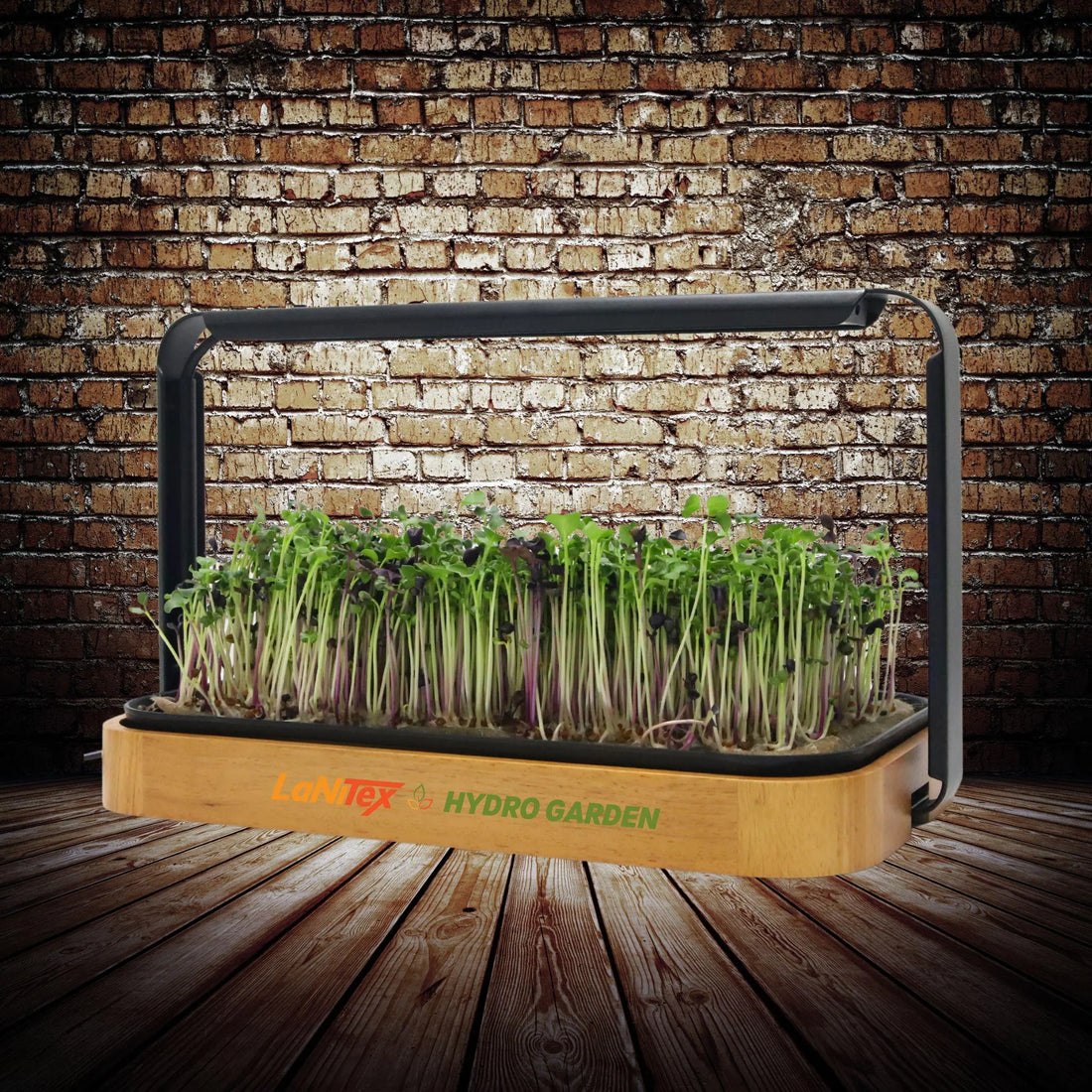
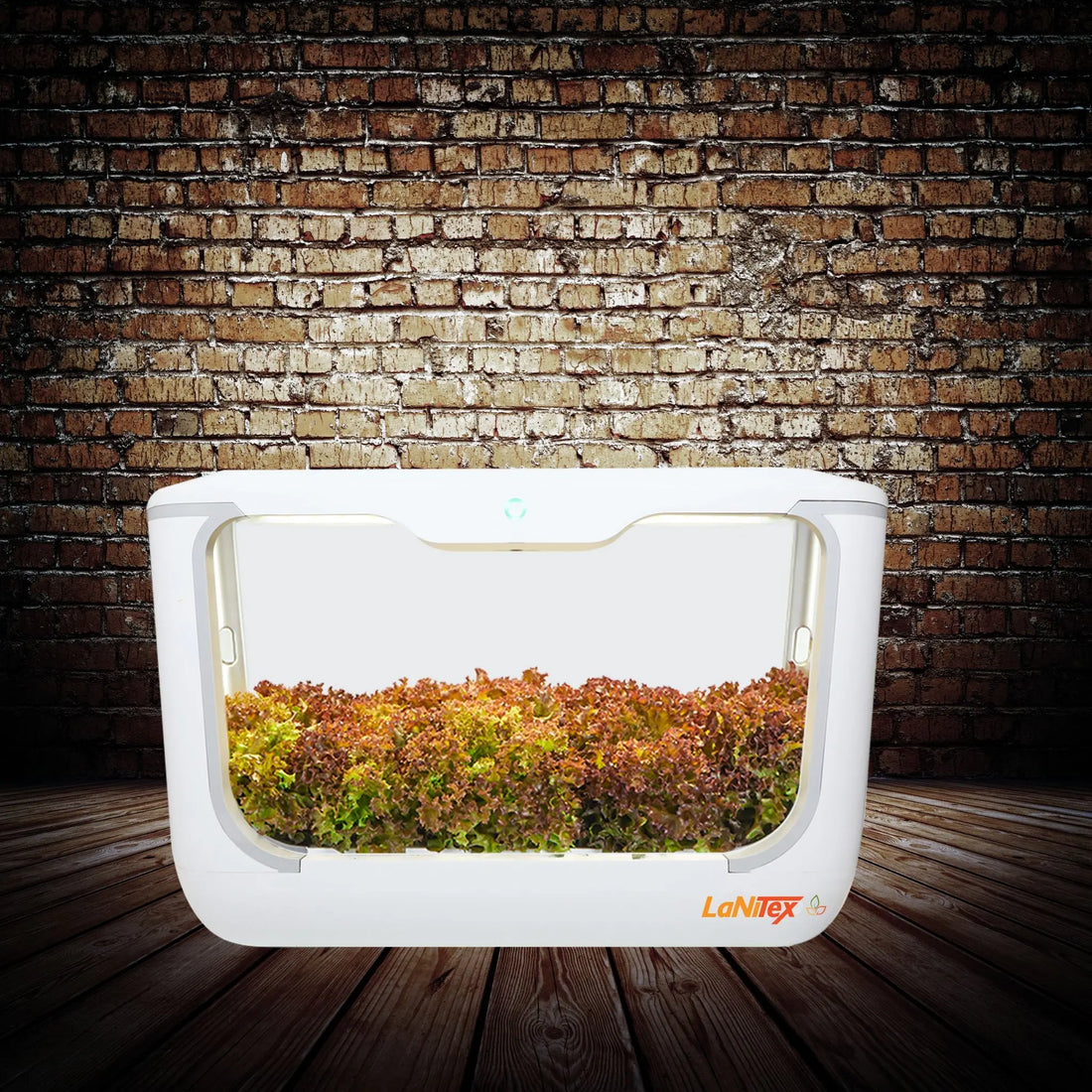
The system type matters less than the numbers. A deep water culture rig, where DWC basil sits with its roots in oxygenated water, is the easiest start. An NFT basil system runs a thin film of nutrient past the roots and scales better for rows of plants. Aeroponic basil, where the roots are misted, grows fastest of all but needs more kit and more attention. For a benchtop start, deep water culture wins. For young, compact basil, a small self-watering unit like the Desktop Grow Box handles the light and water for you.
One thing the system does not do for you is hold the seedling. Start basil seeds in a small rockwool cube or peat plug, then drop it into a net pot once the roots show. Clay pebbles (LECA) packed around the net pot steady the plant and let the roots breathe. Both are inert, so they support the seedling without adding nutrients or harbouring disease.


Fresh basil on your bench in about three weeks. The Desktop Grow Box runs the LED and self-watering tank, so you just top up the water and pinch the tips.
Start your first basil crop →Personally tested at home on the Sunshine Coast before listing.
My experience growing basil on the Sunshine Coast
My wife loves that our home-grown fresh herbs are always within arm's reach in the kitchen. Whether it's a rich spaghetti sauce or our Friday-night homemade burgers, she just picks a few leaves and dinner is sorted. Anyone who has tasted the difference knows: the flavour of your own living, home-grown basil is worlds apart from the store-bought bunches that spend weeks wilting on a plastic tray. It's not just convenience - it's a completely different food experience.
That is what got me testing hydroponic basil at home in the first place. One Genovese plant gave me a solid handful of leaves a week for about four months. On the Coast I run young, compact plants in the Desktop Grow Box, my compact indoor herb garden, shift the mid-size ones into the Smart Grow Box, and once a plant really stretches and wants headroom it goes into the Grow Box Tall. Match the system to the plant's height and you never crowd the light.
Best basil varieties for hydroponics
The best basil varieties for hydroponics are the compact, fast leafy types. Genovese basil is the workhorse, with big soft leaves and classic pesto flavour, and genovese basil hydroponic growers get heavy yields from it. Plain sweet basil is milder and just as easy.
For something different, lemon basil hydroponics gives a citrus note that suits fish and tea, while thai basil hydroponic plants bring an aniseed kick for stir-fries and pho. If bench space is tight, pick a dwarf basil variety such as 'Spicy Globe' or Greek basil; these dwarf, compact basil cultivars stay small and bushy under lights.
LaNiTex sells the growing hardware, not the seed, so you buy seed separately. There is no shortage of hydroponic basil seeds Australia wide, with suppliers like The Diggers Club, Mr Fothergill's and Eden Seeds all stocking Genovese, Thai and lemon types. Basil is one of the easiest herbs to start with; once it is running, mint, dill, rosemary, oregano and marjoram follow the same playbook, and the hydroponic system essentials all carry across. Parsley is another easy next herb to add to the rotation - see our hydroponic parsley guide.
Pruning basil to delay bolting
Prune basil often and it stays leafy for months; leave it alone and it bolts. Bolting is when the plant sends up a flower spike, and once it flowers the leaves turn bitter and growth slows. That flowering suppression is the single biggest yield lever you have.
Start pinching once the plant has three or four leaf pairs. Snip the growing tip just above a leaf pair and the plant branches into two, doubling the leafy stems each time. Pinch out any flower buds the moment you see them. Do this every two to three weeks. Your first real harvest lands about three weeks from transplant, and hydroponic basil yield per plant then runs around 30 to 60 g of leaf a week once it is branching well.
Common basil problems and fixes
Most basil problems come down to water chemistry, airflow or disease, and each has a clear fix. Here are the three you are most likely to hit.
- Yellowing leaves. Yellow lower leaves usually mean the pH has drifted out of the 5.5 to 6.5 band so the plant cannot take up nutrients, or the EC has crept too low. Reset the reservoir, recheck the pH, and feed at the right strength.
- Basil downy mildew. Basil downy mildew shows as yellow blotches on top of the leaf and grey-purple fuzz underneath, and it thrives in still, humid air. Space plants out, run a small fan, and pull infected leaves fast. There is no cure once it takes hold.
- Fusarium wilt. Fusarium wilt causes sudden one-sided wilting and brown streaks in the stem. It is soil-borne, so it is rare in a clean hydroponic setup, but if it appears, remove the plant and sterilise the system before you replant.

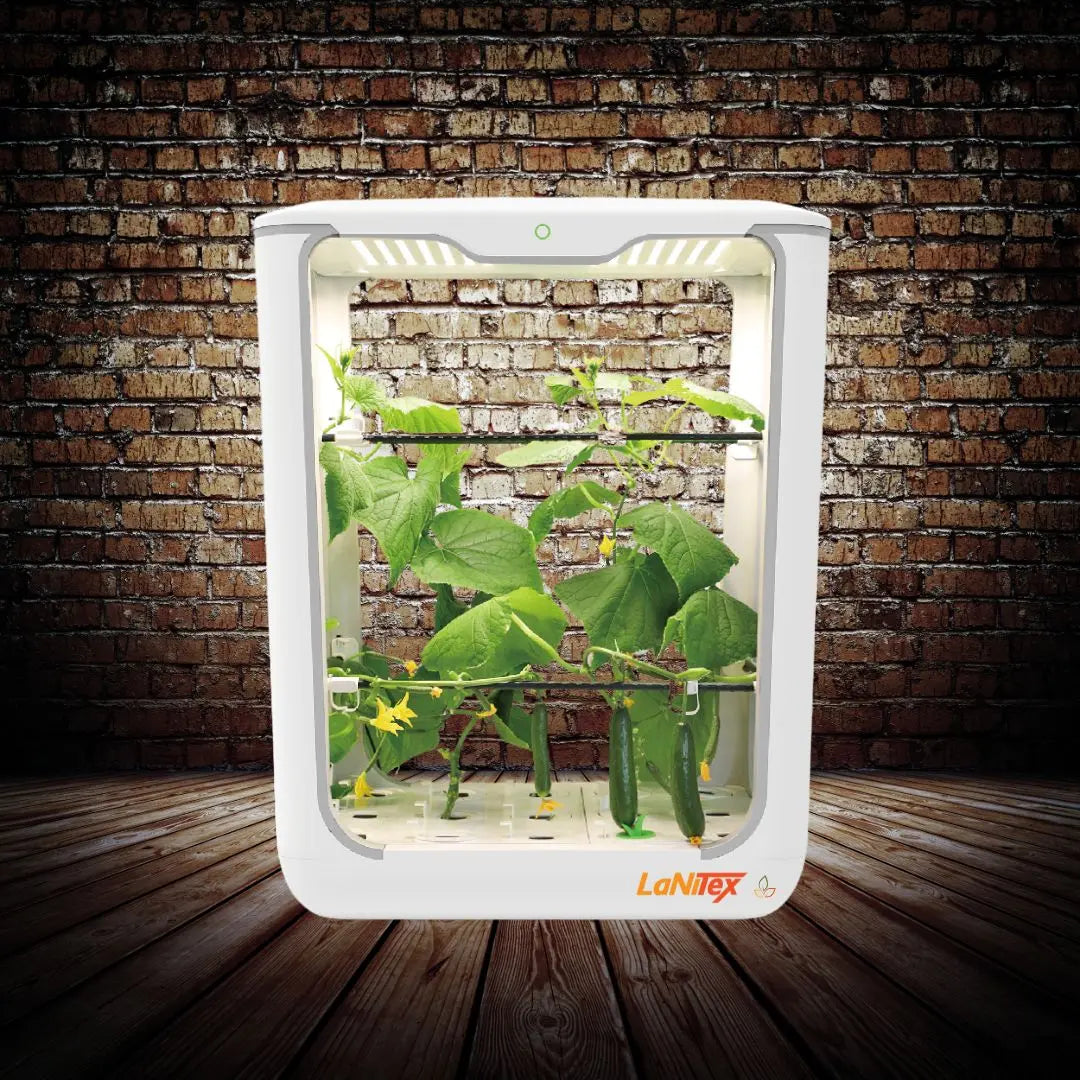
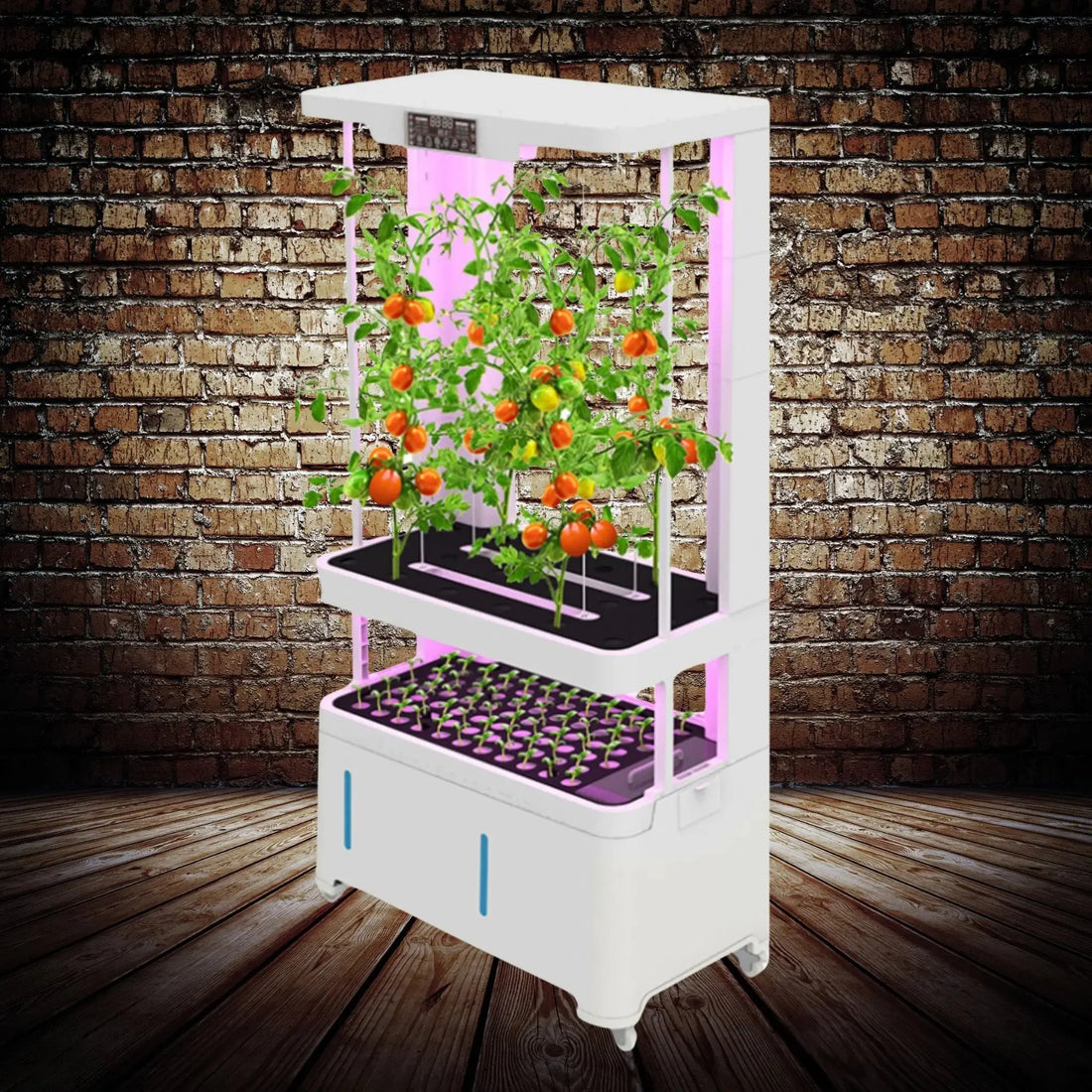
Once your basil stretches tall and wants headroom, the Grow Box Tall adds the extra height and more planting sites for a bigger, longer run.
Grow taller herb crops →Ships from the Sunshine Coast, Queensland.
The full range
Find the system that fits your space


Supported in Australia - every model tested before listing.
Frequently asked questions
How do you grow basil hydroponically in Australia?
Grow basil hydroponically by suspending the roots in nutrient-rich water instead of soil. Hold the pH at 5.5 to 6.5, feed at EC 1.0 to 1.6 mS/cm, run 14 to 16 hours of LED light a day at 18 to 27 deg C, and pinch the tips every couple of weeks. In an indoor setup the season does not matter, so you can start any month of the year.
What is the best hydroponic system for basil?
For most home growers a deep water culture setup or a small self-watering grow box is the best system for basil, because both are simple and forgiving. Deep water culture keeps the roots in oxygenated water with almost no moving parts. Move to an NFT channel only when you want to run many plants in a row.
What pH should basil be in hydroponics?
Basil should sit at a pH of 5.5 to 6.5 in hydroponics. That range keeps nitrogen, iron and magnesium available to the roots. Drift above 6.5 and the leaves yellow between the veins; drift below 5.5 and growth stalls. Check twice a week with a pen tester and adjust in small steps.
What EC is best for hydroponic basil?
Beginners should feed hydroponic basil at an EC of 1.0 to 1.4 mS/cm, roughly 700 to 1000 ppm. Established plants handle up to about 1.6 mS/cm. Higher than that burns the leaf tips and does not lift growth, so there is no reason to overfeed a leafy herb like basil.
How much light does hydroponic basil need?
Hydroponic basil needs 14 to 16 hours of light a day, a PPFD of 200 to 400 umol/m2/s at the canopy, and a daily light integral of 12 to 17 mol/m2/day. Below that the stems stretch and the plant makes fewer leaves. An LED sitting close above the canopy is the easiest way to hit those numbers indoors.
Which basil varieties grow best hydroponically?
Genovese and plain sweet basil grow best hydroponically because they are fast, leafy and compact. Thai basil and lemon basil grow just as well and add different flavours. For a tight bench, dwarf cultivars like Greek basil or 'Spicy Globe' stay small while still cropping heavily under lights.
Why is my hydroponic basil turning yellow?
Hydroponic basil usually turns yellow because the pH has drifted out of the 5.5 to 6.5 band or the nutrient strength has dropped too low, so the plant cannot take up iron and nitrogen. Reset the reservoir with fresh solution, recheck the pH, and confirm the EC. Yellowing paired with grey fuzz underneath instead points to downy mildew.
Will basil grow back after you cut it?
Yes. Cut above a leaf pair and each stem branches into two, so regular harvesting makes the plant bushier rather than smaller. Keep pinching out the tips and any flower buds, and one basil plant keeps cropping for months.
Can you grow basil from cuttings hydroponically?
Yes, and it is faster than starting from seed. Snip a 10 cm non-flowering tip, sit the cut end in water, and roots appear in one to two weeks. Once the roots are about an inch long, move the cutting into a net pot in your system.
Ready to grow more than herbs? If basil is your gateway crop and you want a full salad garden next, a larger vertical system like the Smart Indoor Hydroponic Tower V5.2-A lets you scale up leafy greens and herbs together in the same corner of the room.
About the author
Laszlo Bulatko founded LaNiTex Hydro Garden in December 2024, based on the Sunshine Coast, Queensland. Before hydroponics he spent 15 years in sales, marketing and brand development in the Hungarian fishing-tackle trade, after starting his career at IBM and Diageo, and helped build a 12 per cent market share. Today he hand-picks and tests every hydroponic system at home before listing it, and runs the Term-Grow Enrolment program placing grow boxes in Queensland primary-school classrooms.
Get a fresh grow guide like this every fortnight
Join the LaNiTex Hydro Garden newsletter for practical hydroponic, microgreen and mushroom growing tips for Australian homes. Subscribe to download a free hydroponics starter guide (PDF) and get 10% off your first order.
Join the newsletter →Sources
- American Society for Horticultural Science - Walters and Currey, "Growth Rate and Nutrient Uptake of Basil in Small-scale Hydroponics", HortScience. View the ASHS basil hydroponics study.
- Plant Science Archives - "Comparative Analysis of Growth Parameters in Hydroponic and Soil-grown Systems of Ocimum basilicum L.": the plant heights of basil plants at the end of the growth period were 40 +/- 3.10, 30.80 +/- 2.82, and 28.50 +/- 3.17 cm for NFT, EBB and soil respectively. View the Plant Science Archives growth data.
- Sustainable Gardening Australia - "The Pros and Cons of Hydroponic Growing": farms "use up to 90 percent less water" with hydroponics than with soil, a real advantage for water-conscious Australian households. Read the SGA hydroponics overview.