
Last updated: 15 July 2026
Rosemary has a reputation for being fussy in pots. Yet in a well-run hydroponic system it thrives. Grown without soil, this woody Mediterranean herb rewards Australian kitchens with dense, resinous sprigs all year, and it sips a fraction of the water a garden bed would.
Quick answer: Yes, you can grow rosemary hydroponically. Start from a cutting rather than seed, hold the nutrient solution at pH 5.5 to 6.5 and EC 1.0 to 1.8 mS/cm, and give it 12 to 16 hours of bright light daily. In a warm indoor spot it produces cut-and-come-again sprigs within a few weeks.
Key takeaways
- Rosemary (Rosmarinus officinalis, now also classified as Salvia rosmarinus) is a woody perennial that suits recirculating hydroponics once its roots establish.
- Keep the nutrient solution at pH 5.5 to 6.5 and EC 1.0 to 1.8 mS/cm, with light at 200 to 400 umol/m2/s PPFD.
- Cuttings root far more reliably than seed, which germinates slowly and unevenly.
- Yellowing leaves usually point to iron or magnesium deficiency, both easy to correct in a closed system.
What is rosemary, and why grow it hydroponically?
Rosemary is a woody, evergreen perennial herb in the mint family, Lamiaceae. Its botanical name is Rosmarinus officinalis, though botanists reclassified it in 2017, so you will now also see it listed as Salvia rosmarinus. Native to the Mediterranean, it stores its scent in resinous, needle-like leaves that hold up to roasting, grilling and long braises.
Growing rosemary hydroponically suits it better than most people expect. In a garden bed it sulks: poor drainage brings on root rot, and winter growth slows to a crawl. A closed system takes that guesswork away. Roots sit in an oxygen-rich, evenly fed environment, and you set the light and temperature yourself, right through the year. Research on rosemary hydroponics has even found the method can lift the plant's aromatic and antioxidant compounds against soil-grown plants.
Cultivar choice matters too. "Tuscan Blue" is upright and vigorous, which makes it a strong pick for a taller hydroponic setup and regular harvesting; "Arp" is one of the hardier, more cold-tolerant types; and "Blue Lagoon" is a compact, free-flowering choice for smaller systems. Trailing "Prostrate" forms look attractive but sprawl, so they are less practical indoors. If you already grow a Mediterranean herb like sage, rosemary will feel familiar.
Best hydroponic growing conditions for rosemary
Rosemary is forgiving once you match its Mediterranean instincts. Aim for these targets:
- pH: 5.5 to 6.5 in the nutrient solution, which keeps nutrients available to the roots.
- EC: 1.0 to 1.8 mS/cm. Run the lower end for young cuttings and lift it as the plant matures and puts on woody growth.
- Light: 200 to 400 umol/m2/s PPFD from an LED grow light, for 12 to 16 hours a day. Rosemary is a sun lover, so it rewards the brighter end of that range.
- Temperature: 18 to 26C suits steady growth.
- Humidity: 40 to 70 per cent. Drier air than most leafy greens prefer, which helps prevent fungal problems.
- Growing media: rockwool, perlite or coco coir all work well for starting seedlings and cuttings, giving the young stems support while roots develop.
Bright light paired with the right nutrient strength is what builds that resinous aroma. Under-light the plant and it stretches, pale and weak; over-feed it and the tips can scorch. Rosemary hydroponics with LED grow lights gives you a repeatable result once these numbers are dialled in. A cheap 4-in-1 water quality tester takes the guesswork out of pH and EC. Over several weeks the plant develops a woody base and a fibrous root structure suited to recirculating flow.

Get a fresh grow guide like this every fortnight
Join the LaNiTex Hydro Garden newsletter for practical hydroponic, microgreen and mushroom growing tips for Australian homes. Subscribe to download a free hydroponics starter guide (PDF) and get 10% off your first order.
Join the newsletter →My experience growing rosemary on the Sunshine Coast
If there's one thing that always earns a top spot on my weekly harvest list, it's rosemary. For a long time I assumed this tough, woody herb would be too stubborn for countertop hydroponics. Then I discovered that once it gets the perfect nutrient balance and the right light spectrum in a closed system, it delivers a far more intense, resinous aroma than anything I could buy at the market. A single fresh sprig for the Sunday roast, and you immediately understand why it's worth the effort.
The lesson was that rosemary is not stubborn, it is specific. Give it the numbers above, keep the light strong, and it settles into a closed system as happily as any leafy herb.
Choosing a hydroponic system for rosemary
Several methods grow rosemary well, and the best choice depends on your space and how hands-on you want to be.
- Deep water culture (DWC) suspends the roots in an aerated nutrient reservoir. Deep water culture rosemary grows quickly once established, though the woody base prefers a stable, well-oxygenated tank.
- Nutrient film technique (NFT) runs a thin stream of solution past the roots. A rosemary hydroponic system with NFT works, but the perennial's thick roots can crowd narrow channels over time.
- Ebb and flow (flood and drain) periodically floods the root zone then drains it. An ebb and flow rosemary setup gives the roots plenty of oxygen between cycles, which the plant likes.
- Kratky is a passive, no-pump method that suits a single plant, but it offers less control as the rosemary grows large.
For most home growers, a compact recirculating unit that manages water and light in one place removes the fiddly parts.

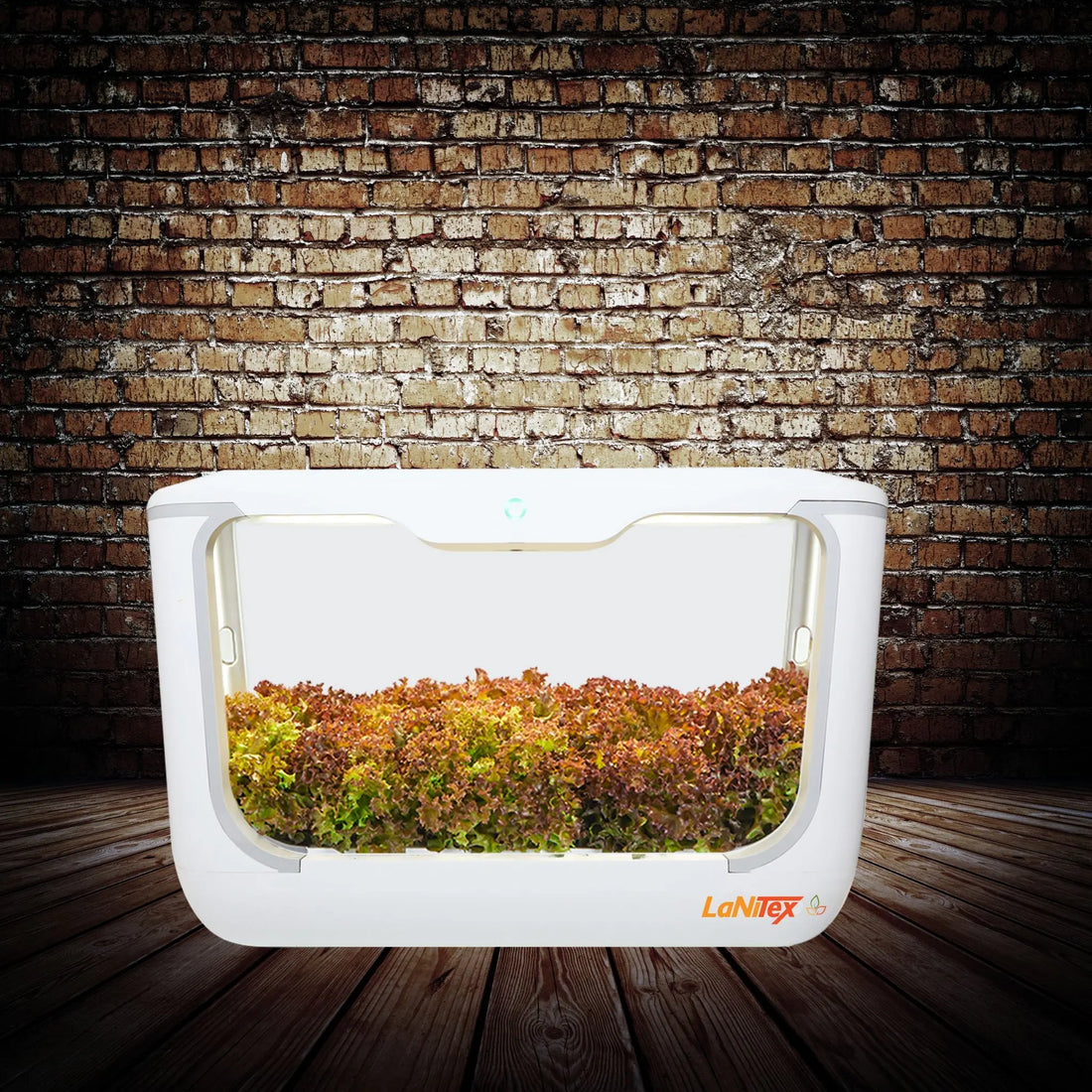
Grow rosemary and other herbs on your kitchen bench with the light and water handled for you. The self-watering tank and full-spectrum LED do the daily work, so you just supply the cuttings.
Start growing rosemary →Personally tested at home on the Sunshine Coast before listing.
Propagation: seeds vs cuttings
You can grow rosemary from seed, but be patient. Seed germinates slowly and erratically, often taking weeks with a low success rate. Growing rosemary from cuttings in hydroponics is far more reliable and gives you a plant true to the parent cultivar. Take a 10cm cutting from soft, non-flowering growth, strip the lower leaves, and set it in rockwool or a net pot with perlite until roots form. You can also root the cutting in a glass of clean water on a bright windowsill first, then pot it up once white roots appear. Warmth speeds things up. In Queensland, a warm-season start from about October to February gives cuttings the 18 to 26C they like to root and establish. As the cutting matures it develops the woody stem and branching root structure that mark an established rosemary plant.

Troubleshooting hydroponic rosemary
Most problems show up in the leaves first.

- Iron deficiency appears as yellowing between the veins on the newest growth, while the veins themselves stay green. It is common when pH drifts too high, so check and correct pH to 5.5 to 6.5, then top up with chelated iron.
- Magnesium deficiency shows as yellowing between the veins on older, lower leaves. A magnesium supplement, such as a diluted Epsom salt solution, usually fixes it.
- Slow, sparse woody growth often means too little light. Raise the PPFD toward 400 umol/m2/s and confirm the plant gets its full 12 to 16 hours.
- General yellowing with soggy roots points to poor oxygen; increase aeration and check the solution temperature.
- Powdery mildew shows up as a dusty white coating on the leaves, and it is a common disease on indoor rosemary. It takes hold in still, humid air, so space plants for good airflow, run a small fan or crack a window nearby, and keep humidity toward the drier 40 to 70 per cent end. Snip off affected sprigs as soon as you spot them.
Harvesting and storing rosemary safely
Rosemary is a cut-and-come-again perennial, so regular harvesting actually keeps it productive. Snip 5 to 8cm from the soft tips with clean scissors. Never take more than about a third at once, so the plant can recover and rebush. Prune lightly and often rather than in one hard cut: pinch the growing tips to push out bushy side-shoots, and avoid cutting back into the old bare wood, which is slow to reshoot. Kept this way it won't go leggy on you.
Food safety starts at the bench. Wash your hands and sanitise your scissors before cutting, and rinse harvested sprigs in clean water. Pat them dry, since surface moisture shortens shelf life. Fresh rosemary keeps for one to two weeks wrapped loosely in the fridge, and it dries or freezes well for longer storage.

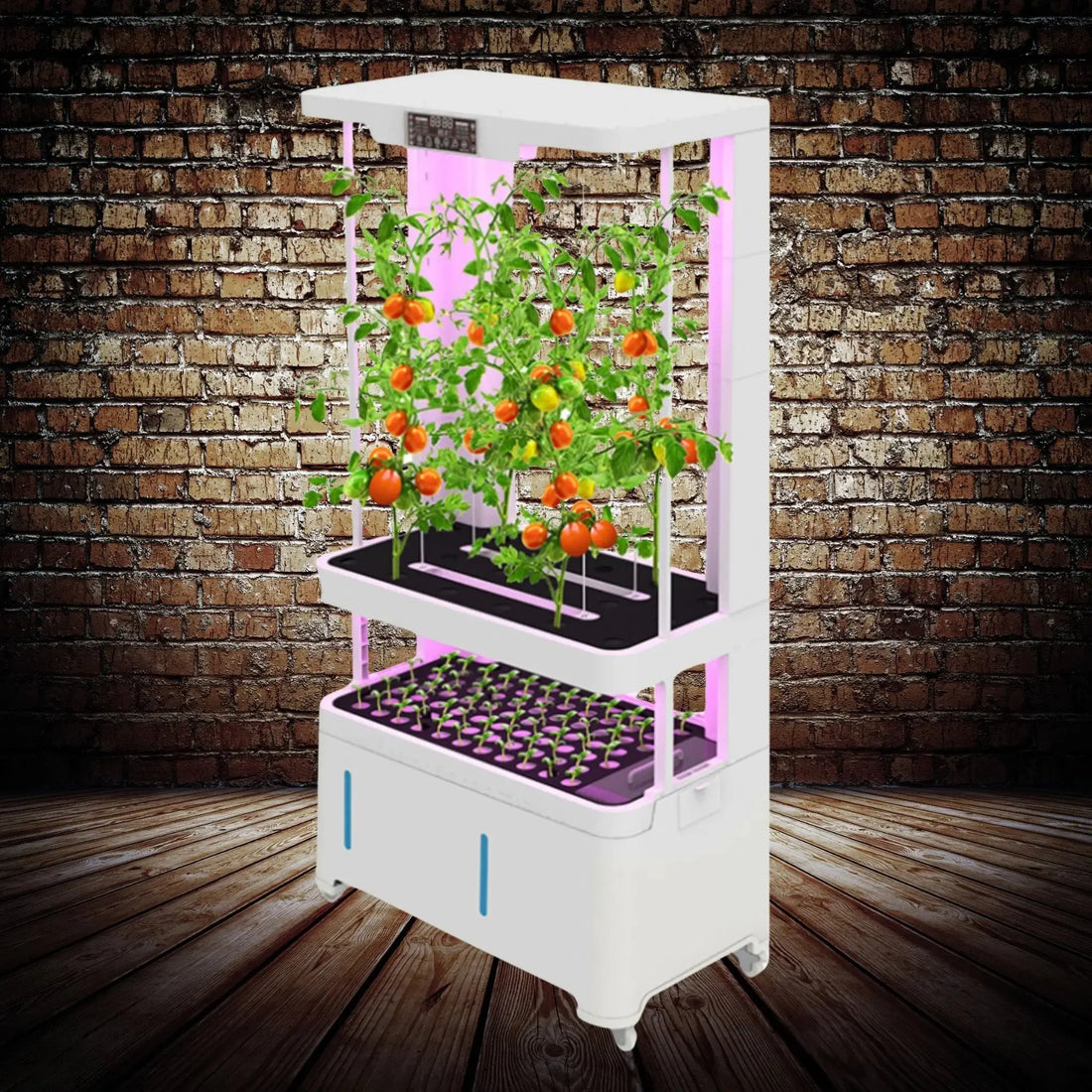
Ready to give an upright cultivar like Tuscan Blue more headroom? The taller version adds vertical space for herbs that climb, with the same self-watering and LED setup. You supply the plants.
Grow taller herbs →Ships from the Sunshine Coast, Queensland.
The full range
Find the system that fits your space


Supported in Australia - every model tested before listing.
Frequently asked questions
How do I grow rosemary hydroponically in Australia?
Start a cutting in rockwool, perlite or coco coir, then move it into a recirculating system once roots form. Hold the nutrient solution at pH 5.5 to 6.5 and EC 1.0 to 1.8 mS/cm, and run an LED light for 12 to 16 hours a day. A warm spot at 18 to 26C keeps hydroponic rosemary growing across the Australian seasons.
What is the best hydroponic system for rosemary at home?
A compact recirculating unit is the easiest choice, because it manages water and light for you. Deep water culture and ebb and flow both suit rosemary's woody roots, while NFT works but can get crowded over time. For a single plant, passive Kratky is fine but gives you less control as the herb grows.
What EC and pH should I use for hydroponic rosemary?
Keep the pH between 5.5 and 6.5 so the roots can take up nutrients, and run the EC at 1.0 to 1.8 mS/cm. Use the lower EC for young cuttings and lift it as the plant matures. Check both with a simple meter, since drift is the most common cause of nutrient problems.
How much light does hydroponic rosemary need indoors?
Rosemary is a sun-loving herb, so give it 200 to 400 umol/m2/s PPFD from an LED grow light for 12 to 16 hours a day. Aim for the brighter end of that range. Too little light makes the plant stretch, turn pale and grow slowly, so raise the intensity if growth looks weak.
Can I grow rosemary from cuttings in a hydroponic system?
Yes, and cuttings are the recommended way. Growing rosemary from cuttings in hydroponics is far more reliable than seed and produces a plant true to its parent. Take a 10cm cutting from soft, non-flowering growth, strip the lower leaves, and root it in rockwool or perlite before transferring it into your system.
How long does hydroponic rosemary take to harvest?
From an established cutting, you can usually start light harvesting within a few weeks, once the plant has enough leaf to spare. Because rosemary is a cut-and-come-again perennial, it keeps producing for months. Take no more than about a third at a time so it can recover and rebush.
Why is my hydroponic rosemary turning yellow?
Yellowing is usually a nutrient issue. Yellowing between the veins on new growth points to iron deficiency, often from high pH, so correct the pH and add chelated iron. Yellowing on older, lower leaves points to magnesium deficiency, which an Epsom salt supplement fixes. Soggy roots and general yellowing mean too little oxygen.
Can I grow rosemary indoors, and can it grow in shade?
Yes, and indoors is where hydroponic rosemary does best, because you control the light and warmth all year. It will not thrive in shade, though. Rosemary is a sun lover, so it needs a bright LED at 200 to 400 umol/m2/s PPFD for 12 to 16 hours a day. In low light it stretches, pales and grows slowly.
When should I plant rosemary in Australia?
In a hydroponic system you can start rosemary indoors at any time of year, since the conditions stay constant. If you are rooting cuttings, the warm October to February window helps them strike faster in the 18 to 26C they like. Note that rosemary is Mediterranean, not native, so the "native rosemary" (Westringia) sold in Australia is a different plant.
What can I grow alongside rosemary in the same system?
Rosemary pairs well with other Mediterranean herbs that share its needs, so sage, thyme and oregano all sit happily at pH 5.5 to 6.5 and EC 1.0 to 1.8 mS/cm in the same multi-hole system. Leafy greens like lettuce and basil prefer more humid air than these Mediterranean herbs, so they make less ideal tank-mates.
Sources
- Functional Foods in Health and Disease (peer-reviewed), "Pharmacochemical investigation of Rosmarinus officinalis L. cultivated by clonal micropropagation and hydroponic combined method": "Hydroponic cultivation of medicinal and aromatic plants is an innovative agrobiotechnology for growing plants without soil and is becoming increasingly popular." ffhdj.com
- International Journal of Molecular Sciences, "Rosmarinus Officinalis Leaves as a Natural Source of Bioactive Compounds": "Rosemary extracts have been widely used as a preservative in the food industry due to their inherent high antioxidant activity." ncbi.nlm.nih.gov
- Vertical Farm Daily, "Hydroponic rosemary cultivation boosts bioactive compounds" (reference; page access-restricted at time of writing): verticalfarmdaily.com/article/9694382
- Autonomous University of Nuevo Leon, "Cultivation of Rosmarinus officinalis in hydroponic system" (reference; PDF access-restricted at time of writing): ResearchGate publication 310048299
About the writer
Laszlo Bulatko founded LaNiTex Hydro Garden in December 2024, based on the Sunshine Coast, Queensland, with one mission: that any Australian family can grow fresh food at home. LaNiTex supplies indoor hydroponic systems, microgreen kits and mushroom growing boxes chosen for real homes, and Laszlo personally tested products at home before listing them. He also runs the Term-Grow Enrolment program, which places grow boxes in Queensland primary-school classrooms. His earlier career spans IBM and Diageo in Hungary, followed by 15 years in sales, marketing and brand development in the fishing-tackle trade. Read more on the About Laszlo page.