
Want fresh sage all year, with no garden bed and no green thumb? A hydroponic setup gives soft, aromatic leaves from a benchtop, even in a small unit.
Quick answer: Grow sage hydroponically by rooting a cutting or seedling in a net pot, then running a recirculating system at pH 5.5-6.5 and EC 1.0-1.6 mS/cm. Give it 200-400 umol/m2/s of LED light for 14-16 hours a day at 18-24C, and pick once the plant bushes out.
Key takeaways:
- Sage (Salvia officinalis) is a woody Mediterranean herb that takes well to soil-free growing.
- Hold the solution at pH 5.5-6.5 and EC (electrical conductivity, a measure of feed strength) 1.0-1.6 mS/cm for steady, healthy leaves.
- Give 200-400 umol/m2/s of light for 14-16 hours daily, at 18-24C.
- Deep water culture, ebb-and-flow, and vertical towers all suit sage; NFT (nutrient film technique) can crowd a woody stem.
- Start from a softwood cutting for a faster, truer plant than seed.
Sage at a glance
| What to set | Target for sage |
|---|---|
| pH | 5.5-6.5 |
| EC (feed strength) | 1.0-1.6 mS/cm |
| Light (PPFD) | 200-400 umol/m2/s |
| Hours of light | 14-16 per day |
| Water temperature | 18-24C |
| Germination from seed | 7 to 21 days |
| Seed to first pick | 8 to 12 weeks |
| Cutting to first pick | a few weeks, once it bushes out |
| Best systems | deep water culture, ebb-and-flow, vertical tower |
| Replace the plant | every 3 to 4 years, once it turns woody |
This guide is for: Beginners setting up a first indoor herb garden on the Sunshine Coast, in Brisbane, or anywhere in Australia.
Growing sage hydroponically means raising the kitchen herb Salvia officinalis in nutrient-rich water instead of soil. Sage hydroponics suits Australian homes, since a compact system fits on a bench, sips water, and runs all year. That means the plant stays close, clean, and ready to pick.
Growing sage hydroponically also gives you more control than a pot on the windowsill. You set the pH, the feed strength, and the light. That means the plant never stalls in tired soil or dries out in a Queensland summer. I run LaNiTex Hydro Garden from the Sunshine Coast, and the ideas behind fast indoor lettuce carry across to sage and most hydroponic herbs for the Australian climate.
So where do you start? First, it helps to know what sage is, and why a woody herb takes to water so well.
What is sage, and does it suit hydroponics?
Sage is a woody, evergreen herb from the Mediterranean. Its botanical name is Salvia officinalis. It grows well without soil because the roots want steady moisture and plenty of air. That means less guesswork than with heavy garden soil.
Common Sage is the classic grey-green kitchen type. You grow common sage hydroponically the same way as any other form. For a bit of colour, try 'Berggarten', 'Purpurascens' (purple sage), or 'Tricolour'. All of them are culinary.
Here is one quick note. You may see white sage hydroponic setups online. But white sage is an ornamental grown for smudging, not for cooking. So stick with Salvia officinalis here.
Sage carries a woody stem and fibrous roots. That means it behaves a little differently from a soft herb like basil. But with the right light and feed, it settles in happily.
Setting up a hydroponic sage system
Start with the feed. Hold a hydroponic sage pH of 5.5-6.5, so the roots take up nutrients cleanly. Then run a sage hydroponic EC of 1.0-1.6 mS/cm. Keep it lean for young plants, then lift it a touch as they mature.

New to soil-free growing? Our guide to hydroponic system essentials covers the basics first.
Light comes next. Sage is a sun lover. So aim for a PPFD (photosynthetic photon flux density, or how much growing light actually reaches the leaves) of 200-400 umol/m2/s from an indoor herb garden LED light, running 14-16 hours a day. Also keep the water at 18-24C, since warm water carries less oxygen and invites root rot. Sage itself takes warm air in its stride, but a reservoir creeping past 24C in a hot Brisbane spare room is what causes trouble.
Now the system itself. A DWC bucket for sage is the easiest start, since the roots sit in oxygenated water. Ebb-and-flow suits sage too, because the drain cycle feeds the roots air. For example, a vertical tower fits several plants in a small footprint. An NFT system for sage and basil works as well. But a woody stem and spreading roots can crowd a narrow channel over time.
| System | Suits sage? | Why |
|---|---|---|
| Deep water culture (DWC) | Easiest start | Roots sit in oxygenated water |
| Ebb-and-flow | Yes | The drain cycle feeds the roots air |
| Vertical tower | Yes | Several plants in a small footprint |
| NFT (nutrient film technique) | Workable, with a catch | A woody stem and spreading roots can crowd a narrow channel over time |
Also, think about companion planting: what else shares the system with your sage. Sage sits in the same pH 5.5-6.5 and EC 1.0-1.6 band as most woody and leafy herbs, so it runs happily beside rosemary, thyme, basil, dill and lettuce. That makes a multi-plant tower an easy way to keep a whole herb shelf on one reservoir. But avoid pairing sage with a hungry fruiting crop, since those want a far richer feed than sage tolerates.

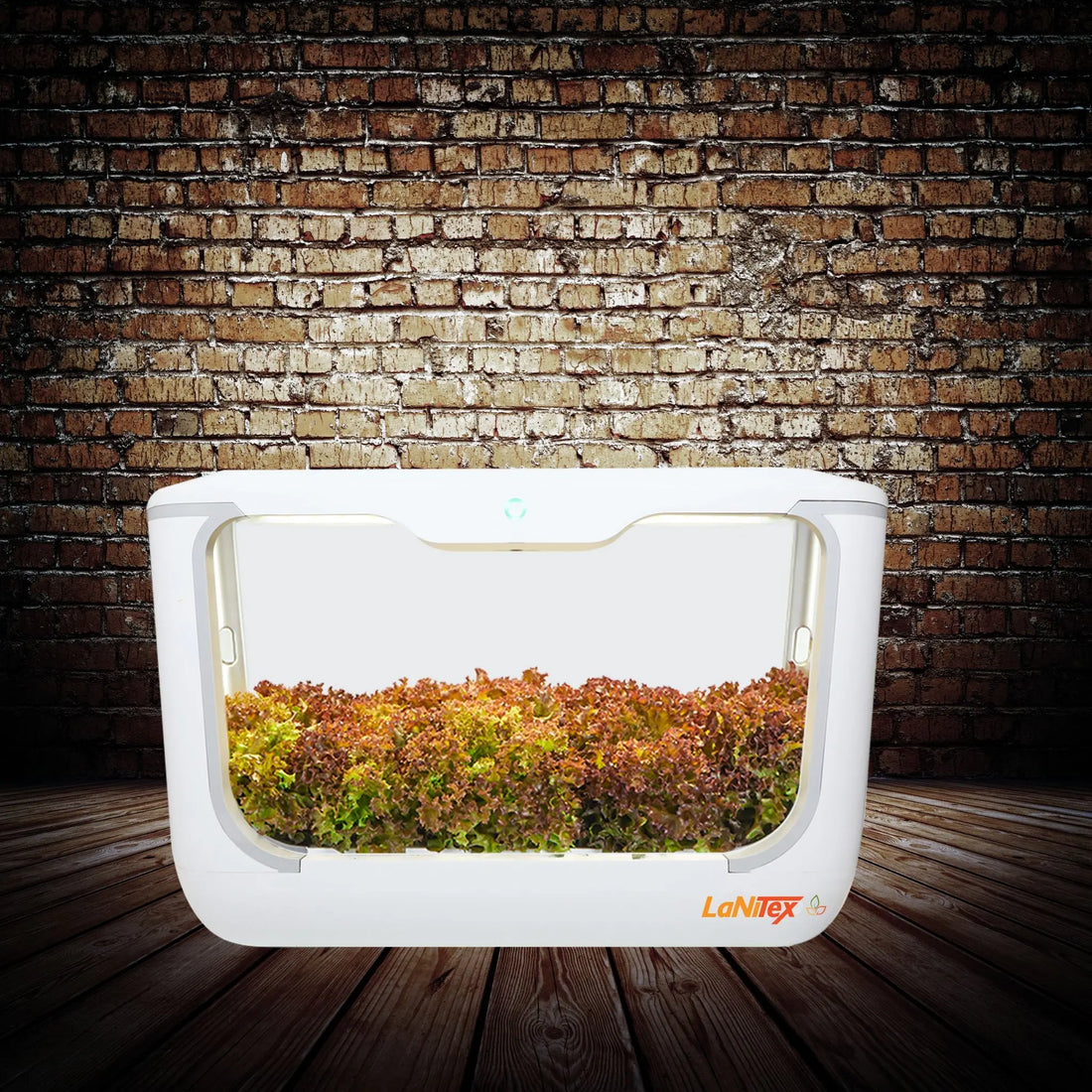
Fresh sage on your kitchen bench all year, in a system built for herbs and leafy greens. The 9-litre reservoir and full-spectrum LED handle the daily watering and light. You set the pH and feed.
Start growing sage →Ships from the Sunshine Coast, Queensland.
What I've learned about growing sage from research
Here is my honest position. I have grown microgreens in under a week, lettuce in 25 to 35 days, and soft herbs year-round at home. But I have not yet run a full sage crop myself. So the sage-specific numbers here come from research, and from close cousins: the woody Mediterranean herbs.
Sage behaves a lot like rosemary and thyme. All three carry a hard, woody stem. All three love bright light, and prefer a leaner feed than a leafy salad crop. So I lean on what works for growing rosemary hydroponically when I set sage targets: firm light, moderate EC, and patience while roots build.
So what is the upshot? Treat sage as a slow, steady herb, not a fast salad green. But once it fills out, a single plant keeps giving for months. I would rather say that plainly than pretend I have a shed full of sage.
Propagating sage for hydroponics
You can start sage three ways: from seed, from softwood cuttings, or by cloning a plant you already have. Seed is cheap, but slow and a bit hit-and-miss. That means many growers skip it. Instead, softwood cuttings are the reliable choice. Snip a 10cm tip from fresh, non-flowering growth, strip the lower leaves, and root it in rockwool. Then wait until roots show before moving a cutting into your system.

So how long does sage take? Seed is the slow road. ABC Gardening Australia puts sage germination at 7 to 21 days, and Yates reckons a new plant needs 8 to 12 weeks before it is ready to pick. A rooted cutting skips most of that wait, since the plant arrives with a head start instead of building one. That gap is the whole reason cuttings are worth the trouble.
Timing matters in Australia. Spring is the window Yates and ABC Gardening Australia both name for planting sage outdoors, once the soil warms but before the real heat lands. But indoors under lights, you can start almost any time. So in warm zones like the Sunshine Coast, you might grow outside in the cooler months, then move back under lights when summer heat builds.
Get a fresh grow guide like this every fortnight
Join the LaNiTex Hydro Garden newsletter for practical hydroponic, microgreen and mushroom growing tips for Australian homes. Subscribe to download a free hydroponics starter guide (PDF) and get 10% off your first order.
Join the newsletter →Harvesting and keeping sage productive
Pick sage once the plant has bushed out, usually a few weeks after it settles in. Snip sprigs from the top and outer stems with clean scissors. Also, never strip more than a third at once.
Regular picking is your best tool against woodiness. But sage turns hard and leggy with age. That means a light, frequent trim pushes soft new growth. Also pinch out flower buds, since flowering slows leaf production.
Here is the good news. According to the Royal Horticultural Society, sage is evergreen, so you can pick leaves any time of year. That means fresh sage on the bench through winter, not just summer.
Got more than you can cook with? Sage dries better than almost any herb. Hang small bundles somewhere warm and airy, or lay the leaves flat until they crumble, then store them in a sealed jar away from light. But I should be straight with you. A plant under lights keeps producing all year, so you may find you rarely need to dry any of it.
Even so, no sage plant lasts forever. Yates suggests replacing a plant every three to four years, once it turns sparse and woody no matter how carefully you trim. So when that day comes, strike a fresh cutting from the best growth and retire the old plant.
Troubleshooting hydroponic sage
Most sage problems show up in the leaves first. Pale new tips point to iron deficiency, usually from pH drifting too high. So correct the pH, and the colour returns. Yellowing on older, lower leaves usually means a magnesium deficiency. An Epsom salt top-up fixes that. Weak, pale growth overall can signal low nitrogen from a feed run too lean.
Browning edges and wilting often trace back to heat. So move the plant somewhere cooler if a Brisbane summer pushes the water past 24C.
Root rot is the other big one. Slimy brown roots and a sour smell mean the water lacks oxygen. So add an air stone and refresh the solution. But here is one thing to avoid: do not keep tipping in more nutrients to fix yellow leaves. Nine times out of ten the cause is pH or oxygen, not feed.
One problem is easy to miss indoors: powdery mildew. Sage comes from dry Mediterranean hillsides, so it resents damp, still air. Bunnings notes that mildew is a common issue for sage in humid climates, and a closed room through a Sunshine Coast summer is exactly that. So watch for a dusty white film on the leaves.
The fix is airflow, not chemistry. Give each plant room to breathe, run a small fan across the canopy, and water at the roots so the leaves stay dry.

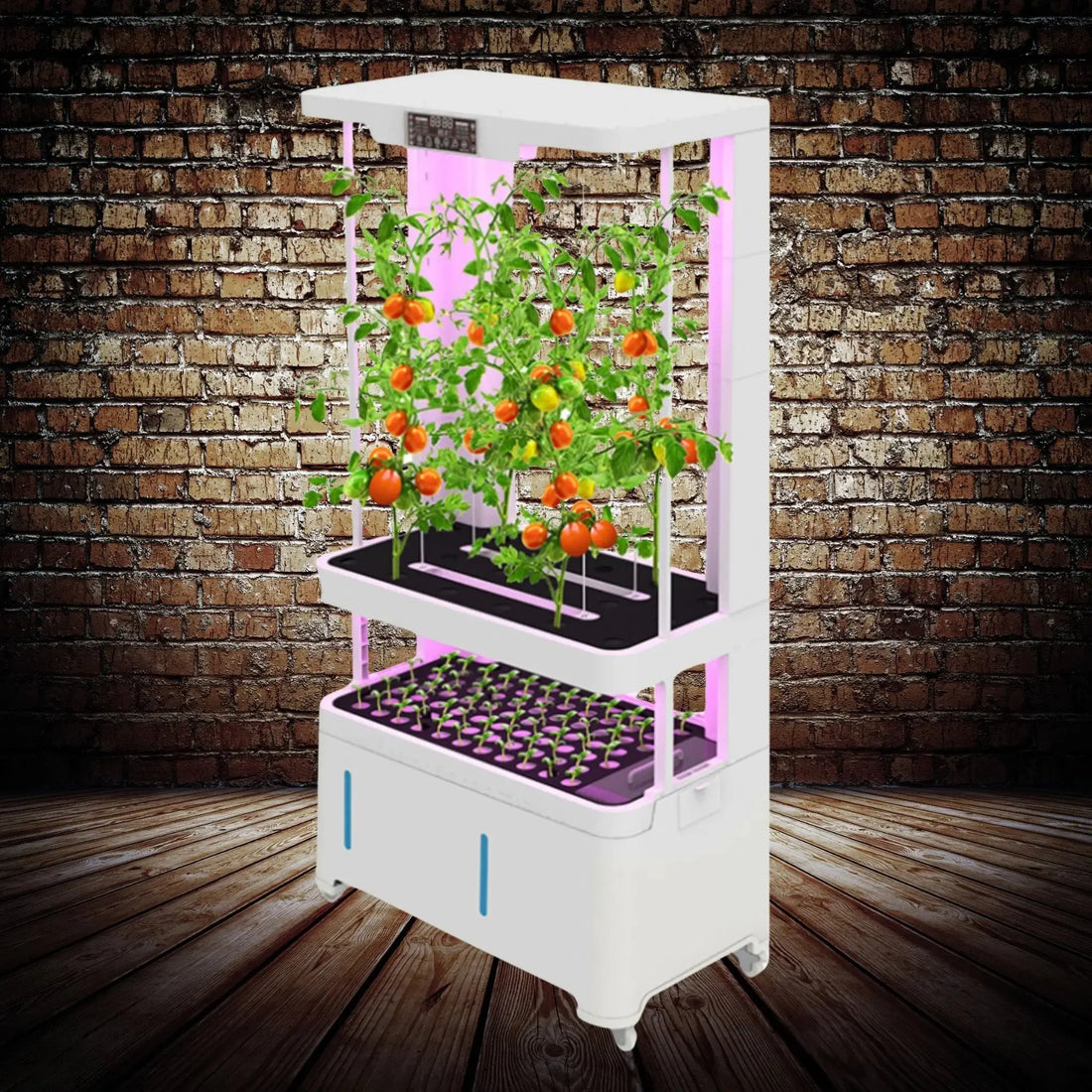
Growing more than one bench can hold? The V5.2-A tower fits 72 planting sites into a small floor footprint, so a whole herb shelf runs from one reservoir. You still set the pH and feed.
Scale up your herbs →Ships from the Sunshine Coast, Queensland.
The full range
Find the system that fits your space


Supported in Australia - every model tested before listing.
Frequently asked questions
What is the best pH and EC range for hydroponic sage in Australia?
Keep the pH between 5.5 and 6.5, and the EC between 1.0 and 1.6 mS/cm. That band lets the roots feed cleanly, and the moderate EC suits sage as a light-feeding, woody herb. So check both with a meter each week, since pH drift causes most trouble.
How many hours of light does hydroponic sage need indoors?
Give hydroponic sage 14 to 16 hours of light a day at 200-400 umol/m2/s from an LED grow light. Sage is a Mediterranean sun lover. So aim for the brighter end of that range. Too little light makes it stretch, pale and grow slowly.
Which hydroponic system is best for growing sage at home?
For most beginners, a deep water culture bucket or an ebb-and-flow system is the easiest match. Both keep the woody roots well oxygenated. Also, a vertical tower works if you want several herbs in a small space. NFT works too, but it can crowd as the roots spread.
How long does sage take to grow hydroponically before first harvest?
From a rooted cutting, you can usually take a first light picking within a few weeks, once the plant has bushed out. From seed it runs much slower: 7 to 21 days just to germinate, then 8 to 12 weeks before the plant carries enough growth to pick. So sage is slower than a salad leaf, and it pays to let it build a strong frame first.
Can I grow common sage and purple sage together in the same hydroponic system?
Yes. Common sage and purple sage ('Purpurascens') are both forms of Salvia officinalis. That means they share the same pH, EC, light and temperature needs. A purple sage hydroponic setup needs nothing special. So just run them side by side.
What nutrient solution is best for leafy herbs like sage in hydroponics?
Use a balanced leafy-green or general hydroponic nutrient at a sage nutrient solution EC of 1.0-1.6 mS/cm. Herbs like sage want steady nitrogen for leaves, plus potassium and magnesium. Instead, avoid a high-strength fruiting formula, which can burn the roots.
Why are my hydroponic sage leaves turning yellow or brown?
Yellow leaves usually mean a nutrient or pH issue. Pale new tips point to iron shortage from high pH. Yellow lower leaves point to a magnesium gap. Brown, wilting edges mean heat stress or root rot. So check pH, water temperature and root health before adding more nutrients when growing sage indoors.
When should you plant sage in Australia?
Under lights, any time of year. That is the real advantage of growing indoors: you are not waiting on a season. Outdoors in Australia, spring is the window Yates and ABC Gardening Australia both point to. So the answer depends on where the plant will live, not on the calendar.
Can you freeze sage?
Yes, and it is the easiest way to keep a big harvest. Wash the leaves, pat them dry, strip them from the stems, then pack them loosely into freezer bags. The Spruce Eats puts their freezer life at up to a year. But freezing sharpens the flavour, so use a lighter hand than you would with fresh leaves.
Sources
- Sustainable Gardening Australia, on the water efficiency of soil-free growing: farms using hydroponics use "up to 90 percent less water" than soil-based farming.
- Royal Horticultural Society (RHS), for sage being evergreen and pickable at any time of year.
- HortTechnology, "Optimizing Sowing Density for Parsley, Cilantro, and Sage in Controlled Environment Production", for sage in controlled-environment production.
- ABC Gardening Australia, for sage germination taking 7 to 21 days.
- Yates, for a new sage plant needing 8 to 12 weeks before it is ready to pick, and for replacing a plant every three to four years once it turns woody.
- Bunnings, for powdery mildew being a common issue for sage in humid climates.
- The Spruce Eats, for frozen sage leaves keeping up to a year, and for freezing intensifying the flavour.
About the writer
Laszlo Bulatko founded LaNiTex Hydro Garden in December 2024 and runs it from the Sunshine Coast in Queensland. He came to hydroponics and indoor gardening after an early career at IBM and Diageo in Hungary, then 15 years in the Hungarian fishing-tackle trade across sales, marketing and brand development. Before listing anything for sale, he tested his own setups at home: microgreens in under a week, lettuce in 25 to 35 days, and herbs running year-round in the kitchen. Today LaNiTex sells hydroponic grow boxes, a benchtop Mini Grow Pot, and the Smart Microgreen Kit, and Laszlo runs the Term-Grow program, placing grow boxes in Queensland primary school classrooms. You can read more on his founder page.