
Shiso hydroponic setups are how Sunshine Coast and Brisbane cooks keep aojiso and akajiso leaves going through summer, when outdoor shiso usually bolts and crisps in low-altitude QLD summer heat, with most plants done within a fortnight.
I haven't run shiso on a Desktop Grow Box in my workshop yet, so this guide pulls together what the research says, what AU growers report, and the parameter ranges that show up consistently across the academic work on Perilla frutescens. Once I do a shiso trial, I'll update this guide with what actually happened, including what went wrong, because something usually does.
Here's what the science actually says about shiso parameters. Then which LaNiTex setup makes sense if you want leaves on the plant every week instead of every six months.
Shiso identification: what Perilla frutescens actually is
Shiso is the Japanese name for Perilla frutescens, an annual herb in the mint family (Lamiaceae). The plant is native to Southeast Asia and the Indian highlands, with traditional cultivation across the Korean peninsula, southern China, Japan, and India. Wikipedia notes Perilla "is an annual plant growing 60 to 90 cm tall" with opposite leaves 7 to 12 cm long and 5 to 8 cm wide.
In Australian kitchens the herb shows up under two main names: aojiso (green shiso, var. crispa with smooth or frilly green leaves) and akajiso (red shiso, var. crispa f. purpurea with deep purple-red foliage). Aojiso has a mild, anise-citrus flavour and goes into sashimi plates, tempura, and salads. Akajiso is more intense, slightly minty, and is used to colour and flavour pickled ume plums and shiso vinegar.
Both cultivars grow similarly hydroponically. The main practical difference is light: red shiso needs more PPFD to hold its anthocyanin colour, otherwise the leaves drift back to bronze-green. Red forms also grow a touch slower and taste a bit sharper than green.

Is shiso good for you? Nutrition and antioxidants
Beyond the flavour, shiso leaves carry a genuine nutritional payload. Food-composition data for fresh Perilla frutescens leaves lists them as a strong source of beta-carotene (vitamin A) along with vitamin C and vitamin K. The leaves are also where the plant concentrates its antioxidant polyphenols, with rosmarinic acid the dominant one alongside flavonoids such as luteolin. The distinctive aroma comes mainly from perillaldehyde, the main compound in the leaf's aromatic oil, which has documented antibacterial activity. A garnish-sized serve won't move your daily intake much, but it's a nice bonus on top of leaves you grew yourself.
Why hydroponic shiso outperforms outdoor in Australia
Outdoor shiso in low-altitude QLD gives you about six weeks of clean growth before summer heat hits. A shaded spot, coastal breeze, or shade cloth stretches that out.
Sunshine Coast and Brisbane summer humidity sits above 70% for weeks at a time, and once daytime temperatures stay above 30 C the plant bolts. Bolting means it shifts energy from leaf production into flower spikes, the leaves shrink and toughen, and the flavour turns bitter. By February most outdoor shiso plants are spent. Cyclone season storms finish off whatever the heat didn't.
Indoor hydroponic shiso dodges most of that, as long as you keep the temperature down and the lights on a vegetative cycle (under 14 hours). Sustainable Gardening Australia notes that hydroponic farms use "up to 90 percent less water" than soil-based growing, and Australian hydroponic production has grown fast because outdoor cultivation is unreliable for many leafy herbs here. You set the temperature, you set the light, and the plant stays in vegetative growth for months instead of weeks.
For me the bigger win is consistency. A restaurant chef on the Sunshine Coast can plate shiso every week of the year without ringing three suppliers when the wholesale market runs short. A home cook in a Brisbane apartment gets fresh leaves for sushi night without driving to an Asian grocer that might or might not have stock.

Best hydroponic system types for shiso: NFT, DWC, and Kratky compared
Three system types work for shiso. Pick based on whether you want to fiddle or you want results.
Kratky (passive, no pump): the cheapest setup. You pop a rockwool plug into a jar lid, top up the reservoir once, and let the plant drink it down. I find it gets dodgy past three weeks with shiso. The leaves get smaller as the nutrient concentrates and the oxygen runs out. Fine for a quick trial. Not great for a six-month run.
Deep Water Culture (DWC): roots sit in an aerated nutrient bath. Cheap, simple, forgiving. Shiso grows well in DWC because the root zone stays oxygenated as long as the air pump runs. The downside is footprint. A 4-plant DWC tub takes about 40 by 40 cm of floor space.
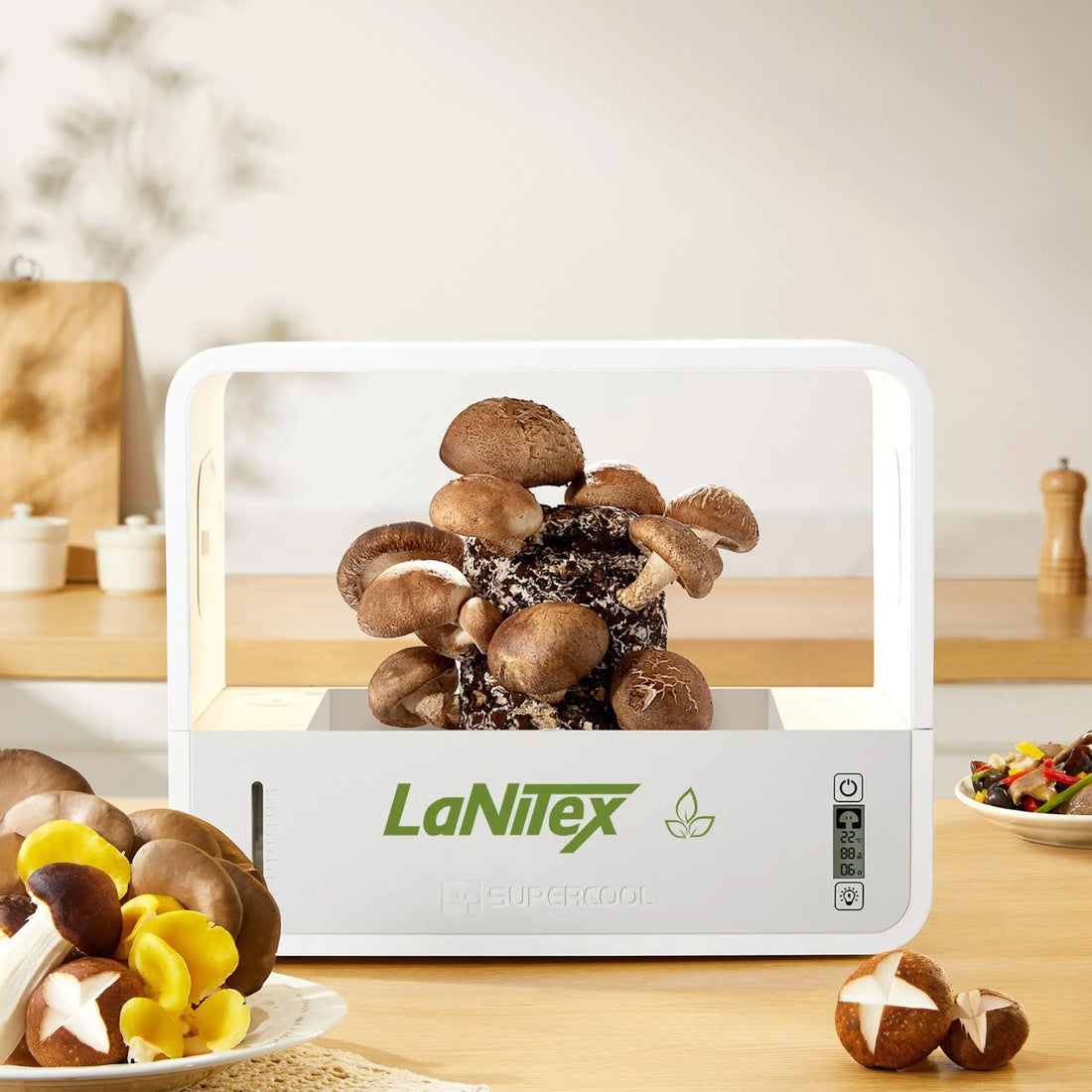
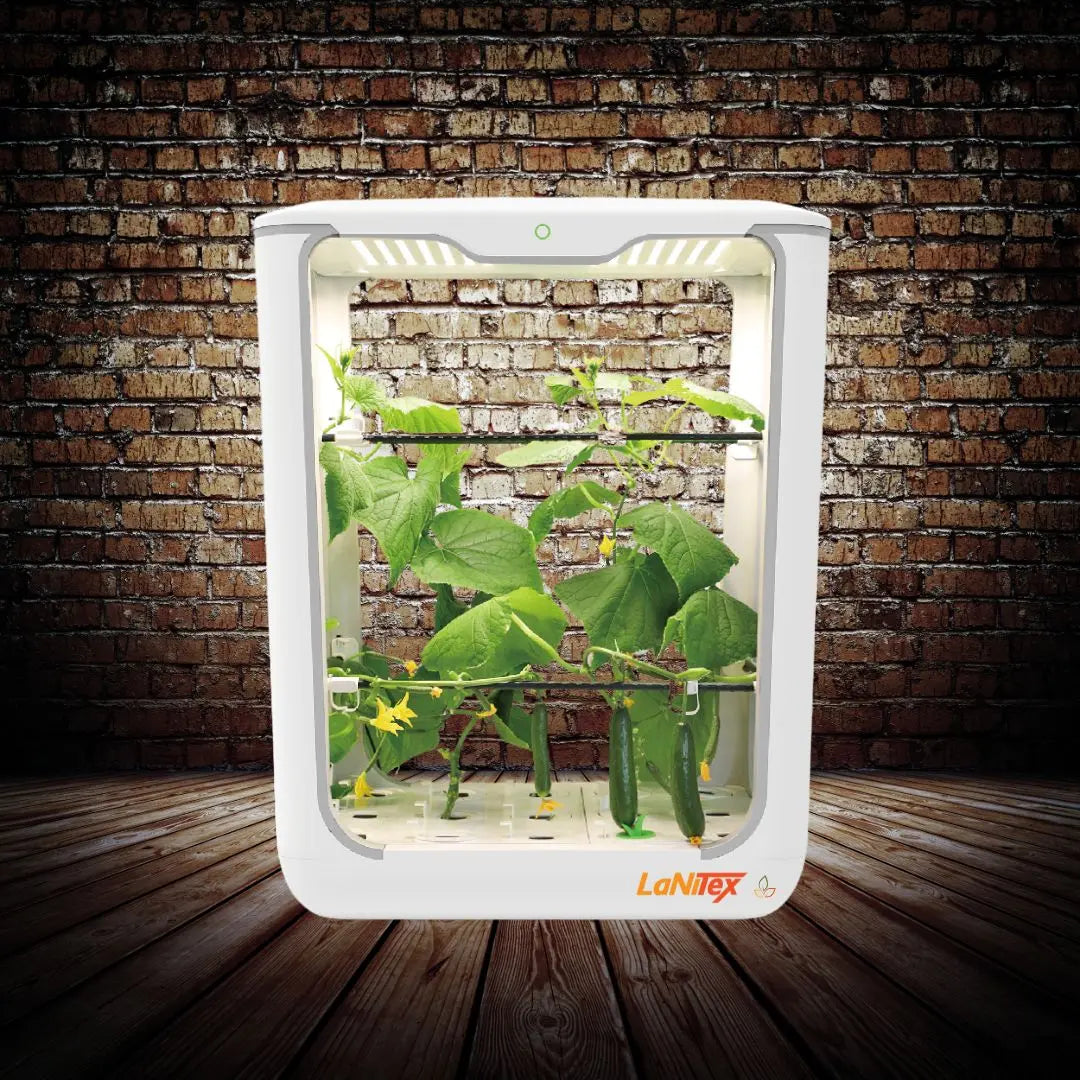
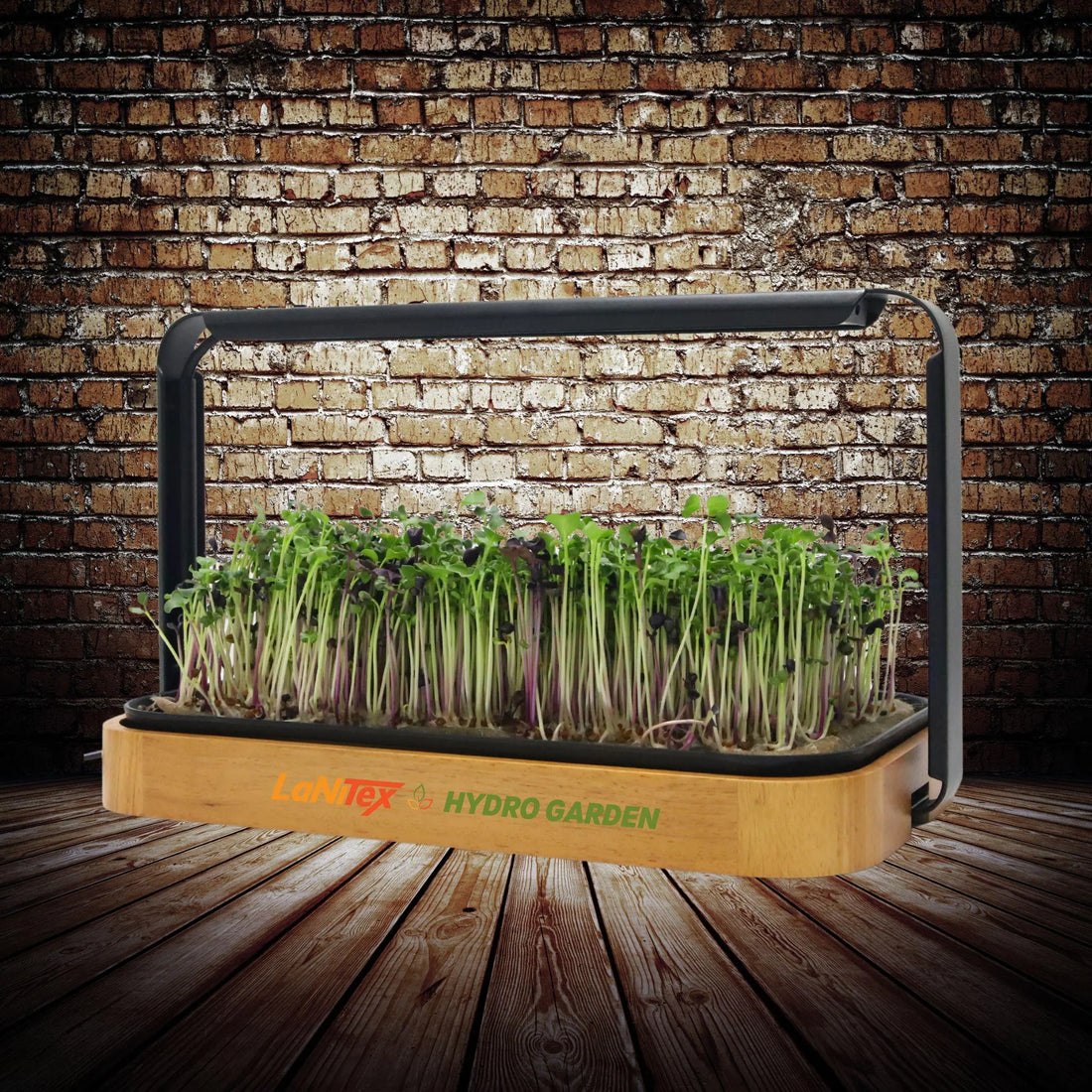
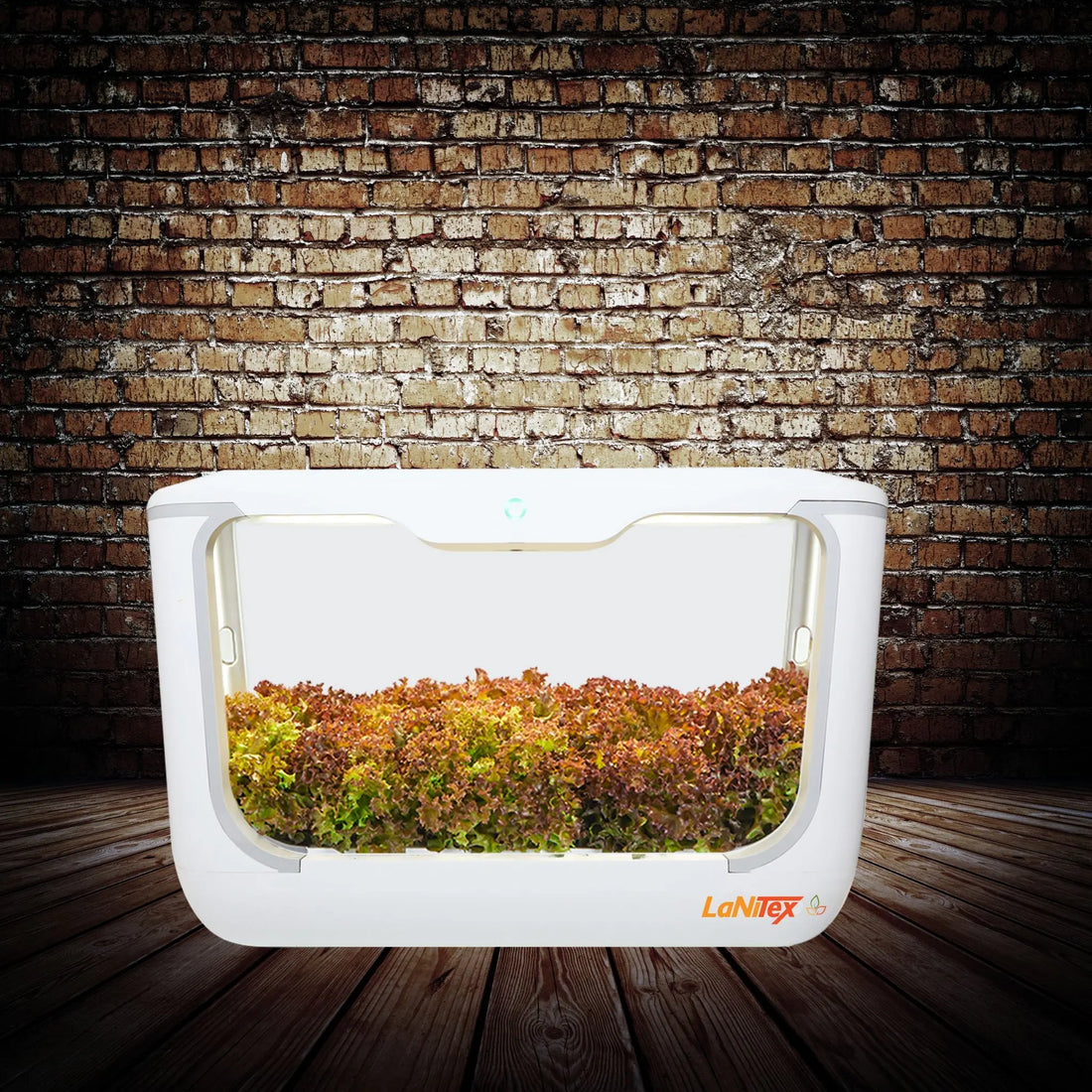
Nutrient Film Technique (NFT): a thin film of nutrient solution flows over the roots in a sloped channel. Lower water use than DWC, tidier, and consistent. Most retail countertop systems use a small NFT or modified hybrid design. The LaNiTex Desktop Grow Box ($139 AUD), a compact indoor herb garden, holds three plant pods in a 318 by 120 mm footprint and matches an NFT-style flow pattern; the Smart Grow Box Short ($429 AUD) holds 15 plants in a stackable design and suits anyone wanting multiple shiso cultivars plus other herbs in one system.

Grow aojiso and akajiso side by side indoors, any season — the Grow Box runs 15 planting sites under full-spectrum LED with a steady nutrient feed, the controlled setup that keeps shiso in leaf instead of bolting. You supply the seeds.
Start your shiso bench garden →Personally tested at home on the Sunshine Coast before listing.
If I were starting shiso fresh, I'd put aojiso seedlings in a Desktop Grow Box on the kitchen bench and keep akajiso in a separate jar Kratky trial just to compare. That covers cost, consistency, and learning at once. For the pillar context on system choice, see the hydroponic system essentials guide.
pH, EC, light, and temperature ranges that work
Shiso is a medium-feeder. The parameter ranges below show up consistently across hydroponic research on Perilla frutescens and Lamiaceae herbs generally. They sit close to basil ranges, with a slightly lower EC ceiling because shiso prefers a milder feed for leaf softness.
| Parameter | Shiso (leafy stage) | Basil (for comparison) |
|---|---|---|
| pH | 5.8 to 6.5 | 5.5 to 6.5 |
| EC | 1.2 to 1.8 mS/cm | 1.6 to 2.2 mS/cm |
| PPFD | 200 to 400 umol m-2 s-1 | 250 to 400 umol m-2 s-1 |
| Air temperature | 18 to 24 C | 18 to 25 C |
| Photoperiod | 12 to 16 hours | 14 to 16 hours |
| Humidity | 50 to 70% | 50 to 70% |
Worth flagging: shiso-specific peer-reviewed data is thin, so these ranges come from broader Lamiaceae work (basil, mint, perilla) more than direct Perilla frutescens trials. Use them as a starting point and tune from what your own plants tell you.
A few notes on each line.
pH 5.8 to 6.5. The sweet spot for nutrient uptake. Drift above 6.5 and iron and manganese lock out, leaves yellow between the veins. Drift below 5.5 and calcium uptake suffers, tip burn starts. Test once a week with a 4-in-1 water quality tester and adjust with pH up or down.
EC 1.2 to 1.8 mS/cm. Shiso prefers a leaner feed than basil. Push past 2.0 and the leaves get tough and less aromatic. For comparison the sibling hydroponic basil guide runs higher EC because basil tolerates the stronger feed.
PPFD 200 to 400 umol m-2 s-1. Akajiso needs the upper end of that range to hold its red colour. Aojiso grows well across the whole range. The Desktop Grow Box LED runs at around 9 W, which puts it around that PPFD at canopy height (my estimate from the 9 W input and three-pod footprint, not a PAR-meter reading). If you're running a different light, check its spec sheet at the canopy distance you'll actually use.
18 to 24 C air temperature. Hotter than 26 C and you start seeing bolting signals. In a Brisbane apartment kitchen during a January heatwave that means running the air-con or moving the unit to the coolest room in the house.
50 to 70% humidity. Shiso is fine across this band, but a humid QLD summer can push a closed room higher, and damp, still air around the leaves invites leaf rot and downy mildew. Run a small fan for gentle air movement and try to keep water off the foliage (water at the root zone, not over the top). The airflow does more than the exact humidity number.
Germination and transplant in rockwool plugs
Shiso seeds need light to germinate, so cover them lightly or not at all. Germination is naturally patchy, so soaking the seeds in clean water for a few hours (overnight is fine) before sowing can help lift the strike rate. Light and steady warmth do more than the soak, though, so keep the seed near the surface and the plug evenly moist.

Soak rockwool plugs in pH-adjusted water (5.8) for an hour. Drop two or three shiso seeds into each plug indent. Don't press them down. Place plugs in a humidity dome at 22 to 25 C. Germination takes 7 to 14 days, which is slow compared to basil at 5 to 7 days, so don't panic if the dome looks empty after a week.
Once seedlings show two true leaves, thin to the strongest one per plug and transfer to the system. Coco coir plugs work too if you prefer a peat-free substrate. Aim for 6 to 10 weeks total from sowing to first usable leaf harvest (shiso microgreens are ready in 12 to 14 days if you want a faster cut).
Get a fresh grow guide like this every fortnight
Join the LaNiTex Hydro Garden newsletter for practical hydroponic, microgreen and mushroom growing tips for Australian homes. Subscribe to download a free hydroponics starter guide (PDF) and get 10% off your first order.
Join the newsletter →When to start shiso in Australian climate zones
Indoor hydroponic shiso doesn't really track outdoor seasons, as long as the room stays in range on temperature, light, and humidity. You can start a tray on the Sunshine Coast in January or July and the parameters stay the same. That's the whole point of moving the herb inside.
For anyone running a parallel outdoor patch (worth doing in cooler months for a flavour comparison), the Bureau of Meteorology classifies South East Queensland as warm-temperate subtropical. Outdoor shiso transplant works from late September through to early March, with the best window being October and November before the worst heat. Brisbane apartments without outdoor access can run the indoor unit year-round and skip the seasonal calendar entirely.
Common shiso problems and how to fix them
A handful of issues come up repeatedly when growers post about hydroponic shiso. The eighth PAA question "why are my hydroponic shiso leaves curling or going brown" usually maps to one of these.
Tip burn (brown crispy leaf edges): calcium deficiency or EC too high. Check pH first (calcium locks out below 5.5). If pH is fine, dilute the reservoir back to 1.2 mS/cm and increase air movement with a small fan.
Root rot (brown, slimy roots, drooping leaves): dissolved oxygen too low or water temperature too warm. In a Queensland summer the reservoir can hit 28 C in an unconditioned room, which kills root health. Drop water temperature with a small chiller, frozen bottles, or simply move the unit to an air-conditioned room. Replace the nutrient solution and clean the reservoir with food-safe sanitiser.
Leaf yellowing (interveinal chlorosis): iron or manganese lockout from pH drift above 6.5. Adjust pH back to 5.8 to 6.0 and the new growth should green up within two weeks. If yellowing is uniform rather than between the veins it's usually nitrogen deficiency, top up the reservoir with fresh nutrient solution.
Indoor pests (aphids, spider mites, whitefly, fungus gnats): a sealed indoor system sees far fewer pests than an outdoor patch, but they still turn up, usually hitching in on a new seedling or an open window. Aphids and whitefly cluster on the soft new growth, spider mites leave fine webbing and stippled leaves in dry warm air, and fungus gnats breed in constantly wet media. Catch them early: yellow sticky traps near the canopy for whitefly and fungus gnats, a firm water rinse or a wipe with a damp cloth for aphids and mites, and let the top of the media dry slightly between top-ups to break the fungus-gnat cycle. If aphids or mites hang on, a horticultural oil or insecticidal soap labelled for edible crops is the food-safe next step. Because you're eating the leaves, stick to those low-toxicity options, follow the product's withholding period, and rinse well before serving rather than reaching for a systemic spray.
Harvest timing, food safety, and storage
Start picking individual leaves once the plant has 6 to 8 sets of true leaves. Pinch above a node and the plant branches sideways, doubling future harvest. A single Desktop Grow Box plant gives a usable 8 to 12 leaves per week from week 8 onwards (give or take a couple of weeks depending on light and temperature).

Once you spot flower spikes forming at the tips, pinch them out straight away. Flowering is the plant trying to set seed, and removing the buds pushes it back into leaf production and stretches the productive window. A plant under steady summer heat and long days will still bolt in the end, so pinching buys you weeks rather than stopping it for good. Let it flower only when you want seed or you're ready to restart.
Food safety for recirculating systems. Shiso grown in a hydroponic system is generally cleaner than outdoor produce because there's no soil contact, no manure, no slugs. The two risks worth managing: rinse leaves before eating (the LED canopy can drop dust), and clean the reservoir every 3 to 4 weeks with a food-safe sanitiser to prevent biofilm buildup. Wash hands before harvesting if you're plating for restaurant service.
Storage. Cut leaves keep for 3 to 5 days in a sealed container with a damp paper towel in the fridge crisper. For restaurant prep, harvest the morning of service. The leaves bruise easily, so handle them like soft herbs (mint, basil) rather than firm greens.

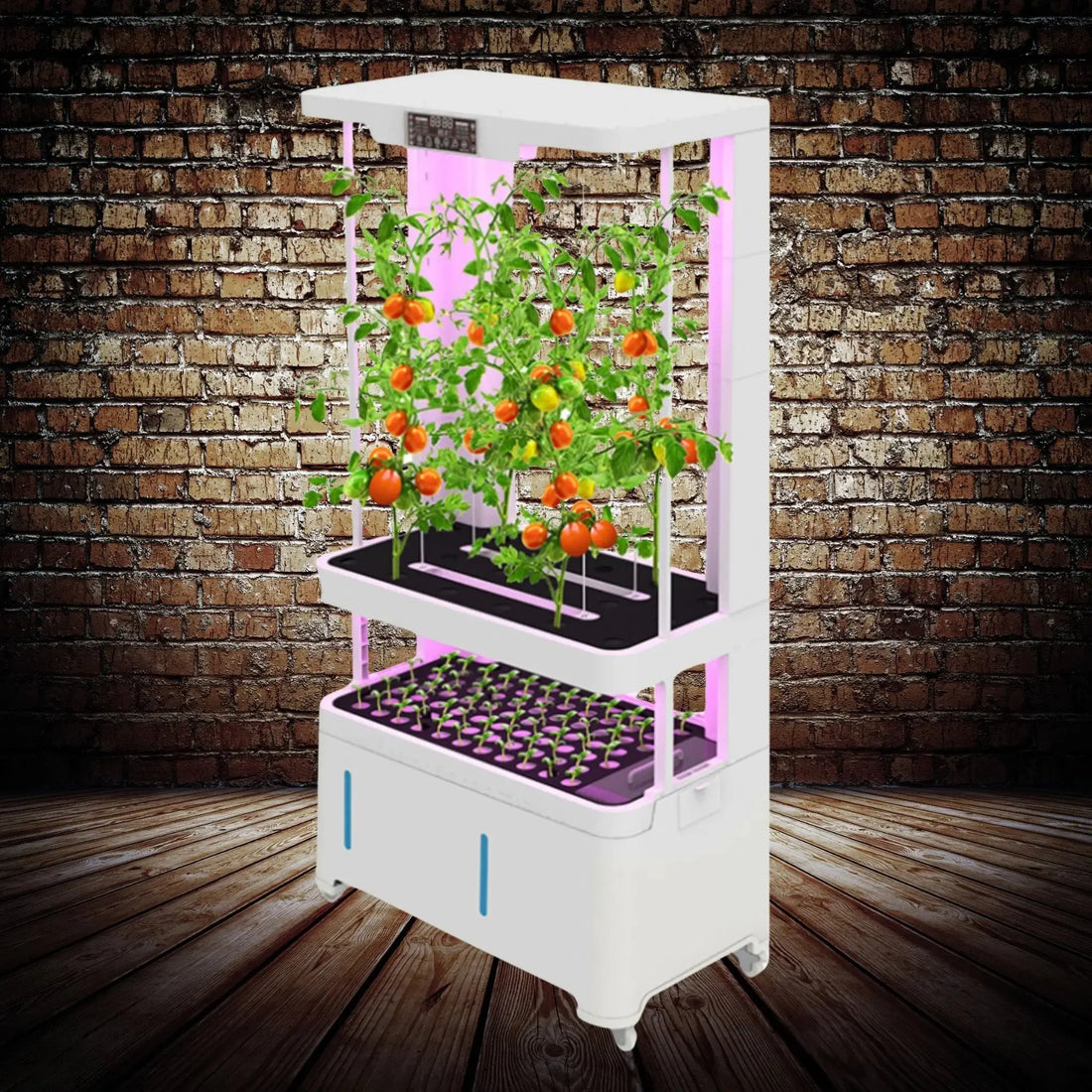
Ready to grow more than a benchful? The V5.2-A Tower stacks up to 72 planting sites under full-spectrum LED with a self-watering tank, room to run shiso alongside a full herb and salad rotation.
Scale up your grow →Personally tested at home on the Sunshine Coast before listing.
The full range
Find the system that fits your space


Supported in Australia - every model tested before listing.
FAQ
How do I grow shiso hydroponically in Australia at home?
Set up a small NFT or DWC system (the Desktop Grow Box works for 3 plants, the Smart Grow Box Short for 15). Germinate shiso seeds in rockwool plugs at 22 to 25 C, light coverage only. Transfer seedlings to the system at the 2-true-leaf stage. Maintain pH 5.8 to 6.5, EC 1.2 to 1.8 mS/cm, 12 to 16 hours of light at 200 to 400 PPFD. First leaf harvest at 6 to 10 weeks from seed. Pinch leaves above a node to encourage branching.
What is the best pH and EC for hydroponic shiso?
pH 5.8 to 6.5 and EC 1.2 to 1.8 mS/cm during the leafy growth stage. Drift above pH 6.5 causes iron lockout and yellow leaves. Push EC above 2.0 and the leaves toughen and lose flavour. Test once a week with a 4-in-1 water quality tester.
Which hydroponic system is best for growing shiso indoors?
NFT or DWC for ongoing production. Kratky works for a quick trial but degrades past 3 weeks. The Desktop Grow Box ($139) is the right size for 3 shiso plants on a kitchen counter. The Smart Grow Box Short ($429) suits 15 plants if you want mixed cultivars or multiple herbs in one unit.
How much light does hydroponic shiso need under grow lights?
200 to 400 umol m-2 s-1 PPFD with a 12 to 16 hour photoperiod. Aojiso (green shiso) grows well across the whole range. Akajiso (red shiso) needs the upper end of 350 to 400 PPFD to maintain anthocyanin colour, otherwise it drifts back to bronze-green. Most retail LED grow lights at canopy height deliver this range.
How long does shiso take to harvest in a hydroponic setup?
Germination takes 7 to 14 days. Transfer to the system at week 2 to 3. First leaf harvest at week 6 to 10. After that you can pinch 8 to 12 leaves per plant per week, with the plant branching sideways and producing for roughly 3 to 5 months before flowering (some plants bolt after the fourth full harvest, others go a couple of months longer). Restart from seed every 4 to 5 months for continuous supply. If you want a much faster cut, harvest the same seeds as microgreens at 12 to 14 days.
Can I grow red and green shiso together in the same hydroponic system?
Yes. Aojiso and akajiso have the same pH, EC, temperature, and humidity ranges, so they share a reservoir without trouble. The only adjustment: position akajiso plants closer to the LED to hit the higher PPFD it prefers for colour. In a Desktop Grow Box, put red shiso in the centre pod and green on either side.
What nutrients does shiso need in hydroponics to stay leafy?
A standard leafy-greens or general-purpose hydroponic nutrient mix at EC 1.2 to 1.8 mS/cm. Shiso is a medium feeder, similar to basil but at the lower end of the basil range. The mix should provide balanced N-P-K plus calcium, magnesium, iron, and trace elements. Bolting (shift to flower production) is triggered by heat and day length, not nutrient deficiency, so keep the EC moderate and focus on temperature control instead.
Is shiso the same as perilla?
Yes, shiso is perilla. Shiso is the Japanese name for Perilla frutescens. Japanese shiso (var. crispa) comes as green aojiso and red akajiso, with frilly, highly aromatic leaves. Korean perilla (kkaennip, var. frutescens) has larger, flatter, milder leaves. The "sesame leaf" sold at many Asian grocers is usually Korean perilla, not true sesame. All of them grow the same way hydroponically, so this guide applies whichever one you're growing.
Where can I buy shiso seeds in Australia?
Shiso seed is easy to find from Australian seed specialists such as The Seed Collection, Eden Seeds, Greenharvest, and Seedmart. Search for aojiso or green perilla for the green type, and akajiso or red perilla for the red. LaNiTex doesn't sell seed; we make the hydroponic systems you grow it in, like the Desktop Grow Box for three plants or the Smart Grow Box Short for fifteen.
About the writer
Laszlo Bulatko founded LaNiTex Hydro Garden in December 2024 and runs it from the Sunshine Coast. Before hydroponics he spent 15 years in sales, marketing, and brand development in the Hungarian fishing tackle market, representing major brands including Okuma, Mustad, Savage Gear, Penn, and Berkley, and building a 12% market share. His career started at IBM and Diageo in Hungary. The shift from fishing to hydroponics came from a consistent value: honest equipment that does what it says. He personally tested every product in his living room before adding it to the LaNiTex catalogue, with microgreens ready in under a week, lettuce at 25 to 35 days, and capsicum plus herbs running year-round. The thing he talks about most is the Term-Grow Enrolment program, which places grow boxes in Queensland primary school classrooms. Read more at the About Laszlo page.
Sources
- Wikipedia, Perilla frutescens (annual plant 60 to 90 cm tall, leaves 7 to 12 cm long, family Lamiaceae, native to Southeast Asia and Indian highlands). https://en.wikipedia.org/wiki/Perilla_frutescens
- Sustainable Gardening Australia, The Pros and Cons of Hydroponic Growing ("Farms utilizing hydroponics use up to 90 percent less water"). https://www.sgaonline.org.au/the-pros-and-cons-of-hydroponic-growing/
- LaNiTex Hydro Garden, Hydroponic system essentials: everything you need to know (pillar guide on NFT, DWC, ebb-and-flow system selection for Australian growers). Read the pillar guide
- LaNiTex Hydro Garden, Hydroponic basil cultivation guide (comparison reference for medium-feeder leafy herbs, similar pH and temperature range to shiso). Read the basil guide
- Bureau of Meteorology, climate classification (South East Queensland: warm-temperate subtropical zone, basis for outdoor shiso planting calendar).
- Review of Perilla frutescens nutrition and phytochemistry, PubMed Central (leaves documented as the plant's richest source of rosmarinic acid, luteolin, and perillaldehyde; vitamins A, C, and K from food-composition data). Read the review