
Last updated 14 July 2026. Written by Laszlo Bulatko, founder of LaNiTex Hydro Garden, Sunshine Coast.
Hydroponic mint grows faster than almost any herb and takes to a soil-free setup with ease. Growing mint in Australia indoors keeps its invasive runners contained and cropping all year.
Quick answer: Yes, you can grow mint hydroponically, and it thrives. Run a light nutrient mix at EC 1.0 to 1.6 mS/cm and pH 5.8 to 6.0, give it 150 to 250 umol of light, and start from a cutting rather than seed for the fastest, most reliable crop.
Mint is a light feeder, which makes it forgiving for a first hydroponic crop and a solid pick for beginners. Get the pH, nutrient strength, and root space right, and one plant crops from Brisbane to the Sunshine Coast for months.
Key takeaways:
- Hydroponic mint suits beginners and crops for months from a single plant.
- Hold pH at 5.8 to 6.0 and EC at 1.0 to 1.6 mS/cm, because it is a light feeder.
- Give 150 to 250 umol of light for 14 to 16 hours a day.
- Start from a healthy cutting, not seed, for roots in one to two weeks.
- Manage the runner roots early, or one plant will crowd the whole tank.
What is hydroponic mint?
Hydroponic mint is any variety of the herb grown in nutrient-rich water instead of soil. Most culinary types belong to the genus Mentha: peppermint (Mentha x piperita) is a natural hybrid of watermint and spearmint, while spearmint (Mentha spicata) is the milder, sweeter cousin used in cooking and cold drinks. Hydroponic peppermint and spearmint both crop heavily indoors.
Home growers can raise chocolate mint, apple mint, and dozens of other cultivars in the same setup, since they share the same needs. Mint spreads through stolons, or runners: horizontal stems that root as they travel. In a garden that makes it a bit of a thug. In a contained hydroponic system it becomes an advantage, because those runners hand you free cuttings without letting mint escape into everything else.
Best conditions for growing mint hydroponically
Hydroponic mint grows best at pH 5.8 on a weak nutrient mix and moderate light. Aim for these targets:
- pH: 5.8 to 6.0 (tolerates 5.5 to 6.5)
- EC: 1.0 to 1.6 mS/cm (it is a light feeder)
- Light: 150 to 250 umol/m2/s, 14 to 16 hours a day
- Temperature: 18 to 24 degrees Celsius (18-24C)
- Humidity: 50 to 70 per cent
Those numbers do most of the work. Check pH every couple of days and keep it near 5.8, because drift is the top reason leaves pale or curl. Keep the hydroponic mint nutrient solution weak: start young cuttings around EC 1.0 to 1.2 mS/cm and lift to 1.6 once the plant is established. Push it harder and you get nutrient burn, not bigger leaves, so do not chase a stronger mix. You will see higher numbers in some guides, and an established plant grown on its own does tolerate up to about EC 2.0 mS/cm, but mint stays a light feeder next to fruiting crops, so the weaker mix keeps growth clean and the flavour sharp.
A basic full-spectrum LED herb light hits the target. That steady daily light integral keeps stems compact and the leaf oils strong, so the flavour stays sharp. In a Queensland summer, run the system in an air-conditioned room so the water stays cool and the roots do not stress.
What I've learned about growing mint from research
I will be upfront: I have not grown mint hydroponically yet. But I have run the same nutrient and light setup for growing basil hydroponically, coriander, and lettuce at home on the Sunshine Coast, and mint sits comfortably inside that leafy-herb window. In my own kitchen I hold leafy herbs around EC 1.2 mS/cm and pH 5.8, which is exactly where the research puts it.
A 2024 study in the journal Sustainability compared field-grown and hydroponic mint and found that "in the hydroponic system, the number of branched stems decreased by up to 80% with increased plant height." In plain terms, hydroponic mint grows taller and leggier with fewer side branches, so you gain height fast but need to pinch it back for a bushy plant.
The Australian gardening site GrowVeg makes the same point for soil mint: "Frequent pinching back helps to keep plants bushy and full, and it delays flowering." That one habit matters more for a full plant than any nutrient tweak, and it is the first thing I would tell any beginner to do from week one.
Get a fresh grow guide like this every fortnight
Join the LaNiTex Hydro Garden newsletter for practical hydroponic, microgreen and mushroom growing tips for Australian homes. Subscribe to download a free hydroponics starter guide (PDF) and get 10% off your first order.
Join the newsletter →Choosing a hydroponic system for mint and managing runner roots
The best hydroponic system for mint at home is deep water culture (DWC) or the Kratky method: both give the roots room and stay simple. Match one to your space and budget:
- Kratky: a passive jar or tub with no pump. The cheapest way to try it, ideal for one or two plants on a windowsill.
- Deep water culture (DWC): roots sit in aerated nutrient water. Fast, forgiving, great for a bench-top crop.
- NFT (nutrient film technique): a thin stream flows through a channel. Tidy, but the dense roots can clog a narrow channel.
- Wick: a passive setup that draws water up to the roots. Slow but hands-off, best for a single small plant.
Here is the catch: those runner roots. In a shared tank they tangle with everything else and choke the flow. Keep each plant in its own net pot or channel, trim stray runners when you top up the water, and check the root mass every few weeks. Do not grow it in the same channel as basil or lettuce and expect either to thrive.
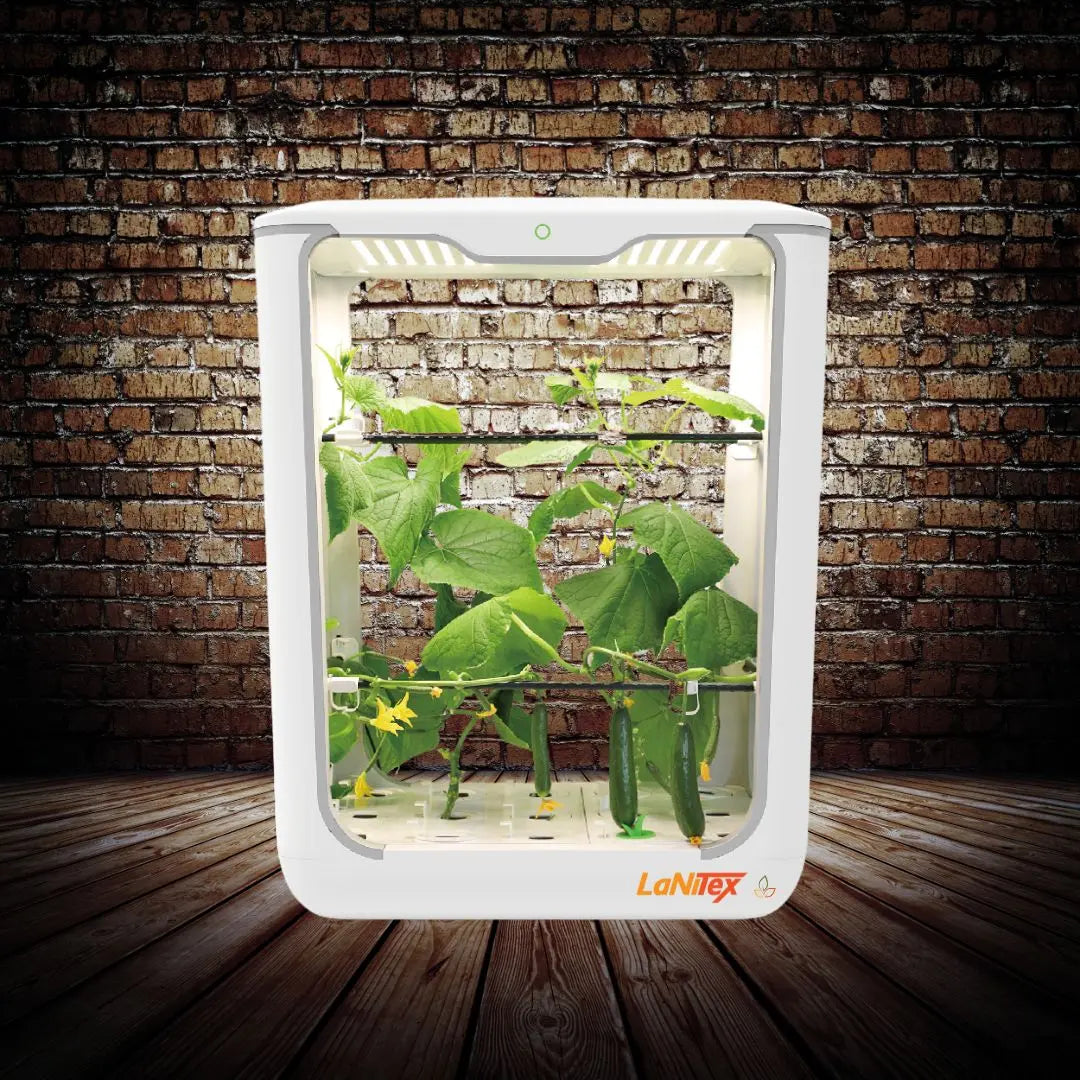
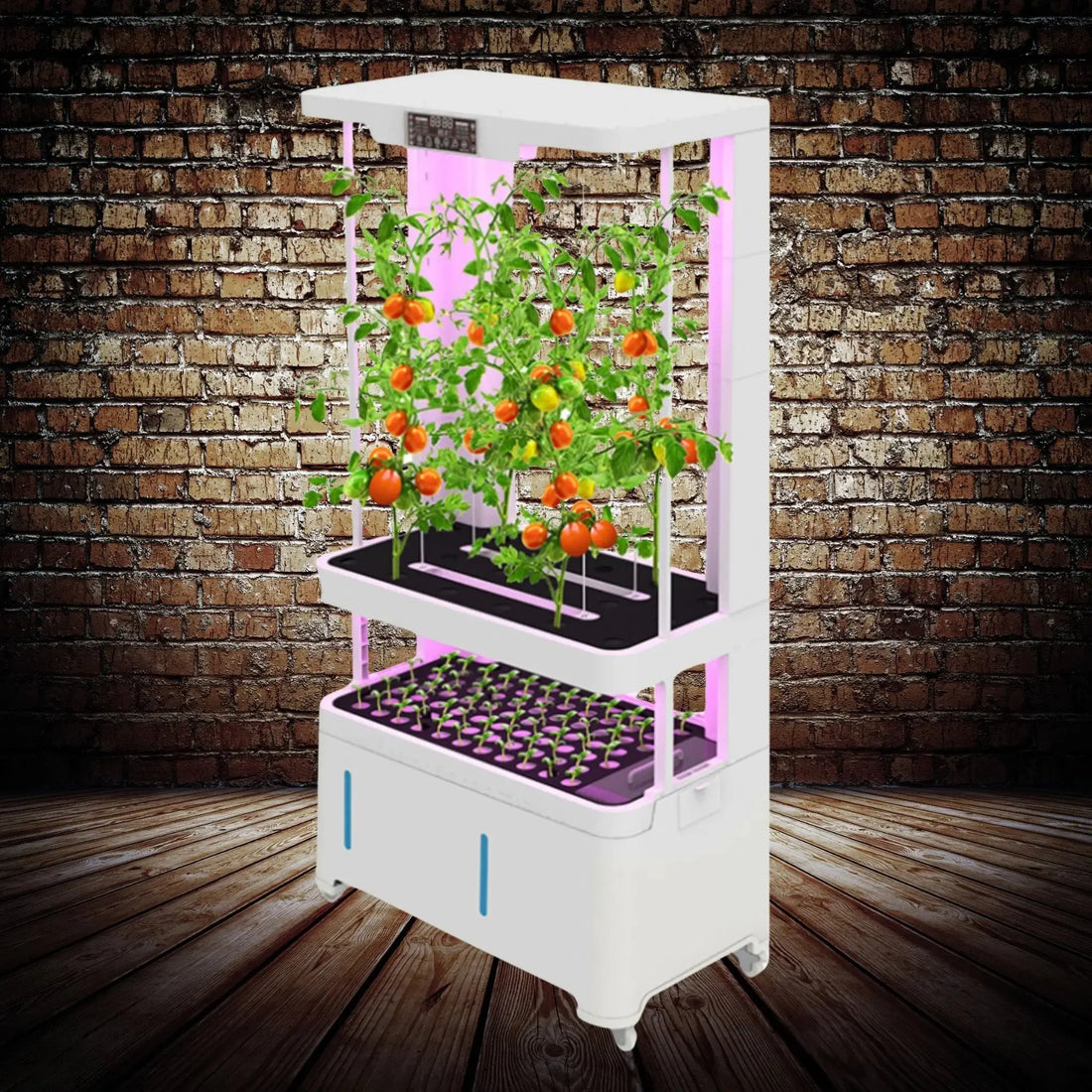
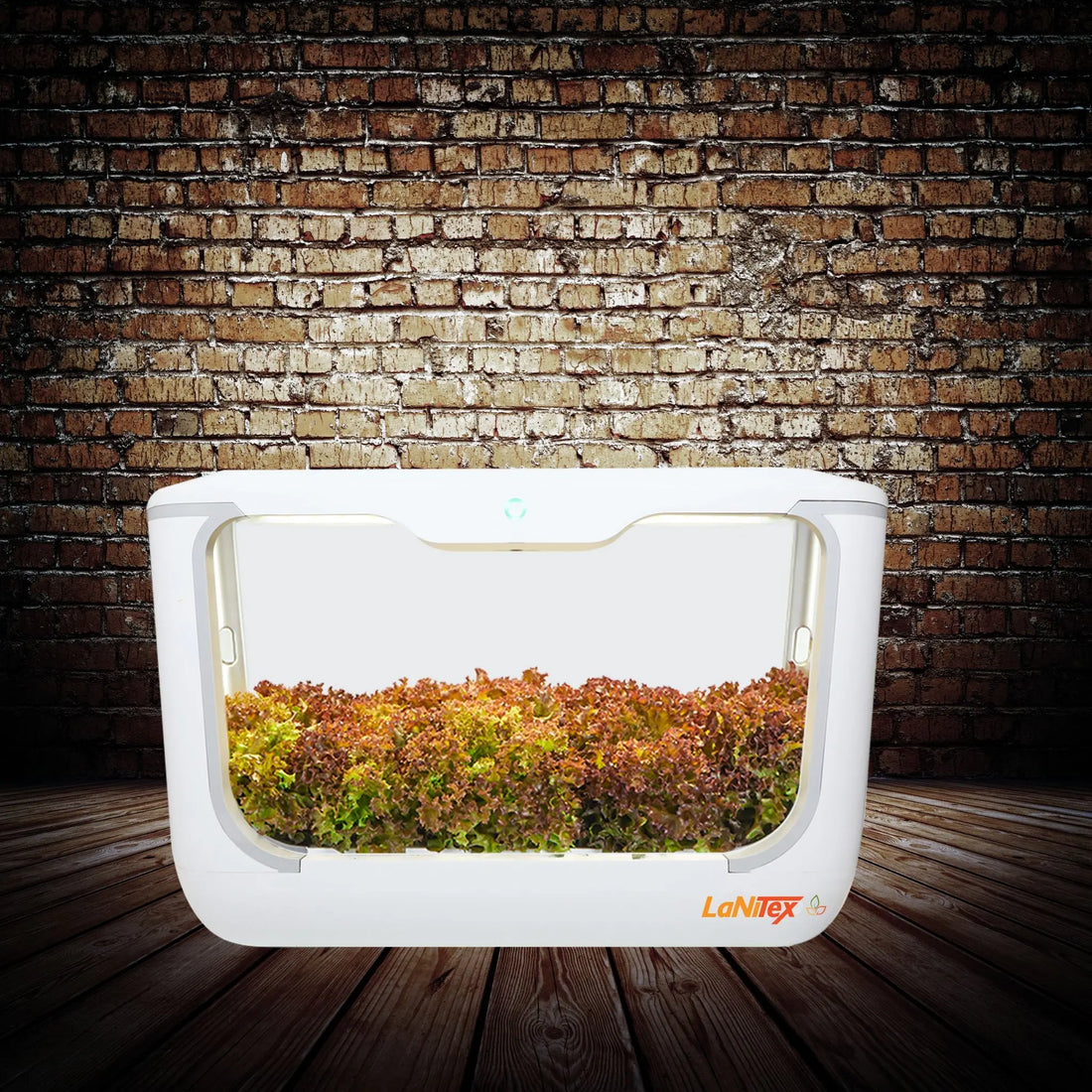
If you would rather skip the setup guesswork, an all-in-one unit like the Smart Grow Box runs the pump, light, and timer for you.

Run mint, basil, and other herbs indoors all year. The Smart Grow Box handles the pump, full-spectrum light, and timer, so you just add water, nutrient, and a cutting.
Start growing mint →Personally tested at home on the Sunshine Coast before listing.
Starting mint: cuttings versus seed
Start mint from a cutting, not seed. The seed is slow, unreliable, and often does not grow true to the parent, while a cutting roots in one to two weeks and is an exact copy of a plant you already like.

Take a 10 to 12 cm sprig from a healthy plant, strip the lower leaves, and sit the bare stem in plain water or a net pot with clay pebbles. Small white roots appear within days. Once they reach a few centimetres, move the cutting into your system at the weaker EC 1.0 to 1.2 mS/cm.
Every time you trim a runner or pinch a stem you have the makings of the next plant, so one supermarket bunch becomes a year-round supply. It grows happily alongside other easy herbs like hydroponic parsley, oregano, and dill, as long as each has its own pot.
Growing mint indoors across Australia
Indoors under lights, hydroponic mint grows all year, its main advantage over a garden bed. Your local climate shapes how hard you work to hold conditions steady.
In Queensland and coastal New South Wales, the challenge is summer heat and humidity: keep the room cool and the water below 24 degrees Celsius so roots do not rot. In Victoria and cooler inland areas, winter is the issue, so a warm indoor spot plus the light's 14 to 16 hour day keeps it cropping while outdoor plants sulk. Spring and autumn are the easiest windows to start a cutting anywhere in the country.
Water quality matters more than most beginners expect. Australian mains water is usually chlorinated, and chlorine stresses young roots, so let tap water sit out overnight or use rainwater or tank water where you can. A cheap 4-in-1 water tester that reads pH, EC, temperature, and TDS takes the guesswork out of every top-up.
Harvesting, food safety and troubleshooting
Harvest mint little and often. Snip sprigs from the top down once the plant is 15 cm tall, and it regrows bushier each time. Take no more than a third of the plant at once and cut just above a pair of leaves, so each snip pushes out two new shoots instead of stalling growth. That cut-and-come-again habit is what makes one plant last months. Pinch the growing tips regularly to keep it full and delay flowering, because once it flowers the leaves turn bitter.
For food safety, rinse cut stems in clean water before use, keep the harvesting scissors clean, and never let old nutrient water splash the leaves you plan to eat. Change the reservoir every one to two weeks.
A few common problems and their fixes:
- Yellowing leaves: usually iron deficiency or pH drift. Bring pH back to 5.8 and the yellowing eases within days.
- Brown, slimy roots: root rot from warm, low-oxygen water. Cool the reservoir, add an air stone, and trim the dead roots.
- Crispy leaf edges: nutrient burn from too strong a mix. Dilute the reservoir back toward EC 1.2 mS/cm.
- Sap-sucking pests: even indoors, mint can attract spider mites, aphids, or whiteflies. Check the leaf undersides, isolate an affected plant, and wipe or rinse the leaves; a light insecticidal soap clears a bad run. Never spray old nutrient water on leaves you plan to eat.
Most problems trace back to the same three numbers: pH, EC, and water temperature. Keep them in range and mint is one of the most trouble-free crops you can grow indoors.
The full range
Find the system that fits your space


Supported in Australia - every model tested before listing.
Frequently asked questions
How do I grow mint hydroponically at home in Australia?
Start with a cutting in a simple deep water culture or Kratky setup indoors. Hold pH near 5.8, EC around 1.0 to 1.6 mS/cm, and 14 to 16 hours of light a day. Keep the water below 24 degrees Celsius, pinch the tips often, and one plant will crop for months.
What EC and pH should I run for hydroponic mint?
Run pH between 5.8 and 6.0 and EC between 1.0 and 1.6 mS/cm. Mint is a light feeder, so keep young cuttings at the lower EC of 1.0 to 1.2 mS/cm and only lift toward 1.6 once established. A stronger nutrient mix causes burn, not faster growth.
How much light does hydroponic mint need indoors?
Aim for 150 to 250 umol/m2/s at the canopy, running the light 14 to 16 hours a day. A basic full-spectrum LED herb light is enough. Good light keeps stems compact and the leaf oils strong, so the flavour stays sharp rather than watery.
Which mint varieties grow best in hydroponics in Australia?
Peppermint and spearmint are the easiest and most useful for cooking and drinks. Chocolate mint and apple mint grow just as well in the same setup. All varieties share the same pH, EC, and light needs, so the method does not change between them.
How long does hydroponic mint take to harvest from cuttings?
A cutting roots in one to two weeks, and you can usually take a first light harvest three to four weeks after that, once the plant reaches 15 cm. After that it regrows continuously, so you snip little and often rather than waiting for one big pick.
What is the best hydroponic system for growing mint?
Deep water culture (DWC) and the Kratky method are the best choices for home growers, because both give mint's roots room and stay simple. NFT works but the dense roots can clog a narrow channel. An all-in-one unit like the Smart Grow Box removes the setup guesswork.
Can you grow mint in just water?
Yes, but with a catch. A mint cutting will root in plain water within days and coast for a while on the energy stored in the stem. For lasting growth it needs a dilute nutrient solution at EC 1.0 to 1.6 mS/cm, which is exactly what a Kratky jar or deep water culture setup provides. Plain tap water alone starves the plant once the cutting has rooted.

Why are my hydroponic mint leaves turning yellow?
Yellow mint leaves usually mean iron deficiency or a pH that has drifted out of range. Bring pH back to 5.8 so the roots can take up iron again. If the roots are also brown and slimy, root rot is the cause, so cool and aerate the water.
Sources
- On mint cultivation methods: "In the hydroponic system, the number of branched stems decreased by up to 80% with increased plant height." Sustainability, 2024, 16(16):7126. Read the study.
- GrowVeg Australia, "How to Grow Mint": "Frequent pinching back helps to keep plants bushy and full, and it delays flowering." Available at growveg.com.au.
About the writer
LaNiTex Hydro Garden is a hydroponics business based on the Sunshine Coast, Queensland, run by its founder Laszlo Bulatko. Laszlo started it in December 2024 after 15 years in sales, marketing, and brand development in the Hungarian fishing-tackle trade, where he helped build a 12 per cent market share. His own hydroponic testing at home has produced microgreens in under a week and lettuce in 25 to 35 days. He has not grown mint hydroponically yet, so this guide draws on that hands-on herb experience plus the published research cited above.
Growing mint hydroponically and run into trouble? Send a question through the LaNiTex contact page. Laszlo reads every message.