
You can grow sweet, ripe strawberries indoors in Australia all year, even without a backyard. And hydroponics makes it faster and cleaner than soil, once you get a few numbers right.
Quick answer: Grow hydroponic strawberries in Australia from day-neutral runners, not seed. Hold the water at pH 5.8-6.2 and an EC of 1.5-2.5 mS/cm, give the plants 10-16 hours of light, keep the air at 18-24C, and hand-pollinate the flowers. First berries land about 60-90 days after planting.
Key takeaways:
- Start from runners or crowns of day-neutral cultivars like Albion, Evie 2, or San Andreas, because strawberries are a fruit and do not come true from seed.
- Keep the nutrient solution at pH 5.8-6.2 and EC 1.5-2.5 mS/cm, moving to the higher end once the plants start fruiting.
- Give 10-16 hours of light at a PPFD of 250-500 umol/m2/s, with air at 18-24C and 60-70% humidity.
- Indoors there are no bees, so hand-pollinate each flower with a soft brush and gentle airflow.
- Expect your first strawberries about 60-90 days after planting, then 4-6 weeks from each flower to a ripe berry.
Strawberries are one of the most rewarding crops you can grow hydroponically in an Australian home. And they crop for months and take up little room, so they do well on a sunny Sunshine Coast windowsill or a Brisbane balcony. But soil growers here fight slugs, grey mould, and heat, and hydroponics sidesteps most of that.
Hydroponic strawberries give you cleaner fruit, tighter control, and a longer season than a garden bed. Because the roots sit in a measured nutrient solution, you decide exactly what the plant gets and when. In practice, growers in Queensland and NSW use the same core method, whether they run a compact NFT channel, a deep-water tub, or a vertical hydroponic strawberry tower. So the system does the daily watering, and you mostly top up and check.
Here is how to choose your plants, dial in the numbers, and get from runner to ripe berry.

What makes strawberries a good hydroponic crop in Australia?
The garden strawberry, Fragaria x ananassa, is a low, spreading perennial in the rose family. It is a fruit, not a vegetable. What we eat is an accessory fruit: the flesh forms from the flower base, and the true fruits are the tiny seeds, or achenes, on the surface. That botany matters for one reason. So strawberries do not come true from seed, and growers never sow them like lettuce.
Instead, start from runners, crowns, or bare-root stock. A runner is a young clone the mother plant sends out on a stem, and a crown is the compact base a plant grows from. Both give you a known variety that fruits fast and tastes the way it should.
For hydroponic strawberries in Australia, pick day-neutral cultivars. These flower and fruit no matter the day length, so they keep cropping through our long warm season instead of stopping after one spring flush. For example, Albion is the reliable all-rounder, with firm, sweet fruit. Evie 2 handles warmth well and crops heavily. San Andreas is productive and shrugs off disease. And all three suit indoor systems, with Australian nurseries selling certified runners in the cooler months.
Setting up your hydroponic strawberry system
Four system types suit strawberries, and each has a trade-off.
- NFT (nutrient film technique): a thin stream of solution runs past bare roots in channels. A strawberry NFT system in Australia is cheap to run and neat for rows of plants, but it is less forgiving if the pump stops.
- DWC (deep water culture): roots hang in oxygen-rich solution. It is simple and stable, so it makes a good first build.
- Vertical towers: plants stack up a column, which is how many people grow vertical hydroponic strawberries in tight courtyards and on balconies.
- Coco-perlite substrate bags: roots grow in a soilless mix fed by drippers. And this holds moisture well and buffers mistakes, so commercial farms favour it.
Whatever you plant into, sit the crown just above the solution or wet media rather than buried in it. But a constantly wet crown rots, and that is the quickest way to lose a young plant.
Whichever you choose, the numbers stay the same. Keep the nutrient solution at pH 5.5-6.5, aiming for a tight 5.8-6.2 band where strawberries take up nutrients best. Then run an EC of 1.5-2.5 mS/cm, lower while the plants build leaves and moving toward 2.0-2.5 once they fruit. Give 10-16 hours of light at a PPFD of 250-500 umol/m2/s. Also hold the air at 18-24C with 60-70% humidity, and keep gentle airflow across the leaves.
Start with clean water, too. Rain, filtered, or RO water keeps the numbers predictable, while hard tap water high in bicarbonates nudges the pH up. That means above about 6.3 the plants struggle to take up iron, which shows as pale new leaves, and that is the real reason to hold the tight 5.8 to 6.2 band.
Do not let the solution sit warm and still. So above about 24C the water holds less oxygen and root rot creeps in, and a small air stone or a shaded reservoir pays off.

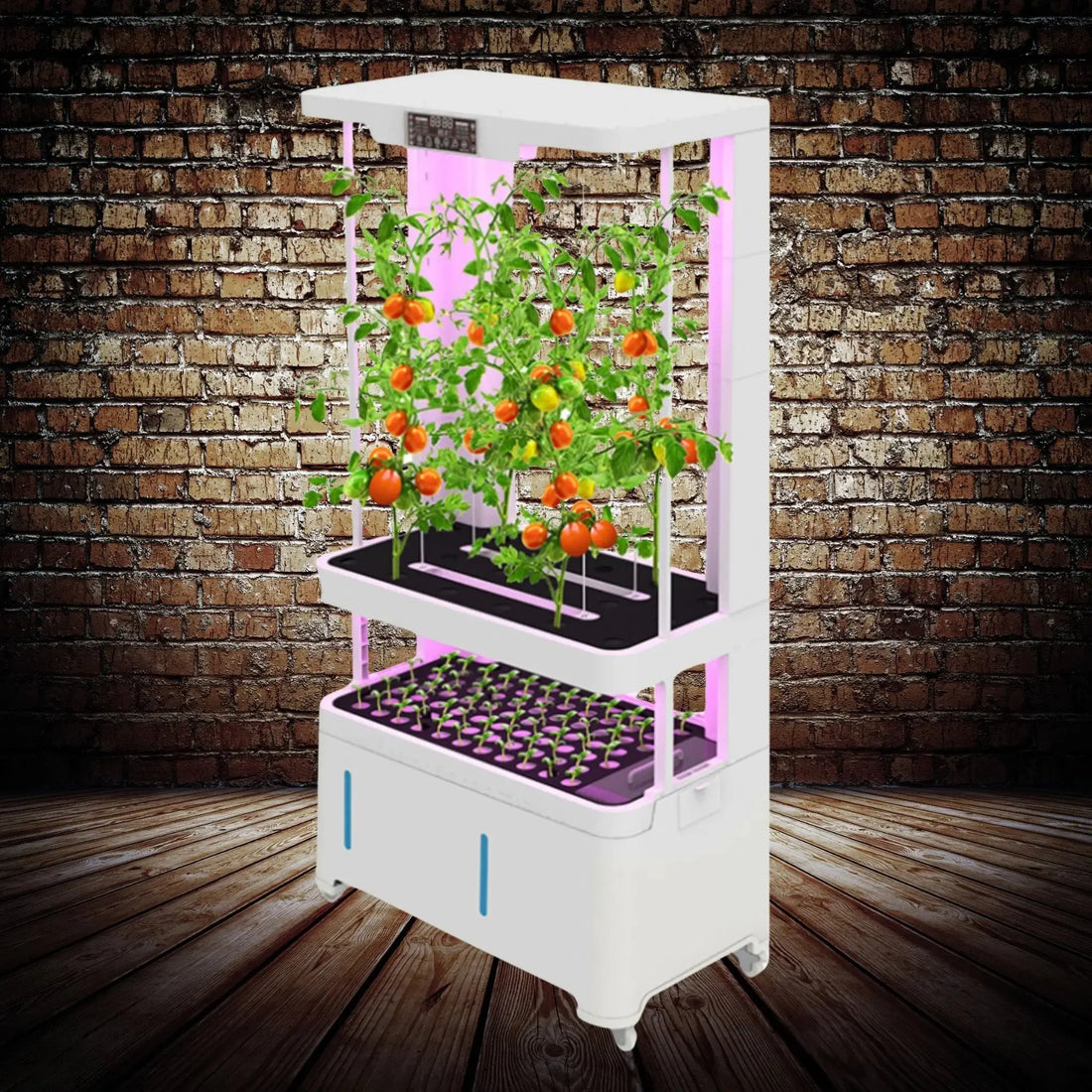
Grow strawberries up one vertical tower in a small footprint, with room for up to 72 plants at once. The self-watering tank and full-spectrum LED handle the daily watering and light. You choose the varieties.
Start your strawberry tower →Personally tested at home on the Sunshine Coast before listing.
My experience growing strawberries on the Sunshine Coast
One of the nicest things about indoor hydroponics is that a smart growing setup doesn't just give you fresh produce - it creates a shared family experience. When I last planted strawberries in the system in our apartment, my wife and kids were captivated, checking on the plants' progress day after day. The highlight came at flowering time, when the kids enthusiastically took on the role of 'bees' and carefully hand-pollinated the flowers. The excitement as they waited for the first berries to turn red, and then finally tasted them, proved to me that a home smart grow box and tower hold far more than just technology.
That family moment is also a growing lesson. But indoors there are no bees, so those small hands were doing a job the plant genuinely needs.
Feeding and pollinating hydroponic strawberries
Strawberries get hungry once they start setting fruit, so the right hydroponic fertiliser matters. Then a balanced nutrient mix gives them nitrogen (N), phosphorus (P), and potassium (K), plus calcium, magnesium, and trace micronutrients like iron and manganese. So in the leafy early stage, a fairly even NPK mix is fine. But once flowers appear, switch to a higher-potassium fruiting formula, because potassium drives sugar and fruit quality.
Change the whole nutrient solution about every 2-3 weeks, and top up water in between as the plants drink. So old solution drifts in pH and EC, and a fresh mix keeps the numbers honest.
Pollination is the step most indoor growers miss. Outdoors, bees and wind move pollen between the flower parts. Inside, that job is yours. Once a day while flowers are open, brush the centre of each with a soft paintbrush or cotton bud. Then a small fan on low helps by shaking pollen loose. Skip this and you get lumpy, half-formed berries instead of plump ones. It takes two minutes, and it is a job kids love.

Get a fresh grow guide like this every fortnight
Join the LaNiTex Hydro Garden newsletter for practical hydroponic, microgreen and mushroom growing tips for Australian homes. Subscribe to download a free hydroponics starter guide (PDF) and get 10% off your first order.
Join the newsletter →Managing Queensland heat and common problems
Heat is the biggest challenge for hydroponic strawberries in Queensland and northern NSW. Day-neutral plants keep flowering in warmth, but once the air pushes past about 30C, flowers drop and fruit softens. So time your start for the cooler run. For example, in the subtropics, plant runners from autumn through early spring so the main crop lands before the worst summer heat.
During heat waves, move the system out of direct afternoon sun, add airflow, and keep the reservoir shaded so the solution stays below 24C. In practice, a digital 4-in-1 water quality tester lets you check pH, EC, and water temperature in seconds.
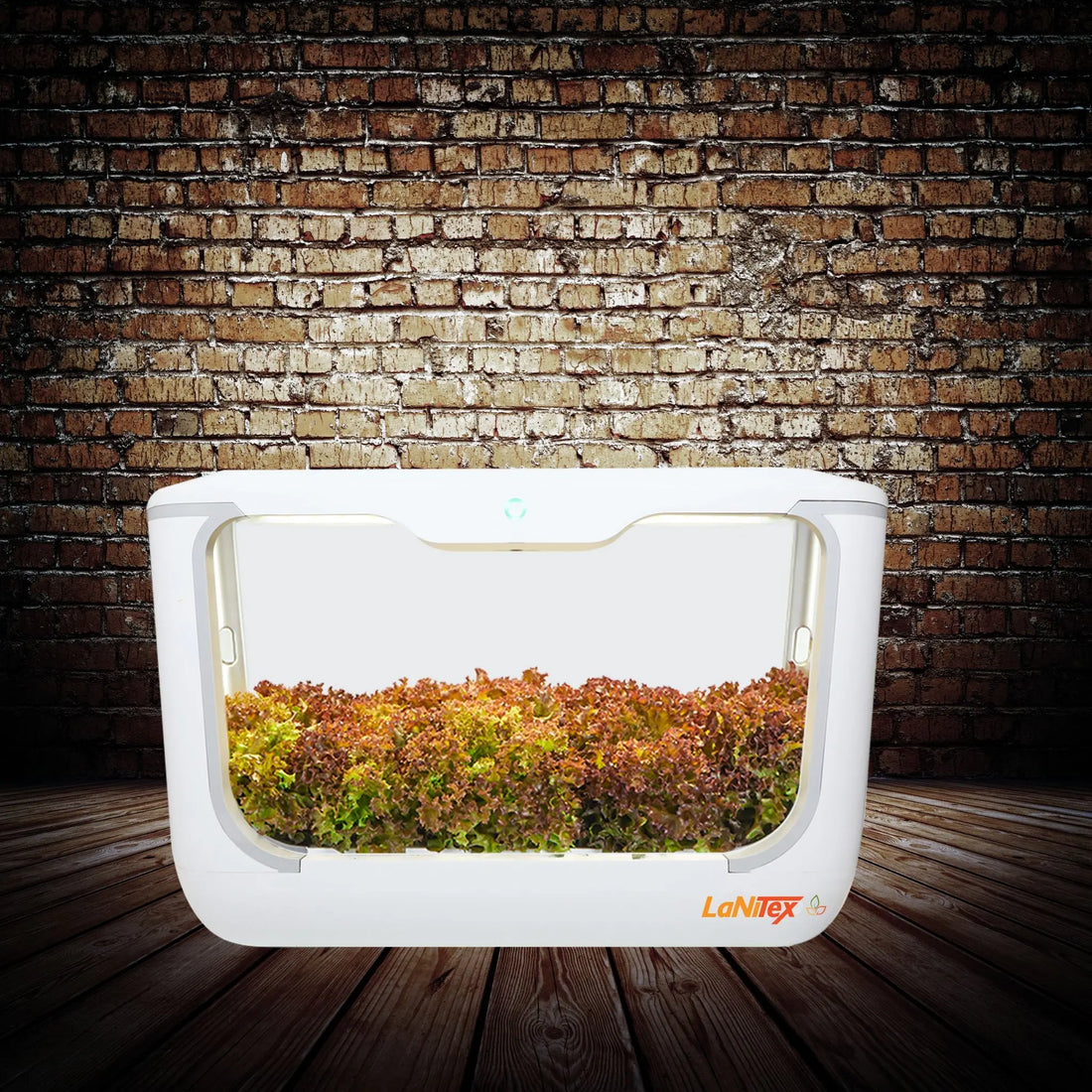
Watch for a few common problems. Spider mites thrive in hot, dry air and stipple the leaves, so raise humidity and wipe them off early. Then aphids cluster on new growth, but a firm water spray knocks them back. Thrips are tiny and silvery, rasping the leaves and flowers, so a sticky trap and steady airflow keep them down. Powdery mildew shows as white dust on leaves, because still, humid air feeds it. And botrytis, or grey mould, rots ripe fruit fast. So good airflow prevents both, and never pack plants shoulder to shoulder. A compact setup like the Smart Grow Box gives each strawberry plant room to breathe.
Harvest: how long until your first strawberries?
From planting a healthy runner to your first ripe strawberries, expect roughly 60-90 days. After that, each flower takes about 4-6 weeks to swell into a berry you can pick, so a day-neutral plant keeps producing waves for months.
Pick strawberries when they are fully red, ideally in the cool of the morning. Then snip the stem rather than tugging the fruit. And taste one straight away. A warm, just-picked hydroponic strawberry beats anything from a supermarket punnet.
One study in Frontiers in Plant Science (2025) found that substrate-grown strawberries produced the highest yields per plant, so if raw output is your goal, coco-perlite bags are worth a look. But for flavour at home, almost any clean system delivers.
The full range
Find the system that fits your space


Supported in Australia - every model tested before listing.
Frequently asked questions
How do you grow strawberries hydroponically in Australia?
Start with runners or crowns of a day-neutral variety, not seed. Then sit the roots in an NFT channel, a deep-water tub, a tower, or a coco-perlite bag. Hold the solution at pH 5.8-6.2 and EC 1.5-2.5 mS/cm, give 10-16 hours of light, keep the air at 18-24C, and hand-pollinate the flowers. And time your planting for autumn to spring in warm zones.
What is the best hydroponic system for strawberries at home?
For most Australian homes, a compact deep-water or substrate system is the easiest place to start, because both are stable and forgiving. NFT channels suit neat rows, while vertical towers pack more plants into a small courtyard or balcony. So pick the one that fits your space and light.
What EC and pH should hydroponic strawberries be in Australia?
Keep the pH between 5.5 and 6.5, and aim for a tight 5.8-6.2 band where strawberries absorb nutrients best. Run the EC at 1.5-2.5 mS/cm: nearer 1.5 while the plants build leaves, and closer to 2.0-2.5 once they fruit. Then check both every few days.
How much light do hydroponic strawberries need indoors?
Give strawberries 10-16 hours of light a day, at a PPFD of about 250-500 umol/m2/s at leaf height. A window rarely supplies enough on its own indoors, so most growers add a full-spectrum LED. And more light means more flowers, but pair it with airflow so the leaves do not overheat.
Which strawberry varieties are best for hydroponics in Australia?
Day-neutral cultivars perform best, because they fruit through the long warm season instead of a single spring flush. Albion is a sweet, firm all-rounder, Evie 2 handles warmth and crops heavily, and San Andreas is productive and disease-tolerant. Then buy certified runners from an Australian nursery in the cooler months to avoid importing pests.
How long do hydroponic strawberries take from planting to harvest?
Plan on about 60-90 days from planting a runner to your first ripe berry. Once a plant is flowering, each bloom takes roughly 4-6 weeks to become a pickable strawberry. Then day-neutral types keep fruiting in waves for several months.
Why are my hydroponic strawberries not flowering or fruiting?
The usual culprits are too little light, heat stress, or missed pollination. So under 10 hours of light or above 30C, plants stall. If flowers open but no fruit forms, they were not pollinated, so brush each bloom daily and add gentle airflow. And too much nitrogen pushes leaves over fruit, so switch to a higher-potassium mix once flowers appear.
Can you grow strawberries indoors?
Yes, and it is what hydroponics does best. Strawberries fruit happily inside all year if you meet their needs. They want strong light, so a windowsill rarely does the job alone, and most indoor growers add a full-spectrum LED for 10 to 16 hours a day. So add warmth, gentle airflow, and daily hand-pollination, and they crop indoors.
Can you grow strawberries from seed?
You can, but it is rarely worth it. Strawberries do not come true from seed, so seed-grown plants are slow and their fruit is a gamble. Start instead from runners or crowns of a named day-neutral variety like Albion or Evie 2. You get a known plant that fruits within a couple of months, not a mystery.
When should you plant strawberries in Australia?
Indoors under lights you can start day-neutral runners almost any time of year. For setups that follow the seasons, plant from autumn through early spring so the main crop lands before summer heat. That timing suits Brisbane and the Sunshine Coast, while cooler southern cities like Melbourne, Adelaide, and Perth do well with a spring planting.
Sources
- Frontiers in Plant Science (2025): "The substrate system produced the highest yields on a per-plant basis." frontiersin.org
- Gardening Australia / ABC (Jerry Coleby-Williams): subtropical strawberry propagation from runners. abc.net.au
About the writer
Laszlo Bulatko is the founder of LaNiTex Hydro Garden, based on the Sunshine Coast in Queensland. Before hydroponics, he spent 15 years in sales, marketing, and brand development in the Hungarian fishing-tackle trade. He hand-picked and tested every product at home on the Sunshine Coast before adding it to the catalogue, and he runs the Term-Grow program that places grow boxes in Queensland primary school classrooms. Read more on the about Laszlo page.