
Last updated: 23 June 2026 by Laszlo Bulatko, founder, LaNiTex Hydro Garden.
Bok choy hydroponics is one of the fastest-paying leafy-green crops you can grow indoors in Australia — harvest-ready in 28 to 45 days, steady year-round supply, and a flavour that easily beats supermarket bunches. Short on time? Bok choy microgreens give you a harvest in about 10 days.
Indoor hydroponic bok choy thrives at pH 5.5 to 6.5 and EC 1.2 to 1.8 in compact systems like a Smart Grow Box, NFT channel, or deep water culture tub. A full-spectrum LED at 200 to 300 micromoles per square metre per second keeps leaves compact instead of stretching, and a stable 18 to 24 degrees Celsius dodges the bolting risk that ruins outdoor crops in a Sunshine Coast summer. We've tested every variety, nutrient range, and system layout in this guide on our own systems at LaNiTex's Sippy Downs facility before publishing.
Here's what works for growing bok choy indoors in Australia, from system choice and seed selection through harvest and storage.
Key takeaways
- Hydroponic bok choy reaches harvest in 28 to 45 days from seed, faster than soil-grown plants in the same climate.
- Target pH 5.5 to 6.5 and EC 1.2 to 1.8 for steady leaf growth without bolting.
- Indoor systems sidestep Sunshine Coast summer heat, the main cause of premature flowering in outdoor crops.
- Joi Choi, Mei Qing Choi, and Shanghai are the most reliable varieties for Australian growers; Suzhou Baby is a strong compact pick for tight Smart Grow Box layouts.
- A Smart Grow Box, NFT channel, Kratky bucket, or DWC tub all work for home setups.
- White, firm roots signal a healthy reservoir; brown, slimy roots point to Pythium and a temperature problem.
- Cut bok choy stores 7 to 10 days at 4 degrees Celsius wrapped in a damp paper towel.
What does hydroponic bok choy need to thrive in Australia?
Hydroponic bok choy (Brassica rapa subsp. chinensis), the plant Filipino growers call pechay, is a soil-free leafy brassica grown with roots in a nutrient solution. It needs cool, stable conditions to stay productive. The plants want 14 to 16 hours of light a day, a water temperature between 18 and 24 degrees Celsius, and a nutrient solution at pH 5.5 to 6.5 with an EC of 1.2 to 1.8. Older sources sometimes list a higher pH window, but most leafy brassica references now agree the lower band gives better uptake of calcium and magnesium, preventing the brown leaf edges growers call tipburn. Push pH above 6.5 in a warm reservoir and bitterness creeps into the leaves as iron and manganese start to lock out; drop below 5.8 and calcium uptake stalls, which is the start of tipburn on young leaves.
Light matters more than people expect. A full-spectrum LED at 200 to 300 micromoles per square metre per second at the canopy keeps leaves compact instead of stretching for light; bump to 300 to 500 if you run a dense layout or notice plants bleaching. That same hardware sits inside the Smart Grow Box, which is why we lean on it for asian-leafy demos. If you are curious about how the broader setup compares to NFT, DWC, or grow tents, our pillar on everything you need to know about hydroponic system essentials walks through the trade-offs.
According to Sustainable Gardening Australia, "hydroponic farming can produce up to three or four times more produce than traditional methods" in the same footprint -- though that yield gap depends on well-managed lighting and nutrients, which is why apartment growers in south-east Queensland increasingly invest in self-contained units.
Which hydroponic system suits bok choy?
For most home growers, three options cover the field: a deep water culture tub, an NFT channel, or a self-contained unit like our Smart Grow Box. Each handles what bok choy needs in hydroponics, but they ask different things from you.
Deep water culture is the simplest active option: a 20 to 40 litre tub, an air stone, and net pots feeding 6 to 12 plants. It forgives small mistakes but still needs the nutrient solution kept below about 24 degrees Celsius on hot Brisbane afternoons, otherwise dissolved oxygen drops and root disease risk climbs. NFT channels run a thin film of solution past the roots and suit growers who want six to twelve plants in a tight footprint, though they punish power outages because roots dry quickly. Kratky-style passive setups are the absolute-beginner entry point: a 5 to 10 litre bucket with a net pot in the lid, no pump, ready in roughly 21 days for baby varieties as long as you size the reservoir generously so solution level and EC don't crash before harvest. Aeroponics works for bok choy too but adds plumbing complexity that's hard to justify for a crop that grows just as well in a simple DWC tub.
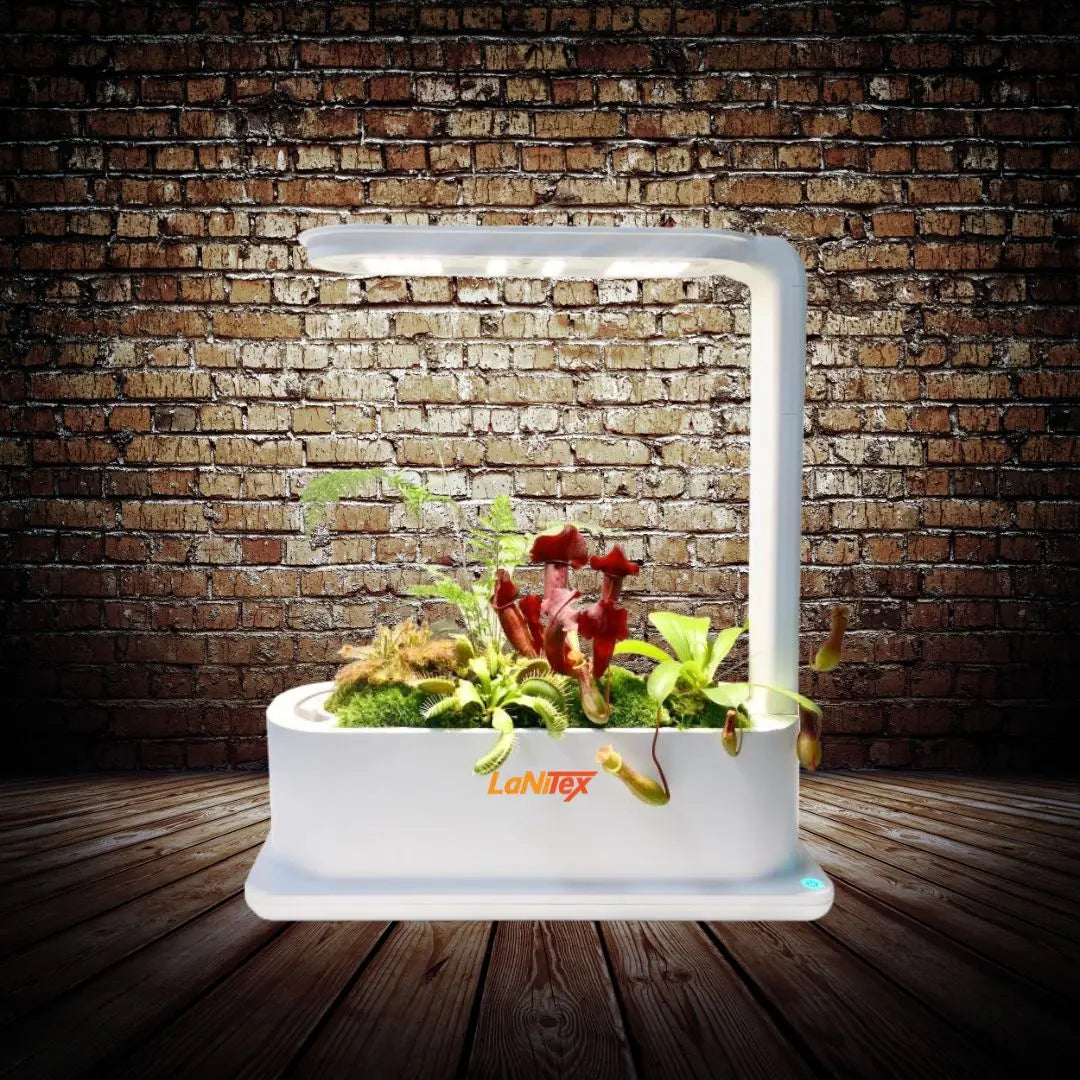
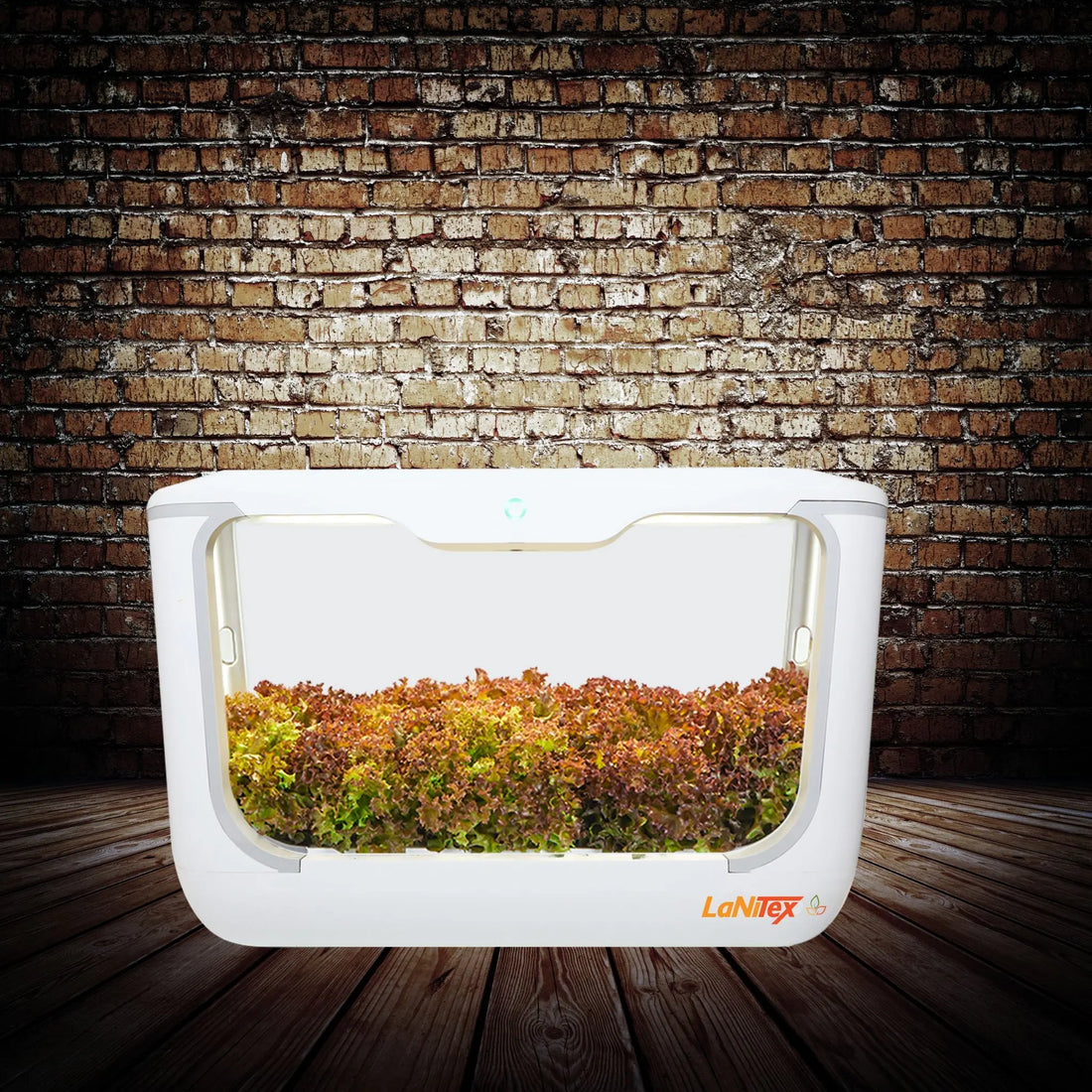
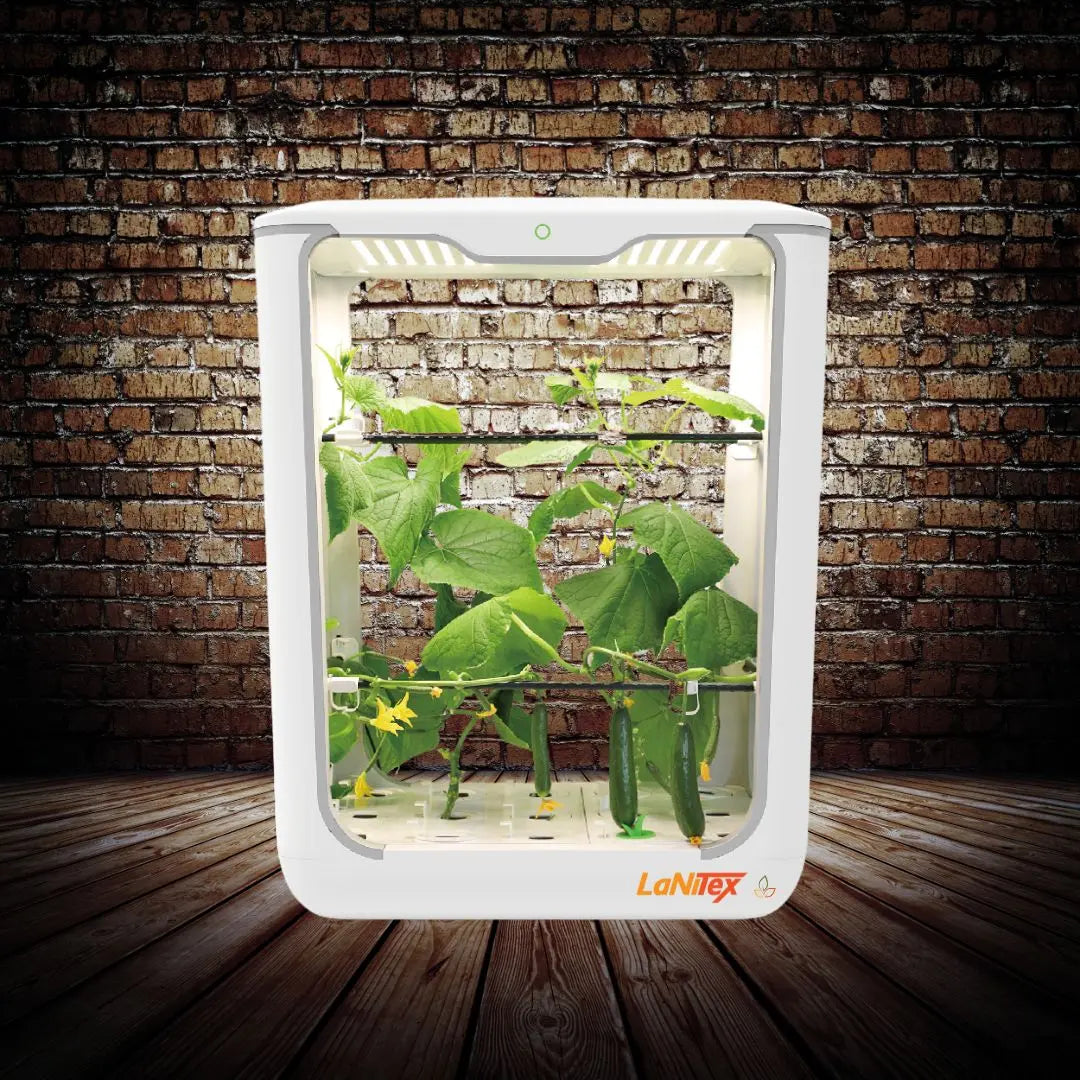
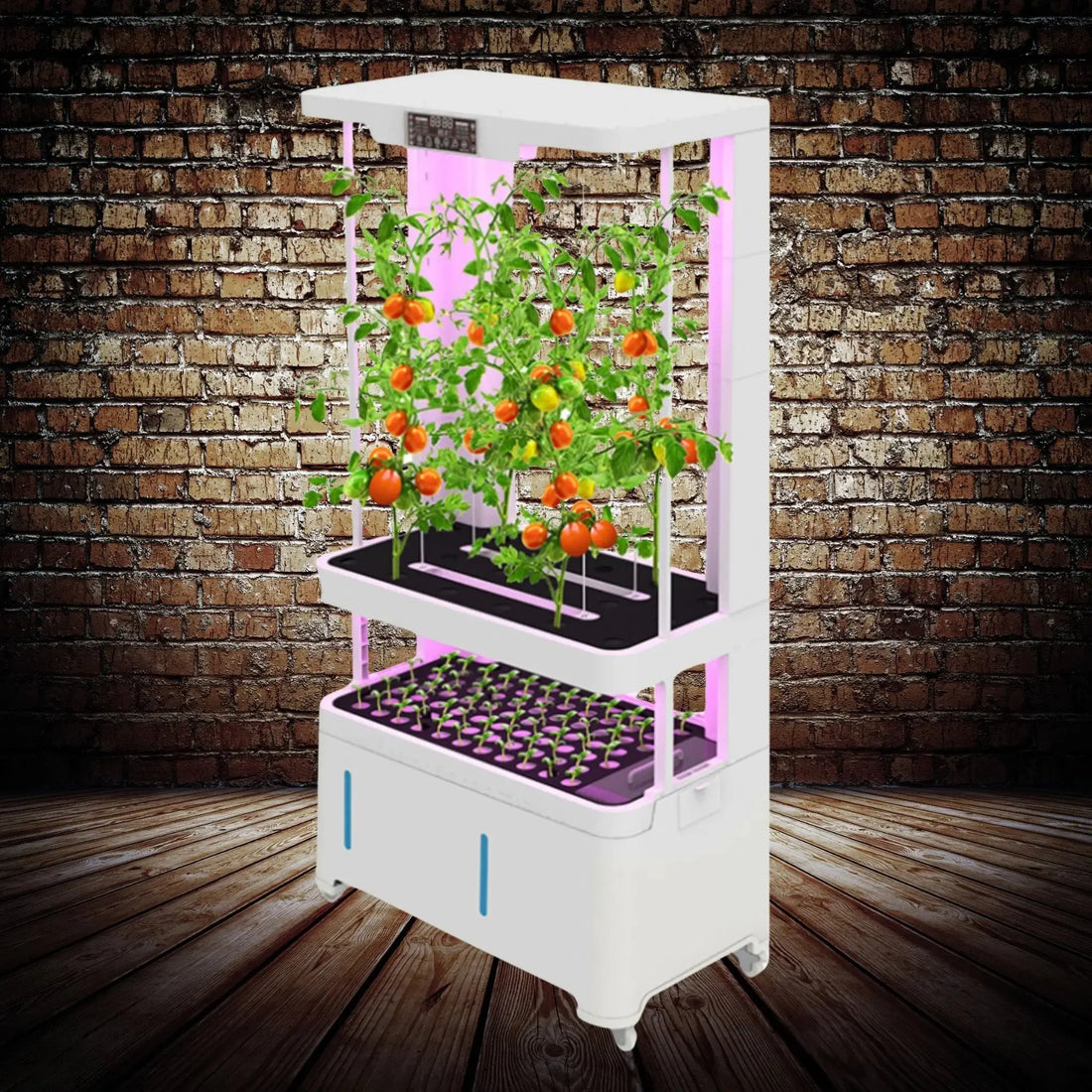
A Smart Grow Box hides the plumbing, runs LEDs, and keeps temperature steady, which matters here on the Sunshine Coast where afternoon humidity swings would otherwise stress the plants. The trade-off is the upfront cost compared to a DIY tub.

Grow your own bok choy indoors all year, no bolting-prone summer bed required. The Smart Grow Box holds the cool, steady water, low EC and full-spectrum light this brassica likes on your bench. You supply the seeds.
Grow your own bok choy →Personally tested at home on the Sunshine Coast before listing.
Towers also work for bok choy in hydroponics, since the leaves stay small enough that they don't crowd neighbours and the vertical layout suits an apartment balcony or laundry corner.
My experience growing bok choy on the Sunshine Coast
My first bok choy went into one of our Smart Grow Box units because I love Asian soups and got tired of supermarket runs for leaves I'd use the same night. The plants settled in beautifully -- healthy, comfortable, and growing fast. That's why we now lead with bok choy whenever LaNiTex demos a Smart Grow Box at trade shows: visitors see at a glance how forgiving this crop is in a hydroponic setup, and it tells the indoor-growing story better than almost anything else we've tried.
What's the seed-to-harvest timeline?
Hydroponic bok choy moves through three clear stages. Start the seeds in a soil-free medium that holds moisture without staying waterlogged -- a rockwool or coco-coir starter plug drops straight into a net pot, and the damp paper-towel method also works if you move each sprouted seed carefully once its first root shows. Bok choy seeds (sold as bok choy, pak choi, or pak choy -- they are the same plant) are easy to source in Australia from suppliers such as The Seed Collection, Mr Fothergill's, or Eden Seeds. Seeds germinate in 5 to 10 days when held at 18 to 22 degrees Celsius. Transplant the seedlings into your system at two to three weeks, once two true leaves are showing; settle the plug so the roots reach the solution without burying the crown. Baby bok choy is ready to cut at 21 to 28 days from transplant; full-sized heads need another two to three weeks, for a total of 28 to 45 days from seed.
Indoor growers usually beat outdoor timelines because lights run on a schedule and water sits in the right range every day. Outdoor crops on the Coast often slow or bolt early when November hits. Growers in Melbourne or Hobart face the opposite problem: the outdoor sowing window is narrow (March to April and August to September only), with winter usually too cold for reliable outdoor germination. Indoor hydroponics extends the temperate-zone season to year-round, which is why our southern customers often run two batches in parallel.
Which bok choy variety should you pick?

Joi Choi is the safe first pick because it tolerates a wider temperature range than most and produces firm white stems with deep green leaves. Mei Qing Choi is a baby variety that suits towers and tight Smart Grow Box layouts; it harvests fast and stays tender. Suzhou Baby is another compact cultivar worth running alongside Mei Qing Choi for a paler-stemmed option in the same harvest. Shanghai bok choy has spoon-shaped green stems and a slightly milder taste, popular with cooks who use it raw. Tatsoi is technically a cousin but grows on the same schedule and tolerates similar nutrient ranges. If you're building out a full brassica bench, our guide on how to grow cabbage in a hydroponic system runs a close parallel, and for a non-brassica cool-season leafy green in the same reservoir, see growing spinach hydroponically.
If you already grow alliums hydroponically, the nutrient profile sits close to what we cover in our spring onions guide, so an EC of 1.4 to 1.6 lands in the safe overlap if you run both crops in one reservoir.
Get a fresh grow guide like this every fortnight
Join the LaNiTex Hydro Garden newsletter for practical hydroponic, microgreen and mushroom growing tips for Australian homes. Subscribe to download a free hydroponics starter guide (PDF) and get 10% off your first order.
Join the newsletter →What pests and problems should you watch for in Queensland's humidity?
Aphids are the first issue indoor growers usually hit. They ride in on a single seedling and multiply quickly under stable indoor temperatures. A weekly leaf check and a neem-oil wipe on the undersides keep the population in check -- use neem oil only as directed on the product label for edible crops and observe any withholding period before you harvest. Cabbage moth caterpillars are less of a problem indoors but worth knowing about if you move plants between an outdoor patio and an indoor unit.
Tipburn (the brown crispy edges along young leaves) usually traces back to inconsistent calcium uptake, which in turn comes from a high EC, low humidity, or very high humidity above 80 per cent. Hold EC at 1.4 and keep room humidity between 50 and 70 per cent (avoiding extremes below 40 or above 80) and the leaves recover.
Two other deficiencies show up as yellowing rather than brown edges. An overall pale cast that starts on the oldest, lowest leaves usually means the nitrogen level has run down, so top the reservoir back up to your target EC. Yellowing between the veins while the veins themselves stay green points to magnesium, which a balanced two-part leafy-greens nutrient normally supplies -- if it lingers, a light dose of Epsom salts at the label rate corrects it. Catch either early and the heads stay sweet and worth harvesting.
Bolting is the big Australian summer issue. Once air temperatures stay above the cool-season comfort window (roughly 21 to 24 degrees Celsius) for several days in a row -- combined with long daylengths and heat stress -- bok choy switches to flowering and the leaves turn bitter. Daylength is the second half of that trigger: even cool reservoir water won't save plants getting more than 16 hours of light a day at over 300 micromoles per square metre per second, so trim your indoor photoperiod back to 12 hours during the November to January window if a fresh batch is in the box. Running EC above 2.0 in warm weather accelerates the flip: the higher salt load stresses the plant when it's already feeling temperature pressure, so baby varieties in particular start to bolt earlier than the calendar suggests. Avoid starting a fresh batch outdoors between November and January if you live north of Brisbane; the heat will beat you. An indoor unit dodges this entirely, which is the main reason we keep recommending indoor hydroponics for coastal Queensland growers.
What do healthy bok choy roots look like in a hydroponic system?
Healthy bok choy roots are white and firm, with clean branching that you can see when you lift the net pot. Pythium presents differently: roots go brown and slimy, often with a sour smell rising off the reservoir. The fix is colder water (drop reservoir temperature below 22 degrees Celsius using a chiller or a deeper tub that buffers heat) plus a hydroponics-grade beneficial-microbe inoculant that outcompetes the pathogen at the root surface. If the rot has spread through several plants, harvest what you can, sanitise the system with hydrogen peroxide at the label rate, and replant in clean media.
How does bok choy fit into Australian apartment growing?
Bok choy is small, fast, and ornamental enough to sit on a kitchen counter. That matters more in Australia than people realise. Per the Australian Bureau of Statistics 2021 Census, "70 per cent were separate houses, 13 per cent were townhouses and 16 per cent were apartments." That 16 per cent figure, close to a million Australian households, is the audience that simply cannot dig a vegetable bed.
In Sunshine Coast and Brisbane, indoor hydroponics gives apartment growers two things outdoor beds can't: shelter from the November heat that bolts most leafy crops, and shelter from the wet-season pest pressure that hammers brassicas (editorial inference from ABS data). A Smart Grow Box on a kitchen bench produces a cut of bok choy every few weeks; that's enough for a household stir-fry rotation without buying supermarket leaves.
How do you harvest bok choy for a continuous supply?

You have two harvesting routes, and the one you pick decides how often you replant. For a steady trickle of leaves, cut the outer stems a few centimetres above the base and leave the central crown growing -- the plant keeps pushing new leaves from the middle, so a single bok choy can feed a kitchen for weeks in a cut-and-come-again rhythm. For a clean full head, slice the whole plant off about two centimetres above the net pot; many growers find a smaller second head regrows from the stump within a couple of weeks, which stretches one transplant into two harvests before you reset the system. Harvest in the cool of the morning when the leaves are turgid, and use a sharp, clean blade to limit the bruising that shortens fridge life.
How do I store hydroponic bok choy after harvest?
Rinse the cut heads in cold tap water within an hour of harvest, spin or pat dry, then wrap loosely in a damp paper towel inside a perforated bag. Stored at 4 degrees Celsius in the crisper drawer, it holds for 7 to 10 days without yellowing. If you cut the leaves but leave the root ball in the net pot, the harvested plant can sit in the fridge an extra three days because the root mass keeps the basal tissue alive. For trade-show demos we sometimes hold cut heads two weeks this way with no soft spots, which is the part that surprises visitors most.

Cooking for a crowd? The V5.2-A tower runs up to 72 planting sites under full-spectrum LED with a self-watering tank, so you can keep bok choy, lettuce and herbs in constant rotation. You supply the seeds.
Scale up your grow →Personally tested at home on the Sunshine Coast before listing.
The full range
Find the system that fits your space


Supported in Australia - every model tested before listing.
FAQ
What pH should I run for hydroponic bok choy?
Hold pH between 5.5 and 6.5, with 6.0 as a steady mid-point. Bok choy uses calcium and magnesium more efficiently in this band, which prevents tipburn on young leaves. Check pH daily because reservoir drift is fastest when plants are growing hard.
What EC should hydroponic bok choy run at?
Run EC at 1.2 to 1.8 millisiemens per centimetre. Lower EC gives sweeter, milder leaves; higher EC speeds growth but raises bolting risk in warm conditions. Most Sunshine Coast growers settle around 1.4 to 1.6 as a year-round compromise that handles summer heat.
What nutrient solution does bok choy need in hydroponics?
Bok choy needs a balanced leafy-greens nutrient with adequate calcium and magnesium. A general NPK ratio around 8-4-12 works well in the main growth phase. Pick a two-part hydroponic nutrient designed for leafy crops and follow the leafy-greens dosing rate on the label.
How many hours of light does hydroponic bok choy need?
Aim for 14 to 16 hours of full-spectrum LED light a day at 200 to 300 micromoles per square metre per second at the canopy. Trim back to 12 hours during November to January if you're running an indoor batch through Queensland's heat peak: long daylengths combined with warm reservoir water are the dual trigger for bolting in this crop, so shorter days are the simplest defence when the room is hot.
Which bok choy varieties grow best in hydroponics in Australia?
Joi Choi is the safest first pick for Australian conditions because it tolerates a wider temperature range than most cultivars and produces firm white stems. Mei Qing Choi and Suzhou Baby are compact baby varieties that suit Smart Grow Box layouts and tight tower setups. Shanghai green-stemmed bok choy is popular with cooks who use it raw. Tatsoi is a close cousin that runs on the same schedule and EC if you want to mix it into the same reservoir.
How long does bok choy take to grow hydroponically?
Baby bok choy is ready in 21 to 28 days from transplant; full-sized heads need 28 to 45 days from seed total. Indoor hydroponic systems beat outdoor timelines because temperature and light hold steady through the cycle.
Why is my hydroponic bok choy bolting and turning bitter?
Bolting in bok choy is a stress response to long daylengths plus warm reservoir water. Push the photoperiod past 16 hours, or let solution temperatures stay above 24 degrees Celsius for several days, and the plant switches from leaf production to flower-stalk formation, at which point the leaves turn bitter because the plant is pulling nutrients into the seed head. Pull EC back to 1.4, drop indoor photoperiod to 12 hours, and chill the reservoir to recover what you can. Once the central stalk is up and pushing flowers, it's usually better to harvest the leaves you have and restart with a fresh batch.
Can you grow bok choy in a hydroponic tower?
Yes. Bok choy stays small enough that crowded tower holes don't matter, and the vertical layout suits balconies and laundry corners. Use 75 to 100 millimetre hole spacing for baby varieties like Mei Qing Choi; full-sized heads need 100 to 150 millimetres to avoid leaf crowding and canopy humidity issues.
Can I grow bok choy in Kratky or deep water culture systems?
Yes. Both work and they're the most beginner-friendly systems for this crop. Kratky is the simplest passive route: a 5 to 10 litre bucket with a net pot in the lid, no pump, ready in roughly 21 days for baby varieties. Deep water culture adds an air stone for oxygenation and suits a 20 to 40 litre tub feeding 6 to 12 plants. Both forgive small mistakes better than NFT, which is why beginners often start with DWC before moving up to channels or a Smart Grow Box for the looks.
How do you grow bok choy indoors in Australia?
Use a self-contained system such as a Smart Grow Box, set LEDs for 14 to 16 hours a day, and aim to keep water between 18 and 24 degrees Celsius (bok choy tolerates 13 to 24 degrees Celsius broadly). Indoor growing dodges the bolting that hits outdoor Queensland crops when summer air temperatures push past the cool-season comfort window, and shields against aphids and cabbage moth pressure.
Can bok choy be grown hydroponically?
Yes, and it's one of the most forgiving crops to start with. When I first put bok choy into a Smart Grow Box the plants settled in within days, which is why we keep using them for trade-show demos. The combination of fast growth, low pest pressure indoors, and tolerance of small nutrient swings makes it a strong beginner crop.
Is bok choy the same as pak choi?
Yes. Bok choy, pak choi, and pak choy are three spellings for the same plant, Brassica rapa subsp. chinensis, so a seed packet under any of those names grows the same crop. Choy sum (also spelled choi sum) is a close relative but a different vegetable, grown for its flowering stems rather than its leafy base. All of them run on the same hydroponic settings covered above, so you can share one reservoir between them.
Sources
- Sustainable Gardening Australia: The Pros and Cons of Hydroponic Growing
- Australian Bureau of Statistics: Housing: Census, 2021
About the writer
Laszlo Bulatko founded LaNiTex Hydro Garden in December 2024 and runs it from the Sunshine Coast, Queensland. Before hydroponics, he spent 15 years in sales, marketing, and brand development across the Hungarian fishing tackle market, representing brands including Okuma, Mustad, Savage Gear, and Berkley, work that helped build 12 per cent market share in a serious industry. He started his career at IBM and Diageo in Hungary, holds a finance degree from Budapest Business School, and relocated to Australia in mid-2023. Each product on the LaNiTex catalogue was tested by Laszlo at home before listing, and today he runs the Term-Grow Enrolment programme that places grow boxes in Queensland primary school classrooms. More on the About Laszlo page.