
Fresh spinach from your kitchen bench, all year round, with no garden and no soil. That is the promise of growing spinach hydroponically, and in Australia's warm climate it is far easier than most people expect.
Quick answer: Grow hydroponic spinach (Spinacia oleracea) in a cool spot at pH 5.8-6.2 and an EC of 1.2-1.8 mS/cm, under 12-16 hours of light a day. Start seeds at 17-20C, move seedlings into your system once roots show, and pick baby leaves in 25-35 days using the cut-and-come-again method.
If you are new to hydroponics, spinach is a smart first crop. So it grows fast, and it shrugs off the odd beginner mistake. Here is what actually works for growing it indoors in Australia, from seed to harvest.
What is hydroponic spinach?
Hydroponic spinach is simply spinach (Spinacia oleracea) grown in nutrient-rich water instead of soil. It is a true leafy green, and different from kangkung or water spinach, which is a separate warm-climate plant. It is also not the same as silverbeet, which is often sold as "spinach" in Australia but is really a chard. True spinach is sometimes labelled English spinach to tell the two apart. So for the classic dark-green salad leaf, Spinacia oleracea is the one you want.

A few cultivars do especially well in a soilless system. For example, Bloomsdale is a savoy-leaf favourite with good flavour. And Space and Kolibri are smooth-leaf types bred for fast, uniform growth. And Giant Noble gives large leaves for cooking, while Matador holds up well when the weather warms. Because spinach bolts in heat, variety choice matters more here than with most greens, so pick a slow-to-bolt type if your space runs warm.
Best growing conditions for spinach in a hydroponic system
Spinach likes it cool and steady. Keep the nutrient solution at pH 5.5-6.5, and aim for 5.8-6.2, because that is where it takes up nutrients best. CANNA Australia notes that "the best pH levels for most plants in hydro systems are slightly acid (between 5.8 and 6.2)". So spinach sits in that same leafy-green band.
For nutrient strength, use an EC (electrical conductivity) of 1.2-2.3 mS/cm. Start seedlings around 1.2-1.5 mS/cm. Then lift it toward 1.8-2.3 mS/cm as the plants mature. Also, spinach is a heavy feeder for calcium and magnesium. So a balanced leafy-green nutrient, with a good nitrogen, calcium and magnesium ratio, keeps the leaves dark and stops tip burn.
Leafy greens drink fast, so the nutrient solution drifts as they grow. So change the whole tank every couple of weeks, and top it up in between with fresh, pH-adjusted water. One habit is worth keeping from day one. Never combine concentrated Part A and Part B nutrients before diluting them. Mixed neat, they bind into solids the roots cannot use.
Give the plants 12-16 hours of light a day at a PPFD of 150-300 umol/m2/s, which is a moderate intensity for leafy growth. Also, keep the air cool, ideally 15-22C. This matters because spinach is a cool-season crop and will bolt (run to seed and turn bitter) when temperatures climb above about 23-26C. The RHS confirms the pattern: spinach "does best in milder temperatures (ideally 15-20C/60-70F)" and "hot, dry summer weather tends to trigger earlier flowering (or bolting)".
Two practical numbers help here. Space your plants about 13-15 cm apart so air moves freely between the leaves. Then keep an LED grow light roughly 15-20 cm above the canopy, and lift it as the plants grow. Too close and you scorch the leaves; too far and the stems stretch and go leggy.
What I've learned about growing spinach from research
I have not grown spinach in my own systems yet, so I will be straight with you. So the numbers here come from horticultural research and grower reports, not from my kitchen bench. I would rather tell you that than pretend otherwise.
What the research keeps repeating is that spinach lives or dies on temperature. Keep it cool and it thrives; let it get hot and it bolts. But that is the opposite of the fruiting crops I have tested at home on the Sunshine Coast, like capsicum, which love the heat. So my main advice is simple. Treat spinach as a winter and shoulder-season crop indoors, and give it the coolest, shadiest spot you have.
The second lesson is patience with germination. Spinach seed is slower and fussier than lettuce, and warmth works against it at the sprouting stage. In practice, growers who get good, even germination almost always start cool and keep the media moist. So get those two habits right and the rest of the grow is genuinely easy. If you would rather start with the easier leaf, our romaine lettuce growing guide covers a cos crop from seed to harvest.
Which hydroponic system suits spinach?
Spinach has shallow roots and grows fast, so it fits nearly every home system. Here is how the common options compare.
- NFT (nutrient film technique): a thin film of nutrient runs past the roots in channels. So it is efficient and clean, and a proven match for greens. CANNA Australia calls NFT "fabulous for growing shallow-rooted, fast-growing plants like herbs, spinach, radishes and leafy greens".
- Kratky (passive DWC): the plant sits in a reservoir and the water level drops as it drinks. There are no pumps, so a DIY Kratky spinach setup indoors is about as simple as hydroponics gets. So it suits a few plants at a time.
- Deep water culture (DWC): roots hang in aerated nutrient solution. It grows lush leaves but needs an air pump, especially in warm rooms.
- Ebb and flow: the tray floods and drains on a timer. It is forgiving, and works well for seedlings or a mixed leafy crop.
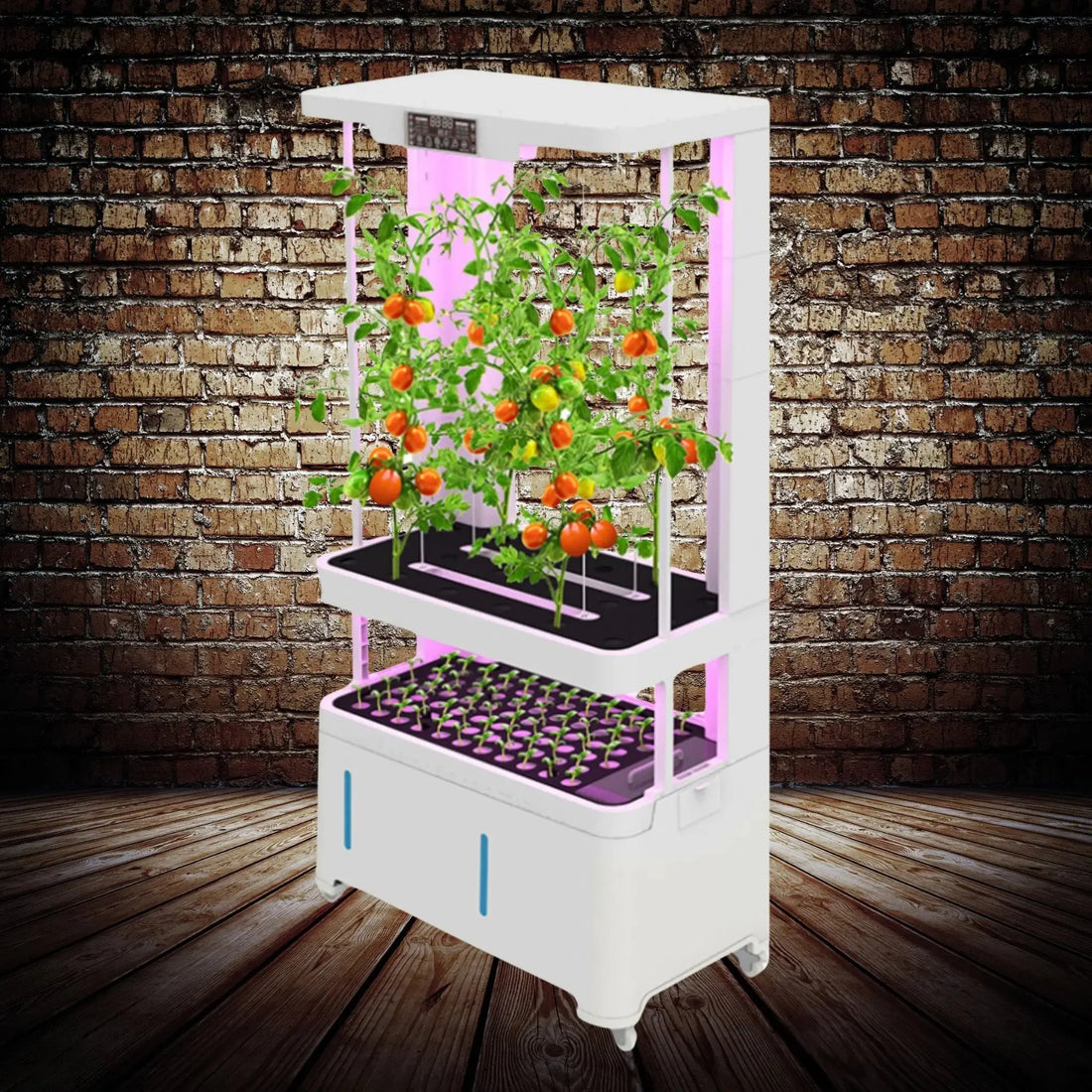
If you would rather not fiddle with pumps and timers, a compact tower or grow box handles that part for you. And the pump, light and feed schedule come set up, so you just add plants.

Grow leafy greens like spinach in a compact vertical footprint, with up to 72 plant positions. The self-watering tank and full-spectrum LED handle the daily feeding and lighting, so you choose what to grow.
Start growing your greens →Personally tested at home on the Sunshine Coast before listing.
Get a fresh grow guide like this every fortnight
Join the LaNiTex Hydro Garden newsletter for practical hydroponic, microgreen and mushroom growing tips for Australian homes. Subscribe to download a free hydroponics starter guide (PDF) and get 10% off your first order.
Join the newsletter →Starting spinach seeds for hydroponics
Germination is where a spinach crop is won or lost. Sow seeds into a moist, inert medium like rockwool or coir plugs, and keep them at 17-20C with low light until they sprout. Because spinach dislikes heat even as a seed, a warm propagation mat can actually hurt your strike rate here, so skip it.
One prep step makes a real difference. Rockwool comes out of the bag quite alkaline, so soak the cubes in pH 5.5 water before you sow. And never squeeze them, because that crushes the air pockets the roots need. Also, keep a little airflow over the tray. Damp, still air around soft young stems invites damping-off, where seedlings pinch at the base and collapse overnight.
Keep the media damp but not soaked; expect sprouts in 6-10 days. Also, some growers cold-stratify their seed first, resting it in the fridge for a week or two to lift germination on older seed. Then once a seedling has two or three true leaves, and roots poke through the plug, move it into your system. From there, the plants really pick up speed.
Growing spinach through the Australian seasons
Australia is not one climate, so timing is everything. Because spinach is a cool-season crop, the goal is to run it when your indoor space stays naturally cooler, or to actively cool the grow area in summer.
In the cooler months, spinach is easy across most of the country. South-east Queensland, New South Wales, Victoria, South Australia and much of Western Australia all suit autumn-to-spring growing. And Tasmania, being cooler again, gives you the longest comfortable window and can push into summer. But the hard case is a Brisbane or Sunshine Coast summer, where indoor rooms stay warm and bolting is a real risk. So in a hot Queensland summer, keep the system in the coolest room, run the lights overnight, and pick young before the heat forces the plants to flower.
Harvesting spinach and keeping it safe to eat
You have two ways to harvest. Cut-and-come-again means snipping the outer leaves and leaving the crown to regrow, for several pickings over a few weeks. Whole-plant harvest means cutting the entire plant at once, about 1-2 cm above the roots, which suits a smaller batch. For a steady supply, use cut-and-come-again and pick the outer leaves every few days.

Because hydroponic spinach is often eaten raw, food safety matters. So wash your hands and tools, keep the nutrient tank and grow surfaces clean, and never use untreated surface water. Then rinse the leaves before eating. So habits like these make home-grown, ready-to-eat spinach safer than a bagged product that has passed through many hands.
To keep your harvest crisp, pat the leaves dry after cutting and store them in a breathable container or a loosely lidded box. Hydroponic leaves hold more water than field-grown ones, so a sealed plastic bag turns them soft in a day or two. Crisp baby leaves also take a sweet-sharp strawberry dressing for spinach salad well.

Common problems and how to fix them
Most spinach problems show up in the leaves first, and nearly all of them trace back to heat, pH or oxygen. Here is how to read the signs and what to check first.
| What you see | Likely cause | Check this first |
|---|---|---|
| Lower leaves turning pale or yellow | Nitrogen shortage, or pH drifting high | Test the tank and bring pH back to 5.8-6.2 |
| Yellowing between the veins on new leaves | Iron lockout when pH sits too high | Lower the pH; the iron is there, the plant just cannot take it up |
| Brown, slimy roots | Root rot from warm, low-oxygen water | Cool the solution, check the air pump, and trim the dead roots |
| Crispy brown leaf edges | Nutrient burn, or the light sitting too close | Drop the EC toward 1.2-1.5 and raise the light |
| Tall central stem with flowers | Bolting from heat | Cool the room and harvest the leaves young |
When something looks off, change one thing at a time and give the plant a few days to respond. Chasing several tweaks at once just makes it hard to tell what actually helped.
Keeping pests off indoor spinach
Growing indoors keeps most trouble out, but a few pests still find their way in on clothes or through an open window. The good news is that a small indoor crop is easy to check, so catch problems early and you rarely need anything harsh.
Fungus gnats look like tiny flies around damp media. So let the surface dry between waterings, set a few yellow sticky traps, and cover wet rockwool with a layer of dry clay pebbles. Spider mites like warm, dry air and leave a fine speckling on the leaves. So wipe the leaves down and treat them with a mild neem oil or insecticidal soap. Then move the affected plant away from the others while you do. Aphids gather on the undersides of leaves, so check there often and rinse them off before they build up.
The main disease to watch is downy mildew, which shows as pale patches on top of the leaves with a greyish fuzz underneath. It thrives in still, humid air, so keep a gentle breeze moving over the plants, avoid crowding them, and pull off any affected leaves straight away.

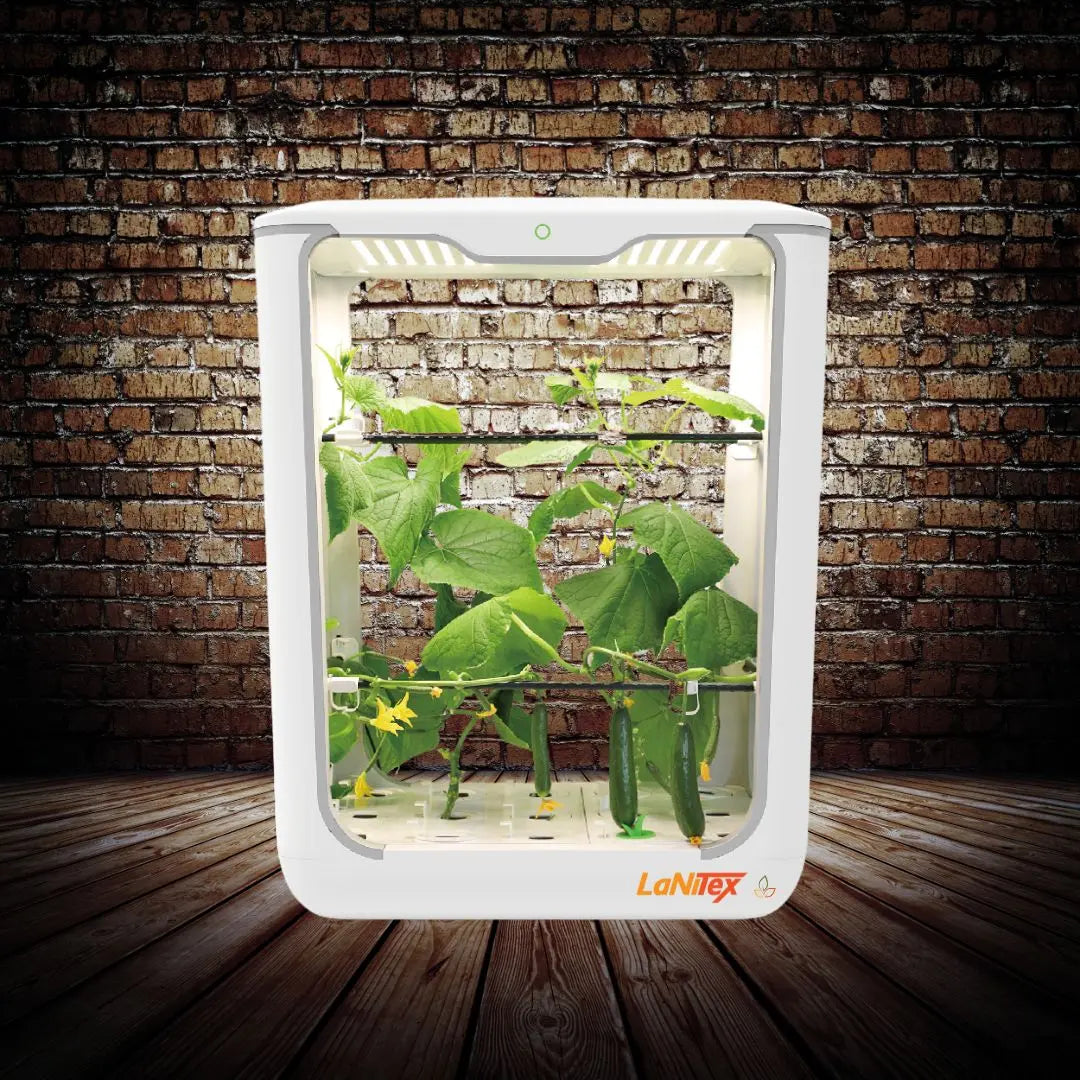
Prefer an enclosed grow space? The tall Grow Box gives cool-season crops like spinach a more sheltered spot, which helps when you need to keep the leaves comfortable through a warm afternoon.
Set up a sheltered grow space →Personally tested at home on the Sunshine Coast before listing.
The full range
Find the system that fits your space


Supported in Australia - every model tested before listing.
Frequently asked questions
How do I start growing spinach hydroponically at home in Australia?
Start seeds in moist rockwool or coir plugs at 17-20C with low light, and expect sprouts in 6-10 days. Then once seedlings have two or three true leaves and visible roots, move them into a clean system. Then run it at pH 5.8-6.2 and EC 1.2-1.5 mS/cm. Also, keep the room cool, and give the plants 12-16 hours of light a day.
What is the best pH and EC range for hydroponic spinach?
Aim for a pH of 5.8-6.2 within a safe band of 5.5-6.5. For nutrient strength, start seedlings at an EC of 1.2-1.5 mS/cm and raise it to 1.8-2.3 mS/cm as the plants mature. Check both regularly, because leafy greens draw nutrients fast and the readings drift.
How many hours of light does hydroponic spinach need indoors?
Give spinach 12-16 hours of light a day at a moderate intensity of about 150-300 umol/m2/s (PPFD). More light is not always better, because too much heat and intensity can stress the plant and push it toward bolting. So steady, moderate light over a long day produces the best leaves.
Which spinach varieties grow best in hydroponics in Australia?
Bloomsdale is a reliable savoy-leaf type, while Space and Kolibri are smooth-leaf cultivars bred for fast, even growth. And Giant Noble gives large cooking leaves, while Matador is a good choice when your space runs a little warm because it is slower to bolt. For a hot climate, always lean toward the slow-to-bolt varieties.
How long does hydroponic spinach take to harvest?
Baby spinach leaves are usually ready 25-35 days after transplanting, and a full plant takes around 40-50 days. So pick baby leaves early and often, because young leaves are sweeter and regular picking keeps the plant productive.
Why is my hydroponic spinach bolting or turning bitter?
Heat is almost always the cause. Spinach is a cool-season crop, so temperatures above about 23-26C trigger bolting, where the plant runs to seed and the leaves turn bitter. So move the system to a cooler room, run lights overnight, and harvest young before the heat takes over.
How do I keep hydroponic spinach cool in a hot Australian summer?
Put the system in the coolest, shadiest room you have, ideally on a lower floor or a tiled area. Run the grow lights overnight so the plants photosynthesise when the air is cooler, and keep the nutrient solution around 18-20C. And an enclosed grow box helps, since picking young leaves before a heatwave saves the crop.
When is the best time to grow spinach in Australia?
Outdoors, autumn through early spring is the sweet spot across most of Australia, because spinach is a cool-season crop that bolts in the heat. Indoors and hydroponically you can grow it year-round, as long as you keep the room cool. But in a hot Queensland summer, run the lights overnight and pick the leaves young.
About the writer
This guide was written for LaNiTex Hydro Garden, founded by Laszlo Bulatko in December 2024 and based on the Sunshine Coast, Queensland. Before hydroponics, Laszlo spent 15 years in sales, marketing and brand development in the Hungarian fishing tackle market. He worked with brands like Okuma, Penn and Abu Garcia, and helped build a 12% market share. He had started his career at IBM and Diageo. His home testing on the Sunshine Coast has shown fast results with microgreens, lettuce and year-round capsicum and herbs. He also runs the Term-Grow Enrolment program, placing grow boxes in Queensland primary school classrooms so children can grow real food during term.
Sources
- Royal Horticultural Society (RHS), Spinach: grow your own. The RHS says spinach "does best in milder temperatures (ideally 15-20C/60-70F)". It also warns that "hot, dry summer weather tends to trigger earlier flowering (or bolting)". rhs.org.uk
- CANNA Australia, Hydroponics for beginners. It says the nutrient film technique is "fabulous for growing shallow-rooted, fast-growing plants like herbs, spinach, radishes and leafy greens". It also notes that "the best pH levels for most plants in hydro systems are slightly acid (between 5.8 and 6.2)". canna.com.au