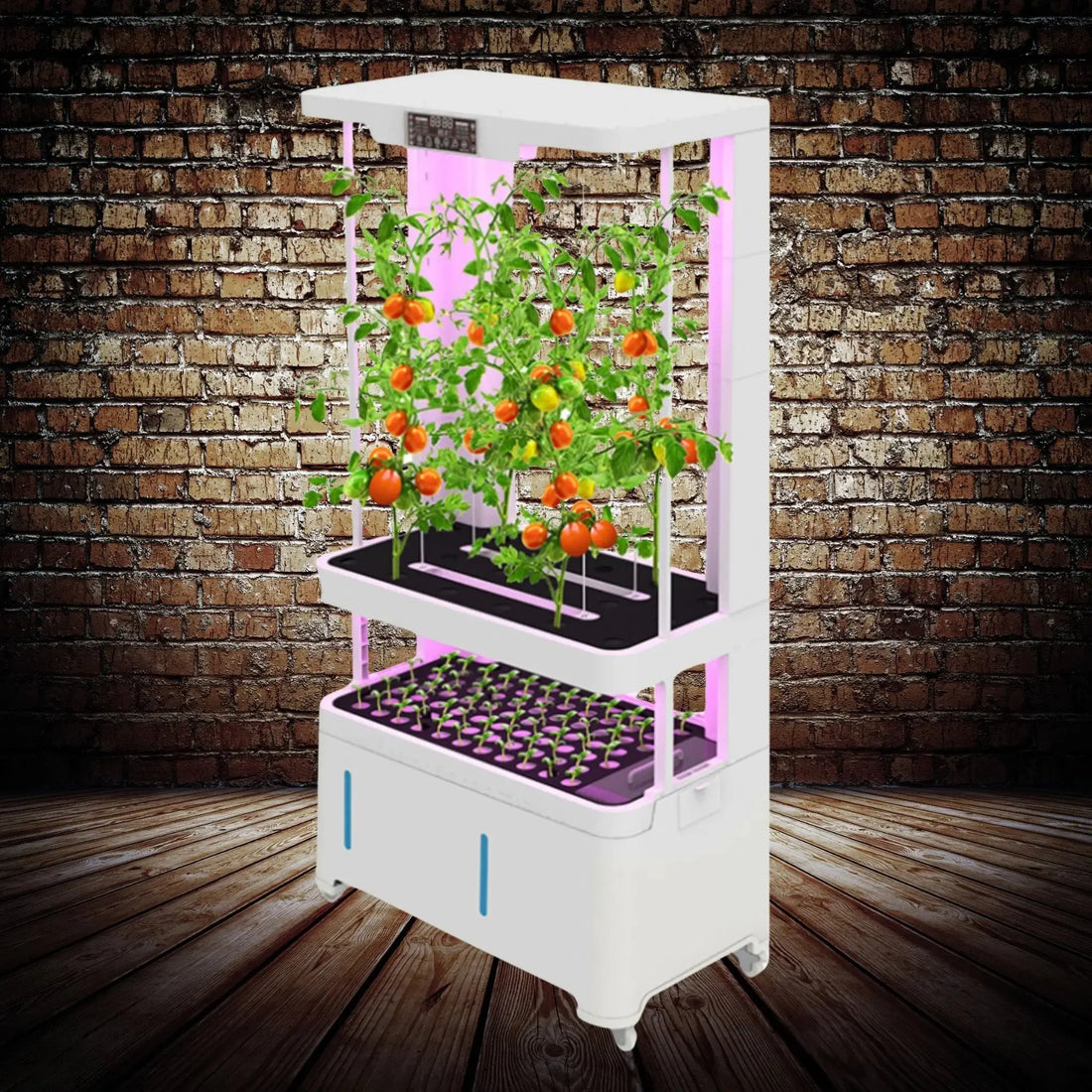

Romaine lettuce is one of the easiest crops to grow indoors in Australia. On the Sunshine Coast, a hydroponic setup keeps it cropping through the humid months that flatten an outdoor bed. Also called cos lettuce, it grows fast enough to supply a kitchen all year.
Quick answer: Grow romaine lettuce hydroponically at pH 5.5-6.0, an EC of 0.8 mS/cm for seedlings rising to 1.4-1.6 mS/cm at maturity, 12-16 hours of light at PPFD 150-250 umol/m2/s, and a water temperature of 15-22 C. Expect a harvest 45-60 days from seed.
Key settings at a glance:
- pH: 5.5-6.0 (5.8 is ideal)
- EC: 0.8 mS/cm for seedlings, 1.4-1.6 mS/cm for mature plants
- Light: 12-16 hours a day at PPFD 150-250 umol/m2/s
- Temperature: 15-22 C, with trouble above 24 C
- Time to harvest: 45-60 days from seed
Hydroponic romaine lettuce hands you a level of control no outdoor bed can match. For one thing, the pH and nutrient strength hold where you set them between quick checks. On top of that, the reservoir keeps the plants clear of Queensland humidity and its pests. And there is no season to wait for, so you can start a crop any month. The roots feed from a balanced solution instead of soil, which makes growth faster and more predictable. Dial in the light, temperature and feed, and the plant does the rest.
What is romaine lettuce?
Romaine, or cos lettuce, is Lactuca sativa var. longifolia: an upright plant with tall, sturdy leaves and a crisp central rib. In short, it is the lettuce at the heart of a Caesar salad. In practice, its firm leaves handle warmth and rough handling far better than soft butterhead types or loose-leaf kinds such as hydroponic oak leaf lettuce, and it is much more forgiving than hydroponic iceberg lettuce. After all, it grows fast, sits neatly in a net cup, and rewards steady feeding with dense, sweet hearts.

Variety choice matters more than most expect. For example, bolt-resistant cos types hold their quality in the warmth an Australian summer brings. 'Parris Island Cos' and 'Valmaine' are the long-standing hydroponic favourites here. In fact, 'Green Towers' and packaged romaine-hearts mixes are just as easy to find in Australia. Overall, choose a named cos variety over a generic lettuce mix for more predictable hearts.
Best conditions for hydroponic romaine lettuce
Romaine is a low-EC, cool-season crop. That's why its settings sit at the gentle end of the hydroponic range.
| Setting | Target |
|---|---|
| pH | 5.5-6.0 (5.8 ideal, tolerant to about 6.5) |
| EC | 0.8 mS/cm seedlings, 1.4-1.6 mS/cm mature |
| Light | 12-16 hours a day, PPFD 150-250 umol/m2/s |
| Temperature | 15-22 C; heat stress and bolting above 24 C |
| Humidity | 60-75% |
So keep the nutrient solution cool and well-aerated. Warm, stagnant water triggers root problems and the bitterness that ruins a heat-stressed crop. For that reason, two tools earn their place: a timer on the lights and a cheap EC (electrical conductivity) pen.
Get a fresh grow guide like this every fortnight
Join the LaNiTex Hydro Garden newsletter for practical hydroponic, microgreen and mushroom growing tips for Australian homes. Subscribe to download a free hydroponics starter guide (PDF) and get 10% off your first order.
Join the newsletter →My experience growing romaine lettuce on the Sunshine Coast
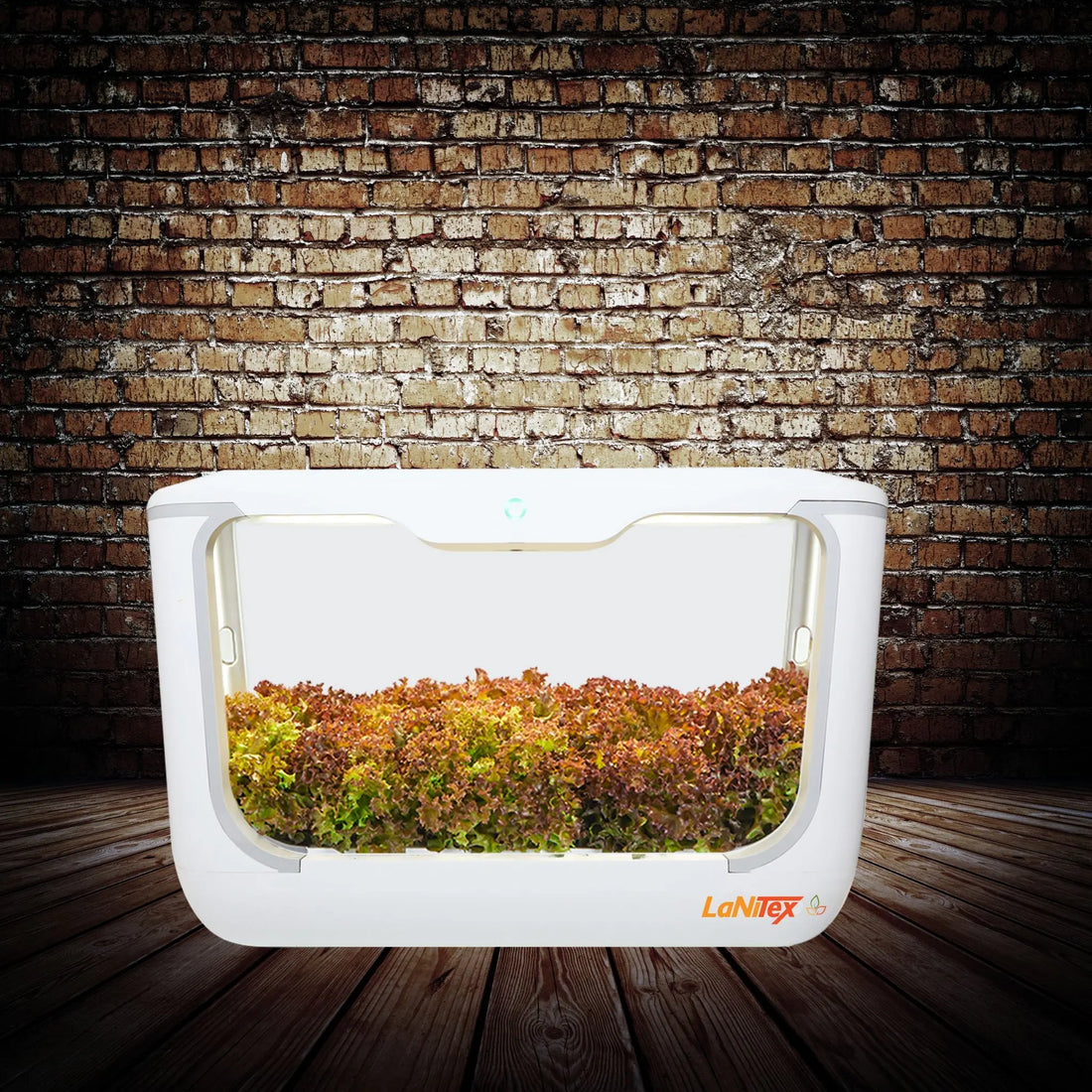
I've grown romaine lettuce myself in two of our systems here on the Sunshine Coast - the Smart Grow Box and our 72-plant hydroponic tower - so the settings in this guide come from crops I've actually harvested, not just research.

In the Smart Grow Box on the bench, a handful of cos plants sat happily at the low end of the EC range. Still, they gave me crisp hearts with next to no fuss. On the bigger V5.2-A tower, I staggered plantings across the 72 positions for fresh leaves to cut week after week. The biggest lesson, though, was blunt: romaine punishes heat. So through the warmer months I kept the reservoir cool and the plants out of direct afternoon sun, and the bitterness stayed away.
Choosing a hydroponic system: Kratky vs NFT vs DWC
Three setups dominate home lettuce growing. And romaine grows well in all of them.
The Kratky method is the simplest of the three. It's a covered container of nutrient solution with no pump. As the roots drink the water down, the falling level leaves an air gap for them to breathe. And it's a great no-power way to grow a few heads, best in small batches.
Nutrient film technique (NFT) runs a thin, constant stream down sloped channels - the workhorse of commercial hydroponic lettuce systems. In practice, it scales cleanly and feeds many plants evenly.
Finally, deep water culture (DWC) suspends the roots in an aerated reservoir, forgiving and cheap to build. That's why our Smart Grow Box runs a DWC-style reservoir with pump and light built in. When you want more heads, the V5.2-A tower steps up to 72 positions in a small floor footprint.

Crisp cos hearts on your kitchen bench, harvest after harvest. The self-watering reservoir and full-spectrum LED hold the pH-stable, low-fuss conditions romaine loves. You just add the seeds.
Start growing romaine →Personally tested at home on the Sunshine Coast before listing.
Seed starting and germination
Romaine seed is light-dependent. That's why it germinates best sitting on, or barely under, the surface of a moist starter plug. Still, bury it deep and it may not sprout at all. Then sow into rockwool or a peat plug, keep it damp, and expect germination in 7-10 days.
Cos seed goes dormant in the heat, a response called thermodormancy. In fact, it refuses to sprout above about 25-30 C. So in an Australian summer, start your seeds somewhere cool, not on a hot windowsill. Once they have two or three true leaves, move them into the main system. At first, run the feed at the low 0.8 mS/cm seedling strength, then build it up. Give the plants room, too, and space cos about 20-25 cm apart in the net cups so the tall hearts get airflow and even light.
Growing romaine through the Australian seasons
Indoors, romaine grows all year. That is the whole point of a controlled system, so the lights and reservoir hold conditions steady while the weather outside does what it likes.
Outdoors on the Sunshine Coast or around Brisbane, cos is really an autumn-to-winter crop. So plant from about March through August, when mild days and cool nights keep the leaves sweet. But steer clear of high summer: heat above 24 C pushes the plant to bolt, sending up a flower stalk as bitterness sets in fast. Even so, with a hydroponic setup indoors, high summer is exactly when it earns its keep.
Common problems and how to fix them
In practice, most romaine trouble traces back to a few root causes, and every one is avoidable.
For instance, tip burn shows up as brown, crispy leaf edges. It's a calcium-delivery problem rather than a shortage in the feed, usually down to poor airflow and fast, soft growth. For example, a small fan and slightly firmer light help the plant move calcium into the new leaves.
Nutrient lockout sets in when pH drifts out of the 5.5-6.0 band. The roots then stop taking up feed, even though it's sitting right there in the water. Then check the pH every few days and correct it early.
Then come bolting and bitterness, the classic heat signature. So to fix them, cool the water, cut the light back toward 12 hours, and harvest before a stressed plant turns on you.
Pests stay rare indoors, but not impossible. For instance, aphids can gather under the leaves and fungus gnats hover around a damp reservoir. So check new growth now and then, wipe off any aphids or hang a yellow sticky trap, and it usually stops there.
One more habit matters, a food-safety one. After all, indoor lettuce gets eaten raw. So keep the reservoir clean, change the solution regularly, don't let it go warm and stagnant, and wash every leaf before it hits the plate.
Harvesting romaine lettuce
For full hearts, cut the whole plant at the base once it feels firm and dense. That is usually 45-60 days from seed, or 30-45 days from a transplant. For a steadier supply, treat it as cut-and-come-again. Instead, pick the outer leaves and leave the growing centre alone, and one plant keeps cropping for weeks.

For a supply that never runs dry, stagger the sowing. So start a few fresh seeds every two to three weeks, and the next crop is always coming on behind the one you cut.
Either way, harvest in the cool part of the day if you can. Even so, give clean hydroponic lettuce a quick rinse before eating. Once cut, romaine keeps well: pat the leaves dry, seal them in a container with a sheet of paper towel, and a firm cos head stays crisp in the fridge for about a week.

Ready for bigger harvests? The V5.2-A vertical tower packs 72 planting sites into a small floor footprint, with full-spectrum LED built in. It's the natural next step when one benchtop box is not enough.
Grow romaine at scale →Personally tested at home on the Sunshine Coast before listing.
The full range
Find the system that fits your space


Supported in Australia - every model tested before listing.
Frequently asked questions
How do I grow romaine lettuce hydroponically at home in Australia?
Start cos seed on a moist plug. Then move the seedlings into a DWC, NFT or Kratky system. Hold pH 5.5-6.0 with an EC around 0.8 mS/cm, building to 1.4-1.6 mS/cm as they mature. Give them 12-16 hours of light at PPFD 150-250 umol/m2/s, and keep the water at 15-22 C. After that, harvest lands at 45-60 days.
What EC and pH should I use for hydroponic romaine lettuce?
Run pH 5.5-6.0, with 5.8 as the sweet spot. Start seedlings at an EC near 0.8 mS/cm. Then build up to 1.4-1.6 mS/cm as they mature. After all, romaine is a low-EC crop at heart. That means feeding it too hard makes the leaves tough and bitter, not bigger.
How much light does hydroponic romaine lettuce need indoors?
Romaine needs 12-16 hours of light a day at a PPFD of 150-250 umol/m2/s, which is a moderate level. After all, lettuce is a low-light leafy green. So pushing the intensity higher without cooling the crop just invites bolting and bitterness.
Which hydroponic system is best for growing romaine lettuce?
All three common systems work. For example, deep water culture (DWC) is the most forgiving for beginners. The Kratky method needs no pump for small batches, while nutrient film technique (NFT) scales best for bigger numbers of heads. In practice, our Smart Grow Box runs a DWC-style reservoir, and the V5.2-A tower scales to 72 plants.
How long does hydroponic romaine lettuce take to harvest?
Overall, expect about 45-60 days from seed to a full head, or roughly 30-45 days from a transplant. In fact, picking outer leaves cut-and-come-again style gives you a first feed even sooner. That means one plant stretches across several weeks.
What romaine lettuce varieties grow best in hydroponics in Australia?
Bolt-resistant cos cultivars perform best. For example, 'Parris Island Cos' and 'Valmaine' are proven hydroponic varieties, and 'Green Towers' plus packaged romaine-hearts mixes are easy to buy in Australia. That means choosing a named cos variety over a generic lettuce blend for predictable hearts.
How do I stop hydroponic romaine lettuce from bolting in summer?
Keep it cool. Bolting is a heat response. So hold the water and room below 24 C, shorten the light toward 12 hours, and harvest promptly once the heads firm up. Outdoors, grow cos in autumn and winter instead of summer.
Can you regrow romaine lettuce from scraps?
Sort of. Sit the cut base in a shallow dish of water on a windowsill, and it will push out small new leaves for a week or two. But it won't rebuild a full heart, and it soon turns bitter. So for a real harvest, start fresh cos seed in your hydroponic system instead.
Why is my romaine lettuce growing tall?
That upward stretch is bolting. When the plant feels heat or long days, it races to flower, pushing up a tall central stalk while the leaves turn bitter. So cool the water below 24 C, shorten the light toward 12 hours, and harvest promptly before the heads spoil.
Sources
The settings in this guide are supported by controlled-environment research on romaine and cos lettuce:
- Auburn University - Improving Romaine Lettuce Production in Greenhouse Hydroponic Systems: etd.auburn.edu
- MDPI Agriculture - Growth and Quality of Leaf and Romaine Lettuce Grown on a Vertical Farm in an Aquaponics System: mdpi.com
- University of Guelph - Controlled Environment Production of Romaine Lettuce (Lactuca sativa): atrium.lib.uoguelph.ca
About the author
Laszlo Bulatko is the founder of LaNiTex Hydro Garden, which he started in December 2024 and runs from the Sunshine Coast in Queensland. He began his career at IBM and Diageo in Hungary, then spent 15 years in sales, marketing and brand development in the Hungarian fishing-tackle trade, working with brands including Okuma, Mustad and Abu Garcia and building around a 12% market share. His own home testing had lettuce ready in 25-35 days. Through the Term-Grow program, Laszlo Bulatko places grow boxes in Queensland primary-school classrooms.