
Picture snipping a handful of peppery rocket straight off your bench and dropping it onto a sandwich while it is still cool from the water.
Quick answer: Rocket (also known as arugula) grows well in any home hydroponic system in Australia at pH 5.5 to 6.5 and a low EC of 0.8 to 1.4 mS/cm, under 12 to 16 hours of light a day. Most growers cut their first leaves about three weeks after sowing and keep harvesting for several weeks after that.
Key takeaways:
- Rocket is a fast brassica leafy green that suits beginners and small indoor setups.
- Hold pH at 5.5 to 6.5 and keep EC low, between 0.8 and 1.4 mS/cm, checked with a 4-in-1 tester.
- Give it 12 to 16 hours of light at a PPFD of 150 to 300 umol/m2/s, with temperatures of 18 to 24 degrees C.
- Sow two to three seeds per site; they sprout in 4 to 7 days and reach first harvest in about three weeks.
- Heat and long days push rocket to bolt, so sow in succession and pick young for the best flavour.
By Laszlo Bulatko | Updated 22 June 2026
Last updated: 22 June 2026
What is rocket (arugula)?
Rocket is a peppery, fast-growing salad leaf in the brassica family, the same group as cabbage and mustard. Its botanical name is Eruca vesicaria subsp. sativa. Australians call it rocket, while North American recipes and seed packets call it arugula, so the two words mean the same plant.
The peppery bite comes from glucosinolates, the natural compounds that give brassicas their mustardy edge. Younger leaves taste mild and nutty; older leaves grown in heat turn sharp and bitter. That single fact shapes nearly every growing decision below, because the goal is to keep the plant young, cool and steadily fed.
Rocket suits hydroponics for a simple reason: it is shallow-rooted, hungry for nitrogen, and ready to eat in weeks rather than months. You do not need a big system or a science degree to grow it well, which is why it is one of the first leafy greens I point new growers towards.

Best conditions for hydroponic rocket
Hydroponic rocket grows best at pH 5.5 to 6.5, an EC of 0.8 to 1.4 mS/cm, and 12 to 16 hours of light a day at 18 to 24 degrees C. Those four numbers do most of the work.
The pH controls how well the roots take up nutrients. Below 5.5 or above 6.5, some minerals lock out even when they are present in the water. Rocket is a light feeder, so keep the nutrient strength low. An EC above 1.4 mS/cm pushes the leaves to grow tough and bitter, which is the opposite of what you want. Some older guides quote a much higher EC for rocket; that is wrong for this crop, and a strong solution is the most common reason home-grown rocket tastes harsh.
Measuring is easy with a handheld digital 4-in-1 water quality tester, which reads pH, EC, TDS and temperature from one dip in the reservoir. Check it every two or three days, top up with plain water as the level drops, and replace the whole solution every one to two weeks.
Your water source matters as much as the nutrient mix. Most Australian town water is chlorinated, so stand it uncovered overnight to let the chlorine off-gas, or run it through a carbon filter before you mix in nutrients; supplies treated with chloramine will not off-gas and need a carbon-block filter or a dedicated dechlorinator instead. If your tap water is very hard or runs high in pH, expect to adjust pH a little more often. Keep the nutrient solution itself at about 18 to 22 degrees C, not just the room: warm reservoir water above that holds less oxygen and invites root rot, which is an easy trap to fall into through an Australian summer.
For light, aim for a PPFD of 150 to 300 umol/m2/s at leaf height. That is a moderate level, well within the reach of a basic LED grow light, and it keeps the leaves compact rather than stretched. Rocket also likes a stable room: 18 to 24 degrees C and 60 to 70 per cent humidity. Use a balanced leafy-green nutrient that is higher in nitrogen, with enough calcium and magnesium to prevent pale or curling leaves.
Get a fresh grow guide like this every fortnight
Join the LaNiTex Hydro Garden newsletter for practical hydroponic, microgreen and mushroom growing tips for Australian homes. Subscribe to download a free hydroponics starter guide (PDF) and get 10% off your first order.
Join the newsletter →My experience growing rocket on the Sunshine Coast
My family has become completely spoiled when it comes to rocket. We simply can't eat the shop-bought stuff anymore once we've tasted our own. Greens growing just five metres from the kitchen have a kind of superpower: they're never trucked around for days, and they don't lose their flavour sitting in cold storage. We just walk over, pick a handful, and drop it straight onto a sandwich or a crispy pizza. That intense, full-bodied flavour you get in the first few minutes after picking - you simply can't buy that in any shop.
That difference is the whole reason I keep a few rocket sites running year-round. The setup below is the same one I use at home, and it is forgiving enough that a first-timer can follow it without fuss.
Setting up your hydroponic rocket system
You can grow rocket in any of the common hydroponic methods, but some suit it better than others. Here is how the main options compare for a home grower.
| System | How it works | Best for rocket? |
|---|---|---|
| Deep water culture (DWC) | Roots sit in oxygenated nutrient water | Excellent, simple and cheap |
| Nutrient film technique (NFT) | A thin film of water runs past the roots | Very good, neat for shelves |
| Kratky (passive) | A still reservoir, no pump | Good for a quick first crop |
| Aeroponics | Roots misted with nutrient | Highest yields, more gear |
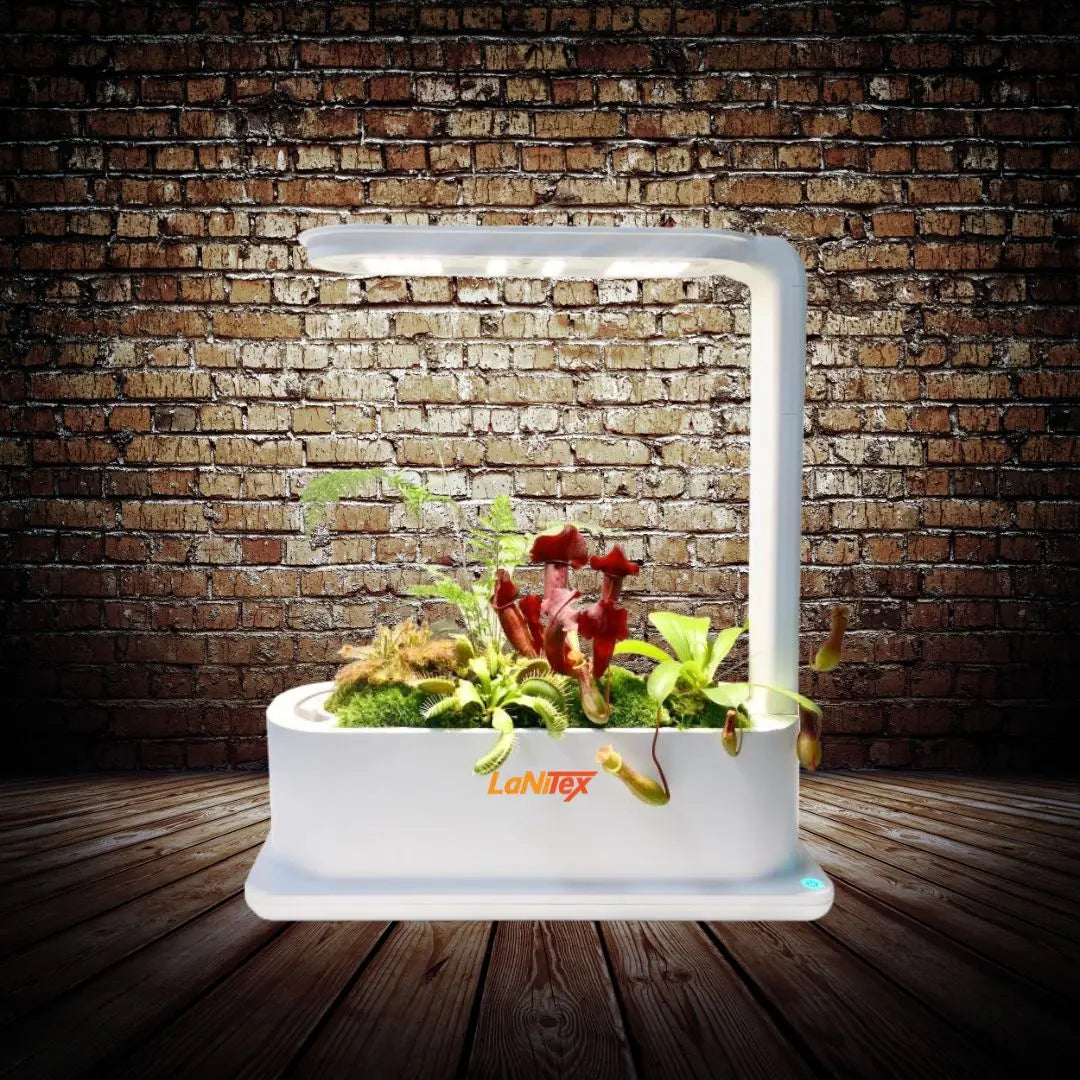
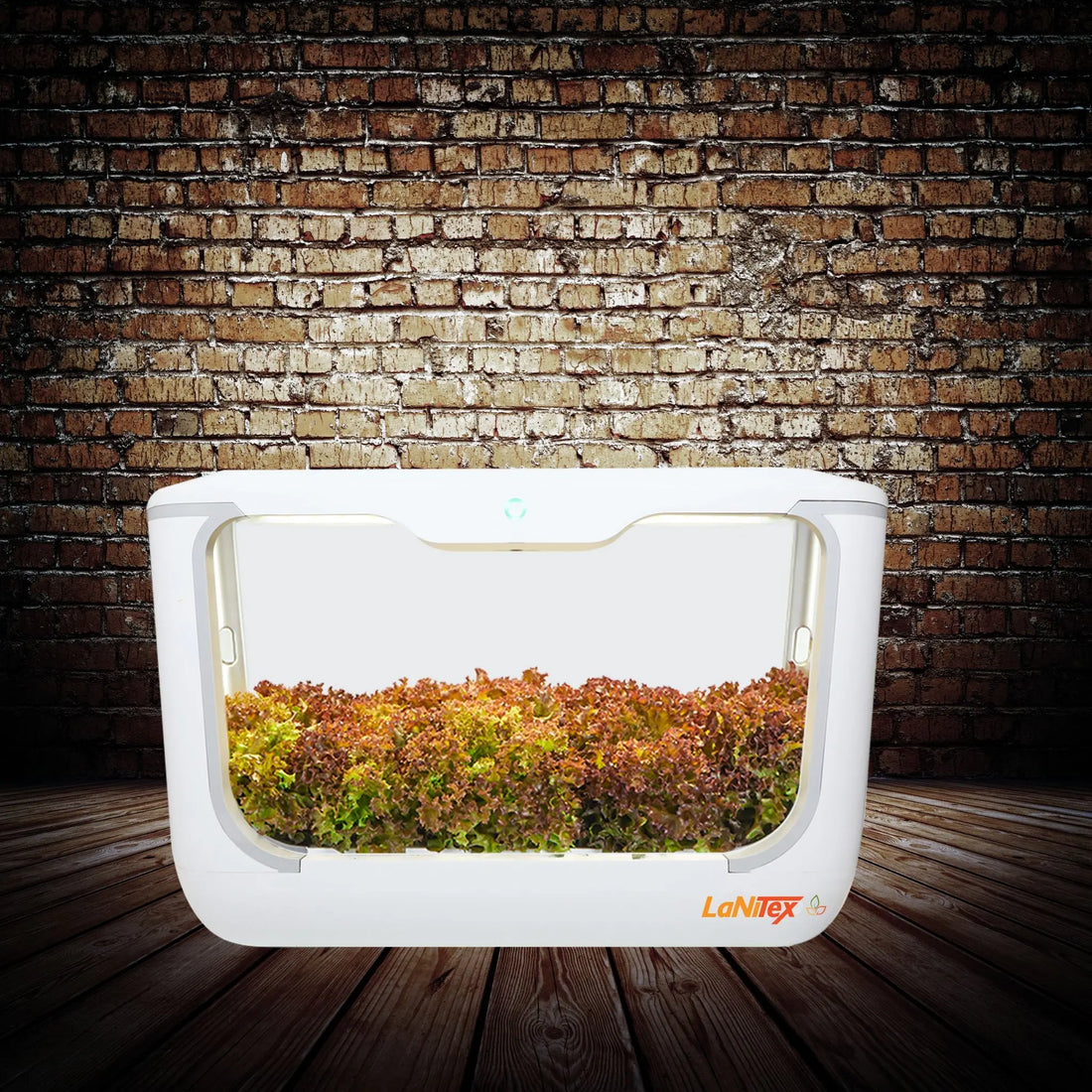
| Countertop unit | All-in-one box with light and pump | Easiest, fully indoor |
For most homes, a countertop unit is the least fiddly path, because the light, pump and reservoir are built in and the plants sit at eye level on a bench. A University of Georgia study comparing soilless systems found arugula grew most successfully in aeroponics, while lettuce did better in DWC and NFT, so keen growers chasing maximum yield have a clear upgrade path.
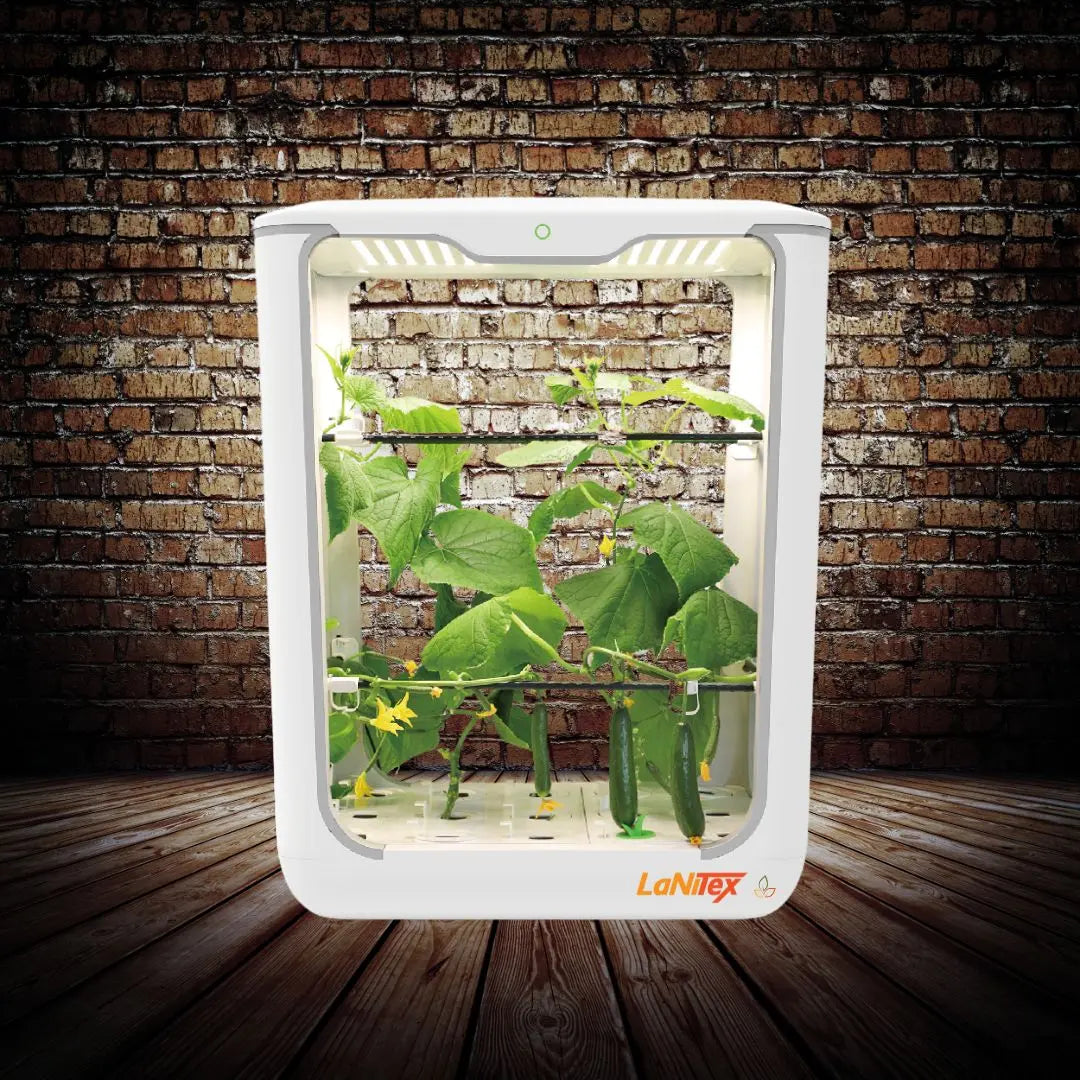
If you want a tidy, self-contained setup, the Smart Grow Box is the unit I built our home rocket supply around. Every product on our site was tested at home on the Sunshine Coast before it went on the catalogue, so the advice here comes from a system I actually grow in, not a spec sheet. For larger households, the step up is the indoor vegetable garden V5.2-A, which holds far more sites for continuous picking.

Grow your own peppery rocket indoors in any season. The Smart Grow Box keeps the low-strength nutrients and full-spectrum light steady on your bench — the cool, even conditions this fast leafy green likes. You supply the seeds.
Grow your own rocket →Personally tested at home on the Sunshine Coast before listing.
Because rocket is such a light feeder, it pairs well with other leafy greens, so you do not have to dedicate a whole unit to it. For a heartier cool-season leaf to grow next, see our guide to hydroponic spinach. Lettuce sits in the same low, mildly acidic range (pH 5.5 to 6.5, EC 0.8 to 1.4 mS/cm) and grows happily alongside rocket in one Smart Grow Box. Basil and some salad herbs are comfortable in there too, though they often prefer a slightly higher EC, closer to 1.8 mS/cm, once established, so keep an eye on them and nudge the feed up if their growth slows. Either way, you can cut a mixed salad bowl from a single reservoir, with the fastest pickers like rocket near the front where they are easy to reach. If you like that peppery bite, you can grow mustard greens hydroponically in the same kind of compact indoor setup for an even bolder, faster leaf. For a milder, crunchier leaf at the other end of the scale, see our guide to growing cos lettuce in Australia.
Sowing is straightforward. Drop two to three rocket seeds into each grow plug or net cup, keep them moist and warm, and they will germinate in 4 to 7 days. Thin to the strongest seedling per site once the first true leaves appear, and move them into the system when the roots reach through the plug.
Growing rocket across Australia's climate zones
Rocket is a cool-season crop, so the right sowing window depends on where you live. Australia spans several climate zones, and indoor hydroponics evens out the swings, but room temperature and day length still matter.
- Tropical (Far North Queensland, Top End): grow indoors in the dry season or in an air-conditioned room; summer heat makes rocket bolt fast.
- Subtropical (Sunshine Coast, Brisbane): autumn to spring is easiest; through summer, keep the room under 24 degrees C and pick young.
- Temperate (Sydney, Melbourne, Perth, Adelaide): rocket grows almost year-round indoors, with summer being the only tricky stretch.
- Cool (Tasmania, alpine areas): indoor growing extends the season right through the cold months when outdoor beds stall.
Bolting is the main risk in any zone. When rocket bolts, it sends up a flower stalk and the leaves turn bitter. Heat above 24 degrees C and very long light hours are the usual triggers. To keep ahead of it, sow a fresh batch every two to three weeks rather than one big planting. This succession sowing means you always have young, mild leaves coming through instead of a single tray racing to seed.
Harvesting and common problems
You can take your first rocket leaves about three weeks after sowing, then keep cutting for several more weeks. The trick is cut-and-come-again: snip the outer leaves about 3 cm above the crown and leave the centre to regrow. A single planting usually gives three or more pickings before the flavour sharpens too far.

Most problems are easy to read once you know the signs. Bitter or bolting leaves point to heat or age, so harvest younger and cool the room. Brown, crispy leaf edges (tip burn) usually mean the solution is too strong or calcium is short, so lower the EC and check the nutrient mix. Yellowing or slimy roots suggest root rot from warm, low-oxygen water, fixed by cooling the reservoir and adding an air stone.
Algae is the other nuisance worth heading off early. It shows up as a green or brown film on the water and on any wet surface the light reaches, and it competes with your rocket for nutrients and oxygen. The fix is simple: keep light off the nutrient solution. Use a light-proof reservoir or cover the tank, block any gaps where light sneaks in around net cups, and rinse the system out between crops. Starving algae of light is far easier than scrubbing it away once it takes hold.
Food safety still applies to home-grown greens. Rinse rocket in clean, cold water before eating, dry it gently, and store it in the fridge in a loose container or bag. Picked fresh and chilled promptly, rocket holds well for about five to seven days, though the flavour is always best in the first few minutes after cutting.

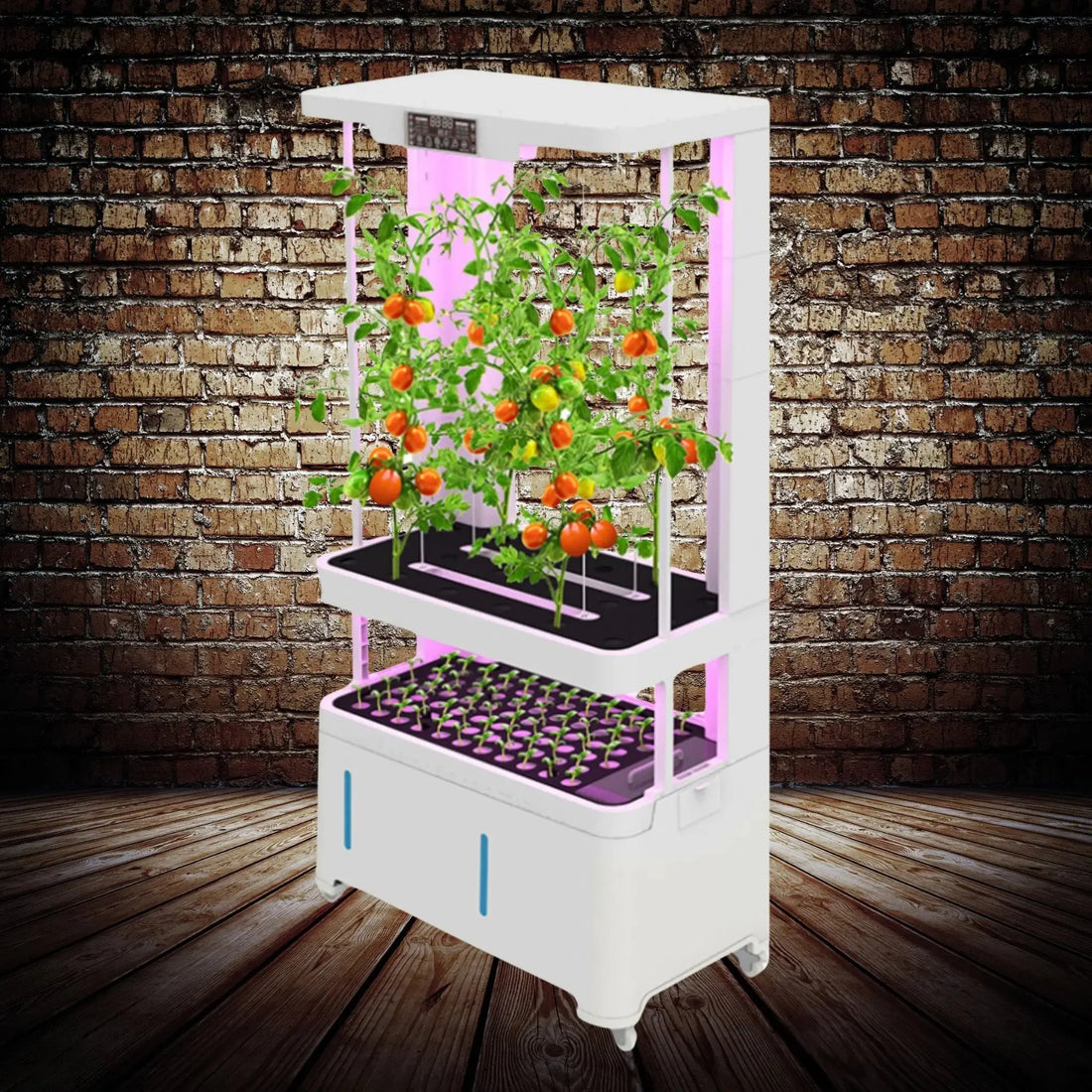
Feeding a bigger household? The V5.2-A tower runs up to 72 planting sites under full-spectrum LED with a self-watering tank, so you can keep rocket, lettuce and herbs in continuous rotation. You supply the seeds.
Scale up your grow →Personally tested at home on the Sunshine Coast before listing.
The full range
Find the system that fits your space


Supported in Australia - every model tested before listing.
Frequently asked questions
How do I grow rocket hydroponically at home in Australia?
Sow two to three rocket seeds per grow plug, keep them warm and moist, and move the seedlings into a DWC, NFT or countertop system once roots appear. Hold pH at 5.5 to 6.5, EC at 0.8 to 1.4 mS/cm, and give 12 to 16 hours of light at 18 to 24 degrees C. You will pick your first leaves in about three weeks.
What is the best EC and pH for hydroponic rocket?
Rocket grows best at pH 5.5 to 6.5 and a low EC of 0.8 to 1.4 mS/cm. Rocket is a light feeder, so a strong nutrient solution makes the leaves tough and bitter. Check both with a 4-in-1 tester every two or three days and adjust slowly. If your rocket tastes harsh, a high EC is the most likely cause.
How many hours of light does hydroponic rocket need indoors?
Hydroponic rocket needs 12 to 16 hours of light a day at a PPFD of about 150 to 300 umol/m2/s at leaf height. A basic LED grow light on a timer is plenty. Stay near the lower end of the day-length range in warm rooms, because very long light hours combined with heat can push rocket to bolt.
Which hydroponic system is best for growing rocket in a small Aussie apartment?
For a small apartment, an all-in-one countertop unit is the easiest choice, because the light, pump and reservoir are built into one box that sits on a bench. Deep water culture and Kratky are good low-cost alternatives. The system matters less than keeping the EC low and the room cool, both of which any compact setup can manage.
How long does hydroponic rocket take to harvest?
Hydroponic rocket reaches first harvest in about three weeks from sowing, faster than soil-grown rocket. Using cut-and-come-again, you can keep picking the outer leaves for several more weeks, usually getting three or more harvests from one planting before the flavour sharpens and it is time to start a fresh batch.
What rocket (arugula) varieties grow best in hydroponics in Australia?
Standard salad rocket cultivars such as 'Astro', 'Rocket', 'Runway' and 'Coltivata' grow quickly and reliably in hydroponics. Wild rocket types such as 'Sylvetta' grow more slowly with a stronger, sharper flavour that suits gourmet cooks. For a fast, mild first crop, start with a standard salad rocket and try wild rocket once you are confident.
Can I grow rocket alongside other greens in the same system?
Yes. Rocket shares its low pH 5.5 to 6.5 and EC 0.8 to 1.4 mS/cm range with lettuce, so they grow well together in one hydroponic system or Smart Grow Box. Basil and some salad herbs are happy in there too, though they often prefer a slightly higher EC once established, so watch their growth and nudge the feed up if needed. Harvest the rocket young so it does not overshadow slower neighbours.
Is rocket the same as arugula?
Yes. Rocket and arugula are two names for the same plant, Eruca vesicaria subsp. sativa. Australians and the British call it rocket, while North American recipes and seed packets call it arugula (Italians call it rucola), so everything in this guide applies whichever name is on your seeds. Wild rocket is a close, slower-growing relative with a sharper, more peppery flavour.
Is rocket (arugula) good for you?
Yes. Rocket is a nutritious leafy green. It is low in kilojoules and a good source of vitamin K and folate, and it also provides calcium and vitamin C. Rocket is one of the leafy vegetables highest in natural dietary nitrate, and its peppery bite comes from antioxidant glucosinolate compounds typical of brassicas. Picked minutes before eating, home-grown rocket keeps more of these nutrients than greens trucked and stored for days. This is general information, not medical advice.
Why is my hydroponic rocket going bitter or bolting?
Rocket turns bitter and bolts when it gets too hot, too old, or too strong a nutrient mix. Heat above 24 degrees C and very long light hours trigger the flower stalk that signals bolting. Keep the room cool, hold EC at 0.8 to 1.4 mS/cm, harvest the leaves young, and sow a fresh batch every two to three weeks so you always have mild leaves on hand.
Sources
- Elfarisna et al. (2024), AIP Conference Proceedings: "Growth and Yield of Arugula (Eruca vesicaria ssp. sativa) in Static Hydroponic with CaCl2 Application." The study reports that "the CaCl2 application did not improve the Arugula's growth and yield," and that an AB Mix nutrient solution alone was sufficient. Link
- Yang, Samarakoon, Altland and Ling (2021), Agronomy 11(7): "Photosynthesis, Biomass Production, Nutritional Quality, and Flavor-Related Phytochemical Properties of Hydroponic-Grown Arugula." Examines arugula response under different electrical conductivities of the nutrient solution. Link
- Nutrition and yield of hydroponic arugula under inoculation of beneficial microorganisms (2023), Horticulture Environment and Biotechnology 64(2): studies arugula nutrition and yield across electrical conductivities with beneficial microorganisms. Link
- University of Georgia (2025), HortScience: "Arugula and Lettuce Responses to Greenhouse Hydroponic Systems." The comparison found "arugula grows most successfully in aeroponics systems, and that lettuce is better suited for DWC and NFT systems." Link
About the author
Laszlo Bulatko is the founder of LaNiTex Hydro Garden, based on the Sunshine Coast. He started the business in December 2024 after a 15-year career in sales, marketing and brand development in the Hungarian fishing-tackle trade. He tested every product in the range at home before listing it, and grows rocket, lettuce, herbs and microgreens in his own kitchen year-round. Read more on the about Laszlo page.