
This guide is for: Beginners to intermediate growers.
Chives are one of the easiest herbs to grow hydroponically in Australia, and a controlled indoor setup gives you fresh green stems all year. This guide to hydroponic chives covers both common chives (Allium schoenoprasum) and garlic chives (Allium tuberosum), the exact pH and nutrient settings that work, and how to harvest the same clump again and again. No backyard required.
Growing hydroponic chives in Australia indoors sidesteps the usual outdoor headaches: no soil pests, no soggy winters, no waiting for spring. With pH and EC control you get steady growth in a Brisbane summer or a cool southern winter alike. I have run herbs year-round in my own Sunshine Coast kitchen, and chives are the most forgiving.
Here is the setup, the numbers, and the small mistakes that trip most people up.
Key takeaways:
- Run the nutrient solution at pH 6.1 to 6.8 and EC 1.8 to 2.2 mS/cm for steady chive growth.
- Give chives 200 to 350 micromoles per square metre per second of light over a 12 to 16 hour photoperiod.
- Both common chives (Allium schoenoprasum) and garlic chives (Allium tuberosum) grow well in NFT, DWC and ebb and flow systems.
- Chives are perennial, so divide an established clump to get a faster start than seed.
- Cut-and-come-again harvesting lets one planting feed you for months indoors.
What are chives?
Chives are a perennial herb in the onion family (Allium), grown for their slender, hollow green leaves and mild onion flavour. Two species cover almost every kitchen use. Common chives (Allium schoenoprasum) give the fine, round, grassy stems most cooks know. Garlic chives (Allium tuberosum), also called Chinese chives, have flatter leaves and a gentle garlic note. Both suit hydroponics because they are compact, shallow-rooted and harvested as leaves rather than as a bulb or fruit.
For a controlled indoor system, named cultivars help you pick a consistent look. 'Fine Leaf' is a popular common-chive selection prized for delicate stems, and 'Staro' is a thicker-stemmed European cultivar bred for clean cuts and uniform regrowth. In Australia both are sold as seed and as small plants. Because chives stay small and tolerate close spacing, one grow chamber holds plenty.

Best growing conditions for hydroponic chives
Hydroponic chives do best with the nutrient solution held at pH 6.1 to 6.8 and EC 1.8 to 2.2 mS/cm. That pH band keeps iron, calcium and magnesium available, and the moderate EC feeds steady growth without salt stress. A 2023 study on garlic chives found a controlled salinity lift even improved vitamin C and flavour compounds without hurting growth, so aim for the middle of the band and only push higher once plants are established.
Light is the other lever in indoor herb hydroponics. Give chives 200 to 350 micromoles per square metre per second at canopy height (PPFD), over a 12 to 16 hour photoperiod. That drives thick, upright stems without scorching tips. Keep the root-zone solution around 18 to 22 degrees and the air a touch warmer, and space plants so air moves freely between clumps in humid Queensland conditions. Don't crank the EC past 2.2 for faster growth; chives answer it with tip burn, not bigger leaves.

My experience growing chives on the Sunshine Coast
For a long time I thought of chives as just a 'small garnish' in the kitchen. But growing them hydroponically completely changed how I see them: chives are one of the easiest and most useful herbs you can raise in a controlled environment.
I keep a clump running year-round in my kitchen at home, and what surprised me was how little it asks of me. I top up the reservoir, check the pH every few days, and cut what I need. Through a humid Coast summer the plants kept pushing new stems while my outdoor pots sulked. In winter, when a backyard chive plant down south would die back, mine kept going under the light. The flavour is sharper and cleaner than supermarket bunches that have sat in a fridge for a week. That is the real win: not a novelty, but a herb on tap. Fair point, it won't replace a whole veggie patch. But for a few cuts a week, it earns its shelf. If you want another easy, forgiving herb to grow alongside them, here is how to grow parsley hydroponically.
Which hydroponic system is best for chives?
The best hydroponic system for chives keeps roots oxygenated and the solution stable, which means NFT, deep water culture (DWC) and ebb and flow all work well. In NFT a thin film of nutrient runs past the roots, so oxygen is rarely a problem. In DWC the roots sit in the solution, so you need an air stone to keep dissolved oxygen high; chives sulk in stagnant water. Ebb and flow floods and drains on a timer, pulling fresh air to the root zone between cycles. Aeroponics works too, but it is more gear than most home growers need.
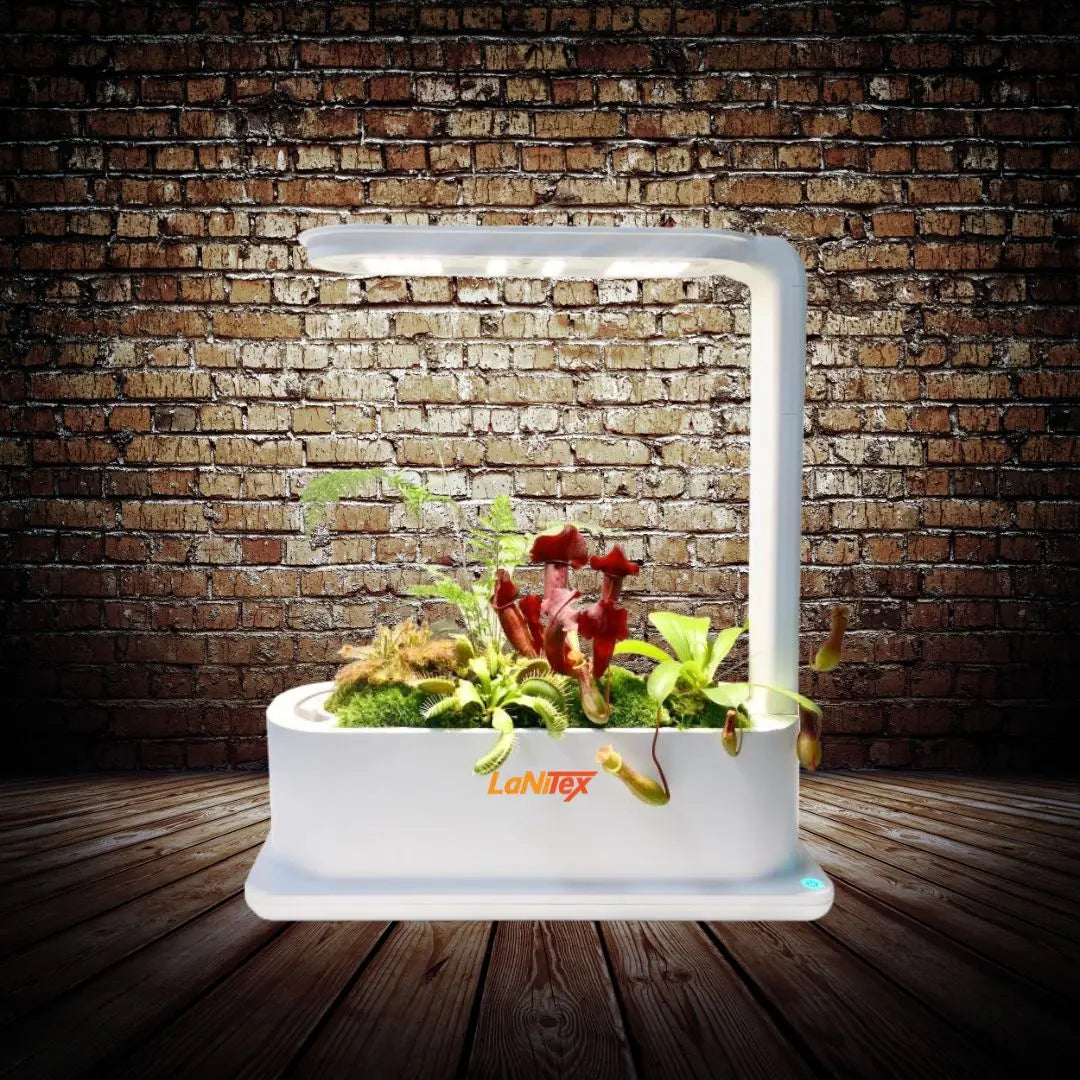
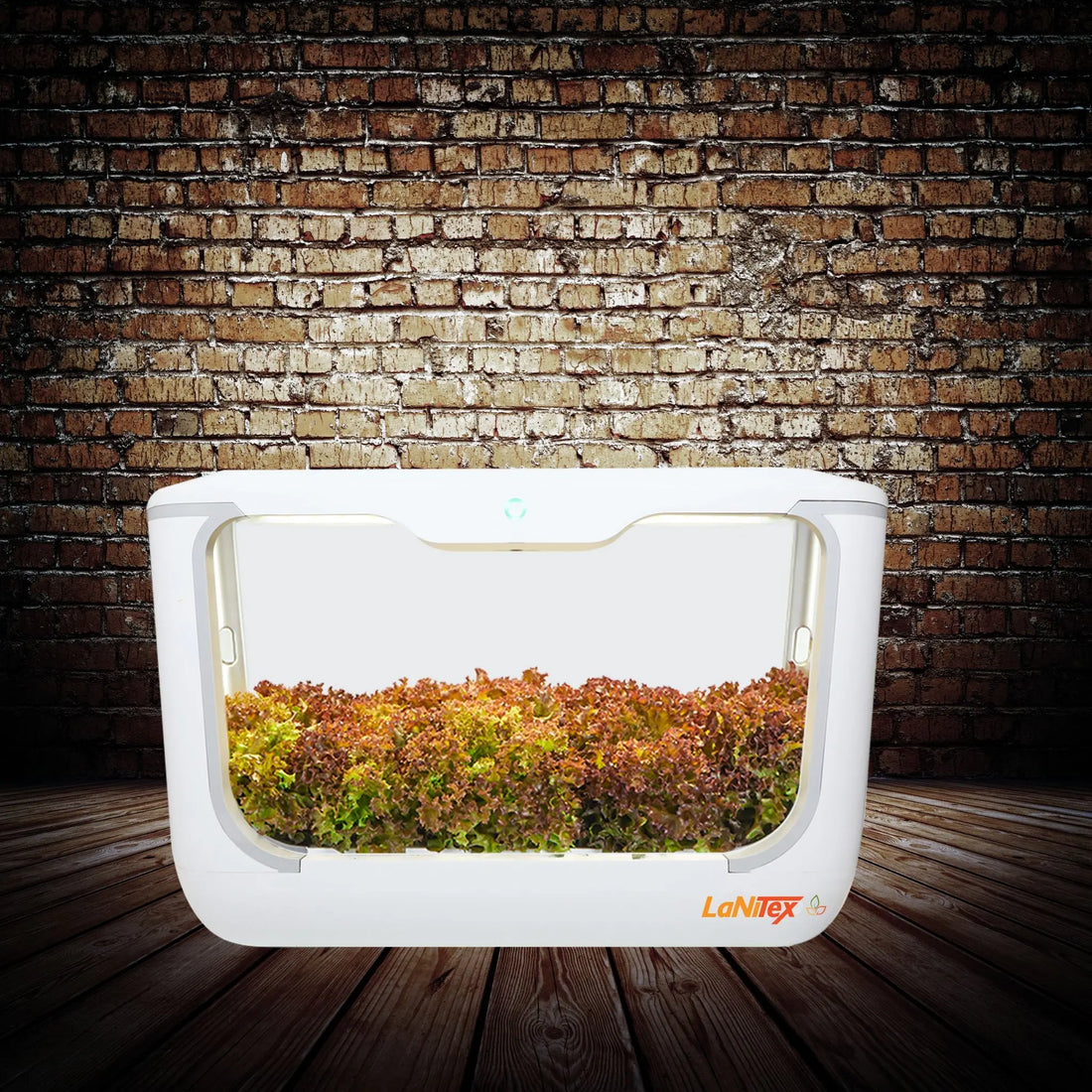
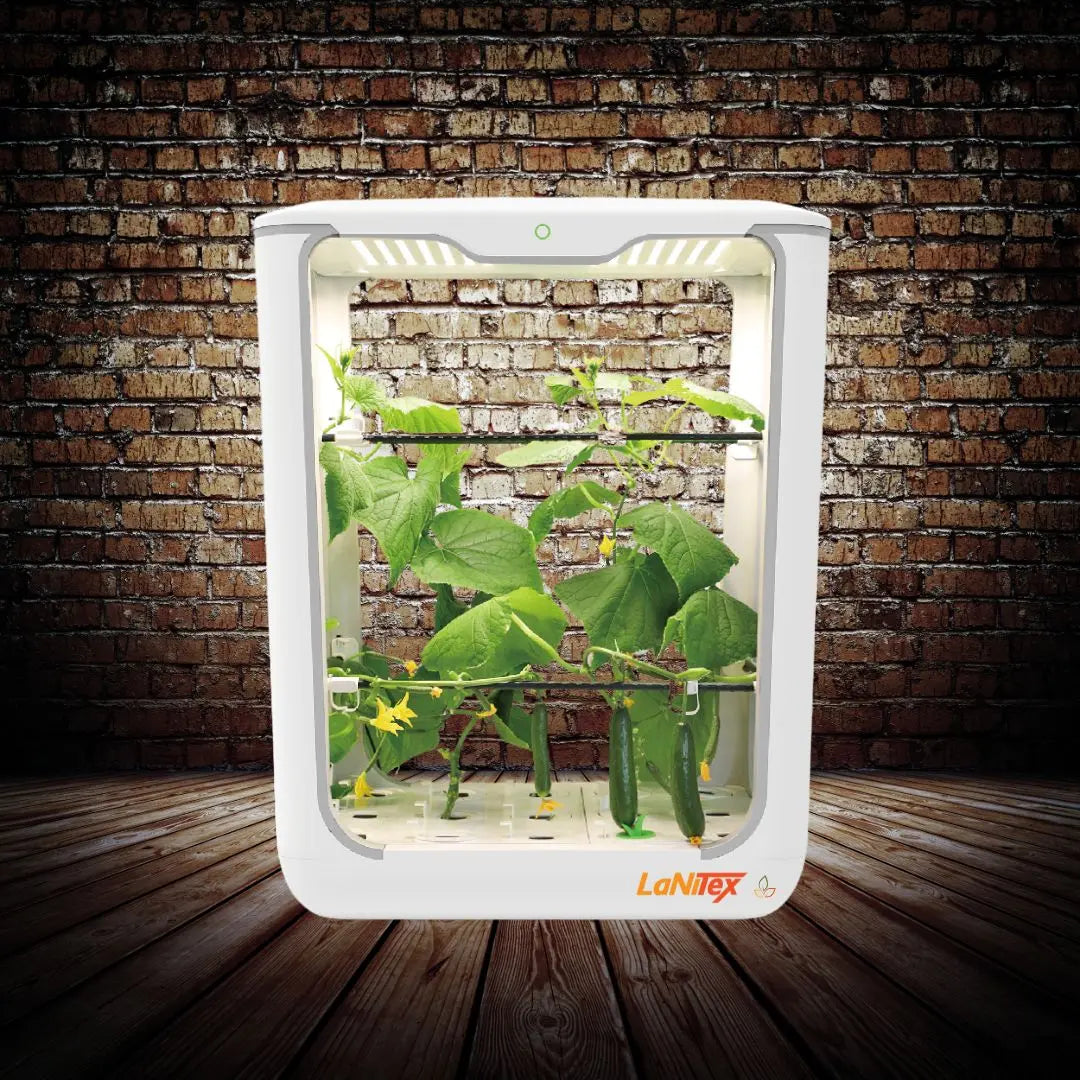
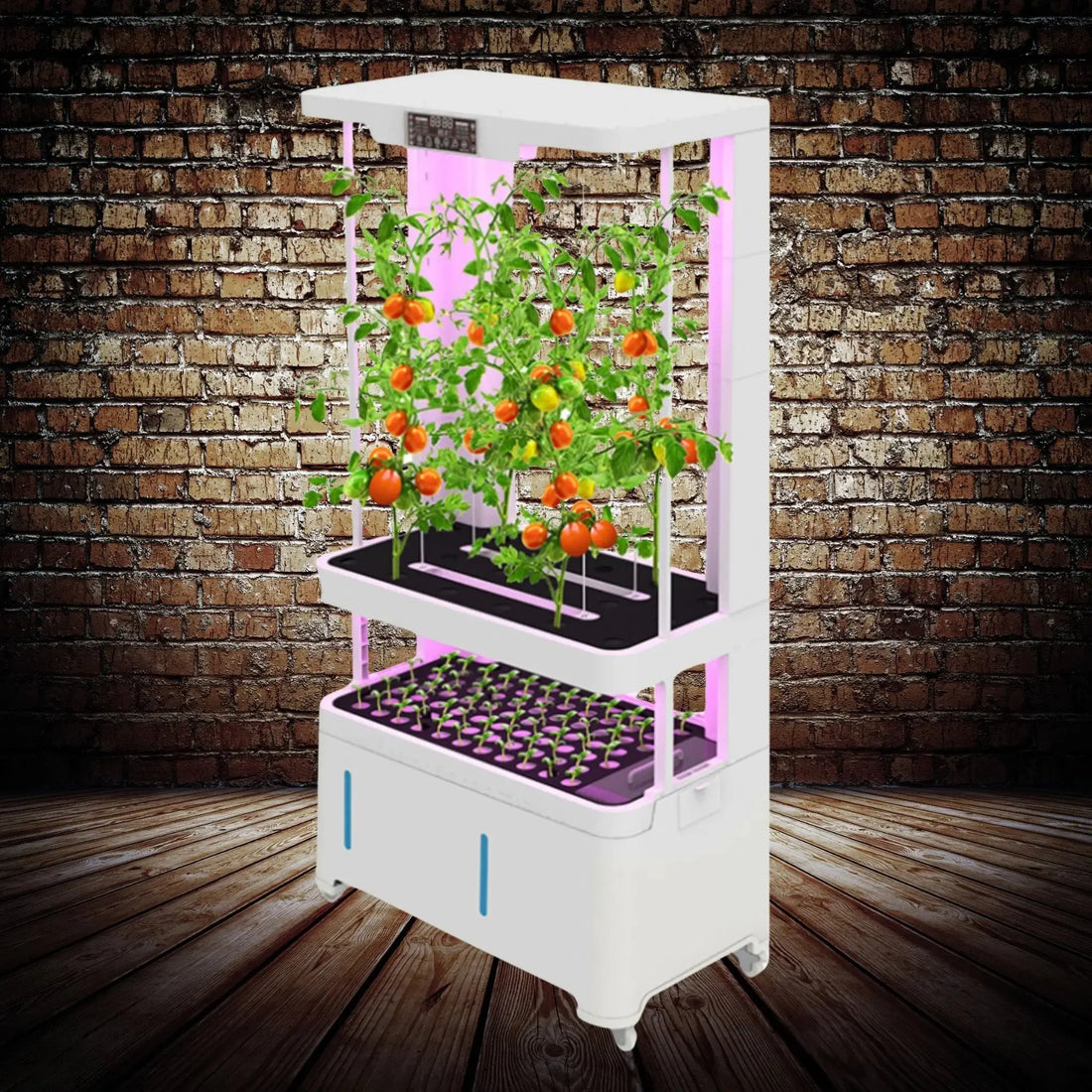
For the simplest controlled environment without plumbing a full system, an all-in-one grow box is the easy path. The Smart Grow Box from LaNiTex holds the water, light and nutrients in one unit, so you set the timer and let it run, which means you can grow chives in an apartment with no backyard and no green thumb. Pair it with a 10-pack of Germinating Mats for clean seed starting, plus a 4-in-1 water tester for pH and EC.

Grow your own chives indoors, fresh all year. The Smart Grow Box keeps the water, full-spectrum light and nutrients steady in one unit — the controlled conditions this compact herb likes. You start the seed or divide a clump.
Grow your own chives →Personally tested at home on the Sunshine Coast before listing.
Planting and propagation
You can start chives two ways: from seed, or by dividing an established clump. Seed is cheap and gives fresh genetics; sow a small pinch per net cup, since chives grow in tight tufts rather than as single plants. Germination takes about 7 to 14 days at warm temperatures, and seedlings are slow at first, so be patient before a real harvest.
Division is the faster route because chives are perennial. Lift a healthy clump, tease it into smaller bunches of 8 to 12 stems each, rinse the roots clean, and set each bunch into a net cup. Within a week or two the divided clumps settle and grow far quicker than seedlings. Don't crowd too many divisions into one cup; give the roots room to spread.
Get a fresh grow guide like this every fortnight
Join the LaNiTex Hydro Garden newsletter for practical hydroponic, microgreen and mushroom growing tips for Australian homes. Subscribe to download a free hydroponics starter guide (PDF) and get 10% off your first order.
Join the newsletter →Common problems and troubleshooting
Most chive trouble comes down to a handful of fixable issues. These are the ones I see most.
- Bolting and flowering. Alliums naturally send up flower stalks, especially under stress or long light hours. The flowers are edible, but stems turn tough once a clump bolts. Snip flower stalks early to push energy back into the leaves.
- Tip burn. Brown, crispy leaf tips usually mean the EC is too high or the air too dry. Drop the EC toward 1.8 mS/cm and check humidity.
- Salt buildup. Over weeks, salts concentrate as water evaporates. Flush the system with fresh, balanced solution every few weeks to reset it.
- Aphids and thrips. These pests find indoor herbs too. Inspect leaf bases, rinse them off, and isolate badly hit plants early.
- Powdery mildew. In humid Sunshine Coast and Brisbane air, white fungal film can appear on crowded plants. Improve airflow, space clumps and avoid wetting the leaves.
Harvesting chives
Harvest chives with the cut-and-come-again method: snip the outer leaves about 2 to 3 cm above the base and leave the centre to regrow. A healthy clump gives several flushes before it needs a rest, and indoors under steady light it keeps producing where an outdoor plant would slow. Cut little and often rather than shearing the whole clump, so the plant always has green leaf to power regrowth.
Timing is easier indoors than out. On the warm Sunshine Coast or in a Brisbane summer, outdoor chives race then bolt; in cooler southern winters they die right back. A hydroponic setup ignores the season, so you cut fresh chives in July as easily as in January. That steady, year-round supply is the whole point of growing chives hydroponically. Use them fresh, since chives lose their punch fast once cut.


Ready to grow more herbs and greens at once? The V5.2-A Tower stacks up to 72 planting sites under full-spectrum LED with a self-watering tank, so you can scale chives, herbs and salad greens in one vertical footprint.
Scale up your grow →Personally tested at home on the Sunshine Coast before listing.
The full range
Find the system that fits your space


Supported in Australia - every model tested before listing.
Frequently asked questions
How do you grow chives hydroponically in Australia?
Start chives from seed or by dividing a clump, set them in net cups in an NFT, DWC or ebb and flow system, and run the solution at pH 6.1 to 6.8 and EC 1.8 to 2.2 mS/cm. Give 200 to 350 micromoles of light per square metre per second over a 12 to 16 hour day. Indoors you grow them year-round anywhere in Australia.
What EC is best for hydroponic chives?
Hold the nutrient solution at EC 1.8 to 2.2 mS/cm for hydroponic chives. That moderate range feeds steady leaf growth without the salt stress that causes tip burn. Research on garlic chives shows a controlled salinity lift can even improve flavour, so the middle of the band is a safe target. Drop toward 1.8 if you see browning tips.
What pH should hydroponic chives have?
Keep hydroponic chives at pH 6.1 to 6.8. In that band the key nutrients (iron, calcium, magnesium) stay available to the roots. Check pH every few days, since it drifts as plants drink and as you top up the reservoir. Above 6.8, nutrient lockout shows as pale new leaves.
How much light do hydroponic chives need?
Hydroponic chives need 200 to 350 micromoles per square metre per second of light at the canopy (PPFD), over a 12 to 16 hour photoperiod. That drives thick, upright stems indoors. Less light gives thin, floppy growth; far more scorches the tips. A 14-hour timer is a reliable starting point.
Which hydroponic system is best for chives?
NFT, deep water culture and ebb and flow all suit chives, because each keeps the roots oxygenated and the solution stable. DWC needs an air stone to keep dissolved oxygen high. For the simplest path, an all-in-one grow box handles water, light and nutrients in one unit, so you skip the plumbing.
Can you grow chives in water?
Yes, but not in plain water for long. Growing chives in water is simply hydroponics: the roots sit in solution instead of soil. Plain water supplies almost none of the nutrients chives need, so a clump left in a glass soon stalls. Feed a balanced hydroponic nutrient at EC 1.8 to 2.2 mS/cm, hold pH 6.1 to 6.8, and use an air stone if the roots stay submerged.
How long do chives take to harvest in hydroponics?
From seed, hydroponic chives are usually ready for a first light cut in about 6 to 8 weeks. From a divided clump it is faster, often 3 to 4 weeks, since the plant is already established. After that, cut-and-come-again harvesting gives repeat flushes for months from the same clump.
Can you grow garlic chives hydroponically indoors?
Yes, garlic chives (Allium tuberosum) grow well hydroponically indoors using the same pH, EC and light settings as common chives. Their flatter leaves carry a mild garlic flavour. A 2023 study found a moderate salinity lift improved the nutritional quality and flavour of hydroponic garlic chives, so they reward steady conditions.
Are chives the same as green onions or scallions?
No. Chives (Allium schoenoprasum) are a slim, hollow-leafed herb with a mild onion taste, usually snipped raw over food. Green onions and scallions are the same plant (Allium fistulosum), which is larger, with a white base and longer green tops, and is usually cooked. Garlic chives are different again. All three grow well hydroponically; this guide covers chives.
Are chives perennial?
Yes. Chives are a hardy perennial allium, so the same clump comes back and keeps producing for years rather than dying off after one season. That is why dividing an established clump works so well, and why cut-and-come-again harvesting gives flush after flush from a single planting. Indoors under steady light they crop year-round.
How do you grow chives from seed?
Sow a small pinch of seed per net cup, since chives grow in tight tufts rather than as single plants. Kept warm, the seed germinates in about 7 to 14 days. Seedlings are slow at first, so be patient for the first few weeks before a real harvest. From seed, a first light cut is usually ready in about 6 to 8 weeks.
Sources
- SciELO Brasil (Horticultura Brasileira, 2022): Growth and quality of chives in hydroponic system with concentrations of magnesium sulfate - Allium schoenoprasum response to nutrient solution.
- MDPI Foods 2023, 12(1) 204: Moderate Salinity of Nutrient Solution Improved the Nutritional Quality and Flavor of Hydroponic Chinese Chives (Allium tuberosum) - moderate NaCl raised vitamin C and soluble protein.
- ResearchGate (Agriculture 2023, 13(7) 1346): Effect of Electrical Conductivity Levels and Hydrogen Peroxide Priming on Nutrient Solution Uptake by Chives - higher EC reduced water uptake and fresh mass.
About the writer
Laszlo Bulatko founded LaNiTex Hydro Garden in December 2024, based on the Sunshine Coast, Queensland. Before hydroponics he spent 15 years in sales, marketing and brand development in the Hungarian fishing-tackle trade, after starting his career at IBM and Diageo, and helped build a 12 per cent market share. Today he hand-picks and tests every hydroponic system at home before listing it, and runs the Term-Grow Enrolment program placing grow boxes in Queensland primary-school classrooms.