
Growing leeks hydroponically in Australia gives home growers a faster, cleaner path to long, tender white-shanked leeks: no heavy soil, no guesswork, and a cool-season harvest you can run year-round.
The appeal is control. In a hydroponic system you closely manage the pH, the EC and the light. It still takes regular monitoring, but it keeps hydroponic leeks clear of the mercy of a wet winter or a dry spell. You can start a tray most weeks of the year, and with no soil the white shank lifts out clean with nothing to scrub off. That is a long way from the slow, hit-and-miss leeks most people give up on in the garden bed.
Here is the full setup, from conditions to harvest.
What are leeks (Allium porrum)?
Leeks (Allium porrum) belong to the onion family, alongside garlic, chives and onions. Unlike onions, they never form a bulb. The part you eat is the long, blanched stack of leaf bases - the white-to-pale-green shank.
Because they do not bulb and have a long vegetative phase, leeks are a long-season cool crop, sitting in the system for months rather than weeks as they grow towards a thick, upright shank. They are adaptable and cold-tolerant, which is why they suit a controlled hydroponic setup so well: a long, stable run without the temperature swings and pests that punish them in an open garden bed.
King Richard is a fast, early type that reaches harvest size quickly with a long pale shank - a strong first pick for soilless growing. Bandit is a hardy, later-season variety that stands well and resists bolting. Carentan is a reliable heritage leek with a thick shank and good cold tolerance. All three are available from Australian seed suppliers.
Leeks are often confused with spring onions and scallions, but they grow quite differently. Leeks are the largest, mildest allium - a long blanched shank that takes months to mature - while spring onions and scallions are small, fast crops you harvest young. If you want a quicker allium for the same system, see our hydroponic spring onions guide.
Best hydroponic conditions for leeks: pH, EC, light and temperature
Get these numbers right and leeks almost grow themselves:
- pH: 6.0-6.5 (seedlings tolerate slightly higher; hold mature plants at 6.0-6.5)
- EC: 1.4-2.0 mS/cm across the cycle - start near 1.4 and build to 2.0 as plants bulk up
- Light (PPFD): 200-400 umol/m2/s at canopy height
- Photoperiod: 12-16 hours per day under LEDs
- Temperature: roughly 13-24 C

Leeks like a slightly acidic solution. Holding pH 6.0-6.5 keeps nitrogen, calcium and iron available. Drift too high and you invite iron lock-out and pale tips; too low and you stress the roots. Check daily at first.
EC is your feeding dial: lean for young transplants, building towards 2.0 mS/cm as the shank thickens. Watch for tip burn if you over-concentrate in warm weather.
A PPFD of 200-400 umol/m2/s at canopy height gives sturdy, upright growth without stretch. Run that on a 12-16 hour photoperiod and they keep developing through autumn and winter. Hold the solution and room in the 13-24 C band - cool enough to avoid heat stress, warm enough to keep growing.
My experience growing leeks on the Sunshine Coast
Most people assume leeks are a slow, fussy crop - long growing times, constant care, unpredictable results. That was my experience in the garden bed too, right up until I started growing them hydroponically on my Sunshine Coast setup. Now everything sits in my hands: the nutrients, the water, the environment. No mud, no guesswork. Just clean, even growth and the kind of consistent, premium-quality leeks I can count on every single harvest.
That control is the real reason I switched. Once you can see the numbers on a readout, a four-month crop stops feeling like a gamble. The next call is which system to run them in.
Choosing a hydroponic system for leeks
Leeks have a fibrous root system developing from the base, and a tall, upright shank you want to keep clean and pale. The system you pick needs to give those roots room and keep that shank stable, so think about reservoir depth and channel height.

| System | How it works | Best for leeks? | Watch-out |
|---|---|---|---|
| Kratky / deep water culture | Passive, non-circulating; roots hang into a static reservoir, no pump. | Simplest entry point. Grow leeks in buckets or tubs with a deep reservoir. | A long-season crop draws the level down, so size the reservoir up. |
| DFT (deep flow technique) | Roots sit in a deeper, slowly moving body of solution. | Strong fit. Commonly used in commercial hydroponic leek trials, since the deeper channel suits their root mass. | More setup than a passive tub. |
| NFT (nutrient film technique) | A thin film of solution runs through shallow channels. | Workable for young plants, but tight for a tall, heavy shank. | Slim root zone gives less buffer if a pump skips. |
| Aeroponic | Roots are misted in air. | High-performance. | Most equipment; least forgiving for a beginner on a long crop. |
Density matters too: commercial DFT trials run 70-plus plants per square metre, so translate that down to comfortable spacing rather than crowding.
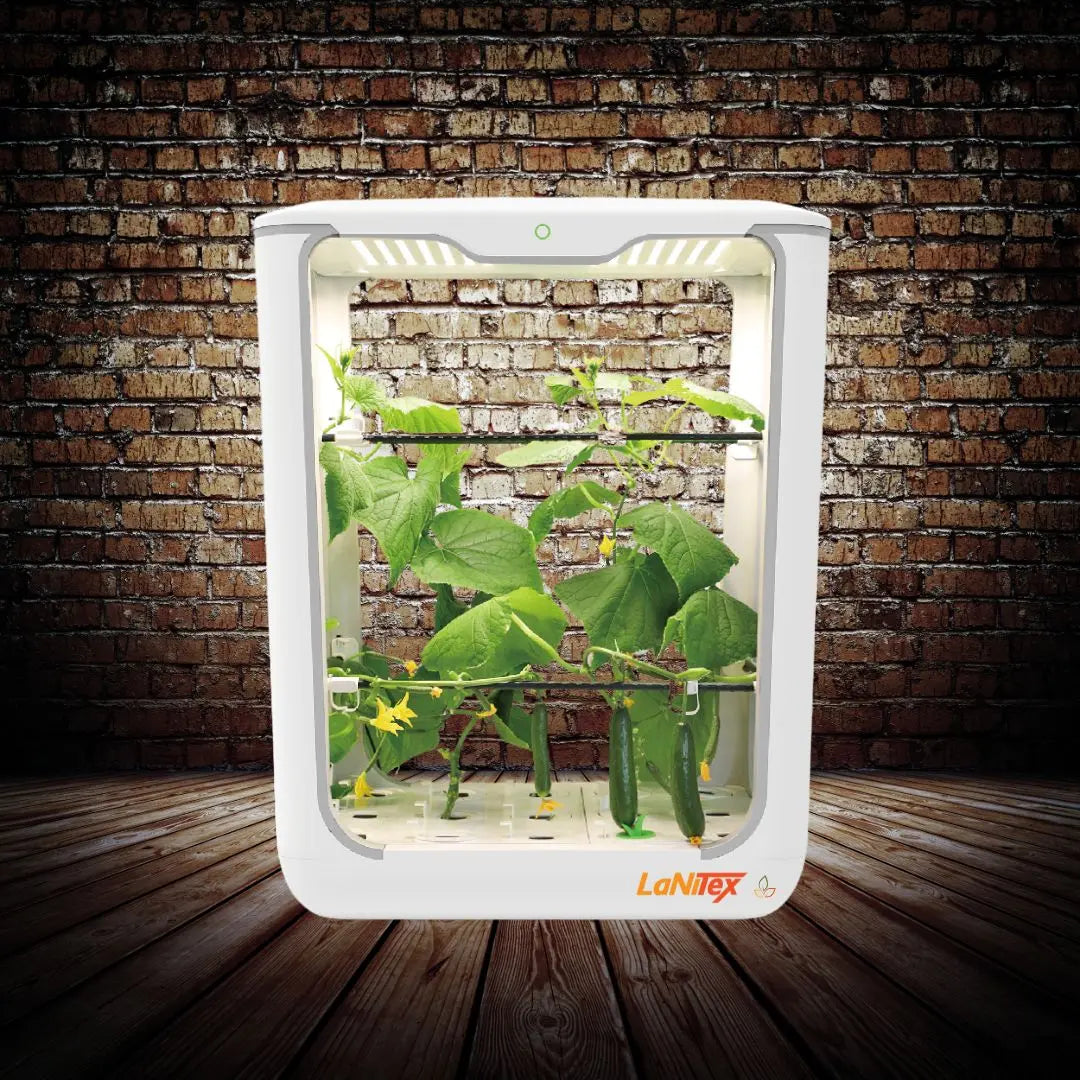
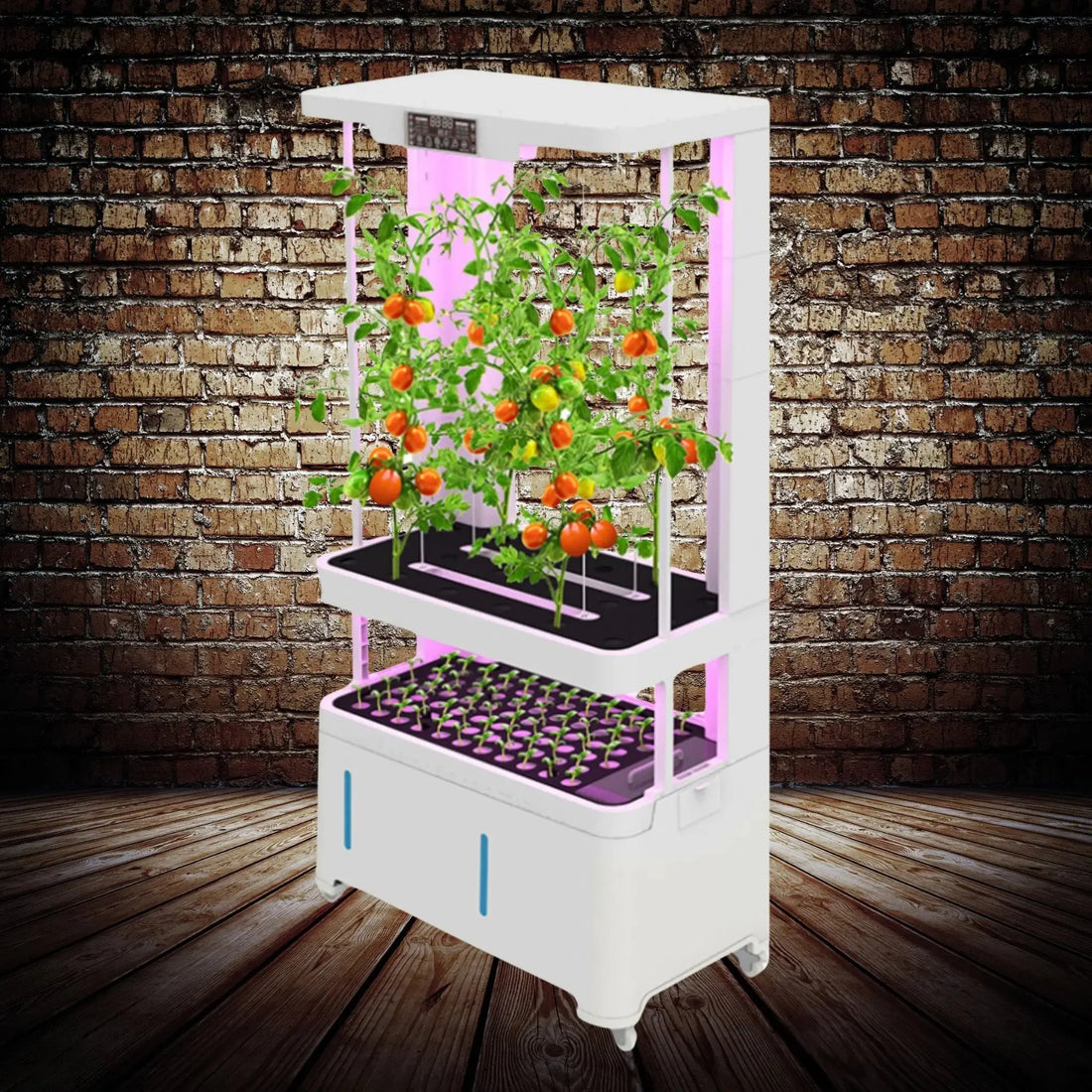
My pick for the home setup is the LaNiTex Smart Grow Box - Tall ($650). The extra height is the whole point with leeks - it gives the long shank room to develop upright and clean, with light, reservoir and airflow already sorted in one enclosed unit. For a crop that lives in the system for months, that stability is exactly what you want.

Grow your own leeks indoors through the cool season. The Grow Box Tall gives the long shank the upright height, deep reservoir and steady light it needs — light, water and airflow in one enclosed unit. You raise the seedlings.
Grow your own leeks →Personally tested at home on the Sunshine Coast before listing.
Get a fresh grow guide like this every fortnight
Join the LaNiTex Hydro Garden newsletter for practical hydroponic, microgreen and mushroom growing tips for Australian homes. Subscribe to download a free hydroponics starter guide (PDF) and get 10% off your first order.
Join the newsletter →Planting, timing and blanching for long white shanks
The pale shank is what makes a leek a leek, and you create it by blanching - excluding light from the lower stem so it stays white and tender. In soil you earth up; in a soilless setup you do the same with collars, cardboard or paper tubes, or by stacking clean media like coir or rockwool granules around the shank as it grows, adding height gradually to extend that white section.
Leeks are a cool-season crop. In temperate Australia, start seedlings in late summer to autumn for an autumn-winter grow; on the subtropical Sunshine Coast and across QLD, the autumn-to-winter window is the sweet spot, when temperatures settle into the 13-24 C band. Indoors you are not locked to the calendar, though through the hottest summer weeks you still need to cool the room, since heat above 24 C slows growth and stresses the plants. Expect roughly 3-4 months from seedling to a harvestable shank, similar to or sometimes a little faster than soil because conditions never stall.
Common problems and how to fix them
Most leek troubles trace back to the solution or the environment:
- Tip burn: usually EC too high or calcium uptake stalling in warm, low-airflow conditions. Drop the EC slightly, improve airflow, and check pH is in range.
- Nutrient deficiency: pale or striped leaves often mean iron or nitrogen lock-out from pH drift. Reset pH to 6.0-6.5 and the colour usually returns.
- Bolting: triggered by a cold snap. Keep the room steady inside the 13-24 C band.
- Heat stress: above 24 C, growth slows and plants soften. Cool the room or shift to the cooler months.
- Pythium (root rot): the main recirculating-system risk - slimy, brown roots. Keep solution cool and oxygenated, and sanitise between crops.
- Thrips and rust: thrips scar the leaves; rust shows as orange pustules. Indoors, good hygiene and airflow keep both rare - inspect weekly and remove affected leaves early.

Ready to grow more leafy greens at once? The V5.2-A Tower stacks up to 72 planting sites under full-spectrum LED with a self-watering tank, so you can scale herbs and salad greens in one vertical footprint.
Scale up your grow →Personally tested at home on the Sunshine Coast before listing.
The full range
Find the system that fits your space


Supported in Australia - every model tested before listing.
Frequently asked questions
What is the best hydroponic system for growing leeks at home in Australia?
A deeper-reservoir system suits leeks best because of their long shank and fibrous roots. At home, an enclosed tall unit like the LaNiTex Smart Grow Box - Tall gives the height and stability a long-season crop needs. DFT and deep water culture also work well; shallow NFT is less forgiving for a tall, heavy plant.
What EC and pH should I use for hydroponic leeks?
Run pH at 6.0-6.5 throughout. Start seedlings on an EC near 1.4 mS/cm and build to around 2.0 mS/cm as the shank thickens, keeping the cycle inside 1.4-2.0 mS/cm. Check both daily early on.
How much light do hydroponic leeks need indoors under LEDs?
Aim for a PPFD of 200-400 umol/m2/s at canopy height on a 12-16 hour photoperiod. That gives sturdy, upright growth without stretch and the cleanest, most even shanks.
How long do leeks take to grow in hydroponics from seed to harvest?
From seedling to a harvestable shank is roughly 3-4 months, and a little longer from seed. Growth is slightly faster than soil because conditions never stall. Commercial deep-flow trials report a 50-75 day cultivation window on the hydroponic panels, measured after the seedlings are pre-grown.
Which leek varieties grow best in hydroponic systems in Australia?
King Richard is a fast, early variety with a long pale shank, a strong first choice for soilless growing. Bandit is hardy and bolt-resistant for later harvests, and Carentan is a reliable heritage leek with good cold tolerance. All three are available from Australian seed suppliers.
Can I grow leeks in Kratky buckets on a balcony in Australia?
Yes. A Kratky bucket or tub works for a small balcony crop with no pump or power. Use a deep reservoir, because a long-season leek draws the solution down steadily over its months in the system.
How deep does the nutrient solution need to be for hydroponic leeks?
Leeks prefer more depth than typical leafy greens because of their fibrous, base-developing roots. A deeper reservoir or deep-flow channel keeps the root zone stable over a long crop. Shallow NFT film can work for young plants but offers less margin as the shank thickens.
When and how do you harvest hydroponic leeks?
Harvest hydroponic leeks once the white shank reaches about 2-3 cm thick and 15-20 cm long, usually 3-4 months from seedling. Lift the whole plant from the net pot or cut it at the base. With no soil to dig, harvesting is clean, and you can stagger picks across the channel as each leek sizes up.
When should you plant leeks in Australia?
Leeks are a cool-season crop. In temperate areas like Melbourne and southern Australia, start seed in late summer to autumn for an autumn-winter harvest; in subtropical Queensland, sow from autumn through winter. Indoors in a hydroponic system you can start a tray almost year-round, because you control the temperature and light rather than the seasons.
Sources
- NSW DPI - Leek growing (Eric Darley): "The best temperature range for growth and production is 13 C-24 C," and leeks "do not like acid soils and prefer a soil reaction of pH 6 or higher."
- Wageningen University & Research - Hydroponically grown leek: the trial cultivation period was "50-75 d," and "a plant density of more than 70 plants m-2 is needed to achieve plants of more than 200 g which are thicker than 2.0 cm."
About the writer
Laszlo Bulatko is the founder of LaNiTex Hydro Garden, which he started in December 2024 and runs from the Sunshine Coast, Queensland. His career began at IBM and Diageo in Hungary, followed by 15 years in sales, marketing and brand development in the Hungarian fishing-tackle trade. Today he sells indoor hydroponic grow boxes, a benchtop Mini Grow Pot and the Smart Microgreen Kit, and runs the Term-Grow Enrolment program that places grow boxes in Queensland primary-school classrooms. He tested each product at home before listing it. Read more about Laszlo Bulatko.