
How to Grow Mustard Greens Hydroponically in Australia
By Laszlo Bulatko | Updated 8 July 2026
If you have ever watched a punnet of mustard greens wilt in the crisper before you finished it, growing your own fixes that.
Quick answer: Yes, you can grow mustard greens hydroponically. Sow seeds in a hydroponic system at pH 5.8 to 6.5 and EC 1.2 to 2.4 mS/cm, under 14 to 18 hours of light. Seeds germinate in 4 to 7 days, and you harvest baby leaves in 25 to 40 days.
Key takeaways:
- Mustard greens (Brassica juncea) grow hydroponically in 25 to 40 days from seed.
- Hold pH at 5.8 to 6.5 and EC at 1.2 to 2.4 mS/cm for healthy leaf growth.
- Give the plants 14 to 18 hours of light at 150 to 300 umol/m2/s.
- In warmer Australian states, autumn and winter suit outdoor sowing; indoors you grow all year.
- Cut-and-come-again harvesting lets one planting feed you for weeks.
Mustard greens are one of the quickest leafy crops you can grow without soil, and they do well under lights in an Australian kitchen. Growing mustard greens indoors sidesteps the two things that knock outdoor crops about here: dodgy weather and the summer heat that makes these cool-season plants bolt. Growing without soil is frugal with water too: hydroponic systems use up to 90 percent less than soil farming (Sustainable Gardening Australia). Peppery leaves in about four weeks, year-round, off a benchtop unit that fits a small flat. That is the appeal. This guide covers growing mustard greens for beginners on the Sunshine Coast, in Brisbane, or anywhere warm.
What are mustard greens?
Mustard greens are the edible leaves of Brassica juncea, a fast-growing brassica prized for its peppery, horseradish-like bite. They belong to the same family as cabbage, kale and broccoli, but they mature far quicker. The flavour ranges from mild in young leaves to sharp and mustardy in older ones.
A quick point of confusion worth clearing up. Mizuna is often sold alongside mustard greens and treated as one of them, but botanically it is a different species: Brassica rapa var. japonica. It has a gentler, almost sweet taste. Tatsoi is another close cousin. For a hydroponic grower, all three behave similarly, so the growing method here works for the lot.
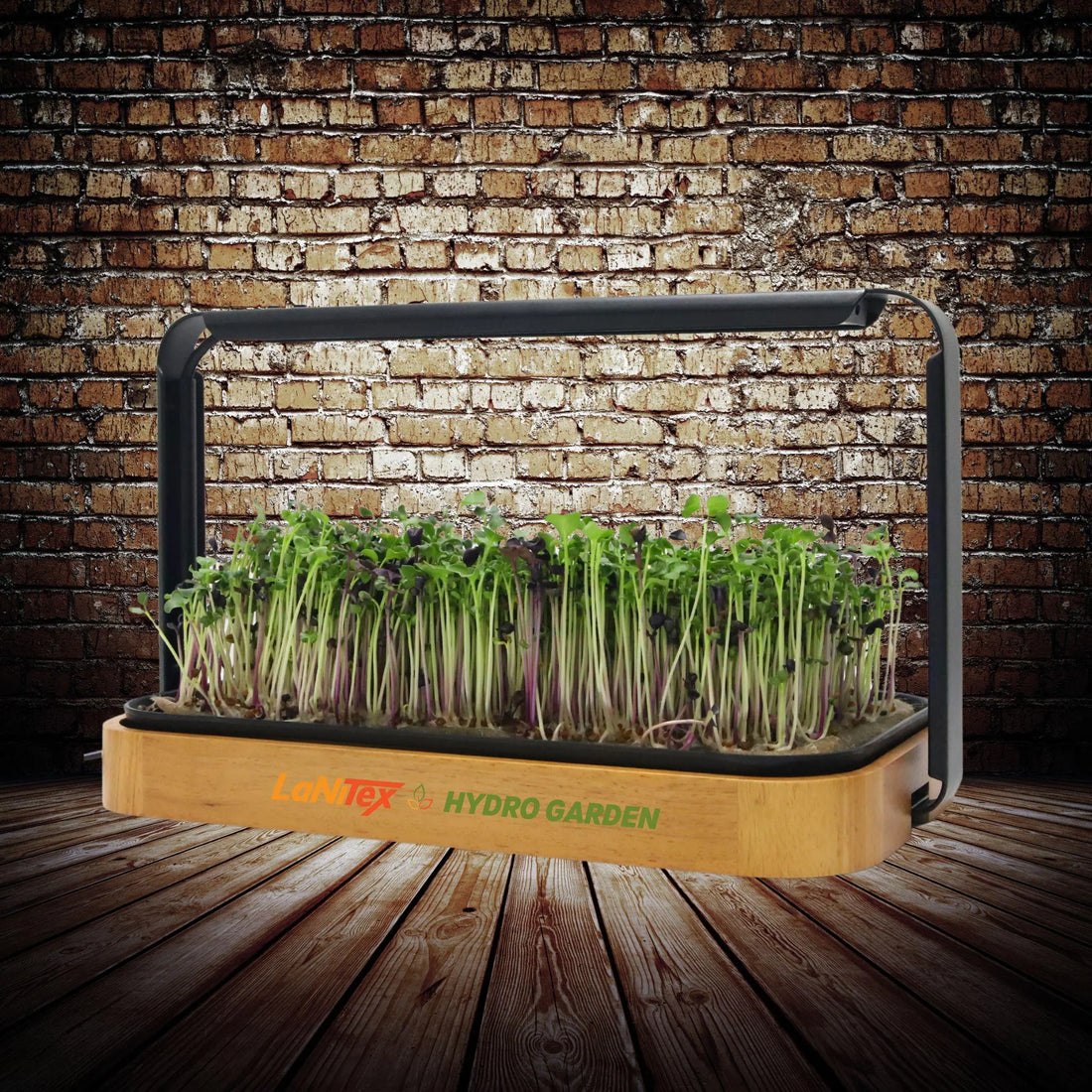
Several cultivars do well under lights. Giant red mustard and red giant bring deep burgundy leaves and a strong kick. Green wave is frilly and vigorous. Florida broadleaf is a milder, flat-leaved workhorse. Osaka purple mustard sits in between, with striking purple-veined leaves and a moderate heat. For colour on the plate, the red and purple types are hard to beat.

Setting up a hydroponic mustard greens system
A hydroponic mustard greens system needs three things dialled in: nutrient strength, pH and light. Get those right and the plants mostly look after themselves.
Keep the nutrient solution pH between 5.8 and 6.5. That range keeps nitrogen, calcium and iron available to the roots. Run the electrical conductivity (EC) at 1.2 to 2.4 mS/cm. Start lower for young seedlings and raise it as the plants bulk up. Too high and the leaf tips scorch; too low and growth stalls.
Light does the heavy lifting indoors. Aim for a photosynthetic photon flux density (PPFD) of 150 to 300 umol/m2/s at leaf height, with a photoperiod of 14 to 18 hours a day. A full-spectrum LED covers this comfortably. Mustard greens are leafy, not fruiting, so they do not need the intense light a tomato demands.
Any of the common systems suits this crop. Deep water culture (DWC) suspends the roots in oxygenated nutrient solution and is the simplest to run. Nutrient film technique (NFT) flows a thin stream of solution past the roots and scales well for rows of leafy greens. Ebb and flow floods and drains a tray on a timer, which works nicely in vertical towers. For most home growers, the choice comes down to the system already on the bench rather than the crop.
One warning. Don't let the nutrient tank sit warm and stagnant. Roots need oxygen, and warm still water breeds root rot fast in a Queensland summer.
Pests are far less of a worry indoors. The soil pests that trouble outdoor mustard - cabbage white caterpillars, flea beetles and clubroot - largely disappear once the crop is growing in a clean hydroponic setup off the ground. The one to keep an eye on is aphids, which can drift in from other plants. If you spot them, isolate the affected plant and treat with neem oil or bring in beneficial insects like ladybirds rather than reaching for anything harsh.
What I have learned about growing mustard greens from research
I have not grown a full crop of mustard greens myself yet, so I will be straight with you about that. What I share here comes from Australian horticultural guidance, hydroponic literature, and my own hands-on time with other fast leafy greens in the same system.
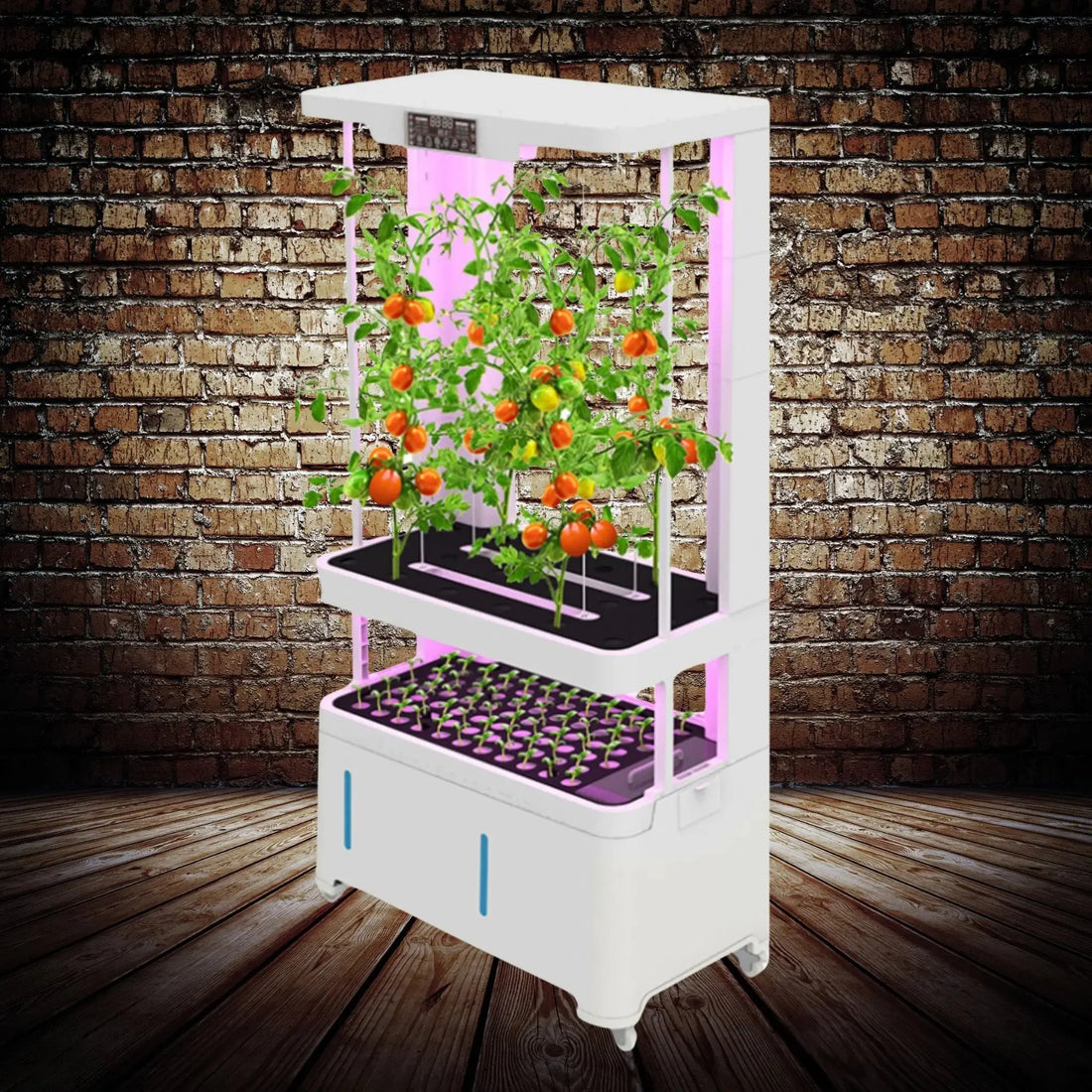
In my V5.2-A tower at home on the Coast, lettuce runs 25 to 35 days from seedling to a cut, and microgreens are ready in under a week. Mustard greens sit in that same fast-leafy bracket, so the 25-to-40-day timeline the research reports lines up with what I see from comparable crops. The tower holds 76 seedling positions, which means a staggered planting keeps a steady supply coming rather than one big glut.
The research consensus is clear on one thing: mustard greens are easy. GardensOnline, an Australian source, notes they germinate within a few days when sown straight into the ground. Under controlled indoor conditions, that reliability only improves, because you remove the weather from the equation. My plan for the first mustard crop is a small batch of osaka purple, and I will update this guide once I have harvested it.
Sowing and harvesting mustard greens in Australia
Mustard greens are a cool-season brassica, and that single fact shapes the whole Australian growing calendar. In the warmer states, autumn and winter are the natural outdoor sowing windows. Grown hydroponically indoors, the season disappears, and you sow whenever you like. Growing mustard greens from seed is straightforward, and mustard greens seeds are easy to source in Australia from garden centres and online seed suppliers.
Seeds germinate in 4 to 7 days at a comfortable 16 to 21 degrees Celsius. From there, baby leaves are ready in 25 to 40 days depending on variety and light. The peppery flavour intensifies as the leaves age, so pick young for salads and a little later for stir-fries.
Heat is the enemy. When temperatures climb, mustard greens bolt: they shoot up a flower stalk, the leaves turn bitter, and the plant is essentially done. This is why outdoor Australian growers stick to the cooler months. Indoors, keep the room from baking and you sidestep the problem entirely.
Harvest with the cut-and-come-again method. Take the outer leaves and leave the growing centre intact. The plant pushes out fresh growth, and a single planting keeps giving for several weeks. Cut about 3 to 4 cm above the crown so you do not damage the regrowth point. Successional sowing on top of this gives you a rolling supply.
Choosing a hydroponic system for mustard greens
Mustard greens are a leaf crop, so almost any home hydroponic system grows them well. If you want a set-and-forget option that handles the light and watering for you, the Smart Indoor Hydroponic Tower V5.2-A is a strong fit. With 76 seedling positions, it suits a household that eats greens most nights, and its full-spectrum LED and self-watering tank cover the daily work.

Fresh mustard greens on your kitchen bench in about four weeks - the self-watering tank and full-spectrum LED do the daily work. You supply the seeds.
Start your indoor garden →Personally tested at home on the Sunshine Coast before listing.
To be clear about what it is: the V5.2-A is a leafy-greens and herb tower. Mustard greens sit right in its wheelhouse. It is not built for large fruiting crops, so buy it for what it does well.
The full range
Find the system that fits your space


Supported in Australia - every model tested before listing.
Frequently asked questions
How do you grow hydroponic mustard greens in Australia?
Sow mustard greens seeds in a hydroponic system set to pH 5.8 to 6.5 and EC 1.2 to 2.4 mS/cm. Give them 14 to 18 hours of light a day. Indoors you can grow them year-round anywhere in Australia; outdoors, warmer states sow in autumn and winter to avoid summer bolting.
What is the best EC for hydroponic mustard greens?
The best EC for hydroponic mustard greens is 1.2 to 2.4 mS/cm. Start seedlings at the lower end, around 1.2, and raise it towards 2.0 to 2.4 as the plants mature. High EC scorches leaf tips; low EC slows growth.
What pH should mustard greens be in hydroponics?
Keep hydroponic mustard greens at a pH of 5.8 to 6.5. This range keeps nitrogen, calcium and iron available to the roots. Check it every couple of days, since pH drifts as the plants drink and feed.
How much light do hydroponic mustard greens need?
Hydroponic mustard greens need 14 to 18 hours of light per day at a PPFD of 150 to 300 umol/m2/s. A full-spectrum LED at leaf height covers this. As leafy plants, they do not need the high light intensity that fruiting crops demand.
How long do hydroponic mustard greens take to harvest?
Hydroponic mustard greens germinate in 4 to 7 days and reach baby-leaf harvest in 25 to 40 days from seed. Pick young leaves earlier for milder salads, or wait for a sharper, more peppery flavour.
Which mustard green varieties are best for hydroponics?
Giant red mustard, red giant, green wave, florida broadleaf and osaka purple all grow well hydroponically. Red and purple varieties add colour and a stronger bite; florida broadleaf is milder and flatter-leaved. Mizuna and tatsoi grow the same way.
Why are my hydroponic mustard greens turning yellow?
Yellowing leaves usually point to a nitrogen shortage or a pH problem locking out nutrients. Check the pH sits at 5.8 to 6.5 and the EC has not dropped too low. Top up the nutrient solution and yellowing on new growth should ease.
What is the difference between mustard greens and collard greens?
Both are leafy brassicas you can grow hydroponically, but they differ. Mustard greens are peppery and fast, ready in 25 to 40 days. Collard greens are milder, with larger, smoother leaves and a slower harvest. Turnip greens and kale sit in between. All suit a leafy-greens tower.
Ready to grow your own mustard greens? A benchtop hydroponic system gives you peppery leaves in about four weeks, no backyard needed. See the V5.2-A hydroponic tower and start your indoor garden.
About the writer
Laszlo Bulatko founded LaNiTex Hydro Garden in December 2024, a solo operation based on the Sunshine Coast. Before hydroponics, he spent 15 years in sales, marketing and brand development in the Hungarian fishing-tackle trade, after starting his career at IBM and Diageo. He now picks and tests indoor hydroponic systems, grow kits and accessories at home before adding them to the catalogue, and runs the Term-Grow program that places grow boxes in Queensland primary school classrooms. LaNiTex Australia Pty Ltd (ABN 47 682 768 967) ships Australia-wide.
Get a fresh grow guide like this every fortnight
Join the LaNiTex Hydro Garden newsletter for practical hydroponic, microgreen and mushroom growing tips for Australian homes. Subscribe to download a free hydroponics starter guide (PDF) and get 10% off your first order.
Join the newsletter →Sources
- GardensOnline (Australia), Mustard Greens plant guide. Notes the crop "is extremely easy to grow and will germinate within a few days if sown straight into the ground in spring". Accessed 8 July 2026. gardensonline.com.au
- Sustainable Gardening Australia, The Pros and Cons of Hydroponic Growing. States that "Farms utilizing hydroponics use up to 90 percent less water". Accessed 8 July 2026. https://www.sgaonline.org.au/the-pros-and-cons-of-hydroponic-growing/
Last updated: 8 July 2026