
Growing kale is one of the simplest ways to keep a cool-season leafy green on hand all year, and a hydroponic setup makes it easier still. Indoors, you control the water, the light and the temperature, so an Australian summer or a small apartment stops being a barrier to a steady crop of leaves.
That control is the real value. When you run kale hydroponically, you set the pH and nutrient strength yourself, run the lights on a timer, and cut leaves from the same plants for weeks. On the Sunshine Coast, where summer heat pushes outdoor kale to bolt, an indoor system on a bench or in a spare corner keeps the crop cool and productive across the whole year.
This guide covers the varieties, the numbers and the day-to-day habits that keep hydroponic kale healthy at home.
Ever pulled a limp bunch of kale from the crisper and wondered why the leaves you grow yourself taste so much sweeter? The difference usually comes down to freshness and control.
Quick answer: Kale grows well in hydroponics at pH 5.5 to 6.5 and EC 1.6 to 2.2 mS/cm, under 200 to 400 PPFD for 14 to 16 hours a day, at 16 to 22 degrees C. Seedlings are ready in 3 to 5 weeks, with first harvest at 5 to 8 weeks. Cut outer leaves and the plant keeps producing.
What is kale, and which types suit hydroponics?
Kale is a leafy form of Brassica oleracea, the same species as cabbage and broccoli, grown for its edible leaves rather than a head. The same species is also grown for looks, not the plate. See our guide to growing ornamental kale in Australia. For a brassica that forms its buds on a tall stalk instead, see our guide to growing brussel sprouts hydroponically. Two groups matter for kale hydroponics indoors: curly kale (Brassica oleracea var. sabellica) and Lacinato or Tuscan kale (Brassica oleracea var. palmifolia). Both handle soilless growing well and stay compact enough for a home system.

For a first hydroponic crop, three cultivars are reliable. 'Dwarf Curled Scotch' stays short and bushy, which suits a shallow bench system. 'Lacinato' (also sold as dinosaur or Tuscan kale) has flat, dark, strappy leaves and a milder flavour. 'Red Russian' is tender, quick to mature and forgiving of small nutrient slips, so it is a good starter for anyone new to growing kale hydroponically. For the best hydroponic kale results, match the variety to your space: curly types for the frilly supermarket look, Lacinato for the chef's leaf. Both crop for months from the same plants.
Best growing conditions for hydroponic kale
Good hydroponic kale growing starts with a mildly acidic nutrient solution: pH 5.5 to 6.5 keeps nitrogen, calcium and iron available to the roots. Hold the electrical conductivity at EC 1.6 to 2.2 mS/cm, a moderate feed. Weaker than that and the leaves pale; much stronger and you risk tip burn on new growth.
Light is the other half. Aim for indoor grow lights delivering PPFD 200 to 400 umol/m2/s at leaf height, run 14 to 16 hours a day. Kale is a cool-season crop, so keep the air at 16 to 22 degrees C with moderate humidity, and space plants about 20 to 30 cm apart so air moves freely and leaves stay dry.
Four numbers to remember: pH 5.5 to 6.5, EC 1.6 to 2.2, PPFD 200 to 400, and a room no hotter than the low 20s.
What I've learned about growing kale from research
I have not grown kale myself yet, so everything here comes from the research and from how the same principles have played out with other hydroponic leafy greens I have run at home on the Sunshine Coast. What the studies keep confirming is that the nutrient solution does most of the work. A 2023 study by Tan and colleagues in Horticulturae grew kale in a deep-flow system on half-strength Hoagland's solution at roughly EC 1.5 mS/cm and pH near 6, and stated plainly that nutrient solution management is a key way to regulate the yield and quality of the crop.
A 2025 kale study in Frontiers in Plant Science by Yang and colleagues went further, finding that a calcium-nitrate-only feed in the final week before harvest lifted nutrient uptake and yield. That matches what I see in my own lettuce and herbs: small, deliberate changes to the feed matter more than any single piece of gear. So when I point you at pH 5.5 to 6.5 and EC 1.6 to 2.2, that comes from the research, not from a kale crop of my own. When I have run a full cycle myself, I will update this guide with first-hand notes.
Is hydroponic kale as nutritious as soil-grown kale?
Growers often assume soil-grown kale must be more nutritious than hydroponic. The research does not back that up. Nutrient density tracks how the crop is grown far more than whether the roots sit in soil or water. Kale's vitamin, mineral and antioxidant levels move with the cultivar, the light, the feed strength and how soon you eat the leaves after cutting, so a blanket "soil is better" line does not hold.
What the studies do show is that the nutrient solution is the lever. The 2023 Tan study in Horticulturae tied kale's phytochemical and antioxidant levels directly to how the nutrient solution was managed, and the 2025 Yang study found that adjusting the feed in the final week measurably raised nutrient uptake. So a well-run hydroponic system gives you the control to match or beat soil-grown kale on nutrition, because you set the exact conditions the plant grows in. Add the freshness of cutting leaves minutes before they hit the plate, and home-grown hydroponic kale stands up well against anything from the shop.
Get a fresh grow guide like this every fortnight
Join the LaNiTex Hydro Garden newsletter for practical hydroponic, microgreen and mushroom growing tips for Australian homes. Subscribe to download a free hydroponics starter guide (PDF) and get 10% off your first order.
Join the newsletter →Which hydroponic system suits kale?
Kale is not fussy about system type, so pick the one that fits your space and budget. Five common setups all work.
- Kratky is a passive method with no pump: plants sit in a lidded container and the water level drops as they drink. It is the cheapest way to answer "can you grow kale hydroponically without a pump or air stone".
- Deep water culture (DWC) floats plants over an aerated reservoir; an air stone keeps roots oxygenated and growth fast.
- Nutrient film technique (NFT) runs a thin stream of solution through channels, which suits a Lacinato kale NFT system where you want several plants in a row.
- Wick systems draw solution up a rope into the growing medium, best for one or two small plants.
- Ebb and flow floods and drains a tray on a timer, which is forgiving and easy to scale.
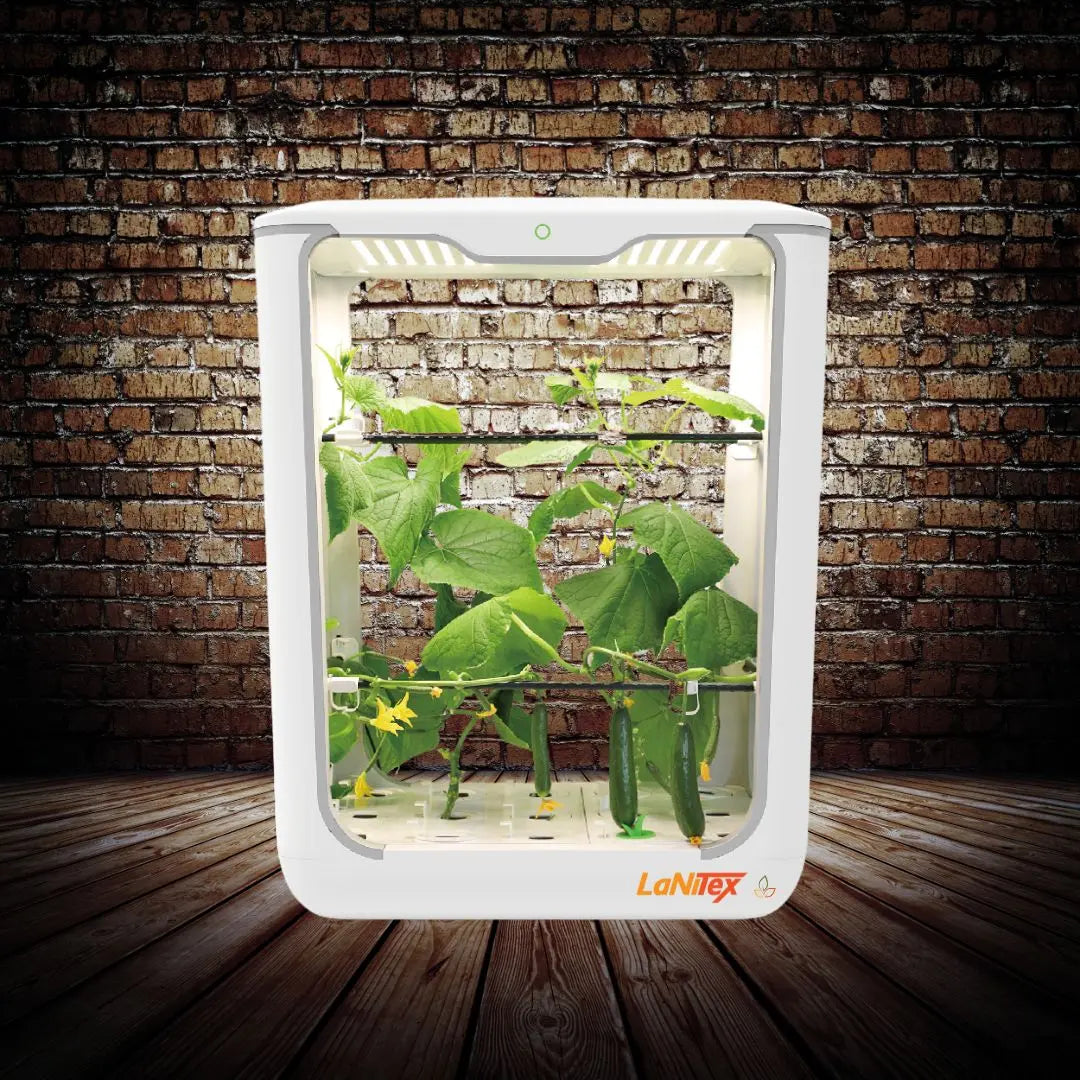
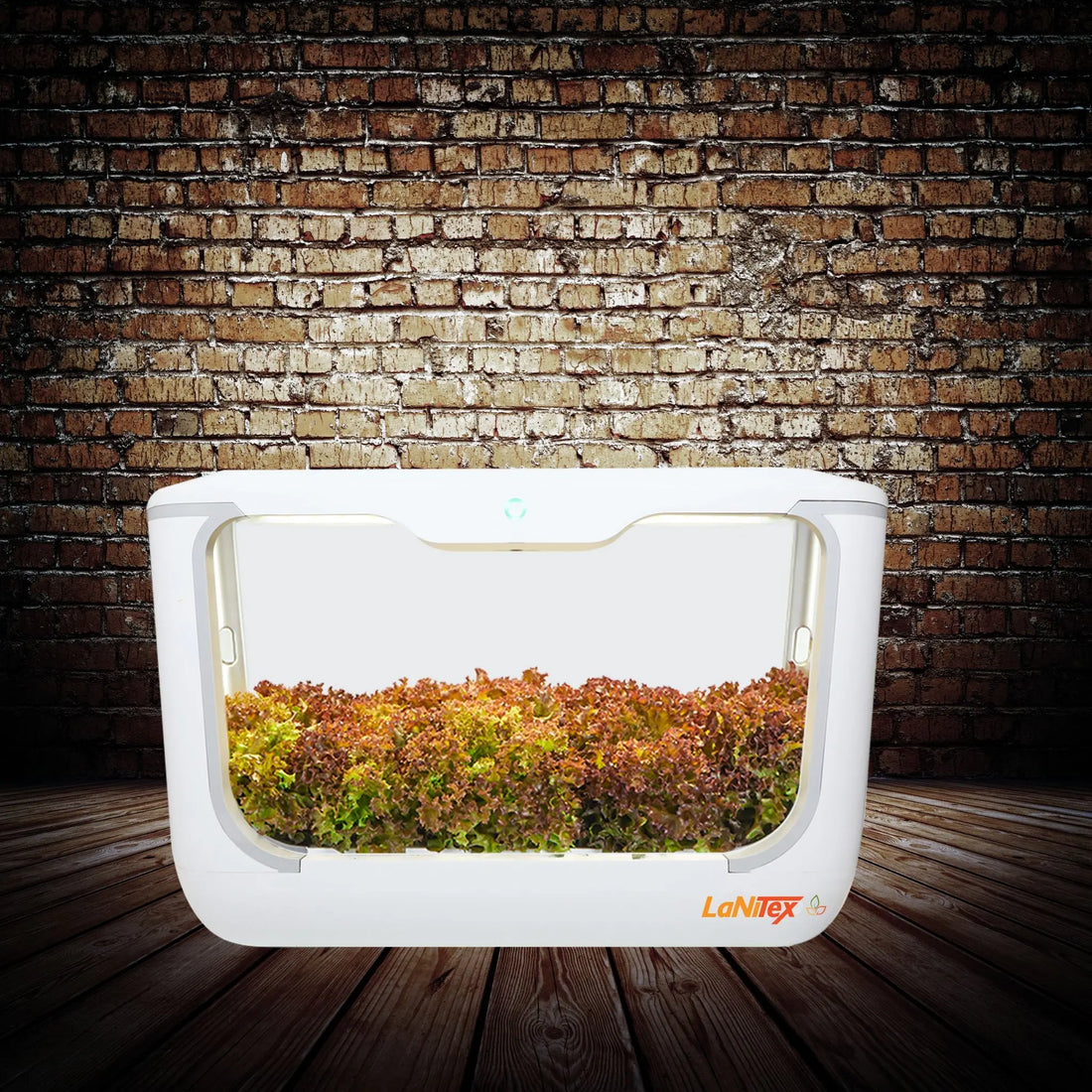
For a compact benchtop option that suits leafy greens like kale, the LaNiTex Grow Box gives you built-in lighting and a controlled reservoir in one unit, so you skip the guesswork of matching a light to a tray.

Grow kale on your bench through the whole year — the Grow Box runs the full-spectrum light and a controlled reservoir in one unit, the steady conditions this cool-season leafy green prefers. You transplant the seedlings.
Start your kale bench garden →Personally tested at home on the Sunshine Coast before listing.
If you want to see how these systems compare in detail, our hydroponic system essentials guide breaks down each type. For other leafy greens that share kale's setup, see our guides to growing spinach, broccoli, growing collard greens hydroponically and romaine lettuce.
How long does hydroponic kale take to grow?
Kale seeds germinate in about 5 to 10 days at 18 to 24 degrees C. From there, seedlings take 3 to 5 weeks to build a solid root system and a first set of true leaves before they are ready to run at full nutrient strength. First harvest comes at 5 to 8 weeks from sowing, depending on variety and light.

The best part is that kale is a cut-and-come-again crop. Take the outer leaves and leave the growing centre intact, and a single plant keeps producing new leaves for two to three months. A dwarf kale Kratky setup on a windowsill can feed a household through a whole season from just a few plants.
Hydroponic kale care at a glance
Once your kale is growing, the day-to-day routine is short. Here is the whole cadence in one place.
- Daily: check the water level and top up if the reservoir is low (in a Kratky setup the roots take oxygen from the air gap as the level drops, so do not keep it topped to the brim; on a long kale grow you can still refill when it runs low, just leave an air gap above the roots), and confirm the lights are running their 14 to 16 hour cycle.
- Weekly: test pH (hold 5.5 to 6.5) and EC (hold 1.6 to 2.2 mS/cm) with a meter and adjust, and look over new shoots and leaf undersides for aphids or whitefly.
- Fortnightly: refresh the nutrient solution completely, rinsing out old solution and root debris so the feed stays balanced and the system stays clean.
Troubleshooting nutrient problems and pests
Most kale trouble shows in the leaves. Pale, yellowing older leaves usually mean a nitrogen shortage; feed strength is too low or the reservoir needs a refresh. Yellowing between the veins on older leaves points to magnesium. New leaves that curl, brown at the tips or distort suggest a calcium problem, often from pH drift out of the 5.5 to 6.5 band. Pale new growth with green veins is classic iron lock-out, again usually a pH issue rather than a true shortage.
Kale is a brassica, so it draws the same pests indoors as out. Aphids cluster on new shoots and leaf undersides; whitefly lift in a cloud when you brush the plant; powdery mildew shows as a white dusty film in still, humid air. Keep an integrated approach: inspect weekly, wipe or hose off small aphid colonies, improve airflow to deny mildew the still air it needs, and use a sticky trap or a horticultural soap spray before reaching for anything stronger. Catching problems early is far easier than clearing an infestation.
Growing kale in the Australian climate
Kale is a cool-season crop, which shapes how you time it across Australia. Outdoors on the east coast, autumn to early spring is the natural window; summer heat makes outdoor kale bolt and turn bitter. Growing kale indoors hydroponically removes that limit, because you set the temperature yourself and can crop right through a Brisbane or Sunshine Coast summer. This is what makes hydroponic leafy greens in Australia so practical: the weather stops deciding your harvest.
The main summer job indoors is heat management. Keep your grow space out of direct afternoon sun, run the lights during cooler hours if the room warms up, and keep air moving around the plants. Inland regions with hot, dry summers need the same care plus an eye on humidity. Hold the room in the 16 to 22 degrees C band and kale behaves the same in January as it does in July.
Keeping hydroponic kale safe to eat
Clean water and a clean system are the foundation of safe leafy greens. Use drinking-quality water to mix your nutrients, and empty and rinse the reservoir between crops so old solution and root debris do not build up. Wipe down channels, net pots and the tank with a mild sanitising solution, then rinse before the next batch.
At harvest, cut leaves with clean hands or scissors, rinse in cool water and store them dry in the fridge, since wet leaves spoil faster. Growing indoors without soil, hydroponic kale carries less grit and fewer soil-borne organisms than garden kale, but water hygiene still matters. Treat the reservoir like a kitchen surface and your harvest stays crisp and safe.
Harvesting your kale
Start harvesting once plants have several mature outer leaves, usually from week 5 to 8. Pick the largest outer leaves first, snapping or cutting them close to the main stem, and always leave the young central leaves to keep growing. Take no more than about a third of the plant at once so it can recover.

Harvest in the cooler part of the day for the crispest leaves, and pick little and often rather than stripping a plant bare. Managed this way, hydroponic kale gives you fresh leaves for months, and there is a real satisfaction in cutting your own dinner from a plant on the bench.
Ready to grow your own kale?
Growing kale well comes down to holding a few numbers steady, and that is exactly what a controlled benchtop system does for you. If you would rather not juggle a separate light and reservoir, the Grow Box runs the lighting and the recirculating root zone in one unit, so you can crop cool-season leaves right through an Australian summer.

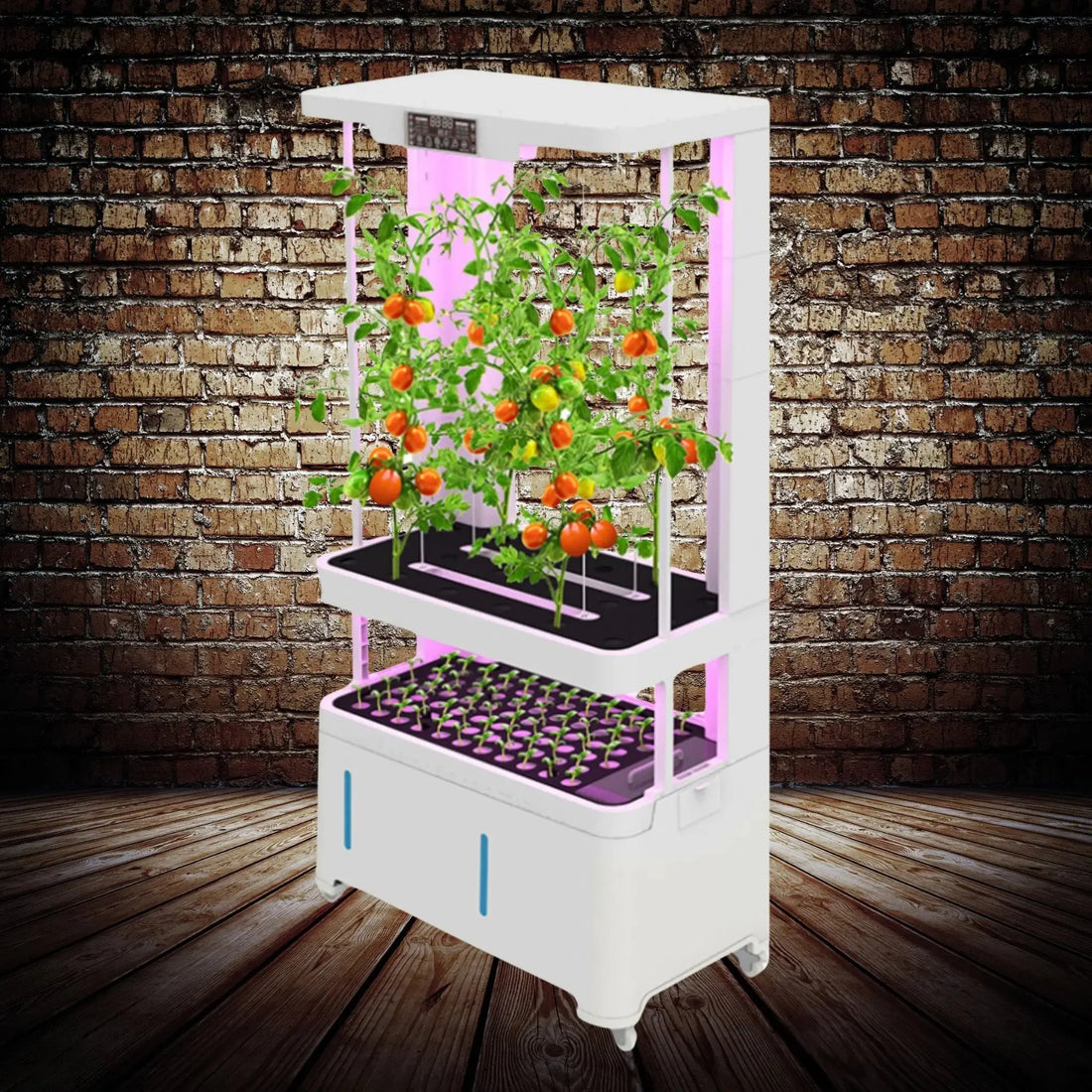
Growing more than a handful at a time? The V5.2-A Tower gives you up to 72 planting sites in the same floor space — a rolling kale crop without the sprawl. You supply the seedlings.
Scale up your grow →Personally tested at home on the Sunshine Coast before listing.
The full range
Find the system that fits your space


Supported in Australia - every model tested before listing.
Frequently asked questions
How do I grow kale hydroponically at home in Australia?
Start kale seeds in rockwool or a seedling plug, then move the seedlings into a hydroponic system such as Kratky, DWC or NFT once they have roots. Hold the solution at pH 5.5 to 6.5 and EC 1.6 to 2.2 mS/cm, run grow lights at 200 to 400 PPFD for 14 to 16 hours a day, and keep the room at 16 to 22 degrees C. Growing indoors lets you crop year-round, even through an Australian summer.
What is the best EC and pH for hydroponic kale growth?
The best range for hydroponic kale is pH 5.5 to 6.5 and EC 1.6 to 2.2 mS/cm. That pH band keeps nitrogen, calcium and iron available, while the moderate EC feeds steady leaf growth without the tip burn that comes from an over-strong solution. Check both with a meter every few days and top up or dilute as needed.
How many hours of light does hydroponic kale need indoors?
Hydroponic kale needs 14 to 16 hours of light a day indoors, at a PPFD of 200 to 400 umol/m2/s measured at leaf height. A timer keeps the cycle consistent. More than 16 hours gives little extra benefit and adds to your power bill, while less than 12 slows growth and leaves plants leggy.
What varieties of kale grow best in hydroponic systems?
Curly kale (Brassica oleracea var. sabellica) and Lacinato or Tuscan kale (Brassica oleracea var. palmifolia) both grow well hydroponically. Good starter cultivars are 'Dwarf Curled Scotch' for compact bench systems, 'Lacinato' for flat chef-style leaves, and 'Red Russian' for tender, fast, forgiving growth.
How long does hydroponic kale take to harvest in Australia?
Hydroponic kale takes about 5 to 8 weeks from sowing to first harvest, with seedlings ready to transplant at 3 to 5 weeks. Because it is a cut-and-come-again crop, a single plant then keeps producing outer leaves for another two to three months. Indoor growing gives the same timeline all year.
Can I grow kale hydroponically without a pump or air stone?
Yes. The Kratky method grows kale with no pump or air stone at all: the plant sits in a lidded container of nutrient solution, and as the roots drink, an air gap forms above the water line to supply oxygen. It suits one or two kale plants and is the simplest, cheapest way to start.
Why are my hydroponic kale leaves turning yellow or curling?
Yellowing older leaves usually signal low nitrogen or a tired reservoir, while yellowing between the veins points to magnesium. Curling or browning new leaves often means a calcium problem caused by pH drifting outside 5.5 to 6.5. Check the pH and EC first, refresh the solution if it is old, and correct the pH before adding more nutrients.
When should you plant kale in Australia?
Grown hydroponically indoors, kale has no real season: you can start it any month because you set the temperature and light yourself. Outdoors on the east coast, plant from autumn to early spring, since summer heat makes kale bolt and turn bitter. Held at a cool 16 to 22 degrees C indoors, kale stays productive right through a Queensland summer.
Sources
- Sustainable Gardening Australia, "The Pros and Cons of Hydroponic Growing": "Farms utilizing hydroponics use up to 90 percent less water" and "hydroponic farming can produce up to three or four times more produce than traditional methods". sgaonline.org.au
- Tan et al., Horticulturae 2023, 9(1), 53, "Growth, Phytochemicals, and Antioxidant Activity of Kale Grown under Different Nutrient-Solution Depths in Hydroponic": "nutrient solution management is considered a key way to regulate the yield and quality of crops". mdpi.com
- Yang et al., Frontiers in Plant Science 2025: "use of only Ca(NO3)2 during the final week of kale production significantly enhanced nutrient uptake, leading to improved plant growth and increased yield". frontiersin.org
About the writer
Laszlo Bulatko founded LaNiTex Hydro Garden in December 2024 and runs it solo from the Sunshine Coast. Before hydroponics, he spent 15 years in the Hungarian fishing-tackle trade in sales and brand development, after starting his career at IBM and Diageo. Today he selects and tests indoor hydroponic systems, grow kits and accessories at home before adding them to the catalogue, and runs the Term-Grow program that puts grow boxes in Queensland primary school classrooms. Read more on the about Laszlo page.