
By Laszlo Bulatko, founder of LaNiTex Hydro Garden - Last updated: 7 July 2026
Kohlrabi is a cool-season brassica that grows well in a small indoor hydroponic system, from the Sunshine Coast up to Brisbane and beyond. The swollen stem forms a crisp, mild bulb that many home cooks compare to a sweet turnip. It is one of the friendlier brassicas for a soilless setup.
Growing kohlrabi hydroponically gives you something a garden bed cannot: steady water, steady nutrients, and a controlled light schedule. That means fewer of the stress problems that make outdoor bulbs turn woody or bolt early. I run LaNiTex Hydro Garden here on the Sunshine Coast, and this guide pulls together the research and the numbers you need to get an even bulb indoors.
Here is the short version, then the detail.
Quick answer: Grow kohlrabi hydroponically by keeping the nutrient solution at pH 6.0 to 6.8 and EC 1.8 to 2.4 mS/cm, giving 12 to 16 hours of full-spectrum LED at 200 to 300 umol/m2/s, and holding the room at 16 to 24C. The bulb sizes up in about 45 to 60 days.
Key takeaways:
- Kohlrabi likes it cool: aim for 16 to 24C and treat it as an autumn-winter crop outdoors, or grow it indoors year-round.
- Target pH 6.0 to 6.8 and EC 1.8 to 2.4 mS/cm for even bulb growth.
- A recirculating system (NFT or DWC) holds nutrient levels steadier than Kratky for the full bulbing period.
- Harvest at 5 to 7cm bulb diameter, roughly 45 to 60 days from transplant, before the flesh turns woody.
What is kohlrabi?

Kohlrabi is a cultivated brassica, Brassica oleracea var. gongylodes (the Gongylodes Group), grown for its swollen stem rather than its leaves or flower. That stem sits just above the root crown and rounds out into the bulb you eat. The name comes from the German for cabbage-turnip, which is a fair description of both look and taste.
If you like quick brassicas, fast-growing radish is one of the speediest roots you can grow hydroponically, often ready in 25 to 40 days.
The bulb is not a root. It is a thickened section of stem, which matters in hydroponics because it forms above the water line, in the air, with the leaves fanning out from little nodes across its surface. Popular cultivars include Purple Vienna (deep purple skin, pale flesh), White Vienna (light green skin, the classic market type), and Quickstar, a fast F1 hybrid that suits shorter indoor cycles. Grand Duke is another quick F1, ready in around 50 days; Superschmelz stays tender even when it grows large; and Korridor resists bolting in warmer spells - handy when you want a fast, forgiving crop indoors. Purple kohlrabi hydroponics setups tend to draw the eye, but the flesh inside every colour is the same crisp white.
Starting kohlrabi from seed for hydroponics

Kohlrabi is easy to raise from seed, and in a soilless setup you start it in an inert medium rather than potting mix. Sow one or two seeds into a pre-soaked rockwool cube or a peat-free plug, about 5mm deep, and keep the medium warm and damp. At a media temperature of roughly 16 to 27C the seeds germinate in about 3 to 10 days.
Once the seedlings are up, give them light straight away so they do not stretch, and thin to the strongest single plant per cube. Move them into the hydroponic system when they have three to four true leaves, usually three to four weeks after sowing. Handle the young roots gently and settle the cube into the net pot so the roots reach the solution. Starting in a clean, inert medium is one of the quiet advantages of hydroponics: there is no damping-off from soil fungi and no hardening-off against the weather.
For a steady supply rather than one big harvest, sow a fresh batch every two to three weeks and transplant them into free sites as they come ready. This succession approach suits a multi-site unit like a tower, where you can keep a rolling crop moving through the same system.
Best growing conditions for kohlrabi in a hydroponic system
Kohlrabi grows best when the nutrient solution and the light stay inside a fairly tight band. Get these two things right and the rest is mostly patience.
Nutrients: pH, EC, and the solution
Keep the nutrient solution at pH 6.0 to 6.8 so the plant can take up iron, calcium, and the other elements it needs for firm bulb tissue. For electrical conductivity, run kohlrabi hydroponic EC 1.8 to 2.4 mS/cm - lean toward the lower end for young seedlings and the upper end as the bulb swells. Kohlrabi hydroponic pH 6.0 to 6.8 is the same range most leafy brassicas prefer, so a general hydroponic brassica nutrient solution works well.
A balanced solution supplies nitrogen (N) for leaf growth, phosphorus (P) and potassium (K) for the bulb, plus calcium (Ca) and magnesium (Mg) for cell structure and chlorophyll. Calcium matters more than people expect: it is the element that keeps the bulb firm rather than pithy. Check EC and pH every day or two, and top up with fresh solution as the plants drink it down.
Light and temperature
Give kohlrabi 12 to 16 hours a day of full-spectrum LED light at a PPFD of 200 to 300 umol/m2/s measured at leaf height. That is enough to drive steady growth without pushing the plant to bolt. Indoor kohlrabi grow lights LED Australia growers use are usually simple full-spectrum panels - nothing exotic. Can you grow kohlrabi indoors on this schedule? Yes, easily, which is the whole point of a benchtop system.
Hold the air at 16 to 24C with humidity around 60 to 70 percent. Kohlrabi is a cool-season crop, so warm rooms are its enemy. Heat above the mid-20s tells the plant to flower instead of fatten, and once it bolts the bulb stops forming. This is why cool season hydroponic crops Australia growers often move brassicas indoors over summer.
What I have learned about growing kohlrabi from research
I will be honest here. I have not grown kohlrabi myself yet - it is on my list for the next cool-season run at home on the Sunshine Coast. So this section is what I have read and pulled together from the research, not a first-hand harvest story.
What stands out is the physiology of the bulb. In a soilless system the swollen stem forms above the root crown, in open air, and it expands evenly only when the plant gets steady nutrient and steady light. Stress is the enemy. A swing in EC, a hot afternoon, or a dry spell tells the plant it is under threat, and it responds by turning the flesh woody or by bolting to seed. Even conditions drive even expansion. That is the single clearest lesson from the literature.
A peer-reviewed study from a plant-factory system found that cultivar choice matters a lot in closed hydroponic setups. The researchers reported that "Asac kohl" was the optimal kohlrabi cultivar for hydroponic cultivation in a closedtype plant factory system. The takeaway for a home grower: pick a variety bred for controlled environments, then hold your conditions steady.
Which hydroponic system suits kohlrabi?
Kohlrabi grows in most hydroponic systems, but a recirculating one holds nutrient levels steadier through the long bulbing period. Here is how the common options compare.
| System | How it works | Best for kohlrabi |
|---|---|---|
| NFT | A thin film of nutrient flows past the roots in a channel. | Works well; give the bulb enough support as it swells. |
| DWC | Roots hang in oxygenated solution over a large reservoir. | A solid choice - stable nutrients for a plant that sits in place for weeks. |
| Kratky | Non-recirculating: fill the reservoir once and let the level drop. | Carries one short crop, but EC drifts over the 45 to 60 day cycle. |
| Aeroponics | Roots are misted directly with nutrient. | Can grow excellent bulbs, but needs reliable pumps and more attention. |
| RDWC | Several buckets link to one shared reservoir. | The steadiest EC of all - overkill for one plant, handy for a batch. |
For most home growers I would point to a compact recirculating unit over Kratky, simply because steady EC gives you a rounder, firmer bulb.

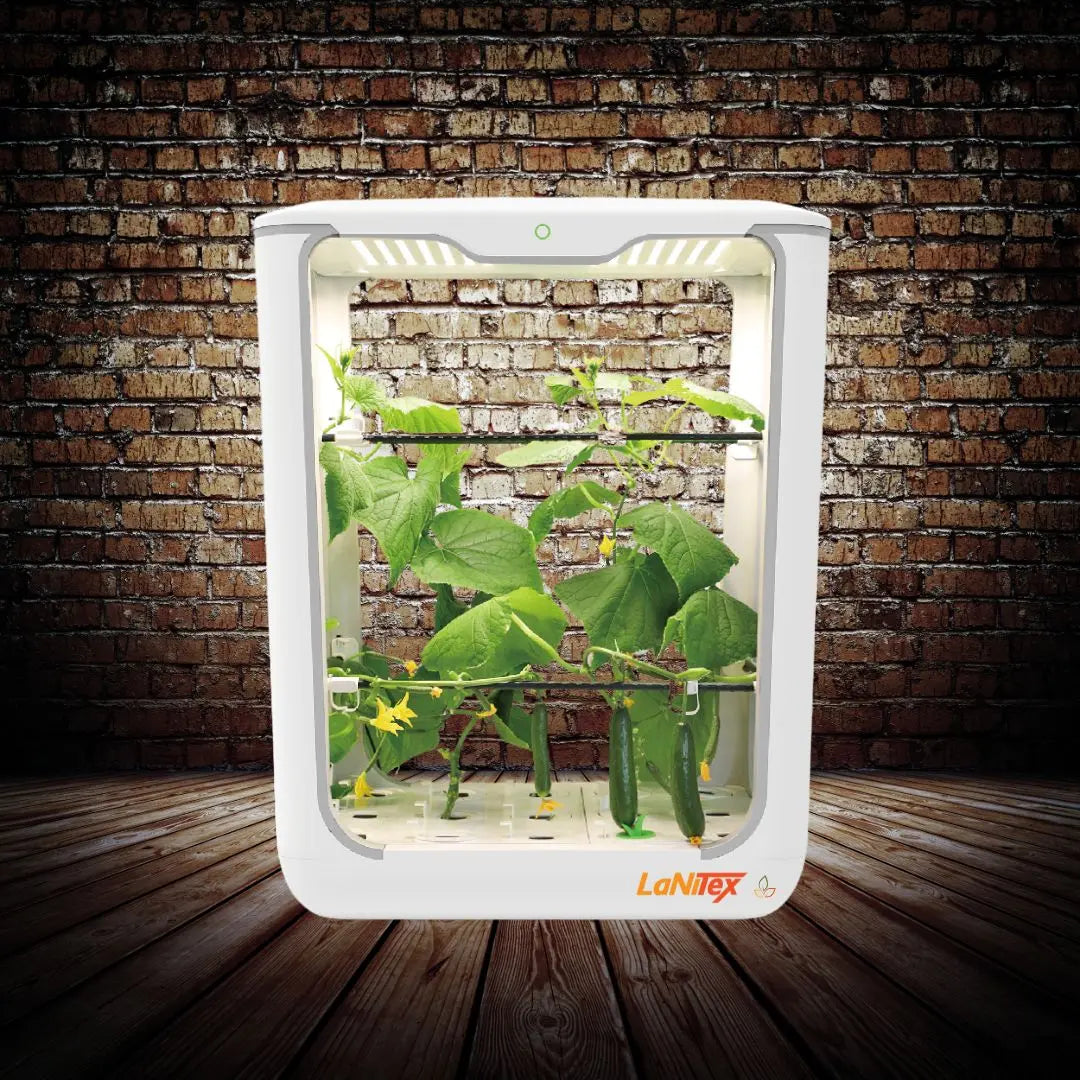
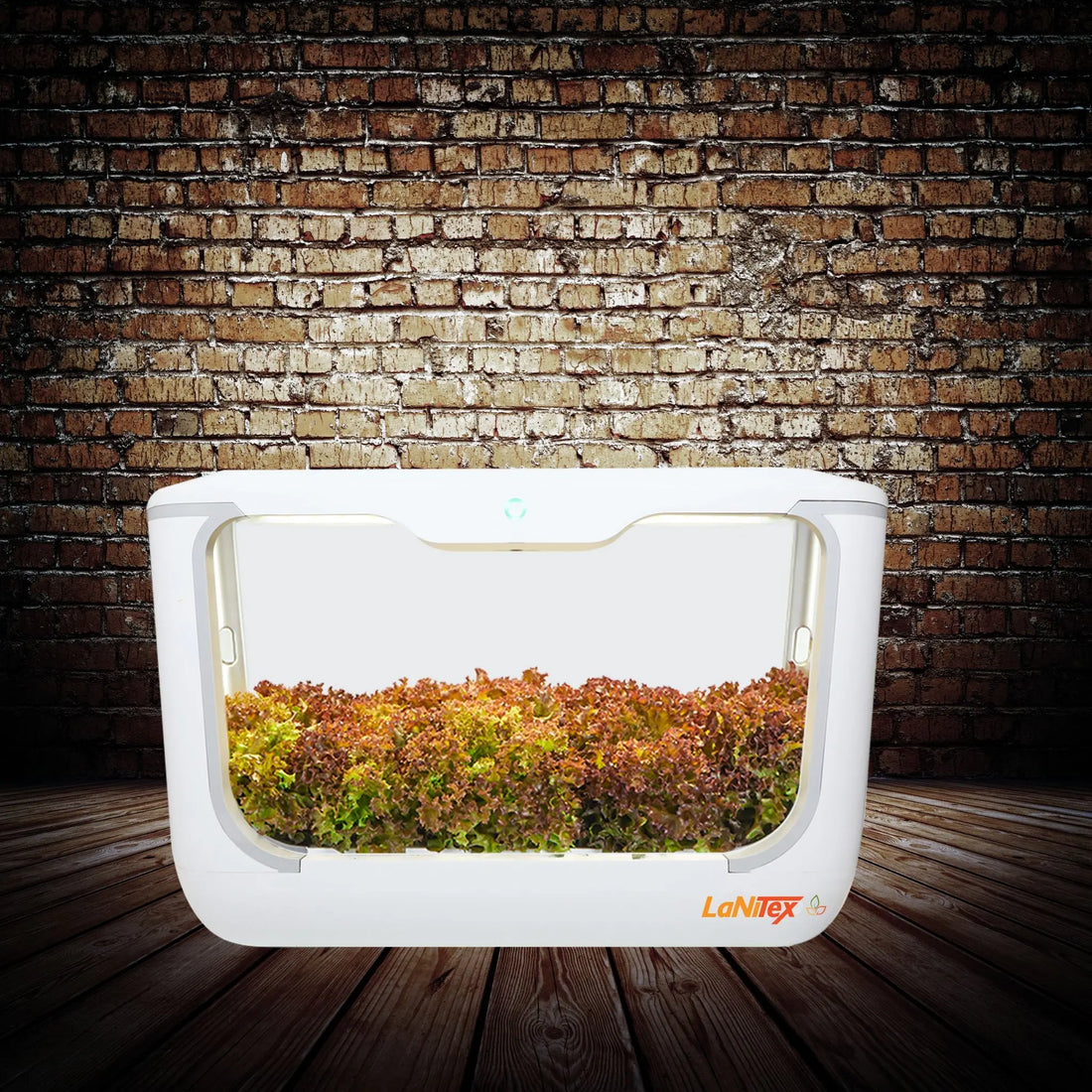
A compact way to grow kohlrabi indoors — the Grow Box keeps the nutrients and full-spectrum light steady, so this cool-season brassica gets consistent conditions instead of garden-bed swings. You transplant the seedlings.
Start your bench garden →Personally tested at home on the Sunshine Coast before listing.
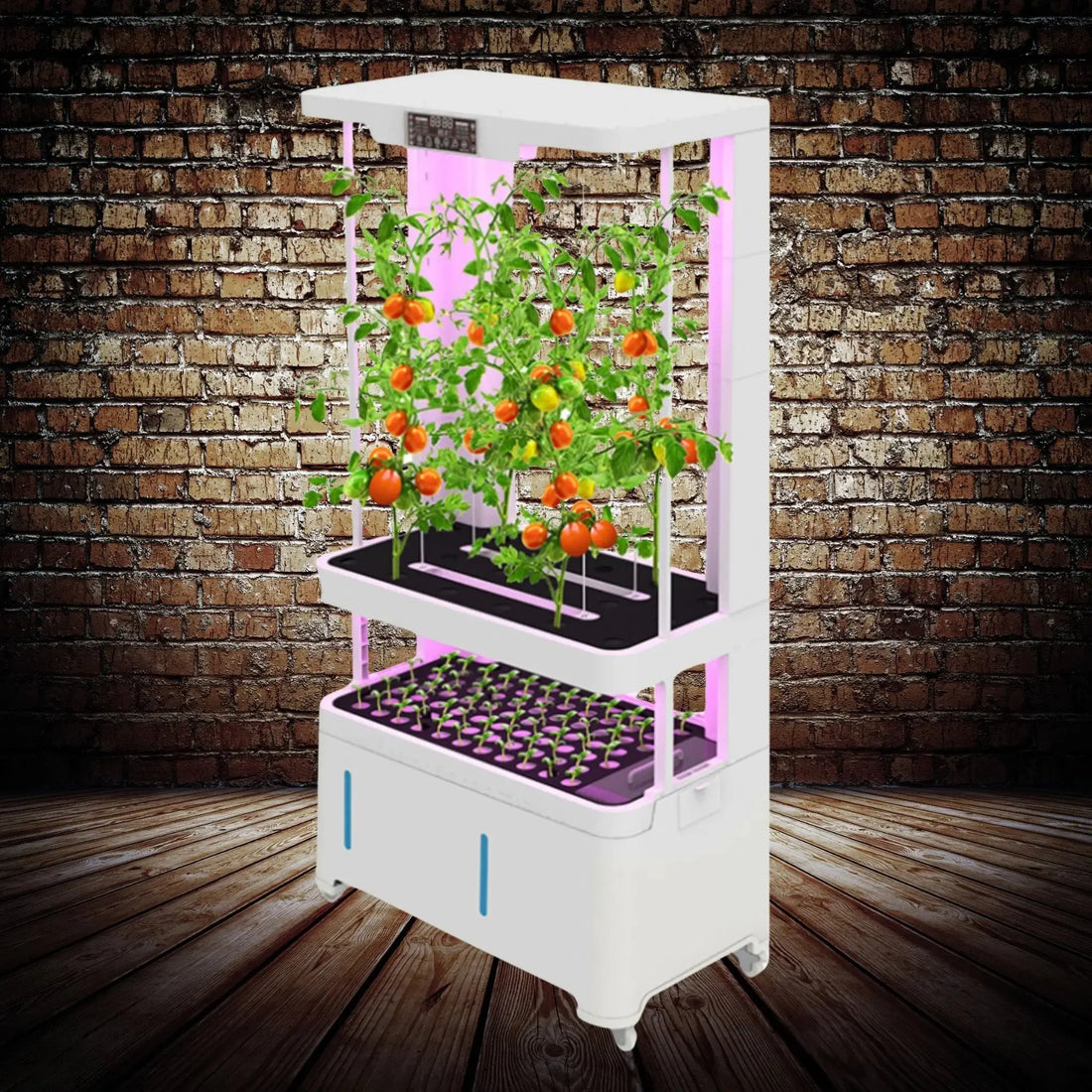
If you want to grow more than a few plants at once, the Smart Indoor Hydroponic Tower V5.2-A gives you far more planting sites in the same floor space. For the wider setup basics, our hydroponic system essentials guide covers reservoirs, pumps, and lighting. If you are working through the brassica family, our guide to growing cauliflower hydroponically, our hydroponic brussel sprouts guide and our guide to how to grow collard greens in Australia are good companion reads.
Get a fresh grow guide like this every fortnight
Join the LaNiTex Hydro Garden newsletter for practical hydroponic, microgreen and mushroom growing tips for Australian homes. Subscribe to download a free hydroponics starter guide (PDF) and get 10% off your first order.
Join the newsletter →Growing kohlrabi across Australian climate zones
Kohlrabi is a cool-season crop, so the right sowing window depends on your zone. Australian climate timing for kohlrabi outdoors looks like this:
- Tropical (far north): grow through the dry season, roughly April to August, when nights cool off.
- Subtropical (Sunshine Coast, Brisbane): autumn and winter, about March to July, is the sweet spot. Our humid summers are too warm.
- Temperate (Sydney, Perth, Adelaide): autumn plus an early spring sowing both work.
- Cool (Melbourne, Tasmania, highlands): spring into summer, once frost risk passes.
Here is the part that changes everything: indoor hydroponics lets you ignore the calendar. Because you control the temperature and light inside the unit, you can grow kohlrabi year-round regardless of your zone. A Brisbane grower can raise a firm winter-style bulb in the middle of a humid January, as long as the room stays cool enough for the system to do its job.
Troubleshooting: why kohlrabi bulbs don't form
When a kohlrabi bulb refuses to fatten, the cause is almost always a nutrient disorder or root-zone stress. Here are the usual suspects and what they look like.
Calcium deficiency shows as tip burn on the newest leaves - brown, scorched edges on young growth while older leaves stay green. Calcium moves slowly through the plant, so the youngest tissue starves first. It also leaves the bulb soft rather than crisp.
Boron deficiency is the classic bulb killer. It causes hollow or brown centres inside the bulb, and cracking on the surface. Brassicas are hungry for boron, and a solution short on trace elements will disappoint you at harvest.
Tip burn from high EC or low humidity looks similar to calcium burn but comes from the water being too concentrated or the air too dry, which stops the plant moving calcium to the leaf edges. Do not let EC drift above 2.4 mS/cm chasing faster growth - you will scorch the leaves and pith the bulb instead.
For the root zone, keep dissolved oxygen high, because warm still water suffocates roots and invites rot. Cycle the pumps so the solution stays aerated, and keep the water temperature below about 22C. Warm nutrient water holds less oxygen and speeds up root disease, which quietly stalls bulb growth before you see anything wrong up top.
Pests, and the hydroponic advantage of growing indoors
Growing kohlrabi in a sealed indoor system sidesteps most of the trouble that hits it in a garden bed. The soil-borne problems that plague outdoor brassicas - clubroot, cabbage root fly, and slugs and snails chewing the young bulbs - simply cannot reach a soilless setup indoors. That is one of the real advantages of hydroponics for the cabbage family.
A few pests can still find their way in, though. Aphids and whitefly are the usual sap-suckers, clustering on the undersides of leaves; a strong rinse or an insecticidal soap knocks back a small outbreak, and catching them early keeps it that way. Fungus gnats can appear if the growing medium stays wet at the surface, so let the top of the cube dry slightly between top-ups. Check the leaves whenever you check your EC and pH, and you will spot most problems before they matter.
Harvesting and using hydroponic kohlrabi

Harvest kohlrabi when the bulb reaches 5 to 7cm in diameter, usually around 45 to 60 days from transplant. Yates recommends pulling the bulbs at this size, and it is good advice: leave them longer and the flesh turns woody and fibrous. Small and crisp beats big and tough every time.
For food safety, rinse the harvested bulb in clean water, trim the stem and leaves, and refrigerate it. It keeps well for a couple of weeks. Eat it raw for the best texture - peeled and sliced into sticks, or grated through a slaw - or cook it like a mild turnip in soups, roasts, and stir-fries. The leaves are edible too, cooked like any brassica green.

Growing more than a handful at a time? The V5.2-A Tower gives you up to 72 planting sites in the same floor space — a rolling kohlrabi crop without the sprawl. You supply the seedlings.
Scale up your grow →Personally tested at home on the Sunshine Coast before listing.
The full range
Find the system that fits your space


Supported in Australia - every model tested before listing.
Frequently asked questions
How do you grow kohlrabi in a small hydroponic system at home in Australia?
Set up a compact recirculating unit indoors, keep the solution at pH 6.0 to 6.8 and EC 1.8 to 2.4 mS/cm, and run a full-spectrum LED for 12 to 16 hours a day at 200 to 300 umol/m2/s. Hold the room at 16 to 24C. Transplant seedlings, keep conditions steady, and harvest at 5 to 7cm.
What is the best nutrient EC and pH range for hydroponic kohlrabi?
The best range is pH 6.0 to 6.8 and EC 1.8 to 2.4 mS/cm. Use the lower EC for young seedlings and move toward the upper end as the bulb swells. A standard leafy-brassica nutrient mix suits kohlrabi, with enough calcium and boron to keep the bulb firm and solid.
How many hours of grow light does hydroponic kohlrabi need indoors?
Kohlrabi needs 12 to 16 hours of full-spectrum LED light a day, at a PPFD of 200 to 300 umol/m2/s measured at the leaves. That drives steady growth without triggering the plant to bolt. Longer is not always better - keep a consistent daily cycle rather than pushing the hours up.
Which kohlrabi varieties grow best in hydroponics for Australian conditions?
Fast, compact varieties do best indoors. White Vienna and Purple Vienna are reliable, and Quickstar is a quick F1 hybrid that suits short indoor cycles. Research on closed plant-factory systems found that cultivars bred for controlled environments outperform garden types, so choose a variety suited to steady, protected growing.
How long does kohlrabi take to harvest in a hydroponic setup?
Most kohlrabi is ready about 45 to 60 days after transplant, when the bulb reaches 5 to 7cm across. Steady nutrient and light can bring it in at the shorter end. Do not wait for a bigger bulb - past 7cm the flesh usually turns woody.
Can you grow kohlrabi in Kratky or does it need a recirculating hydroponic system?
You can grow a single short crop in Kratky, but a recirculating system (NFT or DWC) is better for kohlrabi. Kratky is non-recirculating, so the EC drifts as the water drops over the 45 to 60 day cycle. A recirculating system holds nutrient levels steady, which gives a rounder, firmer bulb.
Why are my hydroponic kohlrabi bulbs not forming properly?
Bulbs fail to form when the plant is stressed. The common causes are heat above the mid-20s (which triggers bolting), calcium or boron deficiency, and high EC. Keep the room at 16 to 24C, hold EC at 1.8 to 2.4 mS/cm, and make sure the solution carries enough calcium and boron for firm, solid bulbs.
When should you plant kohlrabi in Australia?
Kohlrabi is a cool-season crop. Outdoors, plant it in autumn and winter across most of Australia - roughly March to July in the subtropics - with an extra early-spring sowing in temperate zones. Indoors in a hydroponic system you can plant it year-round, because you control the temperature and light.
Do hydroponic kohlrabi need companion plants?
No. Companion planting is a soil-garden technique for deterring pests and improving soil, and a sealed indoor hydroponic system does not need it. If you want to fill spare sites, grow other cool-season leafy greens or brassicas that share kohlrabi's pH 6.0 to 6.8 and EC 1.8 to 2.4 mS/cm.
Sources
- Korean Society for Bio-Environmental Control (2017). Study on optimal kohlrabi cultivar for hydroponic cultivation in a closed-type plant factory system (Journal of Bio-Environment Control). Linked in the "What I have learned" section above.
- Yates Australia - kohlrabi growing guide (referenced for harvest bulb size of 5 to 7cm diameter).
About the writer
Laszlo Bulatko is the founder of LaNiTex Hydro Garden, a solo operation based on the Sunshine Coast, Queensland. He started the business in December 2024 to help Australian families grow fresh food at home, even without a backyard or a green thumb. Before hydroponics, Laszlo spent 15 years in sales, marketing, and brand development in the Hungarian fishing-tackle market, after starting his career at IBM and Diageo. He tests indoor growing gear at home before adding it to the catalogue, and he writes these guides to make soilless growing simple for everyone. Read more on the About Laszlo page.