
This guide is for: Beginners to intermediate indoor growers
Quick answer: You can grow cauliflower indoors with hydroponics in Australia by holding the solution at pH 6.0 to 6.5, staging the EC from about 0.5 up to 2.0 mS/cm as the plant matures, and keeping temperatures cool (around 15 to 21C by day) so the curd forms firm and white.
Key takeaways:
- Cauliflower is a cool-season brassica, and the white head you eat is the curd, an arrested flower.
- Hold pH at 6.0 to 6.5 and stage EC from 0.5 to 0.8 (seedling) up to 1.8 to 2.0 mS/cm (curd).
- Keep it cool: roughly 15 to 21C by day, and the nutrient solution below 22C.
- Heat or stress causes buttoning (tiny premature curds), so steady conditions matter more than anything else.
- From transplant, early types take about 50 to 80 days; from seed, plan on 80 to 120 days.
Cauliflower (Brassica oleracea var. botrytis) is a cool-season brassica that many Australian gardeners find fussy outdoors, especially once summer heat sets in. Indoors, a controlled hydroponic system removes the worst variable: temperature. That makes it one of the better candidates for a home grow box.
Growing cauliflower hydroponically gives you year-round control over the conditions a curd needs. Cauliflower hydroponics is not a beginner-proof crop, but it rewards careful nutrient timing and a cool, stable root zone. The pay-off is a climate-independent harvest, which matters where most regions get too hot for field cauliflower for part of the year.
This guide walks through the biology, the numbers, the system choices, and the timing.
What is cauliflower, and can you grow it hydroponically?
Yes, you can grow cauliflower hydroponically, and you can grow it in water-based systems without soil at all. Cauliflower (Brassica oleracea var. botrytis) is a cool-season brassica grown for its curd, the dense white head that is really an arrested inflorescence. The plant shifts from leafy vegetative growth to curd formation through a low-temperature vernalisation response, after warm early growth gives way to cooler conditions.
People often ask, can you grow cauliflower hydroponically at all, given how fussy it is outdoors? The answer is yes. Can you grow cauliflower in water? In hydroponics the roots sit in an oxygenated nutrient solution rather than soil, so "in water" is exactly how it works. The catch is that cauliflower in hydroponics is heavy and top-heavy, with a wide leaf canopy, so the system has to support the plant and deliver steady nutrition.
Indoor hydroponics suits Australian conditions because it decouples the crop from the weather outside. You set the temperature, the light, and the feed. That is a real advantage here. If you are new to soilless growing, the hydroponic system essentials guide covers the basics, and cauliflower's close cousin is covered in our grow broccoli guide, and the same cool-season approach applies to hydroponic cabbage.
Starting cauliflower from seed. Begin in a propagation tray rather than straight in the system. Sow into rockwool or coir plugs, keep them moist at around 18 to 21C, and expect germination in roughly 7 to 14 days. Grow the seedlings on under gentle light until they have four to five true leaves and a firm root plug, then transplant them into your hydroponic system and start them on the seedling-strength feed. Raising them in plugs gives you even, sturdy seedlings and lets you cull the weak ones before they take up space.
The short version: cauliflower grows well in hydroponics as long as you keep it cool and feed it in stages.
Best growing conditions for hydroponic cauliflower
Hydroponic cauliflower needs cool temperatures, a slightly acidic root zone, and a staged nutrient strength that climbs as the plant matures. Get those three right and the rest is maintenance.
Nutrients: pH and EC for cauliflower hydroponics
Hold the pH between 6.0 and 6.5 for cauliflower hydroponics. The broader hydroponic chart range runs 6.0 to 7.0, but the lower half keeps nutrient uptake reliable (source: igworks hydroponic nutrient chart). Drift above 7.0 and the plant starts locking out trace elements.
Stage the EC as the plant grows. Seedlings want a gentle 0.5 to 0.8 mS/cm. Through vegetative growth, lift it to roughly 1.2 to 1.8 mS/cm. As the curd forms, push to about 1.8 to 2.0 mS/cm and no higher. Nitrogen and calcium balanced at moderate strength produce firm, compact curds rather than loose ones.
A simple pH and EC meter earns its keep here. The Digital 4-in-1 Water Quality Tester reads pH, EC, TDS and temperature in one tool, which covers most of what this crop asks you to watch.
Temperature: why cauliflower is a cool-season crop
Cauliflower is a cool-season crop because heat triggers poor curds. Aim for around 15 to 21C by day and 13 to 18C overnight, and keep the plant below roughly 24C wherever you can. Utah State University Extension notes that cauliflower does best where "temperatures do not exceed 75F" (about 24C).
Keep the nutrient solution below 22C as well. Warm, low-oxygen water invites Pythium root rot. Heat stress also causes buttoning, where the plant throws small button-sized curds instead of one proper head. Don't let the root zone swing hot and cold; steadiness beats any single perfect number.
Light and humidity indoors
Cauliflower indoors does well with a PPFD around 250 to 400 umol/m2/s, a photoperiod of about 12 to 16 hours, and a daily light integral near 12 to 17 mol/m2/day. Be honest with these figures: cauliflower-specific light trials are scarce, so these are starting points inferred from brassica norms. Treat them as a baseline and adjust by watching the plant.
Keep humidity at 50 to 70 percent. Above 80 percent, fungal and soft-rot risk climbs, especially once the curd is sitting under its leaves.
| Parameter | Range | Notes |
|---|---|---|
| pH | 6.0 to 6.5 | Lower half of the 6.0 to 7.0 chart range |
| EC (seedling) | 0.5 to 0.8 mS/cm | Gentle start |
| EC (vegetative) | 1.2 to 1.8 mS/cm | Building leaf and frame |
| EC (curd) | 1.8 to 2.0 mS/cm | Do not exceed |
| Air temp | 15 to 21C day, 13 to 18C night | Below ~24C |
| Solution temp | Below 22C | Pythium control |
| PPFD | 250 to 400 umol/m2/s | Inferred, adjust by observation |
| Photoperiod | 12 to 16 hours | DLI ~12 to 17 mol/m2/day |
| Humidity | 50 to 70 percent | Above 80 percent raises disease risk |
The bottom line: cool air, cool solution, staged feed, and steady light are the four dials that decide your curd.
Get a fresh grow guide like this every fortnight
Join the LaNiTex Hydro Garden newsletter for practical hydroponic, microgreen and mushroom growing tips for Australian homes. Subscribe to download a free hydroponics starter guide (PDF) and get 10% off your first order.
Join the newsletter →What I've learned about growing cauliflower from research
Cauliflower is one of the more demanding crops to grow hydroponically. It is a cool-season brassica that needs steady temperatures and careful nutrient timing, and I will be honest: I have not run a full cauliflower crop through our systems yet. What I can share is research-backed guidance plus what we have learned designing and testing LaNiTex Grow Box systems on the Sunshine Coast.
Here is what makes me cautious. With faster crops, our own at-home testing produced microgreens in under a week and lettuce in 25 to 35 days, and those forgive a lot. Cauliflower does not. It spends weeks building a frame before it commits to a curd, and a single warm spell in that window can trigger buttoning you cannot undo. So the thing I would watch hardest is solution temperature. On the Coast our summers are warm and humid, and a reservoir that creeps past 22C is the most likely way a home grow goes wrong. Get a cool, well-aerated root zone and you have solved most of the problem before it starts. That's the trick.
Choosing a hydroponic system for a big brassica
Cauliflower is a large, top-heavy plant, so the best system gives it root space, strong aeration, and physical support. Three setups suit it.

NFT (nutrient film technique)
NFT delivers excellent oxygen and steady nutrition through a thin recirculating film. The downside for cauliflower is the heavy canopy, which needs wide channels and support, and the fact that Pythium can spread fast through recirculating water. Good for growers who already run NFT and can keep the solution cool.
Deep water culture and Kratky
Deep water culture gives the roots plenty of space and buffers pH and EC swings, which helps a heavy plant. Keep the solution below 22C with strong aeration. A small-scale Kratky setup is non-recirculating, which lowers cross-contamination between plants, though you get less control once it is running.
Aeroponic towers
Aeroponic towers offer very high oxygen and suit micro or sprouting types like Fioretto rather than full heads. The risk is blunt: a pump failure dries the roots fast and can trigger buttoning within hours.
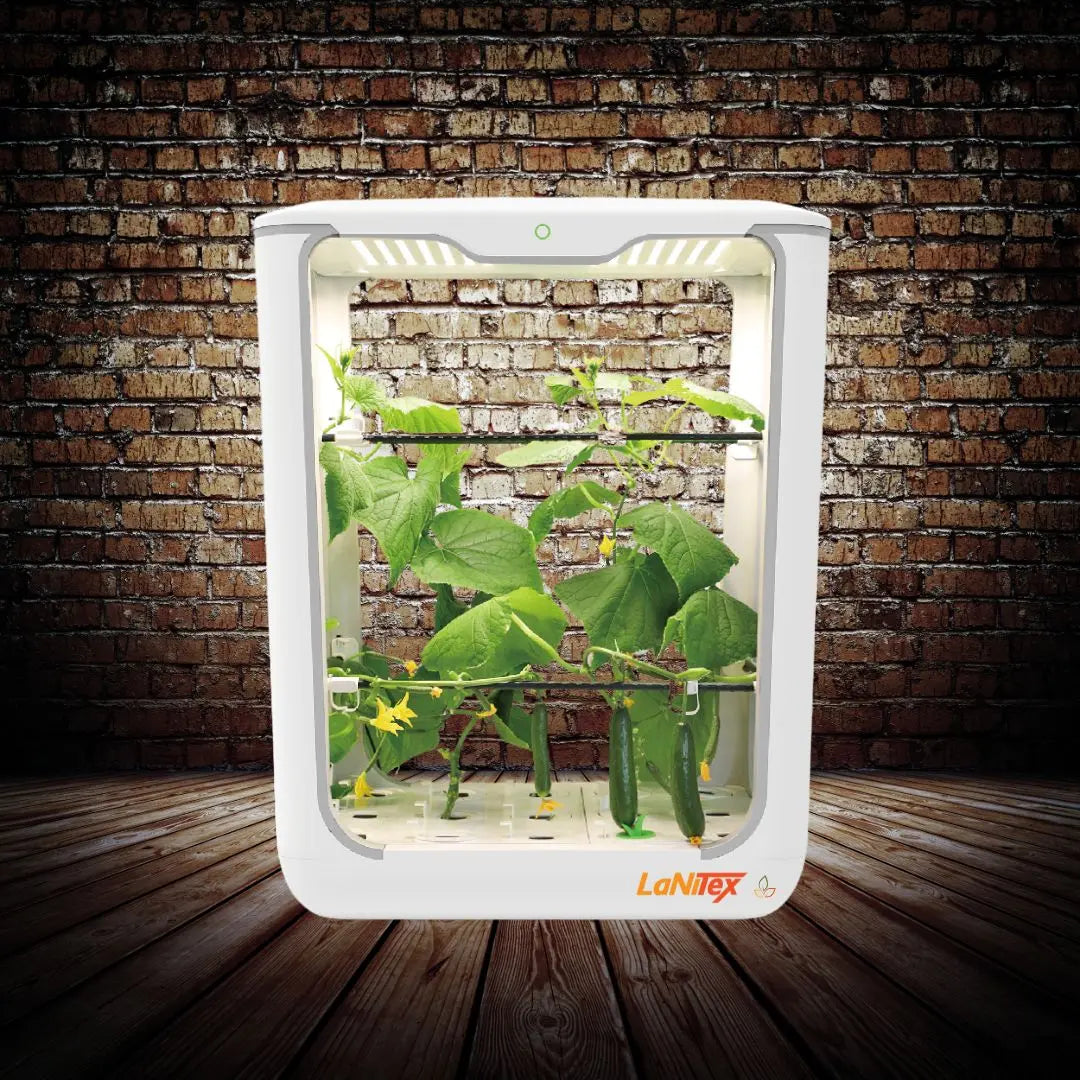
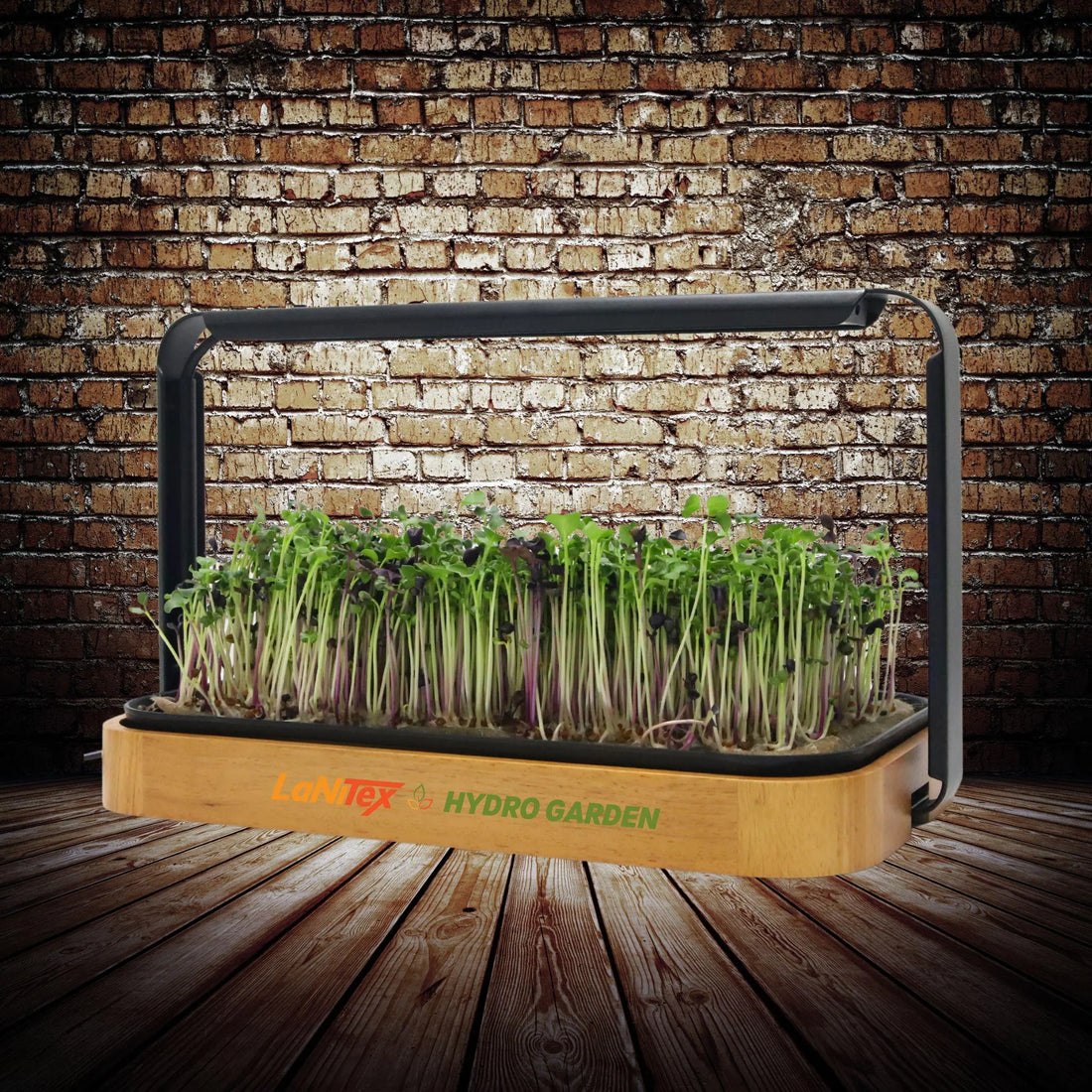
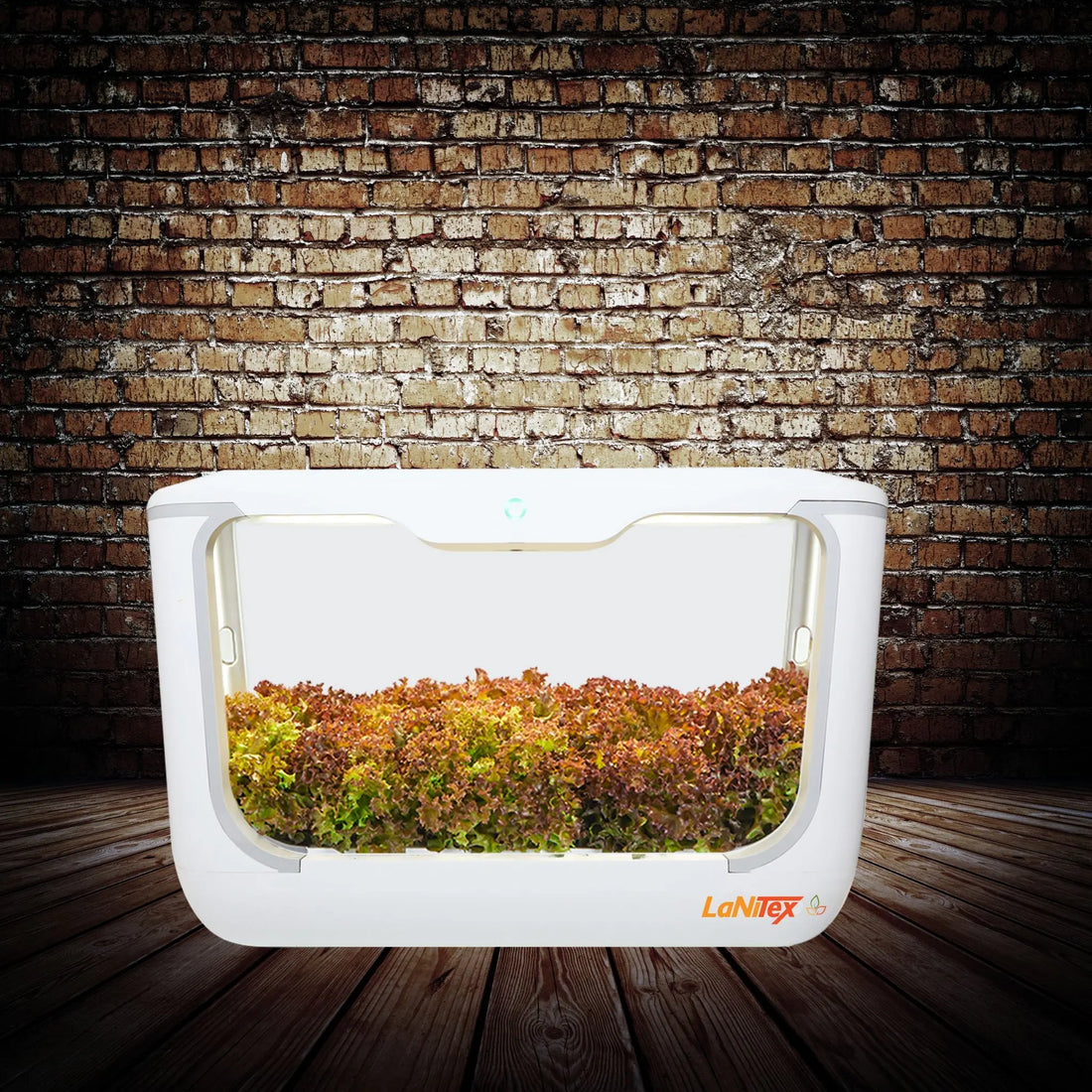
For an enclosed, temperature-stable indoor grow, the Smart Grow Box gives you a contained environment to manage all of this in one place. If you want extra headroom for cauliflower's big leaves and tall frame, the Grow Box Tall version adds vertical room. Both are designed here on the Sunshine Coast by LaNiTex Australia.

Grow cool-season cauliflower indoors whatever the weather outside. The enclosed Grow Box lets you hold the temperature, light and staged feed steady in one place — the cool, stable root zone this fussy brassica needs. Give big frames the Tall version.
Start your cauliflower grow →Personally tested at home on the Sunshine Coast before listing.
The takeaway: pick a system that keeps the solution cool and holds a heavy plant steady, and the variety almost picks itself.
Blanching, buttoning and firm white curds
Blanching keeps the curd white, and avoiding buttoning keeps you with a curd at all. These two jobs decide whether you harvest a clean head.

Blanching technique
Once the curd reaches egg to tennis-ball size, tie the outer leaves up over it to shade it, which keeps the white colour developing evenly. Don't trap moisture against the curd, though, or you invite Botrytis and soft rot. Some cultivars are self-blanching and curl their own leaves over the head. Even under LED light, a light blanch helps the colour stay uniform.
Avoiding buttoning, ricey curds and Pythium
Buttoning is the curd forming too early and too small, triggered by cold or heat shock, dry roots, low nitrogen, or transplant stress. Ricey or loose curds usually mean the plant ran too warm. The fix for both is steady conditions: even temperature, no root-zone drying, and enough nitrogen while it grows.
Pythium root rot is waterborne and spreads through contaminated solution, thriving in warm, low-oxygen water. Keep the solution cool and aerated, sterilise reservoirs between crops, and filter where you can.
The takeaway: shade the curd, never starve or shock the plant, and keep the water clean and cold.
Harvesting and storing cauliflower
Cut the head while the curd is still firm, tight and full sized, usually somewhere around 15 to 20 cm across, and before the segments start to loosen or turn ricey. Slice through the main stem with a sharp knife and leave a few wrapper leaves around the curd to protect it. Cauliflower does not keep for long once cut: store it unwashed in the crisper drawer of the fridge and use it within about a week, or break it into florets, blanch them briefly and freeze them for longer storage. A head left on the plant past its prime only loosens and loses texture, so it is better to cut a touch early than a touch late.
The takeaway: cut the curd firm and full, then chill or freeze it quickly.
When to grow cauliflower across Australia's climate zones
Outdoors, the right window depends on your zone, but indoor hydroponics lets you ignore most of that. Here is the field reference first.
In temperate areas like coastal New South Wales and Victoria, sow in late summer to autumn for a winter or early-spring harvest. In Mediterranean zones such as coastal South Australia and Western Australia, winter and the shoulder seasons are ideal in the field, while summer heat ruins heads. In subtropical Queensland it stays warm and humid most of the year, so field cauliflower is risky outside the coolest months.
Indoor hydroponics decouples the crop from summer heat. Because you control the temperature, you can run cool-season cauliflower closer to year-round, even when it is too hot outside to grow it in the ground. That is the real case for hydroponic cauliflower Australia growers can rely on: a season you set yourself.
For variety, Snowball Y Improved is a reliable white type widely available from Australian seed suppliers. White Magic and self-blanching hybrids also do well indoors. If you want colour, Cheddar is orange and Purple of Sicily is purple, and micro or sprouting types like Fioretto suit a tower's tighter spacing. Buy seed from Australian suppliers so the cultivars suit local conditions.
The takeaway: the calendar matters outdoors, but indoors you set your own season.

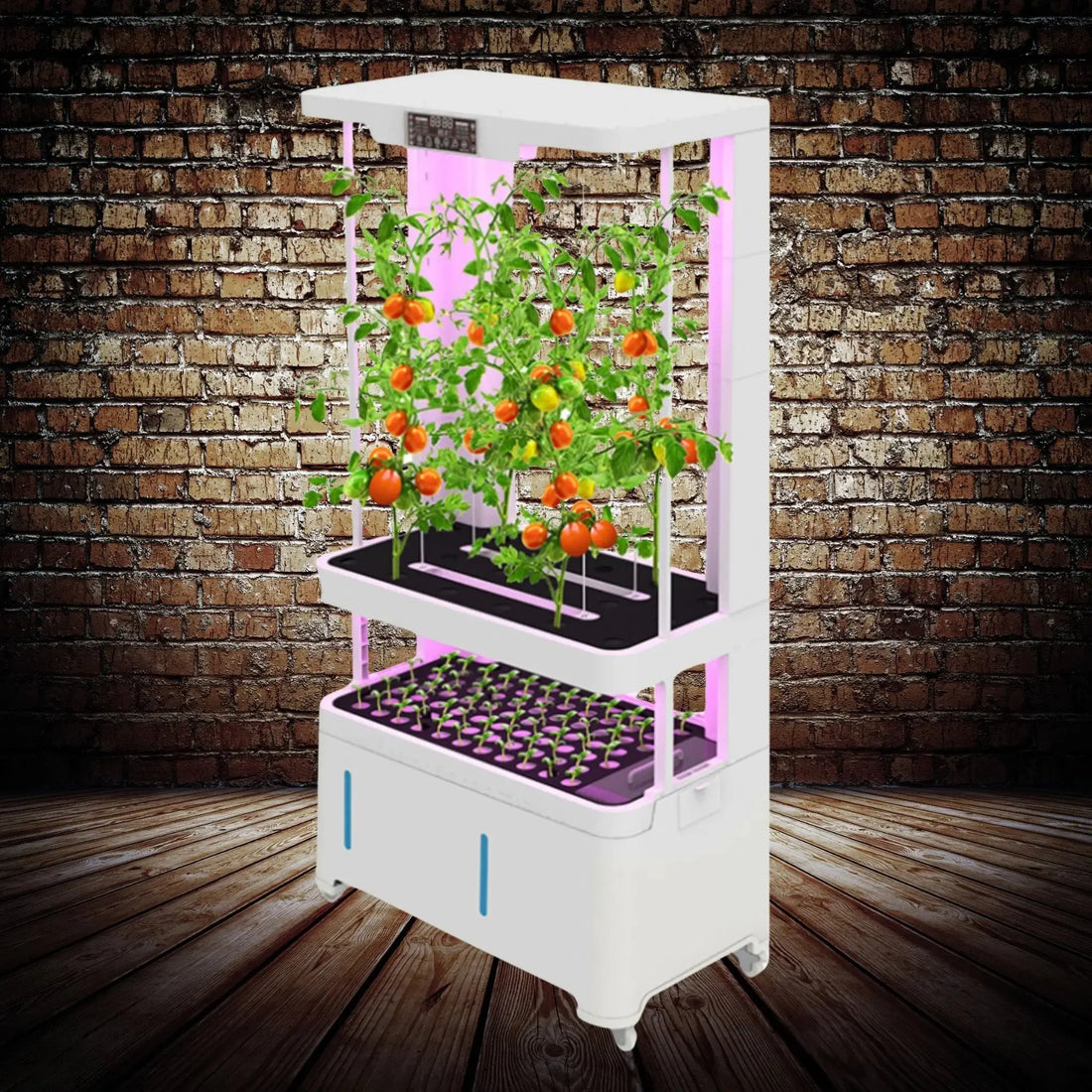
Ready to grow more greens than one crop at a time? The V5.2-A Tower stacks up to 72 planting sites under full-spectrum LED with a self-watering tank — plenty of room for leafy brassicas and everyday salads.
Scale up your grow →Personally tested at home on the Sunshine Coast before listing.
The full range
Find the system that fits your space


Supported in Australia - every model tested before listing.
Frequently asked questions about growing cauliflower
How do I grow cauliflower hydroponically in Australia's climate?
Grow it indoors so you can keep it cool. Hold pH at 6.0 to 6.5, stage EC from about 0.5 up to 2.0 mS/cm as the plant matures, keep air temperature around 15 to 21C and the solution below 22C, and give it 12 to 16 hours of light. Indoor control matters most in warmer Australian zones where outdoor summers are too hot for good curds.
What is the best EC range for hydroponic cauliflower?
Stage it. Seedlings want 0.5 to 0.8 mS/cm, vegetative growth wants about 1.2 to 1.8 mS/cm, and curd formation wants roughly 1.8 to 2.0 mS/cm. The full working range sits between 0.5 and 2.0 mS/cm. Keep nitrogen and calcium balanced at moderate strength for firm heads, and do not push EC past 2.0.
What pH should I use for hydroponic cauliflower?
Hold the pH between 6.0 and 6.5. The broader hydroponic chart range for cauliflower runs 6.0 to 7.0, but staying in the lower half keeps trace-element uptake steady. Check it regularly with a meter, because pH drift is one of the quiet causes of poor growth in a recirculating system.
How many hours of light do hydroponic cauliflower plants need indoors?
Give cauliflower around 12 to 16 hours of light a day at a PPFD of roughly 250 to 400 umol/m2/s, which lands near a daily light integral of 12 to 17 mol/m2/day. These figures are inferred from brassica norms rather than cauliflower-specific trials, so use them as a starting point and adjust based on how compact and green the plant stays.
Which cauliflower varieties grow best in hydroponic systems in Australia?
Snowball Y Improved is a dependable white variety available from Australian seed suppliers, and White Magic and self-blanching hybrids also perform well indoors. For colour, try Cheddar (orange) or Purple of Sicily (purple). For a tower with tight spacing, micro or sprouting types like Fioretto fit better than full-head cultivars.
How long does cauliflower take to grow in a hydroponic setup?
From transplant, early and mid cultivars take about 50 to 80 days. From seed, plan on roughly 80 to 120 days. The exact timing depends on the cultivar and your conditions, with cooler, steadier setups generally running closer to the predictable end of those ranges.
What is the ideal temperature and humidity for hydroponic cauliflower?
Aim for around 15 to 21C by day and 13 to 18C at night, and keep the nutrient solution below 22C to limit Pythium. Hold humidity between 50 and 70 percent. Above 80 percent humidity, fungal and soft-rot risk rises, which matters most once the curd sits under its leaves.
When is cauliflower ready to harvest?
Cut the curd when it is firm, tight and full sized, usually around 15 to 20 cm across, and before the segments start to loosen or turn ricey. From transplant, early types are ready in about 50 to 80 days. Cut in the cool of the morning and chill or use the head quickly.
Why does cauliflower turn yellow?
A cauliflower curd yellows when light reaches it as the head matures, because the sun develops pigment in the white curd. The fix is blanching: tie the outer leaves up over the curd once it reaches egg size so it stays creamy white. A yellow tinge is harmless but looks less appealing.
Sources
- Gardening Australia Magazine, cauliflower growing guide: "Cauliflower can be tricky to grow for newbie gardeners, but once you have the basics sorted, you'll be growing big, beautiful curds every time." gardeningaustraliamag.com.au
- Utah State University Extension, cauliflower in the garden: "Cauliflower is a cool season vegetable that prefers a sunny location and fertile, well-drained soil," and "Buttoning often occurs in plants exposed to dry soils, low temperatures, low nitrogen, or other shocks at planting." extension.usu.edu
- igworks hydroponic nutrient and pH chart: cauliflower pH 6.0 to 7.0, EC 0.5 to 2.0 mS/cm. igworks.com
About the writer
Laszlo Bulatko founded LaNiTex Hydro Garden in December 2024, a solo operation on the Sunshine Coast in Queensland. Before hydroponics he spent about 15 years in sales, marketing and brand development in the Hungarian fishing-tackle trade, after starting his career at IBM and Diageo. His own at-home testing on the Sunshine Coast has produced microgreens in under a week, lettuce in 25 to 35 days, plus capsicum and herbs year-round. He also runs the Term-Grow Enrolment program, which puts grow boxes into Queensland primary-school classrooms. Read more on the about Laszlo page.