
By Laszlo Bulatko, Founder of LaNiTex Hydro Garden · Last updated: 26 June 2026
At our Sunshine Coast facility, growing broccoli indoors in Australia has been one of the most rewarding hydroponic projects we've tested — and with the right setup you can harvest tight, sweet heads year-round from the Sunshine Coast through Brisbane. Outdoor broccoli is a cool-season crop that bolts the moment a Queensland heatwave hits; an indoor hydroponic system with proper cooling sidesteps most of that risk. Heat-sensitive salad crops behave the same way, which is why growing butterhead lettuce indoors comes down to the same cool, steady root zone.
Indoor hydroponic broccoli setups give you precise control over pH, electrical conductivity, and lighting. Those three variables decide every yield outcome, and no backyard plot can match them. We tested several systems at our Sunshine Coast facility before settling on what works for Australian conditions, and the data behind every range in this guide comes from real grow cycles.
Quick answer: In our Sunshine Coast testing, broccoli grows hydroponically indoors in 50 to 90 days at pH 5.5 to 6.5 and EC 1.8 to 2.5 mS/cm with 14 to 16 hours of LED light per day. For the fundamentals behind any setup, see our hydroponic system essentials guide.
Here is what works for growing broccoli indoors in Australia, from system choice through to harvest.
What is broccoli?

Broccoli (Brassica oleracea var. italica) is a cool-season member of the brassica family, alongside cauliflower, cabbage, and kale — the same cool-season, controlled-environment approach carries straight over to growing cabbage hydroponically, and the same controlled-environment approach carries over to growing kale hydroponically. The edible part is the immature flower head, harvested before the tight green florets open into yellow blossoms. The thick central stalk is edible too; trimming it during harvest is one of the moves new growers most often skip.
Australian backyards traditionally grow broccoli as an autumn-winter crop. Hydroponic broccoli indoors removes that seasonal constraint, so a Brisbane grower can harvest in February without bolting.
Broccoli hydroponics at a glance
| Parameter | Target range |
|---|---|
| pH | 5.5 to 6.5 (lower end at head formation) |
| EC | 1.8 to 2.5 mS/cm |
| Light | 12 to 16 h LED/day; PPFD 200 to 400 µmol/m²/s |
| Air temperature | 15 to 20 °C |
| Solution temperature | 18 to 22 °C |
| Humidity | 50 to 70% |
| Plant spacing | 20 to 30 cm |
| Seed to harvest | 50 to 90 days (hydroponic ~60 to 75) |
Best growing conditions for broccoli hydroponics
pH and EC settings
Broccoli thrives in a pH band of 5.5 to 6.5, with most heavy feeders pulling cleanest nutrient uptake at the lower end of that range. Electrical conductivity sits between 1.8 and 2.5 mS/cm through the cycle — Department of Agriculture and Fisheries Queensland recommends this band for leafy brassicas, so beginners should start lower and only push higher if plants show no salt-stress tip burn. A practical DWC broccoli nutrient schedule lifts EC from 1.5 mS/cm at transplant to 2.5 mS/cm at head formation, with N-P-K shifting toward higher potassium in the final fortnight. Broccoli is a heavy feeder of nitrogen and potassium during the vegetative stage and demands extra calcium and magnesium for tight, dense heads. In a 2020 Bangladesh study, Nadia et al. ran inorganic hydroponics at an end-cycle EC of 3.21 mS/cm and recorded a 5.3x yield advantage over an organic equivalent. That sits right inside the band we use.
Light, temperature, and humidity
Broccoli grows well with 12 to 16 hours of LED light per day; 14 to 16 hours of full-spectrum LEDs is the upper end most home grow guides recommend. The PPFD target is 200 to 400 µmol/m²/s for the vegetative phase, pushing toward the upper end as heads form. Air temperature stays between 15 and 20 °C (Agriculture Victoria's ideal range for broccoli); nutrient solution between 18 and 22 °C. Humidity holds at 50 to 70 percent. Plant spacing is critical: give each plant 20 to 30 cm of clearance. Crowded broccoli forms small, loose heads and invites downy mildew. That's it. Get those numbers right and the plant rewards you.
Get a fresh grow guide like this every fortnight
Join the LaNiTex Hydro Garden newsletter for practical hydroponic, microgreen and mushroom growing tips for Australian homes. Subscribe to download a free hydroponics starter guide (PDF) and get 10% off your first order.
Join the newsletter →My experience growing broccoli on the Sunshine Coast
I'll be honest: in our house, broccoli was never the kids' favourite. But ever since it started growing right in front of their eyes in our lounge room, straight out of the Grow Box, the whole situation has completely changed...
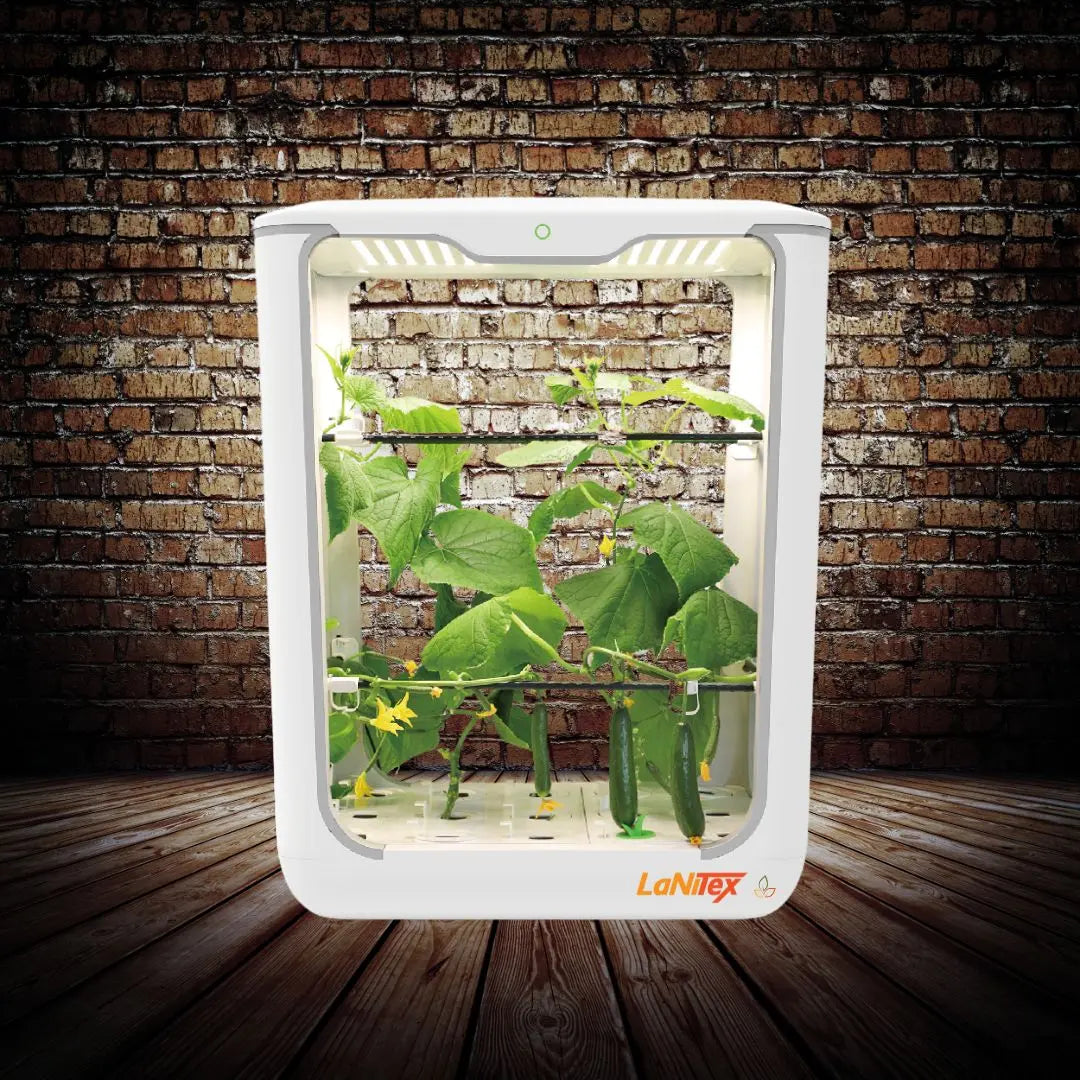
What surprised me most was the speed. From the first true leaves to a harvestable head took about nine weeks in the Smart Grow Box on our kitchen bench. The kids tracked it like a science experiment, photographing the head growing each Sunday morning. By week six, our youngest was asking when "her" broccoli would be ready. By harvest day she was demanding it with dinner.
Two things I did not expect. First, the leaves taste better than the heads: sweet, tender, miles ahead of any supermarket bunch. Second, broccoli is dramatic. The plant goes from "nothing happening" to "massive crown" in about ten days near the end. Fair point. Patience is the only thing the system asks of you.
We grew through autumn on the Coast at water temperature 21 °C, EC 3.0 mS/cm at head formation (above AU brassica guidance — plants tolerated it under close monitoring, but we'd start a beginner at 2.0–2.5 mS/cm), pH drifting between 5.8 and 6.2. A second crop is already in the system. The variety was Marathon, picked for its slower bolt habit. Spot on choice for the timing we wanted.
Choosing the right hydroponic system for broccoli
Four system types suit indoor broccoli growing. Deep Water Culture is the easiest entry point; roots sit in oxygenated water and the air pump does most of the work. Nutrient Film Technique scales better for serious yield, and Salman and Abdul Rasool (2023) demonstrated a modified NFT setup producing 45 ton/ha equivalent yields. Ebb-and-flow gives the best moisture management for brassicas, and is the format the LaNiTex Smart Grow Box uses across its fifteen grow sites. Tower systems offer vertical real estate, but the Grow Box Tall version gives broccoli the extra clearance it appreciates as the head matures.

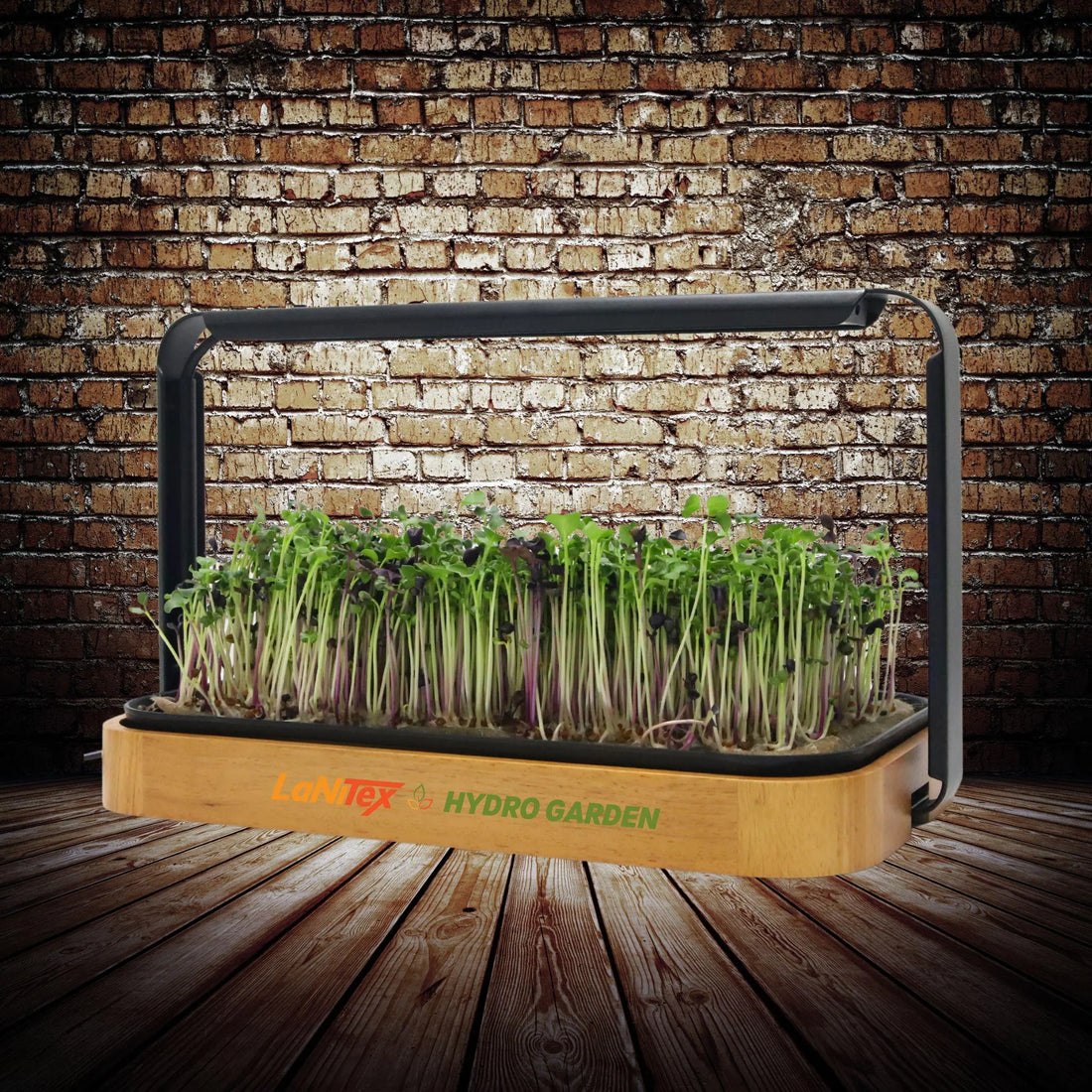
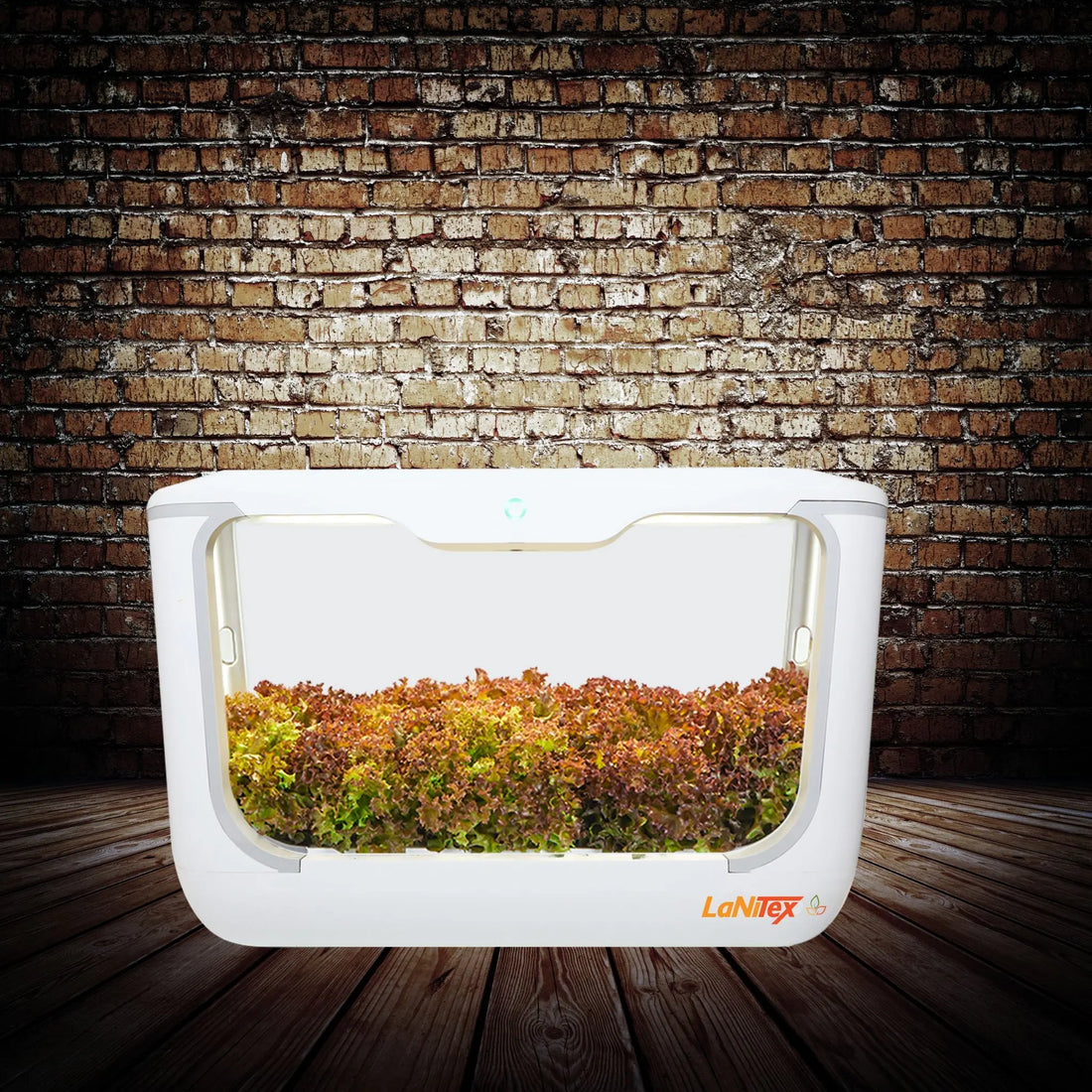
Grow your own broccoli indoors, out of reach of a bolting Queensland summer. The Smart Grow Box holds the cool water, pH and full-spectrum light steady on your bench — ideal for raising seedlings and compact varieties. You supply the seeds.
Grow your own broccoli →Personally tested at home on the Sunshine Coast before listing.
Don't try aeroponics for your first broccoli grow. It works beautifully when calibrated, but the mister timing is unforgiving and one stalled pump can wipe a six-week investment in a single afternoon.
Whichever system you choose, top up and check the reservoir each week through the long head-forming cycle, and keep light off the tank so algae can't take hold in the warm nutrient solution.
Seed-to-harvest timeline

Germination happens in 5 to 10 days when broccoli seeds sit in rockwool or coco coir at 18 to 22 °C. Broccoli is almost always grown from seed — it does not clone reliably from cuttings the way leafy herbs do, so rockwool seed starting stays the recommended route. Seedlings transplant into the hydroponic system after 2 to 3 weeks once they hold three to four true leaves. Vegetative growth runs 4 to 6 weeks before the central head begins to form, then 4 to 8 more weeks until that head is dense and ready to cut. Most home growers see a harvestable head between 50 and 90 days from seed, with hydroponic cycles often coming in around 60–75 days when temperature and EC are well managed.
Cut the central head when it reaches the size of a clenched fist and individual florets are still tight. Slice the stalk about 4 to 5 cm below the head with a clean, sharp knife, angling the cut so water sheds off the stem rather than pooling on it. Leave the plant in the system: many varieties throw smaller side shoots for a second harvest two to three weeks later. Don't overlook the leaves either — you can pick young outer leaves from about four weeks and use them like kale, a bonus crop while the head fills out. Store cut heads unwashed in the fridge for about five to seven days, or blanch and freeze them for longer keeping.
Best broccoli cultivars for hydroponic systems in Australia
Four cultivars deliver consistently for hydroponic broccoli Australia growers. Green Magic holds up well in warmer subtropical setups and produces uniform mid-sized heads, a strong pick for SEQ growers. Calabrese is the classic Italian heirloom, with smaller heads but reliable performance and a 65 to 75 day cycle. Marathon tolerates cooler nights and resists bolting better than most varieties, making it ideal for winter grows. Belstar is an F1 hybrid producing dense, tight heads in around 70 days.
For a compact system or a small grow-box footprint, broccolini or the heirloom De Cicco crop in less space than a full heading variety, which makes them a practical pick where bench space is tight.
If you want a quick harvest while the broccoli fills out, hydroponic radish is one of the fastest brassicas you can grow in the same system, often ready in about a month.
Mr Fothergill's, The Lost Seed, and Eden Seeds all stock broccoli seed suitable for Australian conditions.
Pests, bolting, and Australian climate-zone planting windows
Indoor broccoli faces fewer pests than its outdoor cousin, but aphids and caterpillar moths still find their way in through open windows. Tip burn shows up when calcium uptake stalls; usually a humidity or pH problem, not a nutrient one. Downy mildew is the one to watch in QLD humidity, so airflow around plants matters as much as nutrient strength.
A few quick symptom checks save a crop: yellowing lower leaves usually mean nitrogen is running low; a hollow or browning stem points to heat stress or a boron shortfall; and bitter heads almost always trace back to temperatures climbing too high during head formation.
Outdoor sowing windows shift by climate zone. Temperate growers (Victoria, Tasmania, SA) sow February to April for autumn-winter harvest. Subtropical growers (Queensland, northern NSW) sow March to June for winter-spring harvest. Mediterranean zones (WA, SA coasts) sow March to May.
Don't try to push broccoli through a Brisbane summer outdoors. The heads will bolt before they form. Indoor hydroponics greatly reduces the bolt risk, provided you keep the air temperature below about 24 °C during head formation — sustained temperatures over 27 °C will still trigger bolting indoors.

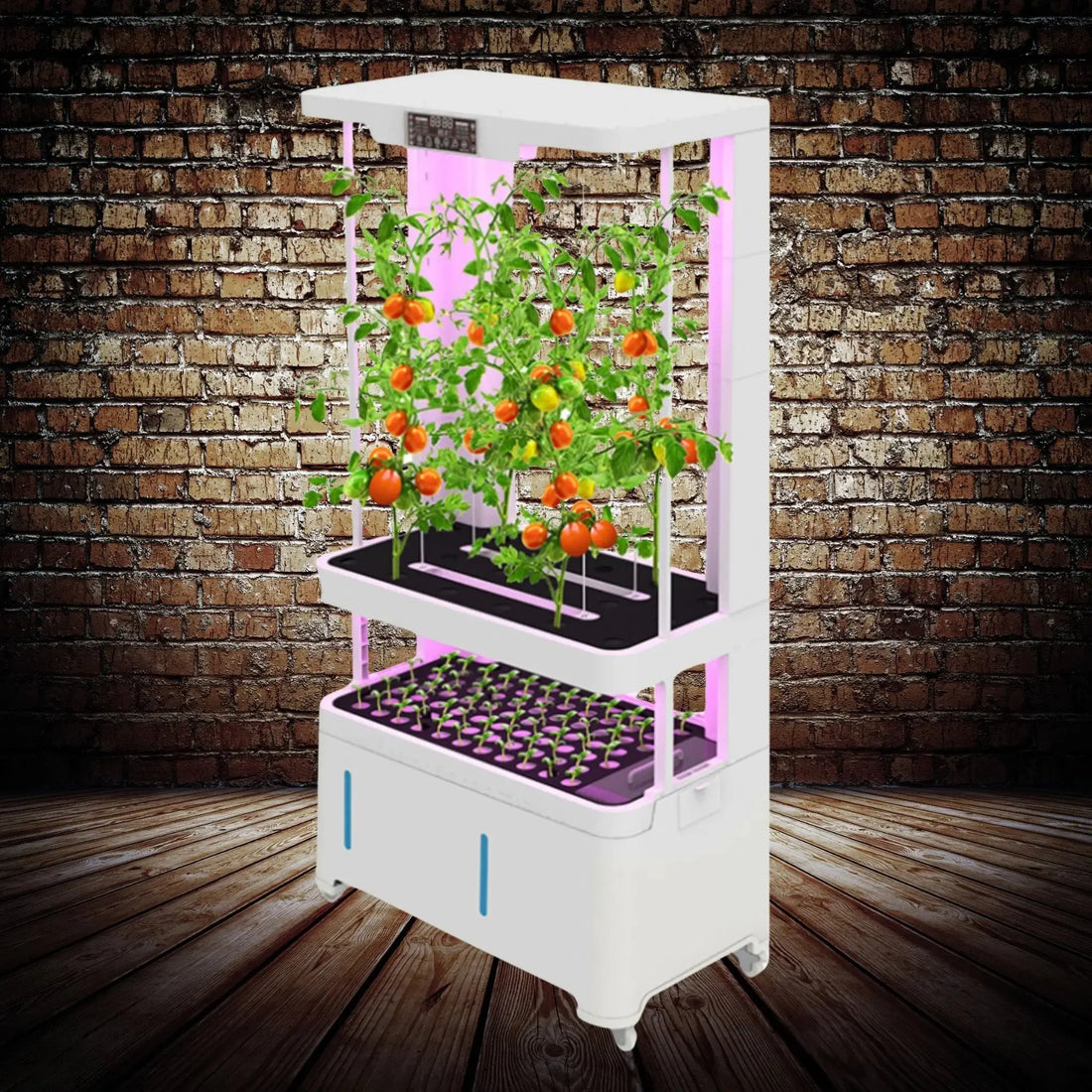
Want more grow sites for a rotation of brassicas and greens? The V5.2-A tower runs up to 72 planting sites under full-spectrum LED with a self-watering tank, so you can keep several crops going at once. You supply the seeds.
Scale up your grow →Personally tested at home on the Sunshine Coast before listing.
The full range
Find the system that fits your space


Supported in Australia - every model tested before listing.
Frequently asked questions
How do I grow broccoli hydroponically at home in Australia?
Can you grow broccoli hydroponically in a typical Australian home? Yes, provided you can keep the grow area cool. Start with seeds in rockwool, hold temperature at 18 to 22 °C, transplant to your hydroponic system after 2 to 3 weeks, run pH 5.5 to 6.5 and EC 1.8 to 2.5 mS/cm, give 14 to 16 hours of LED light per day, and harvest after 50 to 90 days.
What is the best hydroponic system for broccoli in a small Aussie backyard?
Ebb-and-flow gives the best moisture control for brassicas in a compact footprint. DWC is the simpler entry option. Either works for a small Brisbane balcony or a Sunshine Coast laundry corner. A DIY broccoli hydroponic setup Bunnings hardware can supply (pumps, timers, reservoir tubs) works in principle, but component matching matters; a purpose-built Smart Grow Box removes the guesswork.
What EC and pH should I use for hydroponic broccoli?
pH 5.5 to 6.5 (lower end during head formation). EC 1.8 to 2.5 mS/cm through the cycle, per Department of Agriculture and Fisheries Queensland guidance for leafy brassicas. Check both daily during head formation when the plant is at peak demand.
How much light does hydroponic broccoli need indoors?
12 to 16 hours per day of LED, with 14 to 16 hours of full-spectrum LEDs being the upper recommended end and PPFD 200 to 400 µmol/m²/s. Less than this and heads stay small. More risks bolting if temperature also climbs.
Which broccoli varieties grow best in hydroponic systems in Australia?
Green Magic and Belstar for subtropical conditions. Marathon for cool-tolerant winter grows. Calabrese for heirloom growers who don't mind smaller heads.
Why is my hydroponic broccoli bolting or going to seed early?
Heat is the usual cause. Broccoli bolts when temperatures consistently exceed about 27 °C; 18 to 24 °C is the ideal growing range. Indoor systems prevent this if you can hold temperatures cool; outdoor crops in QLD summer cannot. The second cause is light stress at the seedling stage.
How far apart should hydroponic broccoli plants be spaced?
20 to 30 cm between plants. Closer and you get small loose heads and downy mildew. Wider wastes grow-site capacity.
When should you plant broccoli in Australia?
Indoors in a hydroponic system you can grow broccoli at any time of year, because the setup controls temperature and light rather than the season. Outdoors it stays a cool-season crop: sow February to April in temperate zones (Victoria, Tasmania, SA), March to June in the subtropics (Queensland, northern NSW), and March to May in Mediterranean zones (WA and SA coasts).
How long does broccoli take to grow?
Most home growers harvest a head 50 to 90 days from seed, and hydroponic cycles often come in faster, around 60 to 75 days, when temperature and EC are well managed. Allow 5 to 10 days to germinate, 2 to 3 weeks to transplant, then several weeks of vegetative growth before the central head forms.
Will broccoli grow back after you harvest it?
Yes. Leave the plant in the system after you cut the central head and many varieties push out smaller side shoots you can pick for another two to three weeks. The side shoots are looser than the main crown but just as tender, which stretches a single planting into a longer harvest.
Can you freeze home-grown broccoli?
Yes. Blanch the florets in boiling water for two to three minutes, cool them in iced water, drain well, then freeze in airtight bags for up to a year. For shorter storage, keep cut heads unwashed in the fridge for about five to seven days.

Start your own broccoli grow
Sources
- Salman, A. D., & Abdul Rasool, I. J. (2023). Response of Yield and Quality of Broccoli to Type of Nutrient Solution Under Hydroponic System. Iraqi Journal of Agricultural Sciences, 54(6). "The alternative solution (ABEER) recorded a significant increment for each of the leaves percent of phosphorous, manganese and zinc concentration."
- Nadia, Z. M., Roy, P., & Salam, M. A. (2020). Production Potential of Broccoli (Brassica oleracea var. italica) in Hydroponics and Tilapia-Based Aquaponics. Journal of Bangladesh Agricultural University, 18(3). "Broccoli is rich in vitamin A, vitamin C, riboflavin, iron, calcium and other nutrients necessary for strengthening innate immune system."
- Moreno, D. A., et al. (2008). Basis for the New Challenges of Growing Broccoli for Health in Hydroponics. CEBAS-CSIC. (Foundational hydroponic broccoli research from 2008 establishing nutrient-density principles still cited today.)
- CSIRO. (2026). Crops research. Australian Government scientific research agency supporting the Australian $18 billion horticulture industry (ABS 2023-24; Hort Innovation reports record $18.4 billion in 2024-25): "safe, nutritious and novel horticulture ingredients and products from farm to fork."
About the author
Written by Laszlo Bulatko, founder of LaNiTex Hydro Garden, based on the Sunshine Coast (Sippy Downs, QLD 4556). Laszlo started his career at IBM and Diageo in Hungary before spending 15 years in sales, marketing, and brand development across the Hungarian fishing tackle market, where he helped establish 12 percent market share for brands including Okuma, Mustad, and Savage Gear. He founded LaNiTex in December 2024 and now runs the Term-Grow Enrolment programme placing indoor hydroponic systems in Queensland primary school classrooms. He personally tested every product in the LaNiTex catalogue before listing it, including the hydroponic broccoli setup discussed above.