
A Queensland summer can turn butterhead lettuce bitter in a fortnight, and the usual advice - water more, feed more - often makes it worse. Indoors, in water, under a light you control, that whole problem mostly disappears.
Quick answer: Butterhead lettuce grows well hydroponically in Australia at a pH of 5.5 to 6.5, an EC of 0.8 to 1.2 mS/cm, and 14 to 16 hours of light a day. Hold the air under 24C by day and 18C at night, the water below 24C, give it steady airflow, and cut the head at 30 to 45 days from transplant.
Key takeaways:
- Butterhead hearts, so give it 20 to 25 cm between plants - about double a loose-leaf lettuce.
- Hold EC at 0.8 to 1.2 mS/cm, never past 1.6 - a strong mix invites tipburn.
- Tipburn is a calcium transport failure driven by growth rate, not a shortage. Sprays do not fix it.
- Warm air, not warm water, is what bolts the plant - and the risk climbs with sustained heat, rather than flicking on at one number.
- Seed germination varies: published windows run from 1 to 10 days.
| Parameter | Butterhead target |
|---|---|
| Method | DWC, NFT, or pod |
| Medium | Rockwool or sponge plug |
| Germination | 1 to 10 days (published range) |
| Harvest | 30 to 45 days |
| pH | 5.5 to 6.5 |
| EC | 0.8 to 1.2 mS/cm |
| PPFD | 150 to 250 umol/m2/s |
| Photoperiod | 14 to 16 hours |
| Air temp | Below 24C day, 18C night |
| Humidity | 50 to 70 percent |
| Water temp | Below 24C |
| Spacing | 20 to 25 cm |
So can you grow lettuce hydroponically and beat the supermarket shelf? For this one, yes - butterhead lettuce hydroponics is forgiving, because the plant is shallow-rooted and fast. The catch is heat.
What is butterhead lettuce?
Butterhead lettuce (Lactuca sativa var. capitata) is a soft-leaved lettuce that forms a loose, open rosette with a pale buttery heart. The leaves are floppy and mild instead of crisp, which is how butter lettuce got its name. Shops also label it Bibb or Boston.

The one trait that matters is hearting: butterhead closes a head, and loose-leaf types never do. So that difference drives the spacing, the airflow, and nearly every problem below.
Four cultivars suit Australian conditions. Buttercrunch is widely reported as the most heat-tolerant, so it is the usual starting point. Also, Summer Bibb holds up in warmth. Cultivar performance shifts with local climate and system, so treat those heat-tolerance claims as a guide rather than a guarantee. Then there are Boston, the classic soft head, and Tom Thumb for a benchtop.
Best growing conditions for hydroponic butterhead lettuce
A hydroponic butterhead lettuce crop wants a pH range of 5.5 to 6.5. Adjust slowly and re-check after an hour, instead of chasing the meter. For nutrients, run an EC of 0.8 to 1.2 mS/cm from a general-purpose leafy-green A+B formulation sold by an Australian supplier, which carries the calcium and magnesium a hearting lettuce needs. If your meter reads ppm instead, that is roughly 400 to 600 ppm on the 500 scale. Even so, treat 1.6 mS/cm as a hard ceiling - anything stronger outruns the plant's calcium supply, and that means tipburn.
Light is simpler. Aim for a PPFD of 150 to 250 umol/m2/s over a 14 to 16 hour day, with the fixture 20 to 30 cm above the canopy. Then there is airflow, the variable most guides skip. A breeze keeps water moving and humidity away from the heart. In practice, one small fan is the cheapest tipburn insurance.
Air and humidity are the pair most home guides leave out, and they decide whether the other numbers hold. The University of Kentucky's controlled-environment lettuce profile puts the ceiling at 24C by day and 18C at night, and holds relative humidity at 50 to 70 percent. That humidity band is not about comfort - it is tipburn control. Sit too damp and the plant stops transpiring, which is precisely how calcium stops reaching the youngest leaves. So the fan and the humidity target are the same fix wearing two hats.
Germinating butterhead lettuce seed
Sow 2 to 3 seeds per hole into a rockwool cube, sponge plug, or germinating mat, and keep them damp but never wet. Published germination windows range from 1 to 10 days, so do not panic on day four. Then thin to the strongest, and transplant once true leaves appear and roots show through the plug. Also buy seed from an Australian supplier - LaNiTex sells hardware, not seed. The Seed Collection, Eden Seeds and Seedmart all list butterhead varieties, and Eden Seeds carries Buttercrunch under that name.
Transplanting and spacing
On the other hand, give each plant 20 to 25 cm of clear space - roughly double what a loose-leaf type like oakleaf lettuce needs. It is not padding: a butterhead has to close a head, and a crowded one stays an open rosette with a wet, still centre. That means spacing is the difference between a head and a handful of leaves. If you are putting your own system together rather than buying one ready-made, 38 to 75 mm net pots (1.5 to 3 inch) are the usual size for lettuce, sized to seat the plug the seedling started in.
What I've learned from growing related plants
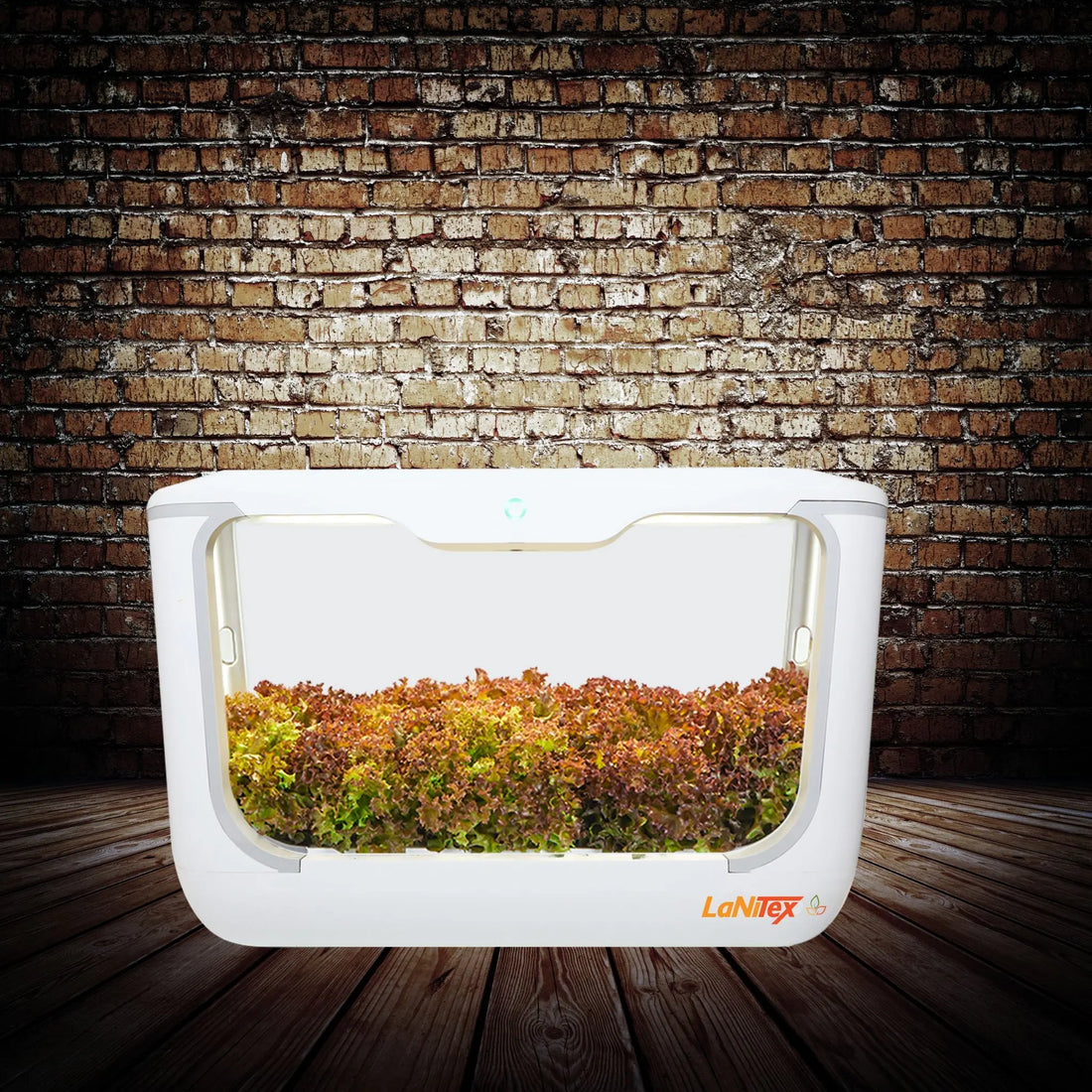
Honest disclosure first: I have not grown butterhead lettuce in my own systems. But I do grow other lettuces and leafy greens in a Smart Grow Box in my kitchen on the Sunshine Coast, and those crops have been ready to cut in 25 to 35 days.
So what carries across? Almost everything except the head. For example, lettuce roots behave the same way in water whatever the type. And the two failures I hit most often - warm water in January, and a mix made too strong - are the same two the research pins on butterhead tipburn and bolting.
The hearting does not carry across. My loose-leaf crops forgive tight spacing because they never close a head. Butterhead does not. The spacing and timing figures above therefore come from Australian growing guides, not my own bench. Treat them as researched rather than tested, and tell me how it goes in your setup.
Get a fresh grow guide like this every fortnight
Join the LaNiTex Hydro Garden newsletter for practical hydroponic, microgreen and mushroom growing tips for Australian homes. Subscribe to download a free hydroponics starter guide (PDF) and get 10% off your first order.
Join the newsletter →Which hydroponic system suits butterhead lettuce?
Most butter lettuce hydroponic builds fall into five shapes, and butterhead lettuce works in any of them. So the deciding factor is not the system - it is whether you hold the root zone cool and give each head its 20 to 25 cm.

| System | How it works | Suits butterhead? |
|---|---|---|
| Deep water culture | Roots in an aerated reservoir | Best for beginners; buffers heat |
| Nutrient film technique | Thin film down a channel | Good, but warms fast |
| Kratky | Static reservoir, no pump | Cheapest; struggles in January |
| Vertical tower | Recirculates down stacked sites | Strong for volume |
| Benchtop pod | Closed box, tank and LED | Simplest indoors; fewest sites |
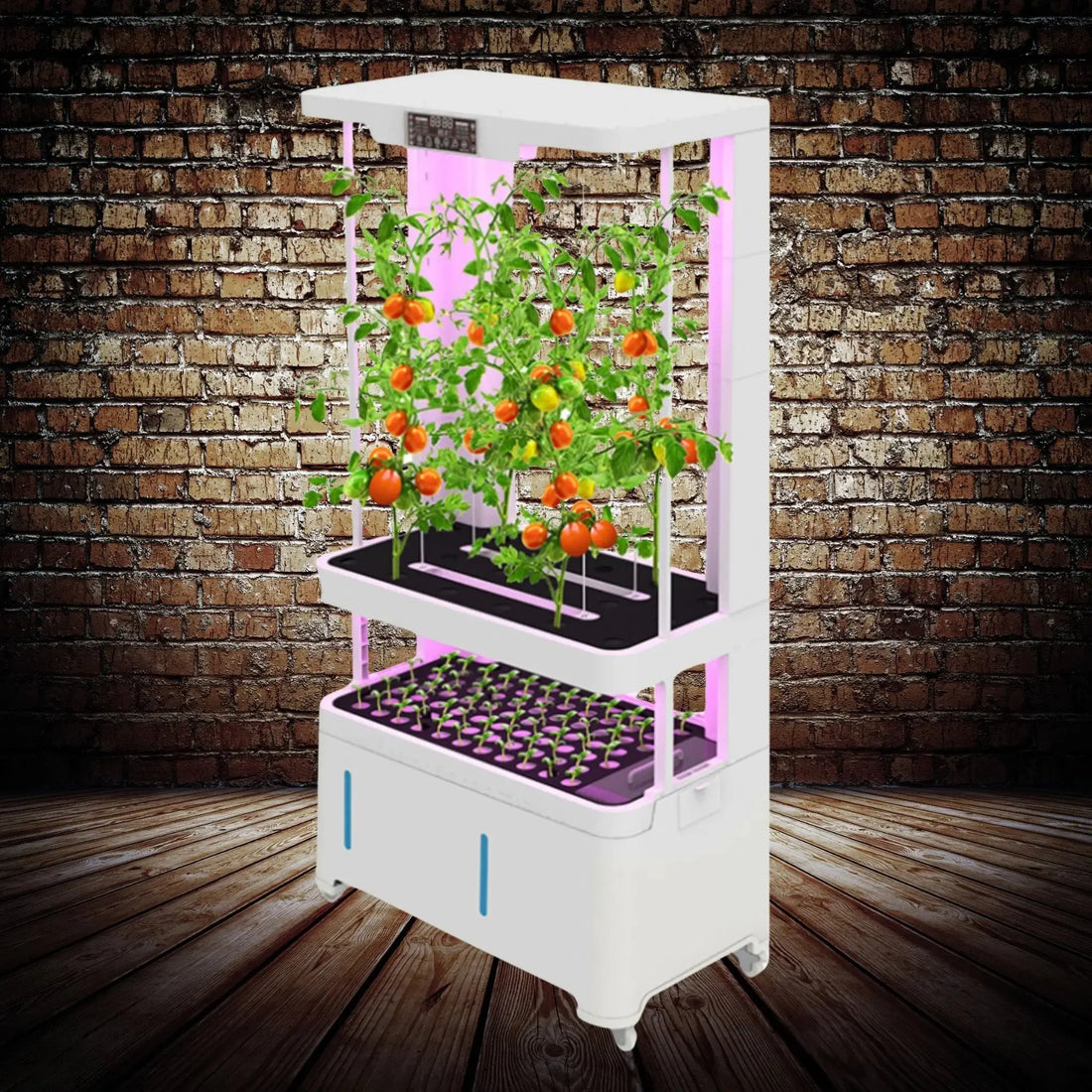
Any of them beats a garden bed on water, though: Sustainable Gardening Australia reports that "Farms utilizing hydroponics use up to 90 percent less water". Power and floor space are the trade-off: a V5.2-A tower draws 1.2 kWh a day in 0.3 square metres.

Run a lettuce crop indoors, off the outdoor calendar - the self-watering tank and full-spectrum LED do the daily work. You supply the seed and nutrients.
Start growing butterhead →Personally tested at home on the Sunshine Coast before listing.
When to grow butterhead lettuce in Australia
Outdoors, butterhead lettuce is a cool-season crop and the calendar is unforgiving. Business Queensland puts it plainly: "a cool-weather variety grown under warm conditions will tend to bolt". The plant gives up on leaves and runs to seed, turning bitter on the way.
But indoors the calendar matters far less, which is the whole argument for growing it in water. Less, not never: room heat and day length still set the ceiling. In Brisbane and on the Sunshine Coast, an autumn-to-winter sowing works outdoors and summer does not. Queensland's commercial crops shift between the Lockyer Valley, the Darling Downs, and the Granite Belt for the same reason. On the other hand, coastal New South Wales, Victoria, and South Australia hold a longer spring and autumn.
Pick the variety for the temperature you have, instead of the packet picture.
Why does butterhead lettuce get tipburn or turn bitter?
Tipburn is the brown, dried edge on the youngest inner leaves of a hearting lettuce - a calcium transport failure, not a shortage. Agriculture Victoria calls it a disorder that "has been mostly recognised as a calcium deficiency disorder, but is influenced by a number of factors, including climate and growth rate." Calcium travels with water, so when a growth surge outruns that flow, the newest leaves starve while the reservoir sits full. Australian summers are the trigger: "In summer, a lettuce crop grows at more than twice the rate in winter." Then the counter-intuitive part. Adding calcium does not fix it: "Supplementary calcium applications using foliar sprays don't effectively increase calcium levels or reduce tipburn and aren't recommended for tipburn control." The real fix is a steady growth rate - steady EC, a topped-up reservoir, and air across the canopy.

Bitterness is a different fault with a related cause, and the trigger is the air rather than the reservoir. Butterhead lettuce turns bolt-prone under prolonged heat and swinging temperatures instead of at one clean cutoff, so treat the mid-20s as the zone where risk climbs, not a line the crop crosses. Day length pushes the same way: lettuce is a long-day plant, so heat and long days compound. A frozen bottle in the reservoir still protects the roots, but it will not stop a hot room bolting the crop - that is the honest limit of a Queensland January. Also watch for downy mildew, aphids, pythium root rot, and fungus gnats. But never chase speed with a strong mix - it causes both faults.
How and when do you harvest butterhead lettuce?
In practice, cut the whole head at the base with a clean knife once it feels soft but full, at roughly 30 to 45 days from transplant. Or treat it as cut-and-come-again: pick outer leaves and leave the heart going.
But will it regrow? Partly. Cut above the crown and you get a second, looser flush, never a second proper head. So most growers replant.
Storage matters more here than in cooler countries. Butterhead has the softest leaf of any lettuce, and a Queensland bench sits well above a European one. So get the head into the fridge quickly, unwashed, in a loose bag. It keeps about a week, but wash it only when you eat it.

Growing more heads than a bench will hold? The V5.2-A tower fits 72 planting sites into 0.3 square metres of floor. You decide what fills them.
Scale up your grow →Personally tested at home on the Sunshine Coast before listing.
The full range
Find the system that fits your space


Supported in Australia - every model tested before listing.
Frequently asked questions
What EC and pH should I use for hydroponic butterhead lettuce in Australia?
Run an EC of 0.8 to 1.2 mS/cm and a pH of 5.5 to 6.5, with 1.6 as the ceiling. In practice, sit low through an Australian summer.
How many hours of light does hydroponic butterhead lettuce need indoors?
Give it 14 to 16 hours a day, with a dark period every night. Lettuce gains nothing from 24-hour light, so a plug-in timer is enough.
How long does butterhead lettuce take to grow in a home hydroponic system?
Roughly 30 to 45 days from transplant, plus the germination window before that. Even so, a fast crop is a tipburn-prone crop.
Which hydroponic system is best for growing butterhead lettuce at home?
Deep water culture suits most home growers, because the water volume resists the swings that bolt butterhead lettuce here. On the other hand, towers suit bigger crops.
What temperature is ideal for hydroponic butterhead lettuce in Australian summers?
The trap is treating it as one number. Keep the solution below 24C for healthy roots, and hold the air under 24C by day and 18C at night, because air is what bolts the plant. Sustained heat matters more than any single reading.
How close should my grow lights be to butterhead lettuce seedlings?
About 20 to 30 cm above the canopy, then adjust by eye. Pale, cupped leaves mean too close. But leggy stems mean too far.
Why are my hydroponic butterhead lettuce leaves bitter or tip burning?
Two different faults. Bitter means the plant bolted, almost always from heat. Brown edges, however, mean tipburn - growth outrunning calcium. So steady EC and airflow fix it.
Sources
- Agriculture Victoria, "Tipburn in lettuce" (linked above)
- Business Queensland, "Growing lettuce"
- Sustainable Gardening Australia, "The pros and cons of hydroponic growing"
- Royal Horticultural Society (UK), "Lettuce: grow your own"
- University of Kentucky Center for Crop Diversification, "Hydroponic Lettuce Production in Controlled Environments" (CCD-CP-63)
All retrieved 17 July 2026.
About the writer
Laszlo Bulatko founded LaNiTex Hydro Garden in December 2024, based on the Sunshine Coast in Queensland (ABN 47 682 768 967). Before hydroponics he spent 15 years in sales, marketing, and brand development in the Hungarian fishing-tackle trade, after starting his career at IBM and Diageo. He hand-picked and tested each product at home before listing it, and runs Term-Grow, putting grow boxes into Queensland primary school classrooms. More about Laszlo.