
You can pull crisp, peppery radishes from an indoor system in about a month, no garden bed required.
Quick answer: Grow radish hydroponically in Australia at pH 5.8-6.5 and EC 1.2-2.2 mS/cm, under 12-16 hours of light, in a media-based system such as Kratky, Dutch bucket or a media bed. Sow 1-2 seeds per site, thin to one, and harvest crisp roots in 25-40 days after transplant.
Radish (Raphanus sativus) is about the quickest crop you can grow in a hydroponic system, which makes it a smart first pick for Australian growers who want an indoor result in a hurry. A month, give or take. Under controlled conditions the roots come out even and clean, without the flea beetles and heat spikes that wreck outdoor radish beds.
Radish hydroponics also takes soil-borne rot off the table and lets you hold pH and EC steady, so a hot Sunshine Coast summer no longer forces the crop to bolt. We ran indoor growing trials at our Sunshine Coast facility before listing our systems, and the climate control that keeps lettuce sweet does the same job here: it holds the root cool enough to stay crisp instead of turning woody. Growing radishes hydroponically indoors means you are not waiting for the right season.
The rest of this guide walks through the biology, the setup numbers, the best varieties and an Australian growing calendar.
What is hydroponic radish?
Hydroponic radish is simply Raphanus sativus grown in a soilless system, with its roots fed by a nutrient solution instead of garden soil. The common table radish is Raphanus sativus var. sativus, a member of the brassica family alongside cabbage and mustard. It is a cool-season annual, which means it does its best root-building in mild temperatures and tends to bolt (send up a flower stalk) when things get hot.
That cool-season biology is exactly why radish suits indoor hydroponics in Australia. Outdoors, a warm spell pushes the plant into flowering and the root turns woody and pithy. Indoors, you hold the temperature at 13-24C and the plant stays focused on making a plump, crunchy root. Radish also has a short taproot rather than a sprawling root mass, so it fits neatly into a media-based system where the root has a little depth to swell into.
Setting up your hydroponic radish system
Radish is not fussy, but it rewards you for hitting the right numbers. Aim for these targets:
- pH: 5.8-6.5
- EC: 1.2-2.2 mS/cm
- Light: 200-400 micromol/m2/s (PPFD)
- Photoperiod: 12-16 hours per day
- Temperature: 13-24C
- Humidity: 50-70%
Which system suits radish? Because radish forms an actual root you eat, it needs media depth. Kratky (a passive, no-pump method), Dutch bucket, deep water culture (DWC) and ebb & flow all give the root room to swell. A bare NFT film - where roots sit in a thin trickle of water on a flat channel - is less suitable for a root crop like this; it works far better for leafy greens. If you are choosing between methods, favour a media bed or Kratky-style setup so the developing root has something to push into.
As for the growing medium itself, radish does best in an inert, free-draining substrate. Clay pebbles (LECA), coconut coir, or a rockwool starter cube all work well, held in a net cup or a shallow media bed. Aim for something open enough to drain freely but able to hold enough moisture for the root to firm up - avoid a dense, waterlogged mix, which is the fastest route to root rot.
Don't overcrowd. One radish per site is the rule once seedlings are up.

Crisp radishes indoors, all year
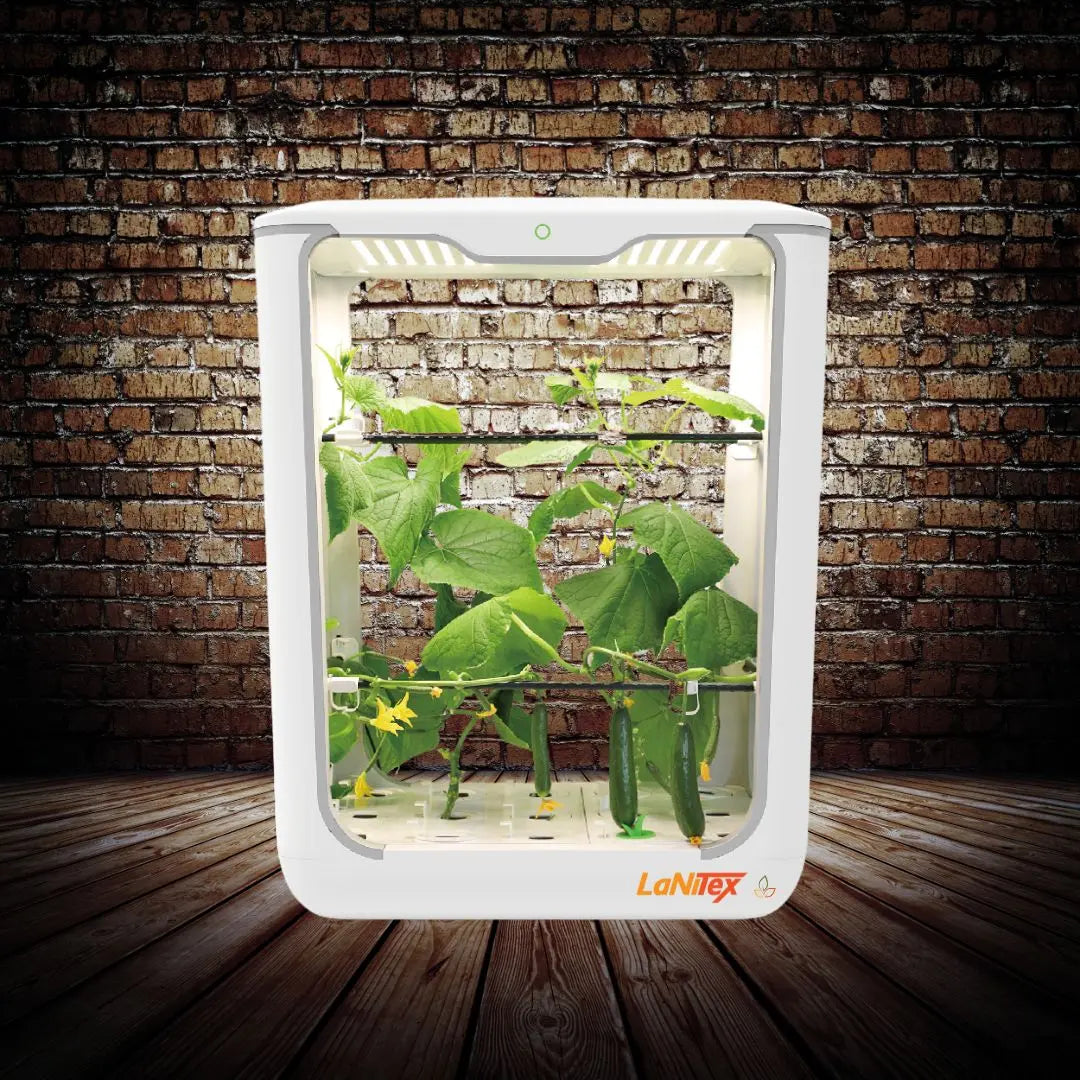
The Smart Grow Box gives you the media depth plus pH, EC and light control to grow crisp radish roots indoors on the Sunshine Coast - no bed, no bolting, no guesswork. Available in 15-hole and 67-hole variants.
Tested at our Sunshine Coast facility before listing. Ships Australia-wide.
Grow radish indoors year-roundTight on space? The Grow Box Tall version holds 15 plants, stacks up to 4 units, and supports cotton and substrate methods - handy for growing more radish in a small footprint. For the wider picture, see our guide to hydroponic system essentials.
What I've learned about growing radish from research
Being straight with you: I have not yet run a full radish crop through our own systems, so this section is research-led rather than a first-hand harvest log. What I can share is context. At LaNiTex we have done indoor testing on the Sunshine Coast across several crops, and my own documented home results - microgreens ready in under a week, lettuce in 25-35 days - line up with what the horticultural literature says about fast, cool-season plants under controlled light and nutrition.
Radish sits firmly in that fast bracket. The peer-reviewed nutrient research (see the Springer study in the Sources) confirms radish responds well to balanced hydroponic feeding, and Sustainable Gardening Australia's work on hydroponics backs the water-efficiency case. So the numbers in this guide are drawn from established cultivation science, not from a single lucky grow. When I do run radish through the Grow Box, I will update this section with real timings. For now, treat these figures as a reliable starting point rather than a personal claim, and expect to fine-tune EC and light to your own room.
Choosing radish varieties for hydroponics
Not every radish behaves the same indoors. These cultivars are the reliable performers:
- Cherry Belle: the classic round red globe, fast and forgiving. A great first radish - the Cherry Belle cultivar is ready in roughly 25-30 days.
- French Breakfast: oblong, red-and-white, mild flavour, also 25-30 days.
- White Icicle: a long, tapered white root with a gentle bite - the White Icicle cultivar wants a bit more media depth.
- Black Spanish: the Black Spanish radish cultivar (sometimes just called black radish) has a dark skin, firm flesh and a stronger, spicier taste.
- Daikon: the large Asian radish. It needs the most depth and time, up to 40 days, so give it a deep Dutch bucket or media bed.
For a first grow, start with Cherry Belle or French Breakfast. Save Daikon for once you have your system dialled in.

Nutrients, germination and harvest timeline
Radish likes a balanced feed that leans towards potassium and calcium rather than heavy nitrogen. A workable target profile:
- Nitrogen: 160 ppm
- Phosphorus: 50 ppm
- Potassium: 200 ppm
- Calcium: 140 ppm
- Magnesium: 70 ppm
- Iron, Manganese, Zinc: trace, around 1 ppm each
Sow 1-2 seeds per hole; germination takes 3-7 days at 18-24C. Once seedlings are up, thin to a single plant per site. Radish is usually best sown straight into its final spot - the taproot dislikes being disturbed and can fork or split if it is moved late. If you do start seeds in a plug or starter cube, transplant while the seedling is still tiny, within the first week or so before the root starts to bulk up, to avoid misshapen radishes. Roots reach maturity 25-40 days after transplant, and the full seed-to-harvest cycle runs about 30-50 days depending on cultivar and conditions.
Harvest when the shoulders of the root are about 2-3 cm across and pushing up out of the medium - don't wait too long, or the root turns woody and pithy. Lift the whole plant gently rather than yanking it, twist off the leafy tops, and give the roots a rinse. Radishes keep best with the leaves removed: store the roots in an airtight container or bag in the fridge and they will stay crisp for a couple of weeks.

One of the big draws of this method is water efficiency. According to Sustainable Gardening Australia, "Farms utilizing hydroponics use up to 90 percent less water" than soil growing - a strong argument in a dry country like ours.
Australian growing calendar and common problems
Radish is a cool-season crop, so your best Australian planting windows are autumn and winter - roughly March to August across Queensland, the Sunshine Coast and Brisbane. In warm conditions radish bolts and the root goes woody and pithy, which is the single biggest reason outdoor crops disappoint. Indoor climate control sidesteps that problem: hold the room cool and you can grow radish through the Australian autumn and winter planting windows and well beyond.
Here are the common problems and their fixes:
- Small or no roots: usually too much nitrogen, not enough light, or overcrowding. Thin to one plant per site and raise the light level.
- Aphids: treat with neem oil or introduce ladybugs.
- Powdery mildew: improve airflow and control humidity.
- Root rot: increase aeration and drainage; check your water is not sitting stagnant.
- Yellowing leaves: a nitrogen imbalance - recheck your EC and nutrient mix.
- Wilting: keep water temperature at 18-22C and add aeration.
Don't chase bigger roots with extra nitrogen; that grows leaves, not radishes.
Frequently asked questions
How do you grow hydroponic radish in Australia?
Grow radish hydroponically in a media-based system (Kratky, Dutch bucket or a media bed) at pH 5.8-6.5 and EC 1.2-2.2 mS/cm, under 12-16 hours of light at 13-24C. Sow 1-2 seeds per site, thin to one, feed a balanced solution, and harvest in 25-40 days. Autumn and winter are the natural windows, but indoor climate control lets you grow year-round.
What is the best EC for hydroponic radish?
The best EC for hydroponic radish is 1.2-2.2 mS/cm. Start seedlings at the lower end (around 1.2) and lift towards 2.0-2.2 as the plant bulks up its root. If your leaves yellow or growth stalls, recheck the EC before adjusting anything else.
What pH should hydroponic radish be kept at?
Keep hydroponic radish at pH 5.8-6.5. This range keeps all the key nutrients available to the root. Check it every day or two, since pH drifts as the plant drinks, and correct gradually rather than in big swings.
Which hydroponic system is best for radish?
A media-based system is best for radish - Kratky, Dutch bucket or a media bed - because radish forms a root that needs depth to swell into. Bare NFT film is less suitable for a root crop, as it is designed for leafy greens sitting in a thin channel of water rather than for bulking roots.
How long does hydroponic radish take to harvest?
Hydroponic radish is ready 25-40 days after transplant. Cherry Belle and French Breakfast come in fast at 25-30 days, while Daikon takes up to 40. The full seed-to-harvest cycle, counting germination, runs about 30-50 days.
What radish varieties grow best hydroponically?
Cherry Belle, French Breakfast, White Icicle, Black Spanish and Daikon all grow well hydroponically. Cherry Belle and French Breakfast are the easiest starters; White Icicle and Daikon want more media depth; Black Spanish brings a stronger, spicier flavour.
Why are my hydroponic radish roots small?
Small hydroponic radish roots usually come from too much nitrogen relative to potassium, not enough light, overcrowding, or temperatures that are too warm - all of which push the plant into leaf growth over root growth. Thin to one plant per site, raise the light, ease off the nitrogen and keep the room cool.
When should you plant radish in Australia?
In Australia, plant radish in autumn and winter - roughly March to August across Queensland, the Sunshine Coast and Brisbane - because it is a cool-season crop that bolts in the heat. Indoors in a hydroponic system you can plant it year-round, since you control the temperature and light.
Do hydroponic radish need companion plants?
No. Companion planting is a soil-garden technique for deterring pests and improving soil, and a sealed indoor hydroponic system does not need it. If you want to fill spare sites, grow other cool-season leafy greens or brassicas that share radish's pH 5.8-6.5 and EC 1.2-2.2 mS/cm.
About the writer
Laszlo Bulatko founded LaNiTex Hydro Garden in December 2024 and runs it from the Sunshine Coast. Before hydroponics he started out at IBM and Diageo in Hungary, then spent 15 years in sales, marketing and brand development in the Hungarian fishing-tackle trade, where he helped build a 12% market share. At home his indoor grows produce microgreens in under a week, lettuce in 25-35 days, and capsicum and herbs year-round. He also runs the Term-Grow Enrolment program, placing grow boxes in Queensland primary school classrooms. LaNiTex products include hydroponic grow boxes, the benchtop Mini Grow Pot and the Smart Microgreen Kit. Read more on the about page.
Get our free indoor-growing guide
Practical, Australia-specific tips for growing radish, greens and more indoors - straight to your inbox.
Get the free guideReady to grow radish indoors? The Smart Grow Box gives you the media depth and climate control to grow crisp roots year-round on the Sunshine Coast.
Sources
- Sustainable Gardening Australia - "The pros and cons of hydroponic growing" - https://www.sgaonline.org.au/the-pros-and-cons-of-hydroponic-growing/
- Plasma Chemistry and Plasma Processing (Springer) - "A Nitrogen Alternative: Use of Plasma Activated Water as Nitrogen Source in Hydroponic Solution for Radish Growth" - https://link.springer.com/article/10.1007/s11090-025-10569-w