
Ornamental kale is sold as flowering kale. But it does not flower in the season you want it for. The colour comes from pigment in the central leaves, and it only arrives once the nights get cold enough. In Australia, timing is the whole game.
Quick answer: Ornamental kale (Brassica oleracea) is a cool-season brassica grown for its coloured leaf rosettes rather than its flowers. Colour develops when night temperatures hold near 10°C for two to four weeks. In Australia, that means sowing late summer to autumn so plants mature inside the coldest part of winter.
Key takeaways:
- The colour is leaf pigment, not bloom, and the real flowers are a let-down.
- Nights near 10°C, held for two to four weeks, are what trigger it.
- Only July takes the Sunshine Coast under that line, at 9.7°C. Brisbane's monthly means never do.
- So sow April to May in subtropical Queensland for a July peak, earlier in cooler zones.
- Do not bury the seed. It needs light.

What ornamental kale actually is
Ornamental kale is Brassica oleracea, the same species as cabbage and edible kale. Nurseries sell it beside ornamental cabbage, also the same species: kale types have curly, frilly leaves, cabbage types broad flat ones with contrasting edges. Breeders selected both for colour and form, not eating. The University of Wisconsin-Madison Extension puts it plainly: these plants are grown for their large rosettes of colourful leaves, not the flowers.
The trade name misleads. Flowering kale does flower, in spring, once it bolts, and by then the display is finished. And the cut grower Farmer Bailey is blunt: the blooms are not showy and make poor cut flowers.
Most series carry Japanese city names.
| Series | Leaf form | Colour range | Best for |
|---|---|---|---|
| Nagoya | Round, heavily crinkled, tight centre | Fuchsia, lavender, cream | Beds and pots |
| Osaka (cabbage type) | Compact, semi-waved, fast-growing | Pink, red, white centre | Small spaces |
| Peacock | Deeply serrated, feathery | Red or white | Texture |
| Chidori | Mounded, very curly margins | Cream-white or magenta centre | Containers, edging |

Australian catalogues carry 'Sunset', a red centre against dark outer leaves. And the florist trade uses the Crane series, cutting types bred for a 15cm head on a 60cm stem, though a Georgia trial found that length hard to reach.
Why ornamental kale changes colour
Cold does it. And the mechanism is documented better than most garden advice.
Sakata, the breeder behind the Nagoya series, explains the switch. When days sit under about 22°C and nights fall between 4 and 15°C, the plant stops making chlorophyll, and the anthocyanins already sitting in the leaf stop being masked by green.
Then the threshold. UW-Madison Extension reports vivid colour below 50°F, or 10°C. Southern Harvest, an Australian retailer, says plants start to colour once the temperature drops below 10°C. And the greenhouse bulletin e-Gro puts the trigger a little higher, below 55°F, or 13°C.
Duration is where the sources spread. Farmer Bailey specifies three to four weeks of 50°F at maturity, Johnny's Selected Seeds says the same, but a HortTechnology paper found ten to fourteen days of 55-60°F nights enough to start the change.
Consensus: nights near 10°C, held for two to four weeks. Colour starts earlier and warmer than that. Ten is where it turns vivid.
Here is the calculation nobody has published: lay the 10°C threshold over Bureau of Meteorology mean minimums for two south-east Queensland stations.
| Month | Sunshine Coast Airport, 32 years | Brisbane, 26 years |
|---|---|---|
| May | 13.8°C | 13.9°C |
| June | 11.2°C | 11.8°C |
| July | 9.7°C | 10.5°C |
| August | 10.1°C | 11.1°C |
| September | 13.0°C | 13.9°C |
Method: BOM stations 040861 and 040913, mean daily minimum vs the 10°C consensus.
The verdict is narrow. The Sunshine Coast crosses the line in July and sits just above it in August. But Brisbane never crosses it on a monthly mean, with 10.5°C its floor. Then again, a monthly mean averages the mild nights with the cold ones, so plenty of individual nights drop below 10°C long before the mean does. That, plus e-Gro's looser 13°C bound, is why south-east Queensland still gets a real colour window from June to August, peaking in July, with the Coast genuinely edging Brisbane. Colour will develop. Even so, it is unlikely to match cool-temperate intensity, and planning your autumn around vivid magenta will disappoint you.
What I've learned about growing ornamental kale from research
I have not grown ornamental kale. So what follows comes from reading growers who have, then checking their numbers against Australian climate data.
Two things surprised me. The first is that the threshold barely moves across a Japanese breeder, two American sources and an Australian retailer, while the duration moves a lot: ten days in one paper, four weeks in another. Growers agree on the trigger and not on how long it takes. And the second is the germination instruction: the seed needs light, so it should not be buried. That contradicts the depth printed on at least one Australian seed listing.
On the Coast I would treat July's 9.7°C mean minimum as the target and count backwards, rather than sowing whenever the packet says autumn. Seedlings are cheap. But timing is the one variable you control.
Get a fresh grow guide like this every fortnight
Join the LaNiTex Hydro Garden newsletter for practical hydroponic, microgreen and mushroom growing tips for Australian homes. Subscribe to download a free hydroponics starter guide (PDF) and get 10% off your first order.
Join the newsletter →When to plant ornamental kale in Australia
Work backwards from the cold, not forwards from the calendar. Only the subtropical row is calculated from station data; the other two are indicative. Sakata gives sowing-to-colour times of eight to nine weeks in 10cm pots and nine to ten in 15cm. So pick your coldest weeks and subtract.
| Climate zone | Sow | Colour expected |
|---|---|---|
| Subtropical (south-east Queensland) | April to May | July, moderate intensity |
| Temperate (indicative) | March to April | June to August |
| Cool (indicative) | February to March | May to August |
But the negative advice matters more than the table. Do not sow ornamental kale in spring. UW-Madison Extension is direct that these plants do not tolerate summer heat, and that you should wait until temperatures start cooling before planting out. This is an autumn and winter plant across Australia. A spring sowing runs the plant into heat and gives you a leggy stem with a flower spike, not a rosette.
Spacing and feeding for a full rosette
Spacing depends on what you want from the plant — and that is the question nobody answers.
For a wide, full rosette, give each plant room. Southern Harvest recommends 0.3m, which suits a container display; the Australian nursery guide Nurseries Online pushes wider, to 80cm apart in a garden bed. But Farmer Bailey spaces cutting crops far tighter at 4-6 inches (10-15cm): closer spacing gives thinner stems and smaller heads, which a florist wants and a bedding display does not.
Then plant deep. UW-Madison Extension advises burying the stem so the lowest leaves sit flush, steadying a top-heavy plant.
On feeding, the sources genuinely disagree. Sakata's European culture guide says excess fertiliser will delay leaf colouring, and Johnny's says to cease fertilising once cool nights arrive because continued feeding delays the colour change. But Sakata's own American sheet cites NCSU studies finding no relation between nitrogen and a delay in colouring. The advice lands in the same place either way: ease the rate back near maturity. One camp says it protects the colour, the other says it stops the lower leaves yellowing. Also, Southern Harvest adds a technique worth copying: once plants reach 15cm tall, remove the outer leaves, and repeat three to four times as the plant grows.

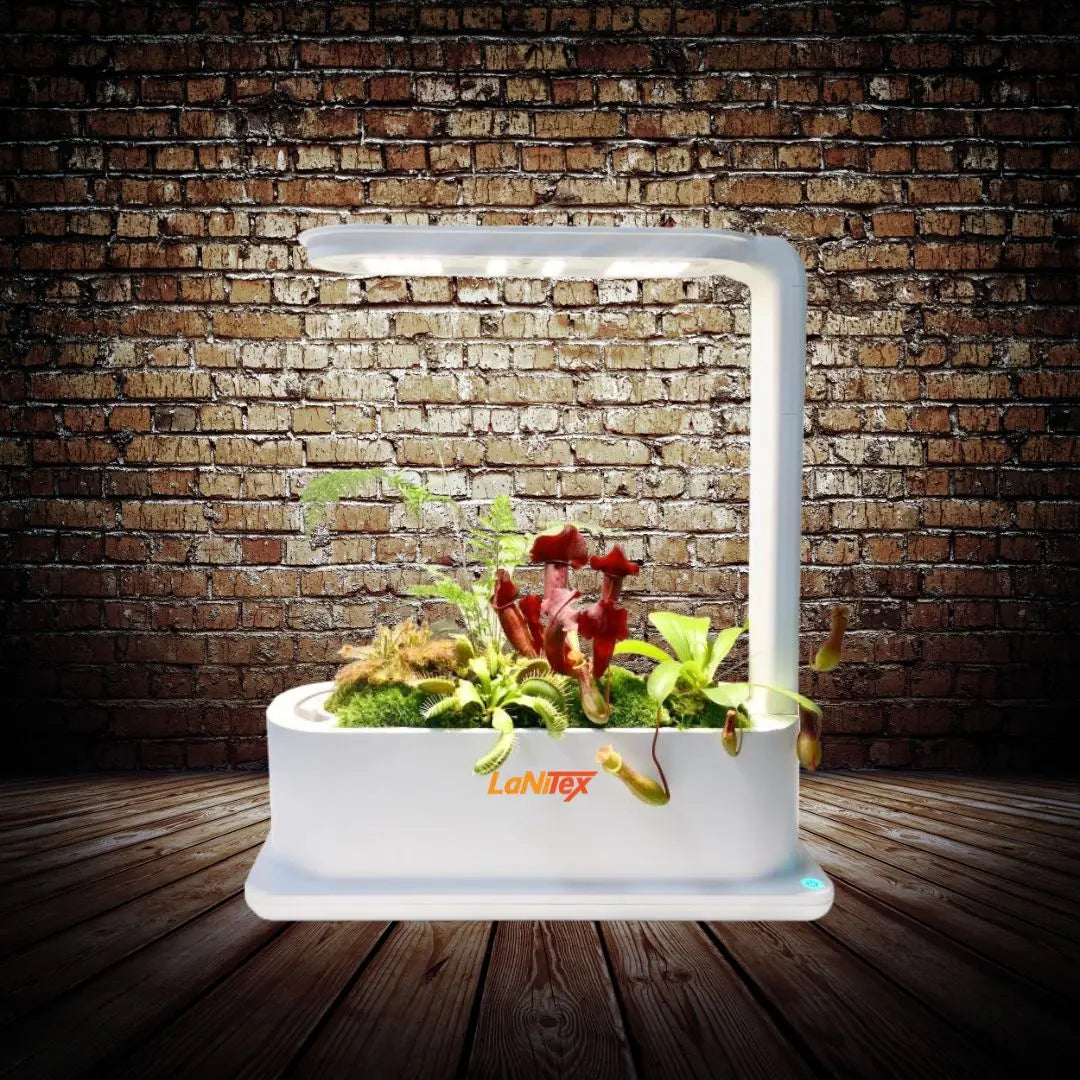
Raise a whole tray of seedlings at the same rate, so the batch is ready to transplant the week you want it. Fifteen holes, self-watering tank, full-spectrum LED.
Start a seedling batch →Personally tested at home on the Sunshine Coast before listing.
Growing ornamental kale hydroponically
A hydroponic setup will not give you colour. But it will give you timing, the part most growers get wrong.
Nothing on a home bench cools your nights. So the cold trigger comes from climate, never equipment. Instead, a controlled root zone produces faster, more even growth to transplant size, so a batch matures together and lands inside the June to August window.
Sakata's figures give a starting envelope: pH 5.8 to 6.2, and a finishing EC of 0.9 to 1.3 read as a 1:2 slurry. Conservative numbers, better than the wider ranges online. And a 4-in-1 water quality tester reads both directly.
Any recirculating method works. DWC, NFT and ebb and flow all suit brassicas, so the choice is about space. Also add LED grow lights for a dull autumn indoors. Our guide to growing kale in Australia goes deeper on nutrient handling, and the cabbage guide covers the same species from the edible side.
Ornamental kale as a cut flower: bouquets and arrangements
Cut the stem, not the flower. Florists use ornamental kale as a cut flower, but it is really cut foliage: the coloured rosette sits on a stem that cutting cultivars push to bouquet and arrangement length.
Then Farmer Bailey's spacing note applies: tight spacing gives thinner stems and the smaller heads florists prefer. But colour varies with conditions, and pink, rose and red can be hard to tell apart. Also, white will blush pink, worth knowing before you order for a fixed date.
And one warning the retail listings skip. A cut brassica stem develops a strong cabbage smell after a few days. So change the water often, strip leaves below the waterline, keep it cool.
Common mistakes to avoid
Burying the seed is the most common failure. Sakata says to cover lightly with coarse vermiculite because the seed requires light to germinate, and UW-Madison Extension says not to cover it at all. But Southern Harvest's kale sowing guide says 5 to 8mm deep. That guide is written for the edible types, and carrying its depth across to an ornamental seed is an easy mistake that costs you germination.
Then the other four:
- Sowing in spring, which produces bolting rather than colour.
- Feeding hard right through the colour break. Two of the three culture guides say it delays colouring, and the third says ease back anyway to stop the lower leaves yellowing.
- Expecting cool-temperate intensity from a subtropical winter.
- Eating it and being disappointed. The leaves are edible, but the plant was bred for looks, and it is tougher and more bitter than the kale it shares a species with.
Join the LaNiTex newsletter for 10% off your first order with code NEWSLETTERDISCOUNT10.

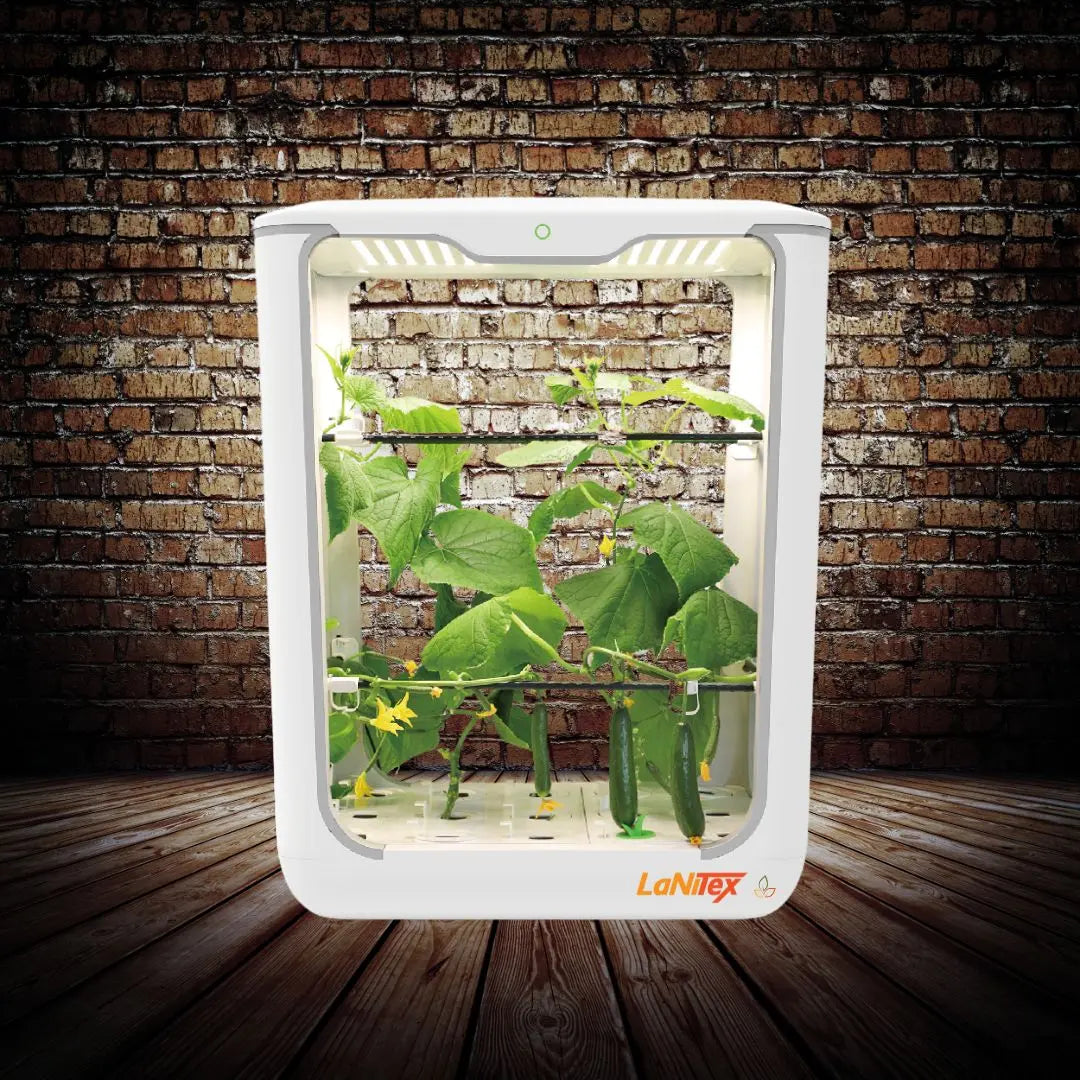
Growing something taller than a kale rosette? The Tall version gives the same even root zone with headroom for bigger plants.
Compare the Tall version →Personally tested at home on the Sunshine Coast before listing.
The full range
Find the system that fits your space


Supported in Australia - every model tested before listing.
Frequently asked questions
How do I grow ornamental kale in Australia?
Sow in late summer or autumn, press the seed onto the surface without covering it, and space plants about 0.3m apart. Then time the sowing so plants mature during your coldest weeks.
When should I plant ornamental kale for the best colour?
In subtropical south-east Queensland, sow April to May for a July peak, working back from Sakata's eight to ten weeks sowing-to-colour. Temperate zones sow March to April, cool zones February to March.
What is the botanical name for ornamental kale?
The botanical name is Brassica oleracea, the same as cabbage and edible kale. So ornamental kale is a selection bred for coloured rosettes. Series on Australian seed listings include Nagoya, Osaka, Peacock and Chidori.
Is ornamental kale edible?
Yes, and it is the same species as the kale you eat. But it was bred for appearance, not flavour, so expect tougher, more bitter leaves. Most growers use it as a garnish.
What pH and EC should I use for ornamental kale in hydroponics?
Sakata's culture guide gives an optimum pH of 5.8 to 6.2 and a finishing EC of 0.9 to 1.3, read as a 1:2 slurry. So start there, and ease the rate back near maturity to stop the lower leaves yellowing, not to hurry the colour break.
About the writer
Laszlo Bulatko founded LaNiTex Hydro Garden in December 2024 and runs it from the Sunshine Coast, Queensland. The catalogue covers hydroponic grow boxes, a benchtop Mini Grow Pot and the Smart Microgreen Kit, each hand-picked and tested at home before listing. He also runs Term-Grow, placing grow boxes in Queensland primary school classrooms. More about Laszlo.
Sources
- BOM station 040861, Sunshine Coast Airport
- BOM station 040913, Brisbane
- Sakata Ornamentals North America, Cultural Information: Ornamental Kale Nagoya
- Sakata Ornamentals Europe, Culture Guide: Brassica oleracea F1 Osaka
- UW-Madison Extension, Ornamental Cabbage and Kale
- Farmer Bailey, Kale (Ornamental) Growing Guide
- Southern Harvest, ornamental kale 'Sunset' seed listing
- Southern Harvest, Kale Growing Guide (edible types)
- e-Gro Alert 2021-10-32, Ornamental Cabbage and Kale
- Johnny's Selected Seeds, Ornamental Kale Production
- HortTechnology 28(6), Ornamental Cabbage and Kale Coloration
- Nurseries Online, How to Grow Ornamental Kale