
Growing hydroponic hot peppers and sweet capsicum indoors in Australia gives you year-round supply, climate-resistant yields, and full control over the variables outdoor growers can never fully manage — pH, EC, light hours, and root-zone temperature. We've tested every system, nutrient regime, and indoor pollination trick in this guide on our own gear at LaNiTex's Sunshine Coast facility before publishing, and the rest pulls from peer-reviewed hydroponic pepper research. Here's the quick reference, then the full guide.
Quick answer: Hydroponic peppers and capsicum thrive indoors in Australia at pH 5.5–6.0 (nutrient solution; root-zone tracks slightly higher at 6.0–6.5), EC 1.5–2.5 mS/cm vegetative scaling to 2.5–3.0 in heavy fruiting, 20–26 °C air temperature, 50–65% humidity, and 12–16 hours of LED light (with a clear 8–12 hour dark period). Hand-pollinate during flowering. Expect 75–100 days from transplant to first harvest and 10–20 capsicums per plant per cycle for compact bush varieties (staked indeterminate bells under strong LEDs can exceed 25).
Why hydroponic peppers suit Australian home growers
Capsicum annuum is a warm-season fruiting plant that loves consistent root-zone moisture, steady nutrition, and long sunlight hours, which a well-tuned hydroponic system delivers year-round. Australia's climate zones add complexity that hydroponics neatly sidesteps. The Sunshine Coast and Brisbane sit in the humid subtropical band where summer rainfall, high humidity, and stink-bug pressure routinely flatten outdoor pepper crops; further inland (Toowoomba, Roma) you swing into dry-subtropical with cold winter nights that abort flowers; northern Queensland brings wet-season storms that knock fruit off the plant. Indoor hydroponics decouples your crop from rainfall variability and seasonal pest peaks, and lets fruit keep coming through winter when outdoor plants stall. In hotter inland or northern QLD regions, active cooling may still be needed during peak summer to prevent flower abortion above 30 °C.
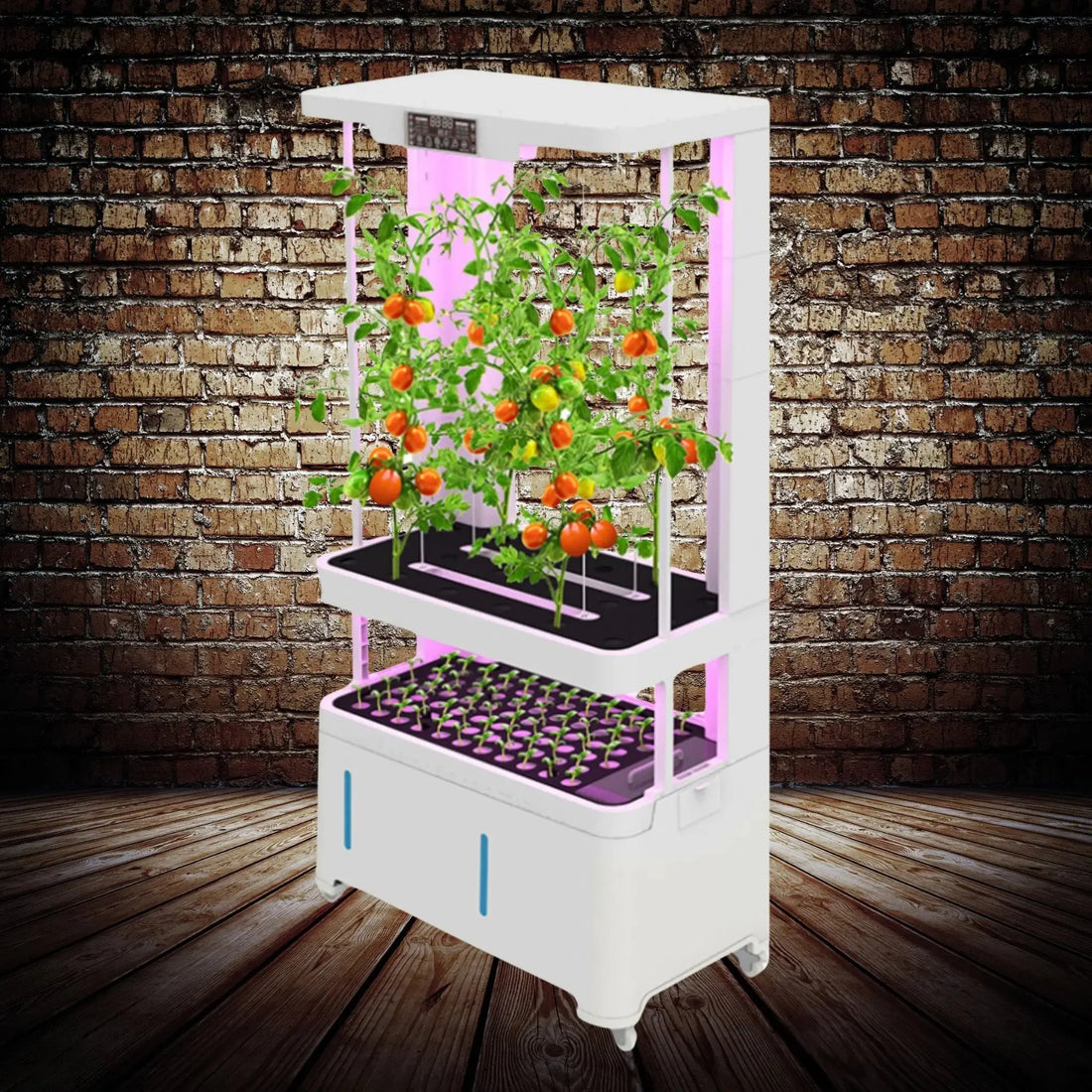
Each well-tuned plant commonly yields 10–20 capsicums per cycle for compact bush varieties, with staked indeterminate bells under strong LED lighting often exceeding 25 per plant. System capacity is a separate consideration: the LaNiTex Grow Box Tall has 15 planting positions but suits 4–8 mature pepper plants per cycle (the rest stay empty so canopies don't shade each other), and the Automated NFT Hydroponic System V5.2-T has 18 positions with peppers spaced every second or third; the off-positions hold lettuces, basil, or kale. Water use is roughly 70–90% lower than soil cultivation.
Quick start: 8 steps to your first hydroponic pepper crop
- Pick varieties for indoor hydroponics. Sweet bells (Yolo Wonder, Bell Boy), jalapeños, and cayenne all perform well.
- Germinate warm. Sow 6 mm deep in pre-moistened starter plugs at 24–29 °C; emergence in 7–14 days for sweet bells and most C. annuum varieties (hot peppers like habanero may take 3–6 weeks).
- Sterilise the reservoir with a 3% hydrogen peroxide rinse before planting.
- Calibrate pH and EC meters. Mix a starter solution at low EC (~1.0 mS/cm) for seedlings.
- Transplant once several true leaves and a robust white root system have formed.
- Set lights to 12–16 hours per day using LED grow lights, with a clear 8–12 hour dark period (sources cite 12–16h as the supported norm for fruiting crops; some indoor growers push to 18h for year-round production).
- Monitor pH, EC, and water level daily through establishment, then every 2–3 days.
- Stake or cage early, fruit-laden branches snap unsupported.
My experience growing hot peppers and capsicum on the Sunshine Coast
I remember the first time I grew Capsicum pepper seedlings in the LaNiTex Grow Box Tall. Honestly? I knew the system worked, but I wasn't prepared for the pace at which the whole thing came to life in front of me.
On that first round I was bold: I planted a hydroponic tomato alongside the peppers. Well, the tomato soon had its own ideas and literally "moved out" of the Box. It created an incredible jungle vibe in the middle of the lounge room!
That's when it hit me. These boxes feed the family fresh food, sure — but they also become part of the room. Coffee in hand each morning, I'd watch them put on new growth. Green walls, but edible.
If you're a Sunshine Coast or Brisbane home grower wondering whether peppers and capsicum really thrive in a controlled, soil-less setup, the short answer is yes — and you don't need a glasshouse or a quarter-acre to make it work. The setup choices, nutrient targets, and indoor pollination tricks below have worked for me, and the rest pulls in research from peer-reviewed hydroponic pepper studies so you can grow with confidence rather than guesswork.
Hydroponic growing conditions for peppers
Your nutrient solution is the lifeblood of the crop, and a few numbers really matter.
- pH: keep it at 5.5–6.0 in the nutrient solution (the root-zone tracks slightly higher, typically around 6.0–6.5). That window keeps nitrogen, phosphorus, potassium, calcium, and iron all soluble at the same time.
- EC: 1.5–2.5 mS/cm in the vegetative stage, scaling up to 2.5–3.0 mS/cm during heavy fruiting. Start seedlings around 0.8–1.2 mS/cm for the first 1–2 weeks, then ramp up gradually as true leaves emerge and the plants size up. Commercial protected-culture operations sometimes push higher (3.0–3.5 mS/cm) — keep that as the upper ceiling for home setups.
- Temperature: 20–26 °C air temp encourages flowering and fruit set. Below 16 °C, pollen viability and fruit set drop sharply; nighttime temperatures dropping below 15 °C trigger flower abortion, and sustained cold below 13 °C halts development.
- Humidity: 50–65% is the sweet spot. Higher numbers invite powdery mildew; lower numbers stress pollen viability.
The shift from vegetative to fruiting nutrition is best understood through the numbers your nutrient mix actually targets:
| Stage | N (ppm) | P (ppm) | K (ppm) | Ca (ppm) | Mg (ppm) | EC (mS/cm) |
|---|---|---|---|---|---|---|
| Seedling (1–2 wks) | 50–80 | 20–30 | 80–120 | 80–100 | 30–40 | 0.8–1.2 |
| Vegetative | 150–200 | 50–60 | 200–250 | 150–180 | 50–60 | 1.5–2.5 |
| Early fruiting | 120–150 | 60–80 | 250–300 | 180–200 | 60–70 | 2.2–2.7 |
| Heavy fruiting | 100–140 | 60–80 | 280–350 | 180–220 | 60–80 | 2.5–3.0 |
Best hydroponic systems for peppers
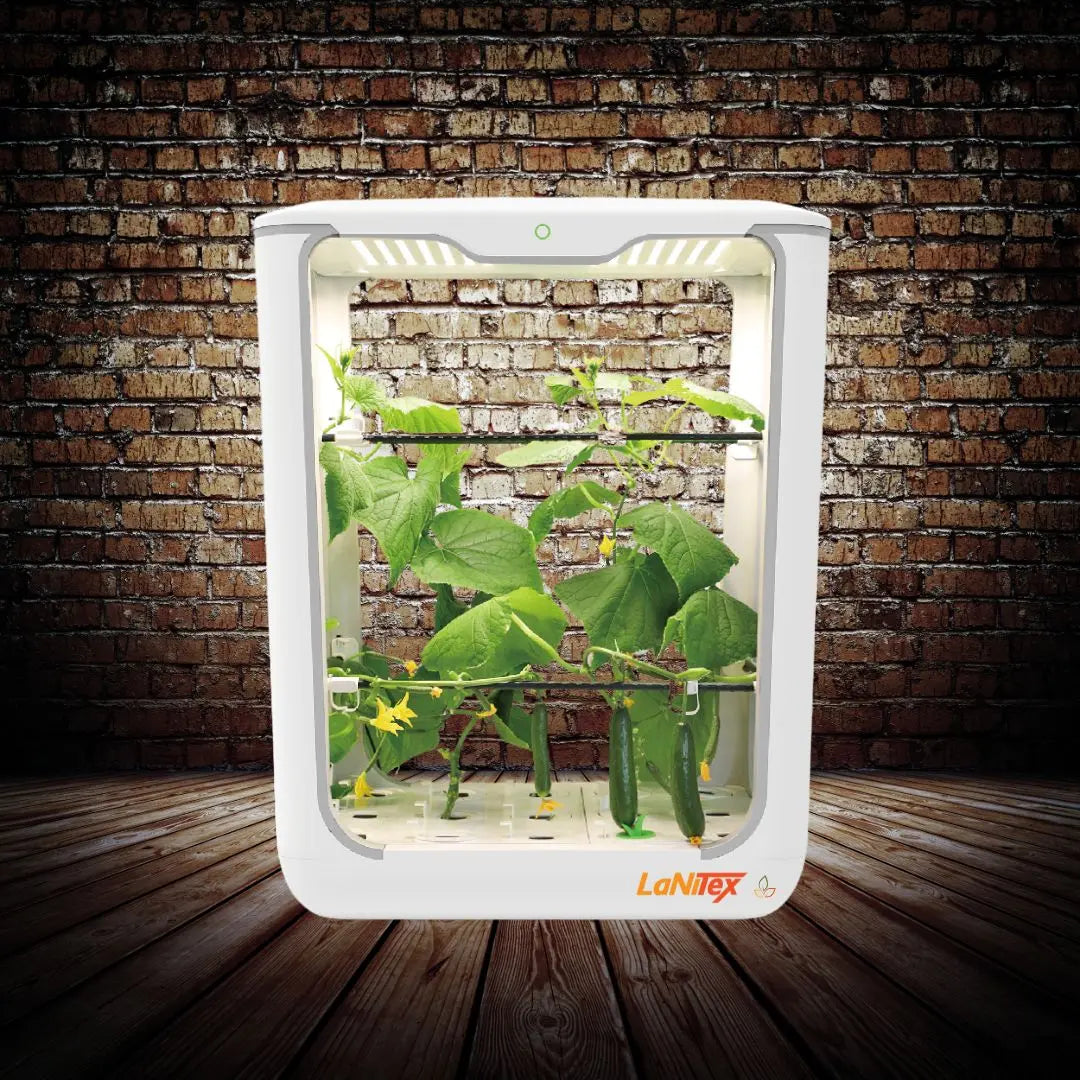
I grow mine in a LaNiTex Grow Box Tall: the tall format matters because mature bells can reach a metre indoors and need canopy head room. For scaling beyond a single plant or mixing peppers with leafy crops, the Automated NFT Hydroponic System V5.2-T suits multi-crop households and apartments. For the wider picture on system selection, see our pillar guide on hydroponic system essentials.
Three system categories all work for peppers. All three are active recirculating setups that need reliable aeration or flow plus regular pH and EC monitoring. Absolute beginners may want to start with a simpler passive (wick or Kratky-style) bucket before stepping up:
| System | Strengths | Weaknesses | Root volume | Maintenance | Best for |
|---|---|---|---|---|---|
| Deep Water Culture (DWC) | Continuous hydration; high root oxygenation; resilient to short pump outages | Heavier reservoirs; algae risk if light leaks in | Large (full bucket or vertical column) | Weekly reservoir top-up; air-stone check | Vigorous bells, indeterminate cultivars |
| Nutrient Film Technique (NFT) | Efficient nutrient use; low water mass; easy to scale horizontally | Shallow channel limits root mass; pump failure dries roots quickly | Small (root mat in a 1–2 cm film) | Pump and flow check daily | Compact bush varieties, jalapeños, multi-crop setups |
| Aeroponics | Maximum root-zone oxygen; fastest fruit cycles | Tight maintenance window; a missed pump cycle can wipe out a crop | Air-suspended; no substrate | Daily atomiser check, weekly nozzle clean | Experienced growers chasing fastest cycle times |

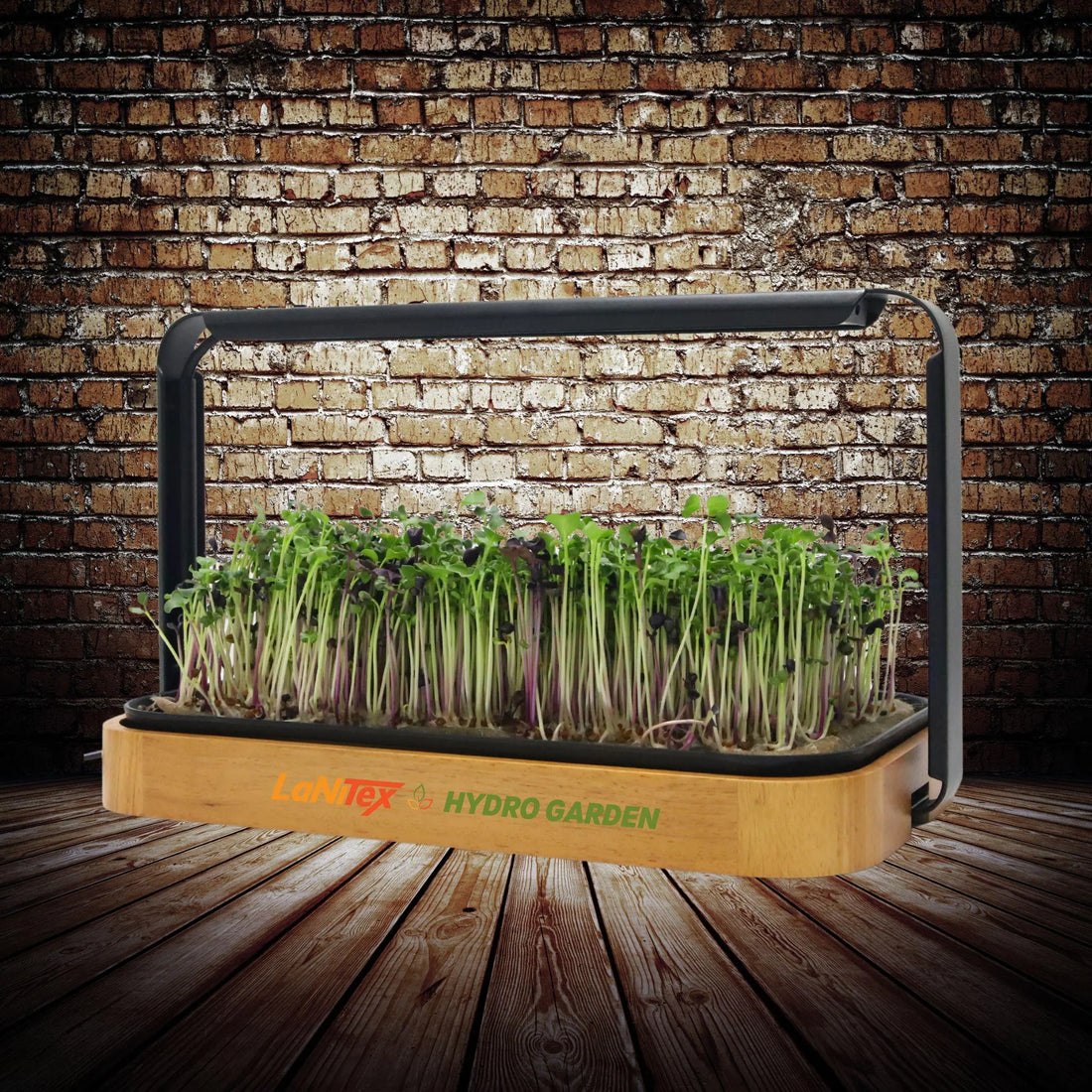
Grow your own capsicums and chillies indoors, any season. The Smart Grow Box Tall gives fruiting plants tall canopy headroom plus steady full-spectrum light and nutrients, with room to stake and train. You supply the seeds.
Start your pepper grow →Personally tested at home on the Sunshine Coast before listing.
Choosing a growing medium for your net pots
Soil-less doesn't mean substrate-free. In DWC and NFT systems the roots still need an inert medium in the net pot to anchor the plant and wick moisture to the crown while the main root mass reaches the nutrient solution below. Four media suit hydroponic peppers, and the right one depends on your system.
| Medium | Best for | Notes |
|---|---|---|
| Clay pebbles (LECA / hydroton) | DWC, including the Grow Box Tall | Reusable, free-draining, excellent root aeration. Rinse and sterilise between crops. The default choice for most home pepper growers. |
| Rockwool | Germination and NFT | Holds water well for seedlings; soak to pH ~5.5 before sowing. Single-use, not reusable. |
| Coco coir | DWC, drip, and hybrid setups | Renewable and buffers moisture well; pick pre-buffered coir and watch that it doesn't stay waterlogged in pure DWC. |
| Perlite | Blending with other media | Cheap and airy; usually mixed with coir or used as a net-pot collar rather than on its own. |
For a beginner on a recirculating system, the most forgiving combination is a rockwool starter cube for germination dropped into a net pot of clay pebbles: the cube keeps the seedling moist while it establishes, the pebbles keep the mature root zone oxygenated, and both rinse clean for the next cycle.
Get a fresh grow guide like this every fortnight
Join the LaNiTex Hydro Garden newsletter for practical hydroponic, microgreen and mushroom growing tips for Australian homes. Subscribe to download a free hydroponics starter guide (PDF) and get 10% off your first order.
Join the newsletter →Nutrient formulation through the lifecycle
Peppers shift nutrient demands sharply between vegetative and fruiting stages.
In the vegetative stage, an N-P-K ratio around 3-1-2 or 2-1-2 supports vigorous leaf and stem growth. Once flowering begins, transition to a fruiting blend closer to 1-2-3 or 2-3-4. The modest increase in phosphorus maintains flower set, but the dominant shift is the higher potassium — it translates directly into fruit size, sugar, and capsaicin in hot varieties (Ropokis et al. 2018, see Sources, confirms K uptake rises sharply during fruiting in hydroponic sweet pepper).
Don't ignore the micronutrients. Calcium strengthens fruit cell walls and prevents blossom-end rot. Magnesium drives chlorophyll. Boron controls pollen viability and fruit set. Iron prevents interveinal chlorosis on younger leaves. A balanced two-part hydroponic nutrient with added Cal-Mg covers the lot for most growers.
A simple top-up tip from my own bench: between full reservoir changes, use half-strength solution when refilling. Plants drink water faster than they consume mineral salts, so straight-strength top-ups gradually push EC too high. Change the whole reservoir every 1–2 weeks for best results.
Pruning, training, and indoor pollination

Most varieties produce more fruit when topped early and trained to 2–4 main stems. Stakes, light trellises, or tomato cages provide the structural support fruit-laden branches need. Use sterilised secateurs between plants, since peppers share viral diseases with tomatoes, chillies and other nightshades like hydroponically grown eggplant that spread fast on dirty blades.
Indoors you generally won't have enough pollinating insects. The fix is low-tech: every couple of days during flowering, shake the flowering stems or vibrate them with the back of an electric toothbrush held near (not on) each flower. Pollen drops onto the stigma and fruit sets within the week. Skip this step and open flowers drop without setting fruit.
Seed to harvest: realistic timing
From sowing, peppers germinate in 7–14 days under warm, humid conditions (hot cultivars like habanero can stretch to 3–6 weeks). After transplanting, sweet bells reach first harvest in 75–100 days in a well-tuned indoor system; expect closer to 100–120 days under typical home conditions with less-than-ideal light intensity or cooler nights. The first ripe fruit is the slowest; once the plant has set its initial flush, subsequent harvests come thick and fast for the next few months.
Variety choice drives most of the variance:
| Variety | Type | Days to first harvest (from transplant) | Notes |
|---|---|---|---|
| Yolo Wonder | Sweet bell (compact) | 70–85 | Fast, reliable, ideal first crop |
| Bell Boy | Sweet bell (indeterminate) | 75–95 | Larger fruit, needs staking and canopy room |
| Early Jalapeño | Medium-hot | 60–75 | Earliest to set; high fruit count |
| Mucho Nacho | Medium-hot jalapeño | 70–80 | Larger pods, similar timing |
| Cayenne Long Slim | Hot | 80–95 | Long, productive plants; pull when fully red |
| Habanero | Very hot | 95–115 | Longest cycle; needs warm bottom-heat at germination |
Harvest bell peppers at full size and your preferred colour. Jalapeños can be picked green for bright, grassy flavour or left to redden for a sweeter, hotter kick. Cayennes are usually pulled when fully red and just starting to wrinkle. Use sharp shears rather than tugging, since twist-and-pull breaks branches.

Overwintering peppers for a faster second-year crop
Here's something most pepper guides skip: peppers are tender perennials, not annuals. In a frost-free indoor system you can carry the same plant into a second season, and an overwintered plant with an established root system fruits earlier and heavier than a fresh seedling.
As the first season winds down, prune the plant back hard to a few main stems, ease the EC back to the vegetative range (1.5–2.0 mS/cm), and trim the light period to about 10–12 hours so the plant rests rather than pushing weak winter fruit. Keep the root zone above 15 °C and check regularly for aphids, which love a sheltered indoor plant over the cooler months. When you lift the light hours back to 12–16 and raise the EC again in late winter, the plant breaks dormancy and runs into flower weeks ahead of anything you start from seed in spring. For Sunshine Coast and Brisbane growers that head start can mean ripe capsicums by mid-spring instead of waiting for summer.
Optimising flavour and heat
Three cultivation levers change the eating quality of hydroponic peppers.
1. Mild end-stage water stress. Letting EC drift 0.3–0.5 mS/cm above your target in the final 5–7 days before harvest concentrates sugars and capsaicin in hot varieties. Don't push beyond 0.5 mS/cm; wilt damage at this stage drops yield faster than it adds flavour.
2. Balanced potassium and sulfur profile through fruiting. A K:Ca:Mg ratio close to 4:2:1 plus an adequate sulfate floor (around 70–100 ppm) builds flavour complexity and consistent skin firmness.
3. Light intensity during ripening. Push your LED PPFD higher in the final two weeks (around 600–800 µmol m⁻² s⁻¹ at canopy level) and the colour deepens and sugar content lifts. This works particularly well on bell peppers held to full red, and on cayennes pulled at the wrinkle stage.
Research by Ropokis et al. (2018) found that nutrient uptake varies considerably across cultivars in hydroponic sweet pepper (Sondela took up more NO₃, Mg, Ca and B; Bellisa took up more K), but the rootstock they tested ('RS10') did not alter uptake. So treat each variety as its own first-crop experiment; don't assume a grafting layer will compensate for picking the wrong cultivar.
Common challenges and how to solve them
Even in a clean indoor environment, three problems crop up regularly on Australian hydroponic peppers.
- Aphids: small pear-shaped insects on new growth, leaving sticky honeydew. Spot-treat with neem oil at the first cluster and re-check weekly.
- Blossom-end rot: dark, sunken patches on the base of the fruit. It looks like a disease but it's a calcium uptake issue, usually triggered by erratic watering or pH swings. Steady the pH at 6.0, top up Cal-Mg, and the next round of fruit comes through clean.
- Powdery mildew: white dusty patches on leaves. Drop the humidity towards the lower end of the 50–65% band and improve airflow with a small fan; that's almost always enough.

Ready to grow leafy greens and herbs at scale alongside your peppers? The V5.2-A Tower runs up to 72 planting sites under full-spectrum LED with a self-watering tank — a compact vertical footprint for high-turnover salad crops.
Scale up your grow →Personally tested at home on the Sunshine Coast before listing.
The full range
Find the system that fits your space


Supported in Australia - every model tested before listing.
FAQ
What's the best hydroponic system for peppers in Australia?
The best hydroponic system for peppers in Australia is a tall vertical-format Deep Water Culture system, which gives most home growers the right combination of strong root oxygenation and head-room for mature plants. I use the LaNiTex Grow Box Tall for that reason. For smaller apartments or multi-crop setups, the Indoor Hydroponic Vegetable Garden V5.2-T runs peppers alongside lettuces, basil, or kale.
What yield can I expect per plant from hydroponic bell peppers?
Yield per plant for hydroponic bell peppers is around 10–20 full-sized capsicums per cycle for a well-tuned home system, with successive flushes possible. Compact dwarf bells and jalapeños sit at the lower end; staked indeterminate bells under strong LED lighting can exceed 25 per plant. Per system: in a LaNiTex Grow Box Tall (15 planting positions, 4–8 mature pepper plants per cycle to give each plant canopy room), total yield works out to roughly 40–160 capsicums per cycle. The Automated NFT Hydroponic System V5.2-T (18 positions, peppers spaced every 2–3 positions) holds 6–9 pepper plants alongside leafy crops in the off-positions.
How do you grow hot peppers hydroponically?
To grow hot peppers hydroponically, follow the same protocol as sweet peppers with two tweaks: push EC to the upper edge (2.5–3.0 mS/cm) during heavy fruiting, and let modest end-stage water stress concentrate capsaicin. Pick true hot cultivars (cayenne, jalapeño, habanero), run 12–16 hours of LED light, and pollinate by hand.
What are the best pepper varieties for hydroponics?
The best pepper varieties for hydroponics are compact, determinate, or short-internode cultivars that suit indoor canopy limits. Reliable picks include Yolo Wonder and Bell Boy (sweet bells), Early Jalapeño and Mucho Nacho (medium-hot), and Cayenne Long Slim (hot).
How long does it take to grow peppers hydroponically?
It takes roughly 110–150 days to grow peppers hydroponically from seed to first table-ready fruit: allow 7–14 days for germination, 4–6 weeks of vegetative growth, then 75–100 days from transplant to first harvest. Plants keep producing for several months after.
Can you grow capsicum hydroponically year-round in Australia?
Yes, you can grow capsicum hydroponically year-round in Australia when you hold the environment at 12–16 hours of LED light, 20–26 °C, and steady nutrient delivery. Production typically slows during winter unless you supplement both light and heating, and heating costs add up in colder climates. Many growers run two or three overlapping cycles per year.
Do you need to hand-pollinate hydroponic peppers indoors?
Yes, you do need to hand-pollinate hydroponic peppers indoors for consistent fruit set. Pepper flowers are self-pollinating — each one has both male and female parts, so you don't need a second plant — but indoors there's no wind or bees to shake the pollen loose. During flowering, tap the stems or vibrate them with an electric toothbrush held near each open flower. Without that movement, open flowers drop instead of setting fruit.
Why are my hydroponic pepper leaves yellowing or curling?
Yellowing on the lower leaves usually signals a nitrogen or magnesium shortfall, or a pH drift locking nutrients out — check the pH sits in the 5.5–6.0 band and top up Cal-Mg before adding anything else. Leaves that curl or wilt while staying green point to heat stress or an aphid cluster on the new growth. Pale, stunted new leaves with slow growth mean the EC, light level, or root-zone temperature is too low. Fix the environment first; reaching for more nutrient when the real problem is pH or temperature only makes it worse.
Are peppers a fruit, and is a capsicum the same as a bell pepper?
Botanically, peppers and capsicums are fruits — they grow from the flower and carry the seeds — even though we treat them as vegetables in the kitchen. In Australia, "capsicum" is the everyday name for the sweet bell pepper (Capsicum annuum), while "pepper" usually means the hot chilli types. Both are the same species and grow the same way in a hydroponic system.
Key takeaways
- Hydroponic peppers thrive at pH 5.5–6.0 (nutrient solution; 6.0–6.5 root-zone), EC 1.5–3.0 mS/cm vegetative to heavy fruiting, 20–26 °C, 50–65% humidity, and 12–16 hours of light (with an 8–12 hour dark period).
- Shift nutrient ratios from N-heavy in the vegetative stage to P-K-heavy at flowering.
- Hand-pollinate during flowering: without insects indoors, this is the single biggest determinant of fruit set.
- Stake or cage early; fruit-laden branches break without support.
- Allow 75–100 days from transplant to first harvest and expect 10–20 capsicums per plant per cycle (40–160 total in a 15-position Grow Box Tall planted with 4–8 plants).
Sources
- Furtado, G. de F., Cavalcante, A. R., Chaves, L. H. G., Santos Júnior, J. A., and Gheyi, H. R. (2017). Growth and Production of Hydroponic Pepper under Salt Stress and Plant Density. American Journal of Plant Sciences, 8(9). Read the Furtado et al. 2017 study on hydroponic pepper salt stress
- Ropokis, A., Ntatsi, G., Kittas, C., Katsoulas, N., and Savvas, D. (2018). Impact of Cultivar and Grafting on Nutrient and Water Uptake by Sweet Pepper (Capsicum annuum L.) Grown Hydroponically Under Mediterranean Climatic Conditions. Frontiers in Plant Science. Read the Ropokis et al. 2018 cultivar-and-grafting study on sweet pepper nutrient uptake
Written by Laszlo Bulatko, founder of LaNiTex Hydro Garden. Read more about Laszlo's hydroponic growing journey on the Sunshine Coast. For a broader overview of indoor hydroponics, see our pillar guide: Hydroponic system essentials: everything you need to know. New to LaNiTex? Browse the full range of hydroponic systems.