
Golden-tan, faintly sweet, and growing in branching clusters that look more like coral antlers than supermarket mushrooms - the butterscotch oyster is the caramel-coloured oyster almost nobody can put a name to.
Quick answer: The butterscotch oyster mushroom (Pleurotus cornucopiae) is a warm-season gourmet oyster with golden-tan caps and a branching, antler-like habit that grows best at around 18-28C with high humidity, making it well suited to Australian conditions.
This guide is for: Beginners who want a gourmet, slightly unusual oyster to grow at home, and curious cooks trying to identify the caramel oyster they spotted at a market.
Key takeaways:
- Butterscotch oyster mushrooms are Pleurotus cornucopiae, a golden-tan oyster with a branching antler-like shape, not the same species as the gold or phoenix oyster.
- They are a warm-weather variety that fruits best at around 18-28C with humidity of 85-95% and fresh air.
- First harvest comes about 3-4 weeks after inoculation, then two to four more flushes follow.
- They suit Australian summers and warm subtropical regions, and grow indoors in a warm spot the rest of the year.
- A reputable Australian mushroom spawn supplier plus pasteurised straw or hardwood sawdust is all the growing medium you need.
At a glance
- Species: Pleurotus cornucopiae (golden-tan, branching antler-like habit)
- Climate: warm-season
- Fruiting temperature: around 18-28C (a warm-weather variety; the room you provide, not a Box setting)
- Humidity: 85-95%
- Substrate: pasteurised straw or hardwood sawdust (also sugarcane mulch, Master's Mix)
- Difficulty: beginner-friendly
- Time to first harvest: about 3-4 weeks (colonisation around 2 weeks, then fruiting 7-10 days), then multiple flushes
Honest disclosure: the butterscotch oyster (Pleurotus cornucopiae) is not yet a variety we have fruited on the LaNiTex test bench on the Sunshine Coast - the Smart Mushroom Growing Box and the more common oyster strains came first, and this golden-tan, antler-branching warm-season oyster is one we are working up to. The guidance below draws on cultivation science and grow-guide literature (Fungi Ally), Australian warm-climate oyster-growing guidance, and feedback from LaNiTex customers running the Box across QLD, NSW, VIC and TAS.
What is a butterscotch oyster mushroom?
A butterscotch oyster mushroom is Pleurotus cornucopiae, a cultivated oyster with golden-tan to caramel caps, a mild and slightly sweet flavour, and a distinctive branching, antler-like growth habit. It is a close relative of the common oyster (Pleurotus ostreatus), and the warm caramel colour is where the name comes from.
Here is where shoppers get tangled up. Three different mushrooms get sold under warm "gold" and "tan" colour names, and they are genuinely separate species. The tan oyster mushroom label, in particular, gets stuck on more than one of them.
| Mushroom | Species | Cap colour | Habit | Best fruiting temp |
|---|---|---|---|---|
| Butterscotch oyster | Pleurotus cornucopiae | golden-tan / caramel | branching, antler-like | ~18-28C (warm) |
| Gold (yellow) oyster | Pleurotus citrinopileatus | bright golden-yellow | clustered rosettes | warm ~20-30C |
| Phoenix (summer) oyster | Pleurotus pulmonarius | pale tan/grey | shelf clusters | warm ~18-30C |
So butterscotch oyster vs gold oyster is a real distinction, not just marketing. The gold oyster (Pleurotus citrinopileatus) is the bright-yellow one and grows in tight rosettes. The phoenix or summer oyster (Pleurotus pulmonarius) is a paler tan with a flatter shelf shape. The butterscotch sits between them in colour but stands apart in shape, with those forking, antler-like stems. All three are warm-climate oyster mushrooms, so the growing conditions overlap and the same setup handles the lot.

Why grow butterscotch oysters at home?
Start with the flavour. Butterscotch oysters are mild, slightly sweet and nutty, with a tender texture that cooks down well in a pan. They are gentler than a brown shimeji and sweeter than a plain pearl oyster.
Then there is the look. Those branching, antler-like clusters make a striking plate, the kind of thing that gets a "where did you get those?" at the dinner table. You will not find them sitting in a Coles cool room.
They are forgiving, too. Like most oysters, butterscotch oysters are beginner-friendly and quick to colonise. For a first warm-season grow, they are hard to beat.
How do butterscotch oysters grow in Australia?
Butterscotch oysters are a warm-weather variety. They fruit best at around 18-28C with humidity held high at 85-95% and a steady supply of fresh air. This is the single most important fact to get right, and it is where a lot of generic guides go wrong by lumping every oyster into a "cool climate" bucket.
The science backs the warm framing. A peer-reviewed review of Pleurotus cultivation lists Pleurotus cornucopiae fruiting best around 20-28C, notes that oyster mushrooms "grow at moderate temperatures, ranging from 18 to 30 degrees C", and reports that Pleurotus species "grow better during the summer and autumn in subtropical and tropical regions" (Bellettini et al., 2016).
That makes them a natural fit for a lot of the country. Subtropical Brisbane, south-east Queensland, northern New South Wales and Darwin's Top End sit in that warm band for much of the year, so a butterscotch oyster grow is comfortable through a warm summer without much fuss. In cool-temperate Melbourne or Hobart, grow them across summer or set up an indoor fruiting chamber in a warm spot - a kitchen, a heated room - the rest of the year. The rule is simple: hold roughly 18-28C plus high humidity, and you can grow butterscotch oyster mushrooms just about anywhere in Australia.
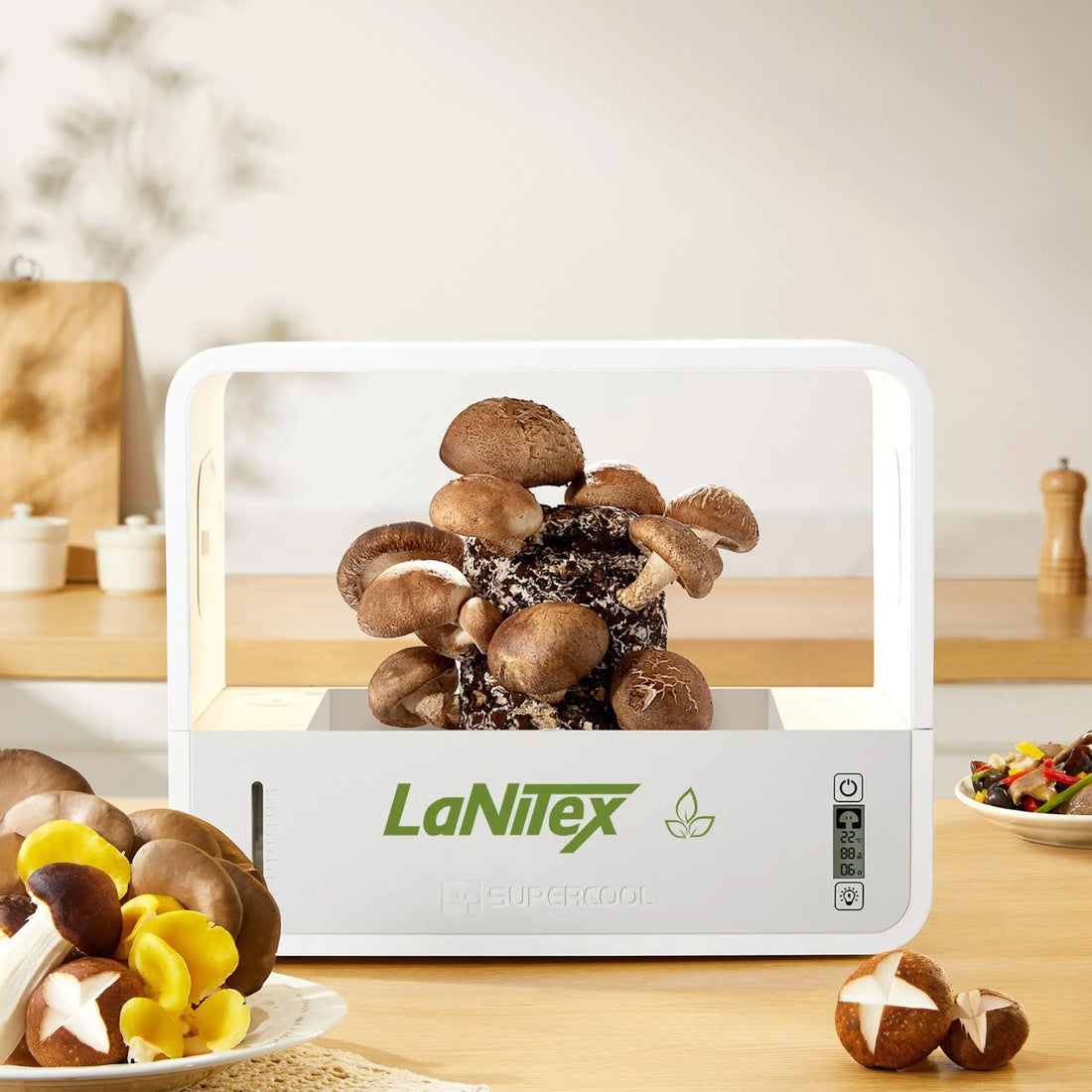
This is also where a reusable growing box earns its keep. Getting butterscotch oyster mushrooms to fruit comes down to two things: keeping them in the right temperature range (around 18-28C - choose a room, cupboard or garage that naturally sits in that band) and holding humidity high and steady at 85-95%. The Smart Mushroom Growing Box takes care of the hard part - its humidity control, LED lighting and clear lid hold the fruiting environment without daily misting or guesswork - while you simply place it somewhere in the right temperature range.

Want hands-off harvests? The Smart Mushroom Growing Box runs the humidity, fresh air and light for you — no daily misting. You supply the fruiting block.
Start growing mushrooms →Ships from the Sunshine Coast, Queensland.
Step-by-step: from spawn to harvest
Here is the full path from inoculation to a plate of mushrooms. Most growers see their first harvest about 3-4 weeks in.
Source your spawn
Start with butterscotch oyster spawn - grain spawn of Pleurotus cornucopiae - from a reputable Australian mushroom spawn supplier. Check the label says cornucopiae, since "tan oyster" and "gold oyster" labels can mean different species. If you buy a butterscotch oyster mushroom grow kit instead of loose spawn, the same growing rules below still apply. Keep spawn in the fridge until you use it.
Prepare the substrate
Butterscotch oysters grow on a lignocellulosic substrate - pasteurised straw or hardwood sawdust at about 60% moisture is the classic choice. Sugarcane mulch (easy to find at Bunnings), paper pellets and spent coffee grounds all work too, and a supplemented Master's Mix suits the keen grower. Aim for the "wrung-out sponge" feel: squeeze a handful and only a few drops should come out.
Pasteurise
Soak straw in hot water held at roughly 65-80C for an hour or so to knock back competing moulds, then drain and cool. This step is what keeps green mould from taking over later. If you would rather not heat a large volume of water, cold pasteurisation works too: soak the substrate for around 12 to 24 hours in a cold bath of water mixed with hydrated lime, which lifts the pH enough to hold competitors back, then drain.
Inoculate
Mix spawn through the cooled substrate at about 10-15% of the substrate weight. More spawn means faster colonisation and less chance of contamination. Pack it into your container loosely enough to leave air spaces. A clean food-grade bucket is a popular low-tech choice - drill a few small holes around the sides for the mushrooms to push through, then tape over them until pinning begins. A purpose-built fruiting chamber like the Smart Mushroom Growing Box skips the drilling and holds the humidity for you.
Colonisation
Keep the inoculated substrate warm and out of direct sun while the white mycelium spreads. This takes roughly two weeks. Do not rush it - wait until the block is fully white before triggering fruiting.
Pinning and fruiting
Once colonised, expose the block to fresh air, light and high humidity. Tiny pins appear, then grow into clusters over about 7-10 days at 18-28C. This is the stage that rewards steady humidity and good airflow. Give them enough indirect light, too - like other coloured oysters, butterscotch oysters need light to develop their full golden-tan colour, so a shaded windowsill or steady LED light brings out the caramel tones rather than a pale, washed-out cap.
Harvest
Pick the whole cluster just before the cap edges flatten out, twisting it off at the base. Then keep the block going - butterscotch oysters give multiple flushes, usually a week or two apart, so one block keeps producing. A healthy block usually yields a first flush and then two to four more before it is spent, with the first the largest and each one after a little smaller (University of Florida IFAS Extension). When it finally stops, the block does not have to hit the bin - spent mushroom substrate breaks down well in a compost heap or as mulch around the garden.
A fully colonised, snow-white block is the green light. Trigger fruiting too early, before the mycelium has run the whole substrate, and you trade a strong first flush for a weak one.
Get a fresh grow guide like this every fortnight
Join the LaNiTex Hydro Garden newsletter for practical hydroponic, microgreen and mushroom growing tips for Australian homes. Subscribe to download a free hydroponics starter guide (PDF) and get 10% off your first order.
Join the newsletter →Common problems and how to fix them
Most oyster troubles come down to air and water. Here are the usual ones.
Long leggy stems, tiny caps
This is the classic sign of too little fresh air and too much carbon dioxide. Improve ventilation and the caps fill out. Light helps too - oysters grow towards it.
The block will not pin
Usually the humidity is too low or the room has drifted too cool. Lift the humidity back to 85-95% and check the spot is sitting in that 18-28C warm band.
Drying out
Pins shrivel and caps crack when the air is too dry. Hold humidity steady; do not let it swing.
Mould or contamination
Green, black or slimy patches mean a contaminant has moved in. Do not try to save a badly contaminated block - discard it and tighten your pasteurisation and hygiene next round.
Most of the problems above trace back to unstable conditions - humidity that swings and air that goes stale. A reusable system removes those variables: the Smart Mushroom Growing Box holds humidity and light steady and keeps the fruiting chamber ventilated, so contamination and dry-out have far less chance to take hold, flush after flush. (Temperature you manage simply by choosing a room in the right range - see above.) Unlike a one-off supermarket kit, it is built to be reset and grown again.
How to use butterscotch oysters in cooking
Treat butterscotch oysters like any tender oyster, and let their mild sweetness lead. They work well in a quick stir-fry, pan-fried in butter until the edges crisp, or dropped into a brothy soup near the end. One tip, though: they're far better cooked than eaten raw. Raw oyster mushrooms can taste faintly metallic and turn chewy, and a quick cook improves both the flavour and how easily they digest. For ideas, browse the LaNiTex recipes page.
Storage is simple. Keep fresh butterscotch oysters in the fridge in a paper bag or a paper-towel-lined container for a few days. Do not seal them airtight in plastic without absorbent paper - that traps condensation and turns them slimy. To keep them longer, dehydrate them or saute then freeze.
Grow gourmet at home
Grow your own gourmet oyster mushrooms at home through the warmer months. The Box holds the humidity, fresh-air cycle and light steady — you just pick a warm room and add a fruiting block.
Grow your own mushrooms →Ships from the Sunshine Coast, Queensland.
Butterscotch oyster mushroom FAQ
What is a butterscotch oyster mushroom, and how is it different from gold and phoenix oysters?
A butterscotch oyster mushroom is Pleurotus cornucopiae, a golden-tan oyster with a branching, antler-like habit, a mild and slightly sweet flavour, and a close relationship to the common oyster. It is distinct from the bright-yellow gold oyster (Pleurotus citrinopileatus) and the tan phoenix or summer oyster (Pleurotus pulmonarius). These are three different species, often confused under colour names.
What does butterscotch oyster mushroom taste like?
Butterscotch oyster mushrooms have a mild, slightly sweet and nutty oyster flavour. The texture is tender and cooks down well, which makes them versatile across savoury dishes from stir-fries to soups. Their gentle sweetness is what sets them apart from a plainer pearl oyster.
How long do butterscotch oyster mushrooms take to grow from inoculation to harvest?
Butterscotch oyster mushrooms take about 3-4 weeks to first harvest. Colonisation of the substrate runs around two weeks, then pins to harvest takes roughly 7-10 days at 18-28C. After the first flush, expect two to four more flushes about one to two weeks apart from the same block.
What temperature do butterscotch oyster mushrooms need to fruit?
Butterscotch oyster mushrooms fruit best around 18-28C, since they are a warm-weather variety. They also need high humidity of 85-95% and a steady supply of fresh air to form tight, healthy clusters. They are not a cool-climate mushroom, so do not chase a cold snap to trigger them.
Can butterscotch oyster mushrooms grow successfully in Australia?
Yes, butterscotch oyster mushrooms grow well in Australia as a warm-season crop. They suit Australian summers and subtropical or tropical regions such as Brisbane, south-east Queensland, northern NSW and Darwin naturally. In cooler regions they grow indoors during the warm months, or in a warm indoor spot year-round, wherever around 18-28C and high humidity can be held.
Are butterscotch oyster mushrooms easy to grow for beginners?
Yes, butterscotch oyster mushrooms are easy and forgiving, like most oysters. They colonise substrate quickly and tolerate a range of conditions. The one variable that rewards attention is consistent high humidity paired with fresh air, which is what produces tight, well-formed clusters rather than leggy stems.
How do you store fresh butterscotch oyster mushrooms?
Store fresh butterscotch oyster mushrooms in the fridge in a paper bag, or a paper-towel-lined container, for several days. Avoid sealing them airtight in plastic without absorbent paper, since that traps condensation and turns them slimy. For longer storage, dehydrate them or saute then freeze.
What substrate is best for growing butterscotch oyster mushrooms?
The best substrate is pasteurised straw or hardwood sawdust at about 60% moisture. Sugarcane mulch, a supplemented Master's Mix, and even paper pellets with spent coffee grounds also work for Australian growers. The aim is a lignocellulosic substrate that holds moisture while keeping air spaces for the mycelium.
Ready to grow butterscotch oysters at home?
Once you have the hang of butterscotch oysters, the same Box grows other gourmet mushrooms too - try shiitake, shimeji or coral tooth next, or start from the basics with our complete mushroom growing kit guide. New here? Join the LaNiTex newsletter for 10% off your first order with code NEWSLETTERDISCOUNT10 at our subscription page. Got a butterscotch grow on the go - email us a photo, we love seeing what readers grow across Queensland and beyond.
Related mushroom guides
- Snow white oyster mushrooms - a cool-climate specialty oyster
- Pink oyster mushrooms - a warm-climate specialty oyster
- Pearl oyster mushrooms - the easy beginner's oyster
About the author
Laszlo Bulatko is the founder of LaNiTex Hydro Garden, a Sunshine Coast small business making indoor growing simple for Australian households. After fifteen years in sales and brand development, Laszlo now tests every system LaNiTex stocks before it reaches the catalogue - from hydroponic herb gardens to the Smart Mushroom Growing Box - and shares what actually works for growers in Australian conditions.
Sources
- Bellettini, M.B. et al. (2016). Factors affecting mushroom Pleurotus spp. (peer-reviewed, PMC/NIH): https://pmc.ncbi.nlm.nih.gov/articles/PMC6486501/
- University of Florida IFAS Extension. D.I.Y. FunGuide: Grow Your Own Oyster Mushrooms at Home: https://edis.ifas.ufl.edu/publication/SS662