
Walk into any Asian grocer and the shimeji shelf is a naming minefield: shimeji, beech, buna, bunapi, even "blue". Most labels point to one clustered fungus, one points to something else entirely, and the grow runs cooler and slower than most beginners expect.
Quick answer: A shimeji mushroom is grown at home in Australia by colonising a supplemented hardwood-sawdust block with shimeji spawn at about 21-24 degrees C, then fruiting it in a cool, humid spot at 13-18 degrees C with 85-90% humidity. Expect roughly 6 to 9 weeks from inoculation to the first harvest. Shimeji are slower and cooler-growing than oyster mushrooms, so they reward a patient, steady setup over a rushed one.
Key takeaways
- Shimeji (Hypsizygus tessellatus, the beech mushroom) fruits cool, at about 13-18 degrees C, well below the range most oyster mushrooms prefer.
- Brown buna-shimeji and white bunapi are cultivars of the same species; supermarket "blue shimeji" is usually a mislabelled blue oyster, a different mushroom altogether.
- The block wants supplemented hardwood sawdust with wheat bran, and colonisation can run 4 to 6 weeks before the first pins appear.
- Shimeji are bitter and tough raw, so they are always cooked, which firms the texture and brings out a sweet, nutty flavour.
- This guide is written for beginner-to-intermediate growers who have raised an easier mushroom and want to step up to a cooler, fussier species.
Shimeji at a glance
| Detail | What to expect |
|---|---|
| Climate preference | Cool; suits a Queensland winter or an air-conditioned room |
| Fruiting temperature | About 13-18 degrees C (the room you provide, not a machine setting) |
| Fruiting humidity | 85-90%, with pinning often nearer 95-98% |
| Fresh-air need | Good ventilation; stale, high-CO2 air causes long stems and tiny caps |
| Substrate | Supplemented hardwood sawdust plus wheat bran |
| Difficulty | Intermediate; a slow coloniser that wants a clean, aged block |
| Time to harvest | Roughly 6 to 9 weeks from inoculation |
What is shimeji? Brown buna, white bunapi, and the "blue shimeji" myth
Shimeji is a wood-loving gourmet mushroom in the genus Hypsizygus (Hypsizygus tessellatus, also written H. marmoreus), commonly called the beech mushroom. It is native to Japan, where it grows on fallen oak, beech and elm, and it forms tight clusters of small caps on long, pale stems. That clustered habit is the giveaway on a market shelf.
The two shimeji you actually meet are cultivars of one species, not separate mushrooms. Brown buna-shimeji, sold as brown beech mushroom, has small tan caps on creamy stems. White shimeji, also labelled silver shimeji or bunapi, is the paler form bred from the same Hypsizygus tessellatus stock. This matters when you buy spawn: a "brown beech" listing and a "buna-shimeji" listing point to the same grow, so you are not choosing between two mushrooms, only two colours.

Then there is the naming trap. "Blue shimeji" sold on Australian retail spawn is almost always a blue oyster, a Pleurotus species, not a true Hypsizygus. It is a different mushroom with different needs, faster and more forgiving than real shimeji.
If a listing shows steel-blue caps in a loose fan rather than a tight clump of small round caps, treat it as a blue oyster and grow it as one. Calling it shimeji is a marketing habit, not botany.
So when this guide says shimeji, it means the Hypsizygus beech mushroom: brown buna and white bunapi. The blue one belongs in a different chapter.
Why grow shimeji mushrooms at home?
Shimeji earn their place on the bench on flavour. The Australian Mushroom Growers Association describes them simply: "Shimeji mushrooms have a meaty texture, with a sweet nutty flavour." Cooked, they hold their shape in a stir-fry and soak up a soy-based sauce well. The flavour is clean umami, at home in miso, hotpot or a buttery pasta, which is why they are a staple of Japanese and wider Asian cooking.
Home growing also closes a price and freshness gap. Shimeji clusters in a supermarket overwrap are not cheap, and they are often a few days past harvest by the time they reach the shelf.
A block fruiting on your own bench gives you firm, just-cut clusters on the day you cook, which is the part most growers actually notice. The trade-off is patience, since shimeji ask for more time and a cooler spot than oyster mushrooms. Fair point. For a grower who wants a genuine gourmet reward, that is a fair deal.
How shimeji grows in Australian climates (a cool-loving slow coloniser)
Honest disclosure, and the only first-person note in this guide: shimeji is not yet a species we have fruited on the LaNiTex test bench on the Sunshine Coast. The Smart Mushroom Growing Box and faster species came first. The guidance here is built from cultivation science and grow-guide literature, the Australian Mushroom Growers Association profile, Australian spawn-supplier growing data, and feedback from LaNiTex customers running the Box across Queensland, New South Wales, Victoria and Tasmania. As shimeji lands on our own bench, this guide will refresh with first-hand Sunshine Coast observations.
What the cultivation literature agrees on is the temperature. Shimeji fruit best at about 13-18 degrees C, a cool range that rules out a warm summer kitchen and favours a shaded, cooler room. (One Australian supplier brochure lists 15-21 degrees C; the broader grow-guide consensus, including GroCycle, sits lower, so 13-18 degrees C is the safer target to plan around.)
For Australian growers that maps cleanly onto climate. In cool-temperate zones such as Hobart, Melbourne and a Sydney winter, an unheated room often sits in range without any help. In subtropical Brisbane or tropical Darwin, the realistic path is an air-conditioned room, a cool cupboard or the cooler months.
Shimeji is also a slow coloniser. It wants a clean, well-aged block and takes its time before fruiting, which is the main reason it sits a step above beginner oysters in difficulty. None of that is a problem with the right setup, but it does mean shimeji is not the mushroom to pick if you want a flush in a fortnight.
Most home growers keep shimeji indoors on a sawdust block, but as a wood-loving species it can also be grown outdoors on inoculated hardwood logs kept in a cool, shaded spot. That outdoor path runs slower and follows the seasons rather than a controlled indoor environment, so for a first grow in Australian conditions the indoor block stays the more predictable option.
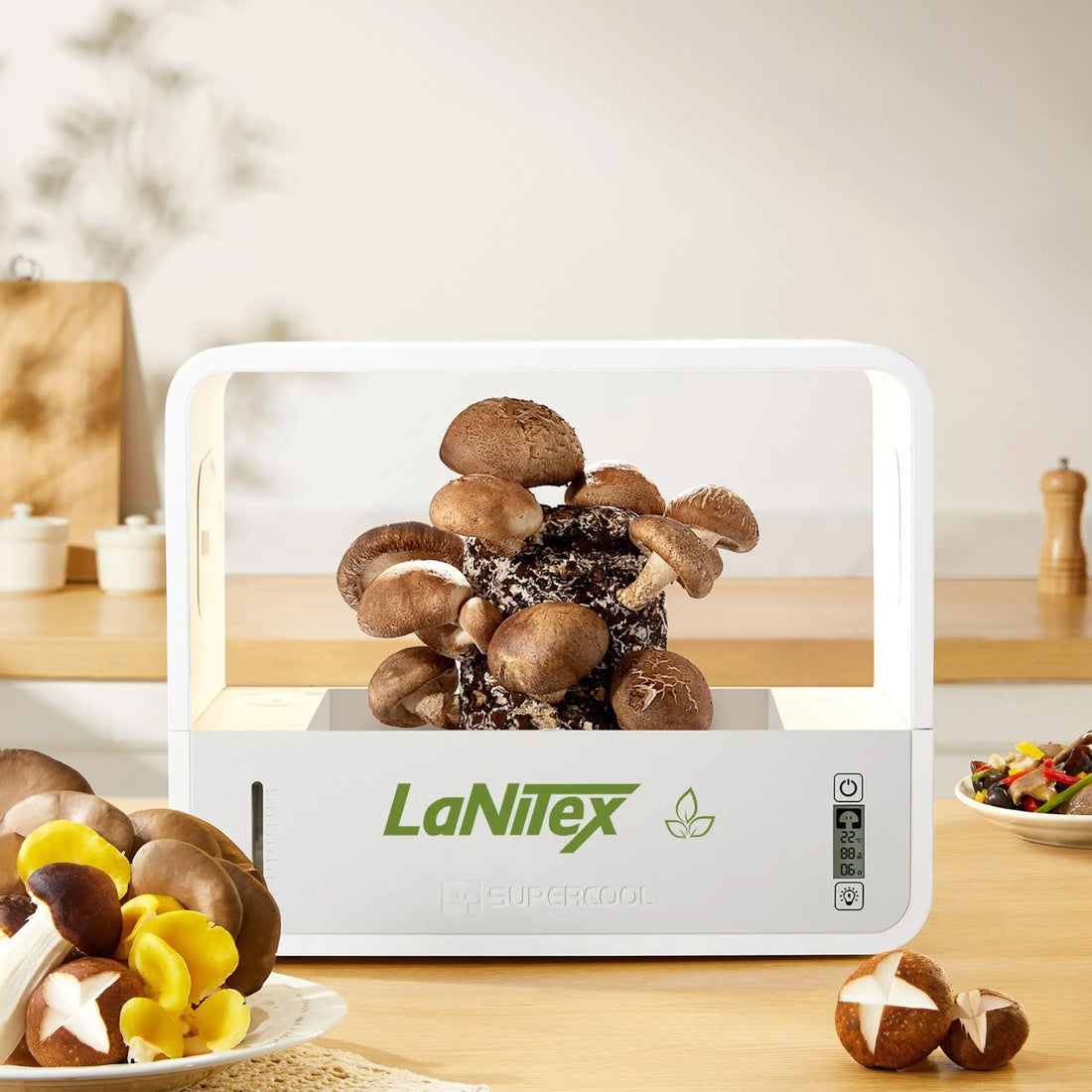
Getting shimeji mushrooms to fruit comes down to two things: keeping them in the right temperature range (around 13-18 degrees C -- choose a room, cupboard or garage that naturally sits in that band) and holding humidity high and steady at 85-90%. The Smart Mushroom Growing Box takes care of the hard part. Its humidity control, LED lighting and clear lid hold the fruiting environment without daily misting or guesswork, while you simply place it somewhere in the right temperature range. The Box manages humidity and light; the cool room is your job, which suits the way a slow coloniser likes to fruit.

Grow gourmet shimeji and other wood-loving mushrooms indoors, any season. The Box runs the humidity, fresh-air cycle and light for you — no daily misting. You supply the fruiting block.
Start growing mushrooms →Ships from the Sunshine Coast, Queensland.
Step-by-step: from spawn to harvest
This is the full path for indoor shimeji growing in Australia, from sourcing spawn to cutting the first cluster. Read it once before you start so the slow steps do not catch you out.
Sourcing spawn
Start with shimeji spawn from a reputable Australian mushroom spawn supplier. LaNiTex sells the growing hardware, not the spawn, so you source the living culture separately. Grain spawn colonises a sawdust block quickly and is the usual choice; sawdust spawn is an option for log work. Buy Hypsizygus tessellatus (buna or bunapi) and confirm the species on the listing, since this is exactly where the "blue shimeji" mix-up creeps in.
Substrate preparation
Shimeji fruit on supplemented hardwood sawdust, typically hardwood sawdust mixed with wheat bran for extra nutrition. The mix is hydrated, then sterilised to knock back competing moulds before the spawn goes in. A bran-supplemented block is nutritious enough that pasteurisation alone often falls short, so sterilising (pressure-cooking) is the safer choice. Clean substrate matters more for shimeji than for hardier oysters, because the long colonisation gives contaminants more time to take hold.
Inoculation
Add the spawn to the cooled substrate in a clean space, mix it through, and seal the block in a filter-patch grow bag. Work quickly and keep surfaces wiped down. The cleaner this step, the lower your contamination risk over the weeks ahead.
Colonisation
Keep the inoculated block warm and dark while the mycelium runs through it, at about 21-24 degrees C. This is the patient stage. GroCycle notes that shimeji colonisation "will generally take the shimeji mycelium 4 to 6 weeks to fully colonize the substrate, but depending on the substrate used and conditions, it can take up to 90 days." Many growers also rest a fully white block for a further week or two so it browns and firms before fruiting.
Pinning
Move the colonised block to fruiting conditions: cooler, brighter, humid and well ventilated. Pinning starts with very high humidity, often around 95-98%, plus indirect light and fresh air. Tiny pinhead clusters appear over several days. This is the trigger stage where the cool 13-18 degrees C range starts to matter.
Fruiting
Hold the block at 13-18 degrees C with 85-90% humidity, indirect light and good fresh-air exchange. Keep CO2 low, ideally under about 900 ppm, or the clusters stretch into long stems with small caps. Over roughly 10 to 20 days the clusters fill out into the familiar tight bunches of small-capped mushrooms.
Harvest
Harvest the whole cluster by cutting it at the base while the caps are still firm and rounded, before they flatten and the edges turn wavy. Across the whole cycle, expect roughly 6 to 9 weeks from inoculation to that first harvest (longer if colonisation runs slow), and a well-kept block can give more than one flush.
Getting a second flush
Shimeji blocks are rarely one-and-done. After the first harvest, rest the block somewhere cool and dark for about a week, then rehydrate it with a brief soak or a thorough misting and return it to fruiting conditions. Most growers get one or two useful flushes from a block, with the first the heaviest, and a second flush often follows a couple of weeks later. Because the Smart Mushroom Growing Box is built to be reset and run again, it holds the humidity and light for that next flush without reaching for a fresh single-use kit.
Get a fresh grow guide like this every fortnight
Join the LaNiTex Hydro Garden newsletter for practical hydroponic, microgreen and mushroom growing tips for Australian homes. Subscribe to download a free hydroponics starter guide (PDF) and get 10% off your first order.
Join the newsletter →Common problems and how to fix them
Most shimeji setbacks trace back to a handful of causes. Here is how to read them.
Long stems and tiny caps
This is the classic fresh-air problem. Stale, high-CO2 air pushes the mushroom to stretch its stems while the caps stay small. Improve ventilation, open the chamber more often, and keep CO2 low during fruiting.
Pins drying out
Pins that shrivel before they grow usually mean the humidity is too low. Shimeji pin best near 95-98% humidity, so raise the moisture at pinning and avoid a dry draught blowing across the block.
Sour or off smell
A sour, cheesy or off smell points to contamination, often bacterial or a competing mould. It is more common with shimeji than with fast oysters because the long colonisation gives contaminants time. Sterile substrate prep and clean inoculation are the fix, and a badly contaminated block is best discarded rather than rescued.
Very slow or stalled colonisation
If the block barely colonises, the culprit is usually a temperature that is too low or weak, old spawn. Keep the colonising block at about 21-24 degrees C and start with fresh, vigorous spawn from a reputable supplier.
Most of the problems above trace back to unstable conditions -- humidity that swings and air that goes stale. A reusable system removes those variables: the Smart Mushroom Growing Box holds humidity and light steady and keeps the fruiting chamber ventilated, so contamination and dry-out have far less chance to take hold, flush after flush, though clean substrate prep and good spawn still do the heavy lifting. (Temperature you manage simply by choosing a room in the right range, as covered above.) Unlike a one-off supermarket kit, it is built to be reset and grown again.
Why shimeji must always be cooked, and how to use it
Shimeji are eaten cooked, never raw. Raw shimeji are noticeably bitter and harder to digest, and a few minutes of heat fixes both: cooking breaks down the bitter compounds and firms the texture into the pleasant, slightly crunchy bite shimeji are known for. There is no need to overthink the timing; a normal stir-fry or simmer is plenty, and the bitterness is gone by the time the clusters are cooked through.
Beyond their flavour, shimeji are light eating: they are low in kilojoules while providing B-group vitamins and the beta-glucans common to gourmet mushrooms, and that gentle cooking is also what develops their savoury, umami depth.
Before cooking, separate the cluster. As the Australian Mushroom Growers Association puts it, shimeji "grow in clumps which are usually separated before cooking." Trim the gritty base, pull the clump into individual stems, and they are ready. From there shimeji are easy to use: tossed through a hot stir-fry, simmered whole in a miso soup or hotpot, or folded into a buttery pasta near the end. For more ideas to pair with a home harvest, see the LaNiTex recipes collection.
Storage is straightforward. Keep an unused cluster in the fridge with the base wrapped in a slightly moist paper towel, out of a sealed plastic bag so it can breathe, and use it within a few days while the caps are still firm.
Grow gourmet at home
Turn a cool corner into a year-round shimeji bench. The Box holds the humidity, fresh-air exchange and light steady — the controlled conditions these clustered wood-lovers need to fruit. You choose the room and supply the block.
Start your mushroom grow →Ships from the Sunshine Coast, Queensland.
Shimeji mushroom FAQ
What is shimeji mushroom (Hypsizygus) and what are blue and silver/white shimeji?
Shimeji is a wood-loving gourmet mushroom in the genus Hypsizygus, often called beech mushroom and native to Japan where it grows on fallen oak, beech or elm. Hypsizygus tessellatus cultivars include brown buna-shimeji and white bunapi-shimeji, both forming tight clusters of small caps on long white stems. In Australia, "blue" and "silver/white" shimeji on retail spawn are usually colour-named cultivated strains sold as blue, silver or ivory shimeji.
How long do shimeji mushrooms take to grow from inoculation to harvest?
Shimeji typically take around 6 to 9 weeks from inoculation to harvest when grown on sterilised sawdust blocks under controlled conditions. Colonisation often runs about 4 to 6 weeks at about 21-24 degrees C while the substrate is colonised. Fruiting then follows over roughly 10-20 days at 13-18 degrees C with 85-90% humidity until dense clusters reach harvest size of a few centimetres across with firm, pale caps.
What temperature do shimeji mushrooms need to fruit?
Shimeji mushrooms fruit best between 13-18 degrees C, which suits cool indoor or shaded outdoor conditions. Growers initiate pinning with high humidity around 95-98%, then maintain about 85-90% humidity while clusters develop. Incubation of the colonised block is warmer, around 21-24 degrees C, but once exposed to fresh air and light, the cooler 13-18 degrees C range optimises dense, well-formed clusters.
Can shimeji mushrooms grow successfully in Australia?
Shimeji mushrooms are already cultivated in Australia, with local producers growing small grey to brown clumping caps from Hypsizygus on wood-based substrates. The species prefers cool fruiting temperatures of about 13-18 degrees C, which align with many Australian highland or winter indoor conditions. Australian mushroom companies also sell shimeji grain spawn and grow kits, indicating the species adapts well to Australian home-growing setups.
Why must shimeji mushrooms be cooked and not eaten raw?
Shimeji are considered edible only when cooked, as raw shimeji have a distinctly bitter flavour and are harder for humans to digest. Cooking for a few minutes at a normal cooking heat breaks down bitter compounds and tough cell walls, improving texture and palatability. Culinary sources treat shimeji like other gourmet fungi that are routinely cooked before eating for safe enjoyment.
What is the difference between shimeji and brown beech mushrooms?
"Brown beech mushroom" is a common market name for buna-shimeji, a brown-capped cultivated form of Hypsizygus tessellatus, so they are essentially the same species. Buna-shimeji have small brown caps on creamy stems, while related bunapi-shimeji are white. Australian descriptions of shimeji emphasise small grey-brown caps on clumping stems with a sweet, nutty flavour and firm texture.
What does shimeji taste like and how do you cook it?
Shimeji mushrooms have a firm, meaty texture with a sweet, nutty flavour that holds up well to sauces. Australian growers describe them as perfect in stir-fries, remaining pleasantly crunchy after a few minutes of high-heat cooking. Typical methods include pan-frying clusters in oil or butter, adding soy-based sauces, or simmering whole clusters in soups, hotpots or pasta dishes.
How do you store fresh shimeji mushrooms?
Fresh shimeji store best refrigerated at about 1-4 degrees C, loosely wrapped so they can breathe. Choose clusters with firm bases and intact caps, often sold in a loose plastic overwrap that maintains firmness. Once opened, unused shimeji keep well for around 3-5 days if the base is wrapped in a slightly moist paper towel and kept out of sealed plastic bags.
Are shimeji mushrooms good for you?
Eaten cooked, shimeji are a nutritious, low-energy food. They are mostly water, so they add flavour without many kilojoules. Like other cultivated mushrooms they supply B-group vitamins such as riboflavin and niacin, and their cell walls contain beta-glucans, a type of dietary fibre. Shimeji are a food rather than a supplement, best enjoyed as part of a balanced diet. (General information only, not medical advice.)
Ready to grow shimeji at home?
For the bigger picture on choosing and running a kit, read the complete Australian mushroom growing guide, and if you want another gourmet wood-lover to try next, see how to grow shiitake mushrooms in Australia.
Related mushroom guides
- Shiitake mushrooms — the classic gourmet wood-lover
- Golden enoki mushrooms — another clustered Asian gourmet
About the writer
Laszlo Bulatko is the founder of LaNiTex Hydro Garden, a Sunshine Coast small business making indoor growing simple for Australian households. After fifteen years in sales and brand development, Laszlo now tests every system LaNiTex stocks before it reaches the catalogue -- from hydroponic herb gardens to the Smart Mushroom Growing Box -- and shares what actually works for growers in Australian conditions.
Sources
- Australian Mushroom Growers Association, Shimeji -- "Shimeji mushrooms have a meaty texture, with a sweet nutty flavour." and "Shimeji grow in clumps which are usually separated before cooking."
- GroCycle, The Complete Guide to Shimeji Mushrooms (grocycle.com/shimeji-mushrooms) -- "Ideal fruiting temperatures for shimeji are 55 - 65 degrees F (13 - 18 degrees C)." and on colonisation time, "4 to 6 weeks to fully colonize the substrate ... it can take up to 90 days."