
The "chestnut mushrooms" stacked at Coles are Swiss-brown buttons, a different fungus from the clustered gourmet species growers actually mean. This guide is about the real one: the scaly-capped Pholiota that fruits cool and tastes of hazelnut.
Quick answer: Chestnut mushrooms (Pholiota adiposa, the gourmet "scaly flame cap") are grown at home in Australia by colonising a supplemented hardwood-sawdust block with chestnut mushroom spawn at about 20-24 degrees C, then fruiting it in a cool, humid spot at 13-21 degrees C with 85-90% humidity. Expect roughly 34-54 days from inoculation to harvest. This guide is for: intermediate growers, because chestnut is a slower coloniser than oysters.
Key takeaways
- Three different mushrooms share the name "chestnut": the gourmet Pholiota adiposa (this guide), nameko (Pholiota microspora), and the supermarket Swiss-brown Agaricus bisporus. Sort this out before you buy spawn.
- Chestnut fruits cool, at about 13-21 degrees C, which suits a southern-Australian winter or an air-conditioned room rather than a warm summer kitchen.
- The block wants a supplemented hardwood-sawdust substrate (a bran-supplemented blend of sawdust, wheat bran and gypsum), and colonisation runs roughly 20-30 days before pins appear.
- The firm, crunchy flesh holds its shape in a pan, so chestnut suits stir-fries, pasta, risotto and roasting.
- It suits intermediate growers stepping up from an easier mushroom to a cooler, fussier gourmet species.
Chestnut mushrooms at a glance
| Detail | What to expect |
|---|---|
| Climate preference | Cool; suits a southern-Australian winter or an air-conditioned room |
| Fruiting temperature | About 13-21 degrees C (the room you provide, not a machine setting) |
| Fruiting humidity | 85-90%, with pinning often nearer 95% |
| Fresh-air need | Good ventilation; aim for low CO2 (ideally under ~1000 ppm); past ~2000 ppm the stems stretch and caps stay small |
| Substrate | Supplemented hardwood sawdust with wheat bran and gypsum |
| Difficulty | Intermediate; a slower coloniser that wants a clean, aged block |
| Time to harvest | Roughly 34-54 days from inoculation, then about 2 flushes |

"Chestnut mushroom" means three things: here is which is which
Before you spend a cent on spawn, sort out the name, because "chestnut mushroom" points to three unrelated fungi and only one is the subject of this guide. Type chestnut mushroom Australia into any search bar and all three turn up at once.
The first is Pholiota adiposa, the gourmet wood-rotting species sold in Australia as the scaly flame cap mushroom. It forms dense clusters of brown, faintly scaly caps on hardwood and is the chestnut mushroom most Australian growers mean when they talk about growing chestnut at home. Everything below is about this one.
The second is nameko (Pholiota microspora), a close cousin with a glossy, slightly slimy cap. It is a genuinely different species, so a nameko listing is not a substitute for chestnut spawn.
The third is the imposter on the supermarket shelf. Swiss-brown, or cremini, is Agaricus bisporus (the same species as the common white button, just a browner strain), and Australian retailers routinely label it "chestnut mushroom". It is a completely different genus from Pholiota, so do not buy a Swiss-brown punnet hoping to clone the gourmet scaly cap; that is the brown-mushroom confusion that derails first-time growers. When a listing names the species as Pholiota adiposa or uses the scaly flame cap alias, you are in the right place.
One thing you do not have to agonise over is the strain. Chestnut is still new to commercial cultivation, so unlike shiitake or oyster there is no menu of named cultivars to weigh up. The only call that matters is getting the species right, Pholiota adiposa, paired with a vigorous, fresh batch of spawn.
Get a fresh grow guide like this every fortnight
Join the LaNiTex Hydro Garden newsletter for practical hydroponic, microgreen and mushroom growing tips for Australian homes. Subscribe to download a free hydroponics starter guide (PDF) and get 10% off your first order.
Join the newsletter →Why grow chestnut mushrooms at home?
Chestnut earns its bench space on flavour. The flesh is firm and crunchy with an intense, nutty, almost hazelnut taste, and the clusters separate cleanly into stems and caps. It is a true gourmet wood-rotting fungus, the kind of clustered scaly cap restaurants pay a premium for and that rarely turns up fresh in a grocery.
There is real demand behind it. According to the Australian Mushroom Growers Association, "Mushrooms are the sixth most valuable horticultural crop grown in Australia with 80% of Australian households regularly purchasing fresh mushrooms." Most of that is button and Swiss-brown; gourmet species like chestnut sit at the pricey, patchy end of the fresh aisle.
Growing your own closes that gap. A block on your own bench gives you firm, just-cut clusters on the day you cook, instead of a costly punnet already days past harvest. The trade-off is patience: chestnut asks for more time and a cooler spot than an oyster. For a gourmet reward, that is a fair deal.
How chestnut mushrooms grow in Australian climates
Honest disclosure, and the only first-person note in this guide: chestnut mushrooms (Pholiota adiposa) are not yet a species we have fruited on the LaNiTex test bench on the Sunshine Coast. The Smart Mushroom Growing Box and faster species came first. The guidance below is built from cultivation science and grow-guide literature, Australian spawn-supplier growing data, and feedback from LaNiTex customers running the Box across Queensland, New South Wales, Victoria and Tasmania. As chestnut lands on our own bench, this guide will refresh with first-hand Sunshine Coast observations.
Growing chestnut mushrooms in Australia starts with one fact the cultivation literature agrees on: chestnut fruits cool, in a broad home-grow window of about 13-21 degrees C. That cool requirement is the most important of the chestnut mushroom growing conditions to plan around. Cool-temperate zones such as Hobart, Melbourne, Tasmania and a Sydney winter often sit in range in an unheated room; subtropical Brisbane and tropical Darwin need an air-conditioned room or the cooler months. The right chestnut mushroom growing temperature is the room you choose, not a setting on a machine.
A 2025 peer-reviewed study of Pholiota adiposa in the journal Foods reported that "The growth of the mycelium was greatest when sucrose was used as the carbon source at 25 degrees C," and that excessive heat damages the mycelium. That is why colonisation runs warm but fruiting is kept cool. (See the Foods 2025 study.)
LaNiTex sells the growing hardware, not the spawn, so you buy chestnut mushroom spawn separately from a reputable Australian mushroom spawn supplier. In a chestnut mushroom spawn Australia listing, look for viable grain or sawdust spawn, the species named as Pholiota adiposa or scaly flame cap (not Swiss-brown), cold-chain shipping and real reviews. A pre-colonised chestnut mushroom grow kit, the kind Australian suppliers sell, is spray-and-fruit, but that grow kit retires after a flush or two, where a reusable chestnut mushroom grow box keeps going.

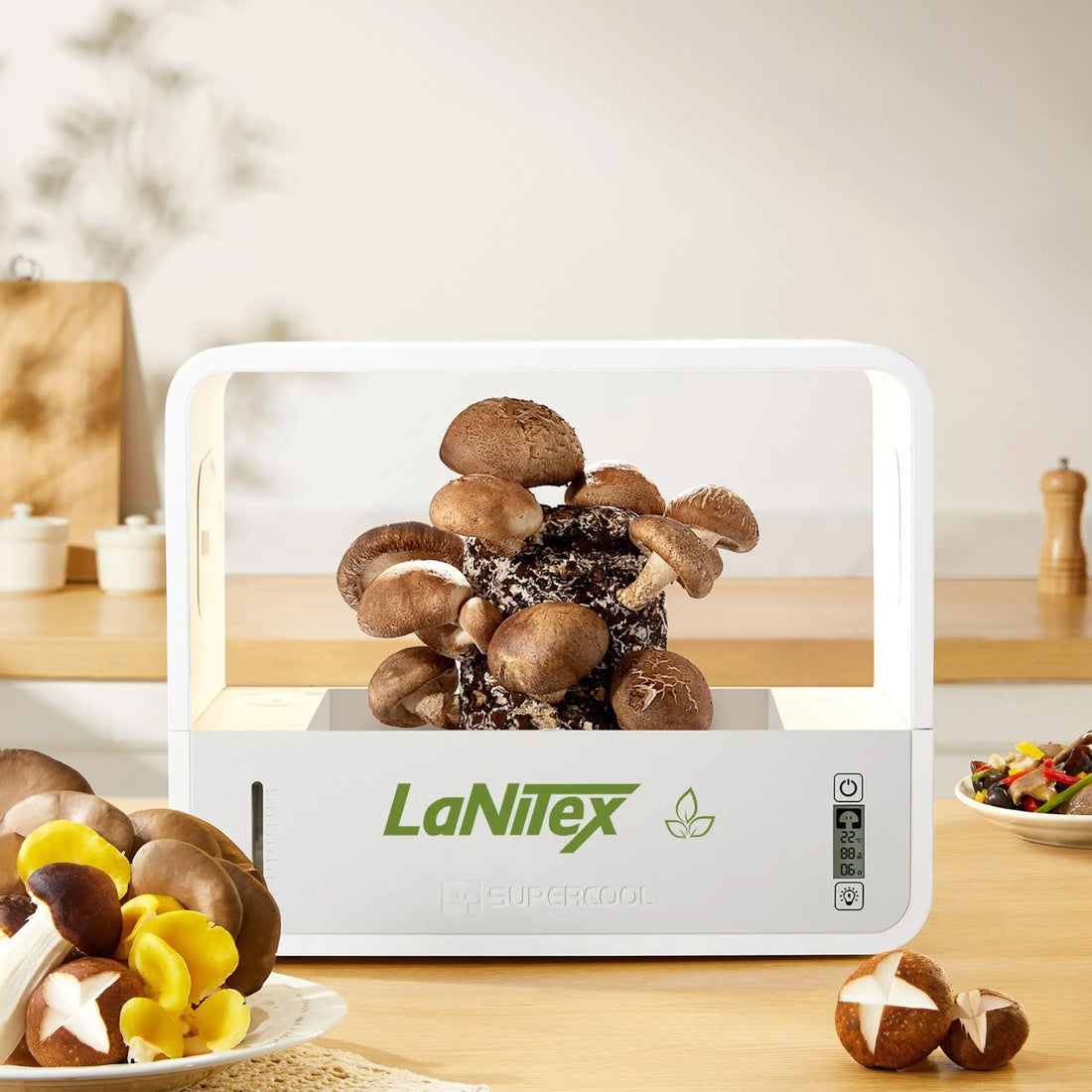
Restaurant kitchens pay a premium for chestnut mushrooms because they are tricky to get right: they need stable humidity and clean air exchange to form properly. The Smart Mushroom Growing Box gives you that same controlled environment on your kitchen bench: humidity control, LED lighting and a clear lid so you can watch every stage. Add your spawn, keep it in the right temperature range, and you are growing chef-grade mushrooms at home. The Box manages humidity and light; the cool 13-21 degrees C room is your job.

Want hands-off harvests? The Smart Mushroom Growing Box runs the humidity, fresh air and light for you — no daily misting. You supply the fruiting block.
Start growing mushrooms →Ships from the Sunshine Coast, Queensland.
Step-by-step: from spawn to harvest
This is the full path for how to grow chestnut mushrooms indoors anywhere in Australia, from spawn to first cluster. It is the answer most Australian growers search for when they look up how to grow chestnut mushrooms: a clean block, a cool room and patience.
Sourcing spawn
Start with chestnut mushroom spawn from a reputable Australian mushroom spawn supplier, confirming the species is Pholiota adiposa. Grain spawn colonises a sawdust block quickly and is the usual choice; sawdust spawn suits log work.
Substrate preparation
Chestnut fruits on a supplemented hardwood-sawdust substrate. A common chestnut mushroom substrate recipe is a bran-supplemented sawdust: roughly 80% hardwood sawdust, 15% wheat or rice bran for nitrogen, and 5% gypsum, hydrated and then sterilised before the spawn goes in. Clean substrate matters more here than for hardier oysters, because the long colonisation gives contaminants more time.
Inoculation
Add the spawn to the cooled substrate in a clean space, mix it through, and seal the block in a filter-patch grow bag. Work quickly and keep surfaces wiped down to lower contamination risk.
Colonisation
Keep the inoculated block warm and dark while the mycelium runs through it, at about 20-24 degrees C. This patient stage typically runs 20-30 days. Growers often rest a fully colonised block for a week or two so it firms and ages before fruiting.
Pinning
Move the colonised block to fruiting conditions: cooler, brighter, humid and well ventilated. The trigger is mechanical as much as anything else. Once the block is solid white and fully colonised, open or cut a window in the bag (or lift the lid) so the surface gets a hit of fresh air and light. Pinning then starts with high humidity, often near 95%, plus indirect light. Tiny pinhead clusters appear over the next several days, and this is where the cool 13-21 degrees C range matters.
Fruiting
Hold the block at 13-21 degrees C with 85-90% humidity, indirect light and good fresh-air exchange, aiming to turn the air over roughly four to eight times an hour. Keep CO2 low, ideally below about 1000 ppm; let it climb past roughly 2000 ppm and the clusters stretch into long stems with small caps. Over one to two weeks they fill out into tight bunches of scaly-capped mushrooms.
Harvest
Cut the whole cluster at the base while the caps are still firm and rounded. Across the cycle, expect roughly 34-54 days from inoculation to that first harvest, then about two flushes a couple of weeks apart for a full cycle of around six to eight weeks. The first flush is usually the biggest; across both, a healthy block returns something in the order of a few hundred grams of fresh chestnut, with the exact figure riding on block size, how vigorous the spawn was and how steadily you hold the cool, humid conditions.
Can you grow chestnut mushrooms on logs outdoors?
Indoors on a block is the quickest route, but chestnut will also fruit outdoors on inoculated hardwood logs, much the way many growers run shiitake. Plug or wedge sawdust spawn into a freshly cut, dense hardwood log (oak and other close-grained hardwoods suit it best), seal the holes with wax, and stand the log somewhere shaded and sheltered. The patience is on a different scale here: a log can take six months to a year to colonise before it throws a first flush, and it tends to fruit on its own terms in the cooler, damper months rather than on your schedule. It is low-effort once it is running, with no daily misting, but you give up the steady humidity, light and clean-air control a benchtop setup provides, and you lean even harder on the weather to supply the cool temperatures chestnut needs. It suits a grower with space, shade and time more than anyone chasing a fast first harvest.
Common chestnut problems and how to fix them
Most chestnut setbacks trace back to a handful of causes.
No pinning
If a fully colonised block sits for a week without forming pins, the trigger is usually missing. Chestnut needs a clear shift to cool temperatures, a jump in humidity and a burst of fresh air, so check the room is genuinely in the cool band and the block is getting indirect light.
Long stems and tiny caps
This is the classic fresh-air problem. Stale, high-CO2 air pushes the mushroom to stretch its stems while the caps stay small. Improve ventilation, open the chamber more often, and keep CO2 low, ideally below about 1000 ppm, during fruiting.
Contamination
A sour, cheesy smell, or patches of green or black mould, points to contamination. It is more common with chestnut than with fast oysters because the long colonisation gives competitors time. Sterile substrate prep and clean inoculation are the fix; a badly contaminated block is best discarded.
Dark, slimy caps
Caps that turn dark and slimy usually mean too much water sitting on them, from over-misting or poor airflow. Ease off direct misting and improve fresh-air exchange so the surfaces can dry between cycles.
Most of the problems above trace back to unstable conditions: humidity that swings and air that goes stale. A reusable system removes those variables. The Smart Mushroom Growing Box holds humidity and light steady and keeps the fruiting chamber ventilated, so contamination and dry-out have far less chance to take hold, flush after flush. (Temperature you manage simply by choosing a room in the right range, as covered above.) Unlike a one-off supermarket kit, it is built to be reset and grown again.
How to cook and store chestnut mushrooms
Chestnut is a cook's mushroom. Its firm, crunchy flesh holds its shape under heat where softer mushrooms collapse, so it shines in a stir-fry, tossed through pasta, folded into a risotto, or roasted until the edges crisp. Do not bin the stems, either: on chestnut they stay firm and sweet, so trim only the gritty base and cook the whole cluster. For the best texture, give the pieces a few minutes undisturbed in a hot, lightly oiled pan so they colour and brown before they start to release their water. Crowding the pan or stirring too early just steams them soft. Season once they are golden.
Storage is straightforward. Keep an unused harvest in the fridge in a paper bag rather than sealed plastic so the caps can breathe, and use it within about a week while it is still firm. For longer keeping, chestnut dehydrates well: slice the clusters thickly and dry them at a low heat, around 40 to 50 degrees C, until they are cracker-dry, then store them airtight and out of the light. Dried chestnut keeps for months and rehydrates straight into soups and sauces. For more, see the LaNiTex recipes collection.
Are chestnut mushrooms good for you?
Yes. Like other culinary mushrooms, chestnut is a low-kilojoule, virtually fat-free food that still brings a useful bundle of nutrients to the plate. The Australian Mushroom Growers Association notes that mushrooms supply several B-group vitamins (riboflavin, niacin, pantothenic acid, biotin and folate), along with the minerals selenium, copper, phosphorus and potassium, a few grams of dietary fibre per serve, and antioxidants including ergothioneine, a compound found almost nowhere else in the diet. Mushrooms left in the sun before cooking even generate their own vitamin D. That is a lot of goodness for very few kilojoules.
Grow gourmet at home
Grow gourmet chestnut clusters on your own bench, whatever the season. The Box holds the humidity, fresh-air cycle and light steady — the stable conditions this cool-loving species needs. You supply the fruiting block and a cool room.
Start growing chestnut →Ships from the Sunshine Coast, Queensland.
Chestnut mushroom FAQ
What is chestnut mushroom (Pholiota adiposa)?
Chestnut mushroom (Pholiota adiposa) is a cool-loving gourmet wood-rotting fungus that forms dense clusters of 3-8 cm brown, scaly-capped mushrooms on hardwoods. It is cultivated on sterilised hardwood sawdust under high humidity, and is distinct from the "chestnut button" Agaricus sold in supermarkets.
How long do chestnut mushrooms take to grow from inoculation to harvest?
Chestnut mushrooms typically take about 34-54 days from inoculation to first harvest on supplemented sawdust blocks: colonisation runs roughly 20-30 days at 20-24 degrees C, then fruiting follows at cooler temperatures. Growers usually obtain about 2 flushes spaced 14-21 days apart.
What temperature do chestnut mushrooms need to fruit?
Chestnut mushrooms fruit best in cool conditions. Cultivation data recommend about 15-18 degrees C during pin formation, then 17-21 degrees C at 85-90% humidity for fruit growth, and many home-grow guides describe successful fruiting across the broader 13-21 degrees C band.
Can chestnut mushrooms grow successfully in Australia?
Chestnut mushrooms grow successfully in Australia when cool temperatures of about 13-21 degrees C are met, using shaded indoor rooms, air-conditioned spaces or the cooler months. Many Australian regions with mild winters or cool indoor rooms fall within this range, and hardwood-sawdust substrates behave the same here.
What does chestnut mushroom taste like and how do you cook it?
Chestnut mushrooms are a gourmet species with an intense hazelnut-like flavour and a firm, crunchy texture that holds its shape during cooking. The clusters separate into stems and caps that brown nicely when sauteed, and they suit stir-fries, pasta, risottos and roasting.
Are chestnut mushrooms easy to grow for beginners?
Chestnut mushrooms are moderately easy for growers who can hold cool temperatures and humidity above 85% during fruiting. They colonise sawdust in roughly 20-30 days and fruit over 7-14 days, slower than many oyster strains but manageable.
How do you store fresh chestnut mushrooms?
Fresh chestnut mushrooms store best in a cool fridge in a breathable container such as a paper bag, where they generally keep for about 7-10 days. Keeping them out of sealed plastic stops moisture building up on the caps, and dehydrating preserves the flavour for months.
What substrate is best for growing chestnut mushrooms?
Chestnut mushrooms perform best on supplemented hardwood sawdust. One common recipe is roughly 80% hardwood sawdust, 15% wheat or rice bran and 5% gypsum by volume, hydrated and then sterilised. Growers also succeed with logs, straw or grain-sawdust blends.
Ready to grow chestnut mushrooms at home?
To grow chestnut mushrooms at home Australia-wide, the path is the same wherever you live: cool room, clean block, patience. For the bigger picture on choosing a mushroom growing kit and running it, read the complete Australian mushroom growing guide. If you want faster gourmet species to start with, see how to grow shiitake mushrooms in Australia and shimeji mushrooms in Australia. And for a discount on your first kit, join the LaNiTex newsletter for NEWSLETTERDISCOUNT10, 10% off your first order of everything you need to grow chestnut mushrooms.
Related mushroom guides
- Pioppino mushrooms, a fellow Italian-gourmet wood-lover
- Shiitake mushrooms, the classic gourmet for the same indoor method
About the writer
Laszlo Bulatko is the founder of LaNiTex Hydro Garden, a Sunshine Coast small business making indoor growing simple for Australian households. After fifteen years in sales and brand development, Laszlo now tests every system LaNiTex stocks before it reaches the catalogue, from hydroponic herb gardens to the Smart Mushroom Growing Box, and shares what actually works for growers in Australian conditions.
Sources
- Australian Mushroom Growers Association, Australia's Mushroom History: "Mushrooms are the sixth most valuable horticultural crop grown in Australia with 80% of Australian households regularly purchasing fresh mushrooms."
- Australian Mushroom Growers Association, Health and Nutrition: mushrooms are low in kilojoules and supply B-group vitamins, the minerals selenium, copper, phosphorus and potassium, dietary fibre and antioxidants including ergothioneine.
- Yu et al., The Domestication and Cultivation of Pholiota adiposa and Its High-Temperature Adaptability, Foods, 2025: "The growth of the mycelium was greatest when sucrose was used as the carbon source at 25 degrees C."