
Of all the gourmet mushrooms a home grower can attempt, maitake is the one that quietly defeats the most people. The prized "Hen of the Woods" rewards patience and a cool room, and punishes shortcuts.
Quick answer: You can grow maitake mushrooms in Australia, but it is the hardest gourmet species to fruit at home. Maitake colonises warm at around 20-24 degrees C, then needs a temperature drop (a cold shock) into a cool 13-18 degrees C window to trigger fruiting. That suits cool-southern regions such as Melbourne, Hobart, Adelaide and Canberra in autumn and winter, or a controlled-humidity indoor setup anywhere, kept in a cool room. It fails when temperatures sit above 22 degrees C.
At a glance
| Factor | Maitake (Grifola frondosa) |
|---|---|
| Climate band | Cool to moderate (colonises warm, fruits cool) |
| Fruiting temperature (room) | About 13-18 degrees C (up to 20 degrees C workable; fails above 22 degrees C) |
| Fruiting humidity | 85-95% |
| Fresh air | Good exchange; keep CO2 low (ideally under about 1000 ppm) |
| Substrate | Oak-based supplemented hardwood sawdust with wheat bran |
| Difficulty | Advanced (the hardest species to grow at home) |
| Time to first harvest | About 60-120 days from inoculation |
Key takeaways
- Maitake (Grifola frondosa, or Hen of the Woods) is a wood-loving polypore that grows as a frilly, layered rosette, prized for its earthy flavour and firm texture.
- The make-or-break step is the temperature drop: colonise warm, then cool the room to 13-18 degrees C to trigger pinning. Miss it and you get no clusters.
- It is slow and contamination-prone, so most growers do best to succeed with oysters or lion's mane first, then graduate to maitake.
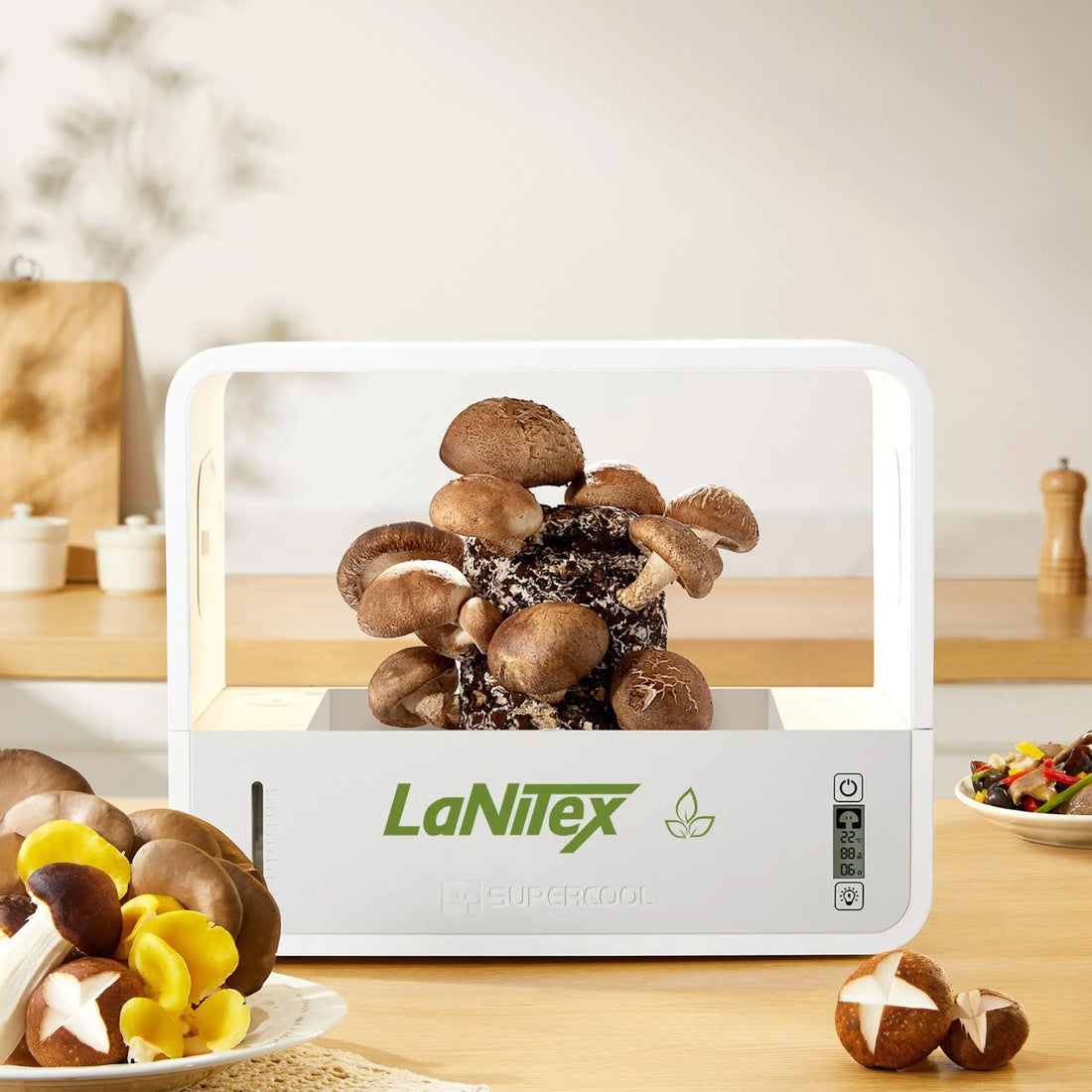
- The Smart Mushroom Growing Box holds the humidity, light and fresh air this fussy species needs indoors; the grower supplies the cool room and the cold shock.
Honest disclosure (intro only, since the rest of this guide stays third-person): maitake (Grifola frondosa) isn't yet a species we've fruited on the LaNiTex test bench on the Sunshine Coast. It is the hardest gourmet mushroom to grow at home, and the Smart Mushroom Growing Box plus the faster, more forgiving species came first. The guidance below is built from cultivation science and grow-guide literature (GroCycle, Zombie Myco, Field & Forest, Out-Grow), the AgriFutures RIRDC specialty-mushroom production research for Australian conditions, and feedback from LaNiTex customers running the Box across QLD, NSW, VIC and TAS. As maitake lands on our own bench, this guide will refresh with first-hand Sunshine Coast observations.
What is maitake (Grifola frondosa, Hen of the Woods)?
Maitake is a wood-loving polypore mushroom (a pore-bearing fungus that rots timber) and forms dense, frilly rosettes at the base of hardwood trees, especially oaks. Each cluster is built from many overlapping grey-brown fronds, and a single fruit body can range from a couple of hundred grams up to several kilograms in the wild. The species decomposes lignin and cellulose in timber, which is why cultivation copies the wood it loves: a hardwood-based substrate.
The scientific name is Grifola frondosa. In English it is almost always sold as "Hen of the Woods", a nod to its feathery, ruffled shape, and the Japanese name maitake is often translated as "dancing mushroom". Those three names point to the same fungus.
One naming trap is worth clearing up early. Maitake is not "chicken of the woods", which is Laetiporus, a separate bright-orange bracket fungus that people muddle with it because the common names sound alike. There is also a difference between the fresh fruit body you grow at home and the maitake extract sold as a supplement, which is a concentrated polysaccharide product rather than something you cook. Unlike shiitake, this species has no widely marketed Australian cultivar split, so there is no "strain A versus strain B" decision to make. You are growing Grifola frondosa, full stop.
Why grow maitake at home?
The first reason is flavour. Maitake has a rich, savoury taste that cooks describe as earthy, nutty and slightly peppery, and a firm texture that stays meaty rather than collapsing in the pan. Fresh maitake mushroom in Australia is mostly a specialty-grocer or restaurant item, so growing your own means you eat it at peak freshness instead of paying premium prices.
The second reason is curiosity about maitake as a functional mushroom. It belongs to the wellness group alongside reishi, and research is investigating its polysaccharides for various effects. That is a research-and-traditional-use story, not a health claim (more on that in the FAQ), but it draws a lot of people to the species.
There is no pretending maitake is easy. It is slow, fussy and unforgiving compared with oysters. The honest pitch is that the reward earns the effort: a home-grown "Hen of the Woods" is a genuinely special thing to put on a plate, and learning to fruit it is a real step up as a grower.
How maitake compares to easier gourmet mushrooms
If you have grown oyster or lion's mane mushrooms before, it helps to see exactly where maitake sits on the difficulty scale. It is best treated as a capstone project rather than a first grow.
| Species | Colonisation speed | Temperature tolerance | Contamination risk | Typical yield |
|---|---|---|---|---|
| Oyster | Fast (about 10-14 days) | Wide and forgiving | Low | High, several flushes |
| Lion's mane | Moderate | Moderate | Low to moderate | Good, repeat flushes |
| Shiitake | Slow (weeks to months) | Moderate, needs a trigger | Moderate | Good over a long cycle |
| Maitake | Slow (about 30-60 days) | Narrow; needs a cold shock and fails above 22 degrees C | High (slow colonisation invites mould) | Modest (one to two flushes, about 200-500 g per block) |
Maitake asks for more environmental control and more patience than the beginner mushrooms, which is why most growers do best to master oysters or lion's mane before attempting it.
Get a fresh grow guide like this every fortnight
Join the LaNiTex Hydro Garden newsletter for practical hydroponic, microgreen and mushroom growing tips for Australian homes. Subscribe to download a free hydroponics starter guide (PDF) and get 10% off your first order.
Join the newsletter →How does maitake grow in Australian climates?
Here is the honest truth that no thin product page will tell you: maitake is the hardest gourmet mushroom to fruit at home, and most failures come down to temperature. The species colonises its substrate warm, at roughly 20-24 degrees C, over about 30-60 days. Then it needs a temperature drop, often called a maitake cold shock, into a cool 13-18 degrees C fruiting window to trigger pinning. That maitake fruiting temperature matters: up to about 20 degrees C is workable, but when temperatures sit regularly above 22 degrees C you get poor crops or none at all. The move from warm colonisation to a cool fruiting room is the step most home growers miss.
Mapped onto Australia, that points clearly to the cool-temperate south. Melbourne, Hobart, Adelaide, Canberra and the NSW highlands give you genuine 13-18 degrees C maitake mushroom growing conditions through autumn and winter, either in a cooler indoor spot or a shaded, sheltered outdoor position. In subtropical Brisbane or tropical Darwin you simply cannot grow maitake open-ambient, because the air is too warm and humid for that cool fruiting window, so you need a cool, air-conditioned room or a controlled space and you treat it as an indoor, seasonal grow.
A word of caution: do not try to fruit maitake open-ambient in the warm, humid north and expect clusters. Without a genuinely cool room you will get an aborted or contaminated block, not a harvest. The cool window is not optional.
This is where equipment matters, and where one fact needs to be clear. The Smart Mushroom Growing Box controls humidity, LED light and fresh-air exchange through its sensor, misting reservoir and ventilated clear lid. It does not control temperature. The grower is the one who provides the cool 13-18 degrees C room and performs the cold shock; the Box then holds the humidity and air that maitake needs while it fruits. Think of it as handling the three variables a fussy species needs steady, namely humidity, light and clean air, while you handle the room.
Creating a cool 13-18 degrees C window in warmer regions
If you live somewhere that does not naturally drop to 13-18 degrees C, you create the window yourself, and you do it before the Box ever comes into play. The most reliable home option is a spare fridge or a wine fridge fitted with an external temperature controller, a plug-in thermostat that switches the appliance on and off to hold a set temperature, which lets you dial in a steady fruiting range a normal fridge runs too cold for. A naturally cool cupboard, garage, cellar or south-facing room can also work through the cooler months. Whichever you choose, remember the division of labour: you supply the cool room and the cold shock, and the Smart Mushroom Growing Box holds the humidity, light and fresh air inside it.
Getting maitake mushrooms to fruit comes down to two things: keeping them in the right temperature range (around 13-18 degrees C, so choose a room, cupboard or garage that naturally sits in that band) and holding humidity high and steady at 85-95%. The Smart Mushroom Growing Box takes care of the hard part. Its humidity control, LED lighting and clear lid hold the fruiting environment without daily misting or guesswork, while you simply place it somewhere in the right temperature range.

Want hands-off harvests? The Smart Mushroom Growing Box runs the humidity, fresh air and light for you — no daily misting. You supply the fruiting block.
Start growing mushrooms →Ships from the Sunshine Coast, Queensland.
Step-by-step: spawn to harvest
Growing maitake from spawn is a months-long project, not a weekend one. Here is the full path, with the cold shock called out as the make-or-break stage.
Sourcing maitake mushroom spawn in Australia
Maitake starts with clean, viable spawn from a reputable Australian mushroom spawn supplier. LaNiTex sells the growing equipment, not spawn, so this is a step you source separately. A few checks save a lot of heartache. Confirm the species is listed clearly as Grifola frondosa (Hen of the Woods), not a look-alike, so you know exactly what you are inoculating. Look for grain or sawdust spawn that arrives clean and cold-chain shipped, since a slow-colonising species like maitake is especially vulnerable to contamination from a tired or warm culture.
Read recent reviews to gauge how viable other growers found the spawn. And check whether the supplier can ship live spawn to your state, because some growers in Western Australia and Tasmania find that quarantine rules restrict what live cultures can be sent in, so confirm shipping to your address before you order. A supplier who specialises in gourmet cultures usually beats a general garden retailer on freshness.
Preparing the substrate
The best maitake mushroom substrate is an oak-based supplemented hardwood sawdust mix. A common recipe is roughly 80% hardwood sawdust to 20% wheat bran, with a small amount of gypsum, hydrated and then sterilised so the maitake culture has a clean head start. Aim for a substrate moisture content of about 60-65%: squeezed hard, a handful should release only a drop or two of water, not a stream. Maitake is usually run at a fairly generous grain-spawn rate, often around 10-20% of the substrate weight, because a faster, more complete colonisation leaves a slow species less of a window in which contaminants can take hold. Some outdoor growers in cool regions instead inoculate buried hardwood logs, which is a slower, multi-year method but a low-maintenance one once established.
Inoculation and colonisation
The spawn is mixed into the sterilised substrate in clean conditions, then left to colonise at around 20-24 degrees C. This is the slow part: maitake commonly takes about 30-60 days to fully colonise a block, noticeably longer than oysters. The mycelium runs white through the substrate and often forms a firm, slightly lumpy surface as it matures. Patience here pays off, because a fully colonised block fruits far better than a rushed one.
The temperature drop: the trigger that makes or breaks the crop
Once the block is fully colonised, maitake will not simply start fruiting on its own. It needs an autumn-mimic cue: a temperature drop from the warm colonisation range into the cool 13-18 degrees C fruiting window. This cold shock is what tells the mycelium that the season has turned and it is time to form clusters. Growers who skip it, or who try to fruit in a room that stays above 22 degrees C, are the ones who report a colonised block that never pins. In a cool-southern autumn, the seasonal drop can do this for you; elsewhere you create it by moving the block to a cooler room.
Fruiting
In the cool window, maitake forms primordia (tiny mushroom pins) that develop into the layered, frilly clusters the species is known for. This stage wants high, stable humidity of 85-95% and plenty of fresh-air exchange. Maitake is especially sensitive to stale air: it wants low carbon dioxide, ideally under about 1000 ppm, because low CO2 produces the broad, layered fronds it is prized for while high CO2 pushes it toward thin, antler-like growth. Clusters typically develop over roughly 14-28 days.
Harvest
Harvest the whole cluster when the fronds have expanded and firmed up but before the edges dry or curl, cutting at the base. A well-managed block usually gives one to two flushes and somewhere around 200-500 g per block before productivity drops off. That is fewer, slower flushes than oysters, the trade-off you accept for a premium gourmet mushroom. To coax a second flush, keep the block in the cool, humid window after the first harvest and let it rest; some growers rehydrate a lighter block by soaking it briefly in cool, clean water for a few hours to top up its moisture. A second flush is usually smaller and slower than the first, so if the block has dried hard or shows any contamination it is better to compost it and start fresh than to chase a marginal return.
Growing maitake outdoors on logs
The sawdust-block method above is the fastest route, but maitake also grows the way it does in the wild: on hardwood logs outdoors. It is a slower, lower-maintenance project that suits cool-southern gardens, and it is the method most of the international grow guides focus on.
Start with a freshly cut, healthy hardwood log from an oak-family or other dense, high-lignin timber; most eucalypts are a poor choice because their oils and phenolics resist colonisation. Drill a grid of holes, tap in maitake dowel or plug spawn from a reputable Australian supplier, and seal each hole with cheese wax to keep moisture in and contaminants out. Stand or part-bury the inoculated log in a shaded, sheltered, consistently damp spot and let it colonise for many months, watering it in dry spells.
The make-or-break trigger is the same as indoors, just delivered differently: a cold-water shock. Once the log is well colonised, a long soak in cold water, or the natural arrival of a cool, wet southern autumn, mimics the seasonal drop that tells the mycelium to fruit. Expect the whole outdoor cycle to run from roughly a year to two before the first flush, after which a good log can keep fruiting for several seasons.
Common problems and how to fix them
Most maitake failures trace back to a handful of causes, and nearly all of them are environmental.
No pins forming
This is the classic maitake problem, and it almost always means the block is too warm. A colonised block sitting above about 20-22 degrees C will stall indefinitely. The fix is the temperature drop: move it into a genuinely cool 13-18 degrees C room to deliver the cold shock it is waiting for.
Aborted or misshapen clusters
Long, thin, antler-like growth or clusters that brown and stall usually points to poor fresh-air exchange (too much CO2), unstable humidity, or temperature creeping up. Improve airflow, hold humidity steady in the 85-95% band, and keep the room cool and even.
Green mould and contamination
Because maitake colonises slowly, it gives competing moulds a long window to take hold. Green patches (often Trichoderma) usually mean contamination got in during inoculation or the substrate was not clean. Start with clean spawn, work in the cleanest conditions you can, and discard a heavily contaminated block rather than trying to save it.
Drying out
If fronds look shrivelled or stop growing, humidity has dropped too low or dry airflow is hitting them directly. Maitake needs that steady 85-95% humidity; avoid pointing fans straight at the clusters.
Most of the problems above trace back to unstable conditions: humidity that swings and air that goes stale. A reusable system removes those variables. The Smart Mushroom Growing Box holds humidity and light steady and keeps the fruiting chamber ventilated, so contamination and dry-out have far less chance to take hold, flush after flush. (Temperature you manage simply by choosing a room in the right range, as covered above.) Unlike a one-off supermarket kit, it is built to be reset and grown again.

How to use maitake in cooking
Maitake is worth the effort in the kitchen. The flavour is rich, earthy and slightly peppery, and the firm texture holds its shape when cooked, so it does not turn to mush the way softer mushrooms can. Tear the cluster into pieces rather than slicing it, and the frilly edges crisp up nicely in a hot pan.
The simplest route is to saute torn fronds in oil or butter for several minutes until the edges are golden, then finish with salt. Maitake also roasts well at around 180-200 degrees C, and it carries soups, risottos, stir-fries and tempura-style batters thanks to that structure. Popular maitake recipes range from a simple sauteed or roasted batch to maitake tempura, a handful torn through ramen or a stir-fry, or a crisp pan-fried "maitake fried chicken". For more ideas and method, see the LaNiTex recipes page.
For storage, keep fresh maitake in a paper bag in the fridge and use it within about a week. To keep it longer, dehydrate the torn pieces at low heat until they are completely brittle, then store them in an airtight jar; dried maitake rehydrates well and adds depth to stocks and stews.
Grow gourmet at home
Grow your own Hen of the Woods indoors, in season. The Box holds the humidity, fresh-air cycle and light steady — the stable, well-ventilated conditions maitake demands. You supply the cool room, the cold shock and the fruiting block.
Start growing maitake →Ships from the Sunshine Coast, Queensland.
Maitake FAQ
What is Maitake mushroom (Grifola frondosa)?
Maitake is a wood-loving polypore mushroom that forms dense, frilly rosettes weighing from 200 g to several kilograms at the base of hardwood trees, especially oaks. It prefers cool conditions around 10-20 degrees C and decomposes lignin and cellulose in timber. The scientific name is Grifola frondosa, and it is widely known as Hen of the Woods due to its feathery, ruffled appearance.
How long do Maitake mushrooms take to grow from inoculation to harvest?
Maitake typically takes around 60-120 days from inoculation of supplemented sawdust or logs to the first harvest under cool, clean conditions, based on specialty production data. Once a block is fully colonised and moved to fruiting at 13-18 degrees C, visible clusters usually form and reach harvest size within about 14-28 days. Well-managed blocks often give one to two flushes before productivity declines.
What temperature does Maitake need to fruit?
Maitake fruits best between about 13-18 degrees C, with Australian kit suppliers warning that regular temperatures above 22 degrees C cause poor or failed crops. It is a cool-weather species, so sustained ranges around 10-20 degrees C suit pin formation and cluster development. Stable humidity and avoidance of hot, dry airflow are also important for proper fruit-body formation.
Can you grow maitake mushrooms in Australia?
Maitake is grown in Australia as a specialty mushroom, with AgriFutures profiling commercial and research production systems for Grifola frondosa. Home growers can cultivate it on supplemented sawdust blocks or hardwood logs in climates with 10-20 degrees C seasonal temperatures. Cooler-climate regions such as Melbourne, Hobart, Adelaide and Canberra suit autumn-winter growing, while warmer areas need a cool indoor space.
Why is Maitake one of the harder mushrooms to grow at home?
Maitake is harder to grow at home because it needs tight temperature control around 13-18 degrees C, struggles when exposed to temperatures above 22 degrees C, and fruits slowly compared with oysters or shiitake. It requires clean spawn, well-prepared hardwood-based substrate, and consistent humidity, otherwise contamination and aborted clusters are common. The complex, multi-layered fruit-body also demands longer colonisation and careful air-flow management.
What does Maitake taste like and how do you cook it?
Maitake has a rich, savoury flavour often described as earthy, nutty and slightly peppery, with a firm texture that stays meaty when cooked. Home cooks commonly saute torn fronds in oil or butter for several minutes, roast them at about 180-200 degrees C, or add them to soups, risottos and stir-fries. The frilly structure also suits tempura-style batters and pan-frying.
What is maitake good for, and what does research say about its benefits?
Maitake is valued first as a flavoursome gourmet food, and it is also one of the functional mushrooms researchers study. Research is investigating maitake polysaccharides, including beta-glucans, for effects in areas such as immune function and glucose and lipid metabolism. Traditional East Asian use includes consuming the fruit-bodies as a food over many decades. In Australia maitake is treated as a food rather than an approved therapeutic good, and any health-related interest sits within research and traditional-use contexts rather than approved therapy. One practical caution: maitake may interact with blood-thinning medication such as warfarin and with diabetes medication, so if you take either, check with your doctor first. This is general information, not medical advice.
Is maitake safe to eat, and should you cook it?
Yes, maitake is a popular culinary gourmet mushroom that is safe to eat for most people once it is cooked. Like other gourmet mushrooms it is eaten cooked rather than raw: a few minutes of sauteing, roasting or frying improves both its flavour and its digestibility, so cook it through before serving. Maitake is grown and eaten purely for the kitchen and is not a psychoactive variety, so it has no mind-altering effect. Anyone on blood-thinning or diabetes medication should see the note in the benefits question above.
How do you store and dry Maitake mushrooms after harvest?
Fresh maitake keeps for about a week in the refrigerator in a paper bag or breathable container. For drying, cleaned fronds are sliced or torn and dehydrated at low heat until they are completely brittle, then stored in airtight jars. Properly dried pieces stay shelf-stable for many months in a cool, dark pantry and rehydrate well for soups, stews and stocks.
Ready to grow maitake at home?
Maitake is the species that most rewards getting the environment right, and the species that punishes getting it wrong. Colonise warm, drop the room to a cool 13-18 degrees C to cold-shock it into fruiting, hold the humidity at 85-95%, and you can grow maitake mushrooms at home in Australia that are worthy of any restaurant plate.
If you are still building confidence, start with the faster species first. The complete Australian mushroom growing guide is the place to begin, and our guides to shiitake and shimeji cover two more gourmet species that are kinder to beginners. Reishi, maitake's wellness sibling, is one we will add to the series soon.
Related mushroom guides
- Reishi mushrooms - a fellow functional mushroom
- Lion's mane mushrooms - another functional favourite
About the writer
About the author
Laszlo Bulatko is the founder of LaNiTex Hydro Garden, a Sunshine Coast small business making indoor growing simple for Australian households. After fifteen years in sales and brand development, Laszlo now tests every system LaNiTex stocks before it reaches the catalogue, from hydroponic herb gardens to the Smart Mushroom Growing Box, and shares what actually works for growers in Australian conditions.
Sources
- AgriFutures (RIRDC), Specialty Mushroom Production Systems: Maitake and Morels. Australian commercial and research production of maitake, including the Japanese bag method adapted for Australian conditions and the growing demand for European and Asian specialty mushrooms.
- Zhang et al. (2025), "Grifola frondosa Polysaccharide F2 Ameliorates Disordered Glucose and Lipid Metabolism in Prediabetic Mice by Modulating Bile Acids", Foods. A peer-reviewed animal (mouse) study, cited here only as an example of the research investigating maitake polysaccharides, not as evidence of any human health benefit.