
Reading time: about 14 minutes
Much of the "Australian lion's mane" sold here is not the real thing, and a search for lion's mane in Australia turns up more supplement bottles than grow guides. Knowing the difference is the first step to growing your own.
Honest disclosure (intro only - the rest of this guide stays third-person): lion's mane (Hericium erinaceus) isn't yet a species we've fruited on the LaNiTex test bench on the Sunshine Coast - the Smart Mushroom Growing Box and the faster, more forgiving species came first. The guidance below is built from cultivation science and grow-guide literature (GroCycle, GrowVeg, Mars Hydro), Australian supplier and educator pages on the native-vs-imported lion's mane question, the DAFF and TGA/FSANZ regulatory guidance, and feedback from LaNiTex customers running the Box across QLD, NSW, VIC and TAS. As lion's mane lands on our own bench, this guide will refresh with first-hand Sunshine Coast observations.
Quick answer: You can grow lion's mane at home in Australia for personal use, and growing your own fresh supply is well within reach. Its powder is a regulated novel food, so commercial supplement sale is restricted. It fruits at 16-24C and takes about 3 to 5 weeks from inoculation to the first harvest.
Key takeaways:
- Lion's mane (Hericium erinaceus) fruits at 16-24C and reaches a first harvest in about 3 to 5 weeks, which suits an indoor grow across most of Australia.
- True lion's mane is not native here; much "Australian lion's mane" on sale is actually the native Coral Tooth (Hericium coralloides), so check the scientific name on any label or spawn.
- Home-growing for personal use is generally treated like other gourmet mushrooms, but lion's mane powder is a novel food, so selling it as a supplement is restricted under FSANZ rules.
- Good fresh-air exchange and 85-95% humidity are the make-or-break; low fresh air gives deformed antler-like growth instead of dense spined clusters.
- You source spawn from a reputable Australian mushroom spawn supplier; LaNiTex supplies the reusable hardware, not the spawn.
This guide is for: Intermediate growers.
At a glance
| Attribute | Detail |
|---|---|
| Species | Hericium erinaceus (Pom Pom and Hulk cultivars) |
| Climate | Moderate, 16-24C (this is the room you provide, not a Box setting) |
| Difficulty | Intermediate (trickier than oysters) |
| Time to first harvest | about 3 to 5 weeks |
| Taste | mild, seafood-like (crab or lobster) |
| Best uses | dry-sauteed "crab cakes", torn scallops, stir-fries |
What is lion's mane, and is "Australian lion's mane" the real thing?
Lion's mane (Hericium erinaceus) is a toothed gourmet mushroom that grows white cascading spines instead of gills, forming a single rounded pom-pom rather than a capped mushroom. Growers also know it as monkey head mushroom or bearded tooth, and it is the species behind most of the published lion's mane research. True Hericium erinaceus is not native to Australia; its natural range covers North America, Europe and Asia, and Australian growers import it under permit conditions.
Here the naming gets slippery. Much of what is sold locally as "Australian lion's mane" is a different species, Hericium coralloides, the Coral Tooth. Coral Tooth is the genuine Australian native, and it grows as a branched, coral-like cluster rather than the single rounded ball of true erinaceus. Both are edible, but only erinaceus is the research species. The practical lesson is simple. Check the scientific name on any label, kit or bag of spawn before you buy. If it says Hericium coralloides, that is the native Coral Tooth, not the imported lion's mane many people think they are getting. LaNiTex covers the native species in a dedicated Coral Tooth guide.
Why grow your own lion's mane instead of buying capsules?
Lion's mane is one of the few gourmet mushrooms that doubles as a kitchen prize and a functional-food curiosity, which is exactly why growing your own makes sense. The fresh mushroom has a mild, seafood-like flavour that dried supermarket caps and sealed capsules cannot match. Torn and pan-fried, it stands in for crab or scallops, turning a single block into a run of restaurant-style meals.
There is a second reason, aimed at the larger crowd who reach for lion's mane as a supplement. Capsules and powders are a recurring spend, often $40 to $90 a bottle, and the form on the shelf varies from fruiting-body extract to mycelium powder. Growing your own gives a fresh, reliable supply on your own terms, from a species you can see and identify. Research is investigating lion's mane for compounds such as hericenones and erinacines, but the work is preliminary, and in Australia the powder is a regulated novel food rather than an approved health product. The honest reframe is about fresh supply and flavour you control, not a health claim.
How does lion's mane grow in Australian climates?
Lion's mane fruits in a moderate window of 16-24C, with many growers reporting the cleanest pinning around 16-21C. That single fact decides where and how it grows across the country. Cool-southern regions such as Melbourne, Hobart and much of Victoria and Tasmania suit it for a long part of the year. Humid-subtropical Brisbane and tropical Darwin are harder outdoors and call for an indoor grow with stable humidity. Colonisation runs a touch warmer than fruiting, around 21-24C, so the mycelium spreads first before the cooler fruiting trigger.
Is it legal to grow lion's mane in Australia?
Yes, with a few honest caveats worth knowing. On import, the Department of Agriculture, Fisheries and Forestry (DAFF) lists Hericium erinaceus among medicinal mushroom species that can be brought in under alternative conditions through the Biosecurity (Conditionally Non-prohibited Goods) Determination 2021, so cultures and spawn are importable with conditions rather than banned. On sale, lion's mane powder is treated by the Therapeutic Goods Administration and FSANZ as a novel food, so selling it as a supplement is restricted unless it is on the permitted novel-foods list. Some Australian suppliers also cannot ship live spawn to Western Australia or Tasmania, so check your own state or territory rules. The takeaway for home growers is reassuring. Growing your own lion's mane for personal use is generally treated like other gourmet mushrooms; the restrictions bite on commercial supplement sale, not on a block on your bench.
That bench is where a controlled chamber earns its place, because lion's mane wants steady humidity and clean, moving air.
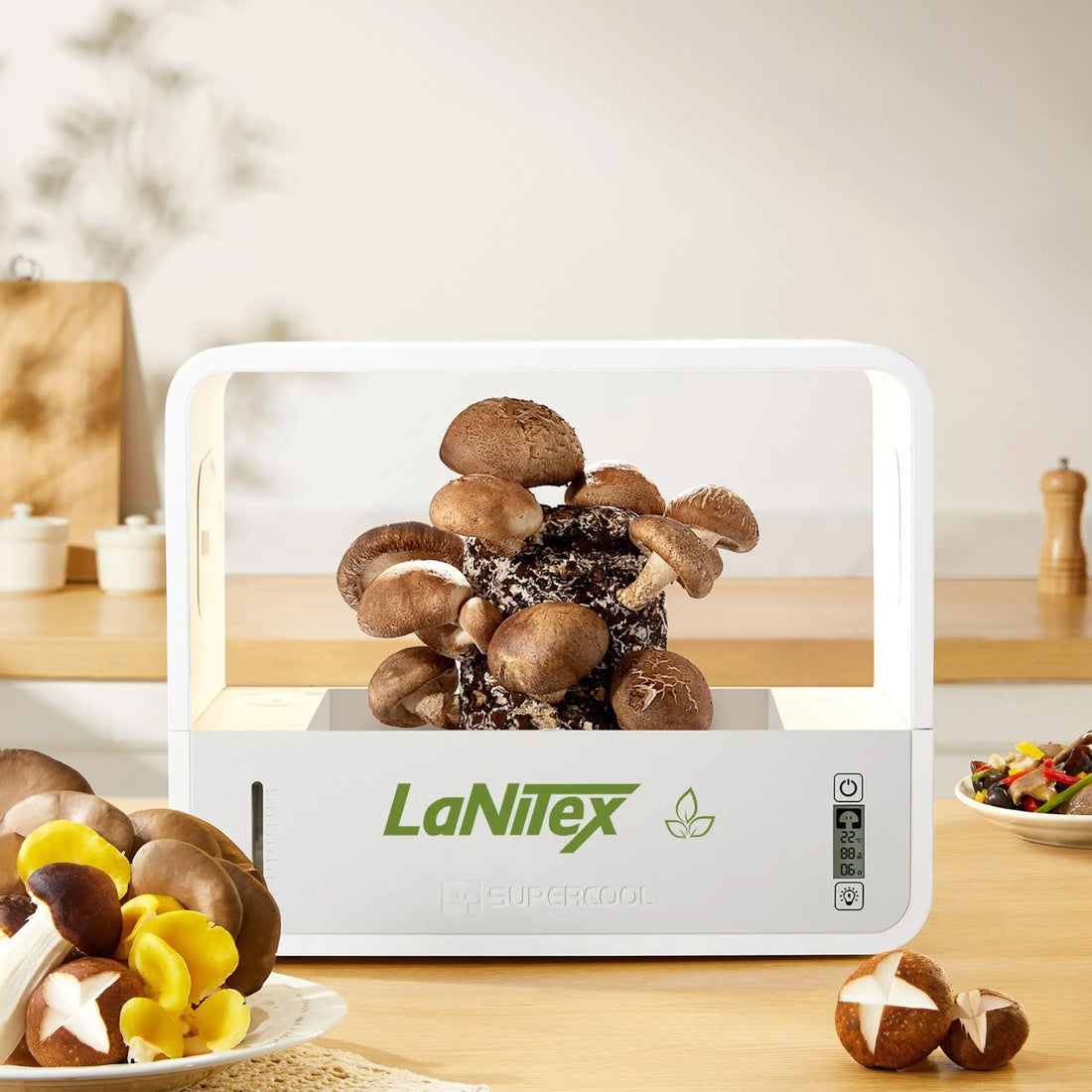
Restaurant kitchens pay a premium for lion's mane mushrooms because they are tricky to get right - they need stable humidity and clean air exchange to form properly. The Smart Mushroom Growing Box gives you that same controlled environment on your kitchen bench: humidity control, LED lighting and a clear lid so you can watch every stage. Add your spawn, keep it in the right temperature range of 16-24C, and you are growing chef-grade mushrooms at home.
One point to be clear on: the Box controls humidity and light and gives the mushroom a ventilated, lidded chamber, but temperature stays in your hands. You place the Box in a room that naturally sits in the 16-24C band, and the daily misting drops away. If you are new to home cultivation, the broader complete Australian guide to mushroom growing covers the basics that apply to every species before you specialise in lion's mane.

Want hands-off harvests? The Smart Mushroom Growing Box runs the humidity, fresh air and light for you — no daily misting. You supply the fruiting block.
Start growing mushrooms →Ships from the Sunshine Coast, Queensland.
Step-by-step: growing lion's mane from spawn to harvest
Lion's mane follows the same broad arc as other gourmet mushrooms, spawn run through to harvest, but the spined fruit body is fussier about air and timing than a forgiving oyster. The stages below match what the cultivation literature and Australian growers report.
1. Spawn run
Start with fresh, viable spawn from a reputable Australian mushroom spawn supplier. Old spawn colonises slowly and loses ground to contamination, so buy spawn that arrives quickly and use it promptly. Lion's mane grows from grain or sawdust spawn, which carries the living mycelium into your substrate.
2. Prepare the substrate
Lion's mane is a wood-lover, so it wants a hardwood-based substrate. The standard recipe is supplemented hardwood sawdust with wheat bran, though growers also run it on a Master's Mix of roughly equal parts hardwood sawdust and soy hulls, inoculated with around 5 to 10% grain spawn by weight. The bran adds the nitrogen the mycelium needs to colonise quickly, and a ready-supplemented block saves you the sterilising step.
3. Inoculate
Mix the spawn through the sterilised substrate, or inoculate a prepared block, keeping everything as clean as you can. Lion's mane is more sensitive to competitor moulds than oysters, so clean hands, clean tools and fresh spawn matter here.
4. Colonise
Hold the inoculated substrate at about 21-24C while the white mycelium spreads through it. This spawn run usually takes two to four weeks, with many strains fully colonised in roughly 14 to 21 days. The block looks firm and white once it is ready to fruit.
5. Pinning
Drop the temperature into the 16-24C fruiting band, lift humidity to 85-95%, and give the block fresh air. Lion's mane also needs a little light to fruit, so give it indirect light for roughly 8 to 12 hours a day. Small white pins appear, which are the start of the fruit bodies. Good fresh-air exchange is the single biggest lever at this stage. Without a controlled chamber, growers improvise a humid space: a large clear bag held off the block on a few skewers, or a small clear tub or mini-greenhouse, misted inside two to three times a day with a little fanning for fresh air. A controlled box holds that humidity and ventilation steady without the daily misting.

6. Fruiting
This is where lion's mane rewards or punishes your air management. In the 16-24C band with 85-95% humidity and good fresh air, the pins swell into dense, rounded clusters with the species' signature cascading teeth. Stale, high-carbon-dioxide air is the classic mistake: it pushes the mushroom into deformed, antler-like growth instead of a tight spined ball. The fix is fresh air. Where you open the block matters too: lion's mane can be fruited from the top or the side, and many growers favour a single side opening for better air flow across the face, while a smaller opening tends to channel growth into one denser, rounder ball rather than several scattered heads.
7. Harvest
Cut the cluster while the teeth are still white and before they start to yellow or brown, which is the point of best flavour and texture. From inoculation to that first harvest commonly runs about 3 to 5 weeks, and a well-kept block gives several flushes before it is spent. Growers commonly report two to three flushes from one block, sometimes more, with each a little smaller than the last. To coax the next flush, scrape the spent face back to clean substrate, soak the block in cool water for a few hours to rehydrate it and let it drain, then give it an overnight cold rest in the fridge before returning it to fruiting conditions.
A quick word on the two cultivars LaNiTex references. Pom Pom and Hulk are both Hericium erinaceus and grow the same way; growers report Pom Pom forms tighter, rounder clusters and Hulk grows larger, heavier fruit bodies. Those cultivar traits are grower-reported rather than firmly established, so treat them as a guide, not a guarantee.
Lion's mane teaches air management faster than any other gourmet species. Get the fresh air right and the rest tends to follow.
Can you grow lion's mane outdoors on logs?
Indoors on a block is the fastest and most reliable route in Australia, but lion's mane also grows outdoors on inoculated hardwood logs or dowels, much like shiitake. Log growing is slower and seasonal, though a log needs little attention and can fruit for a few years in a shaded, sheltered spot. For most home growers after a steady kitchen supply, an indoor block is the easier option.
Get a fresh grow guide like this every fortnight
Join the LaNiTex Hydro Garden newsletter for practical hydroponic, microgreen and mushroom growing tips for Australian homes. Subscribe to download a free hydroponics starter guide (PDF) and get 10% off your first order.
Join the newsletter →Common lion's mane problems and how to fix them
Most lion's mane setbacks trace back to a handful of causes, and almost all are fixable once you know the signs.
Antler-like growth instead of a spined ball
This is the make-or-break, and it points to stale air. Low fresh-air exchange and high carbon dioxide push the mushroom into thin, branching, antler-like growth. Raise the fresh-air exchange and keep humidity in the 85-95% band, and the clusters form properly.
Yellowing or browning teeth
If the spines turn yellow or brown, the cluster is ageing past its best. Harvest earlier, while the teeth are still white, for the best texture and flavour.
Contamination and green mould
Patches of green mould usually mean contamination from unclean technique or weak spawn. Keep tools and hands clean, work in a tidy space, and start with fresh, vigorous spawn. Do not let the block dry out and go stale.
Drying out
Dry air stalls pinning and crisps the young fruit. Hold humidity high and steady during fruiting and avoid a dry draught blowing straight onto the block.
Most of the problems above trace back to unstable conditions - humidity that swings and air that goes stale. A reusable system removes those variables: the Smart Mushroom Growing Box holds humidity and light steady and keeps the fruiting chamber ventilated, so contamination and dry-out have far less chance to take hold, flush after flush. (Temperature you manage simply by choosing a room in the right range - see above.) Unlike a single-use lion's mane grow kit, it is built to be reset and grown again, flush after flush.

How to cook lion's mane mushrooms
Lion's mane is the seafood of the mushroom world, with a mild flavour close to crab or lobster and a firm, meaty texture that holds up to a hot pan. The technique behind that result is to dry-saute first. Tear or slice the mushroom, then cook it in a dry pan with no oil for a few minutes to drive off its water. Once the moisture has gone and the pieces firm up, add butter or oil and pan-fry until golden. That two-step method gives the "crab cake" and seared-scallop results growers rave about, and it is also how you sear thick pieces into a "lion's mane steak". It also works battered and shallow-fried, simmered into a soup, or dropped into stir-fries and ramen as a protein-style component.
Storage is straightforward. Keep fresh lion's mane unwashed in a paper bag in the fridge and use it within about a week, since the open spines lose moisture quickly. For the longer term, slice or tear the mushroom and dehydrate it at a low heat of around 40-50C until fully crisp, then grind it to powder and store it airtight. For ideas on what to do with a glut, see the LaNiTex recipe collection.
Grow gourmet at home
Grow your own lion's mane on the bench, fresh to the pan. The Box holds the humidity, moving fresh air and light steady — the clean, well-ventilated conditions this toothed species needs. You supply the fruiting block and a 16-24C room.
Start growing lion's mane →Ships from the Sunshine Coast, Queensland.
Lion's Mane FAQ
What is lion's mane mushroom (Hericium erinaceus)?
Lion's mane (Hericium erinaceus) is a toothed gourmet mushroom that forms white cascading spines instead of gills, often resembling a rounded pom-pom or hedgehog-like cluster. It grows naturally on hardwoods and is cultivated on sterilised sawdust or hardwood blocks at 16-24C in many home setups. It is non-psychoactive and used mainly as a culinary mushroom.
Is it legal to grow lion's mane mushrooms in Australia?
Growing lion's mane at home for personal use is generally treated like other gourmet mushrooms, and DAFF lists Hericium erinaceus as importable under conditions. However, lion's mane powder is a novel food, so selling it as a supplement is restricted under FSANZ and TGA rules. Check your own state rules, as some suppliers cannot ship live spawn to WA or Tasmania.
What temperature does lion's mane need to fruit?
Lion's mane fruits well between 16-24C, a range that suits many indoor Australian conditions, with an optimal band around 16-21C for consistent pinning. Within this range, holding humidity around 85-90% with good fresh-air exchange helps prevent deformed antler-like growth and encourages dense, ball-shaped clusters. Colonisation runs slightly warmer, around 21-24C.
How long do lion's mane mushrooms take to grow from inoculation to harvest?
Lion's mane usually takes about two to four weeks from inoculation to full colonisation, with many strains incubated in roughly 14 to 21 days. Once colonised, the mushrooms form pins and reach harvestable size in about 7 to 10 days under fruiting conditions. So the total time from inoculation to first harvest is commonly about 3 to 5 weeks.
What is the difference between the Pom Pom and Hulk lion's mane cultivars?
Pom Pom and Hulk are both cultivated strains of Hericium erinaceus, sharing the same species biology and temperature needs around 16-24C. Growers report that Pom Pom produces tighter, rounder clusters while Hulk forms larger, heavier fruit bodies. These cultivar traits are grower-reported rather than firmly established, and both strains are grown the same way.
What does lion's mane taste like and how do you cook it?
Lion's mane has a mild, sweet, seafood-like flavour often compared to crab or lobster, with a firm, meaty texture when cooked. The key technique is to dry-saute the pieces first to drive off water, then pan-fry in butter or oil until golden. It also works torn into scallops, battered and shallow-fried, or added to stir-fries and ramen.
What is lion's mane good for?
Lion's mane is good for the kitchen first: it is a gourmet culinary mushroom with a mild, seafood-like flavour that stands in for crab or scallops. It is also studied as a functional food, with research exploring compounds such as hericenones and erinacines for nerve growth factor signalling, but that work is preliminary rather than proven in people. In Australia the powder is a regulated novel food with no approved therapeutic claims, so it is best treated as a gourmet food.
How do you store and dry lion's mane mushrooms after harvest?
Fresh lion's mane is best kept unwashed in a paper bag in the fridge and used within about a week to retain its texture. For longer storage, slice or tear the pieces and dry them around 40-50C until fully crisp. Once dry, the pieces are commonly ground to powder and stored airtight in a cool, dark cupboard.
When should you harvest lion's mane mushrooms?
Harvest lion's mane while the cluster is full and firm but the spines are still white, before they start to yellow or brown - that is the point of best flavour and texture. This usually falls about 7 to 10 days after pinning, and roughly 3 to 5 weeks from inoculation. Cut the whole cluster cleanly at its base, and a well-kept block gives several more flushes.
How many times can you harvest lion's mane from one block?
A single block is not one-and-done. Growers commonly report two to three flushes from a well-kept lion's mane block, sometimes more, with each flush a little smaller than the last. After a flush, scrape back to clean substrate, soak the block in cool water for a few hours to rehydrate it, then give it an overnight cold rest in the fridge before returning it to fruiting conditions to trigger the next round.
Where can you buy lion's mane in Australia?
Fresh lion's mane is rarely stocked in major Australian supermarkets. You will usually find it through specialist mushroom growers or the occasional farmers' market, while grain and sawdust spawn is sold by Australian mushroom-supply companies. For a steady, fresh supply on your own terms, most home cooks grow their own from Australian-sourced spawn in a reusable Smart Mushroom Growing Box.
Can you eat lion's mane raw?
Lion's mane is best cooked rather than eaten raw. Raw, it tends to be rubbery and harder to digest. Dry-saute the torn pieces in a hot, oil-free pan to drive off their moisture, then pan-fry in butter or oil until golden and firm - that is when the flavour and texture are at their best.
Ready to grow lion's mane at home?
Related mushroom guides
- Coral tooth mushrooms — its close toothed-fungus relative
- Reishi mushrooms — another functional favourite
About the writer
About the author
Laszlo Bulatko is the founder of LaNiTex Hydro Garden, a Sunshine Coast small business making indoor growing simple for Australian households. After fifteen years in sales and brand development, Laszlo now tests every system LaNiTex stocks before it reaches the catalogue - from hydroponic herb gardens to the Smart Mushroom Growing Box - and shares what actually works for growers in Australian conditions.
Sources
- Department of Agriculture, Fisheries and Forestry (DAFF), List of species of medicinal mushrooms or fungi to be processed with alternative conditions for import. Confirms Hericium erinaceus is importable with conditions under the Biosecurity (Conditionally Non-prohibited Goods) Determination 2021.
- Therapeutic Goods Administration (TGA), Advertising mushroom products that are therapeutic goods. "Novel foods, such as lions mane mushrooms (Hericium erinaceus), are prohibited from retail sale unless included in the list of permitted novel foods under the Food Standards Code or schedule."
- Frontiers in Nutrition (2025), Benefits, side effects, and uses of Hericium erinaceus as a supplement: a systematic review. PRISMA systematic review of hericenones and erinacines, with a balanced safety profile.
- Molecules / PMC (2023), Neurotrophic and neuroprotective effects of Hericium erinaceus. Review of hericenones and erinacines studied for nerve growth factor synthesis, largely in vitro and animal models.
Last updated: 1 June 2026