
Few crops reward a beginner this fast. A pink oyster goes from a fresh-air trigger to a harvest-ready cluster in under a week, and the colour alone makes it worth the bench space.
Quick answer: The pink oyster mushroom (Pleurotus djamor) is the fastest, most colourful oyster to grow in Australia. It fruits at 18-30C (best around 20-28C), needs 85% or higher humidity and good fresh air, and goes from pinning to harvest in roughly 3-5 days.
Key takeaways
- Pink oyster mushrooms are a warm-climate species - they fruit at 18-30C and stall or die below about 10C, so they suit Queensland and the Top End outdoors and the rest of Australia indoors.
- They are the fastest oyster to grow - pins to harvest in about 3-5 days, with a first flush roughly three weeks after inoculation.
- Never refrigerate the spawn. Unlike most mushrooms, this one hates the cold; keep it warm and use it quickly.
- The bright pink fades to pale grey when cooked - that is normal heat chemistry, not spoilage. Cook them hot and fast, never raw.
- Humidity and fresh air decide success, which is the part a controlled fruiting chamber makes easy.
At a glance
| Detail | Pink oyster mushroom |
|---|---|
| Botanical name | Pleurotus djamor |
| Also called | Flamingo oyster, salmon oyster |
| Climate | Warm-loving (tropical/subtropical) |
| Fruiting temperature | 18-30C, best around 20-28C |
| Humidity | 85% or higher |
| Fresh air | High - keep CO2 below about 800 ppm |
| Common substrates | Sugarcane straw, barley straw, hardwood sawdust, coffee grounds |
| Difficulty | Beginner-friendly |
| Time to first harvest | About 3 weeks from inoculation |
This guide is for beginners - especially anyone growing their first oyster, in an apartment or a spare room, who wants a quick, dramatic result. If you have never grown a mushroom before, this is a smart place to start.
What is the pink oyster mushroom?
The pink oyster mushroom is a warm-climate fungus, Pleurotus djamor, that grows in tight clusters of thin, wavy, fan-shaped caps in a vivid salmon-to-rose pink. It is the brightest of the common oyster mushrooms, and the colour is the first thing most people notice.
You may also see it sold as the flamingo oyster or the salmon oyster. These are the same species, Pleurotus djamor, not different mushrooms. The pink intensity varies with light, temperature and age: caps are deepest pink when young and well lit, and fade towards a paler salmon or cream as they mature. A naturally paler variety also exists, so do not panic if a flush comes in softer than the photos on the packet.
In the wild it is a pantropical species, found across warm regions worldwide. That tropical heritage drives every choice you make with it: the temperature you fruit it at, where you put it in your home, and the season you choose to grow.
Why grow pink oyster mushrooms at home?
Three reasons, in order of how often people mention them: the colour, the speed and the flavour.
The colour is pure theatre. A clustered flush of bright pink mushrooms on the kitchen bench gets a reaction every time, which makes this a brilliant first grow for a family or a curious flatmate. The speed backs it up. Pink oysters are the fastest-growing of all the oyster mushrooms - "speed demons" is the phrase growers use - and during peak growth a cluster can roughly double in size in a day. There is real satisfaction in a crop you can almost watch grow.
Then there is the pink oyster mushroom taste. Fresh, the aroma leans savoury and seafood-like, often compared to prawn or crab. Cooked hot and fast, the thin caps crisp up and take on a meaty, almost bacon-like texture, which is why this one has a following among home cooks who want a plant-based "bacon" bit for a salad or a fry-up.
The science backs the beginner-friendly reputation. A 2023 review of Pleurotus djamor in the journal Molecules notes that "this mushroom has a short growth period compared to other edible species. It can be cultivated easily and cheaply," and describes it as a fungus "with a high medicinal and commercial value and protein content" (Cruz-Moreno et al. 2023). Short, cheap and forgiving is exactly what you want when you are starting out.
How do pink oyster mushrooms grow in Australia?
Pink oysters suit Australia better than almost anywhere, because our warm regions match what the species wants. If you have searched "pink oyster mushroom Australia" and wondered whether the climate is on your side, the short answer is yes. The pink oyster mushroom fruiting temperature sits in the 18-30C band, with the sweet spot around 20-28C - and laboratory work on Pleurotus djamor shows the mycelium grows best at roughly 24-28C. The flip side: this is a warm-lover that stalls in the cold and dies off below about 10C.
That single fact maps neatly onto the Australian climate. In Brisbane and coastal Queensland, the humid subtropical summer is close to ideal, and Darwin's wet-season tropical heat is even more so - growers there can fruit pink oysters in a shaded, sheltered spot for much of the year. Further south, in Melbourne, Hobart, Adelaide and Canberra, the move is simple: grow it indoors. A spare room, a kitchen corner or a heated cupboard that naturally sits in the low-to-mid 20s will fruit pink oysters happily right through the cooler months. As a rough seasonal guide for the southern states, the easy months on a sheltered balcony run from about October to April; through winter, move the block to a warm indoor spot. Growing pink oyster mushrooms indoors is the default for most of the country, not a workaround.
Two more conditions matter. Humidity needs to sit at 85% or higher while the mushrooms are forming, and they need a steady supply of fresh air - in a stuffy, high-CO2 space the stems go long and leggy and the caps stay small. One Australian warning worth repeating: keep the block out of direct afternoon sun, which can cook it through a window faster than you would think.
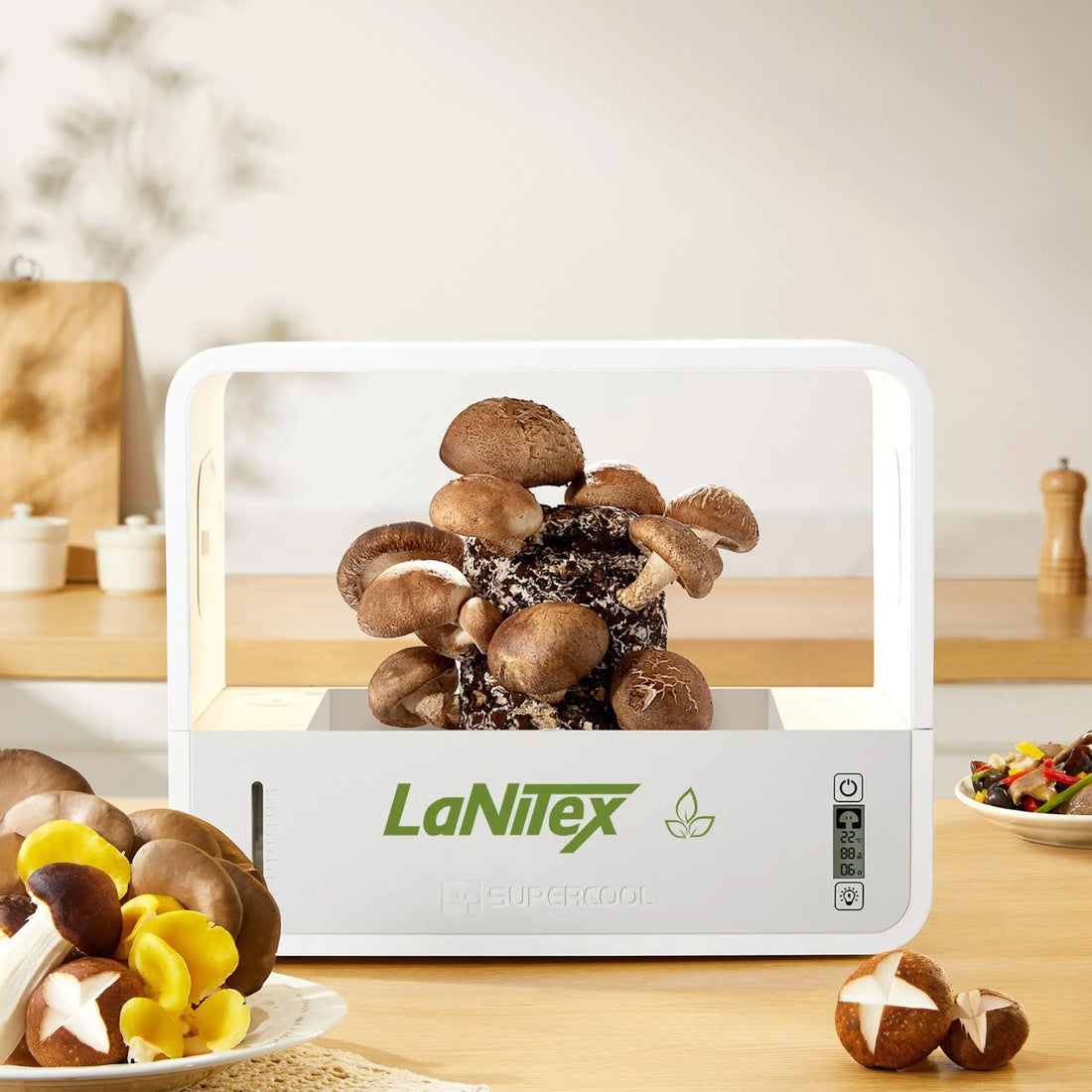
Getting pink oyster mushrooms to fruit comes down to two things: keeping them in the right temperature range (around 20-28C, within the 18-30C band - choose a room, cupboard or garage that naturally sits in that band) and holding humidity high and steady at 85% or higher. The Smart Mushroom Growing Box takes care of the hard part - its humidity control, LED lighting and clear lid hold the fruiting environment without daily misting or guesswork - while you simply place it somewhere in the right temperature range.
A note on honesty before we go further. LaNiTex has not yet run a full pink oyster crop on its Sunshine Coast test bench - the focus to date has been bringing the Smart Mushroom Growing Box to market and testing it across other species. So the numbers in this guide are drawn from published cultivation research and from what experienced growers consistently report, not from a harvest we have weighed ourselves. Where a figure is a reported range rather than a measured result, it is written as one.

Want hands-off harvests? The Smart Mushroom Growing Box runs the humidity, fresh air and light for you — no daily misting. You supply the fruiting block.
Start growing mushrooms →Ships from the Sunshine Coast, Queensland.
Step-by-step: spawn to harvest
The whole journey runs from inoculated spawn to a picked cluster in about three weeks. Here is each stage in order.
1. Source your spawn in Australia
Start with grain spawn from a reputable Australian mushroom spawn supplier. Buying locally keeps shipping times short, which matters for a living culture, and a good supplier will sell you a clean, vigorous Pleurotus djamor culture rather than a tired one. If you would rather not handle loose spawn at all, an all-in-one pink oyster mushroom grow kit - a pre-colonised block you simply open and mist - is the easiest entry point of all, and several Australian sellers stock one.
One quirk is specific to this species: do not refrigerate pink oyster spawn. Most growers reflexively put spawn in the fridge - correct for shiitake, wrong here. The cold shocks this warm-lover and can set it back badly. Keep it at room temperature and use it promptly. If you see tiny pink pins already forming inside the spawn bag, that is a sign to get it growing now, not to chill it.
2. Prepare your substrate
Pink oysters are not fussy about what they eat, and Australia gives you good, cheap options:
- Sugarcane straw - a by-product of the Queensland and northern NSW sugar industry, and a stand-out substrate for pink oysters.
- Barley or cereal straw - widely available and a reliable all-rounder.
- Australian hardwood sawdust - clean, untreated sawdust from a local mill.
- Spent coffee grounds - a small-batch favourite you can collect from a local cafe.
Whichever you choose, the straw needs pasteurising (a hot-water or lime soak) to knock back competing moulds before the mushroom mycelium moves in. Coffee grounds are already pasteurised by brewing if you use them fresh and same-day.
3. Inoculate and colonise
Mix your spawn through the cooled, drained substrate - roughly one part spawn to five parts substrate is a common starting ratio - and pack it into your fruiting container or bag. Keep it warm (24-28C is ideal for this stage) and out of bright light while the white mycelium spreads through the substrate. Full colonisation of a small block usually takes one to two weeks; the substrate turns from patchy to solid white.
4. Trigger pinning
Once the block is fully white, it is ready to fruit. Expose it to fresh air, light and high humidity. Pink oysters need enough light to develop their colour - "bright enough to read by" is the usual rule, never direct sun. Within about 5-7 days, tiny pink pins appear. This is the moment the colour arrives, and it is worth the wait.
5. Fruit and harvest
From pinning, the cluster grows fast - roughly 3-5 days to harvest size, doubling in size about every 24 hours at the peak. This speed is why pink oysters are the fastest oyster, and it is also the one thing beginners get wrong: check the block daily. Harvest when the caps have opened out but the edges still curl slightly downward, just before they flatten fully and start dropping heavy spore. Twist and pull the whole cluster at the base rather than cutting individual caps.
6. Get a second flush
Do not bin the block after the first harvest. A healthy pink oyster block usually gives two to three flushes. Rehydrate the block, return it to fruiting conditions, and a second flush typically arrives 7-10 days after the first, with later flushes smaller than the first. On pink oyster mushroom yield, growers commonly report that the first flush is the largest by a clear margin, so treat later flushes as a welcome bonus rather than the main event.
Pink oysters fruit fast and forgive beginner mistakes - the trade-off is that the harvest window is short, so the habit to build is a daily look, not a weekly one.
Get a fresh grow guide like this every fortnight
Join the LaNiTex Hydro Garden newsletter for practical hydroponic, microgreen and mushroom growing tips for Australian homes. Subscribe to download a free hydroponics starter guide (PDF) and get 10% off your first order.
Join the newsletter →Common problems and how to fix them
Most first-grow problems trace back to one of four things. Here is how to read them.
No pins forming
If a fully colonised block sits for more than a week without pinning, it is almost always too dry, too stale or too dark. Raise the humidity, increase fresh air, and make sure it is getting that "read-by" level of light. Cold also stalls pinning - if your room has dropped below the high teens, warmth is the fix.
Spawn pinning inside the bag
If pink pins appear inside the spawn bag before you have inoculated, the spawn is telling you it is ready. Do not refrigerate it to "pause" it - that does more harm than good with this species. Use it straight away instead. The same warning applies to any ready-made pink oyster mushroom kit Australia sellers ship out: if you notice pins forming in transit, open it and start fruiting rather than putting it in the fridge.
Contamination
Green or black mould, or a sour, off smell, means a competing organism has moved in. Pasteurise substrate properly, work with clean hands and surfaces, and give the mushroom good fresh air so it can outcompete rivals. A small spot can sometimes be cut away early; a block that is more mould than mycelium should be discarded.
Long, leggy stems and tiny caps
This is the classic stale-air signature: too much CO2 and not enough fresh air during fruiting. More ventilation usually fixes it.
Pale or washed-out colour
Soft colour on a fresh flush is usually low light, low humidity or simply an older flush - not a problem with the mushroom. More light during pinning brings the pink back. (Colour fading once the mushrooms are cooked is a separate, normal thing - see below.)
If this is your first grow, the good news is that pink oyster mushrooms are one of the most forgiving species to start with - and a controlled environment makes them more forgiving still. The Smart Mushroom Growing Box takes the two hardest variables for a beginner - humidity and light - and manages them for you, so your first flush is far more likely to succeed. When it is done, you reset it and grow again, rather than binning a single-use kit.
How to use pink oyster mushrooms in cooking
Pink oysters reward simple, hot cooking. The golden rule is to cook them thoroughly and never eat them raw, as with all cultivated oyster mushrooms.
Here is the surprise that catches everyone the first time: the bright pink fades to a pale tan or grey once the mushrooms hit the pan. That is not spoilage and it is not a fault. The pink comes from heat-sensitive pigments, and once the temperature climbs past roughly 80-90C those pigments denature and the colour washes out - the same way a vivid vegetable dulls when boiled. The flavour stays; only the colour goes. If you want to keep some of the drama on the plate, serve a few fresh raw-looking caps as garnish (cooked separately) alongside the cooked dish.
For the best texture, slice the clusters, get a pan properly hot with a little oil or butter, and fry hard without crowding so the moisture cooks off and the edges crisp. Cooked this way the thin caps turn savoury and slightly crunchy - the "bacon" effect home cooks chase.
Simple pink oyster mushroom recipes
You do not need a recipe card to do them justice - pink oysters reward fast, hot, simple cooking. Three easy starting points:
- Pink oyster "bacon" - tear the cluster into strips and fry hard in a little oil until the edges crisp, then season with salt and a pinch of smoked paprika for a plant-based "bacon" that works in salads and on breakfast plates.
- Garlic-butter saute - fry small whole clusters in butter with garlic and thyme, then finish with a squeeze of lemon for a quick side to steak or pasta.
- Stir-fry or noodles - slice and toss through a hot wok with soy, ginger and greens in the last couple of minutes, where the savoury, seafood-like aroma works well.
Storing your harvest. Fresh pink oysters are best kept in a breathable container - a paper bag or a punnet with perforated film - in the fridge at about 2-4C, where they hold for roughly 3-7 days. Avoid sealed plastic, which traps moisture and turns them slimy. Wipe them with a damp cloth rather than washing them, since they soak up water readily. For longer storage, dehydrate them at 40-50C until cracker-dry (under about 10-12% moisture) and store them in an airtight jar in a cool, dark cupboard, where they keep their cooking quality for 6-12 months.
Grow gourmet at home
Grow gourmet oyster mushrooms on your own bench, colour and all. The Box holds the humidity, fresh-air cycle and light steady, so you skip the daily misting and guesswork. You supply the fruiting block.
Grow your own mushrooms →Ships from the Sunshine Coast, Queensland.
Pink oyster mushroom FAQ
What does pink oyster mushroom (Pleurotus djamor) taste like?
Pink oyster mushrooms have a mild, savoury flavour with a seafood-like aroma, often compared to prawn or crab when pan-fried. Home growers typically cook 100-200 g at a time, and the thin, wavy caps develop a slightly chewy texture similar to other Pleurotus species. Their flavour is strongest when harvested just as the cap edges begin to flatten.
How long do pink oyster mushrooms take to grow from inoculation to harvest?
Pink oyster mushrooms usually take about 21-28 days from inoculation to first harvest in warm conditions of 20-28C. After colonisation, pins generally appear within 5-7 days of exposing the block to fresh air and light, and clusters then reach harvest size in another 5-7 days, doubling in size roughly every 24 hours during peak growth. Harvest when caps just start to flatten.
What temperature do pink oyster mushrooms (Pleurotus djamor) need to fruit?
Pink oyster mushrooms fruit best between about 23-29C, with many Australian kits recommending 18-28C as an acceptable room-temperature range. Research on P. djamor shows optimal mycelial growth at 24-28C and strong growth up to 30C, supporting its reputation as a warm-climate oyster. In practice, home growers in warm regions successfully fruit this species anywhere in the broader 18-30C band.
Can pink oyster mushrooms grow successfully in Australia?
Pink oyster mushrooms grow successfully in Australian homes because they prefer warm conditions of roughly 18-30C, which match many Australian indoor temperatures. Australian suppliers sell pink oyster kits specifying fruiting around 18-28C or a best range of 23-29C, confirming their suitability for local conditions. In drier regions, growers keep blocks inside bags with just a few fruiting holes to maintain moisture.
Why do pink oyster mushrooms turn pale or grey when cooked?
Pink oyster mushrooms turn pale or grey when cooked because heat (often above 80-90C) alters the heat-sensitive pigments that give the fresh fruiting bodies their bright pink colour. As the pigments denature, the tissues shift to a whitish or greyish tone, similar to other strongly coloured vegetables that fade during boiling or frying, without changing basic edibility when they are otherwise fresh and sound.
Are pink oyster mushrooms (Pleurotus djamor) safe to eat?
Pink oyster mushrooms (Pleurotus djamor) are widely cultivated as an edible oyster species and are sold in grow-kits and food-oriented guides without toxicity warnings. Like other Pleurotus spp., they are cooked before eating and harvested just as caps flatten to avoid heavy spore drop. People with general mushroom allergies or intolerances need individual medical advice, but there is no evidence in cultivation literature of inherent toxicity in P. djamor.
How do you store fresh pink oyster mushrooms?
Fresh pink oyster mushrooms are best stored in a breathable container, such as a paper bag or a punnet covered with perforated film, in the refrigerator at about 2-4C. General oyster guides recommend avoiding airtight plastic, which traps moisture and speeds spoilage, and instead keeping mushrooms dry and loosely packed so that excess humidity can escape while preventing drying and bruising.
What is the typical shelf life of pink oyster mushrooms refrigerated and dehydrated?
Pink oyster mushrooms, like other oyster species, usually keep in the refrigerator for about 3-7 days at 2-4C before quality declines, especially as their thin gills lose moisture. Properly dehydrated pink oysters, dried at roughly 40-50C until they reach less than about 10-12% moisture, then stored in an airtight jar in a cool, dark cupboard, generally maintain good cooking quality for 6-12 months.
Where can you buy pink oyster mushrooms in Australia?
Fresh pink oyster mushrooms are rarely on supermarket shelves, because their short 3-7 day shelf life makes them hard to stock. You are most likely to find them at farmers' markets, specialty grocers or Asian grocers. The reliable way to have them on hand is to grow your own: Australian suppliers sell grain spawn and all-in-one kits, and the reusable Smart Mushroom Growing Box turns spawn into flush after flush at home.
Are pink oyster mushrooms good for you?
Pink oyster mushrooms are a nutritious, low-kilojoule food. Like other oyster mushrooms, they are a source of plant protein and dietary fibre, and they supply B-group vitamins such as niacin and riboflavin. Enjoy them cooked as part of a balanced diet. This is general nutritional information, not medical advice, and they are a food rather than a treatment for any condition.
Are pink oyster mushrooms psychedelic or invasive?
No on both counts. Pink oyster mushrooms (Pleurotus djamor) are an edible, culinary oyster mushroom, not a psychoactive or "magic" (psilocybin) mushroom, and they are simply cooked and eaten like any oyster mushroom. They are also not an invasive weed in home growing: you grow them indoors on a contained block, and the spent block is composted once it stops fruiting.
Ready to grow pink oyster mushrooms at home?
Pink oysters are the fastest and most forgiving way into home mushroom growing, and the most colourful by a distance - and Australia's warm climate is on your side. Get the conditions right and the rest looks after itself.
For the bigger picture on choosing a species, a substrate and a setup, read our complete Australian guide to mushroom growing kits. And if you have grown pink oysters in your part of the country, tell us how the flush went - we read every reply.
Related mushroom guides
- Pearl oyster mushrooms — an easy all-rounder oyster
- Blue oyster mushrooms — a cooler-climate oyster
- Phoenix oyster mushrooms — another warm-loving oyster
About the author
About the author
Laszlo Bulatko is the founder of LaNiTex Hydro Garden, a Sunshine Coast small business making indoor growing simple for Australian households. After fifteen years in sales and brand development, Laszlo now tests every system LaNiTex stocks before it reaches the catalogue - from hydroponic herb gardens to the Smart Mushroom Growing Box - and shares what actually works for growers in Australian conditions.
Sources
- Cruz-Moreno, M. A., et al. (2023). "Pleurotus djamor: A Review of Its Nutritional, Functional and Cultivation Aspects." Molecules, 28(2):557. https://pmc.ncbi.nlm.nih.gov/articles/PMC9863222/
- LaNiTex Hydro Garden - Mushroom Growing Kit: The Complete Australian Guide