
The healthiest lettuce is not the crunchy iceberg most Australians reach for. Instead, it's the darker, leafier types: cos (romaine), red leaf and butterhead. Those pack far more vitamins and antioxidants into every bite.
Switching to a more nutritious lettuce is one of the easiest upgrades you can make to a salad. And it costs little or nothing extra. The catch is freshness. Leafy greens start losing nutrients the moment they're cut. So the most nutrient-dense lettuce is really one you grow and pick yourself. On the Sunshine Coast and across Brisbane, a small indoor hydroponic setup makes that possible all year. Even then, when outdoor lettuce bolts and turns bitter in the hot, humid months, the leaves keep coming.
Here's how the common varieties stack up nutritionally. Then we'll cover which ones to choose, and how to grow the healthiest of them at home in Australia.
Quick answer: The healthiest lettuces are the dark, loose-leaf and cos (romaine) types. The Cleveland Clinic puts leaf lettuce at up to six to 20 times more vitamin A, vitamin K and lutein than iceberg, and red leaf adds antioxidant anthocyanins. Iceberg is the least nutrient-dense, though still hydrating and low in kilojoules. The darker the leaf, the more nutritious the lettuce.
What makes one lettuce healthier than another?
Here's the trick most people miss: with lettuce, colour is the giveaway. All lettuce (Lactuca sativa) is low in kilojoules and high in water, so any variety works as a salad base. But the nutrition tracks the pigment. So the darker and more colourful the leaf, the more vitamins A and K, folate and plant antioxidants it packs.

There's a reason for that. The compounds painting the leaves deep green and red are the very things that make lettuce good for you. Specifically, that's the carotenoids beta-carotene and lutein, plus the flavonoid anthocyanin. Pale, tightly packed hearts such as iceberg carry far less of that pigment, so they carry less nutrition too. As the Cleveland Clinic puts it, "the darker colours of the lettuce make it more of a rock star."
So what are you actually getting? Vitamin K, for a start, which supports blood clotting and bone health. Then vitamin A from beta-carotene backs up your eyes and immune system. Also, there's folate, plus lutein and zeaxanthin, two more antioxidants tied to healthy vision. In short, reach for a darker leaf and you get more of every one of them.
The healthiest lettuce varieties, ranked
Here's how the lettuces you'll find at Coles, Woolworths or a local market compare. Broadly, the darker and leafier the lettuce, the more vitamins and antioxidants it carries, and iceberg sits at the bottom. No single lettuce wins on every nutrient though: cos is richest in folate, and butterhead stands out for minerals.
| Lettuce | Stands out for | Vitamin K per cup | Compared with iceberg |
|---|---|---|---|
| 1. Red leaf | Anthocyanins, plus vitamins A and K and lutein | — | Up to six to 20 times more vitamin A, vitamin K and lutein (Cleveland Clinic) |
| 2. Green leaf and oak leaf | Vitamins K, A and C, plus potassium | — | Up to six to 20 times more vitamin A, vitamin K and lutein (Cleveland Clinic) |
| 3. Cos (romaine) | Vitamins A and K, folate and lutein | More than 20% of an adult's daily value | More vitamin A, folate and antioxidants |
| 4. Butterhead | Minerals: calcium, potassium and iron | More than 20% of an adult's daily value | More minerals |
| 5. Iceberg | Hydration and crunch (roughly 95% water) | Around 10 to 19% of the daily value | — |
— No per-cup vitamin K figure is verified for red or green leaf. So the Cleveland Clinic comparison is given instead of an estimated percentage.
Red leaf: best for antioxidants. Red and green leaf lettuces are the nutritional standouts. According to the Cleveland Clinic, leaf lettuces can have "six to 20 times more vitamin A, vitamin K and lutein" than iceberg. Red leaf goes one better with anthocyanins, the same red-purple flavonoids found in berries, which help mop up free radicals.
Green leaf and oak leaf: strong all-rounders. Loose-leaf types like green leaf and oak leaf sit just behind red leaf. Also, they offer generous vitamin K and vitamin A along with vitamin C and potassium. Their open, frilly growth means more pigmented surface area, and that means more nutrition than any crisphead.
Cos (romaine): the best of the common supermarket lettuces. In Australia, romaine is sold as cos, and it's one of the most nutritious everyday lettuces you can buy. Specifically, its long, dark leaves are rich in vitamins A and K, folate and lutein. A single cup gives you more than 20% of an adult's daily vitamin K. And cos beats iceberg on vitamin A, folate and antioxidants across the board.
Butterhead (including Bibb and Boston): mineral-rich. Butterhead's soft, buttery leaves are often higher in minerals such as calcium, potassium and iron than other lettuces. And they still deliver over 20% of your daily vitamin K per cup.
Iceberg: the least nutritious, but not useless. Iceberg is roughly 95% water and very low in kilojoules. It still provides some vitamin K (around 10 to 19% of the daily value per cup), folate and fibre. But that's far less than the darker types. It's fine for hydration and crunch. Still, it's simply not where the nutrition lives.
How lettuce compares to other salad greens
Lettuce is a brilliant everyday base, but it isn't the only leaf worth putting in a salad. So if you're chasing maximum nutrition, it helps to know where even the best lettuce sits against other common greens.
Darker, more assertive leaves tend to carry more of some nutrients than most lettuces. Spinach, rocket (arugula) and watercress, for example, tend to have more iron, folate and vitamin C. And kale stands out for vitamin K and antioxidants. Watercress is often ranked among the most nutrient-dense vegetables of all. None of that knocks lettuce off the plate, though. Cos and red leaf hold their own on vitamins A and K. They're milder and more versatile than peppery rocket or bitter kale. On top of that, they bulk out a bowl without overpowering it.
The practical takeaway is the one that runs through this whole guide: variety wins. Rotate cos and red leaf lettuce with a handful of spinach, rocket or watercress. That means more vitamins and minerals than any single green can offer. If you grow your own, that mix is easy to keep going. After all, the same indoor setup that suits lettuce will happily grow spinach, rocket and other leafy greens too.
Get a fresh grow guide like this every fortnight
Join the LaNiTex Hydro Garden newsletter for practical hydroponic, microgreen and mushroom growing tips for Australian homes. Subscribe to download a free hydroponics starter guide (PDF) and get 10% off your first order.
Join the newsletter →My experience growing lettuce on the Sunshine Coast
I've grown a lot of leafy greens in my own hydroponic systems here on the Sunshine Coast. And lettuce is the crop I keep coming back to. Cos and loose-leaf varieties are forgiving and fast. Plus there's something satisfying about picking a few leaves at a time instead of harvesting a whole head.

The biggest lesson has been about our climate. Outdoors in south-east Queensland, lettuce really struggles once the weather warms up. It bolts, turns bitter, and cops a hammering from pests and humidity. Growing indoors under a controlled light and water cycle sidesteps all of that. So I get clean, tender leaves through summer, when the outdoor patch has long given up.
The other thing I've noticed is how much freshness matters. A leaf picked minutes before it hits the plate simply tastes and looks better. Compared to something that's spent a week in a supply chain, there's no contest. Leafy greens start shedding nutrients as soon as they're harvested. So growing your own is the most reliable way to eat lettuce at its peak. I haven't run lab tests on my own crops, so I won't put numbers on it. But the difference in quality is obvious every single time.
Why grow your healthiest lettuce hydroponically?
If the darkest, freshest leaves are the most nutritious, then growing them at home is the logical next step. And hydroponics is one of the easiest ways to do it in an Australian home. A hydroponic system grows lettuce in nutrient-rich water instead of soil. That gives you control over two things outdoor growers can never fully manage: light and nutrient strength. Growing indoors adds the rest. Your plants sit out of the summer sun, the wind and the downpours. Instead, they get the steadier conditions your home already has.
That combination is what makes year-round lettuce realistic. Indoors, out of the direct heat, lettuce is far less likely to bolt than in an exposed garden bed. And there are no slugs after rain. You pick the varieties that carry the most nutrition, whether that's cos, red leaf, green leaf or butterhead. Then you harvest leaf by leaf as you need them. So nothing wilts forgotten in the crisper.
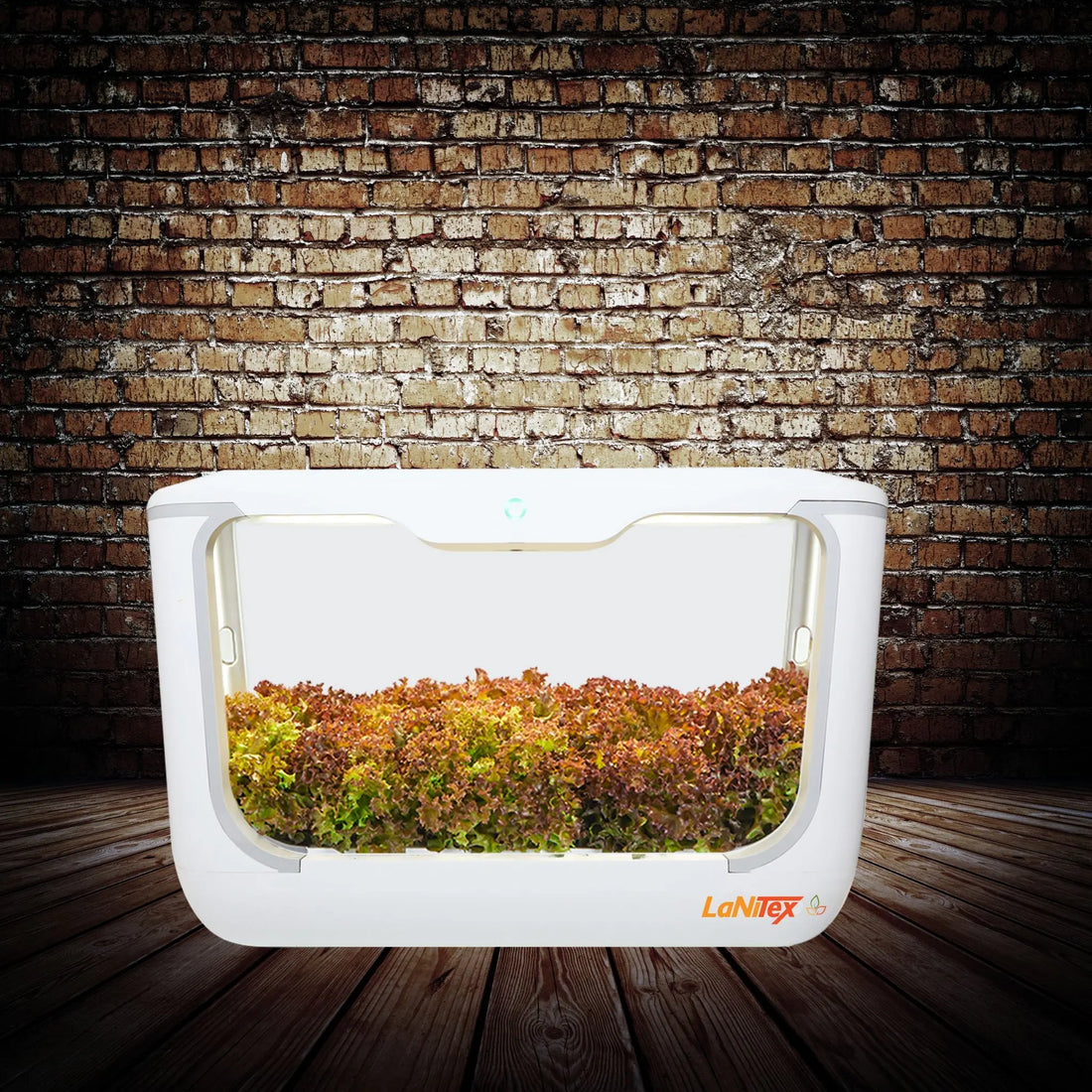
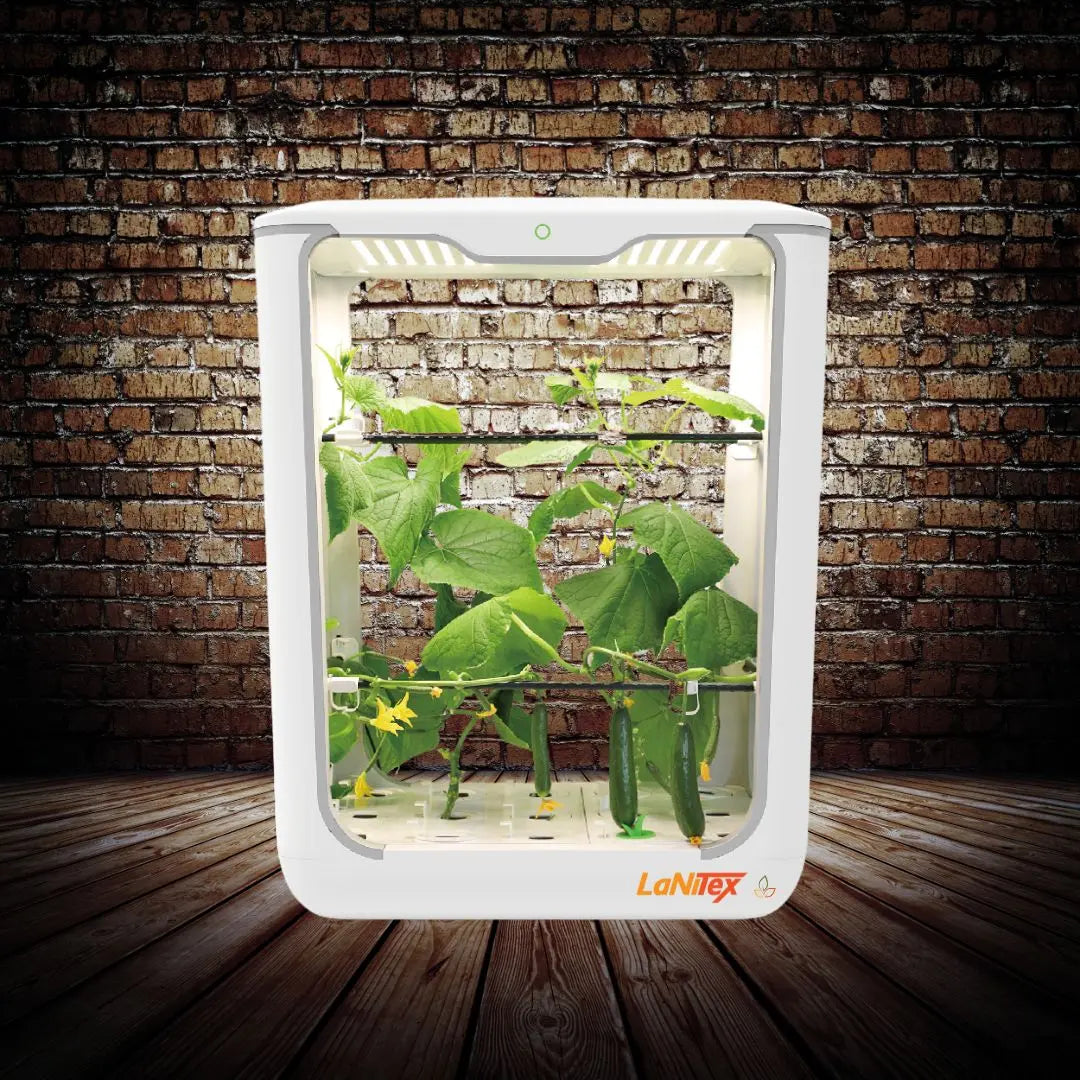
A compact unit like the LaNiTex Grow Box (Tall version) holds up to 15 plants. Those sit under a full-spectrum LED with a self-watering reservoir. In practice, that's plenty for a steady household supply of salad greens on a benchtop or in a spare corner. Set the light and water cycle once. Then top up the reservoir now and then, and pick fresh leaves whenever you want them.

Pick cos and leaf lettuce straight from your own bench, year-round. Fifteen planting sites sit under a full-spectrum LED, and the self-watering reservoir handles the daily watering. You supply the seeds.
Grow your own lettuce →Personally tested at home on the Sunshine Coast before listing.
Cos vs iceberg: the easy Australian upgrade
Iceberg is the most popular lettuce in Australia, and it's the one nutrition-focused eaters can most easily improve on. Swapping iceberg for cos is a like-for-like change, since both give you that satisfying crunch. But cos brings far more vitamin A, folate and antioxidants to the bowl.

You don't have to give up iceberg entirely. A simple middle path is to blend. So keep some crisp iceberg for texture, but build the base of the salad from cos and loose-leaf greens. If you grow your own, this gets even easier. Then plant a mix and you'll always have the darker, more nutritious leaves on hand.
Getting the most nutrition from your lettuce
Choosing the right variety is the biggest lever. But a few habits help you hold on to more of that nutrition once it's picked:
- Go dark. Whenever there's a choice, reach for the darker, more colourful leaf. Colour is a good rule of thumb for nutrient density.
- Pick the freshest at the shop. When you're buying rather than growing, choose deeply coloured, crisp leaves with no wilting, sliminess or browning. Whole heads and loose-leaf bunches usually hold their nutrients better than pre-washed bagged salad. After all, bagged salad has been cut and sitting for longer.
- Eat it fresh. Vitamins in leafy greens fade over time, so eat lettuce as soon as you can after harvest or purchase. And home-grown, picked-to-order leaves win easily here.
- Store it right. Keep cut lettuce cool and dry in the fridge, because wilting and excess moisture speed up nutrient loss.
- Add a little healthy fat. Vitamins A and K and the antioxidant lutein are fat-soluble. So a drizzle of olive oil, some avocado or a few nuts helps your body absorb more of them.
- Mix it up. No single lettuce has everything. Instead, mix cos, red leaf and butterhead to spread your intake across vitamins A, K, folate and minerals.

Growing more than a few heads at a time? The vertical V5.2-A Tower holds up to 72 plants in a slim footprint, on the same full-spectrum LED and self-watering setup.
Scale up your harvest →Personally tested at home on the Sunshine Coast before listing.
The full range
Find the system that fits your space


Supported in Australia - every model tested before listing.
Frequently asked questions
What is the healthiest type of lettuce?
Dark, loose-leaf and cos (romaine) lettuces are the healthiest. They carry the most vitamin A, vitamin K, folate and antioxidants. The Cleveland Clinic puts leaf lettuce at up to six to 20 times more vitamin A, vitamin K and lutein than iceberg. That means they're the most nutrient-dense everyday choice.
Is romaine lettuce healthier than iceberg lettuce?
Yes. Romaine, sold as cos in Australia, is significantly more nutritious than iceberg. It has more vitamin A, vitamin K, folate and antioxidants while offering a similar crunch. So cos is one of the easiest healthy swaps for iceberg fans.
Which lettuce has the most nutrients?
Red and green leaf lettuces top the list for vitamins A and K and lutein. Then comes cos, close behind and richest in folate. Butterhead leads on minerals like calcium and iron. In short, the darker and leafier the lettuce, the more nutrients it holds.
Is red leaf lettuce healthier than green leaf lettuce?
Red leaf has a slight edge thanks to its anthocyanins, the red-purple antioxidant flavonoids that green leaf lacks. Still, both are excellent, nutrient-dense choices and well ahead of iceberg, so either one is a good pick.
Is iceberg lettuce bad for you?
No, iceberg isn't bad for you. It's just the least nutrient-dense lettuce. It's about 95% water, low in kilojoules, and still provides some vitamin K, folate and fibre. It's fine for hydration and crunch, but darker varieties give you far more nutrition.
Is cos lettuce good for you?
Very. Cos is one of the healthiest common lettuces in Australia, rich in vitamins A and K, folate and lutein. One cup provides more than 20% of an adult's daily vitamin K. And its dark leaves make it a standout everyday salad green.
Is hydroponic lettuce healthier than soil-grown lettuce?
Hydroponic lettuce is nutritionally comparable to soil-grown, and the research directly comparing the two methods is still limited. The bigger nutritional wins come from which variety you grow and how fresh it is. In practice, home hydroponics simply lets you pick nutrient-dense cos and leaf lettuce at peak freshness, year-round.
What are the different types of lettuce?
The main types of lettuce are crisphead (iceberg), cos (romaine), butterhead and loose-leaf. Cos includes baby types like little gem, and butterhead includes buttercrunch and Boston. Then the loose-leaf types include green leaf, red leaf and oak leaf. Rocket, spinach and cabbage are popular salad leaves too, but they're different vegetables, not lettuce.
Which type of lettuce is best for salads?
Cos and loose-leaf lettuces like green leaf and red leaf are the best all-round salad choices. They combine crunch with the most vitamins A, K and folate. Still, iceberg works when you just want crisp texture. For the best of both, build a salad from a mix of cos and darker loose-leaf greens.
Does lettuce have any nutritional value?
Yes, every lettuce does, but the amount varies by type. Cos (romaine), butterhead (butter lettuce) and loose-leaf lettuces give more than 20% of an adult's daily vitamin K per cup, and leaf lettuces can carry six to 20 times the vitamin A, vitamin K and lutein of iceberg (Cleveland Clinic). Iceberg supplies 10% to 19% of daily vitamin K.
Which lettuce is safest to eat?
Food Standards Australia New Zealand (FSANZ) does not name a safest lettuce variety in its food safety advice. It lists fresh leafy produce among foods at higher risk of E. coli (STEC) contamination and pre-prepared salads among those at higher risk of Listeria, and its advice for all of them is to wash raw fruit and vegetables thoroughly under running water. If you are unsure about a batch, check the current FSANZ food recall list before eating it.
Grow the healthiest lettuce at home
The healthiest lettuce is dark, leafy and fresh, and the freshest lettuce of all is one you pick yourself. If you'd like crisp cos and nutrient-dense leaf lettuce on hand all year, a compact indoor system makes it simple. And that holds even through a Queensland summer. Explore the LaNiTex Grow Box (Tall version) to get started.
Further reading
Want to grow these rather than buy them? These guides cover the lettuce varieties we grow hydroponically in Australia:
- How to grow butter lettuce at home in Australia
- A complete guide to growing lollo lettuce
- A complete guide to growing batavia lettuce
Sources
- Better Health Channel (Victorian Government) — Fruit and vegetables: nutrition and the "rainbow" of colours
- Cleveland Clinic — The Health Benefits of Lettuce
- Healthline — Iceberg Lettuce: Nutrition, Benefits, and Downsides
- University of Florida IFAS — Lettuce (Lactuca sativa) nutrition and production
- Fresh For Kids (Sydney Markets) — Lettuce varieties in Australia
- Food Standards Australia New Zealand — E. coli and STEC in food
- Food Standards Australia New Zealand — Listeria in food
About the author
Laszlo Bulatko is the founder of LaNiTex Hydro Garden, an Australian indoor-hydroponics and STEM-education business based in Queensland. He grows leafy greens, herbs and microgreens across LaNiTex's hydroponic systems. And he writes practical, tested guides to help Australian home growers get more from indoor gardening.