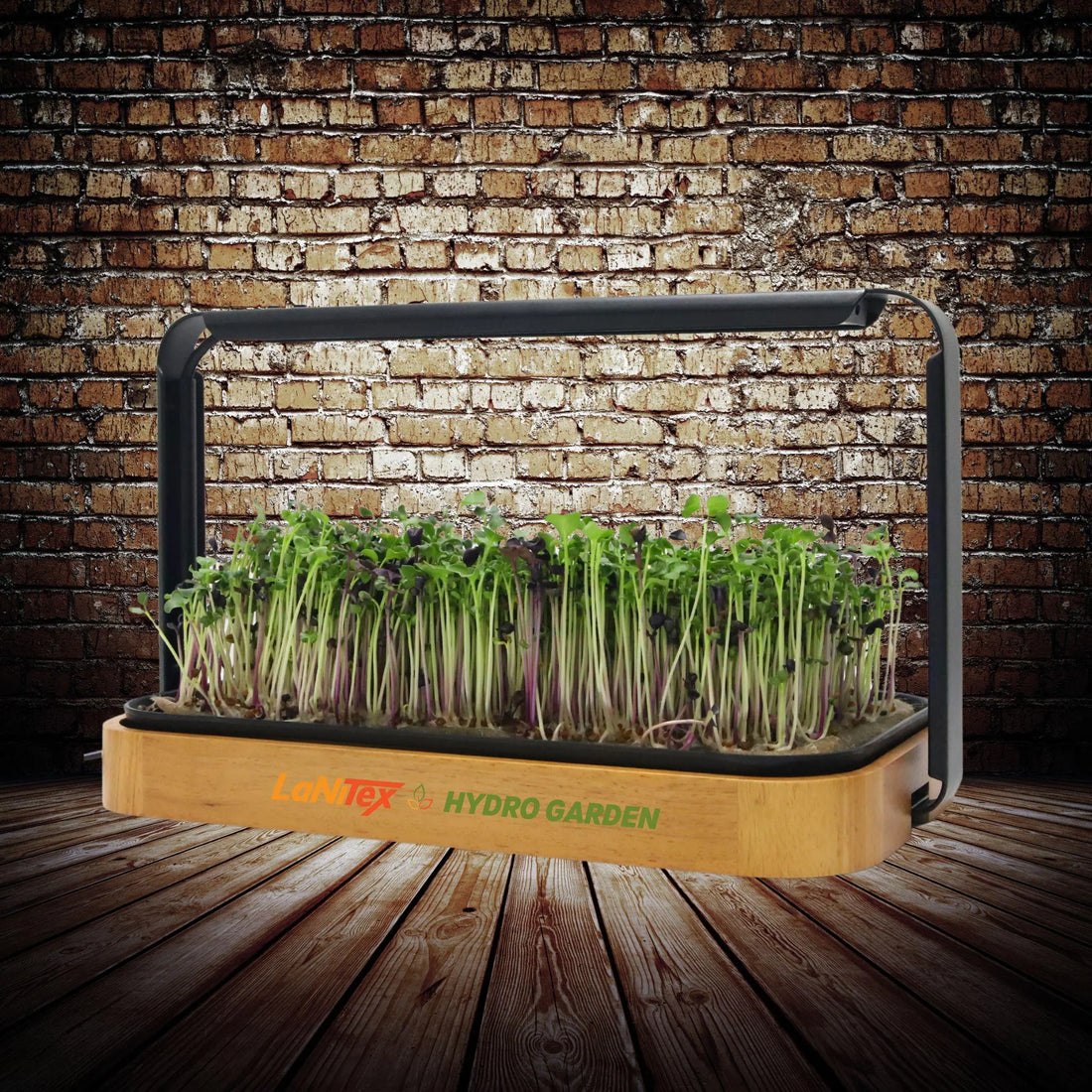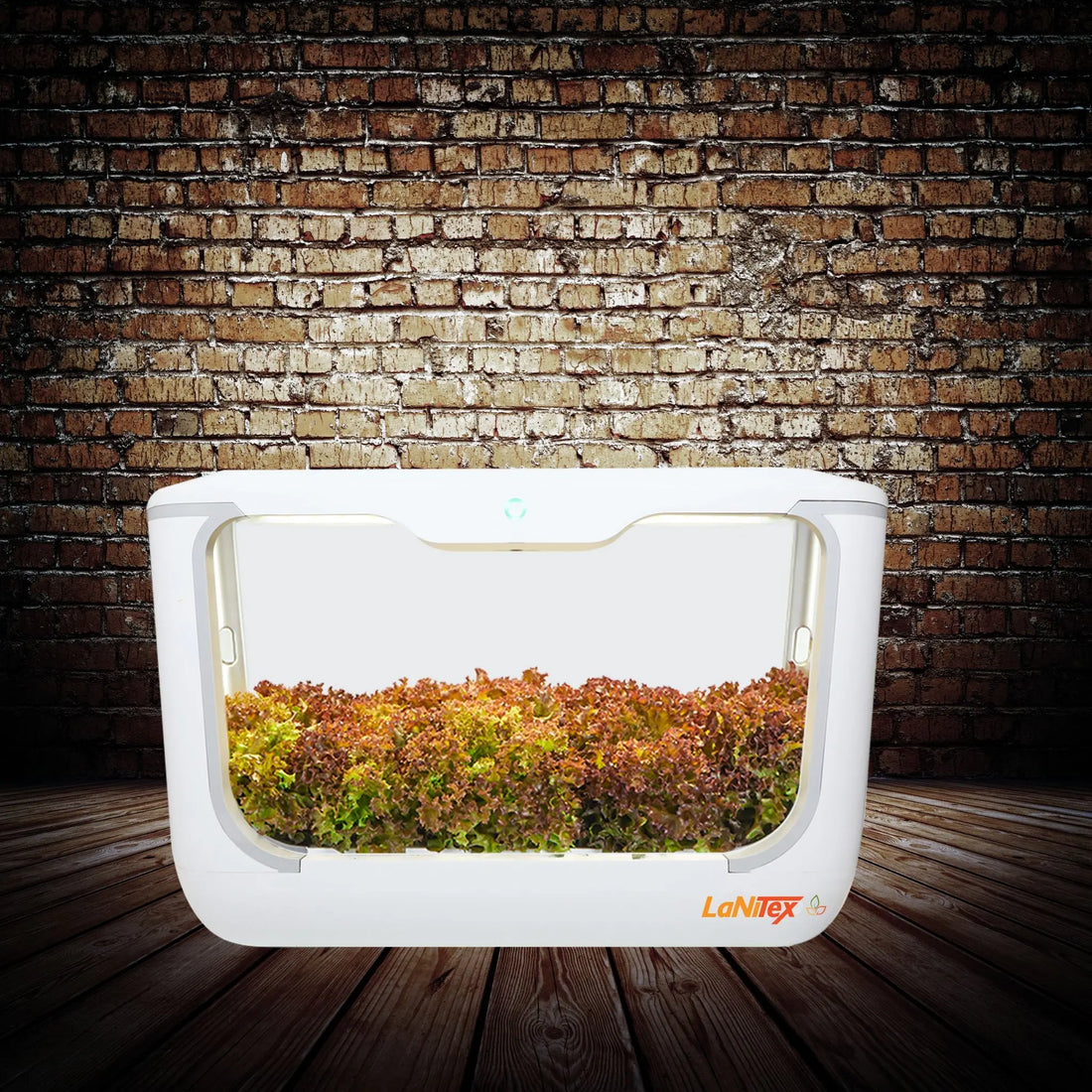

Quick answer: The LaNiTex Desktop Grow Box ($139 AUD) is a 3-pod countertop hydroponic system — an indoor herb garden with a built-in grow light — for Australian homes. It uses a 9W full-spectrum LED on an automated daylight cycle, a patented floating buoy mechanism for up to 14 days of water autonomy, and food-grade UV-resistant ABS plastic. Best for herbs, leafy greens, microgreens, and flowering plants in apartments or kitchens. Annual electricity cost: roughly $7.80–$9.60.
On this page:
- Why choose the Desktop Grow Box for indoor hydroponics?
- Key features and quick specifications
- What can you grow in 3 pods?
- Design and colour options
- LaNiTex range comparison
- How it compares to other countertop systems
- Is it worth $139? Value analysis
- Troubleshooting common Desktop Grow Box issues
- Common beginner mistakes
- Is the Desktop Grow Box right for you?
- Frequently asked questions
If you have ever wanted fresh basil within arm's reach of the chopping board but don't have a garden — or a balcony, or much patience for repotting — a desktop hydroponic system solves that problem in a way that surprised me when I first ran one in my own kitchen. The LaNiTex Desktop Grow Box, a complete hydroponic kit, is a 3-pod countertop unit for herbs, microgreens, and small flowering plants. It's essentially an indoor herb garden with its own full-spectrum grow light, built for Australian homes where benchtop space is the real bottleneck.
I personally tested the Desktop Grow Box at our Sunshine Coast warehouse before adding it to the catalogue. In our own runs, basil and mint hit first harvest somewhere between 28 and 35 days from seeding — obviously that depends on whether your kitchen sits at 18°C or 26°C in winter, but those numbers held up consistently through our pre-listing testing. Microgreens (mung bean, pea sprouts, wheatgrass) finish in 7–10 days from seeding. Romaine lettuce takes around 35–45 days from seeding to a first cut-and-come-again harvest. The 3-pod layout means you can have herbs, a few microgreens, and one flowering plant running together on the same bench without it looking like a science fair project.
Indoor soil gardening hits the same wall every time: not enough light, mess on the bench, and forgotten watering when life gets busy. A hydroponic desktop grow box removes the soil, automates the lights, and gives you two weeks at a time before you need to top up the water. If you want a broader primer on how hydroponic systems work before you decide, the hydroponic system essentials guide covers the basics.

Why choose the Desktop Grow Box for indoor hydroponics?
Hydroponics grows plants without soil. Mineral nutrients are mixed into water and delivered straight to the root zone, so plants spend less energy hunting through soil for what they need.
Research from the University of Arizona's Controlled Environment Agriculture Centre (CEAC) and Wageningen University in the Netherlands shows that hydroponic systems can grow leafy plants faster — and produce significantly more per square metre — than soil. Roots get nutrients directly, so the plant puts that energy into leaves and stems instead of into root expansion.
Water use is the other big difference. NASA, which has researched hydroponic crop production since the 1980s for long-duration space missions, estimates that closed-loop recirculating hydroponic systems use up to 90% less water than conventional field irrigation. The same water cycles through the system instead of soaking away into the ground.
Climate matters more in Australia than people realise. On the Sunshine Coast where we test these units, February kitchens hit 30°C without air-con and summer humidity sits north of 75% — conditions that wreck most soil-grown indoor herbs within a fortnight. The Desktop Grow Box is rated for 10–35°C and 40–70% humidity, which covers Brisbane summers, Melbourne winters, and most apartments in between. Because the lights and watering cycle are sealed inside the unit, the season outside more or less stops mattering once you have it set up.
Key features and quick specifications
| Specification | Value |
|---|---|
| Price | $139 AUD |
| Plant pods | 3 |
| Dimensions | 318 × 120 × 367 mm |
| Weight | 0.86 kg |
| Power | 9W (12V DC) |
| Monthly energy use | ~2.16 kWh (~$0.65–$0.80/month) |
| LED spectrum | Full-spectrum |
| Light modes | Long / short daylight + viewing (auto-cycled) |
| Water autonomy | Up to 14 days |
| Material | Food-grade UV-resistant ABS plastic |
| Temperature range | 10–35°C |
| Humidity range | 40–70% |
| Colours available | Mint Green, Sakura Pink, Moonlight White |
| Warranty | 1 year (manufacturing defects) |
What actually separates this unit from a generic desk planter is mostly down to the lights, the way it handles its own watering, and the LED itself.
One-button automated lights
One button. That is the whole interface. The LED runs an automated daylight cycle with three selectable modes — a long-daylight mode (around 13 hours on), a short-daylight mode (around 8 hours on) and a low-intensity viewing mode — and drops to a rest period on its own, so you do not need to remember what your basil is doing on day 12 versus day 24. When you swap a finished pod out for a new one mid-cycle, the lighting still does the right thing for whatever else is in the unit.
Setup takes about 10 minutes out of the box. You fit the light pole, spread the substrate into the three pods and sow your seeds, top up the reservoir, then press the button once. There's no app, no WiFi pairing and no account to create — the single button is the whole control system. That's deliberate: nothing to update, and no monthly fee waiting behind a login screen.
The full-spectrum LED is the part most people do not look at closely until they have used a few different cheap grow lights and noticed the difference. It runs much closer to natural sunlight than the harsh purple LEDs that ship on most $50 imports. Practically, that means you can sit it on a bench in the kitchen and it does not feel like a UV experiment. It's silent, too — there's no pump and no fan, just a passive reservoir that wicks water up to the roots — so I have one on a bedside table and would forget it was on if it weren't for the light.
Water reservoir and buoy mechanism
This is the part I get the most questions about, mostly from people who have killed a hydroponic plant before. There is a floating buoy inside the reservoir that rides up and down with the water level. You glance at the side of the unit, you know whether it needs a top-up. That's it.
The reason that matters: most hydroponic failures I have seen are not nutrient mistakes, they are someone forgetting that the reservoir ran dry on a Tuesday and the roots cooked by Thursday. The buoy fixes the forgetting problem, not the chemistry problem. The reservoir itself holds enough water for about 14 days at full plant load, less if the room is hot and the plants are mature. We have customers who have gone on two-week holidays with the unit running and come back to healthy plants.
Soil-free growing and energy use
No soil also means no fungus gnats, no soil-borne diseases, and no spillage when you move the unit. The roots sit in water with the nutrients dissolved directly in.
You add your own hydroponic nutrient — any standard mix works, sourced cheaply from any Australian garden or hydroponics supplier, so there are no proprietary pods and no subscription. Seeds are just as easy to source locally: Australian suppliers such as The Seed Collection, Mr Fothergill's and Eden Seeds carry herb, leafy-green and microgreen seed by mail order across the country. A good two-part hydroponic formula covers the trace minerals leafy plants and herbs actually use — magnesium and calcium especially, which is what bagged "all-purpose" plant food usually skimps on. For a deeper read on nutrient chemistry and how the LaNiTex grow nutrient compares with general hydroponic two-part formulas, see our hydroponic nutrients series. The centre pole pulls out and adjusts in height as the plants grow, useful because basil grows about twice as fast as mint and they will be at different heights within a week.
On power: 9W draw, around 2.16 kWh per month if the lights run their full daily cycle. At Queensland's current residential rate of roughly 30c per kWh, that's about $0.65 per month. Annual cost lands somewhere between $7.80 and $9.60 depending on your retailer. The casing is food-grade UV-resistant ABS — the same plastic family Tupperware uses — so it does not yellow or warp sitting under its own light for years.

Grow herbs, microgreens or a flowering plant together on the bench, no soil or garden needed — the Desktop Grow Box runs a full-spectrum LED on an automated daylight cycle and holds up to 14 days of water.
Grow your own herbs →Personally tested at home on the Sunshine Coast before listing.
What can you grow in 3 pods?
Three pods sounds restrictive until you sit down and plan what to put in them. The table below summarises the most common crops people actually run in this unit, plus what to expect time-wise. Days are measured from seed in the substrate; difficulty is "1" for beginner-friendly and "3" for needs-some-attention.
| Plant | Category | Days to germinate | Days to first harvest | Difficulty (1–3) | Notes |
|---|---|---|---|---|---|
| Basil (sweet) | Herb | 5–7 | 28–35 | 1 | Best beginner choice; harvest by pinching top leaves |
| Mint | Herb | 10–14 | 40–50 | 2 | Aggressive grower — plant in own pod |
| Thyme | Herb | 14–21 | 50–70 | 2 | Slow to start, productive once mature |
| Lemon balm | Herb | 10–14 | 40–50 | 1 | Good for tea; tolerates a missed top-up |
| Romaine lettuce | Leafy green | 3–7 | 35–45 | 1 | Cut outer leaves; plant regrows for ~3 cycles |
| Pea sprouts | Microgreen | 2–3 | 7–10 | 1 | Fastest crop; great for new users |
| Wheatgrass | Microgreen | 2–3 | 8–12 | 1 | For juicing; harvest at 15–20 cm |
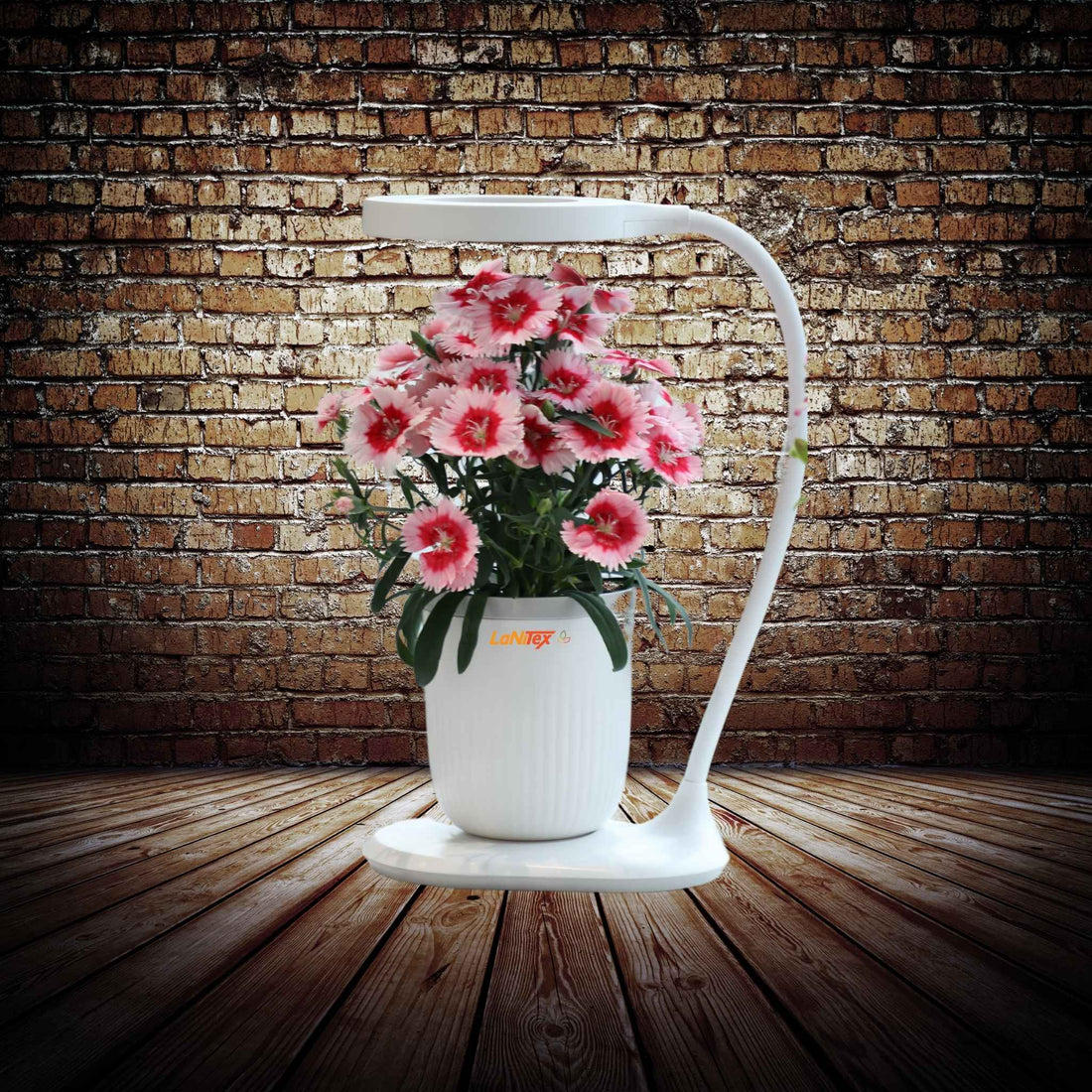
| Pansy / zinnia | Flower | 7–14 | 50–70 (to bloom) | 2 | Decorative; tolerates lower light stage |
A few specific recommendations from running these for a while. Basil is the easiest place to start, and once you have grown your own, the supermarket bunches feel a bit sad. Mint is a bully — if you put it in a shared reservoir with anything timid, it will sulk for the first week then take over. I plant it in its own pod and accept that.
If you stagger the seeding by a week between the three pods of romaine, you end up with a continuous rolling supply rather than three heads ready at the same time. The first time we tried this we ended up with more lettuce than we could eat in a week, which is a problem I'd rather have than the opposite. For a more focused read on growing fresh herbs at home, see our companion piece on the hydroponic herb garden in an Aussie kitchen.
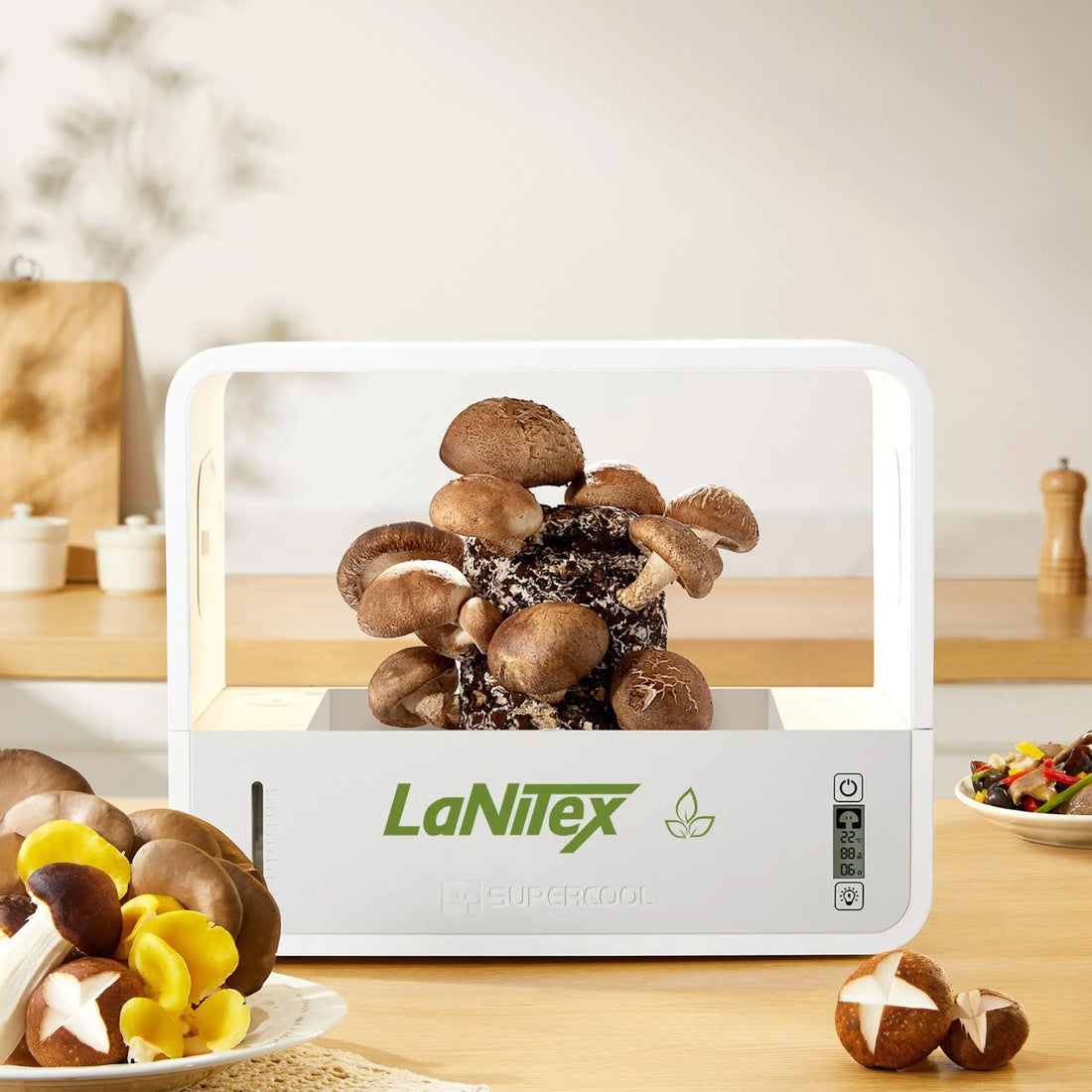
People also ask about more unusual things. Cordyceps militaris (the medicinal mushroom) grows in the Desktop Grow Box if you are into that, which is a small but dedicated subset of our customers. Succulents can be started here and transplanted out to soil later.
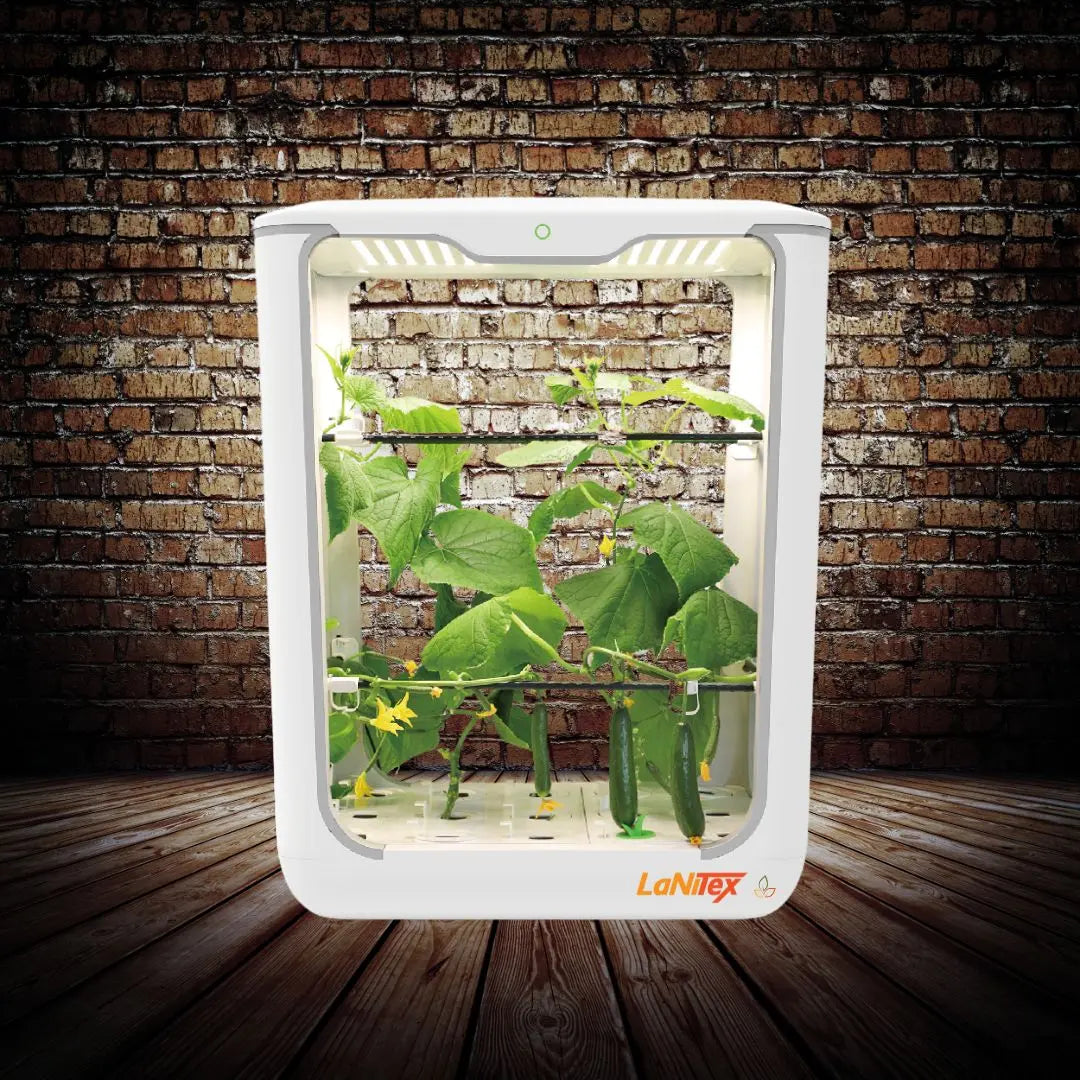
What does not work, just so you don't try it and email me: large root vegetables (carrots will hit the bottom of the pod), anything vining (climbing tomatoes outgrow the LED pole within weeks), and woody perennials.

Design and colour options
The unit is 318 × 120 × 367 mm and weighs 0.86 kg — small enough for a kitchen bench or office desk, deep enough to fit 3 pods side by side. The food-grade ABS plastic is UV-resistant and rated for 10–35°C and 40–70% humidity, which covers most indoor Australian conditions.
Three colours are available, all with identical internals. Mint Green works in kitchens and offices with a natural look. Sakura Pink reads warmer and suits a living room or bedroom desk. Moonlight White is the safest pick if you do not want a unit that commits to a colour scheme.
The centre support pole is removable and adjustable in height, so you can lower it for seedlings and raise it once you are running mature plants.
Get a fresh grow guide like this every fortnight
Join the LaNiTex Hydro Garden newsletter for practical hydroponic, microgreen and mushroom growing tips for Australian homes. Subscribe to download a free hydroponics starter guide (PDF) and get 10% off your first order.
Join the newsletter →LaNiTex range comparison
Not sure which LaNiTex unit is right for you? The table compares the three core models side by side:
| Feature | Mini Grow Pot | Desktop Grow Box | Tall Grow Box |
|---|---|---|---|
| Price (AUD) | $75 | $139 | $650 |
| Plant pods | 1 | 3 | 15 |
| Dimensions (mm) | 146 × 178 × 345 | 318 × 120 × 367 | Not listed |
| Weight | 0.55 kg | 0.86 kg | Not listed |
| Power | 5W (5V DC) | 9W (12V DC) | ≤40W |
| LED type | 4-mode (Planting / Reading / Beauty / Night) | Full-spectrum, automated daylight modes | SPH-045AxyAz balanced spectrum |
| Water autonomy | 3–5 days (500 mL) | Up to 14 days | 9L reservoir |
| Stackable | No | No | Up to 4 units |
| Best for | Single herb, compact space | 3 crops, desk/kitchen, multi-variety | Commercial, large family, 15 plants |
For one herb on a small bench, the Mini Grow Pot at $75 AUD is the cheapest way in. For a mix of herbs, greens, and microgreens running at the same time, the Desktop Grow Box at $139 AUD has the best price-to-capacity ratio. If you want to grow 15 plants in parallel for a larger household or small commercial operation, the Tall Grow Box at $650 AUD is where to spend.
How it compares to other countertop systems
The Desktop Grow Box sits in the same category as the well-known pod-and-app smart gardens — names like AeroGarden, Click & Grow and Gardyn — but it works quite differently. Independent round-ups of countertop indoor gardens from reviewers such as Consumer Reports and Wired note that most systems in this category run on proprietary seed pods, increasingly add app or WiFi features, and sometimes sell subscription plans for pods or nutrients. For some growers those are handy extras; for others they're lock-in.
The Desktop Grow Box goes the other way on each point:
- No proprietary pods. You sow your own seeds into your own substrate, so you're never tied to one brand's refills or left stranded if a pod line is discontinued.
- No subscription. Nutrient is an off-the-shelf hydroponic mix from any Australian supplier, so there's nothing recurring to pay.
- No app or WiFi. A single button runs the daylight cycle — no account to create, and no firmware nagging you to update.
- Local support and plug. It ships with an Australian power supply and Australia-wide delivery, backed by a one-year warranty and a 30-day guarantee handled here rather than through an overseas returns desk.
None of this makes the pod-and-app systems a bad buy. They trade an open setup for guided, app-driven convenience, and plenty of beginners prefer that hand-holding. The Desktop Grow Box is the better fit if you'd rather run an open, low-cost system you can feed with any seed and any nutrient, with no app or subscription in the loop.
Is it worth $139? Value analysis
Fair question, and the honest answer is "it depends on how much you actually eat fresh herbs". If you buy supermarket basil once a year, don't bother with any of this — the maths won't work.
For everyone else: a small bunch of basil at Coles or Woolworths runs $4–$5 and lasts maybe a week in the fridge before the leaves brown at the edges. Mint, thyme, and lemon balm sit in the same range. A household that goes through one bunch of fresh herbs a week — which is conservative if you cook with them at all — spends roughly $230 a year on herbs that wilt before they're finished. The Desktop Grow Box at $139 pays for itself in about seven months on basil alone, and after that the herbs are basically free.
Running costs are small. At 9W and Queensland's current residential rate of around 30c per kWh, the unit costs roughly $0.65–$0.80 per month to run, which works out to $7.80–$9.60 a year. Add about $15–$20 a year for replacement nutrient solution if you keep all three pods planted continuously. Annual running cost lands under $30.
Then there are things the spreadsheet doesn't catch. Fresh-picked herbs taste different to ones that have spent five days in the fridge crisper — sharper, more aromatic, the way they're supposed to taste. Microgreens go for about $5 a tiny clamshell at supermarkets and you can grow your own for pennies. And if you live in an apartment without a balcony, the alternative isn't "soil herbs", it's "give up on fresh herbs" — which is a cost most people just absorb without noticing.
Where the maths breaks: if you already have an outdoor herb garden, or you only reach for fresh herbs once a month, payback stretches well past eighteen months. The unit is for people who actually use what it grows.
Troubleshooting common Desktop Grow Box issues
Most things that go wrong with this unit are not the unit's fault. They are setup or maintenance habits that catch people out once, in the first month, and then never again once you know what to look for. The five issues below cover almost every email I've answered.
Algae in the reservoir
If you start seeing a green or brown film inside the reservoir, that's algae, and the cause is always the same: light is getting at the nutrient solution. The reservoir is opaque for that reason, but leave a pod opening uncovered for a week and algae will move in through the gap. Clean the reservoir with a 1:10 white vinegar solution every 6–8 weeks, refill with fresh nutrient mix, and keep all three pods either planted or capped. Algae itself won't kill anything, but it competes with your plants for nutrients, and frankly it looks bad on a kitchen bench.
Seeds failing to germinate
When seedlings don't appear after 2–3 weeks, the cause is usually one of two things. Either the seeds are too old — test a few on a damp paper towel before you blame the unit — or the substrate has dried out during germination. The substrate needs to stay properly damp for the first seven days, which sometimes means topping the reservoir up past where the buoy thinks it needs to be. Old nutrient solution can also stop germination cold; if the mix in the reservoir is more than three months old, throw it out and start fresh.
LED stops cycling correctly
If the light stays on permanently or shuts off entirely, the first thing to check is the 12V DC adapter. The plug needs to sit fully into the unit and into the wall socket — a slightly loose connection is the cause of probably half the LED complaints we get. If the cycle stops partway through the day, the unit has usually been bumped into manual mode by someone resting something on the button; hold the button for three seconds and it goes back to automatic. If neither of those fixes it, email us with your order reference and we'll replace the controller under warranty.
Water level dropping too fast
A new unit at full plant load shouldn't lose more than about a third of the reservoir in the first week. If yours is dropping faster, check the pod seals first (a loose pod cap basically turns the reservoir into an evaporator), then the room temperature (above about 28°C the unit draws water noticeably faster), and finally whether the unit is sitting where sunlight from a window hits it — which also feeds algae, so move it away from the window for two reasons at once. Ideally a top-up should be needed every 10–14 days, not every five.
Float sticking or mineral build-up
The water-level float should rise and fall freely with the reservoir. If it starts to stick — usually mineral deposits from harder tap water — the level reading drifts and top-ups get unpredictable. Unplug the unit, lift out the planting tray, float cover and float, and rinse them with clean water (no detergents). Give the reservoir a wipe while you're there. The manual recommends a full clean every couple of months; doing it then keeps the float reading honest. Two-minute job, not a defect — just minerals.
Common beginner mistakes
Most of the support emails we get in someone's first month with the unit fall into the same handful of mistakes. The big one is overplanting: people seed three basil pods on day one, get excited, and end up two months later with three basil plants all bolting in the same week. The fix is dull but it works — stagger the seeding by a week or so between pods so you get a rolling harvest instead of a glut.
Tap water is the next trap. Australian municipal water has chlorine in it, which is fine to drink but rough on young seedlings — it suppresses root development for the first week or two. The easy fix: fill the reservoir, leave it uncovered for 24 hours before you add nutrient solution, and the chlorine gases off on its own. If you have a filter jug, use that instead and skip the wait.
The third one is more subtle. The buoy mechanism keeps the water level steady by triggering top-ups, but most people top up with plain water (because that's what the manual says about the buoy). What the manual is less explicit about: the nutrients in the reservoir get diluted as plants take them up, so over 6–8 weeks the solution drifts from "balanced" toward "barely there". Add half-strength nutrient solution at the top-up every 2–3 weeks, and do a full reservoir change every 6–8 weeks. That keeps the chemistry where it needs to be.
Is the Desktop Grow Box right for you?
I get asked this directly often enough that I will just say it: if you already have a sunny balcony, free weekends, and you enjoy soil gardening, you do not need this unit. A few pots, some good potting mix, and a watering can will be cheaper and probably more enjoyable.
Where the Desktop Grow Box earns its keep is the cases where soil gardening is the thing that keeps not happening — the apartment with no balcony, the renter who can't dig anything in, the household that travels too often for weekly watering, the beginner who has killed two pots of basil already and is starting to lose confidence. For those people, the automation is the whole point. It does the boring, easy-to-forget parts so the only thing left for you to do is the parts that are actually fun.
Best for: apartment renters, frequent travellers, herb-heavy cooks, beginners
The Desktop Grow Box is the right entry point if you live in an apartment or unit without outdoor garden access, your work or travel routine regularly breaks weekly plant care, you cook with fresh herbs at least once a week, or you are a beginner who would rather start with automation than learn pruning and pest control from scratch. Most of our customers fit two or three of those at the same time, which is when the unit really earns its keep.
The full range
Find the system that fits your space


Supported in Australia - every model tested before listing.
Frequently asked questions
What can I grow in the LaNiTex Desktop Grow Box?
The 3-pod Desktop Grow Box supports a wide range of plants: herbs (basil, mint, thyme, lemon balm), leafy greens (romaine lettuce, chicory, Indian lettuce), sprouts and microgreens (mung bean, pea sprouts, wheatgrass, soybean), and flowers (pansies, zinnias, catharanthus roseus). Avoid large root vegetables or vining plants that outgrow a compact 3-pod system.
How much does the Desktop Grow Box cost to run each month?
The unit consumes 9W and produces approximately 2.16 kWh per month based on the automated daylight cycle. At current Australian household electricity rates, this is approximately $0.65–$0.80 per month, less than leaving a standard light globe on overnight.
How long does the water reservoir last before I need to top it up?
The patented floating buoy mechanism maintains ideal water levels for up to 14 days between refills. The buoy also alerts you when the reservoir needs topping up, so you never have to guess. This makes the Desktop Grow Box suitable for busy households and short trips away.
What colours does the Desktop Grow Box come in?
The Desktop Grow Box is available in three colours: Mint Green, Sakura Pink, and Moonlight White. All three use the same food-grade UV-resistant ABS plastic construction with identical specifications. Colour choice is purely aesthetic.
How does the Desktop Grow Box compare to the LaNiTex Mini Grow Pot?
The Mini Grow Pot ($75 AUD) supports 1 plant in a compact 146 × 178 × 345 mm footprint with a 500 mL reservoir and 5W LED. The Desktop Grow Box ($139 AUD) supports 3 plants simultaneously in a 318 × 120 × 367 mm footprint with a 14-day water reservoir and the more powerful 9W full-spectrum LED. Choose the Mini Grow Pot for a single herb on a small bench; choose the Desktop Grow Box for a variety of crops or faster, more robust growth.
Does the Desktop Grow Box come with everything I need to start?
The box includes the hardware you need: the grow unit, full-spectrum LED panel, adjustable light pole, power supply and a product manual. You add the growing parts yourself — substrate or grow sponges, your seeds, and a standard hydroponic nutrient — all easy to source from any Australian garden or hydroponics supplier. There are no proprietary pods and no subscription, so you choose what to grow and what to spend. The removable support pole adjusts in height to accommodate plants from seedling to full canopy.
Is the LaNiTex Desktop Grow Box a good indoor herb garden?
Yes — it's purpose-built for it. The Desktop Grow Box is a 3-pod hydroponic indoor herb garden with a built-in full-spectrum grow light, so it grows basil, mint, coriander and other herbs without soil or a sunny windowsill. Setup takes about 10 minutes, and the self-watering reservoir runs for up to two weeks between top-ups.
Where can I buy the LaNiTex Desktop Grow Box in Australia?
The Desktop Grow Box is available at lanitexhydrogarden.com.au for $139 AUD with Australia-wide shipping, a one-year warranty covering manufacturing defects, and a 30-day satisfaction guarantee with full refund or replacement option.
When to choose the Desktop Grow Box
The LaNiTex Desktop Grow Box at $139 AUD is for home growers in apartments, kitchens, and small offices who want herbs, microgreens, or flowers without soil. The 3-pod capacity, 14-day water autonomy, and a full-spectrum LED put it in the middle of the LaNiTex range: more flexible than the single-pod Mini Grow Pot, less of a commitment than the 15-plant Tall Grow Box.
Running cost works out to about $7.80–$9.60 AUD per year on current Australian electricity rates, less than a single bunch of supermarket herbs per month. The unit comes in Mint Green, Sakura Pink, or Moonlight White. A one-year warranty on manufacturing defects and a 30-day satisfaction guarantee are included.
Ready to start? Order the LaNiTex Desktop Grow Box here with Australia-wide delivery. For a single herb on a smaller budget, the Mini Grow Pot at $75 AUD is the entry point. If you want to scale to 15 plants in parallel, the Tall Grow Box at $650 AUD is the next step up.
Verdict: if you live in an Australian apartment, travel often, or just want fresh herbs and microgreens on the bench without thinking too hard about it, the $139 Desktop Grow Box is the easiest place to start in the LaNiTex range. For a regular herb-buying household, it pays for itself in roughly seven months.
Sources
- University of Arizona Controlled Environment Agriculture Centre (CEAC) — controlled environment crop research, Tucson, AZ, USA
- Wageningen University & Research — hydroponic and soilless cultivation studies, Wageningen, Netherlands
- NASA Advanced Life Support Programme — plant growth research for space food production (NASA Technical Reports Server: ntrs.nasa.gov)
- LaNiTex Hydro Garden product specifications — Desktop Grow Box product manual (LHG-105-10351), the Sunshine Coast, QLD 4556