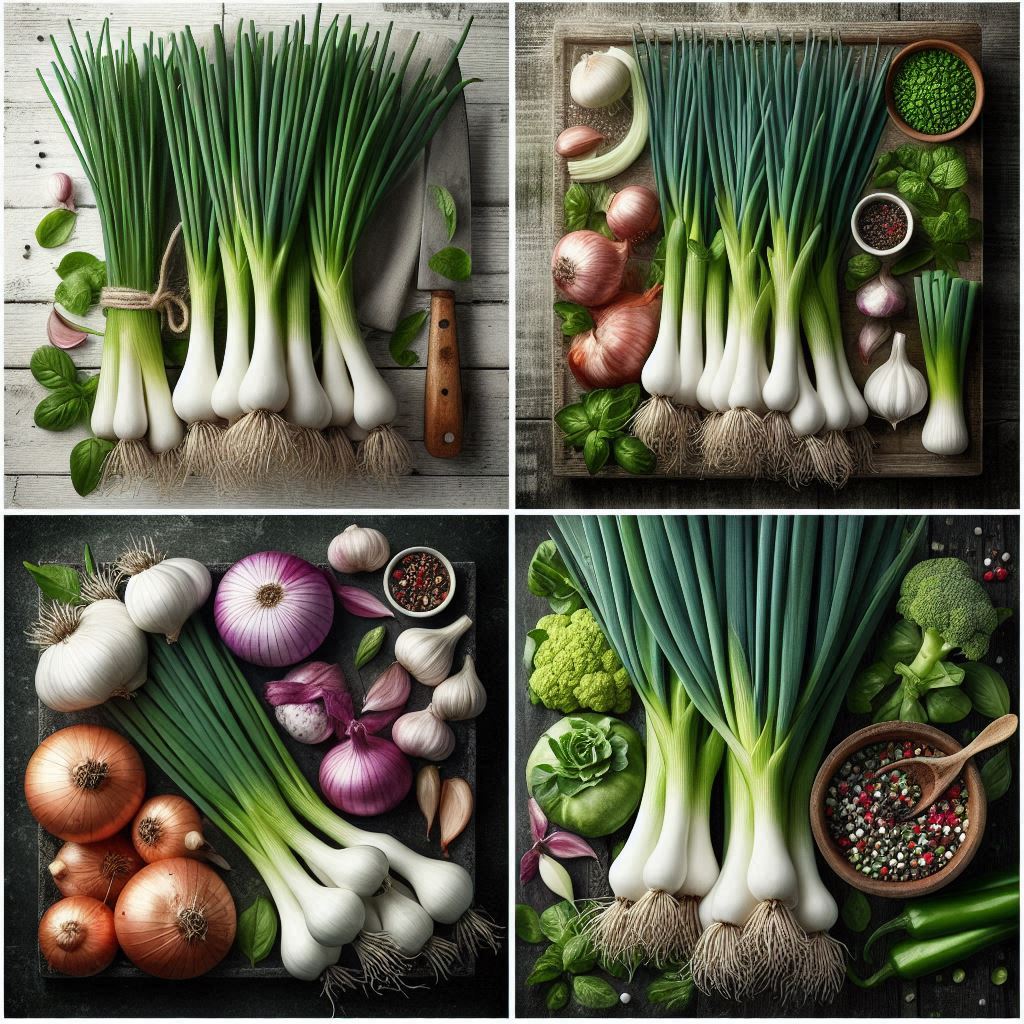

How to Grow Spring Onions Hydroponically in Australia
Hydroponic spring onions (Allium fistulosum) are a relatively easy entry crop for indoor growers, but spring onion hydroponics still needs the right pH, EC, light, and basic hygiene to deliver crisp white stems. Expect a first baby-size harvest in 25 to 35 days from transplant and full bunch size in 6 to 10 weeks (45 to 70 days) under strong LED light.
From my workshop bench on the Sunshine Coast: I have run hydroponic kits for leafy greens, herbs, and microgreens extensively, but I have not yet completed a full spring onion crop hydroponically. This guide draws from Bugbee (2003) on hydroponic nutrient management at Utah State University, Queensland Department of Agriculture and Fisheries (DAF) allium guidance, and published bunching-onion protocols. When I run a 67-hole Smart Grow Box trial with Allium fistulosum on our Sunshine Coast bench, I will update this article with my own EC log, regrowth observations, and harvest weight.
Quick answer
Grow spring onions hydroponically in Australia with a first baby-size harvest at 25 to 35 days from transplant (full bunch size at 45 to 70 days), using pH 6.0 to 6.8, EC 1.4 to 1.8 mS/cm, 12 to 14 hours of LED light, and a DWC, Kratky, or NFT setup. A 67-hole Smart Grow Box Short paired with a 100 to 200 watt full-spectrum LED suits Sunshine Coast and Brisbane apartment growers.
Key takeaways
- First baby-size harvest at 25 to 35 days from transplant, with full bunch size at 45 to 70 days; soil-grown crops in southeast Queensland gardens typically reach harvest in 8 to 12 weeks from sowing (DAF QLD).
- Target pH 6.0 to 6.8 and EC 1.4 to 1.8 mS/cm; alliums tolerate a wider band than lettuce but suffer manganese and aluminium toxicity below pH 5.5 and iron deficiency above pH 7.0 (Bugbee 2003).
- DWC, Kratky, NFT, and aeroponic towers all work; spring onions are shallow-rooted and low transpiration, so the choice comes down to maintenance and plant count.
- 12 to 14 hours of full-spectrum LED at 150 to 250 PPFD during seedling stage; bump to 250 to 400 PPFD during vegetative growth to keep stems compact.
- A 67-hole Smart Grow Box Short fits 50 to 130 spring onion plants per cycle at 3 to 5 seedlings per cup, paired with a 100 to 200 watt full-spectrum LED; cultivars like Tokyo Long White, Ishikura, and Australian-suited Everlasting Bunching all perform on the same kit.
- Supermarket regrowth works for 2 to 4 cycles; seed-grown crops produce sturdier stems before bolting.
Quick-reference parameters for hydroponic spring onions
| Parameter | Optimal | Critical limit | Notes |
|---|---|---|---|
| pH | 6.0 to 6.8 | Below 5.5 or above 7.0 | Mn + Al toxicity below pH 5; iron deficiency above pH 7 (Bugbee 2003) |
| EC (vegetative) | 1.4 to 1.8 mS/cm | Above 2.5 (monitor 2.0-2.2) | Reduce strength immediately if leaf tips brown |
| EC (week 1 starter) | 0.8 to 1.0 mS/cm | Above 1.4 too early | Step up after roots reach 3 to 5 cm |
| Light photoperiod | 12 to 14 hours | Below 10 hours | Shorter days produce leggy pale stems |
| PPFD at canopy | 150 to 250 (seedling) -> 250 to 400 (vegetative) | Below 100 | Verify with PPFD meter, not wattage alone |
| LED wattage (67-hole footprint) | 100 to 200 W full-spectrum | Below 80 W | Two 60-W bars side by side also works |
| Air temperature | 18 to 25 degrees Celsius | Above 30 | Heat stress slows uptake and raises pythium risk |
| Root zone temperature | 18 to 22 degrees Celsius | Above 26 | Insulate or shade reservoirs in summer |
| Germination temperature | 18 to 25 degrees Celsius | Above 30 | Seed-supplier + DAF QLD sources confirm 18-27 range |
| Baby harvest from transplant | 25 to 35 days | - | Tokyo Long White + Red Beard finish faster than Ishikura |
| Full bunch from transplant | 45 to 70 days | - | Soil-grown SE QLD takes 8 to 12 weeks from sowing (DAF QLD) |
| Plant spacing | 2 to 5 cm between plants | - | Tighter in NFT and aeroponic towers; wider in DWC (DAF QLD) |
| Regrowth cycles (supermarket bases) | 2 to 4 cycles | - | Stem energy depletes after the fourth cycle |
[skill-marker: cluster-spring-onion-2026-05-22]
Can you grow spring onions in water hydroponically
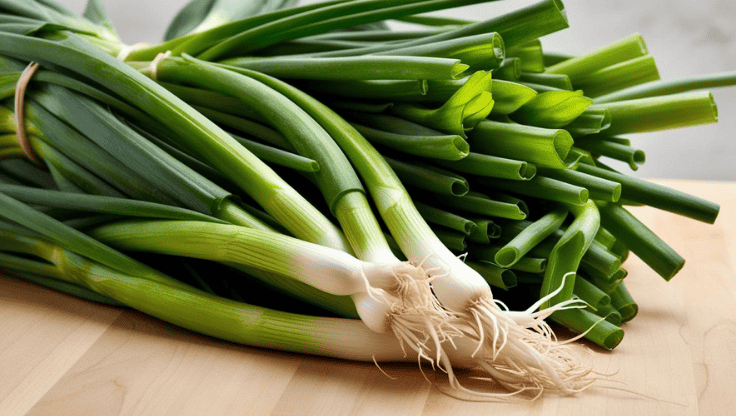
A spring onion (Allium fistulosum) is a small perennial allium grown for its slender white stem and hollow green leaves. Yes, you can grow spring onions in water using a hydroponic kit. Allium fistulosum, also called bunching onion, scallion, or green onion in Australian seed catalogues, does not form a true bulb, which makes it ideal for shallow net cup systems.
Germination sits between 18 and 25 degrees Celsius. Seedlings transplant when they reach 10 to 15 cm tall, typically 4 to 6 weeks from sowing under strong indoor light. First baby-size harvest follows 25 to 35 days after transplant; full bunch size takes 6 to 10 weeks (45 to 70 days) from transplant. Growers in Brisbane and across the Sunshine Coast benefit because year-round indoor production sidesteps the wet-summer fungal pressure on field-grown alliums in southeast Queensland (DAF QLD).
How to set up spring onion hydroponics
A standard DWC or Kratky kit covers every requirement for Allium fistulosum hydroponics, and NFT or aeroponic towers extend the same approach to higher plant counts.
pH and EC ranges and the allium nutrient balance
Maintain a spring onion EC pH window of 6.0 to 6.8 and 1.4 to 1.8 mS/cm for vegetative growth. Check pH every 3 to 4 days with a calibrated meter. EC creeps up as plants drink faster than they absorb salts, so top up with RO or low-TDS filtered water before re-dosing. If your tap water is hard or alkaline (high carbonate hardness, common in parts of southeast Queensland; check your local water utility's annual report or a TDS meter), use RO or a 50/50 RO-tap blend, because hard water will push reservoir pH up over the crop cycle.
Alliums benefit from a slightly sulphur-leaning nutrient profile. A higher nitrate-to-ammonium ratio (4:1 or more) helps maintain root health, while calcium supports compact white-stem development and reduces the risk of leaf-tip burn (Bugbee 2003). Pre-mixed leafy-green nutrients from reputable suppliers already cover this balance; just confirm the formulation lists sulphur and chelated micronutrients on the label.
Outside the 5.5 to 7.0 pH window, the micronutrient picture shifts unfavourably in both directions. Below pH 5.0 to 5.5, alliums take up too much manganese and aluminium - that is toxicity, not deficiency, and root tip damage shows within a few days (Bugbee 2003). Above pH 6.8 to 7.0, iron becomes insoluble and interveinal yellowing on new leaves appears. Keep pH in the 6.0 to 6.8 working range for steady allium growth, and re-buffer the reservoir if it drifts toward either edge.
NFT, DWC, Kratky and aeroponic systems for Allium fistulosum
Spring onions fit comfortably into any of four common indoor hydroponic systems. The choice depends on your appetite for maintenance and how many plants you want per cycle.
Kratky needs no pump. The reservoir level drops as roots descend, leaving an air gap above the waterline. Kratky suits 4 to 6 week crops like spring onions because the harvest window matches the drawdown curve. Best for single-cycle households on a low electricity budget.
Deep water culture (DWC) uses an air pump and 24-hour airstone, which keeps dissolved oxygen at 6 to 8 mg/L (lower acceptable limit 5 mg/L; root function is impaired below 4 mg/L). DWC suits growers who want to recycle the same reservoir for repeated regrowth cycles and tolerate the noise of a small pump.
Nutrient Film Technique (NFT) circulates a thin film of nutrient over the root mat. Spring onions tolerate NFT well because the species is shallow-rooted and low transpiration; the bottleneck is gully temperature in a warm room. Best for growers running more than 50 plants at a time on a benchtop kit.
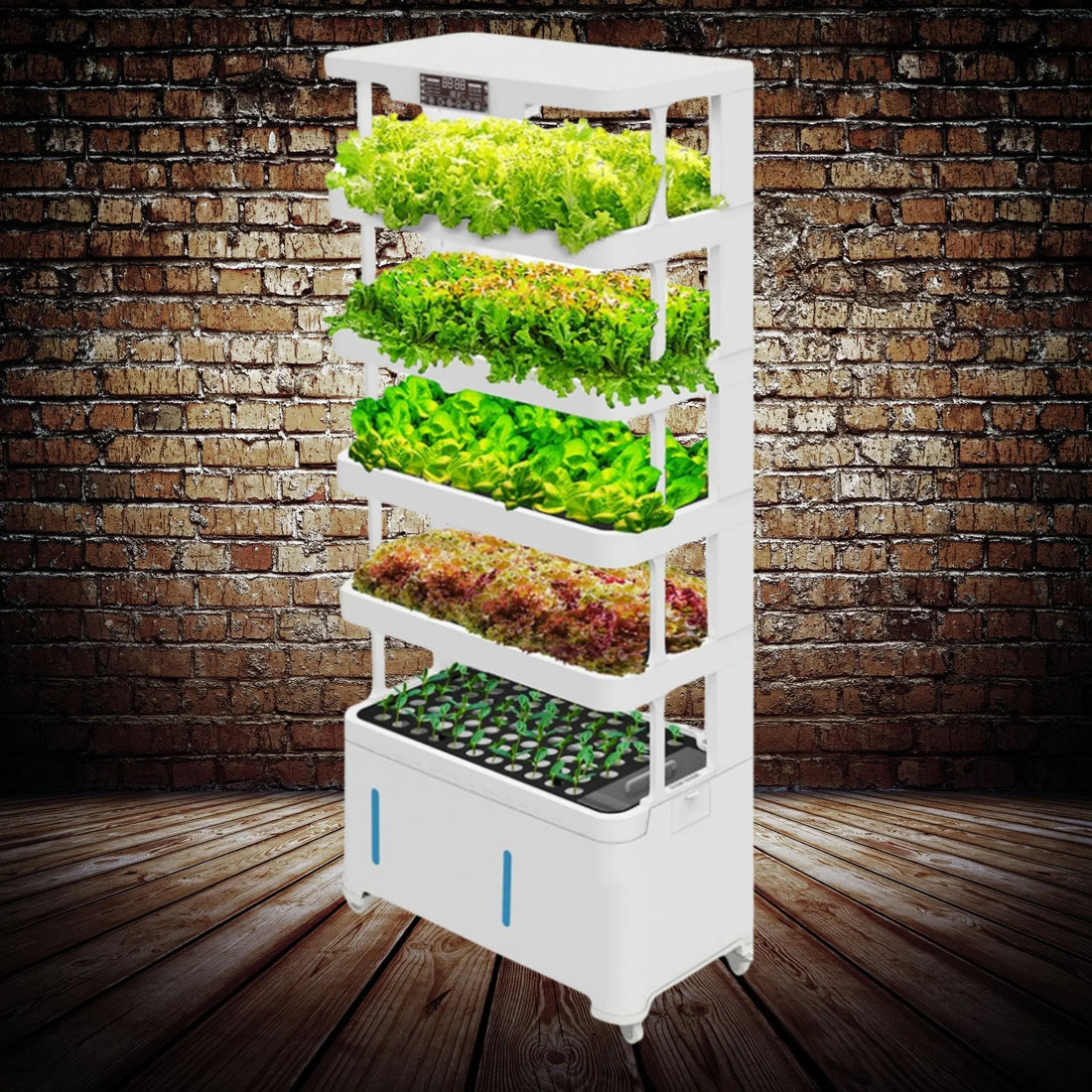
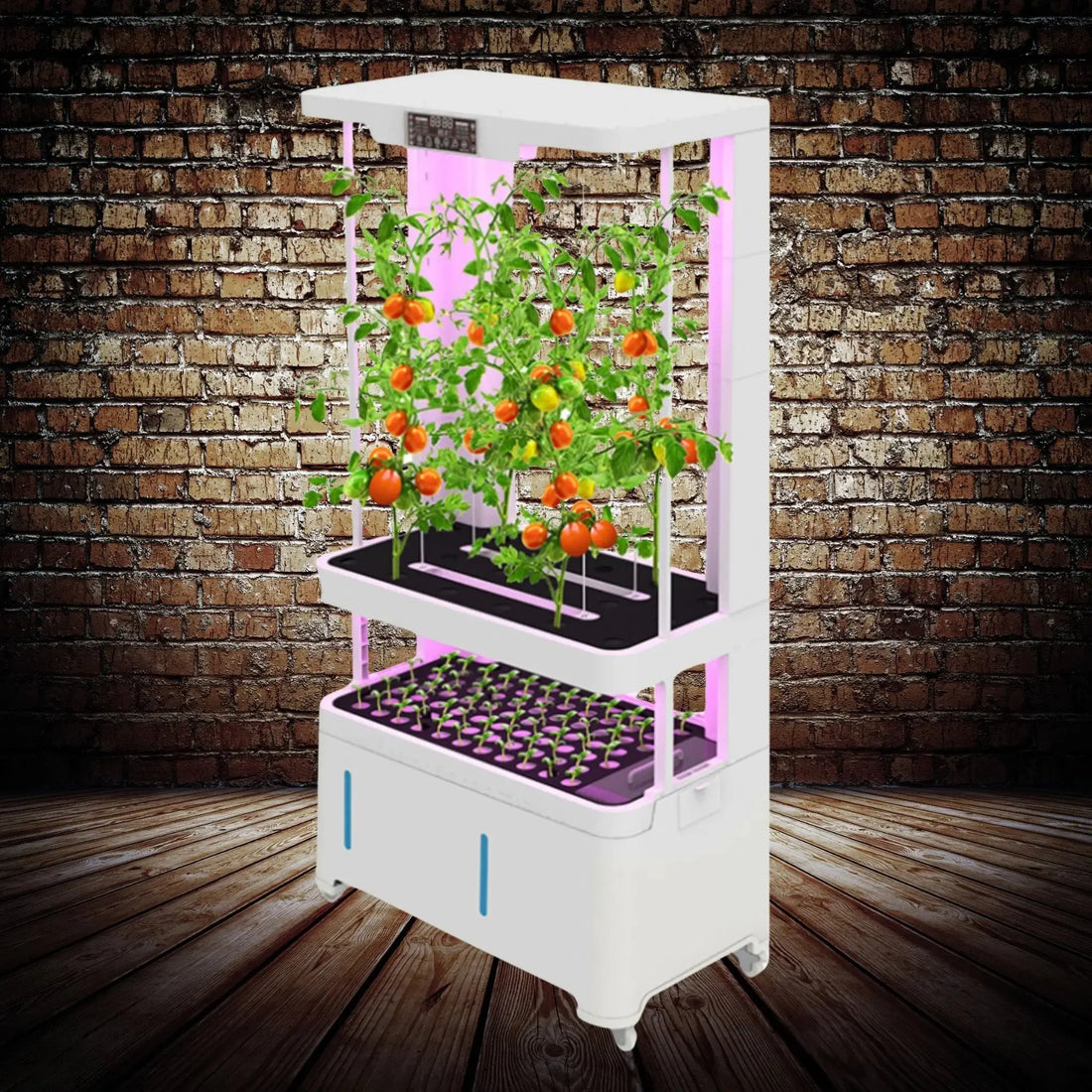
Aeroponic towers mist the roots in a vertical column. Towers give the highest plants-per-square-metre ratio for spring onions and harvest is easy at standing height. The trade-off is moving parts (pump and spray nozzles) and a higher kit cost.
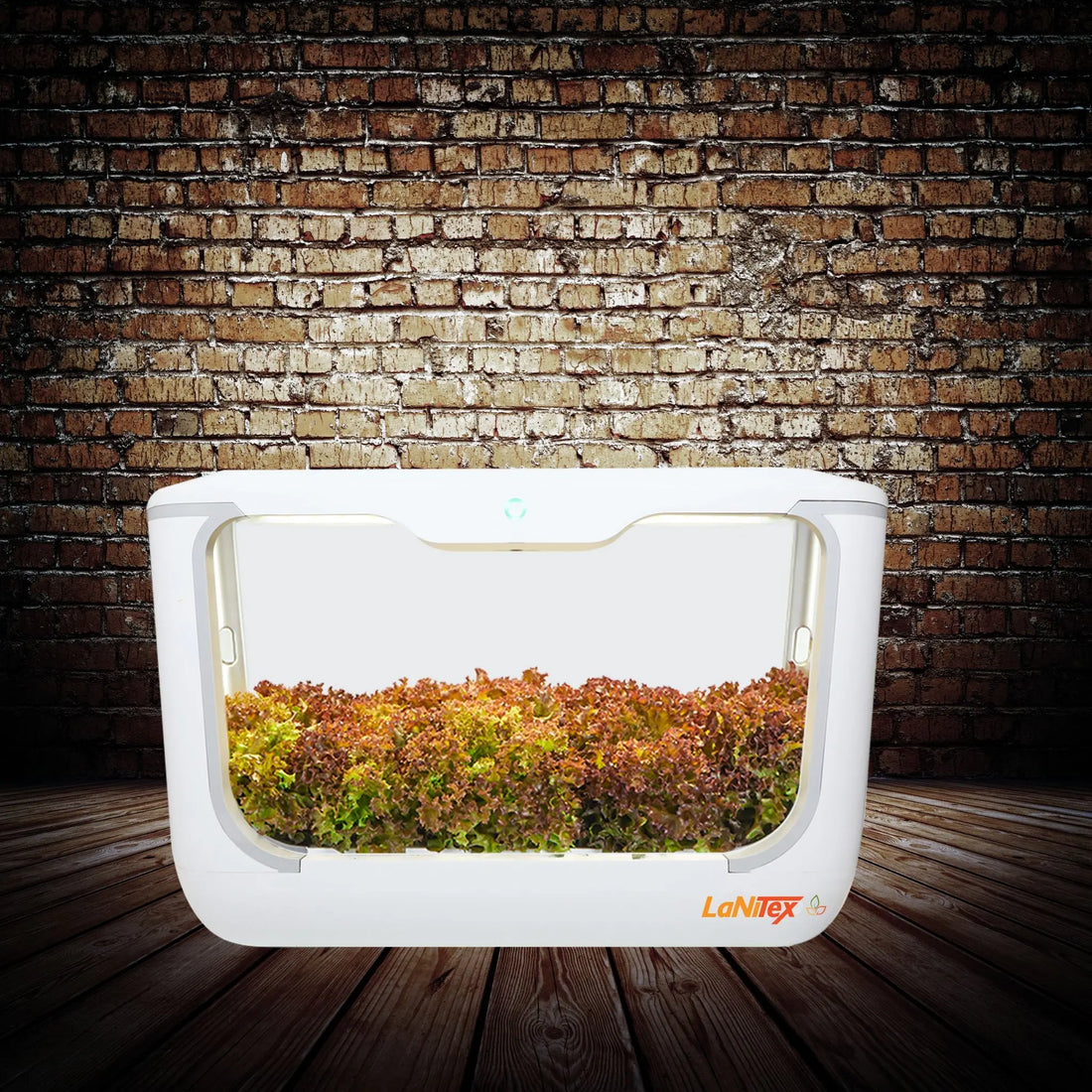
A 67-hole DWC-style Smart Grow Box Short sits between the simplicity of Kratky and the throughput of NFT, which suits most apartment growers on the Sunshine Coast and Brisbane.
Light requirements indoor
Spring onion seedlings need 150 to 250 micromoles per square metre per second PPFD at canopy height; bump to 250 to 400 PPFD during vegetative growth for compact upright stems. Run 12 to 14 hours per day. A 100 to 200 watt full-spectrum LED grow bar (or two 60-watt bars side by side) covers the 67-hole Smart Grow Box Short footprint; verify with a PPFD meter at canopy height, not by wattage alone. Growers on the Sunshine Coast should keep LEDs 25 to 35 cm above the canopy to avoid leaf tip scorch.
Root zone temperature and Australian summer cooling
Spring onions prefer a root zone of 18 to 22 degrees Celsius. Above 26 degrees the dissolved oxygen drops, pythium pressure climbs, and white stems soften. In a Sunshine Coast or Brisbane summer this matters more than air temperature because a closed reservoir traps heat.
Three practical steps keep the reservoir cool. Insulate the reservoir with reflective foam wrap. Shade the kit from afternoon sun by moving it to an indoor bench or a covered patio. If air temperature regularly exceeds 30 degrees Celsius, raise the reservoir pH by 0.1 to 0.2 to compensate for faster nutrient uptake, and drop nutrient strength to EC 1.2 to 1.4 to reduce salt stress while plants slow down.
Substrate, net cup and spacing
Use 5 cm net cups with rockwool or coco coir plugs. Rockwool holds water at higher tension and is reliably sterile from the wrapper, which makes it the safer choice for first-time growers. Coco coir drains faster, is reusable for 2 to 3 cycles if rinsed and sun-dried between crops, and is the lighter footprint option for growers tracking sustainability, though it needs sterilisation by boiling water or 3 percent hydrogen peroxide before reuse to avoid carrying over pythium spores.
Sow 3 to 5 seeds per cup and thin to the strongest 3 at day 14 if germination is heavy. For NFT channels, space the cups 2 to 3 cm apart along the gully to maximise yield per channel while keeping airflow between the white stems. For Kratky and DWC at the typical 67-hole gridded board, 4 to 5 cm spacing matches the natural pitch. Aeroponic towers can go tighter (2 cm) because the misted root zone is shared rather than competed for at the substrate (DAF QLD onion guidance).
5 cm net cups handle the full crop without root-binding because Allium fistulosum is shallow-rooted. Larger cups waste reservoir volume and slow drawdown in Kratky setups.
25 to 35 day timeline for hydroponic spring onions
Germination runs through Week 1. Sow onto pre-soaked rockwool cubes, keep covered at 20 to 24 degrees Celsius, expect green shoots in 5 to 8 days.
Seedlings take over from Week 2 into Week 3. Transfer cubes into the system at day 10 to 14, run nutrient at half strength (EC 0.8 to 1.0 mS/cm), pH 6.2, and 12 hours of light. Roots should reach 3 to 5 cm before full-strength feed.
Rapid vegetative growth follows in Week 3 and Week 4. Step EC up to 1.4 to 1.8 mS/cm, extend light to 14 hours, and watch for white stem elongation. Leaves should be 15 to 25 cm tall by day 24.
First baby-size harvest lands in Week 4 or Week 5. Snip green tops 2 cm above the white stem for a regrowth crop, or pull the entire plant for baby harvest at day 25 to 35 from transplant - cultivar-dependent, with Allium fistulosum selections like Tokyo Long White and Red Beard finishing faster than Ishikura under the same conditions.
For full bunch size (thicker white stems for the eating plate), continue growing to day 45 to 70 from transplant. The trade-off is space versus stem thickness: leaving the same kit for the longer cycle means a fresh seedling tray waits behind it.
Cultivar comparison: choosing the right spring onion for Australia
Cultivar choice has more impact on harvest weight, bolt resistance, and taste than most first-time growers expect. Six cultivars cover the practical Australian range, split between imported types widely sold in seed catalogues and Australian-suited bunching forms gaining shelf space at Diggers Club, Eden Seeds, and Mr Fothergill's.
| Cultivar | Stem colour | Bolt tendency | Day-length sensitivity | Taste | AU availability |
|---|---|---|---|---|---|
| Tokyo Long White | Pure white, long | Low | Mild | Sweet, clean | Widely sold |
| Red Beard | White with pink base | Medium | Mild | Sharp finish | Common in catalogues |
| Ishikura | White, slightly thicker | Low | Mild | Mellow, classic scallion | Widely sold |
| Everlasting Bunching | White, perennial habit | Very low | Day-neutral | Mild | Perennial-veg specialists |
| Kyoto Bunching | Long white stems | Low | Mild | Refined, slightly sweet | Limited (Diggers Club) |
| Straightleaf Welsh Onion | White, upright leaves | Low | Day-neutral | Robust, slightly pungent | Specialist suppliers |
For first-time growers, Tokyo Long White and Ishikura are the safest entry points. Both are widely available as seed, low-bolt, and produce uniformly long white stems under 12 to 14 hour LED schedules.
For continuous harvest setups, Everlasting Bunching and Straightleaf Welsh Onion are day-neutral perennials that produce side shoots and divide naturally over the season. They suit growers running rolling Kratky or DWC cycles rather than single-crop harvests.
For colour and visual interest, Red Beard adds a pink-blushed stem base that holds up on the harvest plate. Bolt tendency is slightly higher than Tokyo Long White, so harvest at day 28 to 30 before flower stems initiate.
A note on first-hand testing
I have not yet completed a full spring onion crop on the Sunshine Coast bench. The timelines and parameters here come from Bugbee (2003) on hydroponic nutrient management at Utah State University, Queensland Department of Agriculture and Fisheries (DAF) allium guidance, and published bunching-onion protocols. When I run a 67-hole Smart Grow Box trial with Allium fistulosum I will update this section with my own EC log, regrowth count, and harvest weight per net cup.
Laszlo Bulatko, LaNiTex Hydro Garden, Sunshine Coast
Why the 67-hole Smart Grow Box Short suits hydroponic spring onions
The Smart Grow Box Short 67-hole hydroponic system fits an apartment kitchen or balcony footprint and accommodates 50 to 130 spring onion plants per cycle at 3 to 5 seedlings per cup. The shallow reservoir suits Allium fistulosum because the species does not need deep root zones.
Growers in Brisbane and on the Sunshine Coast get 10 percent off with code NEWSLETTERDISCOUNT10. A single kit produces continuous 5-week cycles for 2 to 4 people, with cost per bunch typically landing at or below supermarket pricing once the kit amortises across the first season.
Can you regrow supermarket spring onions hydroponically
Yes, you can regrow spring onions hydroponically by placing supermarket bases (white stem with 1 cm of root) into a net cup with roots submerged. This spring onion regrowth hydroponic technique produces new green growth within 5 to 7 days and works for 2 to 4 cycles before stem energy depletes.
The regrowth biology is straightforward. The white base contains reserve carbohydrates and a meristematic crown that drives the first one to two cuts. Each subsequent cut draws on diminishing reserves, so leaf thickness and stem firmness drop by cycle four. Hydroponic media (rockwool plug or coco coir) extends the cycle count by one to two over plain water because dissolved nutrients top up what the crown spent.
For ongoing supply, seed-grown crops outperform supermarket regrowth on stem thickness, harvest weight, and bolt resistance. Regrowing hydroponic spring onions suits a kitchen-window experiment or kids STEM project; a fresh seed crop in a Smart Grow Box Short suits sustained household supply.
Australian climate timing and SE QLD seasonal calendar
Indoor hydroponic spring onion cycles run year-round across all Australian climates. Outdoor and unconditioned-shed setups, by contrast, follow a seasonal window, especially in the warm subtropics of southeast Queensland.
| Month | Indoor hydroponic kit | Outdoor / shed-grown | SE QLD note |
|---|---|---|---|
| January to February | Run year-round | Avoid sowing | Heat stress above 30 degrees, high pythium pressure |
| March | Run year-round | Start sowing | Cool nights arrive; humidity drops |
| April to June | Run year-round | Peak sowing window | Mild days 22 to 26 degrees, low pest pressure |
| July to August | Run year-round | Late winter sowing | Coolest months; slower germination, sturdier stems |
| September to October | Run year-round | Last reliable sowing | Days warming; harvest before December heat |
| November to December | Run year-round | Avoid sowing | Wet summer onset; basal rot risk climbs (DAF QLD) |
Above 30 degrees Celsius, plants slow nutrient uptake and the reservoir warms enough that dissolved oxygen drops. Either move the kit to a cooler indoor spot or apply the reservoir-cooling steps from the root-zone temperature section above.
Common mistakes to avoid
- Running EC above 2.2 mS/cm. Monitor closely between 2.0 and 2.2 mS/cm; if leaf-tip browning appears, reduce nutrient strength immediately. Salt burn at the leaf tip is reliably visible above 2.5 mS/cm (Bugbee 2003). Flush the reservoir with plain water if browning spreads to more than 10 percent of the canopy.
- Crowding more than 5 seedlings per net cup. Air circulation collapses and basal rot climbs fast in warm humid Sunshine Coast and Brisbane summer conditions. Thin to 3 seedlings per cup at day 14.
- Letting the Kratky reservoir run dry before harvest. The white stem firms in the last 5 to 7 days; if the air gap exhausts the residual reservoir before the harvest cut, top up with plain RO water once.
- Skipping pH checks. Below pH 5.0 to 5.5 alliums actually take up too much manganese and aluminium (toxicity, not deficiency; root tips damage within days); above pH 6.8 to 7.0 iron becomes insoluble and interveinal yellowing appears on new leaves (Bugbee 2003). Re-buffer back to the 6.0 to 6.8 working range with a small dose of pH-up or pH-down solution.
- Mixing hard tap water without checking carbonate hardness. Some Sunshine Coast and Brisbane tap supplies are alkaline enough to push reservoir pH up over the crop cycle. Check your local water utility's annual report or a TDS meter, and use RO or a 50/50 RO-tap blend if hardness is significant.
Troubleshooting spring onion hydroponics
Six symptoms cover roughly 80 percent of issues you will see on a Sunshine Coast or Brisbane bench. Match the symptom first; the cause confirms what is actually happening. Apply the fix once both line up.
Yellow leaf tips
Cause: Most often salt burn (EC drifted above 2.2 mS/cm) or a pH excursion to either edge: below 5.0 to 5.5 causes Mn + Al toxicity, above 6.8 to 7.0 causes iron deficiency and interveinal chlorosis (Bugbee 2003). Less commonly a sulphur or calcium shortfall in the nutrient mix.
Fix: Measure EC and pH first. Flush the reservoir with plain RO water, refill at EC 1.4 mS/cm and pH 6.2 to 6.5, and verify your nutrient label lists sulphur and calcium. Yellow tips that persist after a 7-day reset point to a substrate-borne issue; sterilise net cups between cycles.
Leggy pale stems that fall over
Cause: Light below the 150 PPFD floor, light bar too far from canopy, or photoperiod shorter than 12 hours.
Fix: Lower LED bar to 25 to 35 cm above canopy. Confirm photoperiod is 12 to 14 hours. If using a non-grow-specific LED, swap to a full-spectrum bar of 100 to 200 watts for the 67-hole footprint.
Basal rot and soft white stems
Cause: Crowded net cups with high humidity. Sunshine Coast and Brisbane summer conditions accelerate the failure mode within 48 hours (DAF QLD).
Fix: Thin to 3 seedlings per cup. Improve airflow with a quiet clip-fan above the canopy. Remove affected plants immediately and sterilise the affected net cup before reuse.
Downy mildew (greyish coating on leaves)
Cause: Peronospora destructor spores carried in humid still air. Higher risk in wet-summer indoor setups with poor ventilation (DAF QLD).
Fix: Increase airflow with a small fan. Reduce humidity to below 70 percent at canopy height. Remove and bin affected leaves; do not compost. Wash hands and tools between handling diseased and healthy plants.
Pythium root rot (brown mushy roots, stunted top growth)
Cause: Reservoir temperature above 26 degrees Celsius plus low dissolved oxygen. Triggered most often by reservoir sun exposure in Australian summer.
Fix: Cool the reservoir (insulate, shade, target 18 to 22 degrees). Confirm air pump and airstone are running 24/7. Replace the nutrient solution and rinse roots with plain water if more than 30 percent of the root mass shows browning.
Thrips infestation (silver streaks on leaves)
Cause: Western flower thrips and onion thrips both target alliums. Indoor setups are not immune; thrips arrive on hands, on contaminated clothes, or via open windows.
Fix: Hang yellow sticky traps near the canopy. Inspect plants weekly. Spray affected plants with an insecticidal soap or neem solution applied at dusk; do not spray during the photoperiod or under hot LEDs.
Frequently asked questions
Can you grow spring onions hydroponically?
Yes. Spring onions (Allium fistulosum) grow well in DWC, Kratky, and NFT systems because the species is shallow-rooted, does not form a true bulb, and tolerates a wide nutrient window. Entry-level kits like the 67-hole Smart Grow Box Short suit a hydroponic spring onion crop on a Sunshine Coast bench.
How long do hydroponic spring onions take to grow?
Spring onions reach a first baby-size harvest 25 to 35 days from transplant (or 35 to 50 days from seed sowing), and full bunch size at 45 to 70 days from transplant. Soil-grown crops in southeast Queensland gardens typically take 8 to 12 weeks from sowing (DAF QLD), so hydroponic kits reach baby harvest noticeably faster under controlled indoor conditions.
Can you regrow supermarket spring onions hydroponically?
Yes, supermarket spring onion bases regrow in a hydroponic kit for 2 to 4 cycles. Cut 2 cm above the root, place in a net cup with roots submerged, and expect new green leaves within 5 to 7 days. The white base contains reserve carbohydrates and a meristematic crown; stem energy depletes after the fourth regrowth, so fresh seed-grown crops produce sturdier bunches.
What pH and EC do spring onions need in a hydroponic system?
Target pH 6.0 to 6.8 and EC 1.4 to 1.8 mS/cm for vegetative growth. Drop EC to 0.8 to 1.0 mS/cm for the first week after transplant to avoid seedling salt burn. Below pH 5.0 to 5.5 alliums actually take up too much manganese and aluminium (toxicity, not deficiency); above pH 6.8 to 7.0 iron becomes insoluble and yellowing appears (Bugbee 2003).
Do spring onions need a lot of light to grow indoors?
Spring onions need 12 to 14 hours of full-spectrum LED light per day at 150 to 250 PPFD during seedling stage and 250 to 400 PPFD during vegetative growth, measured at canopy height. A 100 to 200 watt full-spectrum LED grow bar covers a 67-hole Smart Grow Box footprint; verify with a PPFD meter, not by wattage alone. Insufficient light produces leggy pale stems that fall over before harvest.
Which hydroponic system is best for growing spring onions in Australia?
All four common systems work for Allium fistulosum. Kratky is the simplest and cheapest for a single 4 to 5 week cycle. DWC suits growers who recycle reservoirs for repeated regrowth. NFT scales past 50 plants on a benchtop. Aeroponic towers maximise plants per square metre but cost more upfront. A 67-hole DWC-style Smart Grow Box Short balances simplicity with throughput for Sunshine Coast and Brisbane apartment growers.
How many spring onions can I grow in a Smart Grow Box?
A 67-hole Smart Grow Box Short fits 50 to 130 spring onion plants per cycle depending on bunch density. Sow 3 to 5 seedlings per net cup. A Sunshine Coast household of 2 to 4 people gets continuous supply on a rolling 5-week harvest schedule.
Can I grow spring onions in just water without nutrients?
You can regrow supermarket spring onion bases in plain water for 1 to 2 cycles because the stem holds stored reserves. For a full seed-grown crop you must add hydroponic nutrient solution at EC 1.4 to 1.8 mS/cm; plain water lacks the nitrogen, potassium, and trace elements alliums need to build new leaf mass.
How close can I space spring onions in NFT or tower systems?
In NFT gullies, space cups 2 to 3 cm apart to maximise yield per channel while keeping airflow between the white stems. In aeroponic towers the spacing can tighten to 2 cm because the misted root zone is shared rather than competed for at the substrate. Kratky and DWC setups on a 67-hole grid sit at the natural 4 to 5 cm pitch and need no further adjustment (DAF QLD onion guidance).
Why are my hydroponic spring onions turning yellow at the tips?
Yellow leaf tips usually trace to salt burn (EC above 2.2 mS/cm) or a pH excursion to either edge: below 5.0 to 5.5 causes Mn + Al toxicity, above 6.8 to 7.0 causes iron deficiency (Bugbee 2003). Less commonly a sulphur or calcium shortfall in the nutrient mix. Flush the reservoir with plain RO water, refill at EC 1.4 mS/cm and pH 6.2 to 6.5, and confirm the nutrient label lists sulphur and calcium. Yellow tips that persist after a 7-day reset point to a substrate-borne issue; sterilise net cups between cycles.
Sources
Inline citations referenced in this guide:
- Bugbee, B. (2003). Nutrient Management in Recirculating Hydroponic Culture. Utah State University, Crop Physiology Lab. Covers pH and EC ranges, Fe/Mn solubility at low pH, and allium nutrient balance. Open-access reference.
- Queensland Department of Agriculture and Fisheries (DAF QLD). Vegetable crops: onions and allium family. DAF QLD vegetable crops. Covers SE QLD seasonal timing, spacing, and disease management for the allium family.
- Sustainable Gardening Australia. "Farms utilizing hydroponics use up to 90 percent less water" than field production, a meaningful efficiency gain for Sunshine Coast and Brisbane households. See SGA: pros and cons of hydroponic growing.
Internal references: hydroponic system essentials overview, grow chives hydroponically, grow bok choy hydroponically, grow coriander hydroponically.
About the writer
Laszlo Bulatko is the founder of LaNiTex Hydro Garden, an indoor hydroponic equipment retailer and STEM education provider based on the Sunshine Coast (Sippy Downs, QLD 4556). Laszlo started his career at IBM and Diageo before building a 15-year career in the Hungarian fishing tackle market, where LaNiTex Kft reached 12 percent market share between 2005 and 2018. He launched LaNiTex Hydro Garden in December 2024 for Australian apartment growers and school STEM programs across the Sunshine Coast and Brisbane. Laszlo has hands-on experience with leafy greens, herbs, and microgreens, and is expanding his trial program to hydroponic spring onion crops.
Changelog
- 2026-05-23: Structural depth refresh merged with 2026-05-22 factcheck revision: added quick-reference parameter table (now 13 rows including LED wattage + spacing + regrowth + baby/full harvest), cultivar comparison H2 (Tokyo Long White, Red Beard, Ishikura, Everlasting Bunching, Kyoto Bunching, Straightleaf Welsh Onion), NFT/DWC/Kratky/aeroponic system comparison, root-zone temperature subsection, troubleshooting H2 (6 symptom-cause-fix blocks), Australian climate seasonal calendar, expanded substrate/spacing notes, full HowTo JSON-LD schema, corrected SpeakableSpecification nesting inside Article, schema URL handles corrected to /blogs/hydroponic-plants/, named inline citations (Bugbee 2003 + DAF QLD), and 3 new FAQ entries (best system, NFT/tower spacing, yellow tips). FAQ count 7 to 10. Preserved all 2026-05-22 factcheck wins.
- 2026-05-22: Factual-accuracy revision following /geo-content-factcheck audit: corrected LED wattage for 67-hole footprint, fixed allium Fe/Mn pH physiology, narrowed pH window to 6.0-6.8, added baby-vs-full-bunch harvest caveats, added NFT system option, added AU tap-water alkalinity note, widened regrowth cycles to 2-4, softened EC salt-burn threshold.
- 2026-05-19: Article rewritten for hydroponic spring onions Australia, expanded FAQ, added Smart Grow Box anchor, refined Sunshine Coast geo signals.