Year-Round Greenhouse Alternatives in Australia: 2026 Buyer's Guide
Last updated: 15 May 2026. By Laszlo Bulatko, founder of LaNiTex Hydro Garden on the Sunshine Coast.
Disclosure: I founded and run LaNiTex Hydro Garden; the LaNiTex products in this guide are ones I sell directly. Prices accurate as of 15 May 2026.
Greenhouse alternatives in Australia include polycarbonate kit greenhouses ($80--$5,000) and indoor hydroponic systems ($429--$1,990). The right choice comes down to outdoor space, rental status, and what crops you want to grow.
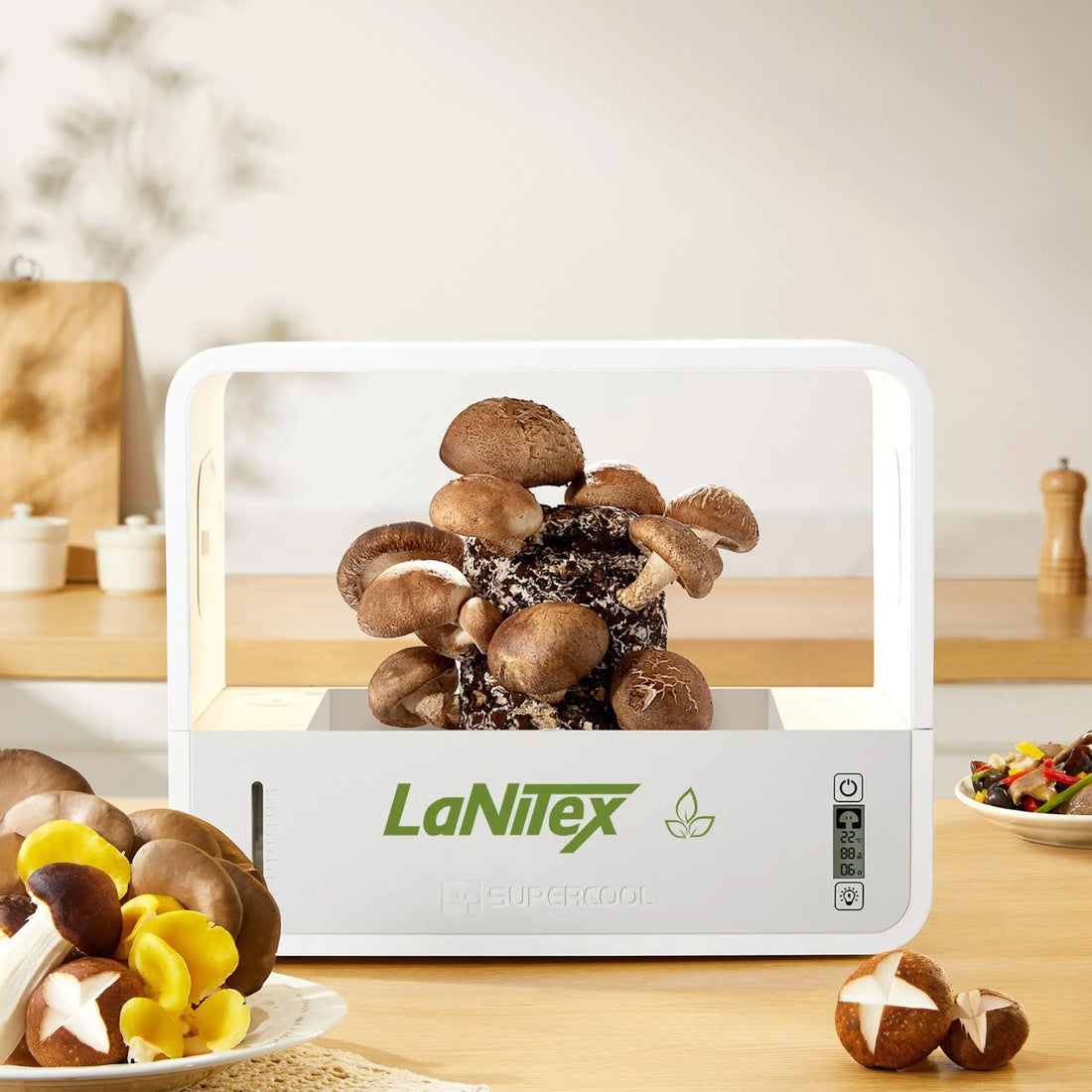
I'd always wanted a greenhouse at home. But unless you live on a farm or have a big block behind the house to put one up outdoors, the chance just doesn't come up. That's why I ended up going the indoor hydroponic route. I get everything a greenhouse would give me, and I can enjoy the look of the plants right in my own living room.
That choice isn't unique to me. Per the Australian Bureau of Statistics 2021 Census, "70 per cent were separate houses, 13 per cent were townhouses and 16 per cent were apartments." Roughly three in ten Australian households live in townhouses or apartments.
Add the renters in separate houses who cannot bolt anything to a slab, and a real glass structure is off the table for a serious chunk of the country. This guide compares purpose-built kits, walk-in setups, and indoor hydroponics so you can pick what actually fits your block.
TL;DR: An indoor hydroponic system gives Australian apartments, rentals, and small blocks the same year-round, controlled-climate growing as a polycarbonate greenhouse, for $429-$1,990. Smart Grow Box (Short) starts at $429 and fits a kitchen benchtop. A walk-in glass kit costs $1,500-$5,000 plus install and is off the table for renters.
How I compared these options: I've run a LaNiTex Smart Grow Box from my the Sunshine Coast home since early 2025, tracking electricity costs, plant cycles, and produce yield. Greenhouse kit prices come from public retail listings as of May 2026.
Quick answer: what works as a greenhouse alternative in Australia
An indoor hydroponic system gives you the same year-round, controlled-climate growing as a greenhouse, in a footprint that fits Australian apartments, rentals, and small blocks. Sustainable Gardening Australia notes that "Farms utilizing hydroponics use up to 90 percent less water" than soil farming, so the running cost stays low. For under $500 you can start with a Smart Grow Box (Short) and grow lettuce, herbs, microgreens, and capsicum year-round. A walk-in kit still wins for tomatoes, climbers, and beds bigger than 15 plants, but most home growers want the same controlled-climate results without the backyard, the build, or the heat-stress problem QLD summers throw at a sealed glass box. If you have no outdoor space -- which covers most renters and most apartment dwellers -- hydroponics is the practical answer.
Browse our full indoor hydroponic system range to see all nine units.
Greenhouse vs hydroponic indoor garden: which one actually fits an Australian home?
A greenhouse traps sunlight to warm the air around your plants. An indoor hydroponic garden replaces sunlight with full-spectrum LEDs and your room's air conditioning. Both extend your season. The differences sit in cost, footprint, and how well each one survives an Australian summer.
Australian climate zones and year-round growing
An indoor hydroponic system grows year-round in any of Australia's six climate zones; a polycarbonate greenhouse needs zone-specific modifications -- shade cloth and active ventilation in tropical Queensland, supplementary heating in cool-temperate Tasmania and Victoria.
Australia spans six major climate zones -- from tropical Queensland and the Northern Territory, to arid inland areas, to the temperate south-east. A polycarbonate greenhouse that works year-round in Melbourne's cool-temperate zone will cook in Cairns without shade cloth and active ventilation. An indoor hydroponic system operates in any zone because the climate is your room, not the weather outside. Darwin households and Hobart households both run at whatever temperature their split system sets. In arid inland zones, an outdoor enclosure loses water fast through evaporation; a closed reservoir doesn't.
Climate independence and AU winter growing
A glass or polycarbonate kit holds warmth on a Brisbane winter morning, which is the whole point. But come a January 38 degree day, an unshaded poly enclosure cooks past 45 degrees inside. You need shade cloth, side vents, and ideally a thermostat-driven fan.
An indoor hydroponic system doesn't care about the weather. The room sits at 22 degrees because your aircon does. You get year-round growing without the summer overheating problem.
For Victorian, Tasmanian, and ACT growers, winter lows can reach 2-5 degrees Celsius overnight. A polycarbonate greenhouse without supplementary heating drops to ambient outdoor temperature, which kills tropical and sub-tropical crops. A 300W fan heater can hold a small greenhouse at 12-15 degrees on cold nights, but adds $15-$25 per month across the three winter months. Your hydroponic unit is already in the room you're heating. No extra cost.
Water use, ongoing costs, and ROI
Soil gardens evaporate. Glass enclosures evaporate faster because the glass concentrates the heat. Hydroponic systems run on a closed reservoir. Sustainable Gardening Australia notes hydroponic systems use up to 90 percent less water than soil farming.
Power is the trade-off: a 40W LED running 14 hours a day costs about $0.15 a day at QLD rates. Over a year that's around $55 in electricity. A polycarbonate frame costs nothing to run but $1,500-$5,000 upfront plus install.
Footprint, portability, and what your strata thinks
A walk-in unit needs 2-4 square metres of level outdoor ground. You can't put one on a third-floor balcony in Sydney or a strata-managed townhouse in Melbourne without a fight. A benchtop hydroponic unit is 50 cm x 30 cm, plugs into a normal power point, and moves with you. Renters don't lose their setup at the end of a lease.
Apartment growers who want vertical growing can also explore a grow tower for apartments in Australia as an alternative to a benchtop unit.
For a detailed comparison of which system suits your living situation, see Hydroponic System for Every Home: Apartment to Backyard.
Greenhouse kits in Australia: who they suit and who they don't
You can get greenhouse kits in Australia from Bunnings, Vegepod, and various specialist online stores -- mini units, walk-in tunnels, and full polycarbonate frames. Prices spread wide: a mini kit runs $80-$250, a portable walk-in greenhouse kit in Australia lands at $250-$900, and a permanent polycarbonate greenhouse build in Australia sits at $1,500-$5,000 plus install and base.
| Greenhouse type | Price range | Best for | Limits |
|---|---|---|---|
| Mini greenhouse | $80-$250 | Seed-starting, herbs | Small capacity, no climate control |
| Walk-in tunnel kit | $250-$900 | Hobby growing, beginners | Plastic film fails in 2 summers |
| Polycarbonate frame (permanent) | $1,500-$5,000 + install | Year-round, owner-occupier | Needs slab, council approval, hail-rated |
Best greenhouse for beginners in Australia
The most beginner-friendly option is a small walk-in frame with shelving, around $400. It fits a 1.2 m x 1.9 m corner, holds a dozen seedling trays, and you can dismantle it if you move.
The catch: it doesn't have its own climate. You're still at the mercy of QLD summer heat and Victorian winter chill. For a true year-round greenhouse for vegetables in Australia that produces all year, you need to add shade cloth, ventilation, a fan, and ideally a small heater. That's another $200-$400 in extras.
Polycarbonate vs plastic vs glass
Polycarbonate twin-wall panels handle hail and most QLD storms. Cheap plastic film fails inside two summers. Glass looks beautiful but cracks under cyclone-grade wind, and it's heavy enough that you need a permanent slab. For renters, none of the three works long-term. You can't anchor a glass frame to a Brisbane rental without losing your bond.
Council and strata regulations in Australia
Before purchasing a polycarbonate kit, check your local council's development rules and your strata by-laws. Most Australian councils treat permanent outdoor structures attached to a slab as a development requiring approval. Freestanding walk-in tunnel kits may avoid formal approval, but requirements vary by council and state -- verify before you buy. Strata-managed townhouses and apartments almost always prohibit permanent outdoor structures without owners' corporation approval. An indoor hydroponic system has no footprint on the land; it is furniture, not a structure.
DIY greenhouse builds: an honest look
Some growers go the DIY route with shed frames, PVC pipe, or shade cloth. A resourceful builder can put up a functional structure for $300-$800 using recycled panels and fencing. The result is more robust than a flat-pack kit and can be sized to suit the exact corner available. The downside is the same as any permanent outdoor structure: renters can't build it, strata won't allow it, and a Queensland summer still cooks the interior. DIY builds make the most sense on a large house lot in a dry south-eastern Australian climate.
Year-round growing without a greenhouse: how indoor hydroponics works
Hydroponics grows plants in nutrient-enriched water instead of soil. The roots sit in or above a 9 litre reservoir, an air pump or pulsed feed keeps them oxygenated, and a full-spectrum LED panel above the canopy delivers the light the sun would. Your living room provides the climate. Sustainable Gardening Australia notes that hydroponic farming can produce up to three or four times more produce than traditional methods, because nutrient delivery is precise and doesn't depend on soil quality.
What you can grow year-round (and what you can't)
These all do well year-round in a grow box:
- Lettuce, spinach, rocket, and kale
- Basil, coriander, mint, and parsley
- Microgreens (sunflower, pea shoots, radish)
- Chillies and small capsicum
For a species-by-species breakdown of which herbs grow fastest, see Hydroponic Herb Garden: How It Works in an Aussie Kitchen.
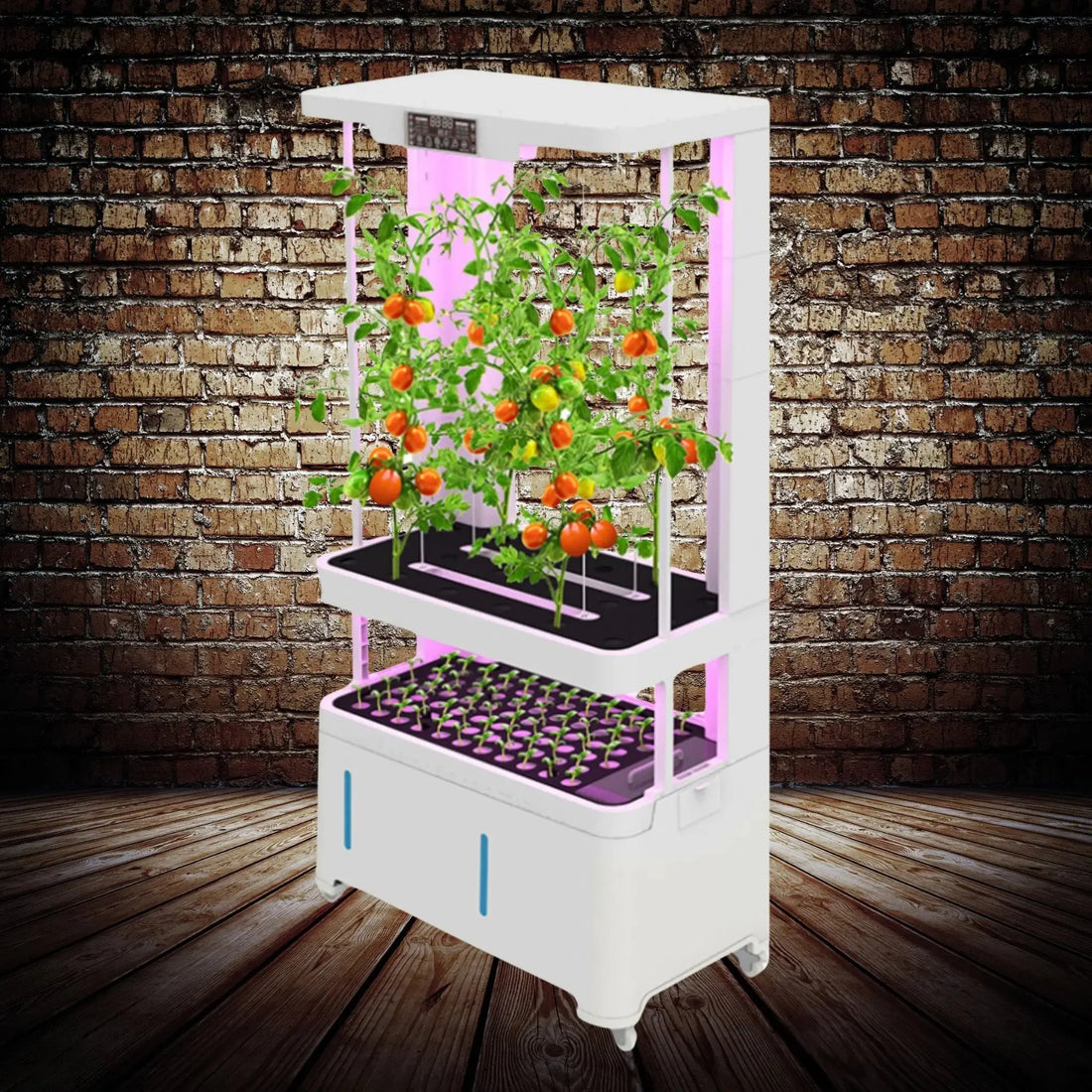
Capsicum and small tomatoes work in the Smart Grow Box Tall because it gives the height climbers need. What doesn't work: full-sized vine tomatoes, pumpkins, corn, or fruit trees. For those you still want a real greenhouse-hydroponics setup in Australia or an outdoor garden. Don't pretend otherwise.
Energy use and ongoing costs
A 40W LED running 14 hours a day uses about 0.56 kWh. At 27 cents per kWh that's $0.15 a day, or about $55 a year. The water pump adds another $5 a year.
Nutrient solution costs $30-$40 a year for a benchtop unit. You're looking at $90-$100 in running costs for an entire year of fresh greens. That beats supermarket herb prices in about three months.
For a full breakdown of spectrum, wattage, and what to ignore on LED spec sheets, see LED Grow Lights Australia: What Actually Matters.
Best LaNiTex system for your greenhouse-replacement goal
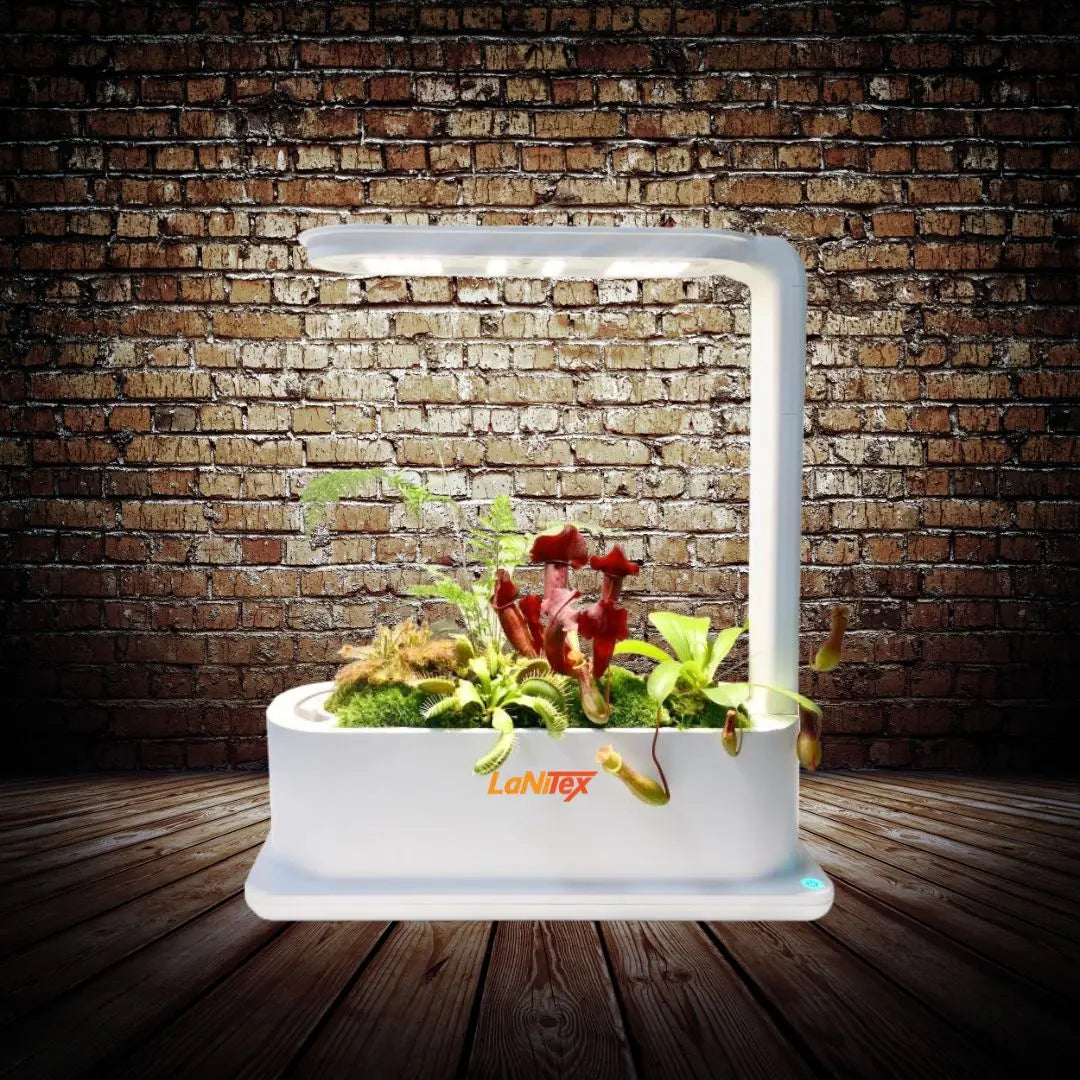
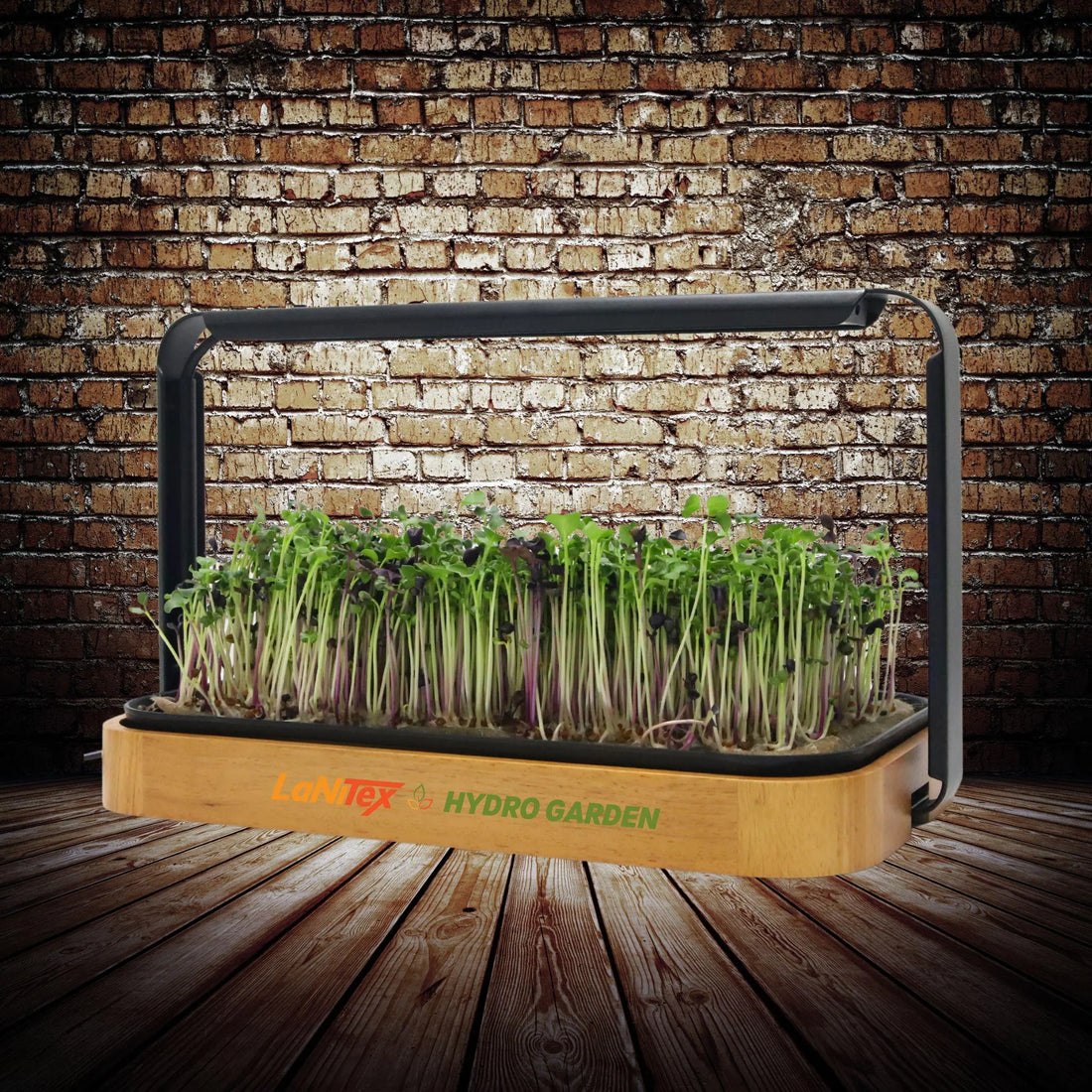
LaNiTex offers three indoor hydroponic tiers as greenhouse alternatives in Australia: Smart Grow Box (Short) at $429 for benchtop herbs and greens; Smart Grow Box Tall at $650 for climbers like tomatoes and capsicum; Indoor Hydroponic Vegetable Garden V5.2-A at $1,990 for 76-position, app-monitored setups.
If a glass kit isn't realistic for your block, here's which tier fits which situation. All three ship from the Sunshine Coast, QLD, usually inside the same week.
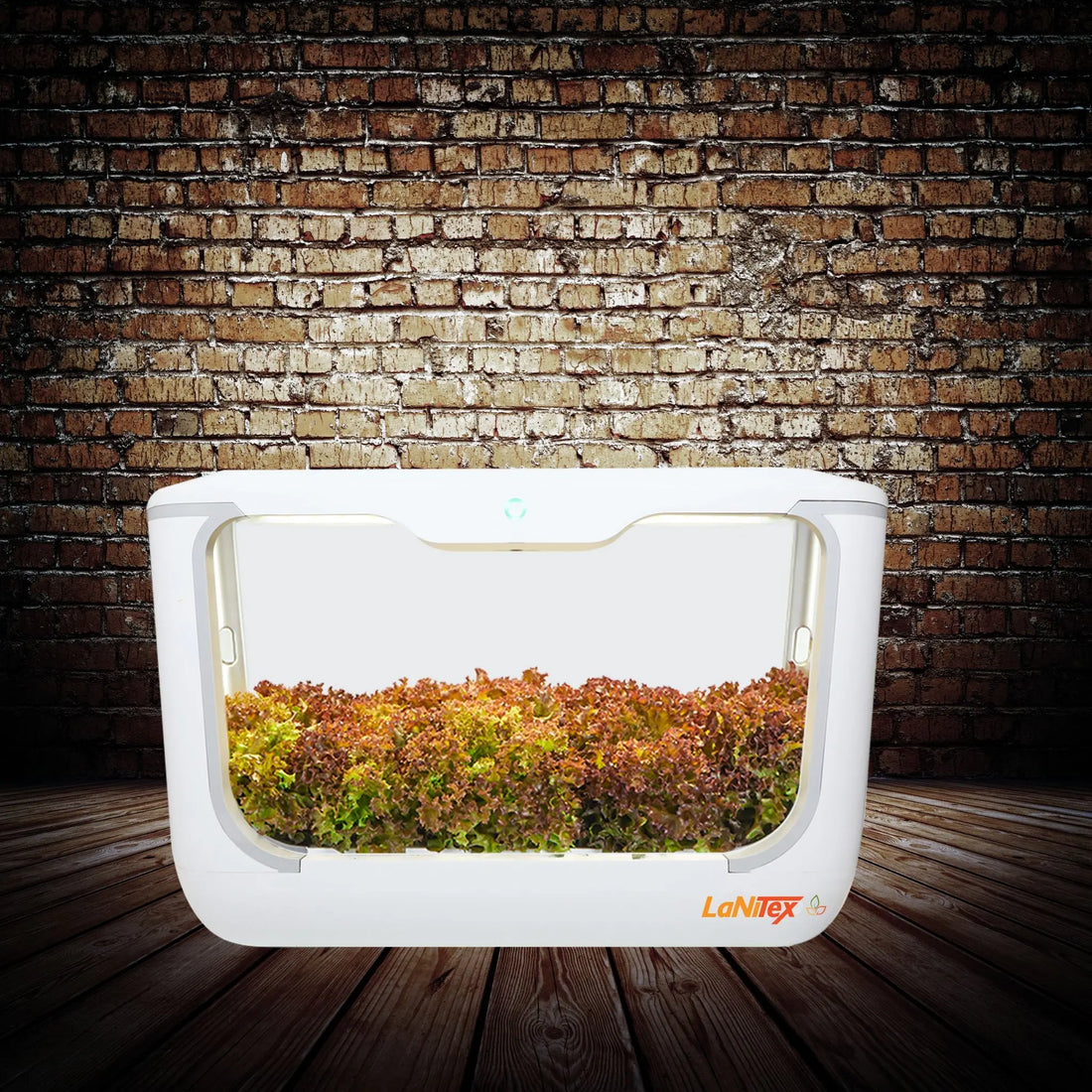
The entry tier is the Smart Grow Box (Short) at $429. It comes as a 15-hole or 67-hole variant with a 9 litre reservoir and a full-spectrum LED. This is the unit I recommend to anyone who'd been priced out of a real year-round greenhouse for vegetables in Australia.
It fits on a kitchen bench, runs near-silent, and gives you the year-round herb and leaf supply most households actually want. Anna in a Brisbane apartment runs the 15-hole version on her benchtop. Fiona in a Sunshine Coast family home runs the 67-hole for her kids' lunchboxes.
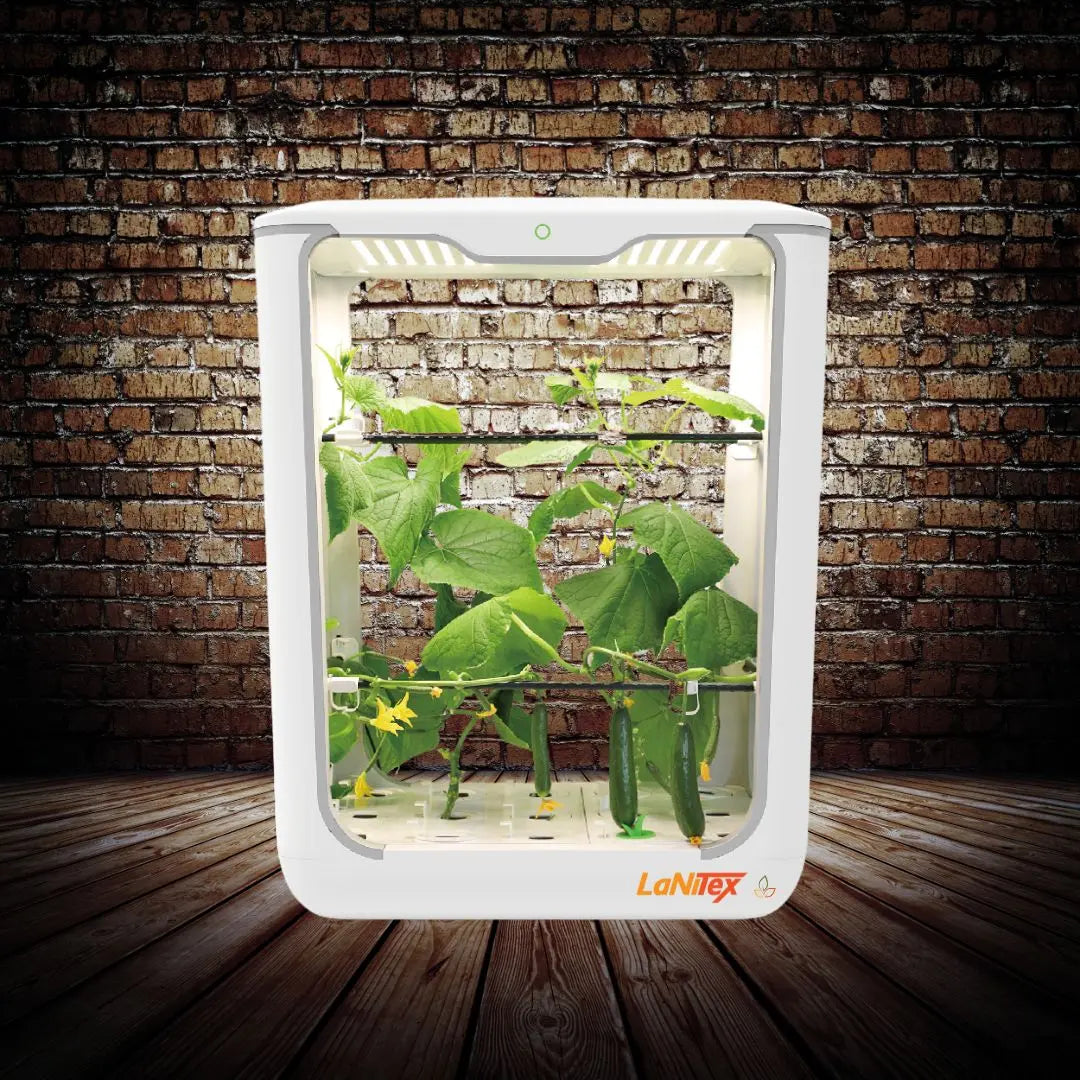
The mid tier is the Smart Grow Box Tall at $650. Fifteen plants, height-adjustable shelving, stackable up to four units. The LED draws 40 watts or less. This is the one for tomatoes, capsicum, and climbers that hit a roof in the shorter unit. If you want the closest indoor match to a tomato-friendly glass kit, this is it.
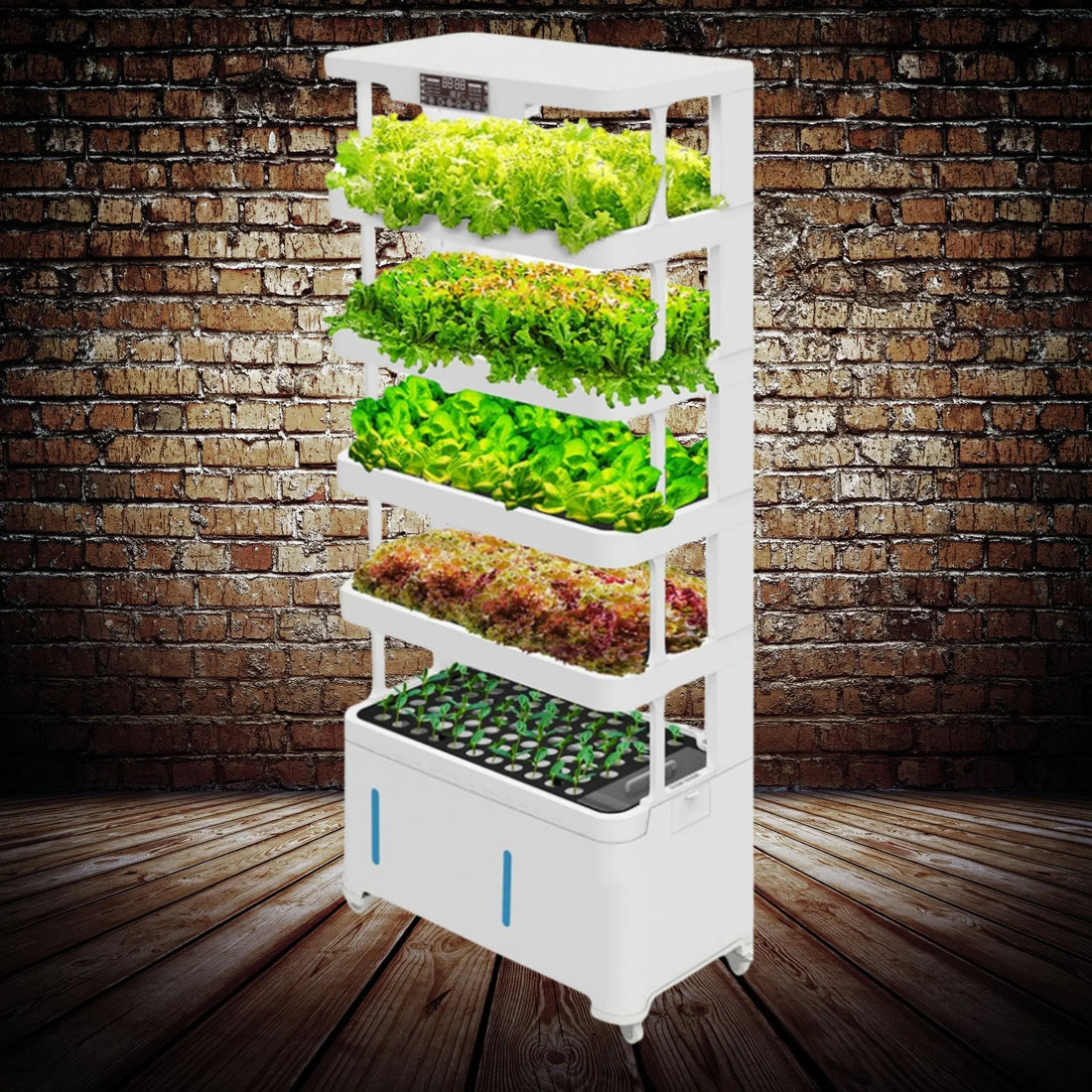
The premium tier is the Indoor Hydroponic Vegetable Garden V5.2-A at $1,990. Seventy-six sowing positions plus seventy-two planting positions, app and sensor monitoring, auto-cooling when the room passes 30 degrees. A walk-in build cannot auto-cool itself, which is why a Perth shed enclosure cooks every January.
The V5.2-A draws about 1.2 kWh a day. The smaller V5.2-T sibling sits at $1,590 if your room is tighter.
Most people who looked at greenhouse kits and thought better of it start at the $429 tier and add a Tall unit later. Use code NEWSLETTERDISCOUNT10 for 10 percent off your first order.
Greenhouse vs grow tent vs hydroponic indoor: a 3-way picker
Three setups, three reader situations. Pick the one your block actually allows.
| Setup | Best for | Wrong for | Footprint | Cost (setup) |
|---|---|---|---|---|
| Polycarbonate greenhouse | Owner-occupiers with outdoor space | Renters, apartments, strata | 2-4 m2 outdoor | $1,500-$5,000 + install |
| Grow tent | DIY enthusiasts, full control | First-timers, time-poor parents | 60-120 cm indoor | $80-$2,000 (components extra) |
| Indoor hydroponic garden | Apartments, rentals, Coast houses | Full vine tomatoes, corn at volume | 50 cm x 30 cm benchtop | $429-$1,990 |
A polycarbonate kit makes sense if you own your home, have 2-4 square metres of outdoor space, and are willing to add shade cloth in QLD summers and a small heater in southern winters. Good for serious vegetable volume and tall fruiting plants. Wrong for renters, apartments, or strata-managed townhouses.
A grow tent is a soft-walled indoor enclosure (usually 60 cm x 60 cm to 120 cm x 120 cm) where you supply your own LED, fans, media, and nutrients. Modular, hobbyist-friendly, but you're the one assembling and tuning every piece. Best for DIY enthusiasts who want full control. Wrong for time-poor parents or first-time growers.
An indoor hydroponic garden like the LaNiTex Grow Box is a complete unit. Plug it in, plant seedlings, walk away. Best for apartments in Sydney, townhouses in Melbourne, rentals in Brisbane, Coast houses with no yard for a build. Wrong for anyone wanting to grow corn or full vine tomatoes at volume. That's the trade.
FAQ
What does a greenhouse do that a hydroponic indoor garden can't?
A glass or poly structure hosts taller and bushier crops, such as full vine tomatoes, climbing beans, pumpkins, and corn, in larger numbers. It also uses free sunlight, so the running cost is essentially zero. Hydroponic gardens cap out around 15-67 plants and use LEDs that draw small but steady electricity.
What grows in a greenhouse that won't grow in a hydroponic indoor garden?
Vine tomatoes over 1.5 metres, corn, pumpkins, melons, full-sized fruit trees, and root vegetables like potatoes and carrots all suit a tall enclosure better. Hydroponic systems excel at leafy greens, herbs, microgreens, capsicum, chillies, and short tomato varieties. Choose by crop, not by hype.
Is a greenhouse cheaper than an indoor hydroponic system over five years?
Not usually. A $2,500 polycarbonate build plus install runs about $3,000 over five years. A $429 Grow Box Short with nutrients and electricity costs around $900 over the same period. The outdoor option wins on per-plant cost only if you fill it and run it hard.
Can I grow tomatoes year-round without a greenhouse in Australia?
Yes, with the right unit. Cherry and dwarf tomato varieties produce all year inside a Grow Box Tall under a 14-hour LED schedule. Full-sized vine tomatoes still want a glass enclosure or outdoor bed. Pick the crop to match the gear, don't try to force it.
Do indoor hydroponic systems work in QLD summer without overheating?
Yes, because they're indoor units sitting in your air-conditioned room. The V5.2-A also has auto-cooling above 30 degrees. A polycarbonate enclosure in a Brisbane backyard regularly hits 45 degrees in January without shade cloth and ventilation, which a Coast grower will tell you the hard way.
Last reviewed: Laszlo Bulatko, 15 May 2026.
Sources
- Australian Bureau of Statistics - Housing types from the 2021 Census: "70 per cent were separate houses, 13 per cent were townhouses and 16 per cent were apartments." Available in the 2021 Census housing release.
- Sustainable Gardening Australia - The Pros and Cons of Hydroponic Growing: "Farms utilizing hydroponics use up to 90 percent less water" and "hydroponic farming can produce up to three or four times more produce than traditional methods." Available in SGA's Pros and Cons of Hydroponic Growing.
Further reading
- Smart Grow Box (Short) - the $429 starter unit most readers pick.
- Smart Grow Box Tall - the climber-friendly mid tier for tomatoes.
- About Laszlo Bulatko, founder - the story behind the brand.
About the writer
Laszlo Bulatko founded LaNiTex Hydro Garden in December 2024 from his the Sunshine Coast home on the Sunshine Coast. He spent 15 years in sales, marketing, and brand development across the Hungarian fishing tackle market, representing Okuma, Mustad, Savage Gear, Prologic, Mad Cat, Penn, JRC, Plano, Abu Garcia, and Berkley. Before that, he started his career at IBM and Diageo in Hungary. Laszlo tested every grow box himself at his the Sunshine Coast home before adding it to the site. He also runs the Term-Grow Enrolment programme, placing grow boxes in Queensland primary school classrooms so kids learn where food comes from. Read more on the About Laszlo Bulatko page.