
Romanesco in Australia: Is It Worth Growing? (2026 Guide)
By Laszlo Bulatko | Updated 12 May 2026
Last updated: 12 May 2026
This guide is for: Beginners to intermediate growers curious about whether romanesco is worth the 75-100 day commitment.
I saw ~$14 romanesco at an Australian supermarket and thought, that's a hydroponic project, not a vegetable.
Quick answer: Romanesco is worth growing at home in Australia if you have 11 weeks and a system that controls temperature. A hydroponic grow box does not pay back on romanesco alone, but the system makes sense when you grow lettuce, herbs, and microgreens between cool-season brassica cycles. The full cost-decision math below.
Key takeaways:
- Romanesco needs 75-100 days from seed to curd. Slow, but high-value at ~$14 a head (realistic supermarket range $8-$16).
- Extended periods above ~26-28 degrees C increase bolting risk in subtropical QLD. Hydroponics reduces that risk through climate control.
- The Smart Grow Box pays back over a year of mixed cropping - romanesco alone needs 30+ cycles, but lettuce, herbs, and microgreens between brassica seasons shorten the payback to roughly one year.
- Microgreens are the faster alternative if you want a quick win before a full grow.
Romanesco (often sold as "Romanesco broccoli" at retail) is a brassica vegetable, a fractal-headed cousin of cauliflower and broccoli originally from Italy, that takes 75-100 days to reach harvest in Australian conditions.

What is romanesco, and why does it cost $14 at the supermarket?
Romanesco is a cool-season brassica in the same family as cauliflower, broccoli, and cabbage (some greengrocers label it "Romanesco broccoli"). The curd is a spiralled green head made up of repeating fractal cones, which is why you have probably seen it on a chef's plate before you have seen it at the supermarket. It originated near Rome, and Australian growers have only recently brought it into mainstream retail. The Veronica cultivar is the most widely stocked variety in Australia and the one most home growers actually buy.
I clocked one specimen at roughly $14 a head at a major Australian supermarket on the Sunshine Coast in autumn 2026 (photo and weekly-catalogue reference available on request). Supermarket prices vary by store and week, so treat $14 as a high-end local data point rather than a national average - the realistic supermarket range is closer to $8-$16 per head depending on supply and store location. Compare that to $4 to $6 for a standard cauliflower or broccoli at the same shelf, and you can see why home growers and chefs both ask whether the vegetable is worth growing in Australia, or paying the markup.
If you've seen the price in your local supermarket, send a photo or receipt to office@lanitexhydrogarden.com.au and we'll publish updated price observations.
The short answer is supply. The plant is a niche, slow-cycle brassica with a narrow growing window in subtropical Australia. Growers do not plant enough to compress wholesale pricing. Add the broader food-inflation backdrop, with fruit and vegetable prices rising 1.8% in the 12 months to March 2026 (ABS, 2026), and the price gap is what makes the cost-decision math interesting for a home grower.
How long does romanesco take to grow in Australia?
The plant takes 75-100 days from seedling to harvest. The range matters because climate zone, light hours, and root-zone temperature each shift the curve. Across the Sunshine Coast and Brisbane, plant in mid-autumn for a winter harvest, or in late winter for a spring crop. Avoid summer planting in subtropical QLD. More on that below.
A typical growing time in Australia breaks down like this:
- Seed to seedling: 10-14 days from sowing to a transplant-ready plug.
- Vegetative growth: 30-45 days of leafy structure-building before the curd begins to form.
- Curd initiation: 10-14 days where the central head starts to spiral.
- Curd maturation: 15-25 days for the head to reach harvest size.
Compared to lettuce at 25-35 days or microgreens under a week, this is a long commitment. That is the trade-off you accept for a vegetable in the ~$14 supermarket range. The benefit is yield density. One mature plant gives you one full head, often 400-800 grams indoors (outdoor yields are usually higher when conditions cooperate), plus tender side leaves you can eat. In our Sunshine Coast setup, the romanesco curd formed at day 78, inside the published range and near the faster end because we held root-zone temperature steady. For romanesco broccoli harvest time in Australia, that puts us at the fast end of the published range.
Day 78 instead of day 95 is the difference hydroponics buys you. Tight inputs, tight outputs.
Is romanesco worth growing in a hydroponic system?
Yes, if you grow more than once a year. Growing romanesco in Australia hydroponically makes the cost-decision math easy.
Romanesco alone does not justify the system. One mature head saves you roughly $14 against supermarket pricing; the Smart Grow Box at $429 would need 30+ romanesco-only cycles to break even on the head price alone. The real economics work when you treat the box as a mixed-crop system - romanesco as the long-cycle showpiece while lettuce (25-35 days, 3-4 heads per cycle), herbs, and microgreens (5-7 days) run in faster rotations between brassica seasons. Across that mixed-crop pattern, the box typically pays back within the first year of continuous use.
Water is the second reason. Hydroponic farms use up to 90 percent less water than soil-based farming (Sustainable Gardening Australia, 2019). On the Coast, where summer water restrictions sometimes bite, that matters for any home grower running through the cool season.
Climate control is the third. Hydroponic systems hold root-zone temperature within a tight band while soil gardens swing with daytime air temperature. Air temperature, day length, and water/nutrient stress all trigger bolting; root-zone control addresses one input but does not eliminate the risk. Indoor hydroponics with climate control reduces the bolting risk significantly compared to outdoor Brisbane summers.
The trade-off: indoor growing is slow for a brassica. Eleven-plus weeks is a long wait compared to lettuce's four. Microgreens are the faster path. For the full curd, the Smart Grow Box - Short is the standard pick - it ships Australia-wide from the Sunshine Coast and runs continuously alongside faster crops between brassica seasons.
Sceptical that an indoor box matches outdoor yield? Fair. The numbers still favour controlled environments for this brassica.
How to grow romanesco at home: a beginner's path
Here's how to grow romanesco at home in Australia, the beginner version, in three steps: source seeds from Mr Fothergill's or a similar Australian supplier, choose a hydroponic system that holds pH 6.0-6.5 and EC 1.4-2.0 mS/cm depending on growth stage, and plant in March or April for a June harvest. The full setup below is romanesco for beginners in Australia, the practical version.
You will need:
- Romanesco seeds: Australian seed suppliers like Mr Fothergill's and Eden Seeds stock romanesco broccoli seeds online - look for the Veronica variety, the most widely stocked AU cultivar. A pack of 50 seeds runs around $4 to $5.
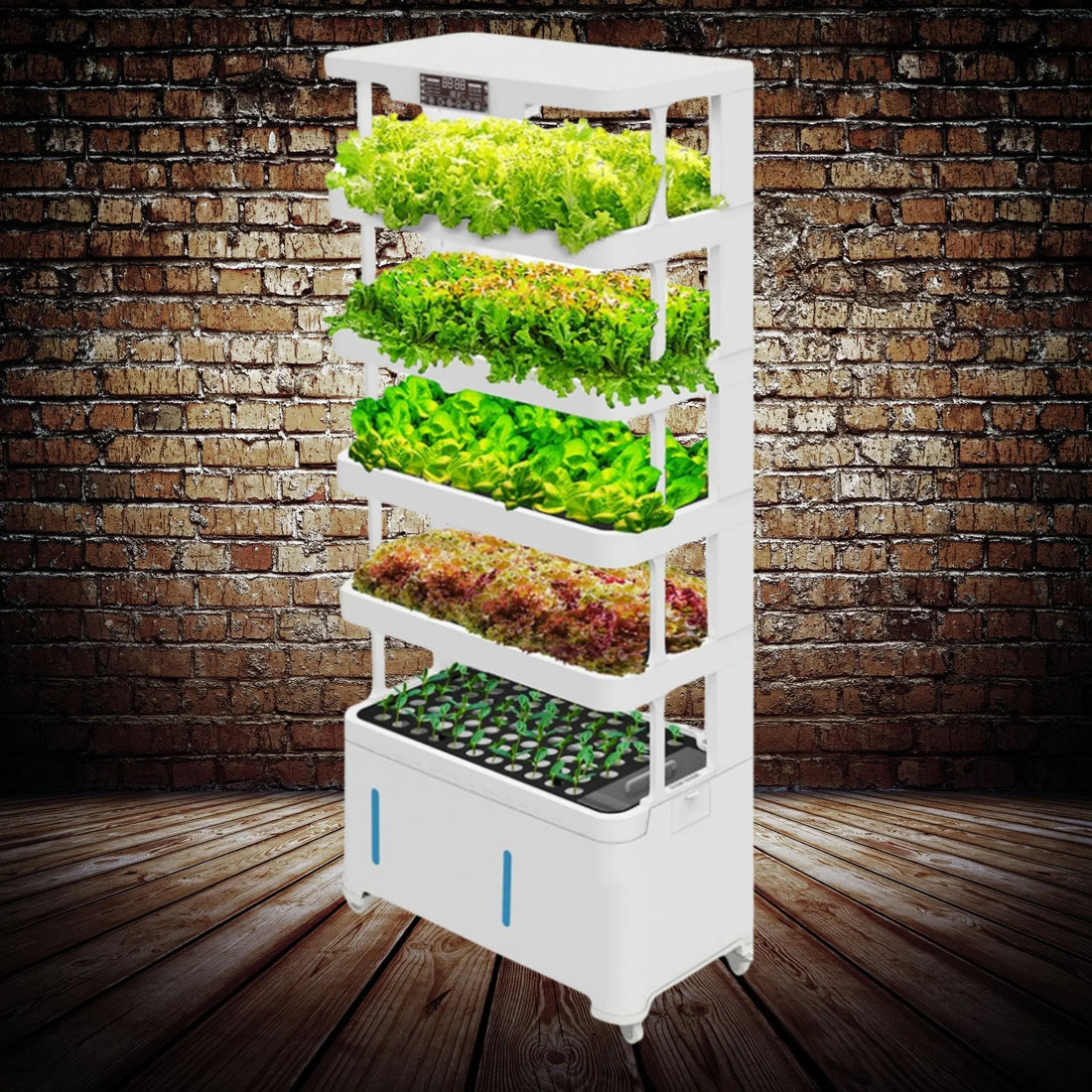
- A hydroponic system or seedling tray: A Smart Grow Box covers seed-to-harvest in one unit.
- pH and EC test kit: A digital tester reads pH (target 6.0-6.5) and EC (target 1.4-1.8 mS/cm during vegetative growth, rising to 1.6-2.0 mS/cm at curd formation).
- Grow lights or full sun: 12-14 hours of light per day during vegetative growth, 14 hours during curd formation.
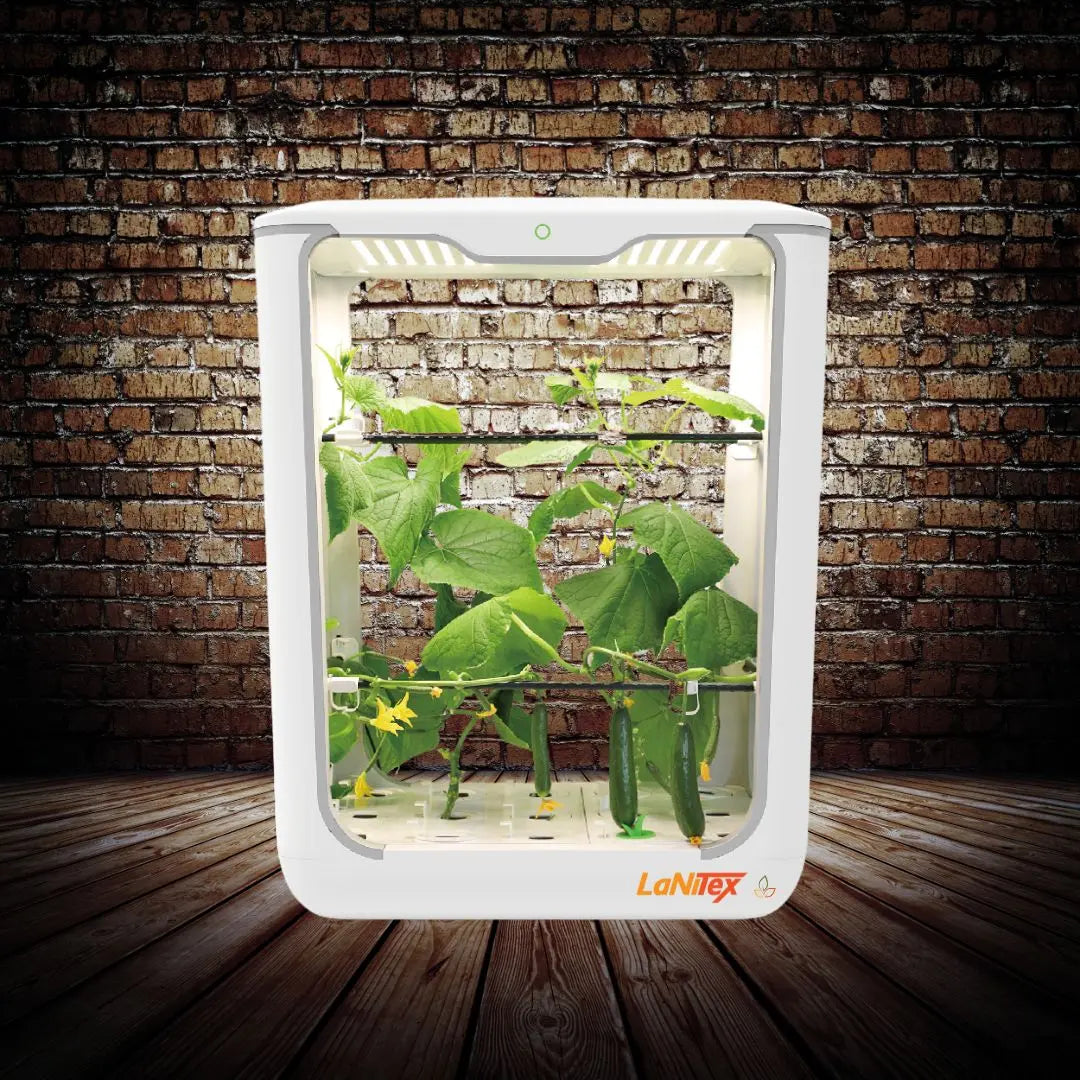
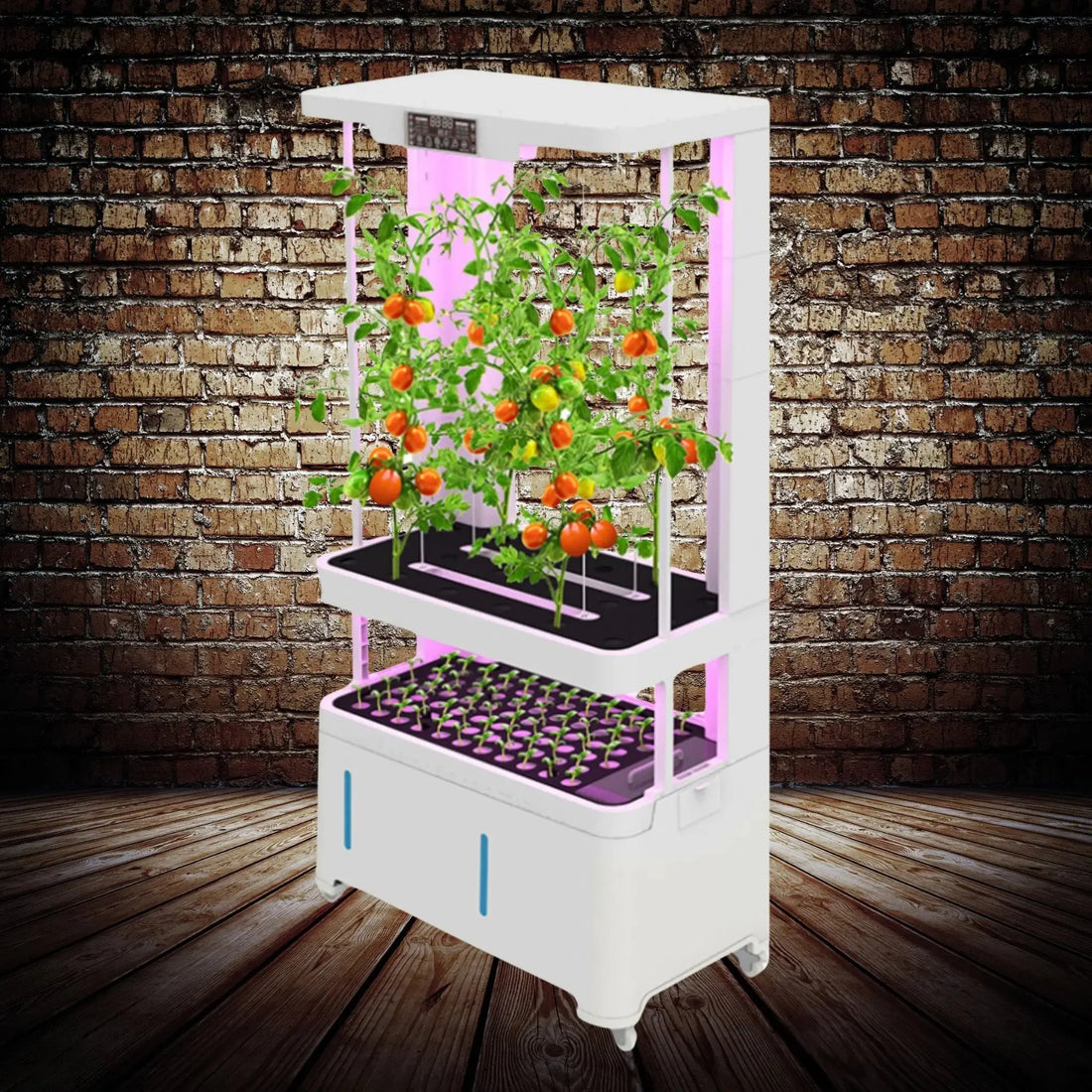
Romanesco plant care in Australia follows the same playbook as cauliflower with two tweaks: tighter temperature control and a slightly higher EC at curd formation. Romanesco is a low-density, high-space crop - one mature plant claims a much larger root and canopy footprint than lettuce or microgreens. The Smart Grow Box ships with a smart full-spectrum LED on a built-in timer, a 9-litre reservoir, and a choice of 15 or 67 planting holes. The 15-hole layout comfortably holds one romanesco plant per cycle (the remaining holes go to faster-turnover companions like lettuce or basil). For first-time growers wanting one decent head, that's the configuration most first-timers land on.
Use the cool-season window. Plant in March-April for a June harvest on the Sunshine Coast, or July-August for spring. Subtropical growers should not plant from October to February. Beginners often miss this. If you have already grown lettuce or microgreens indoors, the same hardware works. See our grow tower setup for apartments in Australia for a smaller-space layout.
Romanesco in subtropical QLD: the heat-stress trap
Don't try to grow this brassica through a Brisbane summer. Extended periods above ~26-28 degrees C increase bolting risk, which means the central head can shoot into flower stalks instead of forming the tight spiral. Once bolted, the head is unrecoverable. You eat the leaves or compost the plant.
This is the most common mistake new growers make in subtropical QLD. Outdoor gardens on the Sunshine Coast and around Brisbane regularly hit 32-35 degrees C through summer afternoons. Indoor hydroponics cuts the heat-bolt risk because the Smart Grow Box runs inside the kitchen where air-conditioning already holds 22-25 degrees C. That is a structural fix, not a gardening trick.
Southern growers have a longer cool-season window. In Victoria and NSW, plant from April to August for autumn-winter harvests; QLD subtropical growers are limited to April-June. The hydroponic system extends the window in any state because it removes the outdoor temperature ceiling.
Romanesco vs other brassicas: what to grow instead, or alongside
Romanesco growing conditions in Australia overlap with cauliflower and broccoli, so the same hardware grows all three. The question is whether you want the long-cycle showpiece or a faster cool-season crop. For first-time growers, the Smart Grow Box - Short is the practical first pick. Here is a neutral comparison of the three LaNiTex options that fit brassicas, plus the soil-garden alternative.
| Setup | Cycle time | Yield per cycle | Romanesco fit | Best for |
|---|---|---|---|---|
| Smart Grow Box - Short ($429) | 11 to 14 weeks | One full head per slot | Strong fit. Temperature control plus EC tuning | First-time growers wanting one good head |
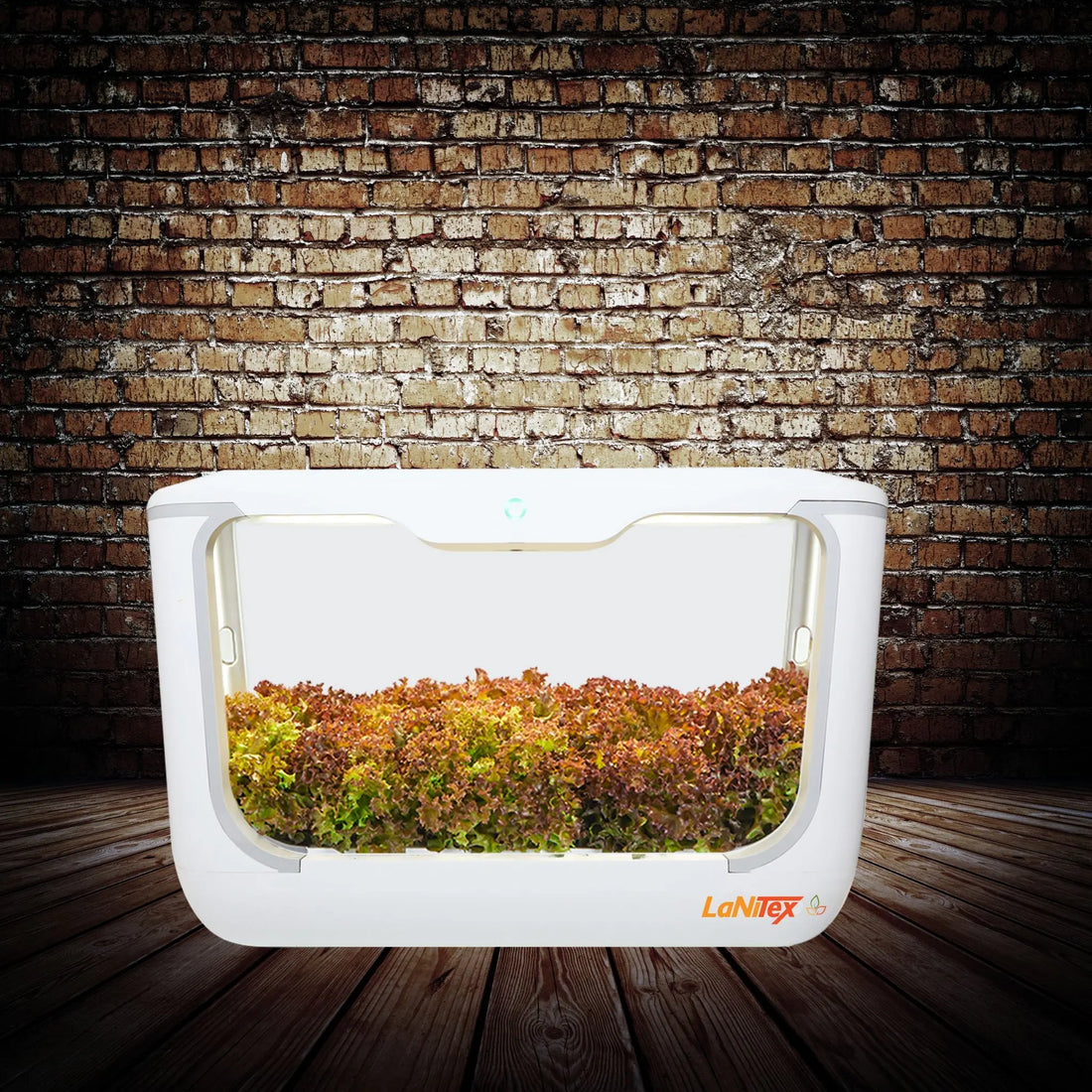
| Mini Grow Pot Z 2.4 ($75) | 11 to 14 weeks for brassica; 25 to 35 days for lettuce | Too small for a full curd | Marginal | Lettuce, herbs, microgreen starts |
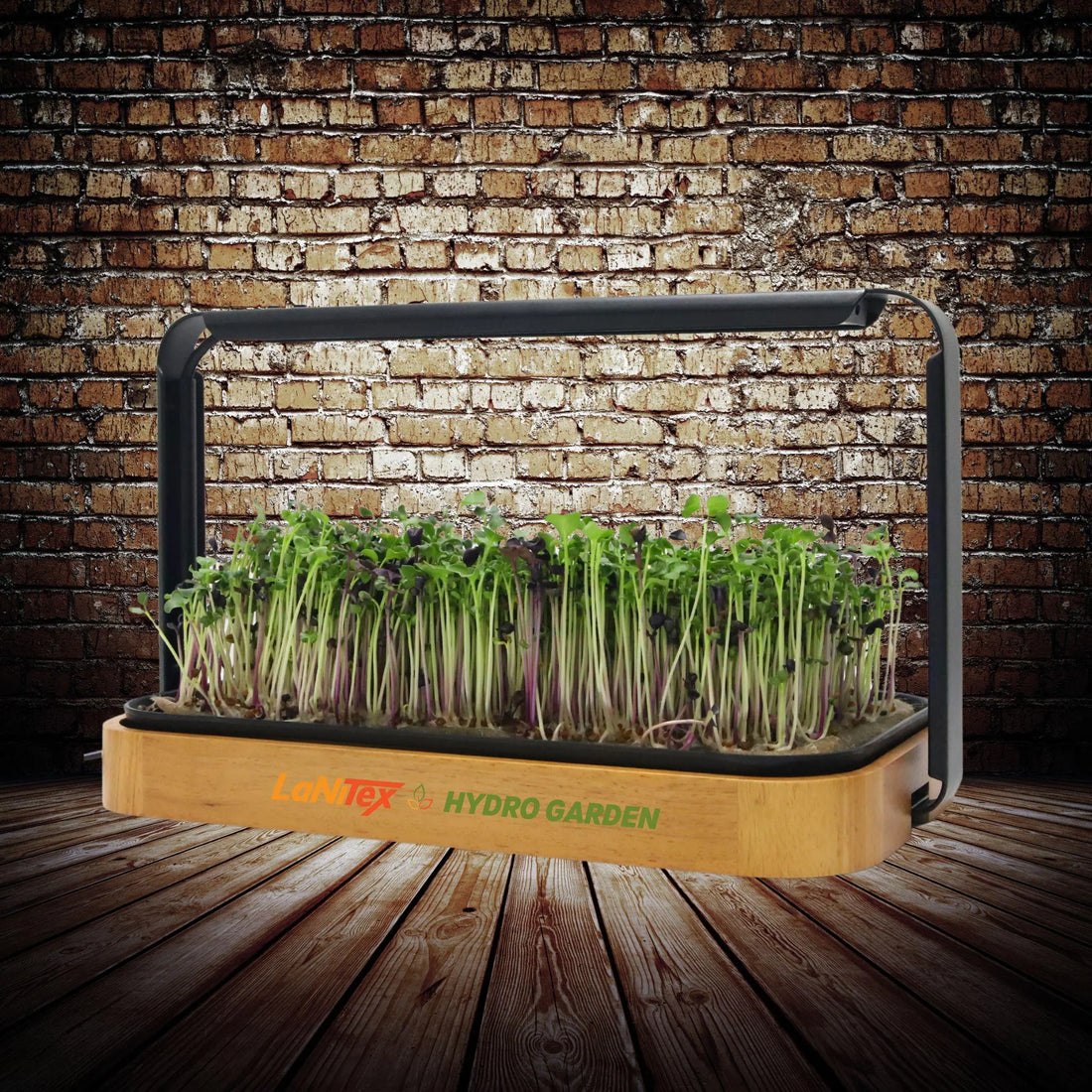
| Microgreen Kit - Black Metal ($129) | Under one week | Tray of romanesco microgreens | Microgreens only, not full curd | Fast wins, kitchen produce, taste-test before a full crop |
| Outdoor soil garden | Same 11 to 14 weeks if cool season | Variable | Risky. Heat bolts curds in summer | Tablelands or cooler southern AU climates |
Outdoor soil also grows the same crop. The honest take: soil works in Hobart, Ballarat, or Toowoomba where summer temperatures stay manageable, while hydroponics is the better fit for SE QLD, Sydney coast, and Perth.
If you have not yet grown anything indoors, start with the Microgreen Kit. Use 10% off with code NEWSLETTERDISCOUNT10 - subscribe to the LaNiTex newsletter. A microgreen tray in seven days tells you whether you want to commit to the 11-week grow.
FAQ
What is the fastest romanesco can mature in Australian conditions?
The fastest romanesco can mature in Australian conditions is about 75 days from seed to curd, achieved when root-zone temperature is held steady. In our Sunshine Coast setup, the curd formed at day 78 - near the optimistic end of the published 75-100 day range. Sow indoors in autumn (March-April) for a winter harvest on the Sunshine Coast and around Brisbane, or in late winter for spring.
Can you grow romanesco in a hydroponic system?
Yes. The brassica fits a hydroponic system well because the root-zone temperature, pH, and EC stay inside the narrow band the plant needs. Run pH 6.0-6.5 and EC 1.4-1.8 mS/cm during vegetative growth, rising to 1.6-2.0 mS/cm at curd formation. The Smart Grow Box ships with the light timer, reservoir, and 15 or 67 holes ready to go.
Is romanesco worth growing at home if it costs ~$14 at the supermarket?
For continuous mixed-crop growers, the Smart Grow Box pays back within a year - but not on romanesco alone. One mature head saves you roughly $14 against supermarket pricing, so romanesco-only would need 30+ cycles. Mixing in lettuce (25-35 days), herbs, and microgreens between brassica seasons brings the payback into the realistic range. For one-off growers paying $14 once a year, supermarket is the cheaper path.
Does romanesco grow well in subtropical QLD heat?
Not outdoors in summer. Extended periods above ~26-28 degrees C increase bolting risk, which means the plant can abandon the head and shoot into flower instead. Sunshine Coast and Brisbane summers regularly push past that range. Indoor hydroponics is the workaround because you control the climate, not the weather.
Can you taste romanesco as microgreens before committing to the full grow?
Yes. Romanesco broccoli seeds grow into microgreens in five to seven days. You eat the tender shoots before any curd forms - microgreens will not develop into a full curd, they are a separate, faster product. A microgreen tray is a fast way to taste the flavour profile, nutty and slightly sweet, before you commit to the 75-100 day grow. The Microgreen Kit is purpose-built for this use case.
Reply with your romanesco grow log or email us at office@lanitexhydrogarden.com.au if you've tried it.
About the writer
Laszlo Bulatko is the founder of LaNiTex Hydro Garden, a solo-operator indoor hydroponics business based on the Sunshine Coast. He founded the business in December 2024 after a career that began at IBM and Diageo in Hungary and continued through 15 years in the Hungarian fishing tackle market, where he led sales, marketing, and brand development for Okuma, Mustad, Savage Gear, Prologic, Mad Cat, Penn, JRC, Plano, Abu Garcia, and Berkley, helping establish a 12% share of the Hungarian fishing market. LaNiTex now ships hydroponic systems Australia-wide from the Sunshine Coast (ABN 47 682 768 967). Read Laszlo's full founder bio.
Sources
- Sustainable Gardening Australia (2019). The Pros and Cons of Hydroponic Growing. Quote: "Farms utilizing hydroponics use up to 90 percent less water."
- Australian Bureau of Statistics (2026). Consumer Price Index, Australia, March 2026 quarter. Quote: "Fruit and vegetable prices rose 1.8% in the 12 months to March 2026."