
Hydroponic System Essentials: Everything You Need to Know
1. Understanding Hydroponic Systems
Ebb and Flow Hydroponic System
An ebb and flow system (also known as a flood and drain system) periodically floods plant roots with nutrient-rich water and then drains away excess moisture. This cycling process prevents overwatering and ensures optimal hydration.
Ebb and flow hydroponics increase water efficiency by up to 50% compared to soil-based farming.
The flood-and-drain cycle gives growers excellent control over nutrient delivery, making ebb and flow systems particularly well-suited for automated hydroponic setups.
Aeroponic Tower System
An aeroponic tower suspends plant roots in the air and mists them with nutrient solutions. This setup enhances oxygen absorption, leading to faster growth and superior nutrient uptake compared to soil-grown crops.
Aeroponic towers promote 25% faster growth compared to traditional hydroponic systems.
Tip: Aeroponic towers are ideal for vertical farming, maximising space efficiency in urban environments.
Hydroponic Tower System
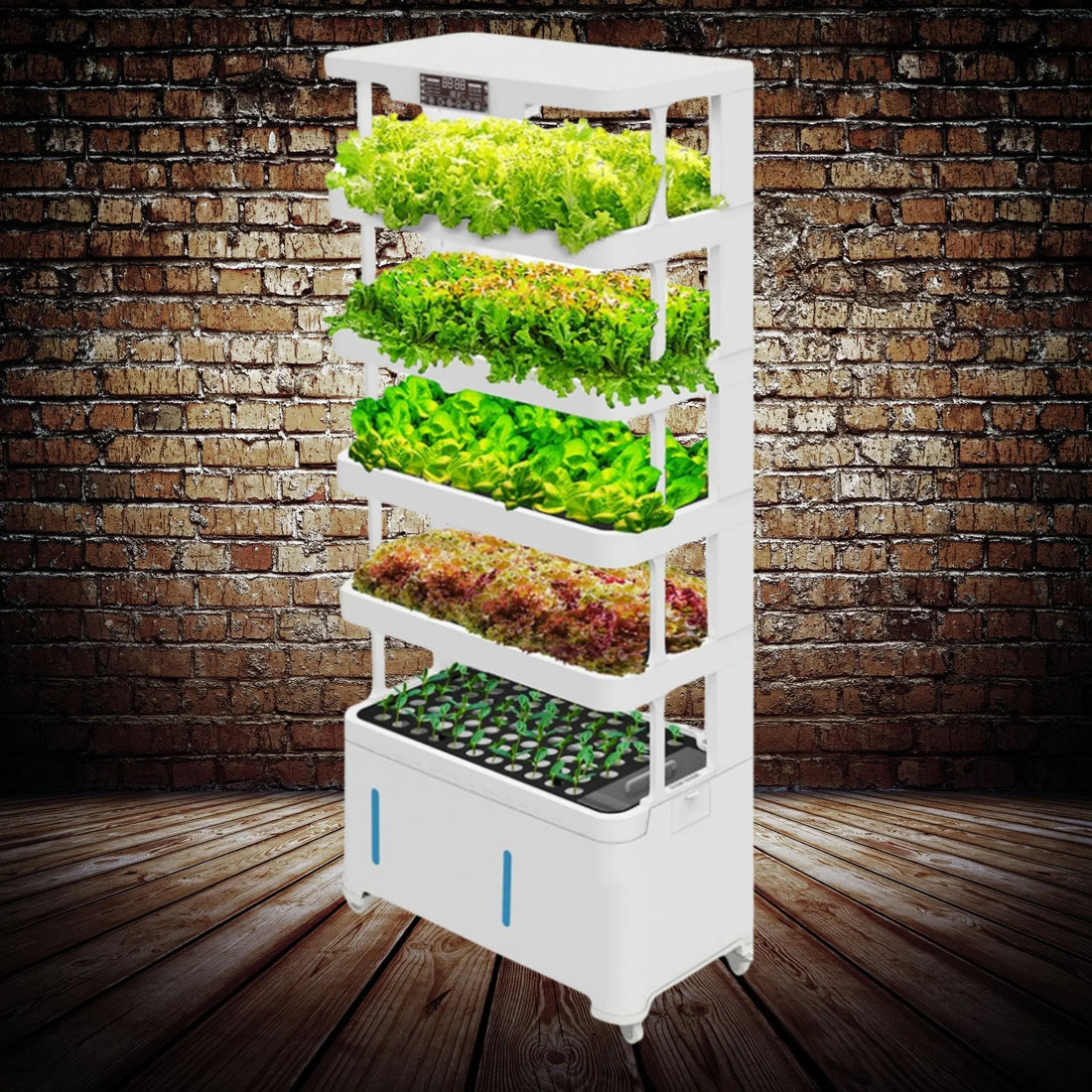
A hydroponic tower utilises a stacked vertical structure, enabling growers to maximise space while maintaining continuous nutrient delivery for each plant.
Hydroponic towers produce five times more food per square foot compared to conventional farming methods.
The vertical, space-saving design of hydroponic towers makes them an excellent choice for urban farming, where floor space is at a premium.
2. Essential Hydroponic Equipment
Hydroponic Grow Tent
A hydroponic grow tent creates a controlled environment that regulates temperature, humidity, and lighting conditions. Grow tents are popular among home gardeners and commercial growers, ensuring consistent plant development.
Grow tents improve plant survival rates by 40% compared to exposed indoor farming setups.
Tip: Choose a grow tent with light-reflective interiors to maximise exposure to hydroponic lights.
Hydroponic Lights
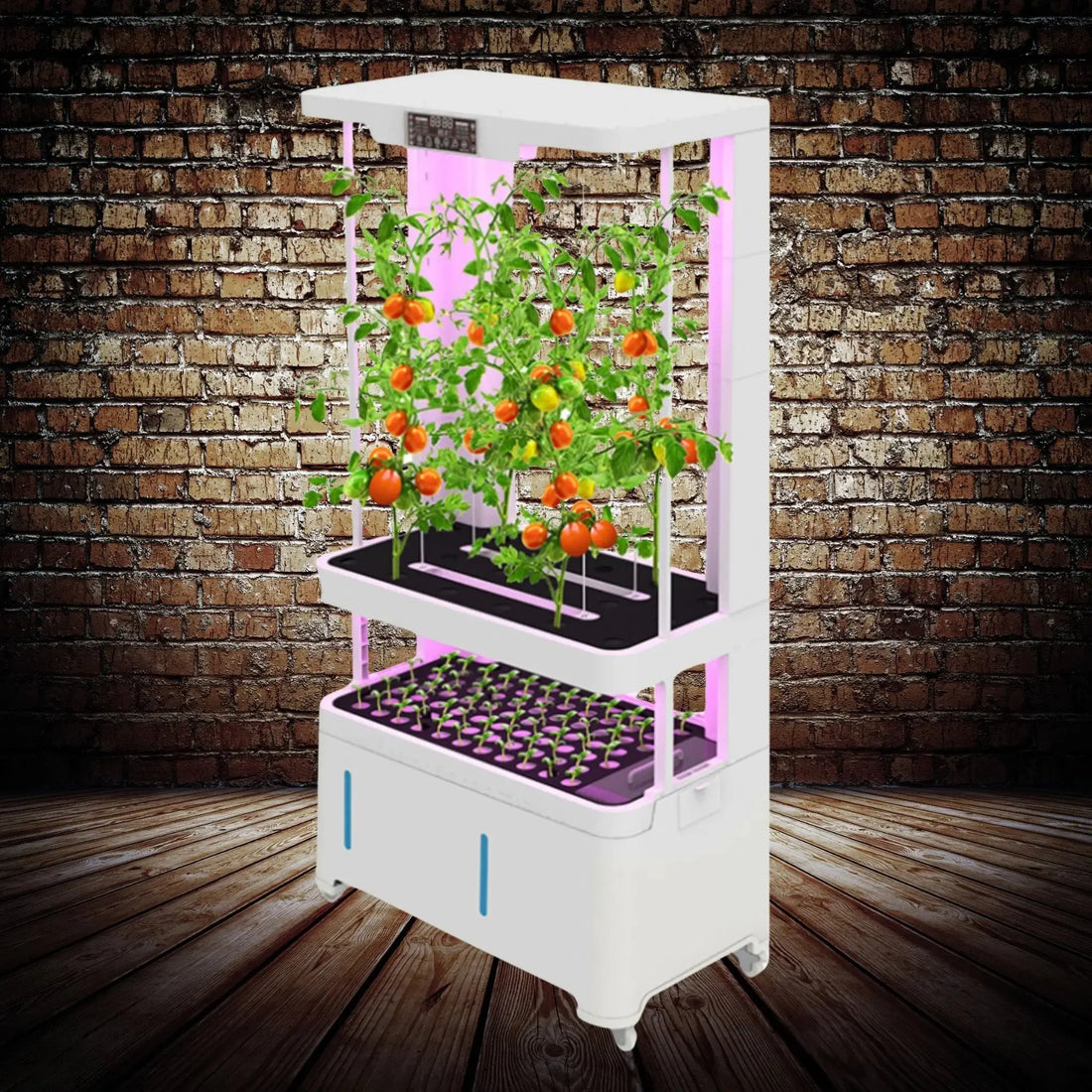
Hydroponic systems rely on LED or high-intensity grow lights to simulate natural sunlight, allowing plants to undergo efficient photosynthesis. These lights provide different spectrums to support various growth stages.
LED hydroponic lights consume 60% less energy while providing better light efficiency than traditional bulbs.
Using an optimised light spectrum ensures plants can photosynthesise efficiently throughout every growth stage — from seedling to harvest.
Hydroponic Greenhouse
A hydroponic greenhouse offers weather protection and automated climate control, enabling year-round cultivation with optimised resource efficiency.
Hydroponic greenhouses reduce water consumption by up to 85% compared to open-field farming.
Tip: Use automated nutrient monitoring systems in hydroponic greenhouses to fine-tune growing conditions without manual intervention.
3. The Future of Hydroponic Farming
Sustainability & Food Security
Hydroponics is reshaping urban agriculture, offering a resource-efficient solution to increase food accessibility in densely populated areas.
By 2030, urban hydroponic farming is projected to contribute a significant share of global vegetable production, driven by water scarcity and urbanisation trends.
Advanced Hydroponic Technology
Automated hydroponic systems now utilise AI-powered sensors for real-time nutrient monitoring and climate adjustments, ensuring optimal crop conditions.
Smart hydroponic farming — powered by AI sensors and automated nutrient delivery — is set to play a key role in the future of agriculture, maximising yield with minimal resources.
Conclusion: The Role of Hydroponics in Modern Agriculture
A hydroponic system provides unmatched efficiency, sustainability, and productivity, making it the ideal choice for future food production. Whether for home growers, urban farmers, or commercial producers, hydroponic setups offer water-saving, space-efficient, and high-yield solutions that redefine sustainable farming.
As hydroponic technology advances, it continues to set new sustainability benchmarks — optimising land and water use while making fresh food production accessible to more people than ever.
Sources
Institution: Wageningen University and Research
Article Title: Providing Food Security through Hydroponic Systems
Institution: SpringerLink
Article Title: Hydroponic Systems for Cultivation of Horticultural Crops
Institution: Instituto Politécnico Nacional
Article Title: A Review on Hydroponics and the Technologies Associated for Medium- and Small-Scale Operations