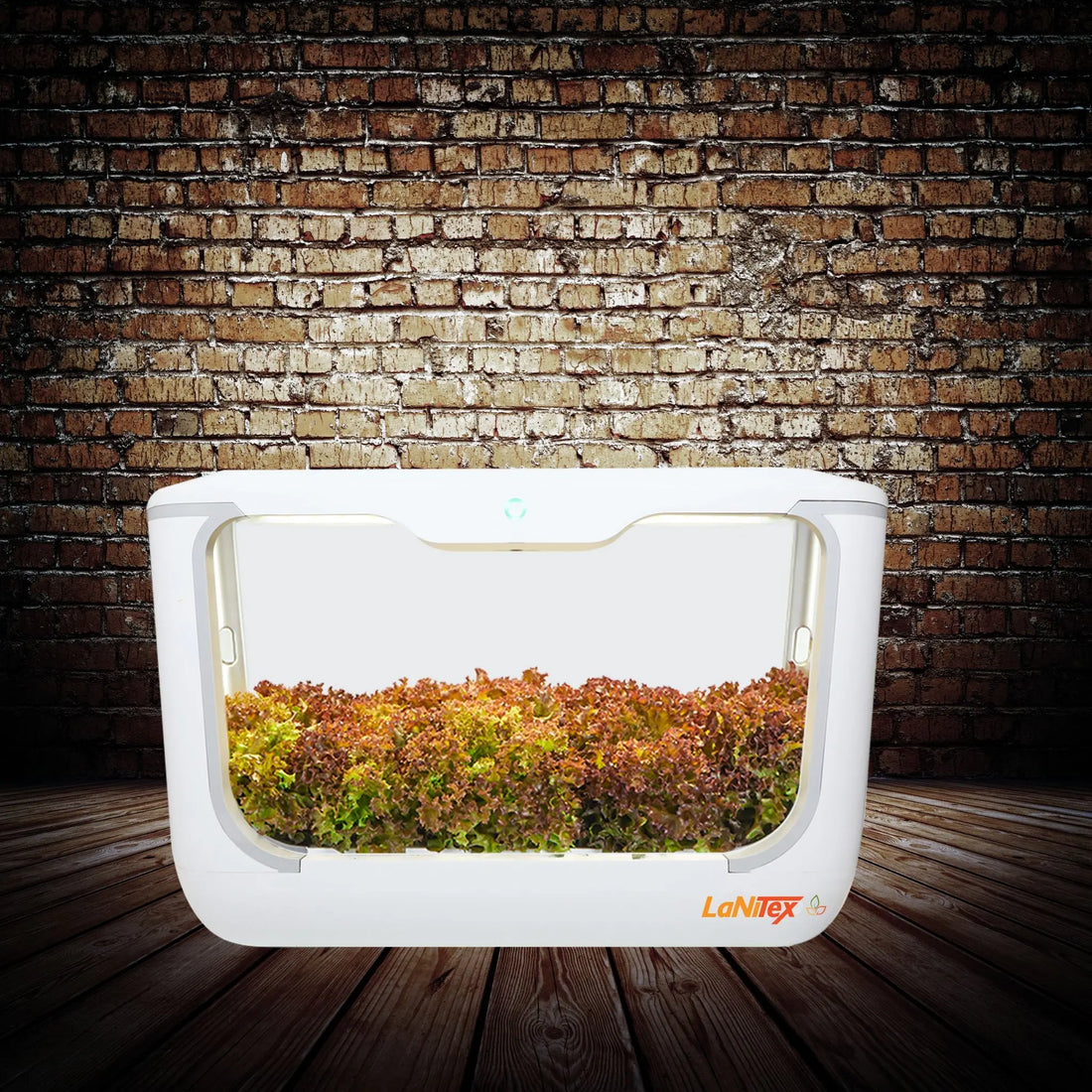

The Benefits of an Indoor Hydroponic Garden
1. Why Choose an Indoor Hydroponic Garden?
Traditional farming depends on soil quality, seasonal changes, and external climate conditions — all factors that can limit productivity. With an indoor hydroponic garden, these limitations disappear, allowing growers to achieve consistent, predictable results in any environment.
Key Advantages:
Optimised Growth Conditions – No dependence on soil health, climate fluctuations, or unpredictable weather.
Year-Round Harvests – Grow fresh vegetables, herbs, and fruits in any season with precise nutrient control.
Minimal Resource Waste – Hydroponic systems reduce water consumption by up to 90%, making them highly sustainable.
Eco-Friendly Approach – Eliminates harmful pesticides, fertilisers, and excess land use.
Tip: Vertical hydroponic gardening increases crop yield per square foot by up to 300%, making it ideal for limited spaces.
2. Practical Benefits of Indoor Hydroponic Gardening
Increased Growth Rate & Higher Yield
Plants cultivated in an indoor hydroponic garden experience continuous nutrient absorption, resulting in faster growth and greater yields. Unlike soil-based methods, hydroponic systems ensure plants receive essential minerals at exactly the right moment, eliminating inefficiencies in absorption.
Hydroponic lettuce matures in just 30 days, compared to 45–60 days in soil-based farming.
Research consistently shows 30–50% faster plant development rates in hydroponic systems, driven by optimal nutrient delivery directly to the root zone.
Space Optimisation & Urban Farming Potential
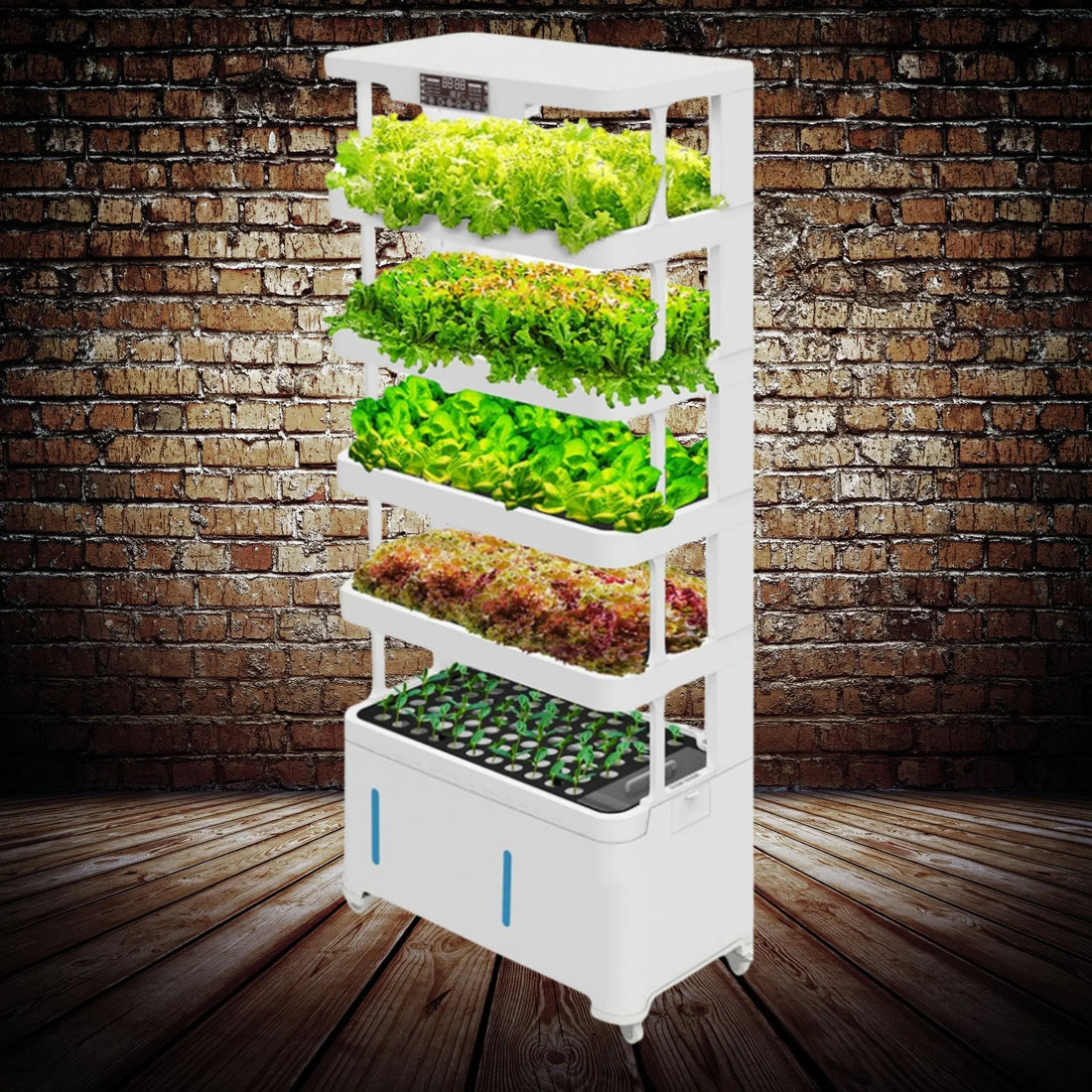
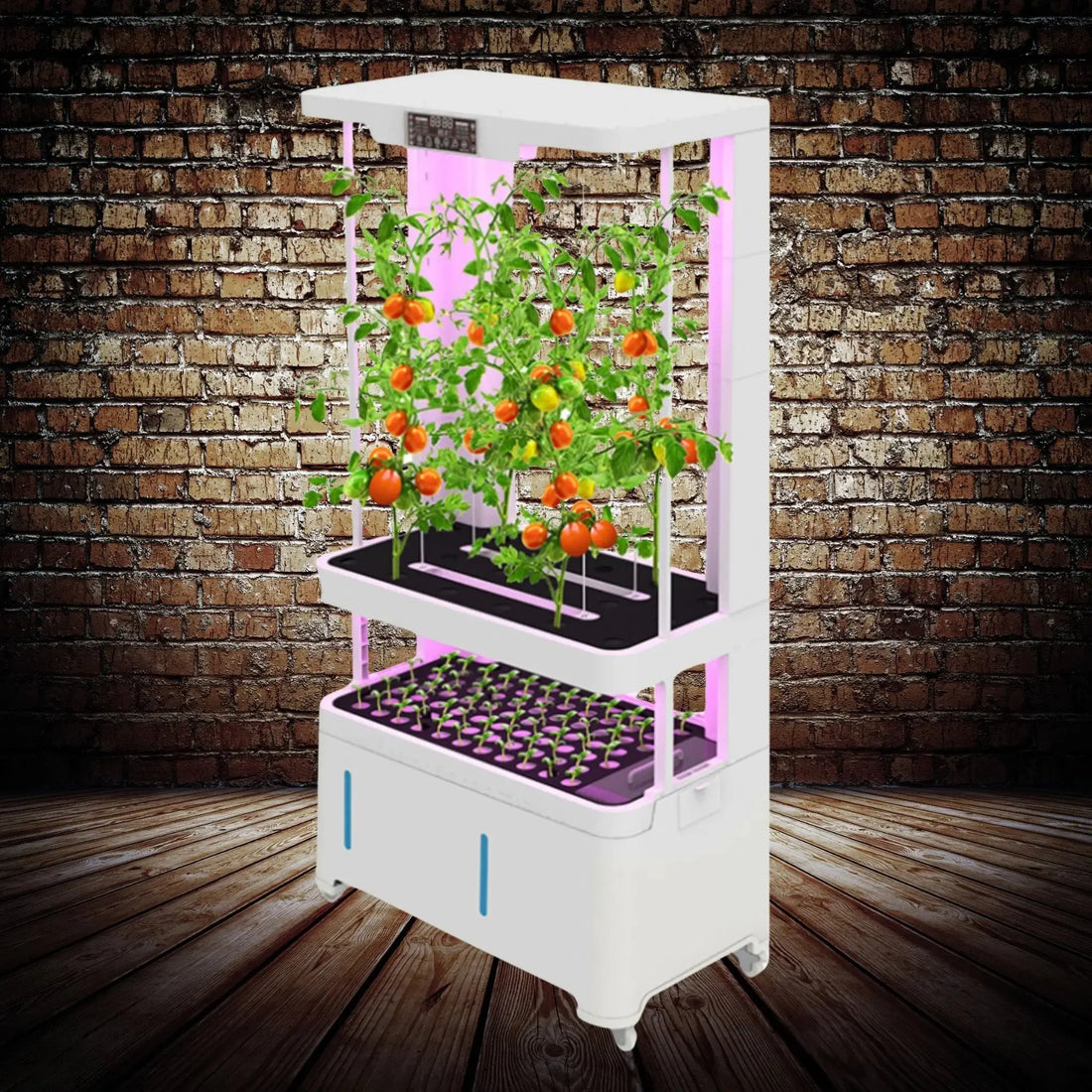
For city dwellers or those with limited gardening space, an indoor hydroponic garden presents a practical solution. With compact hydroponic trays, vertical hydro towers, and stacked growing methods, urban farmers can maximise small spaces without sacrificing productivity.
Hydroponic systems enable growers to cultivate five times more crops per square foot compared to conventional farming.
Tip: Hydroponic towers allow growers to stack multiple plants, saving up to 80% more space than traditional planting methods.
Sustainability & Water Conservation
Water waste is a major concern in traditional agriculture, but hydroponics completely transforms efficiency. Unlike soil-based farming — where excess water evaporates or drains away — hydroponic systems recirculate water, ensuring that every drop is used efficiently.
A hydroponic system uses only 10% of the water needed in soil-based gardening, reducing overall environmental impact.
By recirculating nutrient solutions in a closed loop, hydroponic gardens conserve both water and land resources while increasing food accessibility — a key advantage for sustainable agriculture in Australia.
3. Indoor Hydroponic Gardening vs. Traditional Soil-Based Farming
|
Feature |
Indoor Hydroponic Garden |
Traditional Soil Gardening |
|---|---|---|
|
Growth Speed |
30–50% faster |
Dependent on soil & weather |
|
Water Usage |
Up to 90% less |
High consumption & evaporation |
|
Space Efficiency |
Vertical hydroponic towers |
Large plots required |
|
Pest Resistance |
Minimal soil-borne pests |
Vulnerable to weeds & insects |
|
Climate Control |
Year-round growing |
Weather-dependent yield |
Without soil, hydroponic gardens eliminate many common growing challenges — including soil-borne diseases, nutrient inconsistency, and pest infestations — resulting in more efficient, pesticide-free crop production.
4. Hydroponic Gardening & Future Sustainability
Hydroponic systems are shaping the future of sustainable agriculture, providing solutions for global food security, urban farming, and climate resilience.
Future Possibilities:
Expanding Urban Farming – Cities can integrate hydroponic systems into rooftops, balconies, and shared community spaces.
Climate-Resilient Agriculture – Hydroponics thrives in any climate, making it ideal for areas facing extreme weather conditions.
Technological Advancements – AI-driven hydroponics, automated nutrient delivery, and smart monitoring systems are revolutionising the industry.
As hydroponic technology continues to advance, it represents the next stage of food production innovation — enabling more efficient and eco-friendly farming practices worldwide.
Conclusion: Why Hydroponic Gardening Is the Future
An indoor hydroponic garden offers unparalleled benefits, from higher yields and water efficiency to space-saving solutions and environmental sustainability. Whether for home gardeners, urban farmers, or commercial producers, hydroponic cultivation provides a scalable, resource-efficient alternative to traditional growing methods.
Hydroponic agriculture is setting new standards for sustainable food production — and with systems now available at every price point, there's never been a better time to start growing.
Related Articles
Hydroponic System Essentials: Everything You Need to Know
LaNiTex Hydro Garden: The Future of Hydroponic Gardening